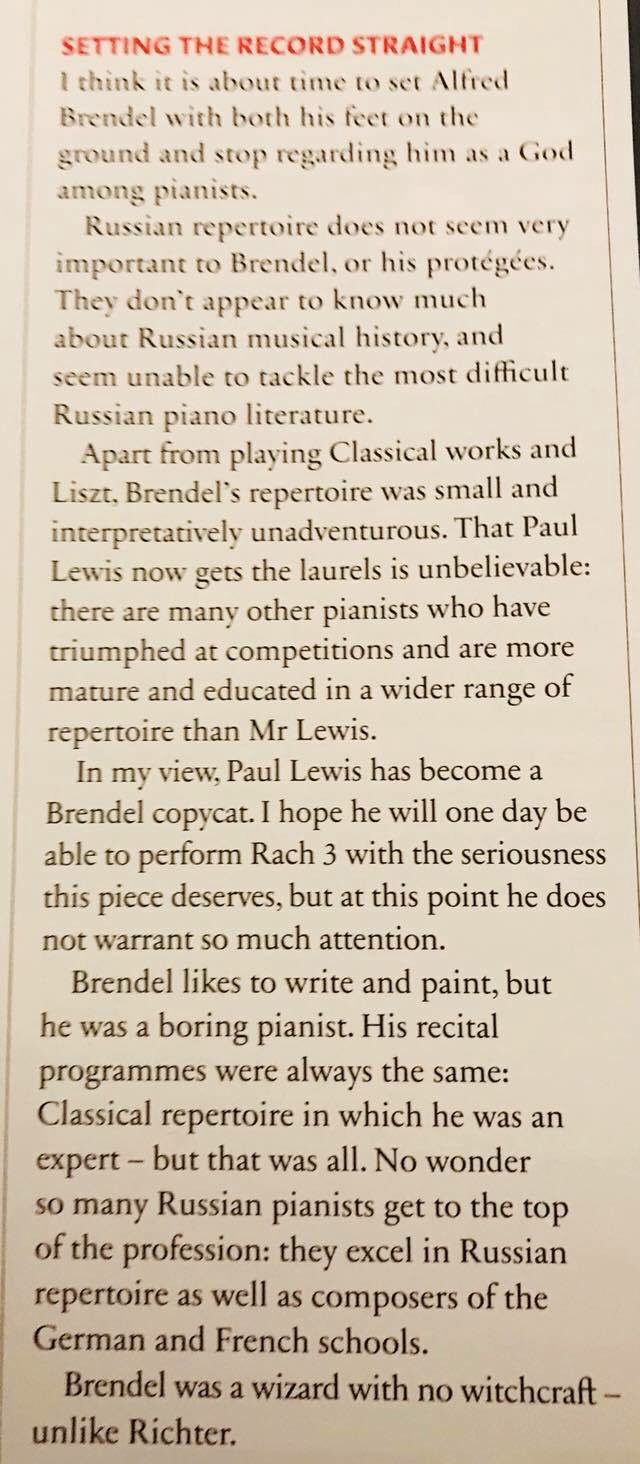
“Schubert’s music is the most human that I know.” – Sir András Schiff, pianist

I will never quite have the words to express what Schubert’s music has meant to me…and I will never stop looking for them. His ability to convey loneliness — and console in its wake — is perhaps his most ineffable quality…” – Jonathan Biss, pianist
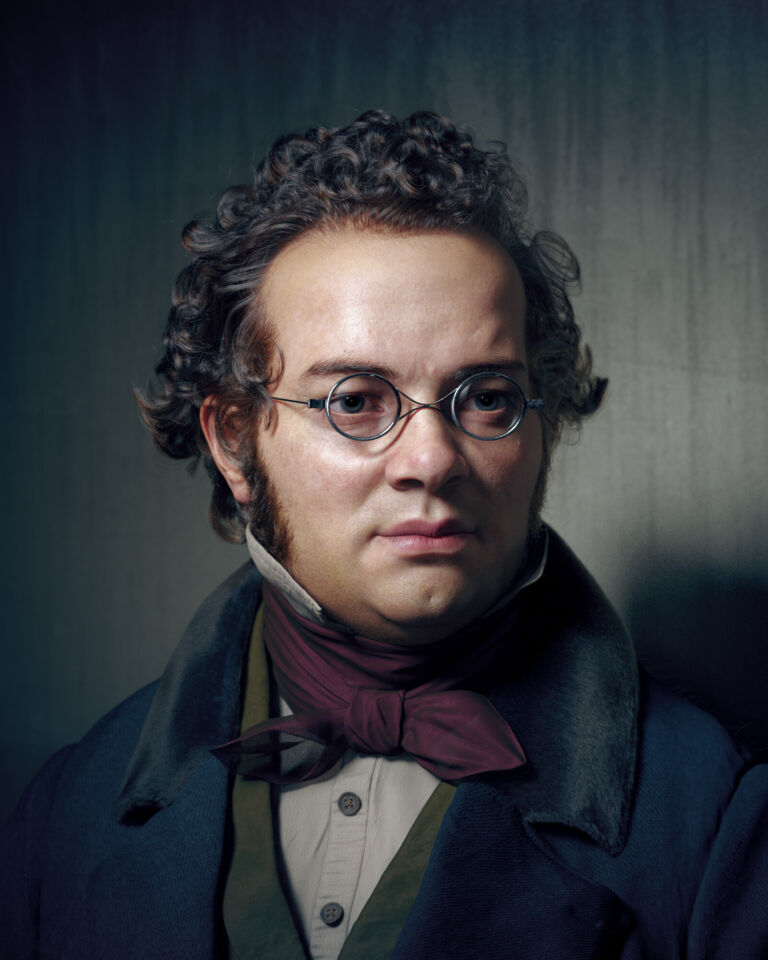
Image credit Hadi Karimi

Schubert’s music provides the bridge between the classical and romantic eras. Yet his music was not well known during his lifetime outside of Schubert’s own intimate circle of friends. His piano music was largely neglected right up to the early part of the 20th century when it was given the attention it deserved by pianists such as Artur Schnabel, who can be partly credited for introducing it into the regular concert repertoire with pieces such as the late piano sonatas, the two sets of Impromptus, the Moments Musicaux, and the “Wanderer fantasie”. Today, these works are staples of the pianist’s repertoire, much loved by performers and audiences alike.

Schubert’s musical sensibilities and invention were inspired by the human voice – he wrote over 600 songs – and lyrical melody and long-spung cantabile lines are distinctive elements of all his music.

For the pianist, his music remains an interpretational challenge and the best Schubert players have absorbed the essentials from his songs and chamber music. Because of his proximity, and admiration for Beethoven, there is a tendency among some players to approach his music like Beethoven’s; but Schubert is a composer who speaks more quietly and introspectively, even in his more declamatory moments. The skill in playing his music well is a sensitivity to these aspects without sentimentality.

British pianist Clifford Curzon (1907-1982) had a special affinity for Schubert, fostered by his studies with Artur Schnabel. His performance of Schubert’s last sonata, the D960 in B-flat, is considered by many to be one of the greatest performances ever. In this recording, his concentration and nervous intensity are so palpable it is almost like eavesdropping.

Clifford Curzon Plays Schubert’s Piano Sonata in B-flat major, D.960

A protégé of the great Russian pianist Sviatoslav Richter, himself a fine Schubert player, Russian pianist Elisabeth Leonskaja is noted for her performances and recordings of Schubert’s piano music. As an artist, she is unfailingly intelligent, tasteful and musical, whose performances display great refinement, romantic fervour, delicacy, and power, all underpinned by commanding technique.

Franz Schubert: Fantasy in C Major, Op. 15, D. 760, “Wandererfantasie” – Allegro con fuoco ma non troppo (Elisabeth Leonskaja, piano)

No appraisal of Schubert pianists would be complete with András Schiff, who really honours every work, and who has recorded the piano music on Schubert-era instruments, offering listeners an intriguing insight into the range of colours and nuances afforded by Schubert’s writing. Always fastidious in his close attention to the details of the score, Schiff really gets to the heart, soul, and fundamental humanity of Schubert in his playing and brings a compelling intimacy to his performances, even in the largest of concert halls.

The great Romanian pianist Radu Lupu, who died in April 2022, was described by Gramophone magazine as “A lyricist in a thousand”, who placed Schubert’s music at the centre of his repertoire throughout his career. Sensitive to Schubert’s mercurial moods, his playing demonstrates immense control, subtlety of shading and dynamic nuance, an almost ethereal luminosity of sound, and a myriad range of colours which fully reveals Schubert’s inventiveness and imagination, the rich seam of his ideas, and his forward vision.

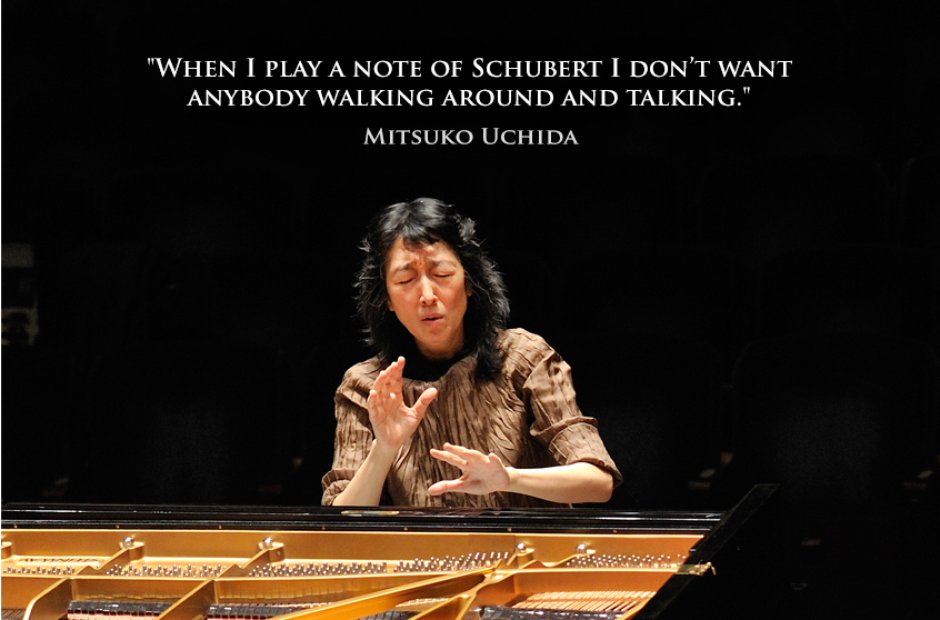
Like András Schiff, Mitsuko Uchida has an unerring ability to bring an intimacy and sense of a conversation to her performances of Schubert’s music, and she does so with clarity, commitment, and a clear sense of the narrative line, the lightness and lyricism, and also the roughness in his music. Uchida is very alert to Schubert’s idiosyncrasies, his chiaruscuro and elusive, shifting moods: beauty and delicacy, poignancy and loneliness abound in her performances of this composer whose music has been a lifelong presence for her.
Other fine Schubert players to explore include Shura Cherkassy, Rudolf Firkusny, Walter Gieseking, Rudolf Serkin, Wilhelm Kempf, Paul Lewis, Maria João Pires, Alexander Lonquich, Imogen Cooper, Krystian Zimerman, Murray Perahia, and of course Alfred Brendel. Of the younger generation, recent discoveries include Inon Barnatan, Yehuda Inbar, Pavel Kolesnikov and Samson Tsoy

An earlier version of this article appeared on the InterludeHK website


Support The Cross-Eyed Pianist

This site is free to access and ad-free, and takes many hours to research, write, and maintain. If you find joy and value in what I do, why not
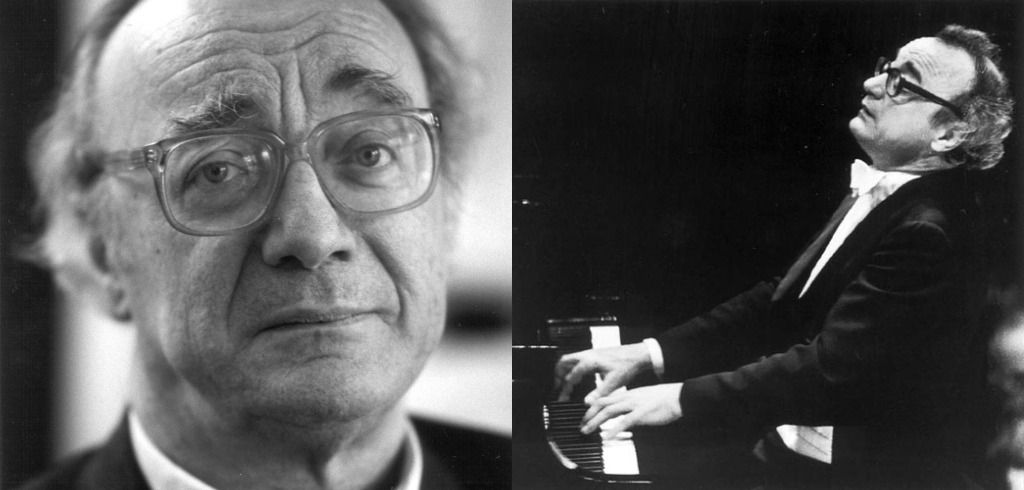
It’s hard to believe Alfred Brendel has died at the age of 94. He’s been a part of my musical landscape since I was a teenager, when my mother, who was an admirer of Brendel in concert and on LP, bought me an Edition Peters copy of Schubert’s Impromptus and Moments Musicaux to learn – music which has remained central to my own piano journey for over 40 years.

A highly regarded pianist whose performances and recordings of the core of the classical canon – Haydn, Mozart, Beethoven, Schubert and Liszt – are considered amongst the finest, Brendel retired from the concert platform in 2008 to focus on writing and lecturing. In addition to his impeccable, tasteful playing, his erudite and engaging writing on composers, music and the exigencies of the pianist’s life is intelligent and considered, the result of a lifetime spent in music.

What follows is just a handful of quotes from Alfred Brendel which offer some useful food for thought for musicians of all ages, whether amateur, student or professional.

If I belong to a tradition, it is a tradition that makes the masterpiece tell the performer what to do, and not the performer telling the piece what it should be like or the composer what he ought to have written.”

Brendel interviewed on the BBC

Fidelity to and respect of the score are the fundamentals of learning and performing music.

The score is the performer’s “road map”, with “signposts” to guide tempo, mood, expression, articulation, dynamics. These markings are also the composer’s personal “signs”, indicating and illuminating how he/she envisaged the music. At a simplistic level, these markings tell us “how to play the notes”, and we ignore them at our peril. Sometimes we have to make considered judgements in order to balance fidelity to the score with, for example, the possibilities offered by the modern instrument; such judgements are based on musical knowledge and experience. So while adherence to the score is fundamental, equally it is not the composer’s last word, as it were, and the score thus provides a jumping off point for interpretation, allowing the performer to bring their own personality and experience to the music and create performances which offer insights into the music while also remaining faithful to the text.

Brendel’s quote is also an important reminder to keep the ego in check when we play, so as not to obscure the music.

Recordings…have helped me to be better aware of my playing, to control it and listen to it more precisely

Here Brendel is talking about listening to his own recordings. Recordings are a very useful tool in practising, offering the musician an opportunity for self-critique, reflection and adjustment. And returning to recordings after a period of time, perhaps years in the case of Brendel, can also be enlightening as they offer a snapshot of where one was in one’s musical development/career and an opportunity to consider how one’s playing may have matured over time.

It should not be the purpose of listening to a number of recordings of a piece to observe what others have done and then play it differently to all of them because it’s me! The other end is to copy a performance that one loves as much as possible – one can learn from it….The most important source of performance is still the score.

Listening to recordings by others of the music you are working on is another useful practice tool, offering ideas about presentation, tempo, articulation and interpretation. As Brendel says, we should not seek to copy the great performers – imitation can sound contrived and artificial and anyway no one could truly imitate great pianists like Cortot or Argerich, for example. Equally, we should not seek to be different for the sake of our ego, but rather seek to be authentic and honest in our approach to and performance of the music. This also, neatly, comes back to Brendel’s comment about the importance of fidelity to the score and placing oneself at the service of the composer and the music, not one’s own ego.

This article first appeared on the Interlude.hk site, in an earlier version

More appreciation of Alfred Brendel here

A great deal is said and written about “integrity” and “honesty” in musical performance. For most people, this means respecting the score by following the composer’s markings and attempting, as far as possible, to interpret the composer’s intentions in the music. In addition, musicians who are praised for “honest” performances tend to play without surface artifice or flashy pianistic pyrotechnics; they attempt to “let the music speak”, free of ego, offer insights into the music, and communicate with the audience.

But there are other aspects to the musician’s honesty which are not immediately obvious to audiences, nor generally acknowledged within the profession, yet these can have a profound effect on a musician’s approach to their music making and their professional life.

For young musicians there is great pressure to conform to established ways of learning and presenting the music. A large part of this is concerned with repertoire, where student musicians or those at the beginning of their professional career may feel under pressure to play certain works to satisfy teachers, concert promoters or critics. (This is borne out when one considers the piano concertos which regularly appear in piano competitions and which are held up as “core works” which every young pianist should play or aspire to play.) Yet for some, these works may not suit them or be to their taste, and as a result they may not play them at their best. Being honest about the kind of repertoire one enjoys and wants to play will make practicing more productive and bring greater integrity to one’s performances. 

This is related to another aspect of the pianist’s honesty – accepting that one cannot “play everything”. Again, the notion that one should have broad musical taste which extends to what one should play is often inculcated during training. There are very few professional pianists whose repertoire extends from the Baroque to the present-day, the notably exceptions being Maurizio Pollini and Marc-André Hamelin (who seems to be able to play anything!). The British pianist Stephen Hough has been open about his reluctance to play the music of J S Bach, a composer whose oeuvre is revered and resides, for many, at the very heart of the core canon. In interviews Hough has admitted, to gasps of horrified disbelief, that he doesn’t feel a deep connection to Bach’s music. Such honesty is commendable in a world where choosing not to play music from the core canon is regarded by some as a form of musical heresy!

There is another more personal kind of honesty, which is to be admired, and that is when musicians open up about injury or performance anxiety. By doing so, they support others who may be similarly suffering, and being honest about one’s frailties helps break down the taboo surrounding musicians and injury. This goes even further in the case of pianist Lars Vogt, who in very public statements on social media and a particularly moving interview for Van magazine revealed that he has cancer and is receiving chemotherapy. It takes a special kind of honesty, indeed courage, to share such personal information, but for Vogt from the outset this was what he intended to do:  “This is a part of my life. It gives people the chance to take part in it. It was supportive, the amount of kindness I encountered….” (interview with Van magazine).

Allied to this is the ability to accept and admit that it is time to quit the concert stage. The great pianist Alfred Brendel, who retired in 2008, wanted to stop performing while still at the peak of his powers in order to pursue other activities, such as writing and lecturing. It takes a degree of personal insight and honesty to make such a decision; for others, the honesty of friends and colleagues may be the catalyst to encourage a musician to review their career and adjust it according to their age or personal circumstances.


This site is free to access and ad-free, and takes many hours to research, write, and maintain. If you find joy and value in what I do, please consider making a donation to support the continuance of this site

Make A Donation


The above letter appeared in the September/October issue of International Piano magazine. I felt compelled to respond thus, and my letter appears in the November/December issue:

I cannot let Mr Erauw’s simplistic and frankly disrespectful letter in issue No. 51 concerning Alfred Brendel go unchallenged. Although now retired from the concert stage, Mr Brendel is a highly regarded pianist whose performances and recordings of the core of the classical canon – Haydn, Mozart, Beethoven, Schubert and Liszt – are considered amongst the finest, and whose thoughtful writing on composers, music and the exigencies of the pianist’s life is intelligent and considered, the result of a lifetime spent with this music. Mr Erauw may not like Brendel’s playing, but that does not warrant such an unpleasant attack on the man, particularly while he is still alive – nor on his protégé Paul Lewis, a respected artist in his own right.

Mr Erauw seems to regard piano playing as some kind of Olympic sport where those who play the most, the widest repertoire, or who triumph in piano competitions are considered the “greats”. Brendel chose to devote himself to a relatively small corner (but by no means “narrow” if one considers the huge variety and complexities of writing by those composers with whom he is most closely associated) of the repertoire because these were the composers to whom he presumably felt the closest affinity. Many other “great” pianists have chosen this route and are renowned for their interpretations of, for example, Bach (Angela Hewitt, Andras Schiff) or Mozart (Mitsuko Uchida, Maria Joao Pires). Some pianists choose to devote a lifetime to performing and recording the works of only a handful of composers, with whom they feel a particular connection or affection, often revisiting works in concert series and recordings, in the knowledge that one never plays the same thing twice, and to offer a fresh perspective as one’s interpretation matures or changes over time. Such a long-standing intimacy gives one deep insights into the music and soundworld of that particular composer or composers, and as such these pianists’ interpretations and performances are often highly prized. Such is the case with Alfred Brendel.

Nowadays children and young artists are encouraged to play everything (and earlier and earlier) in the belief that this is what audiences and concert promoters crave. Personally, I am not convinced that having a huge variety of repertoire in one’s fingers necessarily brings insightful or compelling performances, but rather superficial Olympian displays of pianism and “style over substance”.

Mr Brendel’s life’s work should be celebrated and respected while he’s still with us.

Frances Wilson, October 2018