Mirrors & Echoes – Aïda Lahlou, piano

Moroccan pianist Aïda Lahlou makes an exciting and noteworthy recording début with Mirrors and Echoes, released by Resonus Classics on 19 September 2025.

Supported by Les Amis de Maurice Ravel, the album offers a vivid reimagining of Miroirs, placing it in dialogue with lesser-known piano miniatures from across the world to reveal surprising resonances and intertextual connections.

“Whether through spiritual texts, folkloric archetypes, or meditations on nature, each work in the album offers a moment of contemplation and self exploration.” Lahlou says. Drawing on Ravel’s own writing on Miroirs, she adds: “Ravel believed that music should act as a mirror, reflecting back the listener’s own interiority. This album seeks to transport the listener into that reflective space.”

Lahlou’s sensitive interpretation guides us through shifting sonic landscapes and themes of nature, spirituality, memory and transformation. The listening experience is not unlike a musical treasure hunt: Lahlou interweaves Ravel’s visionary five-movement cycle with rare piano miniatures from five continents—some rescued from obscurity, others newly arranged for this recording, like a Brahms motet or a 14th-century Andalucian song, each handpicked for its unexpected kinship with Ravel’s sonic world and its ability to evoke a sense of wonder.

My hope is that the album’s themes – nature, spirituality, and cross-cultural resonance – can inspire renewed awe for life and the richness of our world, especially at a time when it faces such urgent threats from war, pollution, and climate change.” (Aïda Lahlou)

Born in Casablanca and trained across Europe, Aïda Lahlou brings a multicultural lens to classical repertoire that feels both scholarly and deeply intuitive. The brilliant storytelling, weaving together works by Spendiaryan, Stevenson, Tansman, Garayev, Lecuona, and others, alongside arrangements of Brahms, Siloti and traditional melodies, culminates in a programme that is both exploratory and deeply personal. The result is a compelling artistic statement from a distinctive new voice in classical piano.

Mirrors & Echoes is released on CD and streaming on the Resonus Classics label.
Source: press release


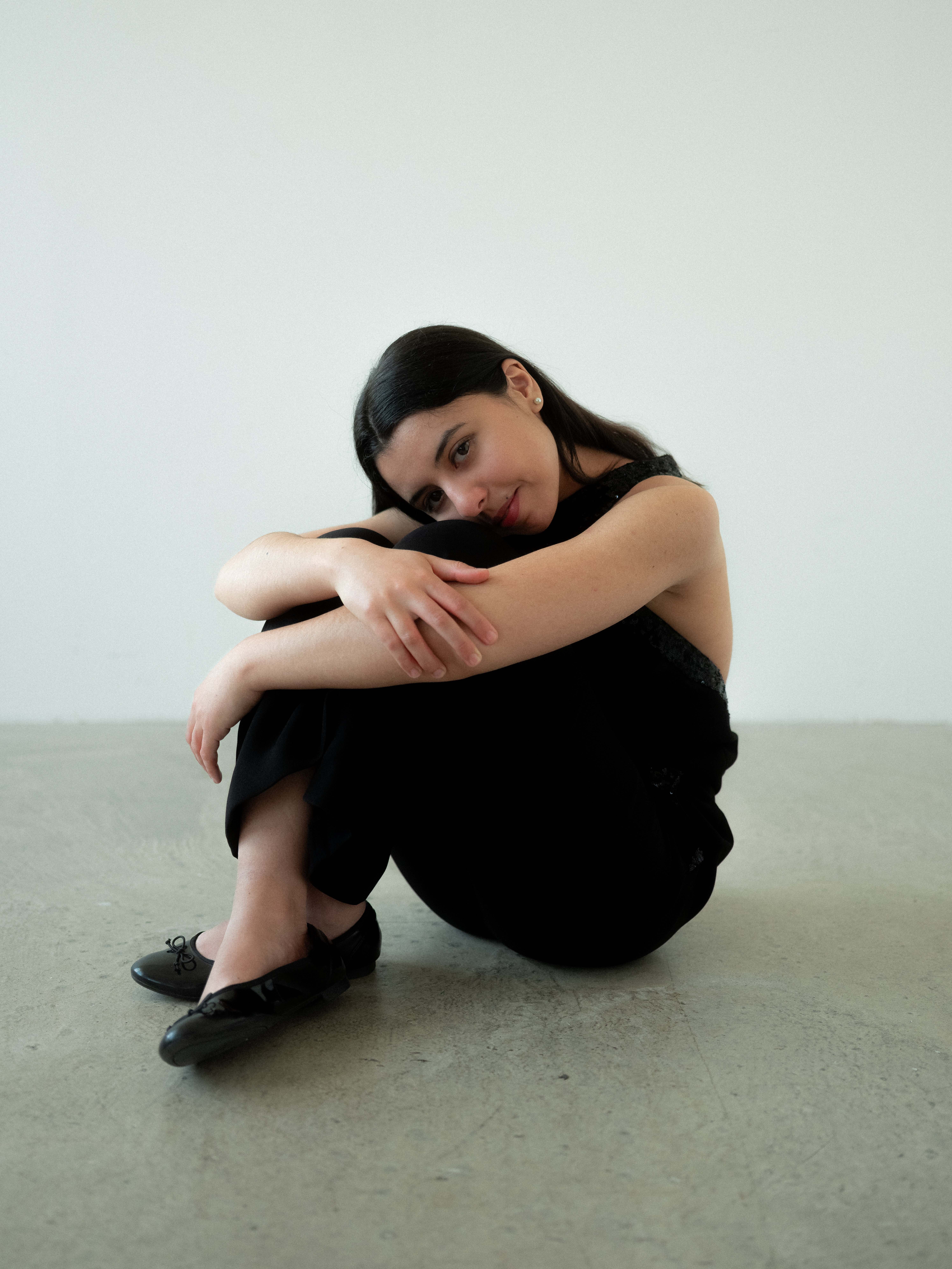
About Aïda Lahlou

Born in Casablanca, pianist Aïda Lahlou began studying piano at the age of five with Yana Kaminska, and won her first international competition at eight. She later studied with Nicole Salmon-Boyer (École Normale Alfred Cortot) before receiving a scholarship to attend the prestigious Yehudi Menuhin School in Surrey. After reading Music at St John’s College, Cambridge, she continued her musical studies at the Guildhall School of Music and Drama, studying with Ronan O’Hora and Peter Bithell, and earning a Distinction in Piano Performance (MPerf).

Aïda has performed internationally from a young age, with appearances in venues including Wigmore Hall (London), BOZAR (Brussels), Théâtre National Mohamed V (Rabat), and the Hall of Organ and Chamber Music (Baku). She has performed as soloist with the Orchestre Symphonique Royal, becoming the youngest pianist to do so at the age of twenty, and has performed alongside artists such as Vadim Repin, Roby Lakatos, and Alina Ibragimova.

She has received over 20 national and international awards, most recently the Philip Crawshaw Prize at the Royal Overseas League Music Competition. A passionate educator and communicator, she also directs opera, volunteers with environmental groups, and created an award-winning one-woman show blending classical piano with stand-up comedy.

Praise for Aïda Lahlou

“Aïda Lahlou is a pianist of imagination and poetry, not shy of exploring sonority, colour, or inner voicings.” — The Classical Source

“Vivacious playing.” — Gramophone

“Aida…played with a poetic sensibility of refined beauty and a sense of style and musical intelligence of aristocratic authority.” — Christopher Axworthy

Website: aidalahlou.com
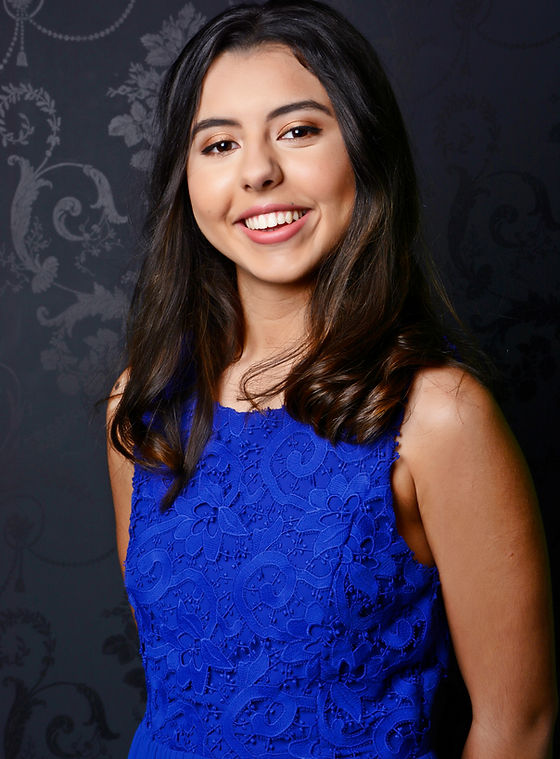
Guest post by Aïda Lahlou


During a practice rut that felt particularly more existential than others, I became obsessed with one question: ‘Can classical musicians ever graduate from their role as ‘craftsman/craftswoman onto that of creative artists? And if so, how may this be done?’

Turns out that this question was an urgent one and resonated with every strand of the classical music industry, from my student peers at London conservatoires to the musical stars of today. Famous pianist Kirill Gerstein posed this exact question to his guest, legendary artist Ai Wei Wei in one of his online seminars for the Krönberg Academy, where the latter had spoken at length about the responsibility of artists to shape the world through creation. I noticed a frustration amongst classical music interpreters of seemingly being some of the only artists deprived of the right to create. In reality of course they are not the only ones: classical actors, dancers, and interpreters of all types share this condition. The question is one of relevance: if classical performers are unable to create, how can they be instrumental in shaping culture and the world? How are they relevant as a cultural force?

For classical music performer, this inability to create in a poietic way (this means ‘to create something original’ as opposed to creating a variation on something that already exists, like an interpretation of a piece for example) is unhelpfully combined with a certain disdain of the profession towards behaviours that could bring attention to oneself, due to a conflation, in the minds of many people in the profession, of the presence or lack of interpretative integrity with certain onstage and offstage behaviours.

To be a classical performer is to be a professional interpreter. When interpreting a score, it is useful to forego one’s subjectivity and replace it by a more appropriate subjectivity instead in order to get closer to capturing what the composer had in mind. When we read Beethoven it is useful to park our most immediate instincts for a moment and try to figure out what Beethoven might have meant by his markings using not our contemporary understanding of the markings but a ‘historically informed’ (for lack of a better expression) reading of those same markings. In a way, at the point of exegesis of the musical text, this process is indeed one of – momentary – self-effacement. But in classical music, for some reason, we have collectively decided to performatively self-efface in a more general sense, ad absurdum, to show our audience just how committed we are to the process of conscientious interpretation.* Thus, anything that a performer does that might be considered to bring too much attention to themselves, such as flashy concert clothes or unconventional programming will elicit suspicion on their ability to sufficiently remove their ‘self’ when they sit to study a score. If you don’t believe that this is a common amalgamation, read this disturbing Norman Lebrecht article about how Yuja Wang would do herself a favour by dressing more soberly: people would then be able to recognise her for the true master that she is. If she were to do that, according to him, she ‘could be a sensation’ (!).

It’s difficult to say for sure whether classical musicians are generally less free to express themselves than classical actors or dancers. Take political views, for example. New York Times

journalist Zachary Woolfe describes pianist and activist Igor Levitt by contrasting him to the other ‘classical artists, [who] by and large, remain publicly reticent about their politics — this isn’t Hollywood’. Whilst actors are considered free, classical dancers seem to be in a similar situation to classical musicians: choreographers talk about things they care about aside from dance, but very few dancers do. The unfortunate consequence of classical music’s effacement ideal is that many classical music interpreters feel not only that they cannot create but also a frustration about not being able to express their full selves, on and offstage, or they might be thought less of.

As I ventured on this strange undertaking of combining Stand Up comedy with straight, serious classical piano performance, I found that talking to an audience about your quotidian as a classical musician in a funny way does much more than get them to feel more engaged. It makes them see you as a person. It means that people don’t just see you as the vehicle for a moving musical message, but they also see you: a partaker of the human condition, which I think has equal potential to move as ultimately we are all vulnerable little chickpeas trying to navigate the huge harira soup that is the world, and it is moving to see another person like us striving, trying, struggling. Just like classical music masterpieces have the power to tear us to pieces telling us things about ourselves that we didn’t even know (Robert Levin’s beautiful phrase), stand up comedy has the power to reveal aspects of ourselves, feelings and emotions that were a part of us all along but we had not noticed until now. It shows us that despite our differences, we are all moved or amused by the same things, and that many of the things we love and care about are the same. Laughing through difficulties gives us the strength to resist until we might see another happy day. Sublimation of pain is something that is very much shared between these two artforms.

On a separate note, breaking free of concert conventions for this show did make me feel like I was creating on a poietic level, and personally much more aligned with my work. I hope that the classical music world will become more open to making this kind of creation for available interpreters should they choose to (as opposed to reserving it for composers), as this will benefit both performers who will be able to be more fulfilled, and audiences who will benefit from the authenticity of these new exchanges. At the moment, it seems that the industry favours a model that seeks to create highly reproducible events so agents can rotate their roster artists from concert to concert without anyone noticing. It’s about time we recognise what we have to gain by granting performers more agency in how they present the pieces that they are interpreting.

*Musicologist Nicholas Cook talks about this in his book Music: A very short introduction (Oxford: 2000

Aïda Lahlou will be performing her Stand Up Comedy Meets Classical Piano and her Mirrors: A Recital with a Story shows in London this October as part of the Bloomsbury Festival (14/10 and 21/10 respectively). Tickets on sale here.


Aïda Lahlou is an up-and-coming Moroccan pianist and one of the most exciting talents of her generation.



Following a BA in Music at St John’s College, Cambridge,  throughout which she studied with Caroline Palmer, Aïda is currently enrolled for a Masters in Piano Performance at the Guildhall School of Music and Drama, studying with Peter Bithell and Ronan O’Hora.

Read more

Aïda blogs about art, lifestyle, and creativity as The Thought Fox on Substack