It’s hard to believe Alfred Brendel has died at the age of 94. He’s been a part of my musical landscape since I was a teenager, when my mother, who was an admirer of Brendel in concert and on LP, bought me an Edition Peters copy of Schubert’s Impromptus and Moments Musicaux to learn – music which has remained central to my own piano journey for over 40 years.

A highly regarded pianist whose performances and recordings of the core of the classical canon – Haydn, Mozart, Beethoven, Schubert and Liszt – are considered amongst the finest, Brendel retired from the concert platform in 2008 to focus on writing and lecturing. In addition to his impeccable, tasteful playing, his erudite and engaging writing on composers, music and the exigencies of the pianist’s life is intelligent and considered, the result of a lifetime spent in music.
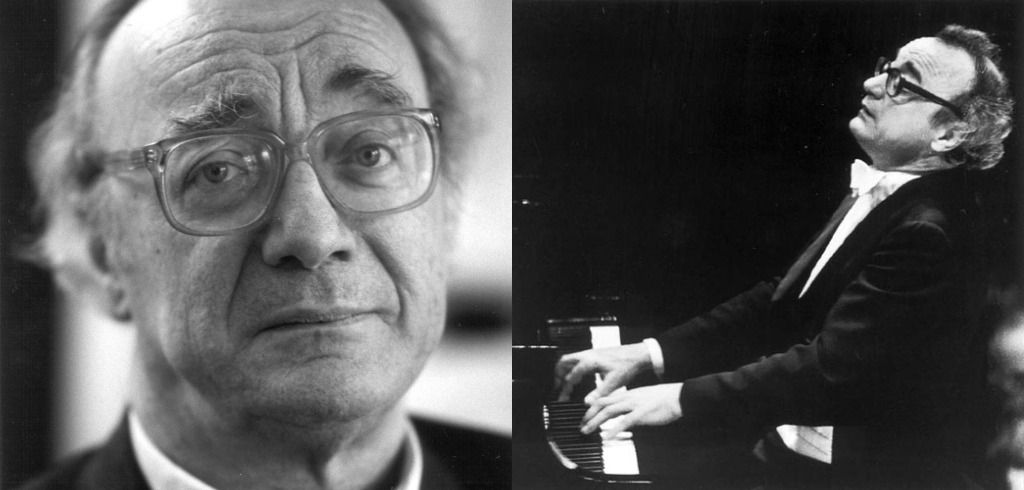
What follows is just a handful of quotes from Alfred Brendel which offer some useful food for thought for musicians of all ages, whether amateur, student or professional.

If I belong to a tradition, it is a tradition that makes the masterpiece tell the performer what to do, and not the performer telling the piece what it should be like or the composer what he ought to have written.”

Brendel interviewed on the BBC

Fidelity to and respect of the score are the fundamentals of learning and performing music.

The score is the performer’s “road map”, with “signposts” to guide tempo, mood, expression, articulation, dynamics. These markings are also the composer’s personal “signs”, indicating and illuminating how he/she envisaged the music. At a simplistic level, these markings tell us “how to play the notes”, and we ignore them at our peril. Sometimes we have to make considered judgements in order to balance fidelity to the score with, for example, the possibilities offered by the modern instrument; such judgements are based on musical knowledge and experience. So while adherence to the score is fundamental, equally it is not the composer’s last word, as it were, and the score thus provides a jumping off point for interpretation, allowing the performer to bring their own personality and experience to the music and create performances which offer insights into the music while also remaining faithful to the text.

Brendel’s quote is also an important reminder to keep the ego in check when we play, so as not to obscure the music.

Recordings…have helped me to be better aware of my playing, to control it and listen to it more precisely

Here Brendel is talking about listening to his own recordings. Recordings are a very useful tool in practising, offering the musician an opportunity for self-critique, reflection and adjustment. And returning to recordings after a period of time, perhaps years in the case of Brendel, can also be enlightening as they offer a snapshot of where one was in one’s musical development/career and an opportunity to consider how one’s playing may have matured over time.

It should not be the purpose of listening to a number of recordings of a piece to observe what others have done and then play it differently to all of them because it’s me! The other end is to copy a performance that one loves as much as possible – one can learn from it….The most important source of performance is still the score.

Listening to recordings by others of the music you are working on is another useful practice tool, offering ideas about presentation, tempo, articulation and interpretation. As Brendel says, we should not seek to copy the great performers – imitation can sound contrived and artificial and anyway no one could truly imitate great pianists like Cortot or Argerich, for example. Equally, we should not seek to be different for the sake of our ego, but rather seek to be authentic and honest in our approach to and performance of the music. This also, neatly, comes back to Brendel’s comment about the importance of fidelity to the score and placing oneself at the service of the composer and the music, not one’s own ego.

This article first appeared on the Interlude.hk site, in an earlier version

More appreciation of Alfred Brendel here
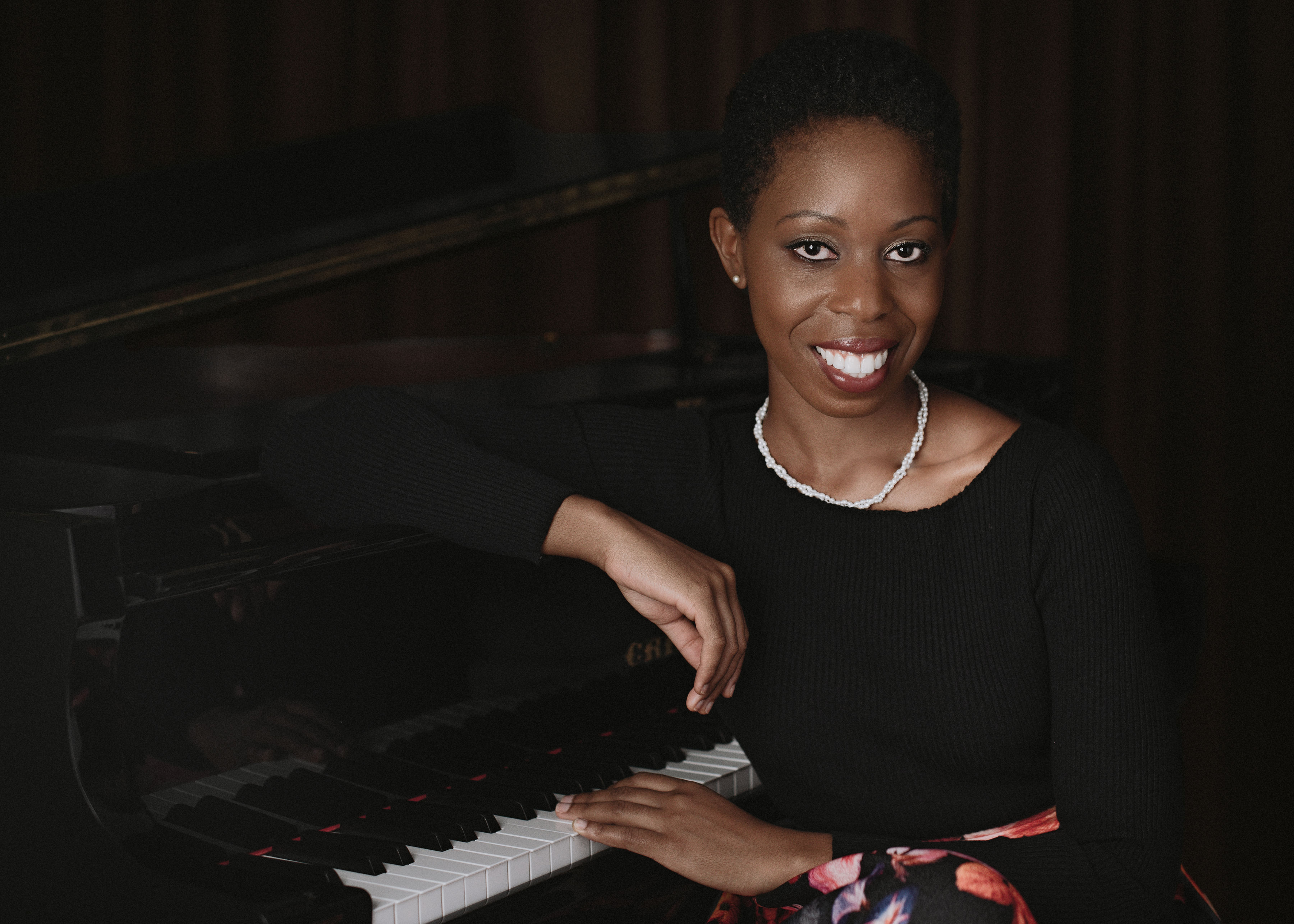
Guest post by Samantha Ege

“Remember it’s about connection not perfection.”

Those were the words of my coach and mentor Deborah Torres Patel. I had just told her about one of my first international lecture-recitals. The lecture had gone well, but the recital had been an absolute disaster. Actually, that wasn’t true—it wasn’t a disaster at all. Yes, my playing had been more nervous than usual, but “disaster” was definitely an exaggeration. I had received sincere compliments, encouragement and gratitude for my scholarly and pianistic contributions. But in my post-performance ritual of dramatizing the worst, re-imagining all the ways in which I could and should have played perfectly, and re-living all of the ways in which I did not, it was an absolute disaster.

About a year after this experience, a video surfaced. It was the trailer for the 2018 Women Composers Festival of Hartford where my lecture-recital had taken place. The trailer contained a short excerpt from my recital that cut to the lyrical second theme of Florence Price’s Sonata in E minor (first movement). It wasn’t bad! Festival Director Penny Brandt showed me the yet to be released full film that featured more of my playing. There was no sign of the disastrous performance I thought I had delivered. In fact, I heard my playing quite differently to how I had experienced it in the moment. Time had allowed me to zoom out and actually appreciate what I brought to the music in that performance. But I wished I could have felt this appreciation back then, and not just in retrospect.

I thought about Deborah’s words again. “Connection not perfection.” What kind of anticipation might I have built pre-performance if I had truly prioritized communication over self-consciousness? What kind of delivery might have unfolded if I had centred my connection to the music over the perfection of the notes. How might I have experienced the immediate aftermath of the recital if I had fully absorbed the audience’s response rather than becoming entangled in a web of personal disappointment? The idea of connection bore so many implications and in this moment of reflection, I was inspired to dig deeper and explore its many layers.

As a pianist-scholar who champions music by women, it is my goal to do the music justice and leave a lasting impression upon the listener. As much as I enjoy the academic side of writing and research, I feel that my work is not complete until I bring the music to life through performance. In those moments, I hope to perform in a way that captures how I felt when I first heard Althea Waites play Florence Price, or Virginia Eskin play Vítězslava Kaprálová because it was connection rather than perfection that drew me in and inspired me to make this repertoire my own.

As I look back on past performances, I try to apply what I wish I had known or felt then to the present. There is something so daunting, yet so liberating about playing repertoire that doesn’t carry the weight of heavily scrutinized performance histories. Indeed, the daunting side always seems so readily present while the liberating side requires a lot more pursuit. Still, they go hand in hand: the repertoire is daunting exactly because it is liberating. In championing under-represented composers, I have found incredible freedom as a pianist; oftentimes, my performances present first-time listening experiences for many, and even world premières—no pressure! But I know that this freedom will not transpire in the moment of performance unless I remember “it’s about connection not perfection.”


Samantha-16Samantha Ege is a British scholar, pianist and educator. Her PhD (University of York) centres on the African-American composer Florence Price. As a concert pianist, Ege’s focus on women composers has led to performances in Singapore, Australia, the UK and the US Ege has also championed Florence Price’s repertoire alongside violinist Er-Gene Kahng with duo recitals in Singapore, Hong Kong and the US.

Ege released her debut album in May 2018 with Wave Theory Records, entitled Four Women: Music for solo piano by Florence Price, Vítězslava Kaprálová, Ethel Bilsland and Margaret Bonds. The album featured the world première recording of Bilsland’s The Birthday Party, which led to Ege preparing an edition of the suite, now published by Faber Music. Four Women has been described as “an impressive collection…performed with virtuosic assurance.” Ege has also been commended “for her goal to bring the music of these composers to greater public awareness.”

Website: www.musicherstories.com

hammershoi_interior_with_woman_at_piano_0

Guest post by Rhonda Rizzo

It’s an average practice day and I’m at the piano—just me and the score—and I’m staring into the unforgiving mirror that is making art. I say unforgiving because every musical wart, every lazy line, every single inadequacy is reflected right back to me in the way I play or don’t play each phrase. I once had a trained psychologist as a piano student. After three months of lessons, she told me playing the piano is harder than being in therapy.

Practicing is hard work. Performing is hard work. Creating art is hard work. I know of very few professions where you’re required to search your soul every single time you do your job. And then there are the outside critics—the former teachers who’s voices still sound in our heads, the critics, the Classical “high temple” or “museum” that fills performers with “should” and “have-to” and “only-one-right-way” judgments that further complicate the process of making music. It’s a wonder so many of us bother to go to work every day.

And yet, along with thousands of fellow musicians, I keep returning to the piano and to the music that challenges every part of my intellect, instinct, training, and skill. I do it because it’s oxygen for me. I do it because it’s something that I can never conquer because at this stage of my life, conquering the piano means conquering myself. I do it because the music has so much to say to me and I humbly believe that I may have something of my own to say through the music I’m privileged to play.

Don’t expect applause. It’s what I’ve learned from years of trying to please all of the people all of the time. I’ve never been able to please everyone and I never will. One of the gifts of being a “musician-of-a-certain-age” is that I no longer expect that I can please everyone. Of course, that’s what I think on my more enlightened days. The not-so-fun days are the ones where every negative review, every criticism, every botched performance comes back and settles on the piano bench next to me, howling my failures in my ear like a bunch of harpies. Those are the days I have to remind myself: don’t expect applause.

Not expecting applause is a gift you give yourself. For me, it’s given me the freedom to survive failure. Surviving failure gave me the freedom and strength to simply disregard the judgment of naysayers because I know failure won’t break me. Knowing this gave me permission to trust my musical instincts and my own voice.

Not expecting applause has made me a more confident performer because I’m not thinking “please like me, please like me” every time I step on stage. I play. I do my best to communicate the music. I play some parts well. I smudge some bits here or there. Maybe I have one of those magical nights when the audience is breathing every note of the piece with me. Maybe it’s the “gig from Hell” where anything and everything that can go wrong does go wrong. Either way, when I don’t expect applause, I’m less tossed around emotionally by the highs of a great performance or the lows of a bad.

Don’t expect applause. When I take my own advice, I’m free to disregard the ill-fitting interpretations of others and find my own custom-made sense of the music. I’m open to playing with the music—and maybe even messing it up a bit—as a way to get beyond the stiffness of the notes to the warm, living core of the composition. Most importantly, it allows me to move beyond soul-killing, rigid perfectionism and embrace the wild, vibrant, unpredictable dance of co-creating a work of art.


Rhonda (Ringering) Rizzo is the author of The Waco Variations. She has crafted a career as a performing and recording pianist and a writer. A specialist in music that borrows from both classical and jazz traditions, Rizzo has released four CDs, Made in America, Oregon Impressions: the Piano Music of Dave Deason, 2 to Tango: Music for Piano Duet, and A Spin on It.  As both a soloist and a collaborative artist, her performances include several allclassical.org live international radio broadcasts, Water Music Festival, Central Oregon Symphony, Oregon Chamber Players, Aladdin Theatre, Coaster Theatre, Ernst Bloch Music Festival, Bloedel Reserve, Newport Performing Arts Center, Skamania Performing Arts Series. In addition to her work as half of the Rizzo/Wheeler Duo, with pianist Molly Wheeler (www.rizzowheelerduo.com), Rizzo records and writes about the music of living composers on her blog, www.nodeadguys.com

Her numerous articles have appeared in national and international music magazines, including American Music Teacher, Clavier, Piano & Keyboard, and Flute Talk. Her novel, The Waco Variations, was released in the summer of 2018 and can be found on www.amazon.com.  


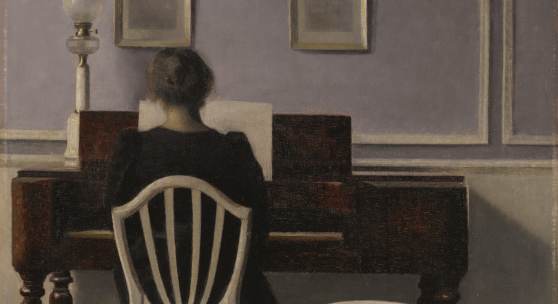
(Image: Vilhelm Hammershøi (1864 – 1916) Interior with Woman at Piano)

Guest post by Simon Danell

Memorizing has, for years, been very fascinating to me. I think that’s partly due to the fact that it was such a struggle for me in the beginning, whereas now it seems like a very natural thing to do. It’s something most of us haven’t really been taught, but expected to figure out by ourselves – if we don’t learn the piece by heart, we’re usually just told to practice more.

I find it interesting how such a crucial part is just left for fate do decide.

When starting to play piano, memorizing is usually not such a big problem. The songs or pieces are short enough to learn just by playing them through a couple of times per day. But once we enter even slightly more advanced repertoire, that way of learning is suddenly of no use, and we tend to find ourselves fiddling around on the keys with an increased heart rate, and with the words “Oh, sh*t” repeating in our heads.

I was no different. I easily came through the harmonically simple and motorically repetitive pieces without any difficulty, and putting my head on auto pilot was my idea of a perfect concert – I’d get up on stage, bow, sit down and start to play. Things would then turn black, and I would come out of the darkness a few minutes later once the last note is played. “How did it go? Oh, just amazing, I didn’t even have to think!” Then it came….. I went up on stage, bowed, sat down and things turned black. “But what was that note again?“, and it all changed. I came out of the darkness, but I wasn’t even half -way through the piece. Desperately I tried to find the right notes to play, my heart rate increased and “Oh, sh*t!” was on repeat in my mind.

Luckily, it was on a sort of bad piano, and the audience was a bunch of classmates who just wanted to go home. They were probably coughing and yawning a lot, so it was surely because of that, and nothing I had done wrong. All I had to do was to practice some more and just focus a bit more next time.

The next concert came – I went up, bowed, sat down.. all just routine by now. The only difference was that this time, I’d be Focused! “Focus, focus focus focus… fo.. f…. oh, sh*t!

These slips went on. I could play the music perfectly at home, and almost as good in the lesson room, but once on stage, it all just fell apart. I went on to practice 8-10 hours per day, but still with the same result in concert.

I got some tricks from my teacher, like “Think of the harmonies” or “Practice more slowly, and with separate hands!“, but that rarely made any actual difference.

The real difference came when I started studying at actual music school, when I was about 18, where other students also had to practice. The rooms quite quickly became full, and there was a lot of time spent just waiting. As the pieces had to be learned anyway, I started by just reading the score, and tried to imagine what it looked like. I read a line, or a phrase, closed my eyes, and tried to play it in my head. Not only was I unable to remember the notes, I barely remembered what it sounded like! It was such an epiphany that I knew it would change my musical life. I finally started thinking about practicing. How would I ever be able to play anything if I had no idea what I was actually playing? From then on I started practicing away from the instruments at least an hour every day. I tried to not allow myself to practice at a piano before I had a very clear idea in my mind of how it was going to sound once I started playing.

It became clear to me that the motoric memory (or muscle memory, as some call it), the thing I had used for so long, was actually very unsafe and unstable. I found that the other senses have an impact on our memory too – the aural and visual, and the intellectual part – and how they, unlike the motoric memory, really needed to be worked on properly and won’t just come by themselves.

I started analyzing my performances, and what I was thinking during my playing. As it turned out, I was thinking almost exactly the same things when I was performing as when I was practicing, and once the muscle memory turned off, I had no safety-net since I didn’t make one when I was practicing. In some aspects, practicing shouldn’t really be that different from performing.

Once I started practicing everything I had to know on the stage, all the memory slips disappeared almost over night. I finally realized not only to focus, but on what I should focus. If I noticed that my mind was drifting on a certain spot, I practiced to know what to think on that spot (the notes, the character, to sing the melody…) to train myself to think about the same thing during the performance. Or if I noticed that I worried about remembering the notes in a certain phrase, I practiced every voice carefully in my mind, both the notes and the music, before I played them, and followed each of them very attentively when I played. Then I would have created a safety net, in case I would need it in public.

I practiced very attentively like this for some time, to make sure I would cover the full piece – I remember once when I was performing the Symphonic Etudes by Schumann and, with full focus, was able to follow everything, down to pretty much every single note – but then got into the next problem….

You. Can’t. Make. Music. If. It. Never. Ever. Flows. … Which is what happens if you think on a note-to-note basis.

It was an obvious improvement from being neither detailed nor attentive, but it was a few steps too far. I tried to alternate between being in constant control, with often playing through to put everything in a certain perspective.

Now I feel that I can be both while performing. If I feel I am under control, I can let go and let the music flow by itself, and can just as easily go back to regain my focus if it’s starting to fall apart.

This article first appeared on the website of pianist Simon Danell.