How long have you been playing the piano? 

33 years, since age 12, sparked off by a friend in the first year at Lancaster Grammar School. I didn’t so much as touch a piano before this and took little active notice of any music, although I remember my father playing records of ‘Your Top 100 Tunes’ and Beethoven symphonies and concertos throughout my childhood. I have no doubt it laid a subliminal seed of love for classical music.

What kind of repertoire do you enjoy playing, and listening to? 

I enjoy listening to more styles than I play. For example the style of Bach ‘eludes’ me, but I do enjoy listening to him and I always play a handful of the 48 for the excellent musical and technical discipline of it. I like everything from Clementi to living 21st century composers, with most of the romantics and certain 20th C composers (Kabalevsky) being particular favourites. I’m particularly keen on Grieg because I love that type of culture and country too, and he’s so accessible in ‘easy bites’ yet can be challenging.

I enjoy listening to various Jazz styles, and like to play Scot Joplin (excellent technical discipline and easily accessible style) but true Jazz mystifies me to play. I think movie music is a tremendous medium and I enjoy making my own transcriptions of it as a counterpoint to the ‘serious stuff’. The act of doing this is great for musicianship, having to be sensitive to elements of harmony, melody, texture, instrumental colour and what techniques are idiomatic for piano.

How do you make the time to practise? Do you enjoy practising? 

I’m fortunate in that I effectively work only part-time as a freelance piano teacher, and am a carer for my Down Syndrome son. I can quite easily get on with practise when he’s playing on the floor nearby, and even if my other young son is in the house. In this way I did 3-4 hrs per day for the last several years, but have reduced it a lot lately – wanting to give them more attention before they grow up! I manage at least an hour nevertheless. I’d describe it as enjoyable with a strong element of frustration!

Have you participated in any masterclasses/piano courses/festivals? What have you gained from this experience? 

 At college (RWCMD) I had masterclasses with Michael Ponti and Peter Donohoe. I played the Polonaise in A flat for Peter, and even today vividly remember his key pieces of advice and his demonstration of it. I think there is nothing so useful as simply ‘hearing’ a top pianist up close. Nowadays I play in most of the Eccle Riggs masterclasses, 3 times per year. It focuses the mind on preparing repertoire and is a very intensive dissection of whatever qualities are lacking in my playing (plus the odd good thing!).

If you are taking piano lessons what do you find a) most enjoyable and b) most challenging about your lessons? 

I have never taken lessons as such since finishing music college at 24, apart from the above masterclasses. I’m now 45 and feel I should be artistically mature enough to know what I’m doing, with the prompts from those top professionals at the classes and self-discovery being enough. If they’re not, then I believe nothing much else would help! It ultimately has to come from within.

What are the special challenges of preparing for a piano exam as an adult? 

I haven’t done any since my LTCL and LWCMD at college, but contemplate an FTCL, or FRSM or something. I’d be much more painfully aware of any shortcomings and probably know in my heart whether I was good enough before I even stepped in there. That’s the difference.

Has participating in masterclasses enhanced any other area of your life? 

Yes. Simply meeting many interesting new people, but also seeing that certain top professionals are very human! Not only that they share struggles or mishaps of their own, but they are rounded people with hobbies outside music! In fact this is probably vital to being a rounded musician.

Do you play with other musicians? If so, what are the particular pleasures and challenges of ensemble work? 

Only a bit (should ideally do more!) – the solo stuff demands so much time and is the ultimate medium for me, the piano being the solo instrument par excellence. I find accompanying a singer particularly challenging, and very effective in drawing out more musicianship from me (supporting a melody line, rhythmic discipline with flexibility, learning to ‘sing’ on the piano). It’s a challenge and a pleasure at the same time to have to ‘give and take’ on ideas for interpretation. This is one reason why I prefer solo playing – I can have it my own way! I feel the piece is mine, regardless of how good my performance is or isn’t.

Do you perform? What do you enjoy/dislike about performing? 

Yes, as much as I can get and/or find time to prepare for!  I enjoy the feeling of sharing my ideas on great music, and the intensity of the experience. There’s the allure of ‘risk sport’ about it, especially as I try to memorize everything. The fear of forgetting it my main dislike, which takes a lot of emotional energy (especially leading up to the performance), but that’s kind of a masochistic pleasure too.

What advice would you give to other adults who are considering taking up the piano or resuming lessons? 

Do it, and don’t be negative about how much talent you think you’ve got – much of it is just a matter of practise, working on the right things and loving the music – but don’t let it consume you either!

If you could play one piece, what would it be? 

It always was the Liszt B minor, but I learnt it last year, although it’s really still a work in progress (probably always will be!). The Chopin Etudes (as a cycle), as I think if you can play those you can play anything. They’re an acid test of just about any aspect of technique you could need. Those things that they don’t give you, I’m sure could be inferred from the lessons learnt in doing them. I see them therefore as nothing less than my nemesis and/or the gateway to virtuosity.


Phillip Fawcett LWCMD LTCL
Piano Week is a new non-residential piano course for children and adults, set in the beautiful north Wales countryside near Bangor.

The initiative of pianist Samantha Ward, Piano Week offers courses for pianists of any age and ability. Participants will have the opportunity to perform on a beautiful Steinway grand piano in Powis Hall at Bangor University, as well as benefitting from one-to-one tuition, masterclasses and faculty recitals. The area also offers an abundance of other activities, from hill-walking in the stunning Snowdonia National Park, dry-slope skiing and go-karting.

Faculty includes: Samantha Ward, Chenyin Li, David Daniels, Maciej Raginia, Sachika Taniyama, Vesselina Tchakarova. The course is sponsored by Blüthner pianos.

Dates: 5th – 9th August 2013

Course fee: £395 per participant

Further information & bookings: www.pianoweek.com

www.samanthaward.org

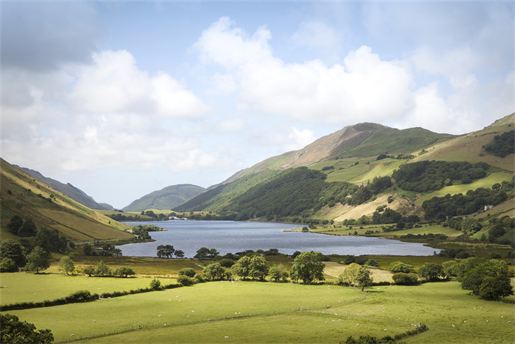
Tal y Llyn, Snowdonia, North Wales

I’ve just attended another of my piano teacher’s excellent 3-day courses for advanced pianists. As regular readers of this blog will know, I am a great fan of my teacher’s courses, which provide a supportive, friendly and inspiring setting for study.

The course is run as a series of masterclasses, offering plenty of input from other participants and important one-to-one tuition with Penelope Roskell, who is a highly-skilled and experienced teacher. There are regular breaks which give everyone the opportunity for “piano chat” and on the last day, we have an informal concert followed by a drinks party.

One of the things I love most of all about these courses is the transforming effect they can have on people who may arrive on the first day anxious and uncertain what to expect. Penelope is a very patient and sympathetic teacher, who is able to draw out the very best in people. One of this year’s participants was on the Autumn 2012 course, an anxious player who gradually unwound as the weekend progressed. It was wonderful to see how far she has come, following private lessons with Penelope in the intervening months, and to hear her playing with greater confidence and poise.

Some people come on the course simply to run repertoire by a friendly audience ahead of a concert. Others are preparing for diplomas, competitions or auditions. For me, this course was to encourage me to pick up some new repertoire following my Diploma. I felt very flat in the days immediately after the exam, and the need to prepare some music for the course was just what I needed to get me playing again. I wanted to run some pieces by my teacher to make sure I was heading in the right direction with them. A number of my pianist friends were attending the course this time as well, so in many ways it was a social event for me and the chance to catch up with friends and colleagues. And make new friends too.

As always, the range of repertoire was very wide, from Bach to Satoh (a contemporary Japanese composer), and the standard very high. But there was never a feeling we were in competition with each other. We were there to share repertoire, offer positive feedback on one another’s playing, and learn. I have compiled a playlist on Spotify of all the pieces we played (except for Fazil Say’s transcription of Mozart’s ‘Rondo Alla Turca’, which should be available on YouTube).

by Catherine Shefski

As adult pianists we all know how hard it is to carve out practice time every day. Our days slip by  full of errands, phone calls, appointments and chauffeuring kids. Sometimes whole weeks or even months fly by while we’re bombarded with family emergencies, travel, or job obligations. But we’re constantly nagged by that inner voice that tells us that consistency and time at the piano are required for steady improvement.

For the past few months I’ve been very lucky to have a lull in activity on the home front. With my daughter happily off studying abroad and two sons away at college, I chat with them often and know that they are safe, healthy and independent. For five months I was able to fill my non-teaching hours at the piano preparing for each week’s Go Play Project recording. But now things are heating up. I’m getting ready to launch a new website and learning everything I can about marketing, branding and book proposals. I’m preparing students for their annual National Guild Auditions and Spring recitals. And I’m getting excited about my daughter coming home to finish high school and start the college search and application process. My time at the piano these days is limited.

When I do find the time to sit down at the piano I aim for deliberate practice. But I also find that more often than not, simply finding the easiest way to play a difficult passage is often the best way. The shape of the phrase leads me to find the best fingering or hand movement. Awkward hand positions are  made more comfortable by simply moving the hand into the black keys. Large leaps are spot on when   I move my arm in an arc and look before I leap. Cantabile comes from the fingertips along with a freely suspended arm and close listening. Fast octaves? For me it’s all in the rebound. Playing the piano is not hard work. It’s not about getting in shape or building muscles. In fact it’s the opposite of the “no pain, no gain” rule of sports. When you’re doing it right, it feels good.

So to all those pianists who are bombarded by life’s obligations, take heart. Piano playing is not always about how regularly you practice or how long you practice or even how deliberate you practice. It just might be  about grabbing that half hour before a student arrives at the door, or those first minutes of daylight with your morning coffee, and ‘coming home’ to the piano. It’s about sinking into the keys and expressing yourself through your fingertips. It’s about deep listening and communication. And in the end it just might about the child leaving home for college or the military. Or about the recent break-up or new romance, the death in the family or the new baby’s birth.


Catherine Shefski is pianist, teacher and blogger who is currently recording one piano piece a week for The Go Play Project.


