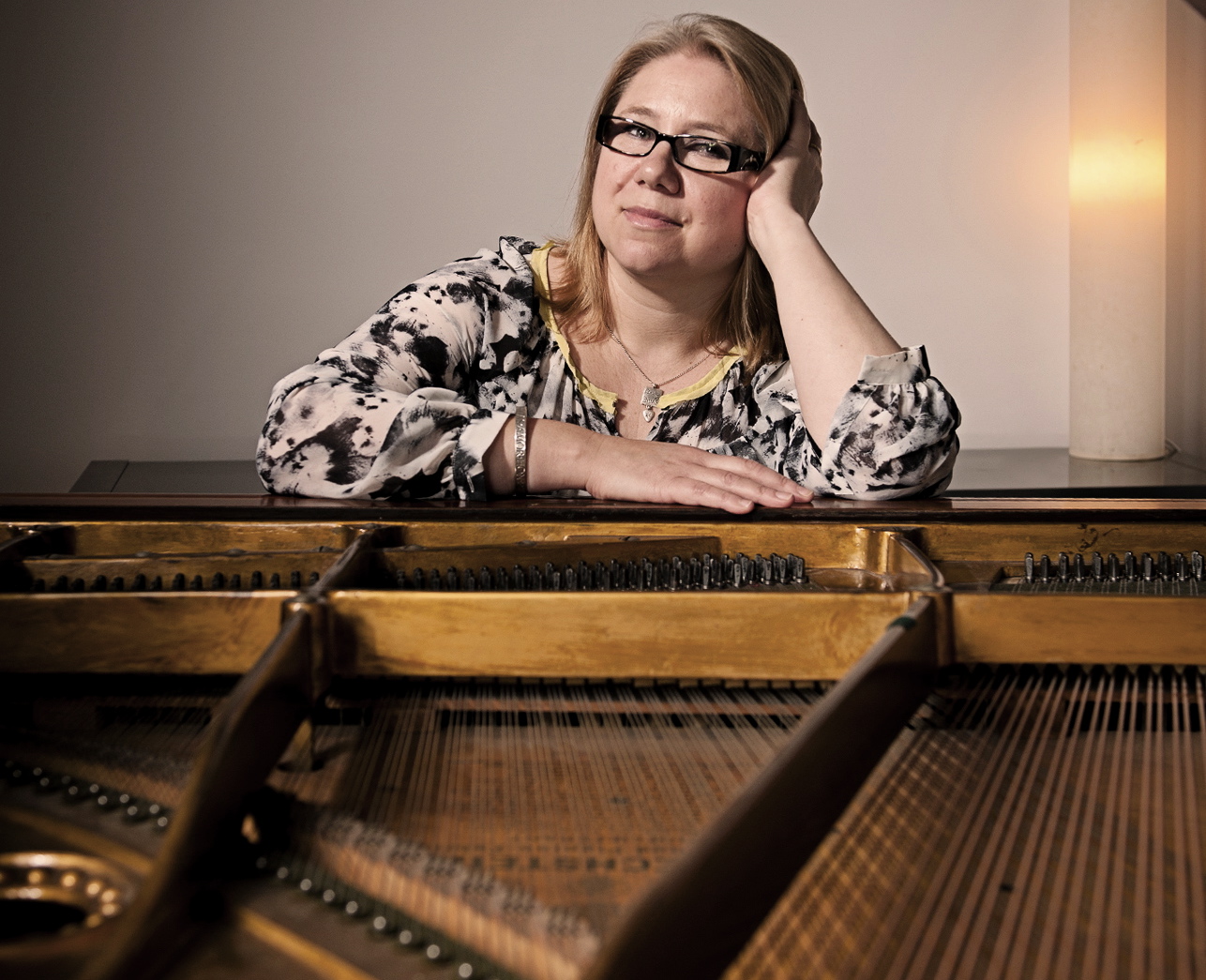
To coincide with the release of her new recording of Mozart Piano Sonatas Vols 2 and 3, I caught up with pianist Orli Shaham to find out more about her influences and inspirations and why one of her most treasured possessions features Snoopy the dog…..

Who or what inspired you to pursue a career in music and who or what have been the most important influences on your musical life and career?

It was my parents and my older brothers who inspired me to start music more than anybody else. My parents listened to a lot of music, and my older brothers were just enough older that they were beginning to be accomplished at instruments when I was coming into consciousness. I just really wanted to be part of that and be able to play with them and do the same sort of things that they were doing. That was very much the source of the initial inspiration. I also went to an untold number of conservatory concerts to listen to my brothers perform, and then also heard the 49 other pianists or violinists who were on the same program. That was hugely inspirational too.

A big part of my influences are the people in my life who also love music and who also play music. For me, that’s changed over time from being my elders to being my children and my students. I find them all incredibly inspiring.

Which performances/recordings are you most proud of?

Ultimately, it’s always the last project you just finished that you’re most proud of, because on some level you feel like it’s better than everything you’ve done before. I have certain highlights throughout my career that I think back on quite fondly. At the moment, I’m riding high on recording the complete Mozart sonatas. That was a monumental mountain to climb. I loved every minute of it, and I learned so much from doing it.

Which particular works/composers do you think you perform best?

I would say whatever I’m doing at the moment, which this year has included a lot of Mozart, and a lot of Clara Schumann and her compatriots. With any luck, we keep getting better at all of them – that’s the hope.

How do you make your repertoire choices from season to season?

That’s a really tough one because you have to choose repertoire quite far in advance. I have to project what I think I will feel like playing 18 months from today. Eighteen months is a long way to plan for your emotional state. These days, 18 minutes is a pretty long way.

I’m so lucky to be a pianist; I have so much repertoire to choose from. I have a list that I haven’t even begun to skim the surface of, of pieces that I would like to play. So I just go down that list based on what I think would work best next.

Do you have a favourite concert venue to perform in and why?

I have a favorite concert venue to record in, but I’ve never actually performed there. It’s Mechanics Hall in Worcester, Massachusetts. I love recording there because there’s something about the atmosphere of the building that makes me feel like it’s all about whatever I’m creating on stage (and also there’s an enormous painting of George Washington and the rear end of his horse looking down on me from high above the stage). The hall has an incredible sound. For pianists, performing or recording at a venue is intricately tied up with the venue’s piano. I really love the instrument at Mechanics Hall, as well as the technician who takes care of it. Any time I sit down at that keyboard, I’m inspired to experiment.

What is your most memorable concert experience?

That’s a very long list. One that I happen to be thinking about recently was with David Robertson and the St. Louis Symphony. I played John Adams’ Century Rolls in Carnegie Hall. The way schedules worked out, the composer couldn’t come to hear any of our performances before that; the first time he could come and hear it was at the Carnegie concert. I was only the second pianist to play that concerto at the time, and there was a great deal of nervous energy.

The orchestra did a magnificent job, and David was incredible. Everything worked, and it was fabulous. When John came on stage for his composer’s bow, he leaned in to me and said, “You got it, you really got it.” There’s really no better feeling as a performer, than for the composer to say, “You got it.” That’s what it’s all about.

I should add that I’m very much looking forward to playing John Adams’ second piano concerto, Why Must the Devil Have All the Good Tunes? in Finland next season, with the Finnish Radio Symphony Orchestra, and the self-same David Robertson conducting.

What have been the greatest challenges of your career so far?

Being a mother of infant twins was a big challenge. We’ve made it through to the other side – those twins are about to turn 15. Things are a lot a lot less intense than they were 15 years ago around this time. I think it’s true for many parents, certainly for a lot of mothers, that it’s tricky figuring out how to keep your commitment to music while also juggling a commitment to family, both of which are all-consuming.

What do you do off stage that provides inspiration on stage?

I do things that have to do with music, like teaching and listening to repertoire other than what I’m working on, which is very inspiring. I also specifically do things that don’t have to do with music. I’m inspired by books I am reading, or TV shows I am watching, or meditation or cooking, that really allow me to get inside my own head in a different way than when I’m getting inside a composer’s head.

As a musician, what is your definition of success?

The not so trite answer is that we musicians don’t have such a definition, because we never think that what we’re doing is good enough, so it can’t possibly be considered a success. Knowing that there will never be a feeling of complete and total success, I set very specific goals for myself, and if I can make those work for an entire performance, then I feel it’s been a success.

Those are often really small things. I had a shoulder injury a few years ago and one of the things that I’ve been working on is maintaining a certain level of muscle relaxation in my upper back, even in performance, from the beginning to the end. That’s no small feat. It has nothing to do with the actual music making, and it has everything to do with the actual music making. When I achieve that, I feel a huge sense of pride, because I know that’s something I wasn’t able to do before.

What advice would you give to young/aspiring musicians?

My biggest piece of advice is that whether other people give you the opportunities you’re hoping for is completely out of your control. But whether you feel that you are constantly improving is entirely in your control, and that way of approaching things will sustain you through the lulls and heartbreaks of a career.

What do you feel needs to be done to grow classical music’s audiences?

There are really two sides to that question. One, how do we get the next generation to understand that classical music is for them? That’s in part why I started Orli Shaham’s Bach Yard, to get to children at the ripe old age of three or four years old. The other side of it is making sure that what you’re presenting to the audience is relevant to their lives in some way. That may have to do with repertoire choices, it might have to do with venue choices, perhaps programme lengths, and the way that you introduce a programme to an audience and explain to them how it connects to them. It’s all about humanizing the musicians and the composers and making people feel that this is something that is actually designed for them and that they can partake of whether they’re three or 30 or 99 years old.

What’s the one thing in the music industry we’re not talking about which you think we should be?

It’s the question of what’s in it for them: What’s in it for your audience? What’s in it for the students? What are they going to get out of that and through their lives? What’s in it for a subscriber or a single ticket buyer? Why are we actually doing this? Because we in the industry get so caught up in the fact that we love it so much, we see what it’s doing for us that we forget to think about the perspective of the people we’re trying to offer it to.

What is your most treasured possession?

I have two favourite possessions. One of them is the Steinway B that’s been with me since 1997, 25 years. I don’t know how I would get it out of the apartment if there’s a fire.

My other favourite possession is the cartoon that Charles Schulz made for me in 1997 – also 25 years ago. It’s a one-panel strip where Schroeder is playing the Beethoven’s “Pathetique” sonata and the final bar line is missing, so the notes are all falling on the ground with their stems up. Poor Snoopy is trying to walk across the floor and the note stems are pricking his little feet, and he’s saying, “Ouch!”


Volumes 2 and 3 of Orli Shaham’s recording of the complete Mozart Piano Sonatas are available now on the Canary Classics label.


A consummate musician recognized for her grace, subtlety, and brilliance, the pianist Orli Shaham is hailed by critics on four continents. The New York Times called her a “brilliant pianist,” The Chicago Tribune referred to her as “a first-rate Mozartean,” and London’s Guardian said Ms. Shaham’s playing at the Proms was “perfection.”

Orli Shaham has performed with many of the major orchestras around the world, and has appeared in recital internationally, from Carnegie Hall to the Sydney Opera House. She is Artistic Director of Pacific Symphony’s chamber series Café Ludwig in California since 2007, and Artistic Director of the interactive children’s concert series, Orli Shaham’s Bach Yard, which she founded in 2010.

Read more


Image credit: Karjaka Studios


**STOP PRESS** Join Paul Roberts and pianist Charles Owen at Kings Place on Sunday 9th October for an exploration of the literary inspiration behind Liszt’s greatest piano works. London Piano Festival co-founder Charles Owen performs the visionary music springing from Liszt’s intense identification with Biblical texts. Details/tickets here


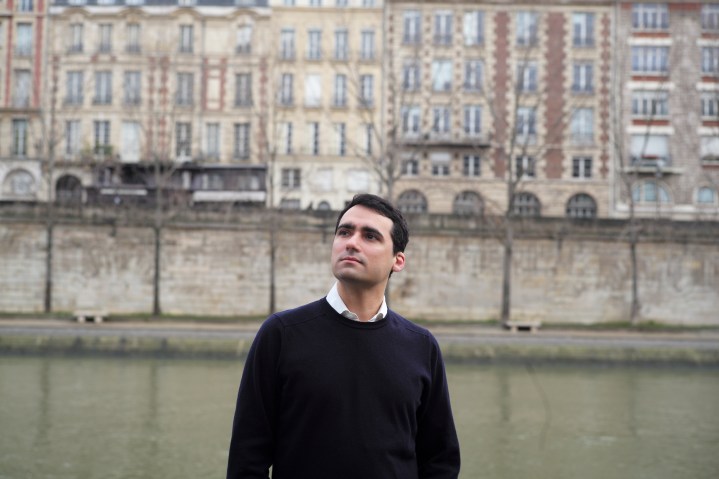
In the introduction to his new book, pianist Paul Roberts recounts a conversation with “an elderly and much celebrated piano teacher” when he was just starting out as the inspiration for a lifetime’s fascination with literature and language and the essential connections between literature and music: “I introduced myself. I cannot remember quite how the topic came about, but within a few minutes we were talking about Liszt’s great triptych of piano pieces known as the Petrarch Sonnets, inspired by the love poetry of the 14th-century Italian poet Francesco Petrarca. “Oh!” I enthused, “those poems …!” She entered her studio. “We don’t need them,” she said, and closed the door. I was deflated. And dumbfounded.”

Paul Roberts feels that music comes from sources beyond simply itself – from, for example, the composer’s life experience, the influence of others, and, in the case of Liszt, poetry and literature, and that as pianists we do the music, and its composer, a disservice by not paying attention to these external sources of inspiration. In his engaging, eloquent and highly readable text, Roberts explores what he believes to be an inseparable bond between poetry and the piano music of Franz Liszt, and how literary inquiry affects musical interpretation and performance. For Roberts, an appreciation of the poetry which inspired or informed Liszt’s music gives the pianist, and listener, significant insights into the composer’s creative imagination, bringing one closer to his music and allowing a deeper understanding, and, for the performer, a richer, more multi-dimensional interpretation of the music. It also offers a better appreciation of Liszt the man: too often dismissed as a superficial showman, in this book Roberts reveals Liszt as a man of passionate intellectual and emotional curiosity, who read widely and with immense discernment, all of which is reflected in his music. As Alfred Brendel said, “Liszt’s music….projects the man”.

Poetry and literature were meat and drink to Franz Liszt, who performed in and attended the cultural salons of 1830s Paris where he knew writers such as Victor Hugo and George Sand. He was familiar with the writing of Byron, Sénancour, Goethe, Dante, Petrarch and others, and his scores are littered with literary quotations which offer fascinating glimpses into the breadth of his creative imagination and what that literature meant to him. For the pianist, they provide an opportunity to “live inside his mind” and open “our imaginations to the wonder of his music”.

Perhaps the most obvious connection between Liszt and poetry is his Tre Sonetti del Petrarca – the three Petrarch Sonnets. They began life as songs which Liszt later arranged for piano solo, and included them in the Italian volume of his Années de pèlerinage. Liszt and his lover Marie d’Agoult spent two years in Italy and it was here that Liszt was exposed to the marvels of Italian Renaissance art and architecture and the poetry of Dante and Petrarch.

The poetry of Petrarch was central to Liszt’s creative imagination and in his triptych inspired by the Italian poet’s sonnets, we find an extraordinary depth of expression and emotional breadth. In the chapter ‘The Music of Desire’, Roberts explores Petrarch’s sonnets in detail and demonstrates how Liszt translates the passion of the poet into some of the finest writing for piano by Liszt, or indeed anyone else.

Perhaps because I have studied and performed these pieces myself, a study which included close reference to Petrarch’s poetry, it is here that I find Roberts’ argument most persuasive, that the pianist really needs this literary context and understanding to bring the music fully to life. He shows how Liszt responds to the ebb and flow of emotions in Petrarch’s writing, in particular in the most passionately dramatic of the three sonnets, No. 104, “Pace no trovo” (I find no peace), where the poet veers almost schizophrenically between extremes of emotion, from the depths of despair to ecstasy.

Subsequent chapters explore other great piano works – the extraordinary B-minor Sonata which Roberts believes is firmly connected to that pinnacle of nineteenth century European literature, Goethe’s Faust, the existentialism of Vallée d’Obermann, a work which exemplifies the Romantic spirit, and its relationship with Etienne de Sénancour’s cult novel Obermann, the “aura” of Byron and his Childe Harold’s Pilgrimage which pervade the Swiss volume of the Années alongside Liszt’s personal experience of the majestic landscape of Switzerland and the Alps. The final chapter explores the Dante Sonata and Liszt’s reverence for The Divine Comedy at a time when Dante’s poetry was being rediscovered by English and European Romantic writers like Keats, Coleridge, Shelley and Stendhal. Throughout, Roberts conveys the power of literature to awaken and inspire the Romantic imagination and sensibilities, and demonstrates how this might inform the way one performs Liszt’s music – from the physical cadence of poetry to its drama, narrative arc and emotional impact which had such a profound effect on Liszt and which infuses his music in almost every note. Here Liszt finds a new kind of expression in which, in his own words, music becomes “a poetic language, one that, better than poetry itself perhaps, more readily expresses everything in us that transcends the commonplace, everything that eludes analysis”.

A useful Appendix explores the influence of other poets such as Alphonse de Lamartine and Lenau, with analysis of other pianos works, including Bénédiction de Dieu dans la solitude, the Mephisto Waltz, the two St Francis legends, and Mazeppa, inspired by a poem by Victor Hugo.

In this book, Paul Roberts reveals the essence of Liszt literary world, providing the pianist with valuable insight and inspiration with which to appreciate, shape and perform his music.

Reading Franz Liszt: Revealing the Poetry behind the Piano Music is published by Amadeus Press, an imprint of Rowman & Littlefield, USA.

Photo of Paul Roberts by Viktor Erik Emanuel


This site is free to access and ad-free, and takes many hours to research, write, and maintain. If you find joy and value in what I do, please consider making a donation to support the continuance of this site

Make A Donation

Declan Byrnie, child prodigy and world-class concert pianist, has enjoyed a glittering career from a young age, touring the world’s best concert halls and producing acclaimed recordings. Ten years into his career his wife dies in a terrible accident and he stops performing; alone with his grief, he falls into obscurity, his concert career abandoned.

As the novel opens, we meet Declan at the end of one of his practice sessions and this immediate signals a major theme of the book – the obsessive nature of being a professional musician. In the dark backstreets of New York City, away from the glamour of Carnegie Hall and the like, Declan seeks out pianos on which to practice (despite having a decent grand piano at his apartment). He’s not fussy about the instruments, only that his practising keeps him away from his apartment until returning is “the only possible course of action”. He plays in nightclubs and cramped, smoky bars. He accompanies a singer called Sandrine, and uses his piano playing as a way to pick up women (although it embarrasses him to admit this). He’s filling a great big hole in his life with music and unsatisfying casual relationships. His dead wife haunts him and he talks to her, consciously and unconsciously. We learn a little more of his relationship with her through letters which are interspersed in the narrative.

With his decision to return to performing comes a host of attendant situations and characters, from his suave agent, Peter Barlow, to wealthy friends and patrons, journalists, an independent piano blogger (!), audience members and strange, sticky fans, and a rich Russian patron of the arts, in whose beautiful concert hall Declan plays later in the novel. Entertainingly and acutely depicted, many of these characters are recognisable from the international world of classical music and are a reminder that beyond the learning and refining of the notes is the necessary “business” of the industry.

The book takes Declan and reader on a road trip of sorts, both physical and emotional. There are the concerts, the settings successively more significant until we reach a beautiful concert hall in Boston where he plays to an audience of 700 people. Along the way, there is a crazy music festival, the polar opposite of the refined surroundings where Declan is used to playing. There are people too, including Elise, a young woman whom he meets at a swish modern concert venue, who accompanies him some of the way on his journey to Boston, and who acts as a contrasting foil for Declan’s introspection. We journey through music with him, exploring the minutiae of Bach, Chopin, Mozart, and especially Beethoven – the Hammerklavier Sonata in particular – where myriad details of the score and the musician’s personal relationship with it are revealed. Declan’s relationship with the Hammerklavier is a strange one – you sense that he doesn’t like this music very much yet is drawn to its complexities and its greatness. Purists may baulk at his irreverence, but it brings a greater humanity to both music and performer.

There is also a wealth of detail about the practice of practising, including the wisdom of Declan’s piano teacher Tal, and performing – the emotional and physical aspects of the pianist’s craft, and the sheer grunt work of being a musician, which are often overlooked in the midst of beautiful, arresting performances.

The book ends in Italy in a small town in which Declan and his late wife dreamed of one day settling, and it is here that the circumstances of his wife’s death, and its preamble, are fully revealed. It’s shocking, unexpected and sad, and one feels that Declan’s behaviour throughout the book as he deals with his grief is justified.

The prose is immediate and engaging, often entertaining, with many episodes which remind us that musicians do not exist in a gilded cage but are ordinary people who happen to do extraordinary things. The protagonist could have a different career and the narrative would still be effective – this is, primarily, a story about love and the exigencies of human relationships, and how betrayal and grief shape and change us. But the fact that Declan is a musician and, more specifically, a pianist – the loneliest of musical professions – and an obsessive one at that, lends a greater depth to the narrative; his obsessive nature causes him to analyse and over-analyse his emotional responses, much as he analyses the Hammerklavier, but also provides an outlet for his grief. Practicing is a protection against his emotions and the music offers a special kind of solace.

Few writers can truly capture the physical and emotional experience of playing and engaging with music, especially complex repertoire like the Hammerklavier sonata. Not since An Equal Music by Vikram Seth have I encountered such sensitive, intelligent and vivid writing about music as Damian Lanigan achieves here. Added to that, a well-paced, entertaining storyline makes this book a thoroughly good read.

Recommended

The Ghost Variations by Damian Lanigan is published in the UK by Weatherglass Books on 15th September


Postcript: the title of the novel, The Ghost Variations, is taken from Schumann’s last piano work, composed in 1854 before he was committed to a mental hospital. While he was writing these variations, he flung himself into the freezing Rhine. The work is intimate, poignant and highly personal.

After his sparkling C P E Bach disc, released on the Hyperion label in January 2022, Marc-André Hamelin, that fearless master of the piano who seems to be able to playing anything (and I mean anything!) moves seamlessly from the precision and clarity of early classical keyboard music to an album of piano rags, written over the last 50 or so years, by American composer William Bolcom (b. 1938).

In the generous liners notes, the composer himself introduces the repertoire, explaining how his discovery of the music of Scott Joplin, which had fallen into obscurity after the composer’s death,  led him to explore the genre himself in the late 1960s, at a time when Joplin’s opera Treemonisha resurfaced and his music, and ragtime in general, was being revived, and a new generation of American composers were writing new “tradition-style” rags. This music has an enduring appeal to audiences, and for Bolcom and others, reviving ragtime was a way of “picking up a dropped thread of our emerging American tradition”; paying homage to and continuing the genre.

The elements of traditional, Joplin ragtime are evident in Bolcom’s rags – the distinctive musical DNA of syncopation and swing, which Hamelin perfectly captures – but Bolcom allows himself to stray into more unusual territories, for example in Rag-Tango which alternates between the gritty sensuality of Argentine tango, piquant “crunchy” harmonies, and traditional rag elements.

In fact, such is Bolcom’s skill with the genre, and Hamelin’s pitch perfect execution, that it’s easy to forget one is listening to ragtime at all. The third of the ‘Ghost’ rags, Dream Shadows, has a lazy, hazy late-night jazz club vibe, to which Hamelin brings his remarkably sensitive sense of timing and atmospheric rubato. Meanwhile, other rags are more traditional in their toe-tapping rhythms and hip-swinging syncopation. Some are exuberant, almost Lisztian in their scope – and here that sparkling clarity and nonchalant technical assuredness that is so characteristic of Hamelin’s playing in more traditional or mainstream repertoire is once again on fine display – while others are easy-going, evoking humid evenings in the American South (with brisket cooking low ‘n’ slow on the coals, perhaps?). The rag fantasia Serpent’s Kiss opens with rumbling, pulsing notes redolent of Schubert’s Erlkönig before slipping into something more akin to silent film music, interspersed with contrasting interludes suggesting shifting narratives and characters (there’s even a Fred Astaire style tap-dancing routine!).  Some of the rags are very personal (Lost Lady and Graceful Ghost, for example), others celebrate friendships, musical collaborators, and other composers, such as Louis Chauvin and Ernesto Nazareth (Joplin’s great Brazilian contemporary); some are wistful, others are punchy, in-yer-face, rags, but all are distinctive, appealing in their references back to Joplin’s model, but with multiple moods and harmonies, and brilliantly presented by Hamelin, who seems to really relish this repertoire (and if you didn’t know it, listening to him you’d never guess he’s a classical pianist – there’s a natural jazz insouciance to Hamelin’s playing throughout the disc). There’s wit and humour aplenty, tempered, when needed, by tenderness and poignancy, whimsy, much charm and ingenious invention.

If you don’t know the music of William Bolcom, this disc should absolutely be your starting point.  It’s a wonderful, revelatory, and, above all, really enjoyable listen from start to finish.

William Bolcom: The Complete Rags is available on the Hyperion label. With detailed liner notes by the composer.


This review first appeared on ArtMuseLondon.com