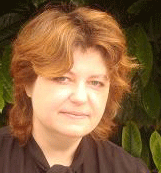
Pianist Anna Maria Stachula was born in Poland, and began playing the piano when she was 6 years old. She studied at the Karol Szymanowski Academy of Music in Katowice with C. Stanczyk and Klara Langer-Danecka, and moved to the UK five years ago.
She possesses a level of talent and virtuoso technique one would be happy to hear at the Wigmore Hall, yet despite this she is presently virtually unknown in the UK. By day, she works in a Post Office sorting office. She is currently studying with pianist John Humphreys at Birmingham Conservatoire.
On 27th May Anna is giving an afternoon recital at The Red Hedgehog, an intimate arts venue in north London. Her programme includes Beethoven Sonata No. 23 in F minor, Op 57 ‘Appassionata’, Chopin Scherzo No. 2 in B flat minor, and the Andante spianato and Grande Polonaise brilliante Op. 22, and Schumann ‘Abegg’ Variations, Op. 1 and Carnival, Op. 9. Do please support this talented artist by attending her concert, if you can.
Liszt’s Années de Pèlerinage Suisse (published 1855) are not fictional imaginings conjured up at home but his responses, in music, to the alpine landscape and landmarks of Switzerland, which he visited with Marie d’Agoult during the period 1835-1839. While owing a great deal to the romantic poetry of Goethe and Byron (in particular Childe Harold), these are also musical ‘postcards’, and the landscape and places they describe can still be viewed and visited today.
Having just enjoyed another holiday in the French Alps, quite close to the places of Liszt’s peregrinations, it is easy to see how the landscape inspired him. Driving down the autoroute south of Dijon, the first intimation one has of a change in the landscape, from the dull, flat agricultural land of the French interior only occasionally relieved by sugar-beet processing plants and statuesque wind turbines, are the Jura mountains, but these are mere trifles compared to the soaring grandeur of the Alps, whose snowy peaks rise up around Geneva and its lake. One really begins to appreciate their awesomeness when one leaves the motorway to begin a 30 minute ascent up twisting mountain roads to one of the many villages and ski stations that nestle in the high valleys. With spring now underway, there are cowslips and other wild flowers in bloom, and streams, augmented by the melting snow, gush noisily down the slopes, rushing headlong to sea level.
The peaks and high slopes are still snow-covered and on a sunny day the snow glints and glistens like crystal. The sky is intensely blue, the sun, in the thinner mountain air, hot on one’s skin. After a few days in this glorious landscape, one feels refreshed and healthy, released from the smog and noise of the city. Franz and Marie probably felt the same.
Looking towards Mont Blanc, from Mont Chèry, France
The alpine landscape of today isn’t so different from the landscape Liszt encountered in the mid-nineteenth century. Approaching Switzerland from the east, he probably enjoyed the great peaks of the Matterhorn and Mont Blanc. Travel would have been far more difficult then, with few proper roads through the mountains, but local guides could be hired to take one on walking tours, and there were plenty of refuges and hostels for weary travellers to rest in at the end of a day spent hiking.
In ‘Pastoral’ Liszt evokes lush mountain pastures, wild flowers, birdsong and fauna, and the pleasure of being in such a landscape; while ‘Au Bord du Source’ describes a mountain stream, playfully carving its course towards the sea. ‘Au Lac de Wallenstadt’ vividly captures the image of a beautiful mountain lake, a light breeze ruffling its clear surface.
‘Orage’ describes the rapidly changing weather of the Alps: I’ve sat and watched a storm brewing in the opposite valley, dark clouds rolling in, the heavy sky scored with shards of lightning, and Liszt brilliantly captures the storm with unsettling chromatic scales in octaves, massive left-hand chords and cadenza-like passages.
‘Vallee d’Obermann’ is a more pensive and philosophical piece, and the place itself does not exist. Rather, the music is based on a romantic literary construct. Built on a simple descending figure, which is recapitulated many times throughout the piece, the music is both imposing and wistful, with its impressive double octaves, evoking the grandeur of the landscape, and graceful melodic lines.
‘Eclogue’ returns to the pastoral mood of the earlier pieces. Short and gentle, it evokes the joy of the dawning of a new day. In ‘Le mal du pays’ the homesickness of the traveller is evoked, tinged with depression and yearning, and a poignant farewell to country. Its ending, in the lower register, brings no relief from the melancholy mood. In the final piece of the suite, ‘Les cloches de Genève’, (‘The Bells of Geneva’) the music is less evocative of the sound of bells, but its mood, underlined by one of Liszt’s more romantic melodies, suggests joy and love, providing an antidote to the dark mood of the previous piece.
British pianist Peter Donohoe describes these pieces as ‘very personal and visual… highly emotional for composer, performer and audience’, and a good performance (such as Donohoe’s at the Southbank in February – review here) can be intense, romantic and highly concentrated. The works from the second year (Italy) are, by contrast, more concerned with literary and artistic impulses (a painting by Raphael, a sculpture by Michelangelo, the poetry of Petrarch) but are no less interesting and absorbing, to listen to and to play.
For a good recording of the complete Années de Pèerinage, look no further than Lazar Berman, though I also like Wilhelm Kempf, particularly in the three Petrarch Sonnets.
The excellent International Piano Series at the Southbank Centre continued with a fine recital of music by Haydn, Bartók, Debussy and Chopin by acclaimed and very popular (judging by the full house) Norwegian pianist Leif Ove Andsnes.
In this age of flashy piano pyrotechnics and daring designer concert outfits, Andsnes comes across as refreshingly understated……..read my full review here
The Victoria & Albert’s new blockbuster exhibition celebrates British design, creativity and innovation in this the year of ‘London 2012’. Read my review for OneStopArts here
The Cross-Eyed Pianist is free to access and ad-free, and takes many hours every month to research, write, and maintain.
If you find joy and value in what I do, please consider making a donation to support the continuance of the site

 Pianist Anna Maria Stachula was born in Poland, and began playing the piano when she was 6 years old. She studied at the Karol Szymanowski Academy of Music in Katowice with C. Stanczyk and Klara Langer-Danecka, and moved to the UK five years ago.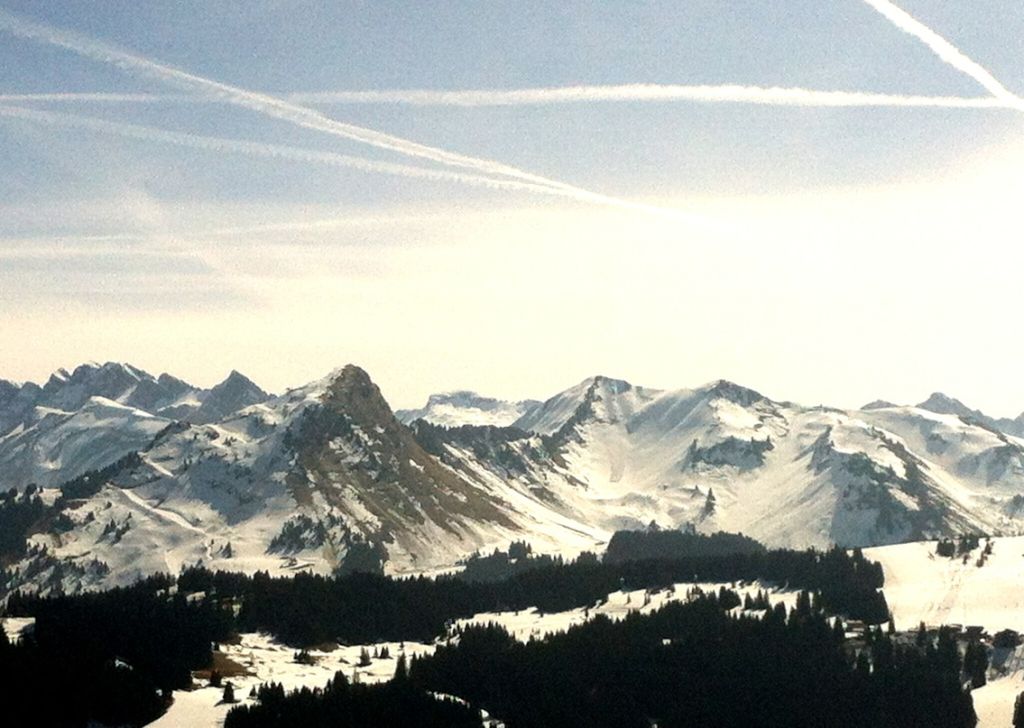





 The Cross-Eyed Pianist