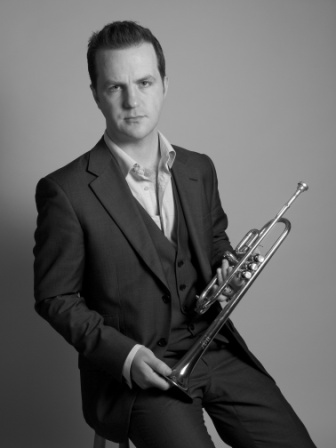
Richard Bates, composer & conductor (photo credit: Scott Inglis-Kidger)

Who or what inspired you to take up composing and make it your career? 

I would say that composing chose me, rather than the other way round. Almost as soon as I started learning to play piano, I started coming up with music of my own when I was bored of the pieces set me by my teacher. I always listened to classical music a lot as a youngster. And as a teenager, I suppose my writing mirrored what I was listening to – Beethoven in my early teens then later, Rachmaninov, Prokofiev, Poulenc, Morton Feldman…

Who or what were the most important influences on your composing? 

As I say, I always listened to music growing up, and I was lucky enough that my piano teacher in those years was interested in furthering the scope of my musical knowledge, and gave me music and recordings to explore that I otherwise would not have chosen. These expanded my horizons considerably. A great favourite of mine is Francis Poulenc, whose unique and instantly recognizable style really caught my interest. I also owe a great debt of gratitude to Michael Finnissy and Giles Swayne, who taught me my compositional craft, the guts to write what I want to write, the intricate skill of orchestration, and how to express what you hear with the instruments you have.

What have been the greatest challenges of your career so far? 

When I graduated from Cambridge, I thought: “nobody makes a living from writing music, and the world doesn’t really need another composer anyhow”, so I followed another passion of mine and went into music direction for theatre – leading pit bands and singers. Over the years since, I have taken every professional composing opportunity that arose for me, but it was only really embarking on Platinum Consort’s recording of my Tenebrae and commission In The Dark, and their subsequent commercial success, which exceeded my hopes, never mind my expectations, and that really convinced me writing music could be a viable life for me.

Which compositions are you most proud of?  

Of the works of mine that have been premiered so far, probably the Tenebrae are my favourite. I took a good deal of trouble to get each response just right, and the weaving of Renaissance-style counterpoint to create 21st-century harmonies was the biggest skill I had to master. I’m very proud of the result, and feel this is one of my most significant works to date.

Favourite pieces to listen to? 

I’m sure it’s a very infuriating answer, but I’m not the sort of person who has a clear favourite. It will depend on my mood and what I’m doing at the time. I also admire music for different reasons: some pieces are guilty pleasures – pieces which are not fantastically put together, but mean a great deal to me either because of their ambience, or a personal significance; other pieces are good for my musical health – pieces I admire because they are so perfectly ingenious in their construction or employ compositional tricks I can’t help but wish I’d thought of.

Who are your favourite musicians? 

Again, I’m going to be annoying and fudge that question and say it depends. I suppose my single, favourite group, is the Platinum Consort, for whom I was recently named Composer in Residence. I have worked with them over a long period, which is unusual in the music business, and have developed a very honest and open relationship with them and their director Scott Inglis-Kidger. I have great admiration for the dedication and skill they employ, and they in turn give me whatever feedback they honestly feel, without fear of my taking offence or umbrage. But I also have a great deal of admiration for the singers and musicians I work with in my conducting career, who turn up night after night and deliver consistently great performances.

What do you consider to be the most important ideas and concepts to impart to aspiring musicians? 

Stephen Sondheim once said that composition without craft is just masturbation. I agree. Without craft, and I would add discipline, you’re just improvising. That’s fun in the sense that you sit at your piano and think: “aren’t I jolly clever to be able to sit here and come up with this”, but the interest of what you come up with soon fades unless there’s a supporting framework. Musical ideas in themselves have little power; it’s their juxtaposition that gives them strength to move listeners. This is the message I would like to convey to my 14 year old self.

What are you working on at the moment? 

Two things: a motet setting of the plainchant Veni Veni Emmanuel for double choir and semi-chorus for the Platinum Consort; and The Vigil, a work for choir, soloists and orchestra – it’s a meditation on the stations of the cross – for Thomas’s Choral Society in London.

What is your present state of mind?

Relaxed. I am on holiday, just doing some writing, and unconstrained by the iPhone ringing or having to go out later and conduct a musical.

What is your most treasured possession? 

My steel tipped conductor’s baton. It’s the perfect weight and length for me, and the polished steel tip catches the light beautifully in darkened theatres and ball-rooms, so the musicians can see my beat. It’s also been around with me quite a few years.

Richard Bates was born and raised in London. He was educated as a music scholar at Winchester College and Cambridge University. He studied composition with Michael Finnissy and Giles Swayne, as well as participating in seminars with John Woolrich, Howard Skempton and John Rutter.

Upon graduation, Richard was appointed organist at the church of St Magnus The Martyr in the City of London, a position he held until 2008 when he moved to be Director of Music at Holy Trinity, Northwood. Richard also pursues a wide range of activities in the British and USA musical theatre and cabaret scenes. He is in demand as a conductor and accompanist and recently made his band‐leading debut in New York City.

Richard was officially appointed Composer in Residence to the Platinum Consort in 2012, after having written for the ensemble on an informal basis for a number of years. His music featured on their album In The Dark was described by BBC Music Magazine as “particularly impressive”, and the Observer said “Bates…knows how to raise hairs on the back of the neck with his smoky eight‐part writing”. 

Keep an eye on www.richardbatesmusic.com and @richbatesmusic on Twitter for details, premieres and performances coming up this Autumn and into 2013.

Platinum Consort will be performing at King’s Place, London, on Saturday 1st September, in a concert which features Richard Bates’ In the Dark. Further information here.

elspeth_wyllie-320x439Who or what inspired you to take up the piano, and pursue a career in music?

I didn’t plan on becoming a pianist or a professional performer until studying with Raymond Fisher while at university; he gave me the technique and self-belief to give it a go. Before that, I got a huge buzz from being surrounded by other enthusiasts and immersed in music day in, day out at music school. I’d studied recorder and clarinet too, but gradually came to realise that the piano appealed the most – because of the wealth of repertoire and playing opportunities it offers. My family wasn’t particularly musical, but my mum could strum a guitar so we sang lots of songs when I was pretty small, and I loved listening to records.

Who or what were the most important influences on your playing?

Obviously my teachers – I’m very grateful for my time with Richard Beauchamp who is disarmingly modest, open-minded and curious. The quality and quantity of chamber music on offer at school has undoubtedly given me a passion for collaborative playing. I like to think I have a reasonably open-minded attitude and curiosity for all arts and music – growing up in Edinburgh with it’s annual festivals and inspiring live performances of music, dance, theatre and wealth of art exhibitions has helped that.

What have been the greatest challenges of your career so far?

Staying focused and productive in personal practice, balancing commitments between different projects, being efficient with admin, and working out what’s next in a field that offers such huge flexibility for developing your career.

Which performances/recordings are you most proud of?

The projects where there’s a shared attitude and natural understanding with the people I’m working with, or in new projects that involve an element of challenge or risk and stretch you further than you thought possible. Specific things I’m really proud of: solo performances of Beethoven’s Choral Fantasy and Elgar’s Enigma Variations, duo performances of Bowen’s Sonata for flute and piano with Claire Overbury, Amalie Trio’s school workshops about the drama and skills of chamber music, and my recent debut recording bringing together lots of colleagues, Enigmas.

Do you have a favourite concert venue to perform in?

Anywhere with a decent piano that’s not too cold, and an open-minded audience!

Favourite pieces to perform? Listen to?

To listen to: Barber’s Violin Concerto, Mozart’s Clarinet Quintet, Schubert’s three last piano sonatas, any of Brahms’ violin sonatas… Mind you, I don’t often listen to classical music in my downtime. I dance and sing along to bands like Snarky Puppy, the Divine Comedy, Count Basie and Stornoway, or listen to Cerys Matthews and Craig Charles on Radio 6 Music. To perform, I love finding compelling repertoire that’s less well-known: trios by Nicolai Kapustin and William Bolcom, an Azerbaijani suite by Fikret Amirov, songs by Bernard Stevens. I love it when the audience hasn’t heard of a piece or composer but enjoys the discovery. It’s way more interesting to me than being the 3000th person to play Beethoven’s Ghost Trio, however good the piece is!

Who are your favourite musicians?

Those who find endless expressive nuance without distorting the overall shape of the music, and who prioritise the music and avoid any on-stage presence of ego. I’ve been blown away by concerts and recordings by Adrian Brendel, Imogen Cooper, Stephen Hough, Kathryn Stott and Steven Osborne, and outside the classical world by the creativity of Stornoway and Chick Corea, and the skill of Courtney Pine and Joshua Redman.

What is your most memorable concert experience?

Hmm. They’re often memorable for the wrong reason. Performing extremely badly but with total swagger aged 7, with two painfully-bandaged knees due to a pre-performance backyard incident! Nerve-wrackingly page-turning for Martha Argerich and Nelson Goerner in the Edinburgh Festival. Good ones: Beethoven’s Choral Fantasy (from memory, which is unusual for me), Enesco’s Violin Sonata no. 3 in my final recital at music college, the rapport with new colleagues in our very first performance together of Mendelssohn’s Piano Trio in C minor.

What do you consider to be the most important ideas and concepts to impart to aspiring musicians?

Play pieces you really believe in, and nothing beats being properly prepared.

Where would you like to be in 10 years’ time?

Performing more frequently with my regular chamber music partners and doing more 1-1 coaching with adults – I enjoy accompanying and working with them to release potential musical expression and overcome frustrations. I also love working with choirs, so continuing to develop that alongside my performing work.

What is your idea of perfect happiness?

A productive days’ work, or being outside somewhere rural in good weather, or good food in relaxed company.

Elspeth Wyllie performs throughout the UK and abroad as a solo pianist, chamber musician and accompanist. She has appeared at the Purcell Room, Fairfield Halls, The Brunton, and on Classics Unwrapped for BBC Radio Scotland. She is a founder member of the Métier Ensemble (with flautist Claire Overbury and cellist Sophie Rivlin) and the Amalie Trio (with mezzo-soprano Catherine Backhouse and violist Alexa Beattie), performing regularly with them and in projects with other musicians from major ensembles, orchestras and opera companies.

In addition to chamber music, Elspeth rehearses and performs with choirs. Particular highlights have been a performance of Beethoven’s Choral Fantasy and piano duo performances of Brahms Ein Deutsches Requiem and Liebeslieder Walzer. Her experience includes engagements with the BBC Symphony Chorus, the National Children’s Choir of Great Britain, and animateur Gareth Malone, as well as regular work with Clapham’s Festival Chorus and several other amateur choirs. Elspeth also teaches, coaches and accompanies, both privately and for workshops and courses. In the studio, she has recorded sessions at Abbey Road, AIR and Dean Street Studios, and for Novello publications.

Elspeth studied piano with Richard Beauchamp and Audrey Innes at St Mary’s Music School in Edinburgh, and continued with Raymond Fischer while reading music at the University of Oxford. She completed her professional training with a PGDip from the Royal Academy of Music, London, studying piano and accompaniment with Andrew West and Colin Stone and winning many prizes, including the RAM Club Prize for Accompaniment, the Vivien Langrish Prize, Evelyn German Prize and J E Reckitt Award. She was supported during her studies by the Oldhurst Charitable Trust and was shortlisted for the 2011 Park Lane Group Award with duo partner Claire Overbury. She has enjoyed lessons and masterclasses with many wonderful musicians, including Julius Drake, Susan Tomes, Adrian Brendel and Tasmin Little.

‘Enigmas: solo piano and chamber works’ is released by Divine Art Records on 19 May 2017

www.elspethwyllie.co.uk

by Madelaine Jones

We all know the feeling – you’re sat on the stool, anxious before a first rehearsal with a singer. Doubtless you’ll have practised the piece, sorted the fingerings, and on meeting the culprit of your hours of toil, you’ll find them to be a perfectly human, ordinary musical being with whom you can get on splendidly, and the rehearsal will go swimmingly. That is, before the seven words that would send a shiver of dread down any aspiring pianist’s spine: “Can you put that down a tone?”

Indeed, transposition is rapidly becoming the Atlantis of pianism, with seemingly very few pianists left in the musical stratosphere that have a grip on the elusive art – and to those who think I am preaching, I am most certainly not one of the few. Last summer, I decided to sit a diploma in accompaniment in which one of the requirements was sight-transposition, and I can honestly say I have never been so thoroughly vexed over such a small component of an exam before. On the day, after preparing for months with a hymn book at the recommendation of a teacher (six hymns up and down a tone every day – healthy work but proved to be a winner in the end), I found it was nowhere near as bad as I’d dreaded. I’m certainly no master transposer, and I wouldn’t dream of doing so in front of another human being again, but with significant practice and preparation, it was no more difficult to learn than any other piano skill I’ve acquired.

So why on earth are we so scared of it?

It seems to me that there is an obvious answer, staring us in the face: unfamiliarity. How many of our teachers drilled scales into us as a child? I’m guessing practically all of them. Sight-reading? The vast majority (and how thankful we are, even if we hated it at the time!). Transposition? I expect not a single hand in the room will have gone up.

I am not launching a tirade against teachers, since they already bear the blame for far too many things as it is; given such a small amount of contact time, teachers simply cannot cover all the bases, and something which does not feature on exam syllabuses or even yet exist to a young learner given its ‘advanced skill’ status is understandably going to be swept under the rug. But why is this considered such a niche skill in the first place, and why are exam boards not bringing this in at a far earlier stage than diploma level?  Why are we not encouraging young children to go away and try to transpose fragments of music? It improves knowledge of keys  – if you don’t know the scales and chords for the keys you’ve played in properly, you can’t possibly transpose into them. It improves memory – if you understand the relationship of the chords inside out, you’re far less likely to forget the notes than a learn-by-rote ‘A B C’ approach. It improves aural skills – transposition is, to a very high degree, dependent on aural awareness and the ability to hear and anticipate what is coming next.

To those of you who think I’m asking too much of young learners, try it. Give a young pupil a small fragment of melody, and then ask them to play it on a different note. Talk about the differences, any ‘black notes’ that may have appeared, and you will find they pick it up a lot more quickly and less painfully than you expect. What you’ve just taught someone is how to transpose on a very basic level. In fact, you do it all the time when you teach children to play scales. The problem, it seems to me, is that we’ve mystified transposition so much that people think it impossibly difficult, learners and teachers alike. Just as with any other skill, you have to start somewhere. If you pick a Chopin Etude you can barely play in the correct key and try to put it up or down a tritone, of course you’re going to struggle. If you take a simple hymn and move it to a related key, you’re going to find you make far better progress.

Naturally, with every other skill under the sun to practise, I doubt we (or our pupils) will now all fall to religiously practising our hymns in every key every day. But next time you’re frustrated with a piece and can’t understand the ins-and-outs of it properly, why not try popping it up or down a tone? If nothing else, it could become a neat party trick…

Madelaine Jones is currently a student at Trinity Laban Conservatoire of Music and Dance, studying piano and harpsichord with Penelope Roskell and James Johnstone respectively. She was the winner of the Gladys Puttick Improvisation Competition 2012 with duo partner and dancer, Adam Russell. Her ensemble experience as a pianist has included working alongside the BBC Singers, the Medway Singers and the Walderslade Primary School Choir, and she has performed as a harpsichordist and chamber organist in the Greenwich International Early Music Festival alongside Trinity Laban’s various Early Music Ensembles. Madelaine is a previous recipient of an LCM London Music Schools and Teachers Award, and is also a keen writer in her spare time, reviewing for Bachtrack and posting on The Cross-Eyed Pianist blog. For more information, visit https://www.facebook.com/madelaineclarajones