When is the right time to start teaching piano technique?
Renowned pianist and pedagogue Penelope Roskell believes that technique should be taught from the start and her new series of books aimed at children turn learning technique into an enjoyable and stimulating series of exercises, games/quizzes and imaginative original pieces.
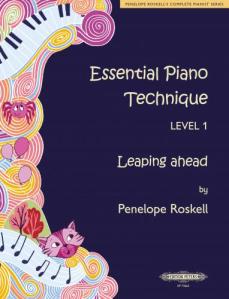
Author of the award-winning The Complete Pianist, Penelope Roskell is recognised as a leading exponent of healthy piano technique which leads to “natural artistry and a lifetime of pleasure at the piano”. In her new trio of books for children, from the outset Penelope aims to encourage these early piano students to explore the keyboard as widely as possible: the first volume is called ‘Hop, Skip and Jump’ (by contrast, many beginner tutor books tend to start in the Middle C position, which can be very limiting). Through a series of fun exercises and short pieces and songs composed by Aaron Burrows and Carl Heap, accompanied by delightful illustrations by Eilidh Muldoon, the student is introduced to techniques such as lateral movement, playing staccato, hand positions, playing sustained notes, legato and more – all aspects of technique which are, or should be very familiar to the advanced pianist. The final volume, ‘Leaping Ahead’, builds on the techniques learnt in the previous two books, while also introducing new challenges, including playing hands together, chords and broken chords, leaps, slurs, chromatic scales, two-octaves scales, fingering and rotation.
As the introduction to the books makes clear, these are technique books, not method books, and as such can be used alongside the teacher’s favoured method books or personal teaching approach to ensure technique is taught in an enjoyable and stimulating way.
In addition to the exercises and pieces, each book includes teaching endnotes, complete with a video demonstrations which can be accessed via a QR code or by visiting https://www.editionpeters.com/essentialpianotechnique1. Learning Objectives and Teaching Tips are concise and informative.
Drawing on the best current pedagogical practice, the books use imagery and gesture to develop ‘piano technique’ in the broadest sense of the term, and remind both teacher and student that technique should always serve the music, rather than be taught and studied in isolation. Thus, this approach ensures the young pianist is equipped with all the necessary skills to play with both technical assurance, confidence and artistry, without tension and with a rich palette of sounds.
Having studied myself with Penelope Roskell for six years (the first few months of which were a crash course in all the technique I was not taught when having piano lessons as a child and teenager), at a time when I was myself teaching piano to young and early students (children and adults), I can attest to the value and ease of her approach to piano technique. She would often demonstrate something to me and then suggest I try it with my own students, using appealing imagery and gestures, and I quickly realised that learning and teaching technique need not be complicated – in fact, it is very simple and I believe the approach laid out in these new books can be easily adapted for older students and even adult learners.
Following the success and acclaim of The Complete Pianist, Penelope Roskell continues to make a vital contribution to piano pedagogy. These new books lay the crucial foundations for a lifetime of secure technique coupled with immense pleasure at the piano and are an excellent addition to piano teaching literature. I cannot recommend them too highly.
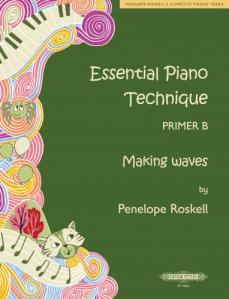
Essential Piano Technique (Primer A, Primer B & Level 1) by Penelope Roskell is published by Edition Peters
Release date: 9th June 2023 | Divine Art Recordings (Divine Art DDX 21107)
This album presents the complete works of Bernard Hughes for solo piano, an eclectic collection covering a period of over 30 years. The oldest piece dates back to his teenage years and the most recent is a brand new suite, Partita Contrafacta, a quirky take on traditional Baroque dance forms. The rest of the music ranges from the large-scale Strettos and Striations to little occasional pieces written for the composer’s children. With such a varied range of music, there is something for everyone on this disc.
What makes this album truly special is the culmination of many years of collaboration between Hughes and Mills, who commissioned and premieres Partita Contrafacta on the disc. The two musicians have been working together for years, resulting in a deep understanding of each other’s artistic vision and an unparalleled ability to bring Hughes’ compositions to life on the piano.
Works
Song of the Walnut
Partita Contrafacta (suite in 7 movements)
Song of the Button
Bagatelles (12 movements)
Miniatures (11 movements)
Three Studies
O du Liebe meiner Liebe
Strettos and Striations
Cradle Song
Sample track:
Bernard Hughes says: “This album brings together pretty much all my music for solo piano written over the course of more than 30 years, the earliest from when I was still at school and the latest written just weeks before being recorded, in October 2022. The inspiration was my pianist and friend, Matthew Mills, who suggested the project and who has put untold hours into learning and animating the music, some of which is very straightforward, and lots of which is very much not.
And this variety is very much the point for me. As in all aspects of my compositional work, I don’t have a single piano ‘style’, but cut my cloth according to the occasion. Although there are several of techniques, textures and devices I return to over and again – as will be obvious to anyone listening straight through – there is also a huge range of approach, from music written for piano beginners up to the most virtuosic I could imagine, and from simple blink-and-you-miss-them melodies to ferocious, post-minimalist studies. In some cases, I don’t know what possessed me.”
Pianist Matthew Mills says: “I am very pleased to have done Bernard’s piano album. It’s a substantial milestone in a musical relationship that now goes back probably twenty years or so…. It really captures all facets of Bernard’s kaleidoscopic musical personality, and, having a close knowledge of the composer as well as the music, I think gives it a special resonance.
Bernard Hughes’ music has been performed by ensembles including the BBC Singers and the London Mozart Players at major British venues including the Royal Albert Hall and St Paul’s Cathedral. His music has won a number of awards both in the UK and internationally and is regularly broadcast on BBC Radio 3 in the UK. Bernard Hughes’s BBC commission Birdchant was premiered at the Proms festival in August 2021. This was the culmination of Bernard’s long relationship with the BBC Singers, which also included a major portrait concert in January 2020, leading to I Sing of Love being nominated for an Ivor Novello Composer Award. An album of Bernard Hughes’s choral music, I am the Song, performed by the BBC Singers, was released in 2016. His orchestral works for family concerts, Bernard & Isabel and The Knight Who Took All Day are frequently performed around Britain and were recorded by the Orchestra of the Swan on a release from February 2020. In 2015 he provided music for the comedy film Bill, a fantastical account of Shakespeare’s early years. A second album of choral music, Precious Things, sung by the Epiphoni Consort, was released in May 2022 and was described by Judith Weir as ‘choral music as we rarely hear it – generous, light-footed, surprising.’ Bernard lives in London where he is Composer-in-Residence at St Paul’s Girls’ School, a position he has held since 2015. He is a keen cricket fan, both as a watcher, a player and as chairman of Chiswick Cricket Club in London.
For almost three decades, Matthew Mills has enjoyed a busy and diverse freelance career as a pianist, composer, and conductor. With a repertoire encompassing music from five centuries, he has performed across the UK as a soloist, chamber musician, and accompanist, in addition to establishing a reputation as a sympathetic and creative dance accompanist.
A committed supporter of young composers and contemporary music, Matthew founded and directed a contemporary music ensemble at Royal Holloway, University of London, with whom, assisted by his own conducting students, he led workshops and performed works by student composers, as well as established twentieth-century names. He has enjoyed a long collaboration with the British composer Bernard Hughes, having given the first performance of his Bagatelles for piano and participated in the first performances of his chamber opera Dumbfounded! at the Riverside Studios, London.
Matthew studied at the Universities of Oxford and London, and at Trinity College of Music, London. His teachers have included Christopher Elton (piano), Daryl Runswick, Andrew Lovett, and Simon Holt (composition), and Gregory Rose (conducting). An award from Oxford University enabled a period of specialist study of contemporary piano repertoire with Rolf Hind, and he has appeared in masterclasses in composition with Michael Finnissy and George Benjamin, and in piano with John Lill and Rosalyn Tureck.
For further press information, interviews and review copies, please contact Frances Wilson
The London Piano Meetup Group celebrates its 10th birthday on 20 May, with an event at Steinway Hall in London.
When I co-founded the London Piano Meetup Group back in 2013, I knew very few amateur pianists. I’d been playing seriously for about 5 years, having returned to the piano after an absence of nearly a quarter of a century. I’d been on a number of piano courses and appreciated the value in connecting with other pianists but these were not regular interactions. I, and my co-founder (a piano teacher based in SE London) were both keen to connect with other adult amateur pianists on a regular basis – not just for the opportunity to play regularly in front of others but also to socialise with like-minded people. Thus the London Piano Meetup Group came to be.
Our launch event at Peregrine’s Pianos on 18 May 2013 was very well-attended and the young pianist Emmanuel Vass, who has been a good friend to the group over the years, was our guest performer. We were a mixed bunch, of various ages and abilities. Some people had played all their life; others, like me, were returners; some were beginners who had taken up the piano in retirement; others had been to music college but had chosen a different career path. All shared a deep passion for the piano.
The ethos of the group has always been to provide a friendly, positive and ‘safe’ environment in which people can perform and socialise. Many people want the experience of performing without the stress (as far as possible) – music is, after all, for sharing. Some find the performance platforms useful in preparing for exams or diploma recitals. Others simply come along to listen and enjoy the varied repertoire. One of the big attractions of the group is the chance to play a really nice instrument; venues are selected for the quality of their pianos, giving participants the opportunity to experience the pleasure and challenge of playing a really fine grand piano.
The group was popular from the get go – a mark perhaps of people’s enthusiasm for the piano and also an opportunity to connect with others, to share stories, discuss practising, repertoire, concerts we’ve enjoyed, our favourite professional pianists or recordings…..and much more. I’ve made some very good friends through the group (and playing the piano can be a rather lonely occupation, although something that most of us actually quite like!), and many of us bump into each other at other piano events, such as concerts, courses and masterclasses.
The group generated some offshoots too, such as an amateur piano competition, adjudicated by none other than Leslie Howard, and the very popular Diploma Days with acclaimed teacher Graham Fitch, which offer people an opportunity to play some of their Diploma repertoire and receive useful critique from Graham as well as advice on planning a diploma programme and managing performance nerves.
Members also regularly attend courses such as the hugely popular summer school, known affectionately as Chets, in Manchester, the Summer School for Pianists at Stowe, Finchcocks in Kent, Jackdaws in Somerset, and even some summer schools held in France and Italy.
The group has also inspired others to form their own meet-ups and piano clubs in the UK and beyond, and in 2015 the LPMG met up with the Vienna Piano Meetup Group at a piano showroom in Vienna (the trip also included a tour of the Bösendorfer factory).
The popularity, and longevity of the group – and its offshoots – is an indication of how many pianists there are in and around London who enjoy the opportunity to meet and explore repertoire, and to share their passion for the piano. It is also a credit to Rob Foster, who now runs the group, and who continues to give amateur pianists regular performance opportunities in a friendly, supportive atmosphere.
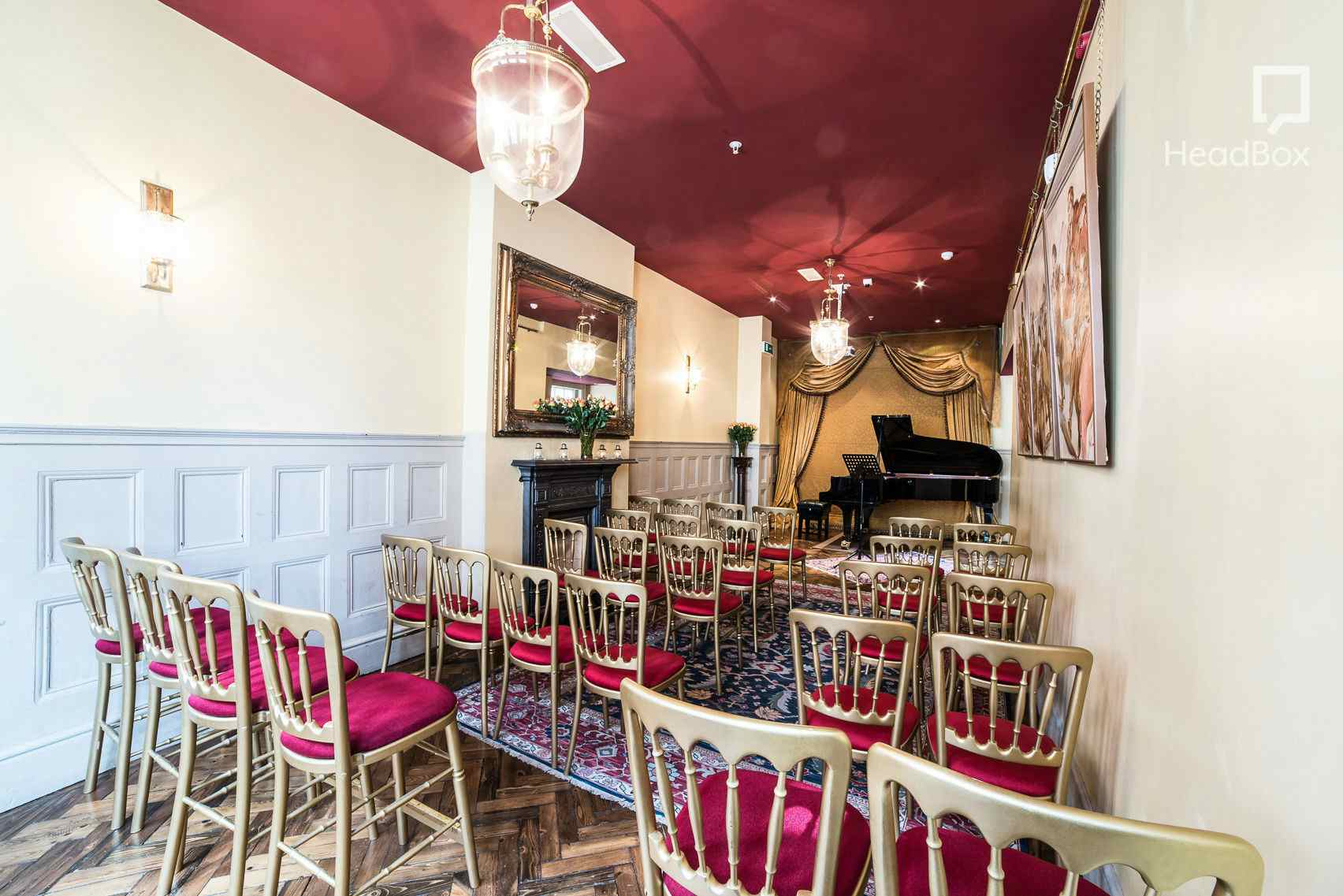
The London Piano Meetup Group (LPMG) meets monthly at venues such as the 1901 Arts Club (Waterloo), Peregrines Pianos (Clerkenwell), Café Yukari (Kew) and Gaspard Music Academy (Richmond). The group is run via a Facebook group and mailing list. If you would like to join LPMG, please contact the organiser at londonpianomeetup@gmail.com
This site is free to access and ad-free, and takes many hours to research, write, and maintain. If you find joy and value in what I do, please consider making a donation to support the continuance of this site
Who or what inspired you to pursue a career in music and who or what have been the most important influences on your musical life and career?
It was at school that my love for the piano blossomed because I heard it every single day in the school assembly. Also, by chance my teacher in infant school happened to have a piano in her classroom, so the tinkling sound of it just occupied me and I loved to explore it and make sounds.
I had formal training as a Junior at the Royal Welsh College of Music and Drama in Cardiff with my teacher, who I still have, Alison Bowring, who took me back to the technical basics and posture, while also understanding what repertoire would suit me. Alison has been a major influence on my career so far from many difference perspectives.
I also did courses with an organisation called Musicians in Focus, a team who focused on visual impairment, which helped to develop me as a musician.
My greatest influences are listening to opera singers so the idea of singing with the piano is always reinforced. Another influence was being a participant on the North London Piano school every summer. The guest teachers really helped me understand about tone production through physical touch. I had never really experienced that sort of connection before, so that memory will stay with me forever. It made me not only improve as a pianist but gave me ways to connect through performance. Pianistically, I love the physical interaction between keyboard and the body becoming one – it’s an amazing experience.
What have been the greatest challenges of your career so far?
I was diagnosed with Asperger’s syndrome, an autism condition, which affects social and communication skills, so I have support assistance to help build my independence and confidence. I actually find my personal organisation to be more challenging than practising at the piano. I can feel anxious when plans change at the last minute, for example, when a train or flight that I am booked on is cancelled. Being totally blind also affects me when I have to travel for performances, as there is no time to become familiar with new locations and therefore I normally require assistance. Being a member of organisations like the Paraorchestra and RNS Moves, an inclusive ensemble based in Gateshead however, helps me to integrate and develop networks and connections with other disabled and non-disabled musicians.
Which performances/recordings are you most proud of?
Performing the Beethoven Choral Fantasia with the Royal Welsh College Chamber Orchestra and Chorus:
My final year recital for my Bachelor degree was very atmospheric and some people I knew from school also attended.
Performing at St. Martin-in-the-Fields in 2019 was thrilling as I was in an open and resonant space, so I had to adjust myself to both the instrument and the acoustic.
Performing the Scriabin concerto in East Dulwich with Michael Cobb conducting the Lambeth Symphony Orchestra. Unfortunately, I am only able to share the encore, an improvisation on some themes suggested by members of the audience.
Which particular works/composers do you think you perform best?
I have a soft spot for Beethoven’s music because both my grandmothers have developed deafness through ageing, especially my grandmother from Northern Ireland on my father’s side. The amazing thing about Beethoven’s music is that it always feels and sounds fresh, however many times you play the same pieces, especially when playing on different instruments and acoustics.
What do you do off stage that provides inspiration on stage?
I love browsing the internet about background of the pieces and always love looking at history and why repertoire was written for specific instruments of the time, especially when dealing with Baroque or Classical period music. Also, I have a grand piano at home that has a distinctive tone colour, which helps me to transfer intimacy across to my public performances. I find that exercise keeps me moving and agile, while breathing exercises or stretches help me to relax before I go on stage.
How do you make your repertoire choices from season to season?
For a recital programme, my teacher and I like to plan the pieces in advance that will complement each other. We always talk about the relationship between each piece regarding tempo and tonality, as well as realistic timelines for learning.
Do you have a favourite concert venue to perform in and why?
I particularly enjoy St. Martin-in-the-Fields as a venue because the acoustics are unlike any other, and it allows the pianist to draw into themselves so the audience can experience the incredible sound. It’s different to a drier acoustic when it sounds like you’re on the same level with the audience when you can hear every nuance. A cathedral is a celestial atmosphere to perform in, feeling like an out of world experience.
What do you feel needs to be done to grow classical music’s audiences?
I like the idea of pre-performance commentary by the artist involved to help make Classical music more accessible and interesting for younger generations. I also like the idea of museum tours (such as Victoria and Albert Museum in London) to explore the instruments for which music was originally written. This provides essential background as audiences are used to modern instruments as the norm.
What is your most memorable concert experience?
Performing in Japan as one of 90 international artists in the True Colours Festival 2022, organised by the Nippon Foundation and live-streamed around the world. The atmosphere was just incredible and I loved having my hair and makeup done for me so I could just sit back and relax. Also, I had never changed into other outfits between musical items, or played with a headset in a live performance. I loved the variety on offer and working with a range of other musicians.
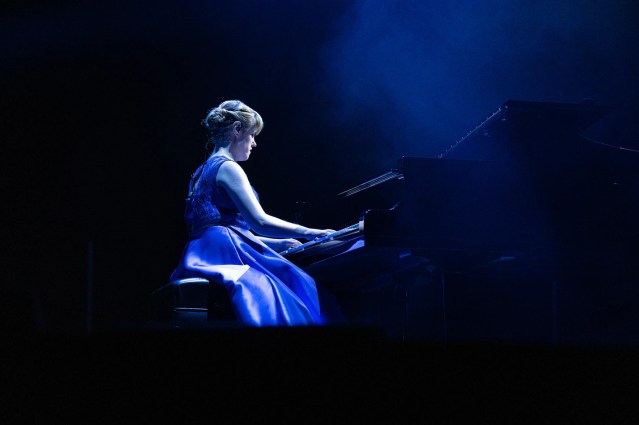
Rachel performing at the True Colours festival in Japan
As a musician, what is your definition of success?
Music is not about competition or who can play the best, it is about connecting and sharing with the audience and developing relationships as they can be vital for the future. Have the right support like a teacher who can understand the way you work, encourage and develop your musical journey.
What advice would you give to young/aspiring musicians?
Embrace every corner or avenue of your instrument from physicality/technique to exploring different music styles, so it becomes a part of you. For example, I love playing Jazz which I believe is interconnected with the classical composers that came before. Patience is always a virtue especially in practicing when you don’t get things right the first time. Keep positive and make the most of every opportunity.
On Saturday 27 May, Rachel Starritt gives a concert by candlelight at the inaugural Ludlow Piano Festival, created by impressionist, comedian and actor Alistair McGowan. Rachel will perform new works by three young composers, written especially for herm, as well as her own improvisations. Info/tickets: https://ludlowpianofestival.com/
Blind from birth, Rachel was born in Bridgend, South Wales in 1994. She has received formal training on the piano since 2006 with Alison Bowring and studied at the Royal Welsh College of Music and Drama (RWCMD) where she recently achieved a distinction in piano performance as a postgraduate student (MMus).
Rachel completed a six month Erasmus placement at the Conservatori Liceu in Barcelona under the tutelage of pianist Alba Ventura.
As a student at RWCMD, Rachel has enjoyed masterclasses with the Labèque Sisters, Stephen Osborne, Peter Jablonski, Angela Hewitt and Valentina Lisitsa. Additionally, she received guidance at the annual NLPS summer course at the Purcell school with renowned professors Dr Michael Schreider (Guildhall), Irina Osipova (Moscow), Irina Berkovich (Israel) and William Fong (RAM).
Rachel’s piano improvisation skills complement her love of jazz and she currently leads a jazz trio ‘The Rachel Starritt Trio’, which appeared at the Brecon Jazz Festival in 2020 and 2021. At Chetham’s Piano Summer School she studied with Nikki Iles and Douglas Finch and has also received lessons with the renowned Welsh pianist and composer Huw Warren.
The Cross-Eyed Pianist is free to access and ad-free, and takes many hours every month to research, write, and maintain.
If you find joy and value in what I do, please consider making a donation to support the continuance of the site










 The Cross-Eyed Pianist