In the latest episode of my Piano101 Podcast series, I meet Marc Yeats, landscape artist and composer, to talk about creativity, interpretation, artistic intent and more…..
Find previous episodes here

In the latest episode of my Piano101 Podcast series, I meet Marc Yeats, landscape artist and composer, to talk about creativity, interpretation, artistic intent and more…..
Find previous episodes here
While others headed to the grander country house operas at Grange Park or Glyndebourne, we drove from the very bottom of south-west Dorset to south Somerset for an evening of music and words at Wyke House, an attractive Georgian farmhouse set in 7 acres of grounds in the village of Wyke Champflower, near Bruton.
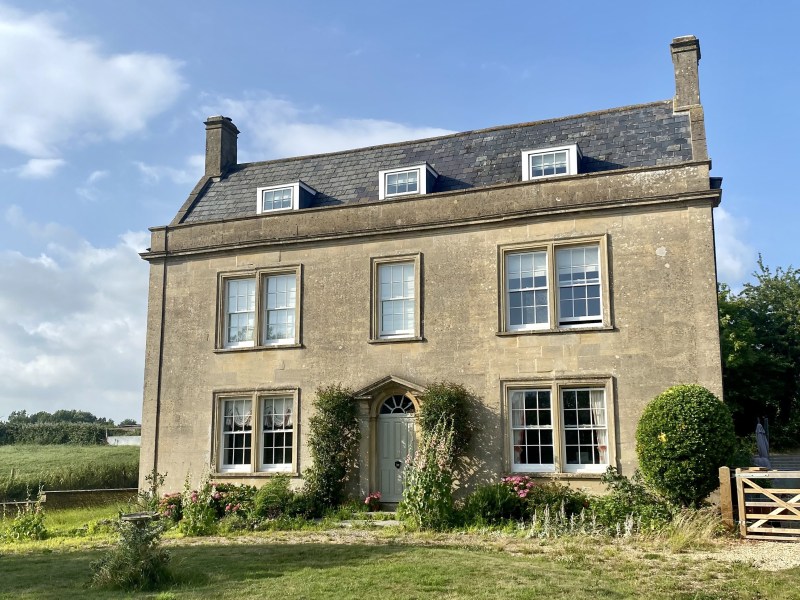
A narrow winding lane dotted with helpful hand-painted signs directing us to “Opera” led to a couple of marshalls who directed us to a field to park the car. Crossing the lane, we were met by Poppy, chatelaine of Wyke House and host of the event, who suggested a sunny spot in front of the house where we might like to picnic. A quick ticket check and, glass of complementary fizz and programme in hand, we wended our way down a path mown through the grass to a dingly dell next to a lily pond where the first act would take place. A simple twisted branch arch and straw bales adorned with velvet cushions provided the set; nearby a quartet of musicians were settling in. The audience drifted in, chatting, laughing, some clutching already-opened bottles of Prosecco…. We assembled in this casual auditorium on straw bales, garden seating, picnic chairs….and the performance began.


Purcell’s ‘The Fairy Queen’ isn’t really an opera: this “Restoration spectacular” is an anonymous adaptation of Shakespeare’s A Midsummer Night’s Dream. Purcell’s didn’t actually set any of Shakespeare’s words to music but instead created a series of short masques for each act of the play. In this performance at Wyke House, poems were interspersed with the musical episodes, which in themselves created the sense of a modern masque.
The singers and musicians are all highly respected performers, who work with some of our leading ensembles (the Orchestra of the Age of Enlightenment, Scottish Opera, Glyndebourne Touring Opera, the Dunedin Consort, ENO, Garsington Opera, amongst others), and who specialise in Baroque and Classical repertoire. Performing outdoors can be challenging and a stiff breeze competed with musicians and singers in the first half, adding to the bucolic ambiance of the event. Impressive projection by all four singers ensured that almost every word was audible, and beautifully enunciated. There was also some very impressive ensemble singing between the four of them: the sweet, elegant voices of the two sopranos Amy Carson and Emily Vine melded wonderfully with tenor Thomas Hobbs, whose warm voice was complemented by Timothy Dickinson’s resonant bass.


A relaxed picnic interval on the lawn followed before we were directed to a different setting for the second part of the evening. Now lanterns and fairy lights garlanded branches of fruit trees, flares lit the path and braziers provided some additional warmth for those who had come without a blanket. Now the wind had dropped, and the smaller size of this pastoral ‘stage’ offered a charming intimacy for more musical and poetic delights.
This was an impressive and hugely enjoyable evening, undoubtedly enhanced not only by the superb performances but also the lovely rural setting and relaxed ambiance. From a practical point of view, it was also extremely well-organised: it was easy to purchase tickets online or on the door on the day, the carparking was easy and there were even proper loos. I know from my conversations with bass Timothy Dickinson that they have performed at Wyke House before and I do hope this becomes a regular venue: it’s a real gem for music and opera lovers in the west of England and is also a valuable platform to showcase performers based in this part of the world and to celebrate the musical talent we have here in the west.
Driving back to south Dorset, the almost-full moon lighting our way for the final part of our journey, we saw a hare, a barn owl and innumerable bats.
Guest post by Caroline Wright
There’s little doubt that a performance diploma should not be undertaken lightly. Preparing takes a long time and requires thought, dedication, consistency and patience. The pieces are hard and, for most of us, the performance is anxiety-provoking. Indeed, for amateur pianists, the challenge can seem insurmountable. That said, the process of learning a diploma programme can also be fascinating, absorbing, energising, and hugely rewarding.
After recently taking my FTCL exam (but before knowing the result!), I’ve been reflecting on the last 18-months of work – was it all worth it? The answer is a resounding YES! I’ve learnt an enormous amount and grown immensely as a musician. I’ve also been fortunate enough to interact with the thriving piano community across the UK, and meet people of all walks of life who love the piano and are pondering their next pianistic step. So I wanted to share my experience, and thank the many people out there who listened, advised and encouraged me along the way.
Planning the programme
I’d been playing pretty consistently for quite a few years as an adult, but had drifted since my LTCL (back in 2012) and fallen out of the habit of really practising rather than just playing. I needed something to kick myself into action, and the FTCL seemed like ideal goal, albeit a rather daunting one. Perhaps it would be impossible, whilst also working full-time outside music, but how would I know unless I tried?
The first task seemed to be to select a programme. We pianists are spoilt for choice – there are just so many great pieces to play! I read the different syllabuses, and went round and round in circles for months, listening and playing, deciding and undeciding. Overall, the programme had to be musically balanced and make some kind of narrative sense. The pieces also needed to be at least potentially playable. (My hands are quite small, so realistically some repertoire is literally out of reach, and always will be.) And, most importantly, to survive the countless hours of practice, I had to really love the pieces – otherwise what’s the point?
Early on, I decided that I ideally wanted to combine something from one of the “great” classical composers (for me, that means Bach or Beethoven), with something short(er) and light(er), plus something from a contemporary composer. In the end, after much agonising, I settled on:
· Beethoven’s Waldstein Sonata, Op. 53 – good for the fingers, good for the soul.
· 3x Gershwin songs, from 7 Virtuoso Etudes, arranged by Earl Wild – beautiful mini-masterpieces.
· Graham Fitkin’s Relent – it’s not on any syllabus, but I’ve loved this whirlwind of a piece since I first heard it a decade ago, and dared to hope I might be able to play it.
It took me quite a while to arrive at the final selection, and there were ups and downs along the way. As I started to learn the pieces, I questioned my choices regularly, and almost gave up every piece because it seemed too hard! But I loved the whole programme and thought it would make a bold and exciting recital. The pieces are high-energy and life-affirming, which was just what I wanted!
Learning the programme
Deciding on a programme was one thing, but actually playing it was quite another. Learning to play 45 minutes of technically challenging piano music was clearly not going to happen overnight. I needed a plan.
Once I had finally decided maybe to give it a go, I gave myself a maximum of 2 years to work towards the FTCL. I peppered my time every few months with piano lessons (with my long-term teacher) and piano weekends (Jackdaws, Finchcocks, and Oxford Piano Weekends), plus a week-long music summer school (Dartington). These gave me a series of small goals to work towards, provided a source of regular expert input, and offered opportunities to play in front of people. As a result, I had a fairly clear timetable for learning the pieces, based on where I wanted to take them and when. I like to play from memory (and have blogged extensively about this before), so as well as physically playing the piano, the learning process also involved studying the scores and doing mental practice – which was really useful on holiday!
To my astonishment, everything worked out as planned. In the final few months, once everything was learnt and just needed (a lot of!) polishing, it was interesting to reflect on my progress*. I found the process of learning these three contrasting pieces quite different. I started with the Beethoven sonata, and initially made quick progress – the piece just made sense to me. I found it relatively easy to look at the score, understand the classical sonata structure, and memorise the notes. However, going from a mediocre to a good performance took ages. There’s a profound depth to this music that I hadn’t fully anticipated, and achieving satisfactory nuances of phrasing and dynamics whilst also maintaining rhythmic integrity was nearly impossible.
Once I had committed the Beethoven to memory, I moved onto learning the Gershwin songs (one at a time, of course). In contrast to the Beethoven, I found these almost impossibly difficult to read and memorise. While he was arranging these pieces for solo piano, Earl Wild added a staggering number of extra notes, many of which come from jazz harmonies and modal scales that were unfamiliar to me. Although the structure followed the original songs, it was sometimes hard to find the melodies buried deep inside the luxuriously dense texture. All three songs left me struggling and despondent for months, until things suddenly clicked, and I could just play them. After that, it was plain sailing.
When I had two Gershwin songs under my belt, I started on Graham Fitkin’s terrifying Relent. Initially, I wasn’t even sure how to approach learning and memorising such a complex modern piece, and had abandoned learning it years ago on the grounds that it was too difficult. But, motivated by my diploma goal, I worked away at it slowly, learning very small chunks at a time – often doing multiple micro-practice sessions throughout the day – then piecing them together gradually. Unlike the other pieces, my progress was pretty linear, and day-by-day I steadily got better at playing it. Graham himself was also kind enough to give me some advice about playing his piece, which was fantastic. When played at full performance speed and dynamics, the physical demands of this piece are considerable, and I had to be quite careful not to over-practice and injure myself.
After finally selecting and working on the last Gershwin song, eventually all the pieces were learnt, and I had played them all to various piano pedagogues along the way. Eventually, there was nothing left to do but admit that I probably could play these pieces and therefore really should give the exam a go!

* Being a scientist by training, I think quite conceptually, and couldn’t resist the urge to plot a simplified representation of these different, entirely subjective learning curves! Has anyone tried doing this before? I started by defining the top of a hypothetical “performance quality” scale as 10/10, an unattainable perfection that one can only imagine for any piece but never achieve – perhaps it’s a recording, or maybe just an idea. Then, somewhere below this, let’s optimistically say 9/10, is my realistically attainable performance. I think I came close to the latter, but probably never achieved it. Then, there’s the actual path of progress towards the best possible performance, which ideally tends upwards from zero as time goes by, moving at different rates and with different shapes for different people and different pieces. It’s hard not to plateau and stop improving, or worse, to go backwards, particularly when learning multiple pieces. However, I was doggedly single-minded about practising, and although my pieces progressed differently, I think they were all on a par with each other by the end.
Preparing for performance
Unfortunately, I’m not a natural performer. I don’t like being in the spotlight; I get nervous and mess things up. Although public speaking is usually OK, public piano playing is much harder. Performance anxiety is not uncommon amongst pianists, particularly adult amateurs, but it is incredibly frustrating! However, it is possible to improve, and clearly I was going to have to in order to get through an exam and indeed be deserving of something called a “performance” diploma! So, as well as learning my pieces really really well, I tried a number of different approaches to try to become more comfortable with performing.
First, I practised performing. I played in front of people, fairly regularly, mostly at informal gatherings of other pianists – because we’re a forgiving bunch, right? I also recorded myself often and learned to keep going, no matter what. As the exam date approached, I organised numerous small recitals in front of friends, family and (most intimidatingly) colleagues. I trialled different strategies for the day itself – including a mixture of practising, exercising and resting – until I knew exactly what I would do and when. I recorded myself, listened, critiqued, took notes, and improved. Little by little, the performance anxiety reduced; it didn’t go away, but I got better at managing my nerves.
Second, I augmented my musical preparation with yoga and mindfulness meditation. By the final few months, I knew I could play the pieces technically, but I was still working on communicating the programme in its entirety, and minor concentration lapses threatened to throw me off course. I needed to learn to be fully present in the moment of music-making, and not allow any unhelpful or self-sabotaging thoughts to distract me. Even a moment’s inattention can result in small slips that cascade into disasters, and the dreaded memory lapse is a perennial fear for anyone playing without a score. But I figured learning to stay focussed was like everything else in music: it improves with practice. So I started doing daily short meditation sessions aimed at recognising the wandering mind and bringing it back to the present. Ultimately, I have no doubt that mindfulness meditation helped me stay focused on the music and breathe through my nerves.
And finally, I studied. I read about Beethoven, about pianists, about memory and about performance. The list of authors included pianists, musicologists, music historians and psychologists. I also listened to different performances, as well as podcasts, interviews and lectures from musicians talking about their craft. All this helped me to get into the mindset of being a performing pianist and a musical interpreter.
Waiting for the result
It’s an age-old truism that the journey is more important than the destination. And that is certainly how I feel about my FTCL. Of course, I hope I’ve passed! But, regardless of the outcome, I’m glad I did it, from start to finish. I feel lucky to have been able to bask in such glorious music, to study it and really get to know it well. And I feel grateful to have shared that journey with so many other people who are passionate about the piano.
The only question now is: what shall I do next?
 Caroline Wright is a musician (MMus, LTCL) and scientist (MSci, PhD). Her compositions have a diverse range of influences, from classical and contemporary to blues and jazz, film and folk, dance and electronica.
It’s still quite unusual these days to attend a concert where the programme begins with a quiet and/or slow piece. Often performers have a favourite “warm up” piece, one with which they feel very comfortable, which is a helpful way to ease into the main programme, warm up the fingers and settle in for the concert. For some performers, a Prelude and Fugue by Bach, or something similar, is a good opener.
I recently attended a concert where the pianist began his programme (which included Beethoven’s heavenly penultimate piano sonata, the Op 110, and closed with Gershwin’s Rhapsody in Blue) with two very quiet, very slow sonatas by Scarlatti. It helped that the pianist in question can produce the most poetic sound (at any dynamic) on the piano, but there was something about the intimacy and muted sounds of this music that made for a very concentrated listening experience.
In fact, I think beginning a concert in this way is a stroke of genius as it can create an immediate sense of intimacy and focus. The audience is forced to listen closely and pay attention to the nuances of the music – a very effective way of drawing the audience in and engaging them with the performance, and ensuring their attention for the remainder of the concert. Opening with a quiet piece or pieces can also create a sense of anticipation and expectation: the audience may be more likely to be attentive and engaged if they are waiting for something to happen. This can be particularly powerful in a concert setting where the audience is large or the venue is imposing, as it can help to create a sense of connection and shared experience.
A quiet piece can be a very effective way of setting the tone for the entire concert and can establish a mood and atmosphere that will carry through the entire concert. This can be especially effective if the quiet piece is followed by more up-tempo or energetic pieces and the contrast can be very effective in creating a dynamic and varied performance. Beginning with a quiet piece can be a bold and unexpected choice, challenging the audience’s expectations and encouraging them to approach the performance with an open mind.
Finally, starting with a quiet piece can be a very effective way of showcasing the performer’s skill. It’s not easy to perform a quiet piece effectively, and is a real demonstration of the performer’s control, sensitivity, and expressiveness. This can be especially powerful if the performer is able to create a sense of intimacy and connection with the audience.
This site is free to access and ad-free, and takes many hours to research, write, and maintain. If you find joy and value in what I do, why not




 The Cross-Eyed Pianist