F-sharp major: “Triumph over difficulty, free sigh of relief uttered when hurdles are surmounted; echo of a soul which has fiercely struggled and finally conquered lies in all uses of this key”. – Christian Shubart, Ideen zu einer Aesthetik der Tonkunst (1806)

“Brilliant and exceedingly clear” – Ernst Pauer, The Elements of the Beautiful in Music (1876)

One of the “black note” keys for the pianist, the key signature of F-sharp Major has a daunting six sharps and its scale includes only two white notes (B and E-sharp – or F natural).

The ‘enharmonic’ key of F-sharp major is G-flat major (exactly the same notes in the scale, but a different key signature comprising six flats) – the key of Schubert’s Impromptu D 899/3 and Chopin’s Impromptu Op 51 No. 3. Curiously, although the pitches are identical, G-flat Major has a different character to F-sharp Major – it’s somehow softer and richer.

From a technical point of view, F-sharp major can be challenging for the pianist, yet piano music in this key is luminous, colourful, and fun to navigate (the opening movement of Ravel’s Sonatine, for example, or Debussy’s Poissons d’or). It’s also warm, affectionate and nostalgic (Beethoven’s Sonata Op 78 or Schumann’s Romance Op 28, No. 2). And in Messiaen’s hands, it is a key of both meditation and ecstasy.

The following piano music in the key of F-sharp Major demonstrates the range of possibilities – sonic, colouristic and expressive – that this key offers: this is some of the most beautiful and arresting music in the pianist’s repertoire:

LisztLes jeux d’eaux à la Villa d’Este (The Fountains of the Villa d’Este)

A beautiful musical evocation of the rilling, plashing, glittering of fountains at the Villa d’Este, situated in Tivoli near Rome, from the third year of Liszt’s Années de pèlerinage. This work inspired Ravel’s Jeux d’eau and many other piano pieces depicting water.

Chopin – Barcarolle, Op 60

Composed in 1845-46, three years before his death, this is one of Chopin’s most arresting and ardently expressive works, scored in a rare key for Chopin. A Barcarolle is a “boat song’, its lilting rhythm inspired by the Venetian gondolier’s stroke; Chopin never visited Venice but he would have been familiar with the genre, which he masterfully captures in this sweepingly romantic, wistful piece.

Schumann – Romance Op 28, No. 2

This is the middle of the triptych of Romances, composed as a Christmas gift to his beloved Clara, who described it as “the most beautiful love duet”. Scored in ternary form, is written on three staves (for ease of reading, nothing more scary!), the thumbs playing a serene inner duet in the tenor register, surrounded by a gently undulating accompaniment. It’s deeply romantic, radiant and infused with affection.

Liszt – Bénédiction de Dieu dans la solitude from ‘Harmonies poétiques et religieuses’

As in Schumann’s Romance, a lyrical melody is heard in the mid-register of the piano, enveloped by a rippling accompaniment in the treble and warm bass line. Luscious harmonies abound in this work of deep expression

Ibert – Le Petit ane blanc (The Little White Donkey) from ‘Histoires’

The second piece from Ibert’s Histoires suite (1922), this charmingly characterful miniature depicts a donkey, complete with clopping hooves, braying and even a few noisy “hee haws”!

Beethoven – Piano Sonata No 24, Op 78

Nicknamed “à Thérèse”, because it was written for Countess Thérèse von Brunswick, this two-movement sonata was composed in 1809 and is one of Beethoven’s most good-natured and sunny works. A cantabile introduction is followed by a long, undulating theme in a first movement which looks forward to Beethoven’s late style, while the second movement is a scampering rondo which capitalises on sudden contrasts in dynamics, major and minor, and textures, and even contains a quote from Arne’s ‘Rule Britannia!’

Messiaen – Regard du Pere and Le baiser de l’enfant Jésus from ‘Vingt Regards sur l’enfant Jésus’

F-sharp major was Olivier Messiaen’s favourite key and he used it repeatedly to express his most transcendent moods. Here, he uses it to create a movement of transcendent meditation, in the first of his Vingt Regards.

Regard XV, Le baiser de l’enfant Jésus, is also scored in F-sharp. Like the first movement, it opens in an atmosphere of quiet contemplation but grows increasingly ecstatic, with flourishes and filigree passagework reminiscent of both Liszt and Liberace.

Debussy – Poissons d’Or from ‘Images’

Inspired by a Japanese lacquer panel illustrating a goldfish and its reflection in the water, this piece is rich in visual imagery as the darting, gilded fish is brought to life in a glittering tour de force of virtuosity and harmonic and melodic inventiveness.


Other pieces in F-sharp major to explore: Scriabin Piano Sonata No. 4, Chopin Impromptu No. 2, Gottschalk The Banjo, Albeniz ‘Castilla’ from Suite Espagnole…..

Shameless begging bit:

This site is free to access and ad-free, and takes many hours to research, write, and maintain. If you find joy and value in what I do, why not

Guest review by Anthony Hardwicke

Rosendal chamber music festival – Day 4

Context is always welcome in a festival devoted to a specific composer and the penultimate Rosendal concert highlighted how actively Brahms subverted the expectations of his late 19th century audience. We heard Clara Schumann’s Piano Trio yesterday and this morning (Sunday) we were treated to some very unfamiliar but also very wonderful chamber music by Brahms’ contemporaries. Sharon Kam (clarinet) and Bertrand Chamayou (piano) played Marie Elisabeth von Sachsen-Meiningen’s elegant and tuneful Romance and then Andsnes made a strong case for Robert Fuchs’ second Piano Quartet in B minor Op.75 supported by James Ehnes, Tabea Zimmerman and Sheku Kanneh-Mason. This was a well-rehearsed and musically satisfying performance, with Kanneh-Mason playing the Thema from the second movement with angelic sweetness and plenty of tasteful flexibility in the tempo of the third movement. If you would like get to know this piece, I was going to suggest you start by listening to the beautiful chord progression in the last minute or two of the opening movement, however it’s such an obscure piece, I couldn’t even find a version of the whole quartet on YouTube! Hopefully Andsnes will do a recording soon.

Back to Brahms in the second half with sparkling rendition of the Op.40 Horn Trio. David Guerrier is a superb horn player with very clean sound and he blended beautifully with the middle register of the piano. Although Guerrier sounded fantastic, I wanted more communication from him. Do you need to sit very still to control the horn? You probably do, but I was concerned that he didn’t seem to be returning the energy and intensity from Bertrand Chamayou (piano) as much as James Ehnes (violin) was. At the heart of this performance was a passionate reading of the slow movement – a magnificent, spacious, evocative nocturne. I’m sure the players were inspired by the moonlight on the fjords with the mountains covered with pine trees that they have seen in Rosendal throughout this week.

A superstar baritone singing a hefty Brahms song cycle accompanied by the festival’s artistic director, Leif Ove Andsnes, would have been a very fitting end to the 2023 Rosendal festival. But disappointingly, Matthias Goerne cancelled at short notice. With tickets already sold, Andsnes had the unenviable task of cobbling together a completely new programme. Not ideal. Everyone is a loser when artists cancel at short notice. I was sitting behind a lady who had travelled all the way from San Francisco to hear Goerne.

The composer-theme for the 2024 Rosendal Chamber Music Festival hasn’t been unveiled yet, but the tickets should go on sale in the new year. I enjoyed the 2023 festival immensely and would certainly love to return in 2024.

Find out more about Rosendal Chamber Music Festival here

Guest review by Anthony Hardwicke

Rosendal Chamber Music Festival- day 3 evening

View the full programme

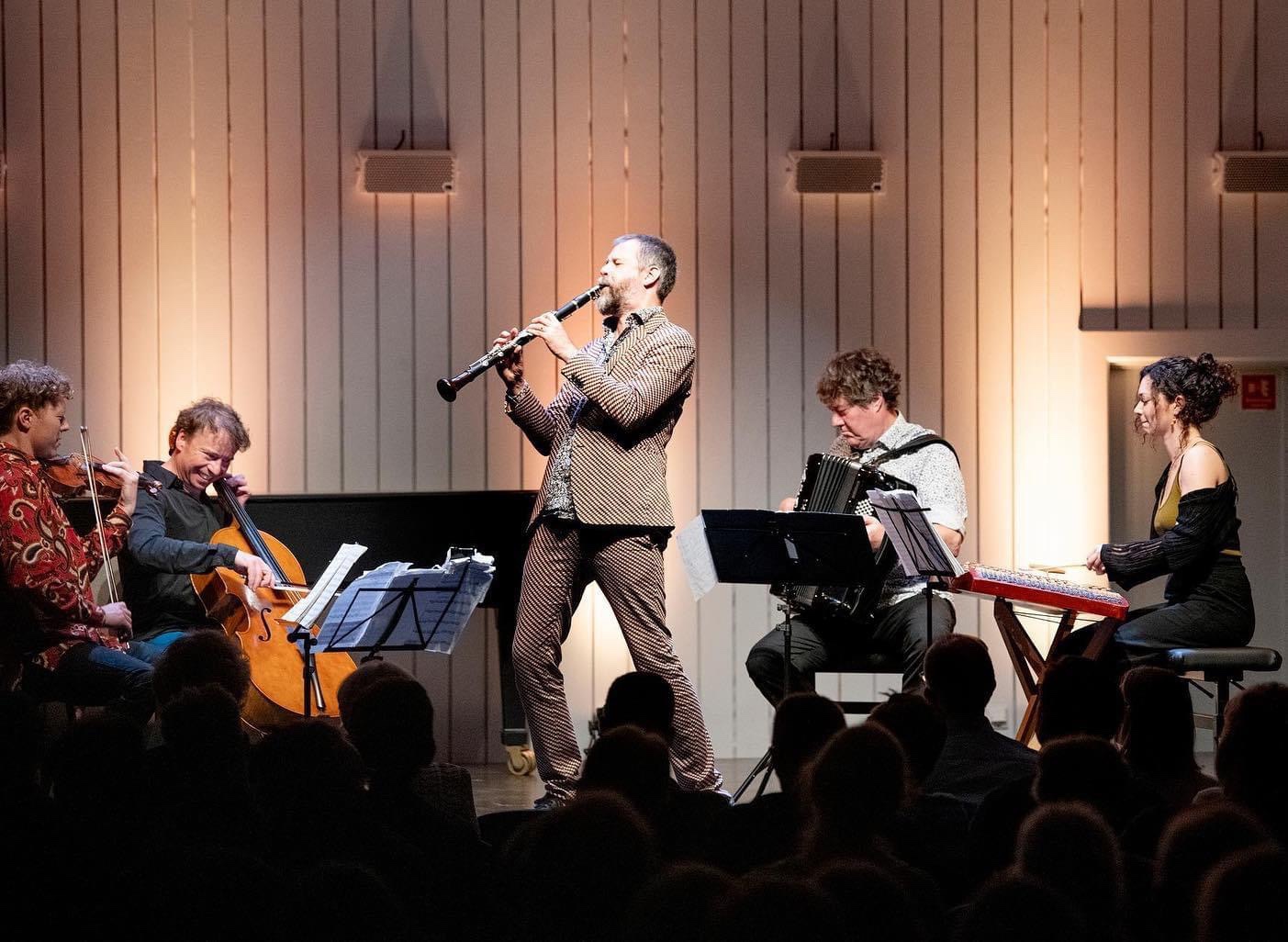
On Friday night we heard the iconic Brahms Op.115 Clarinet Quintet played by charismatic clarinetist Sharon Kam and the Dover String Quartet. The very same piece received an equally enlightened but far more unconventional treatment on Saturday night by the UK based group, ZRI.

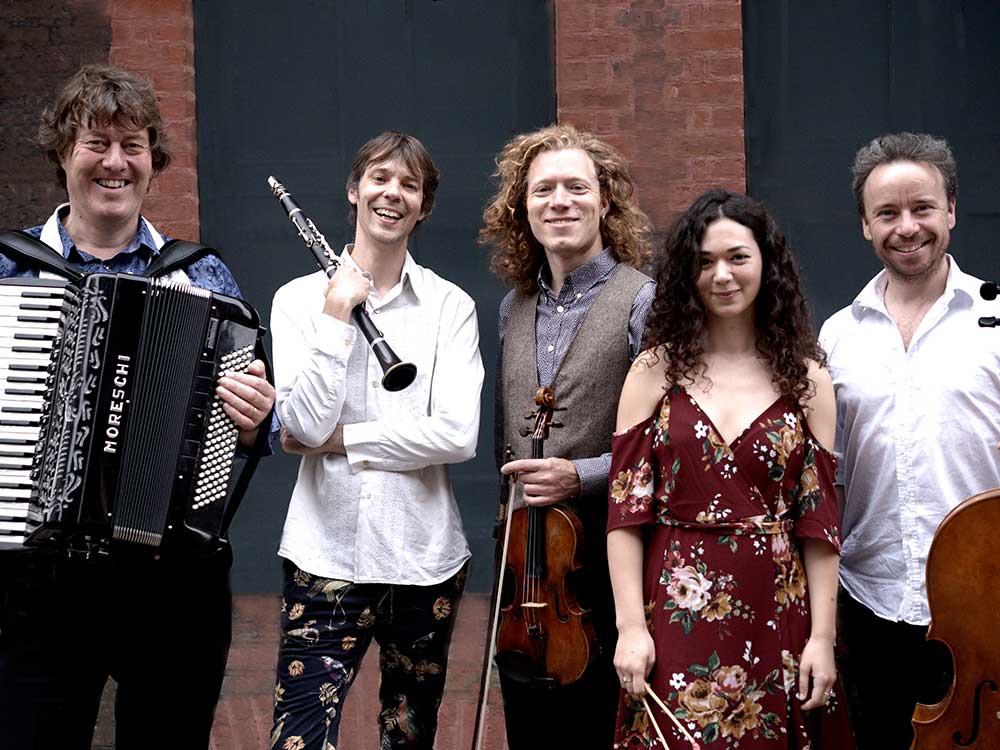
Bear with me, dear reader, while I explain about ZRI: The band’s name stands for ‘Zum Roten Igel’, which translates as ‘to the Red Hedgehog’ – the tavern that Brahms frequented in Vienna in the 1880’s. They’re from the UK and, wonderfully, they pick apart classical masterpieces like Schubert’s String Quintet and Brahms’ Clarinet Quintet and mash them up with the Gipsy folk tunes that inspired them.

If you know your Brahms, you will be aware that the middle section of the Clarinet Quintet’s second movement is actually supposed to invoke gypsy improvisation. (According to Bruce Adolphe’s talk for the Chamber Music Society of the Lincoln Centre, Brahms is reminiscing about his adolescent concert tour with the Hungarian violinist Ede Remenyi.)

The rest of the group (Max Baillie on violin, Matthew Sharp cello, Jon Banks accordion and Iris Pissaride on cembalon) looped the chords from the second movement, while Ben Harlan embellished the clarinet part with increasingly complex improvisations.

(Photo credit: Liv Ovland)

In the third movement, as the improvisations became faster and more energetic, Harlan succeeded in doing something that none of the other superstar classical musicians had quite managed to do in this year’s Rosendal concerts. He let go. There was an uplifting moment of flow with Harlan playing and whirling to the music. It’s inconceivable that this ‘spirit of the dance’ wasn’t an ingredient in Brahms’ music making in the 19th century. What’s seriously great about the ZRI approach is that it allows the players (and their audiences) to get closer to Brahms’ musical truth.

Guest review by Anthony Hardwicke

Rosendal Chamber Music Festival – Day 3 afternoon

Some of the highlights from Saturday afternoon’s concerts at the Rosendal Chamber Music Festival included a symphonic Brahms string quintet Op.111, a fresh and compelling performance of Clara Schumann’s G minor Piano Trio, and a memorable and overwhelming Brahms Piano Quartet No. 3 in C Minor Op.60, with Tabea Zimmerman calling the shots, but Sheku Kanneh-Mason predictably stealing the show with the big cello tune in the slow movement.

An all-star cast of James Ehnes and Guro Kleven Hagen on violins, Tabea Zimmerman and Ida Bryan on violas and Julia Hagen on cello enjoyed Brahms Op.111. The blend and balance was excellent and the overall sound was like an excitingly agile string orchestra. The dynamic range was impressive, especially in the outer movements. Zimmerman was at the centre of all the good communication. The last movement grew steadily to a bustling climax.

Clara Schumann’s G minor Piano Trio sounded light and fresh in the hands of an all-female trio of Yoel-Eum Son (piano), Guro Kleven Hagen (violin) and Julia Hagen (cello). The strings were very together in the unison passages in the first movement. There was plenty of detail in Guro Kleven Hagen’s beautifully shaped melodic phrases. She is not a showy player, sparing in her use of vibrato and always tasteful. Son didn’t have much to do in the slow movement, but got a chance to say more in the last movement with some deliciously judged arpeggios and graceful pedalling.

Leif Ove Andsnes and Bertrand Chamayou

As the Artistic Director of the Rosendal Chamber Music Festival, Leif Ove Andsnes attracts the most astonishingly superb musicians every year. Every one of the 11 concerts features several chamber works with different combinations of players and I have found it fascinating to see who plays well with whom. One particularly successful grouping was Bertrand Chamayou (piano), Guro Kleven Hagen (violin), Tabea Zimmerman (viola) and Sheku Kanneh-Mason (cello) and they served up a sumptuous Brahms C minor Piano Quartet to die for (actually it’s all about death). The first movement was rich and orchestral, with the strings competing to see who could produce the darkest, most malevolent tone. The piano gets more thematic material in the second movement and it was delivered immaculately by an authoritative Chamayou. And then comes the big cello tune at the beginning of the slow movement. Kanneh-Mason allowed it to speak and grow with intuitive emotion. It was a beautiful moment of discovery and the audience were holding back the tears. The last movement had shape and structure. Zimmerman controlled the strings with her dark tone, leading towards the exhausted and desolate final page.