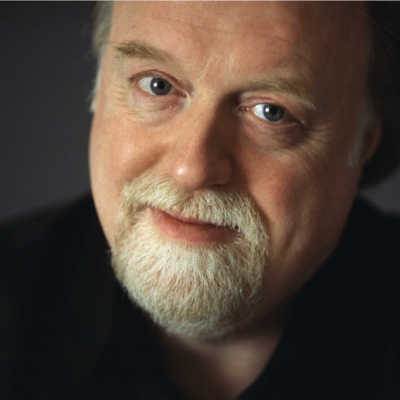
‘Verbs’ is a collection of 24 Preludes for left hand only by composer Kathleen Ryan. Commissioned by her friend and colleague American pianist and Steinway Artist, Keith Porter-Snell, the unifying theme of this suite of miniatures is the idea of verbs, one for each prelude to convey an individual quality of energy and motion, with titles such as Wait, Crackle, Drift, Bloom, Murmur, Tease, Tangle and Bless.

Keith Porter-Snell

The repertoire for the left hand alone is wide, including most famously Scriabin’s Prelude and Nocturne, Op 9, Ravel’s Concerto for the Left Hand (composed for the pianist Paul Wittgenstein, who lost his right arm during the First War) and studies by Godowsky and others. Many pianists use left hand studies and pieces to improve their technique (the left hand often being the weaker hand for naturally right-handed pianists); others are forced to turn to left hand repertoire for reasons of injury. After suffering a repetitive motion injury to his right hand some years ago, Keith Porter-Snell withdrew from performing to concentrate on his teaching career, while also developing an interest in left hand repertoire. He relaunched his performing career in 2006, specialising in piano music for the left hand alone.

By skillfully switching between the high and low registers of the piano and utilising full textures and bright or unexpected harmonies, Ryan creates the illusion of two hands playing. Coupled with Keith’s clean, lucid and sensitively articulated sound and the wonderfully echoey acoustic of Monkton Coombe School (where the album was recorded in May 2013), these preludes hark back to earlier antecedents by Debussy, Rachmaninov, Chopin and J S Bach in their variety and appeal, creating an album rich in contrasts. Ryan’s composing style is eclectic, referencing jazz, contemporary classical, traditional classical, and American folk songs and hymns: Play, for example, is a vibrant anthem, redolent of sacred harp singing, while other Preludes are more contemplative, tender and wistful (Forgive, Bloom).  Push is energetic and rumbling, suggesting bustling city life, Bounce scampers playfully around the keyboard with jazzy syncopations and colourful harmonies, and Tangle is redolent of some of Prokofiev’s more introspective ‘Visions Fugitives’. The album closes with the meditative Bless.

This interesting and appealing project is a celebration of left hand repertoire, a musical friendship, and the art of the Prelude and the miniature. Recommended.

‘Verbs’ is available from iTunes and other online music stores.

Meet the Artist……Keith Porter-Snell

A History of Left-Hand Piano

Kathleen Ryan’s Meet the Artist interview will be published soon.


Who or what inspired you to take up composing, and make it your career? 

I hadn’t considered composing as a career until relatively late in life: at university. When I was younger I was very inspired by the first organ teacher that I had, and I wanted to be like her and teach music to young people. By the time I arrived at university I was both interested in contemporary music and aware that, as an organist, I wasn’t involved in a lot of the activities that most music students are—orchestras and the like—so was looking for something that reflected my interests. I’d had a traumatic time doing my performance diploma and was convinced that performing would never be for me, but I also believed that composition was a matter of innate ability and not hard work (as many students do at 18). It was only when, encouraged by my lecturer, I entered—and won!—the Huddersfield Contemporary Music Festival Young Composers’ Competition that I began to imagine that there might be some sort of future in it for me.

Who or what were the most significant influences on your musical life and career as a composer? 

The lecturer who invited me to enter the competition that I have mentioned, Dr Mic Spencer at the University of Leeds, was a significant influence on my musical development, in particular because he was willing to lend me so many CDs, books and scores when I expressed an interest in New Music. By doing so he allowed me to listen to and learn about music which would have otherwise been completely inaccessible including most of the (at the time) more recent developments in Europe which are so rarely, if ever, performed or even mentioned in the UK. This music in itself was a huge influence on me and opened my ears to so many more possibilities than I had previously considered.

The composer Chris Newman was also a big influence on my work; I greatly admire the music and the art that he makes, and in discussing both my work and his ideas with me he encouraged me to be uncompromising in my work and ideas.

What have been the greatest challenges of your career so far? 

The most challenging time for me was a couple of years ago when I was travelling all the time, teaching in a lot of different places, and struggling to find time to work on pieces. However, this also taught me a lot of skills which help me to work under pressure now. The image of the composer toiling away in a darkened room is very much not the reality! The most challenging project I worked on was probably the opera, green angel, that I wrote from 2010-2011 with librettist and theatre director Adam Strickson. The challenges here were working collaboratively, working in the theatre which was also new to me then, and producing such a long work (75 minutes in total). The opera also went through a very intensive rehearsal process: 6 days from the first rehearsal until the opening performance and this was a completely unfamiliar way of working for me as well. However, the musicians that we worked with were all excellent and extremely dedicated which made all the difference.

What are the special challenges/pleasures of working on a commissioned piece? 

The most recent commission that I have worked on was from the Clothworkers Consort of Leeds. The commission was for a new choral piece that also celebrated the centenary of the discovery of crystallography by William Lawrence and William Henry Bragg. The challenge with such a commission is not just to respond to the brief which involves learning a whole lot of new things about something that you haven’t previously thought about—in this case, about Chemistry—but also to respond in such a way that there is a meaningful relationship between the impetus for the commission and the resultant music. This means that each time it is necessary to re-think one’s approach to composition as a discipline; it’s not sufficient just to draw upon techniques and ideas from the past. This is both difficult, sometimes incredibly so, but also extremely satisfying and rewarding.

What are the special challenges/pleasures of working with particular musicians, singers, ensembles and orchestras? 

There are different challenges when working with all sorts of musicians, and I’m really lucky because most of the time I’m now working with musicians who are either contemporary music specialists or people who are extremely enthusiastic about and dedicated to the pieces that they perform. I really enjoy working with pianist Ian Pace, who has performed two of my works, not least because as well as being an excellent pianist he is also extremely insightful about the music that he performs. A lot of my work involved open or graphic approaches to notation, and I’ve also really enjoyed working with specialist performers on this type of piece. It can be a challenge to present this type of notation to unfamiliar performers. Recently I’ve worked with the group Vocal Constructivists on the piece concerto and with trombonist Gail Brand on the piece ‘entoptic landscape’. When musicians like these are so skilled at working with the type of notational challenges I present to them there’s the opportunity for dialogue and rewarding exchange which also helps me to go further as a composer.

Which works are you most proud of?  

This is a difficult question to answer! Usually, the most recent music I’ve written represents best my current thinking about music and composition, so in this case it would be the piece a common method, written for the Clothworkers Consort of Leeds, which I’ve most recently finished. I’m also extremely proud of the piece ‘/’(h)weTH’ which is a collaborate and multi-media piece that I wrote in 2012 with US visual artist R. Armstrong. This collaboration really challenged me to extend and develop my ideas and this was perhaps a turning point for me in the way that I approach many aspects of my work.

Do you have a favourite concert venue? 

I really enjoy when music is performed in unfamiliar places. I like the idea than any spaces can be re-purposed to become musical, and that the concert hall can become part of the staging of a work itself. In September 2013 Ian Pace performed my piano piece, i am but one small instrument, at the festival Firenze Suona Contemporanea (http://www.flamensemble.com/en/) which takes place in the Bargello Museum which is actually a mediaeval prison that has become an art museum. The concerts take place in the open-air atrium at the centre of the building. This is perhaps one of my favourite ever concert venues.

As an organist my favourite place to perform at the moment is St Laurence Church in Catford. This church was built in 1968 and has beautiful modern architecture and stained glass. It doesn’t house a very big organ but the instrument is quite powerful for its size and makes a great sound. This is the venue for the ‘Automatronic’ (http://automatronic.co.uk) concert series for organ and electronics that I organise with Huw Morgan and Michael Bonaventure .

Who are your favourite musicians/composers? 

This is another difficult question. All of the composers that I work with as an organist are important to me; some of the best experiences I have relating to music are when others share their ideas with me, and the kind of collaborations I have had with some of the composers whose music I perform are very important.

For many years as a student the music of Mathias Spahlinger was usually very close to the top of my CD pile. I also love to listen to the music of Sainkho Namtchylak, particularly the way her compositions and performances include so many influences and that she is so  confident in presenting her ideas.

What is your most memorable concert experience? 

Perhaps some of the most memorable experiences that I have had were of hearing live performances for the first time of large works by composers I had only heard on CD at the Huddersfield Contemporary Music Festival. A particular example that stands out is the world premiere of Concertini by Helmut Lachenmann. But I can think of many examples of fantastic live music experiences, perhaps most recently at the ‘free range’ experimental music series in Canterbury (http://free-range.co) last week. This weekly concert series is memorable every time I go to it, and although so much of contemporary music culture seems based around recordings these days I think that live music is still most important.

What do you consider to be the most important ideas and concepts to impart to aspiring musicians? 

The most important thing for any musicians to do, students or otherwise, is to listen to—and try to come to understand—as much music as possible, and particularly unfamiliar music. This is an idea that I come back to in my own life very often: it’s not possible to spend too much time discovering new music. In addition, I always try to impress on the student composers that I work with the importance of learning technique. Techniques can always be re-worked and re-purposed and, no matter what type of music you want to compose, being able to manipulate sounds and ideas—and to take these from one setting and use them in another—will always help to realise your ideas. Finally, I try to encourage all students to consider compositional practice in a similar way to instrumental practice: do some every day, do warm-up exercises, do a lot that no-one will ever get to hear. Often we think that instrumental performance takes a lot of hard work but expect composers to be brilliant as a result of inspiration and nothing more. Nothing will take you further as a composer as much as hard work!

What are you working on at the moment? 

At the moment I’m preparing to take the programme of organ and electronics pieces on tour. The tour is co-produced by Sound and Music and is a great opportunity to perform the music that I’ve been learning as a performer. The next compositional project is more collaborative work with Adam Strickson (who I worked on the opera with). The piece is still very much in the developmental and ideas stage, but should be finished by the summer.

What do you enjoy doing most? 

Most of my time is spent composing, performing, or teaching music, so I’m glad that I enjoy this. Outside of music-related work I love cooking, particularly for other people. I think that good food is an important part of having a fulfilling life as a musician.

Lauren Redhead is a composer, performer, and musicologist from the North of England. Her music has been performed by international artists such as Ian Pace, the Nieuw Ensemble, Trio Atem, Philip Thomas, BL!NDMAN ensemble and rarescale, and she has received commissions from Yorkshire Forward, the Huddersfield Contemporary Music Festival, Making Music and the PRSF for Music, and Octopus Collective with the Arts Council of England. Her opera, green angel, was premiered in January 2011 with the support of the Arts Council of England. Her music has been performed at Huddersfield Contemporary Music Festival, Gaudeamus Muziekweek, the London Ear Festival, and many locations throughout the UK and Europe. In 2013, her work was be performed in the, Belgium, Italy, Austria, the London Ear Festival, the London Contemporary Music Festival and the Full of Noises Festival in Barrow. In 2014 she will be involved in the Sounds New Festival as a composer and performer. A CD of her chamber works entitled tactile figures was released on the engraved glass label in 2012, and further works will be released on CD in 2014.

As an organ performer she has premiered notable works of experimental music by Chris Newman, Nick Williams, John Lely, and Scott McLaughlin, amongst others. Lauren is actively involved in promoting and commissioning new works for organ and electronics and graphic and open notation works for the organ. In 2013 she made her debut organ performance in North America at Wesleyan University and appeared at the Huddersfield Contemporary Music Festival. She co-curates the ‘Automatronic’ concert series for organ and electronics with Huw Morgan and Michael Bonaventure. In 2014 she will tour her organ and electronics programme throughout the UK with the support of Sound and Music.


Pianist Ian Pace performs Lauren Redhead’s i am but one small instrument on 16th June at Deptford Town Hall, London SE14. Full details here

weblog.laurenredhead.eu

Acclaimed French pianist Pascal Rogé gave a lunchtime recital at Wigmore Hall on Monday featuring works by three towering figures of French piano music – Debussy, Ravel and Poulenc. The hour-long concert afforded the audience a wonderful opportunity to enjoy the most wondrous pianism, from the graceful, subtly nuanced soundworld of Debussy’s Suite bergamasque to Ravel’s glittering Sonatine and closing with Poulenc’s vivid and characterful Les soirées de Nazelles.

Parisian-born Rogé has a deep affinity with these composers, with countless celebrated performances and an impressive discography. I have enjoyed Rogé’s pianism on disc and have for a long time wanted to hear him live.

Debussy’s Suite bergamasque was written in 1890 and owes much to the poet Paul Verlaine and his Fêtes galantes.Verlaine in turn was inspired by the painter Watteau, whose works evoked the elegant and frivolous pleasures of eighteenth-century French society, and his poems – and Debussy’s Suite – also draw inspiration from the Italian Comedia del’arte.

Debussy’s writing is subtle and elusive in rhythm and harmony, with an undercurrent of sadness and poignancy which runs through the four movements. Roge’s lucid playing highlighted many of the details, layers and nuances in the music which other performers may overlook, too keen to emphasise the “impressionistic” nature of Debussy’s writing (a term which the composer himself despised). There was vibrancy too, in the ‘Prelude’ and the ‘Passepied’, emphasised by sensitive pedalling and a clear sense of line. No muddy soundwashes here, ‘Clair de Lune’ seemed to float, suspended and shimmering, yet with a gorgeous clarity too.

When Ravel composed his Sonatine he had already completed Jeux d’Eau, an inspired addition to the impressionist repertoire of the piano, and it seemed unlikely he would turn back to a classical antecedent. However, he was tempted by a competition for the first movement of a sonatina: as it turned out, he was the only entrant. The delicate figurations, which act as an accompaniment (together with the bass line) in the first movement, clearly show the influence of the “running water” arpeggiated figures of Jeux d’Eau.

As in the Debussy, so in Ravel Rogé displayed remarkable precision combined with sensitivity in touch, articulation, tonal shading, phrasing and voicing, all coupled with an astonishing control of the piano which results in the most delicious, sparkling palette of sounds and colours. His magical sense of timing and spare rubato in the opening movement was, for me, one of the most wondrous moments in the entire recital.

In contrast to the intricate traceries of Ravel and Debussy’s kaleidoscopic soundworld, Poulenc’s Les Soirées des Nazelles was bold and spirited, full of improvisatory passages and rapid shifts of mood, dynamic and tempo. Rogé gave a rich and full-blooded performance, which really brought the virtuosic nature of this suite to life.

Satie’s rarely heard Gnossienne No. 5 was the encore – voluptuous in tone, simple and tasteful, a delight!


Meet the Artist……Pascal Rogé

(picture credit: Mary Robert)


Opera (English plural: operas; Italian plural: opere) is an art form in which singers and musicians perform a dramatic work combining text (called a libretto) and musical score, usually in a theatrical setting. Opera incorporates many of the elements of spoken theatre, such as acting, scenery, and costumes and sometimes includes dance. The performance is typically given in an opera house, accompanied by an orchestra or smaller musical ensemble. (Wikipedia)


For most of my adult life I have been allergic to opera. It must also be said that for nearly half of my adult life (some 20 years) I hardly went near a classical music venue, nor played the piano. A chance conversation with a then colleague – now a very good friend – in the art publishing industry (where I worked before I had my son) revealed a mutual love of classical music and, in particular, live concerts and suddenly I was a regular at the Wigmore Hall, enjoying fine chamber music in one of London’s most perfect venues.

As a child in the late 1970s, I went to many operas with my parents, who were subscribers to the Welsh National Opera (WNO) on tour. We were living near Birmingham at this time, and from a young age (around 5) I was regularly taken to concerts by the CBSO at Birmingham Old Town Hall, where the orchestra was conducted by a vibrant young man with wild curly hair, who has gone on to enjoy a glittering and acclaimed career with some of the finest orchestras in the world. Going to the opera was something else we did, as well as listening to classical music LPs at home, and piano lessons, of course. I was lucky enough to see many fine performances, including the most exquisite production of Mozart’s The Magic Flute with sets designed by David Hockney, and a Madame Butterfly which was all Japanese sliding screens and Zen gardens.

Later, as a teenager at school in Hertfordshire, I went to full dress rehearsals at the Royal Opera House, Covent Garden, enjoying an afternoon out of school to see some of the ‘greats’ of the operatic world – including Sir Thomas Allen (in Britten’s Peter Grimes) and Dame Janet Baker. These were memorable occasions, not only for the music, drama and spectacle, but also for the plush scarlet and gold opulence of the Royal Opera House.

A rather disastrous trip to Glyndebourne with my fiancé (reader, he married me) to see Britten’s Death in Venice put me (and my husband) off opera. By this time, I had also formed a very deep dislike of anything by Wagner and had decided (perhaps unfairly) that anything by him would be overblown, over-sung and over here.

Musical friends and colleagues have tried to tempt me back to the opera, assuring me that I will love it, pointing out that I absolutely MUST see anything by Wagner, and citing his important influence. (Some people have even tried to suggest that my dislike of Wagner is an obstinate form of philistinism: I just don’t like his music – get over it!)

Across my social networks, in particular on Twitter, I am connected with many people who absolutely adore opera, passionately and fervently, and who go not once but thrice to Covent Garden or the Coliseum (home to the English National Opera) and beyond to see repeat performances of operas featuring the singers, conductors, producers and directors whose work they admire and love. I began to wonder what I might be missing out on: these people were enjoying fine performances and an enviable social life at the opera at the same time.

When I started reviewing for CultureVulture.net at the beginning of the year, my co-reviewer, Nick, suggested we might cast our reviewing net a little wider than piano recitals and art exhibitions, assuring me that we would not be penetrating Wagner’s Ring, but could happily enjoy operas by Mozart, Bizet, Rossini, Puccini and Handel. And so on 3rd May 2014 we found ourselves in the dress circle at the Coliseum for the first night not of Così fan Tutte, but Thebans, a new opera by Julian Anderson based on the Theban trilogy by Sophocles.

Modern opera for the “opera newbies”? We were really jumping into opera at the deep end, but despite the grim narrative (family intrigue, incest, murder), I really enjoyed it – the music was arresting, with some exquisite chorus and wind writing, the brutalist setting was interesting, and the cast were convincing and committed. Within moments, I believed I was there, in Thebes. In addition to this, it proved a thoroughly good night out: the opera crowd are different to the (largely) superannuated Wigmore hall audience and the atmosphere in the foyer and bar was cheerful and noisy.

Opera is of course very different to chamber music or solo piano recitals. There is drama, there are costumes and sets, there are memorable arias and choruses, there is action and emotion, dance, theatre, “speaking to music” (recitative), comedy, tragedy, pathos and poignancy – the full sweep of human experience is here.

Of all the strands of classical music and the performing arts, opera seems to receive the best press – and the worst press. It continues to be regarded as elitist, snobby, inaccessible (eh?), expensive (ahem – opera tickets are often cheaper than West End theatre or pop concerts) and generally the exclusive preserve of toffs and poseurs.

This has not been my experience, so far. Thebans was an esoteric and admittedly quite “difficult” opera to enjoy, per se, but the audience didn’t strike me as especially high-brow. And at Opera Holland Park on Saturday evening (my first visit to this wonderful venture, now in its 25th year, which runs a busy and varied summer season in the grounds of Holland House in London’s Holland Park) the audience was positively garulous, hugely enjoying all the comedy and dramatic irony contained in Rossini’s ever popular Barber of Seville. (And not forgetting noisy interjections from the peacocks who live in Holland Park.)

If anything, opera seems to me to be rather more relaxed than the “sitting in the dark in hushed reverence” atmosphere of the Wigmore Hall, and based on my, albeit limited, recent experiences, the etiquette of opera going is much looser. For example, you can clap after a particularly fine aria or chorus set-piece and no one glares at you as if you have committed some major musical faux pas, and there is a very tangible sense of shared experience.

On another level there is of course the music. Far from being inaccessible, opera is full of memorable, hummable tunes (something my co-reviewer is very keen on!). I bet most people could hum Bizet’s Toreador’s Song (from Carmen) or Nessun Dorma (from Turandot), which has been elevated to the rank of a sporting anthem, or the magical duet from The Pearl Fishers. We hear excerpts from opera in film and tv soundtracks, and in adverts, so embedded is this art form in our Western cultural landscape.

This week my Twitter feed has been full of tweets about the new production of Dialogues des Carmelites at the Royal Opera House (conducted by Sir Simon Rattle), Poulenc’s sublime opera set during the violent upheaval of the French Revolution (the set includes a working guillotine). It sounds fabulous – musically, dramatically, emotionally – and I really hope it may be available online or DVD, or in repertory at ROH at a future date, as I’d really like to see it.

Meanwhile, I am back at the “Coli” (as we opera buffs say!) for the first night of a new production of The Pearl Fishers by Bizet on 16th June. And in the autumn, new productions of Xerxes, The Marriage of Figaro and La Boheme beckon….

And what of Wagner? Well, I’m not sure I’m quite ready for the ladies with horns on their heads just yet…..

Opera Holland Park

Royal Opera House

English National Opera