Opera ingenu Nicholas Marlowe (my co-reviewer for CultureVulture.net) went to see ENO’s production of Puccini’s La Fanciulla del West.
Often laughed off as the first Spaghetti Western, La Fanciulla del West remains the least known of Puccini’s major works. Set during the California gold rush of 1849-50, it was first performed to universal acclaim at the Metropolitan Opera in New York in 1910 (a far cry from the disastrous opening of Madame Butterfly at La Scala six years earlier). And yet Richard Jones’s new production is the first at the ENO for fifty years.
La Fanciulla tends to appeal to serious aficionados of Puccini’s score rather than the ordinary opera-goer, and it’s not hard to see why. The paucity of stand-alone arias – never mind a ‘Nessun Dorma’ – is a major stumbling block, the only real crowd-pleaser being ‘Quello che tacete’ in Act I, strongly reminiscent (I wonder why?) of ‘Song of the Night’ in Andrew Lloyd-Webber’s Phantom of the Opera. It also has one of the most preposterous plots in all opera, and characterisation that veers dangerously close to cardboard: saloon-owner-with-a-heart-of-gold Minnie, miraculously-reformed bandit Ramerrez aka Dick Johnson and sleazy Sheriff Jack Rance. You might think that singing it in English would have smoothed things a little, but I rather missed the cries of “Howdy, ragazzi!” and “Whiskey per tutti!”
Peter Auty and Susan Bullock in The Girl of the Golden West. (Photograph: John Snelling/Getty Images)
Nevertheless, the entire ensemble did well in what was largely a production of firsts. Highly-regarded British soprano Susan Bullock ruled the roost in a feisty stage debut as Minnie (she previously sang the role in concert at the Edinburgh festival in 2010). It was tenor Peter Auty’s debut as Dick, and American bass baritone Craig Colclough’s as Rance. Canadian conductor Keri-Lynn Wilson, meanwhile, made her UK operatic debut in the pit. Sterling support came from an ENO chorus that shifted convincingly from bible class to lynch mob.
The opening act in the Polka saloon I thought suffered from a lack of clear definition in the male roles, although some were still very good indeed; I particularly liked Graham Clark as Nick the bartender. Act II, set in Minnie’s cabin, was somewhat knockabout, provoking a certain amount of tittering in the Colisseum audience, and at this stage I began to wonder if Jones and co were playing the whole thing for laughs. All came good in the final act, however, particularly in Auty’s poignant rendition of Dick’s final despairing aria, well matched by Bullock’s gutsy performance as she pulled out all the stops to save her fella from the noose.
Who or what inspired you to take up the piano, and make it your career?
I don’t remember not playing the piano! But as a career – the London-based Swiss pianist, Albert Ferber, with whom I was studying, encouraged me to make my debut at Wigmore Hall in 1974.
Who or what were the most important influences on your musical life and career?
All my teachers in different ways; musical members of the family; friends and colleagues who believed in me. The composer William L Reed was a marvellous mentor and facilitator. Perhaps most important of all, a passion for the music I had found and a powerful desire to communicate it.
What have been the greatest challenges of your career so far?
To focus on priorities.
Which performance/recordings are you most proud of?
The ones where there has been that special communication with listeners – whether in the concert hall or in feed-back from far-flung corners of the world. I do not wish to be solely defined by the many Grainger ones, but they have presented much repertoire that is new, fresh, entrancing, life-enhancing – hard work, but what a joy!
Which particular works do you think you play best?
The particular ones for which I feel a gut instinct, whether by Bach, Beethoven, Schumann, Brahms, Chopin, Ravel, Debussy, Rachmaninov …. the list goes on.
How do you make your repertoire choices from season to season?
That is dictated by the projects I am undertaking.
Do you have a favourite concert venue to perform in and why?
I have enjoyed different venues for different reasons – the Melbourne Recital Centre is lovely, but so too is London’s Kings Place for its vibrant sense of enterprise (and very fine hall), and St John’s, Smith Square for its beauty. I have often relished the pin-point acoustics of Wigmore Hall, and the warm atmosphere of the Purcell Room. It was a thrill to play on the stage at Covent Garden for a gala Australia Day concert and at the Royal Festival Hall in Grainger’s ‘The Warriors’. By contrast, a good piano in a large music room can be perfect for a recital where one introduces the music.
Favourite pieces to perform? Listen to?
Most recently Bach transcriptions and originals for a Bach CD on LIR Classics. And see above……
Who are your favourite musicians?
To hear: I so loved the Pollini Beethoven cycle, and in different sonatas, Brendel (the last three) and, unexpectedly, Barenboim in some of the early ones. Of course, that force of nature, Argerich! On disc – Dinu Lipatti, Solomon and Richter.
For many years I played two piano programmes with my friend and colleague, John Lavender. We gradually developed a way of creating one texture from two pianos. We recorded much new Grainger repertoire on three discs and John also made some splendid two piano versions of such works as Tchaikovsky’s ‘Romeo and Juliet’ overture as part of an all-Russian programme.
I have been lucky to work with so many fine artists – in earlier days, the mezzo Muriel Smith, more recently, certain outstanding singers – Stephen Varcoe, Martyn Hill, James Gilchrist and Della Jones, in the Chandos Grainger recordings and in concert. Wayne Marshall was a memorable colleague both as pianist and conductor. It has been a great pleasure to work with the cellist, Rohan de Saram, who has recently returned to the standard repertoire along with his extraordinary abilities and achievements in the field of contemporary music. Earlier women pianists who inspired me in concert included
Lili Kraus, Alicia de Larrocha and Rosalind Tureck. Also Hephizibah Menuhin, whom I knew and admired as a friend.
These are but a few names amongst many others…
What is your most memorable concert experience?
Too many memorable experiences to choose one – but playing in 1980 in the Beijing Conservatoire and to a radio audience they told me averaged 50 million – was certainly the largest audience ever!
What do you consider to be the most important ideas and concepts to impart to aspiring musicians?
Be yourself. Find your unique path. Work hard. Know that beyond failure there is always the next step. Cherish your friends and the wonderful opportunities we have to share our music.
What are you working on at the moment?
A concert at King’s Place, London, to mark 40 years since my London debut.
It will be a programme filled with melody and shared with some good friends, the Fitzwilliam String Quartet and a group of gifted young professionals, as we shall be premiering a piano concerto movement written by Grainger when he was just 13 years old.
I’ll start with mighty Bach arr. Liszt and progress through Grieg (lovely Grieg) by way of Grainger to the Dvorak Piano Quintet Op 81 – what an utterly gorgeous work.
What is your present state of mind?
Expectant.
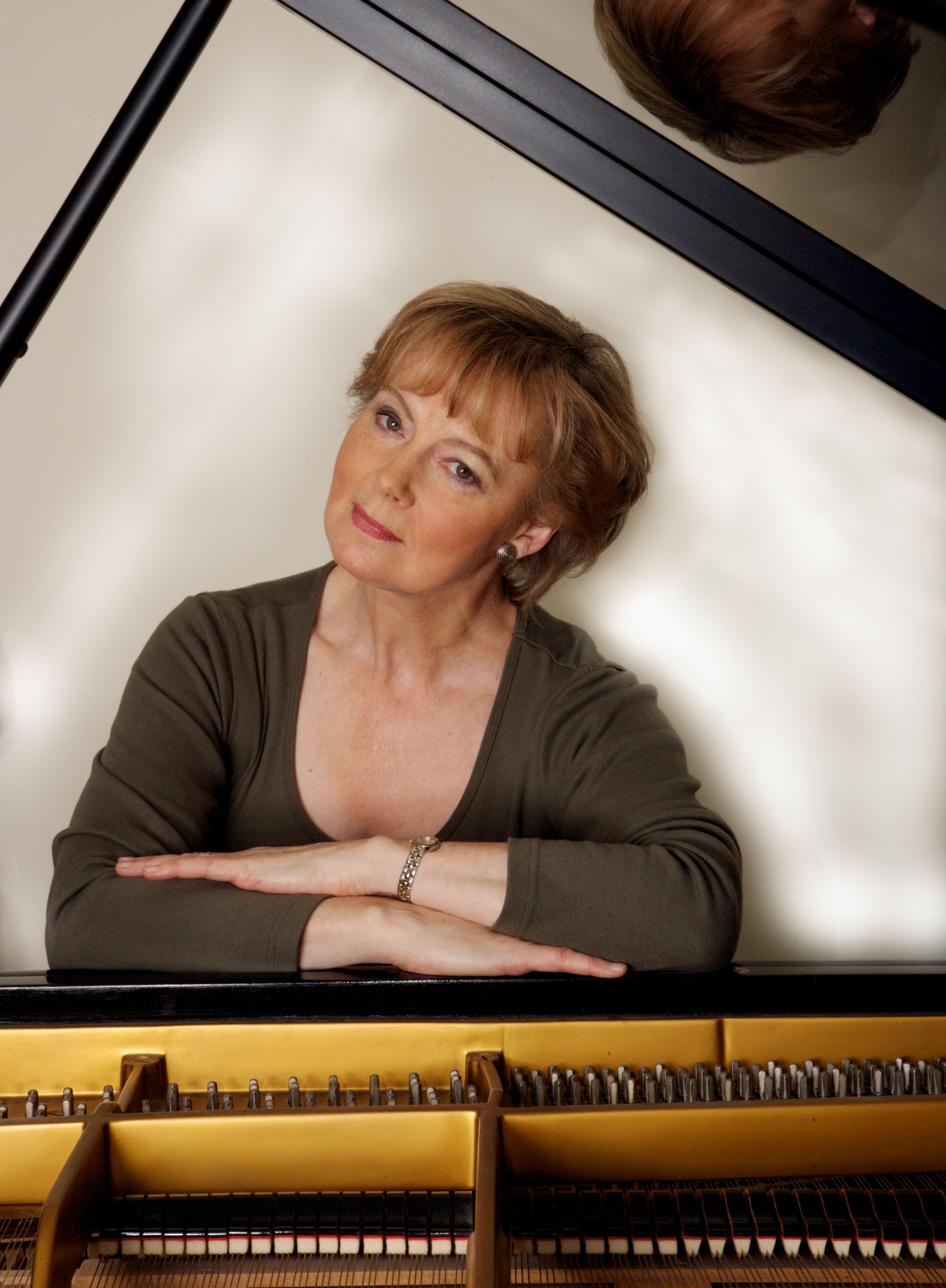
Penelope Thwaites’ 40th Anniversary Concert takes place at London’s King’s Place Hall One on Wednesday 8th October. She is joined by the Fitzwilliam Quartet and outstanding young professional artists in a programme of music by Bach arr. Liszt, Grieg, Grainger and Dvorak. Further details here
London-based pianist and composer Penelope Thwaites has performed and broadcast in over thirty countries on five continents. Since her Wigmore Hall debut in 1974, she has appeared regularly as recitalist in major concert halls, and in a wide repertoire she has built a reputation as an intensely communicative artist. As concerto soloist she has appeared with the Philharmonia, the London Philharmonic Orchestra, City of London Sinfonia and the BBC Concert Orchestra, and with leading orchestras in Australia, Europe and America.
He looks like he should still be at school, yet he plays with the commanding presence, exceptional technical facility and deep commitment a professional artist thrice his years would envy. He’s slight, floppy haired, yet he can bring power and richness to the boldest fortissimo passages, while his pianissimos are delicate whispers. Welcome to the world of Daniil Trifonov.
Superlatives quickly become redundant when attempting to describe the pianistic feats of this young artist, winner in 2011 of both the Tchaikovsky and Rubenstein Competitions, and still only 23. He’s already got a clutch of recordings under his belt, and is in demand around the world. His London concert marked his Royal Festival Hall debut (he has already played at the Wigmore and Queen Elizabeth Halls), and it was therefore a pity that due to an unfortunate, and probably accidental, concert clash with Behzod Abduraimov’s Wigmore Hall recital, the Festival Hall was not as full-to-bursting as it might have been for this eagerly-anticipated debut.
Who or what inspired you to take up composing, and pursue a career in music?
I started as a jazz bass player having become very interested in jazz as a teenager. I had studied classical piano from the age of 5, but took up the bass when I was 18. I only started to compose in my early twenties and for this move it was the work of John Cage that was the key inspiration.
Who or what were the most significant influences on your musical life and career as a composer?
Initially it was Cage.
What have been the greatest challenges of your career so far?
There have been many, but perhaps writing my first opera, a setting of Euripides’ Medea in Ancient Greek was the most challenging as it was the first thing I’d ever written for orchestra, for the stage, for the human voice and I’d only ever seen one opera live. In addition I was my own publisher and I had only 8 months to write it while teaching full time…
What are the special challenges/pleasures of working on a commissioned piece?
The main challenge, which is in fact a pleasure, is to get to work with many very different artists – both with performers, choreographers, opera directors etc.
What are the special challenges/pleasures of working with particular musicians, singers, ensembles and orchestras?
It is, again, the encounter with artists of real quality and I have to find what works best for them; that is to say, I always take account of their characters both musical and otherwise.
Which works are you most proud of?
I’m not really proud of any of them! There are works that I think are of greater significance but I never proud of my own achievements though I take pride in the successes of others – my children for example.
Who are your favourite musicians/composers?
My favourite musicians are the members of my own ensemble, who are the finest singers and chamber music players I know, and with whom I have chosen to work. There are many composers whose works I enjoy and admire but none would be “favourites”!
What is your most memorable concert experience?
There are many, but I would single out two. One was a concert performance of my first opera by BBC Scottish Symphony orchestra 11 years after the opera performances. The other was touring an old piece of mine, The Sinking of the Titanic, during the centenary year of the sinking, when I included my four children in my ensemble (my three daughters on viola, two cello; my son on double bass)
What do you consider to be the most important ideas and concepts to impart to aspiring musicians?
There are two:
Always keep and open mind and a spirit of enquiry (so as not to develop predictable routines) and make sure that you have a secure musical craftsmanship ( so that you are able to express your ideas without difficulty of technique).
Where would you like to be in 10 years’ time?
I would like to be still alive and well, and in our home with my entire family on the Pacific coast of Canada (where we live for part of the year)
What is your present state of mind?
Alert and as serene as possible
Gavin Bryars presents ‘The Bass in My Life’ with Daniele Roccato, double bass, who performs works by Stefano Scodanibbio, Giacinto Scelsi, Ivan Fedele, Franco Donatoni, Daniele Roccato and Gavin Bryars at the Italian Cultural Institute London tonight. The event is part of the Suona Italiano residency to promote Italian music. Further information here
“… The music of Gavin Bryars falls under no category. It is mongrel, full of sensuality and wit and is deeply moving. He is one of the few composers who can put slapstick and primal emotion alongside each other. He allows you to witness new wonders in the sounds around you by approaching them from a completely new angle. With a third ear maybe. . .” –Michael Ondaatje
The Cross-Eyed Pianist is free to access and ad-free, and takes many hours every month to research, write, and maintain.
If you find joy and value in what I do, please consider making a donation to support the continuance of the site








 The Cross-Eyed Pianist