This is an article I wrote for HelloStage, a social media platform which allows musicians, promoters, agents and other music professionals to connect.

social media

noun
noun: social media; plural noun: social medias 

1. websites and applications that enable users to create and share content or to participate in social networking. 

If you are reading this article, I can almost guarantee that you found it via a social media platform – a blog, a blog embedded in a website, a link shared on Facebook, Twitter, LinkedIn or Google+, or via a “discovery engine” such as Stumbleupon or Reddit. Or indeed via any of the other myriad platforms that allow people to create and share content across the internet.

Social media offers musicians quick and easy ways to build and enhance one’s profile, and connect with one another, promoters and agents, venues and audiences, radio stations and recording companies across the web. It has created international stars and opened up the world of classical music to a broader audience and fan base. The barriers to entry are low, and costs minimal or non-existent, and a robust online presence will make you more attractive to presenters, managers and record companies who will look at the size of your fan base, the number of views, and how actively you engage with your fans.

Before social media, there was the personal website, the musician’s “shop-window” containing one’s biography, concert schedule, discography, media such as photographs and video clips, and perhaps some links to other people’s sites. Now, in addition to the website, most tech-savvy musicians will have a Facebook fan page (separate from one’s personal profile page), a YouTube channel, and a Twitter account – and that’s just for starters. Taken all together, these are powerful tools to create international connections and allow others to discover you and your music.

In a recent survey I conducted to explore how classical musicians use social media, the most popular and frequently-used platform was Facebook, with Twitter and YouTube following close behind. In terms of purpose, 87% of respondents said they use social media to connect with others in the profession, with 72% using it for self-promotion, and 66% for advertising concerts, CD launches and other events. The majority of respondents (77%) felt it was important to have a presence on social media as a musician in the 21st century, though, interestingly, only 41% felt social media had been “very useful” in their professional life.

In addition to networking, self-promotion and advertising, respondents to my survey also cited a number of other important uses for social media including: 

• Building community with like-minded professionals and developing a targeted client base 

• Speaking engagements, e-book promotion, increased blog traffic 

• Ticket sales, awareness of opportunities for training, meeting and contacting other musicians 

• Higher profile; creating relationships with journalists; creating relationships with other musicians 

• Greater recognition. Helps to establish an international presence. Helps to ignite/sustain/rekindle current relationships with fellow musicians & colleagues 

• Reconnecting with long lost colleagues to create new working relationships 

• Broader audience for concerts, connecting and sharing ideas with other musicians 

With these obvious benefits of using social media, it always surprises me when I come across active performing musicians who hardly use social media or claim not to know how to use it. If you’ve got a computer, it’s easy. If you have a smart phone, it’s even easier. 

Here are two examples of musicians making effective use of social media, from either end of the UK classical music spectrum. 

First, Emmanuel (Manny) Vass, a young concert pianist from Yorkshire whose active and engaged online presence has succeeded in quickly raising his profile. Manny comes across as down-to-earth, genuine and committed, and it is no surprise that his latest Kickstarter campaign, to fund his second CD (his first CD was also self-funded) has already exceeded its target. Manny uses no agent, promoter nor PR company to market himself. 

Secondly, Stephen Hough. Internationally-renowned pianist and musical polymath, Stephen’s Twitter feed is busy and varied, reflecting his many interests, including religion, food and hats, and offering insightful snapshots into the life of the busy touring musician. 

What both Manny and Stephen share in their online presence is a lack of ego: they don’t “big” themselves up – they come across as genuine and “normal”, and this is a crucial aspect of using social media. 

Some thoughts on using social media successfully. 

Twitter: Do interact with others. Observe good “Twitterquette” by thanking people if they say nice things about you, or post a favourable review. Don’t big yourself up too much in posts (because no one likes a boaster, do they?), but equally don’t sound too desperate (“Please please please come to my concert next Friday!”). Avoid capital letters – this is the Twitter equivalent of shouting – or too many exclamation marks (which just looks over-excited). Offer snapshots of your professional life – your audience are interested. Don’t get into arguments with people online, and don’t use Twitter to slag off colleagues, conductors, critics or others, or moan about the exigencies of your life. Twitter is a very powerful tool – use it intelligently and skillfully and it will reap rewards. 

Facebook: Facebook is a funny beast. At one time, it was the social platform of choice for young people, but now seems to have been taken over by their parents as youngsters move to other platforms such as Snapchat and Instagram. Use Facebook wisely and think carefully about how much information about yourself you want to reveal to the public at large. (Remember, the privacy settings of all posts can customized.) Many musicians have an “artist page” which is separate from a personal profile and is the place to post reviews, information about upcoming concerts and other events, and share links which are relevant to one’s professional profile or career. Facebook also allows you to create events which can be useful in attracting people to a concert or CD launch. Again, the privacy settings can be customized. 

You Tube: It’s impossible to ignore the “Valentina effect” – how the pianist Valentina Lisitsa built a massive online following through her videos of her practise sessions and concerts. YouTube is useful for sharing samples of your work – but only if the recording is good quality. 

SoundCloud: This music-sharing platform has eclipsed YouTube in recent years, and now many artists (from all genres) use it as a place to share tracks and samples of their work. Your personal profile can be embedded on your website or blog, and tracks can be shared across other networks, or kept private and shared only via an emailable link. 

Blogging: This is more niche and requires much more commitment than the platforms above. I meet plenty of people who tell me they are going to start a blog: they get set up with an attractive template, write a handful of articles and then lose interest. A successful blog takes time and effort (see my earlier article on blogging for more detailed advice on how to get started). 

The exigencies of life as a musician in the 21st century mean that most people have to do their own promotion and PR. Very few musicians can afford the luxury of a PR company or powerful publicity machine, and you should not rely on venues to publicise your concerts – unless you are very famous. Social networking gives you powerful, and importantly, free tools to self-promote, and the more active you are online, the more your profile grows. The key to success with any social media platform is to build a distinct and compelling online profile. 
Finchcocks is a fine Georgian manor house set in the tranquil Kent countryside near Goudhurst. Originally the home of Bathurst family, the house became a centre for historical keyboard instruments in 1971 when Katrina and Richard Burnett bought the house as a place for Richard’s growing collection of historic pianos, harpsichords, organs, clavichords and more. The house and collection first opened to the public in 1976 and since has become a hub for the keyboard-inclined and a place where students, conservators and scholars can gain valuable insights into the working practices of composers and how the instruments of their day influenced how they created their music. In addition to open days, where anyone can go along and play the instruments (some 40 are in playable condition), the house also hosts concerts, jazz nights and education events.

For a bunch of piano addicts what better way to spend an early April day than to be offered free range of the Finchcocks collection as part of a private visit. After an initial introduction to the collection by visiting tutor and Finchcocks regular Gary Branch, we were let loose on the collection, with Gary on hand to offer advice about the best instrument for our repertoire to be performed in an afternoon concert. The collection includes some fine harpsichords and clavichords, square pianos (including one which belonged to Queen Victoria, made by John Broadwood & Sons), fortepianos, and grand pianos by Clementi, Pleyel, Erard and Broadwood.

This slideshow requires JavaScript.

When dealing with historic instruments, I think one has to be careful not to invest too much in the idea that these instruments somehow “channel” the great composers to us. We can never accurately recreate their soundworld, because there are other social and historical factors about which we can only surmise, but by playing Bach on a harpsichord or Schubert on an early nineteenth-century fortepiano, for example, we can gain valuable insights into aspects such as dynamics and articulation, and we can experience the same instrumental colours and timbres the composers themselves expected to hear. These instruments, which were handmade right down to the tiniest parts, have very distinct and individual characters, something that has been lost in modern piano production: today it is down to the pianist to create a unique and personal soundworld.

We had a fascinating day exploring these beautiful old instruments, with a concert to wrap up the afternoon which reflected our personal discoveries and musical passions. Hear excerpts from the performances here

For more information about Finchcocks, please visit

www.finchcocks.co.uk

Lola Perrin
Lola Perrin

Who or what inspired you to take up the piano, and pursue a career in music?

It picked me, I couldn’t keep away from the piano and when I hit my early twenties I realised I had to compose, and knew it would take a good few years to write anything I could say was original.  It actually took 9 years to eventually compose eleven minutes of music that I rate; my first piano suite which is a set of seven miniatures.  After that, the door was open.


Who or what were the most important influences on your musical life and career?

Edward Hopper, Ansel Adams, observing children set free at the piano, Rachel Whiteread, Carsten Hoeller, Dr Martin Coath’s emails to me about the speed of thought in the brain, Hussein Chalayan’s ideology that drives his designs, the passing of a close friend and musician and remembering him in a piano suite – these were all triggers, one by one, for my eight piano suites.


What have been the greatest challenges of your career so far?

It’s unimaginably difficult to get other people to play your work which is fairly usual (so many of my predecessors only started getting played after their deaths), although my work is played now more than it was – it ebbs and flows.  It’s hard to get it to take off. I’m more interested in composing than promoting so I run out of time to promote my books. I spend less time than I would like on promoting my books because my composing and teaching take priority.  So I would say the greatest challenge is ongoing; getting my work further into the repertoire and into the hands of many more concert pianists.


Which performance/recordings are you most proud of? 

Always the next one.


Favourite pieces to listen to?

Bill Evans playing ‘Symbiosis’


Who are your favourite musicians?

Martha Argerich is high up in my list and I loved seeing her daughter’s amazing and intimate film about Martha: ‘Bloody Daughter’.


What is your most memorable concert experience?

Maybe the one where around 5 and a half people came. I was in a tiny chapel in Hamburg, My show included films and as there was no screen, they were projected onto the amazing and antiquated wallpaper, creating the sense of a one-time-only atmosphere never to be repeated but perhaps everyone would remember on a particularly deep level.


What do you consider to be the most important ideas and concepts to impart to aspiring musicians?

Once you find your path, never step away from it; no matter how hard it is, do not compromise. Be brave and keep reaching out!


What are you working on at the moment?

I’ve spent the last year creating “Now You See It” – a composer’s response to living in the age of climate change. It’s scored for piano and an orchestra of words featuring the voices of activists and innovators at the frontline of climate justice.  I worked with co-producer Christian Dymond, researching and interviewing a number of activists around the world; then I created a word based composition using extracts from the interviews and set that within piano composition. It has its premiere in London in March and is going to Hebden Bridge Piano Festival in April, will be on at Markson Pianos Concert Series in October, with more dates coming in. 


Where would you like to be in 10 years’ time?

On a planet that has switched to renewable energy or NO energy.


What is your idea of perfect happiness?

Walking to my next gig; that’s when I most feel in my element.


Lola Perrin performs at Hebden Bridge Piano Festival on 18th April in a programme which culminates in her “Now You See It” – a multimedia project featuring solo piano with a sumptuous cloud film by visual artist Roberto Battista, and pre-recorded words captured from international activists, climatologists, inventors, writers, and oil rig workers; voices from the frontline of our global climate conversation.  “Such a brilliant idea!” George Monbiot

 Further information and tickets here 

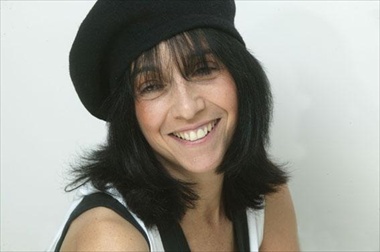
Lola Perrin is a London-based, USA-born composer, pianist, publisher, and Composer-in-Residence at Markson Pianos.

She has been composing since 1992 and performs her compositions on mainland Europe, in the UK (including works for 2, 4 & 6 pianos at Lang Lang Inspires, Southbank Centre) & USA, and has published over 70 piano compositions in 8 books, distributed via Spartan Press. Commissions include silent film scores performed at Barbican, BFI Southbank and Peninsula Arts in Plymouth. She collaborates in performance with writers (including Mihir Bose  & Sue Hubbard), scientists, artists and film makers. 

Lola Perrin has been taken into the repertoire by concert pianists including; Elena Riu, Kevin Robert Orr, Paul Cassidy, Ivory Duo Piano Ensemble, LP Duo, Duo Gastesi Bezerra, Carles and Sofia.  Her technical exercises, commissioned by Trinity College of Music, can be found in their 2015 – 2016 Piano Syllabus Grades 3 & 4.

As an increasing number of pianists and piano duos take up her piano works she is turning her attention to instrumental works.  Elysian Quartet and Carlos Lopez-Real have performed her string quartet and saxophone work. Sarah Watts  commissioned ‘Her Sisters’ Notebook’ (ten bass clarinets) for Peninsula Arts Contemporary Music Festival 2011 and played it at Irish Royal Academy 2014. Simon Desbrulais and Ivory Duo Piano Ensemble have taken up her forthcoming Suite for Two Pianos, Trumpet and Narrator. During 2014 two instrumental works (String Quartet & Saxophone, Wind Quintet & Choir) are due to be rehearsed / performed in London.

She has been interviewed and reviewed by various media including Berliner Morgenpost, BBC Radio 3 and local stations, The Guardian, Lyric FM.  Her recordings appear on radio playlists and occasionally on broadcast TV, are on general release and can be found through digital sites including iTunes (CDs: Fragile Light’, ‘By Peculiar Grace and other loves’).  She also works as a private piano teacher.  Pianist magazine ran an interview, June 2014, with her piano student Shadow Chancellor Ed Balls, in which Lola made a sneak appearance.

As well as various composition projects, she is also currently transcribing ‘Concerto in C Minor’ by Helen Hagan, a forgotten 1912 virtuosic masterpiece still in the composer’s hand, and creating a concert programme around it.

www.lolaperrin.com

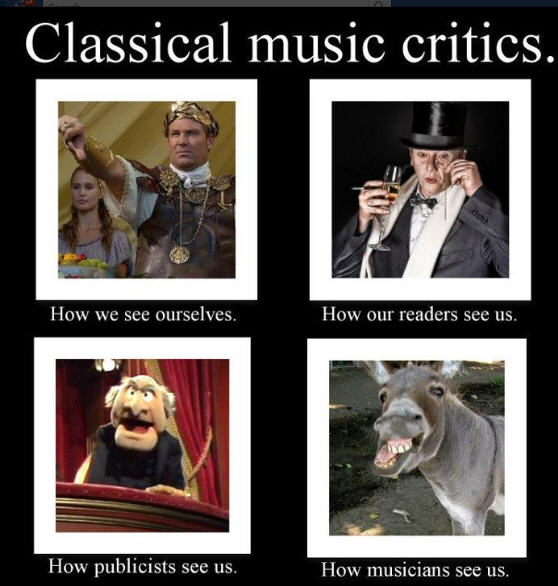
Reviews, and critics, are curious things. As Lisa Hirsch says on her blog ‘Iron Tongue of Midnight’, music reviews and music criticism serve the following purposes:

  • Journalistic: recording what happened and when and by which musicians
  • Opinion: recording a critic’s opinion (we hope a highly informed opinion) of what happened
  • Contextual: placing what happened within some historical and musical context
  • Preservation: enabling people in the far future to get a look at what happened, why, and the impression it made

Good reviews don’t make personal comments on the performer (recall the storm around the very negative comments about the physical appearance of singer Tara Erraught), nor allow the writer’s personal taste to rule the review (i.e. reviewers shouldn’t give a negative review just because they don’t like a particular composer or work: they should be able to put aside such likes or dislikes to offer an objective comment on the performance). Good reviews offer the writer’s considered opinion of the concert: was it effective and did it work? Which parts stood out, which did not? But at the end of the day, a review is one person’s view on someone else’s interpretation.

Some years ago I attended a concert of music by Musorgsky and Liszt by Georgian pianist Khatia Buniatishvili at London’s Wigmore Hall. For many members of the audience, and some critics it was a coruscating display of imaginative and risk-taking pianism, the Liszt pieces in particular performed with the kind of vertiginous virtuosity which Liszt himself may well have approved of. One critic didn’t like the concert, describing the playing as “rash” and “immature” and ended his review with the comment “on the question of whether Buniatishvili can ever be a serious artist, the jury is very much still out” (full review here). A few days later, Khatia Buniatishvili responded to this review with some remarks on her personal interpretation of the pieces (read her response here)

Ms Buniatishvili’s detractor in ‘The Guardian’ had just as much right to give her three stars as ‘The Evening Standard’ critic did in awarding her five stars. And she had every right to reply to her detractor. But I wonder whether such a rebuttal serves any real purpose in the great scheme of things. An international artist like Khatia Buniatishvili will play many concerts in many cities across the world and be heard by many hundreds of people, some of whom are critics and reviewers. A single concert is just a day in the life, and a single negative review is unlikely to make or break an artist.

The violinist Patricia Kopatchinskaja had, for awhile, her own way of dealing with negative reviews. One page of her website was a ‘trashcan’ for negative reviews through which she responded to factual errors and rebuked lapses of taste. She also demanded to know who – herself or the critic – had spent longer studying the score or living with the composer.

Some artists simply don’t bother to read their reviews, and some have agents, managers, mentors and partners who filter the reviews. Performers have to have the courage of their convictions, to get up on stage day in day out and give concerts without worrying unduly what reviewers and critics are going to say. Fundamentally, concerts are about sharing music and entertaining the audience, not playing to please the critics. Without an audience, there would be no concerts (and without concerts, there would be fewer reviewers!).

An informal poll amongst the musical/journalistic community with whom I interact online revealed that most performers felt responding to reviews was a waste of time and that one should hold one’s head high and move on. The only time when a response may be justified is if the review contains inaccuracies or comments which can be construed as slanderous or unduly personal, or where the reviewer has made assumptions about the performer’s lack of form without proper justification or being in possession of all the facts (for example, if the performer is ill, but no announcement is made ahead of the concert). For the purposes of this debate, I am quoting some of the comments by colleagues (musicians and critics/reviewers):

“the dynamic in all this has changed substantially with social media. The critic makes a public statement and the artist can, if he or she so wishes, make a public statement back without having to do anything as cumbersome as, say, write an open letter. These days, artists, both talented and less talented, can succeed by simply getting the public behind them without any help from PRs and record companies.”

This is a good point: social media has had a huge impact on the way artists and performances are received, and has “democractised” reviewing: everyone can be a critic or reviewer these days, with tweets and Facebook/YouTube “likes”

“this whole issue goes round and round and round and round. There are critics. Some are good, some not so good. Some are helpful, some not. Some, sometimes, offend intentionally or otherwise. All get it wrong sometimes, some more than others. But better to be written about than ignored. So there are critics.”

“I have only once responded to a critic. And that is because he was inaccurate and commented on a discography which doesn’t exist. Beyond that, I just play and don’t give a flying duck what anyone thinks – I’ve been at a piano since I was a toddler and have earnt that right. Many/most critics have been to a certain mileage of performances and done a certain amount of reading/research and have an impressive general knowledge of all things musical. They have earnt the right to write. The best any of us can do is go to live concerts and make up our own minds” (a musician)

And a reviewer writes:

When I review, I arrive at the concert wanting to enjoy it and assuming that the performer will give sincerely of their best. Intelligent listening will always find flaws as well as good things, and it’s dishonest to misrepresent the experience; but there are ways of phrasing this – and still keeping it lively and readable (the critic has as much of an obligation to their audience as the performer has to theirs). I’ll only hand down a slating if I detect actual cynicism.”

I return to my earlier comment: a review is just one person’s opinion and is neither right nor wrong. Confident artists know this and are able to move on from a negative review, looking ahead to the next concert. And some artists will always divide critics…..