Li-Chun Su is a Taiwanese pianist based in Berlin and last week she was in the UK for a series of concerts, supported by Kumi Smith-Gordon, creator of the imaginative Soirées at Breinton. I was fortunate to hear Li-Chun at the OSO arts centre in Barnes, and with an audience of just eight people arranged around the piano, the experience was intimate and intense.

J S Bach’s Goldberg Variations are considered to be amongst the finest music for the keyboard. Originating from a simple idea – a beautiful aria over a ground (repeating) bass – the thirty variations present the history of Baroque music in microcosm: lavish displays of modern, fashionable expressive elements of the high Baroque, with just a hint of Classical idealism, together with magnificent structure and formal beauty. There are dances and canons, riddles and doodles, lightning flashes and filigree arabesques. Not until Beethoven’s Diabelli Variations was a similar work conceived on such a scale.  Li-Chun’s performance was vibrant, colourful and absorbing, showing a deep understanding of the structure, voicing and contrasting and varied material contained within the movements. The opening Aria was played with a spare elegance while the livelier variations were bright, poised and nimble. The slower variations were almost romantic with warm legato and sensitive dynamic shading. Li-Chun revealed herself to be a sympathetic and intuitive Bach player, and it was clear from her performance that she feels great affection for this music.

During the interval the audience were invited to vote for the pieces we wanted to hear in the second half. The choices included Schumann’s ‘Carnaval’, Debussy’s ‘Clair de Lune’ and a handful of Chopin’s Nocturnes. In the event, Li-Chun played a triptych of works by Handel, including the variations known as The Harmonious Blacksmith, Mendelssohn’s ‘Variations Serieuses’, which tied in nicely with the Goldbergs, and Debussy’s ‘Claire de Lune’ and ‘Feux d’artifice’. Here she proved the breadth of her technique and musicality, a sensitive yet muscular pianist who is equally at home in Baroque repertoire as the late nineteenth-century. In ‘Claire de Lune’, for example, she revealed some interesting bass highlights, which are not always made apparent by pianists who prefer to focus on the melody in the treble. Her playing had a lovely lucidity which brought a special clarity to Debussy’s writing, something that it not easy to do.

Definitely ‘one to watch’, I very much look forward to hearing Li-Chun again when she next visits London.

www.lichunsu.com

Li-Chun Su kindly completed my Meet the Artist interview:

Who or what inspired you to take up the piano and pursue a career in music? 

The piano chose me. We had a piano at home. I love the piano and playing beautiful music so much. It happened without making a clear decision.

Who or what were the most important influences on your musical life and career?

My teacher Gabor Paska, living in Berlin and supportive friends.

What have been the greatest challenges of your career so far? 

Four Liszt Concertos in one concert and Bach’s well-Tempered-Clavier Book I in one concert.

Which performances/recordings are you most proud of? 

The live concert recording of 2009 at the musical instruments museum in Berlin. I played Bach’s Well-Tempered-Clavier Book I for the first time without an intermission and almost achieved perfection in day.

Which particular works do you think you perform best?

Difficult to say. Time by time it changes.

How do you make your repertoire choices from season to season? 

I have usually instinct to sniff out what I want and need to play.

Do you have a favourite concert venue to perform in and why? 

A lot of places. It is like making friends. I feel comfortable with some people, and some less.

Favourite pieces to perform? Listen to?

One nocturne by Chopin. I always play it after a good concert evening as an encore.

What is your most memorable concert experience? 

I remember well almost every concert

What do you consider to be the most important ideas and concepts to impart to aspiring musicians? 

A love for the music.

What is your idea of perfect happiness? 

A calm and confident feeling.

What is your most treasured possession? 

My passion for life.

What do you enjoy doing most? 

The process of making a thing come true.

What is your present state of mind? 

Secret…..

A native of Taiwan, Li-Chun Su received her musical training in Taipei and Berlin. She graduated from the Berlin University of Arts with the Konzertexsamen, the highest degree in graduate courses. She has studied with Tsia-Hsiuai Tsai, Laszlo Simon, Martin Hughes, Gabor Paska and Mitzi Meyerson.

Li-Chun Su took first prize in the Felix Mendelssohn-Bartholdy Competition and in the Artur Schnabel Competition in 2007. In 2008 she was awarded the first prize in the Porto International Piano Competition in Portugal. She has had numerous invitations to perform across Asia, Europe and South America.
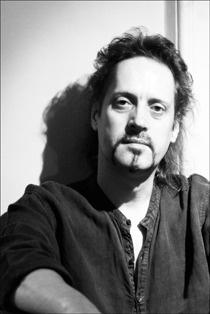
Who or what inspired you to take up composing, and pursue a career in music? 

In my late teenage years I’d dropped out of school and was working in a dull office job in London, but also playing keyboards in a rock band and having piano lessons. My piano teacher was also a composer, and one day I sat down and wrote a piano piece and immediately I knew that this was what I wanted to do with my life – write music. It was very much a ‘Road to Damascus’ moment. After that things changed completely and I went to university and music college for the next seven years to catch up on the training I’d missed.

Who or what were the most significant influences on your musical life and career as a composer? 

All my composition teachers taught me useful things, but my lessons with Oliver Knussen were especially helpful. I studied with him privately for a couple of years. He’d put the music up on the piano and play it whilst scribbling alterations and improvements. It was very practical, and great to be around a musical mind with so much to offer.

What have been the greatest challenges of your career so far?

Developing a musical language that is coherent and expressive. It’s been a slow journey for me, from atonal composing through to a style that is tonal/modal. I see music as about communication (what else can the arts be?) and for that one needs clarity of images and ideas; through this one reaches towards the strangeness that lies beyond our quotidian existence. As Paul Valéry once wrote “what is there more mysterious than clarity?”. I think that’ll go on my gravestone.

What are the special challenges/pleasures of working on a commissioned piece? 

The pleasures are being paid to write it and having a performance at the end. The challenge is the deadline. I compose very slowly, almost every day for hours but only producing a few bars of music each week. I sometimes prefer to write pieces without a commission because they can develop at their own speed.

What are the special challenges/pleasures of working with particular musicians, singers, ensembles and orchestras? 

Working with orchestras and ensembles is incredibly exciting but there’s always limited rehearsal time, which can be frustrating. Because of this I particularly like working with soloists, especially keyboard players and guitarists as their instruments are capable of doing so much. I’ve written quite a lot of music for piano (and harpsichord) and had some fantastic performances where the players have really taken the time to get inside the music. Giving a pianist some music is like handing over a novel, they can immerse themselves in it in their own time and space.

Which works are you most proud of?  

Probably the pieces that reflect a temporary cohesion of my musical language at a given moment, in whatever guise that language presents itself. These would include the early orchestral piece Invisible Cites, the tango Milonga Azure, the White Books for piano, and recently Beyond the River God for harpsichord, and others.

Who are your favourite musicians/composers?

Bach, Couperin, Stravinsky, Debussy, Mozart, Ravel, to name just a few.

What is your most memorable concert experience? 

It’s impossible to pick one as there have been many memorable concerts, in a generally terrifying way; first performances in particular are always nervy experiences. One of the most unusual performances, although it wasn’t a concert, was when an orchestral piece of mine was used as the modern test piece in the last Leeds Conductors’ Competition. I was able to hear it conducted and rehearsed in the semi finals by six different competitors.

What do you consider to be the most important ideas and concepts to impart to aspiring musicians? 

Hard work and perseverance. I know that sounds very boring, but much the same advice was given out by the likes of Rilke, Mozart, Rodin, Ravel, and Cezanne. Plus, a relationship with all the arts. I’m a complete art gallery and book addict, and all these other arts feed into the music I’m writing.

What is your idea of perfect happiness? 

West Ham winning the Premier League, but as that’s never going to happen I’d settle for the FA Cup.

What is your present state of mind? 

Positive!

Graham Lynch was born in London. He has a PhD in composition from King’s College London, and he also spent a year at the Royal College of Music, as well as studying privately with Oliver Knussen.

Graham’s music has been commissioned and performed in over thirty countries, as well as being frequently recorded to CD and featured on radio and television. Performers of his music include the BBC Symphony Orchestra, BBC National Orchestra of Wales, BBC Singers, Orchestra of Opera North, BBC Concert Orchestra, and El Ultimo Tango from the City of Birmingham Symphony Orchestra. He has also worked as an arranger for the Belcea Quartet. His works have been played in venues as diverse as the South Bank, Wigmore Hall, Merkin Hall New York, Paris Conservatoire, Palace of Monaco, and from the Freiberg Jazz Club to a cake shop in Japan, and everything in between.

In 2009 his orchestral work, Invisible Cities, was used as the modern test piece in the Leeds Conductors Competition, and the same year saw the release of the first CD devoted entirely to his music, Undiscovered Islands, which received high critical acclaim. Since that time many of his works have been recorded across a wide variety of CDs.

Graham’s interest in many musical styles has resulted in pieces that reach from complex classical works through to compositions that tread the line between classical music and other genres such as tango nuevo, flamenco, jazz, and café music. These diverse works are in the repertoire of ensembles such as Las Sombras, Ardey Saxophone Quartet, Terra Voce, Dieter Kraus and Tango Volcano. He has also written educational music as part of the Sound Sketches piano series.

Recent commissions include Present-Past-Future-Present for harpsichord (Finland), Arche for violin (UK), Sing-Memory for guitar and harpsichord (Finland), and Lyric Duo for two saxophones (Chile). Premieres for 2014 will include Apollo Toccate for guitar (Finland), Beyond the River God for harpsichord (Finland), Trio Cocteau for piano trio (UK), and French Concerto for baroque violin, harp, and harpsichord (France).

Graham has been the recipient of funding and awards from many organisations, including the Arts Council, Britten-Pears Foundation, PRS, RVW Trust, and the Lyn Foundation.

http://grahamlynch.eu/

Six pianos and six passionately committed pianists: Piano Circus came together to play Steve Reich’s ‘Six Pianos’ back in 1989 and have never looked back. Fast-forward to 2015 and a new generation of pianists make up Piano Circus, still innovating and thrilling audiences with their performances and with over a hundred pieces in their repertoire.

Described as ‘Totally Compelling’ by the Guardian; Piano Circus are one of the world’s leading contemporary music ensembles. They regularly collaborate with film and video makers, theatre and circus performers, dancers and choreographers, and in a variety of educational settings. They’ve recently been seen at the BBC Proms Family Music Intro for Multiple Piano Day (broadcast on bbc Radio 3) and Keyboard Collective Project (Sound Festival, Scotland). They’ve also released seven cds with Decca and now on their own label; the latest release is ‘Skin & Wire’, featuring drummer Bill Bruford.

Known for stunning audiences both visually and musically, they’ve performed throughout the UK and internationally and have gained an enviable reputation for the dynamic rapport they establish with young people in their educational work.

For their 25th Anniversary relaunch concert Piano Circus comes to London’s Bush Hall in Shepherd’s Bush on Thursday 2nd July 2015 to perform works by Steve Reich, Graham Fitkin and premiere two new pieces by Dave Maric (Steve Martland Band and Colin Currie group) and Adrian Sutton (‘War Horse’).

Further information and tickets11072433_10155458056750417_6045247214293465366_o

John Ireland (1879-1962)


The splendidly intimate and elegant 1901 Arts Club played host to Steinberg Duo on Friday evening in a concert of music by John Ireland and Edward Elgar. Steinberg Duo, which comprises husband and wife Nicholas Burns and Louisa Stonehill, are regular performers at the 1901 Arts Club and curate a series of concerts there.

The music of John Ireland is, perhaps unfairly, rarely performed. The majority of his output was piano miniatures and songs. He studied with Charles Villiers Standford at the Royal College of Music (who also taught Vaughan Williams, Holst, Howells and Butterworth, amongst many others) and by the end of the First World War had emerged as a celebrated composer following the overnight success of his second Violin Sonata, of which more later.

The Steinberg Duo have been praised for their “warm musicality” and virtuosity and this was more than evident throughout their programme which opened with Ireland’s first violin sonata in which the influence of the French impressionist composers Debussy and Ravel was evident in its adventurous harmonic palette. The work is no gentile Edwardian drawing room piece and it was played with requisite muscularity and poise by Louisa on violin, with a nimble and sympathetic accompaniment by Nick on piano.

Ireland did in fact meet Edward Elgar and described the few hours in Elgar’s company as “the finest lesson I ever had”. To celebrate this meeting, Steinberg Duo performed a group of miniatures which represented the kind of salon music which was popular at the end of the nineteenth century and entirely appropriate for the small music salon at the 1901. These short but charming works were a pleasant and contrasting interlude between the sonatas by Ireland.

The second part of the concert was occupied by John Ireland’s second Violin Sonata, the work which made him famous. Since the composer was unfit for military service during the First World War, he was able to continue composing. The Violin Sonata No. 2 was premiered on 6 March 1917 by Albert Sammons and William Murdoch, who performed in uniform, and was an immediate success, so much so that the published Winthrop Rogers was on the composer’s doorstep before breakfast the following day. The first edition sold out before it was put on sale, and the work secured Ireland’s success and reputation.

By 1917, the British populace had developed a weary stoicism about the progress of the War. The work perfectly captured the mood of the period by avoiding sentimentality. Instead, it is imbued with pathos in its arresting themes, striking chromatic twists and turns and harmonic and rhythmic motifs redolent of Debussy’s Violin Sonata or Ravel’s Piano Trio. The middle movement is one of great poignancy with a simple song, on the violin, at its heart. Its expressive melancholy suggests a musical anthem for doomed youth, but also a requiem for a way of life destroyed by the War.

Speaking of his own music, Ireland said “Whatever I have to say is said in the music, and if this does not speak for itself, then I have failed”. This powerful and emotional work was given a passionate and involving account by Steinberg Duo who allowed the music to speak for itself.

Steinberg Duo

1901 Arts Club


