British pianist Cordelia Williams is undertaking a special project in 2015 exploring Messiaen’s ‘Vingt Regards sur l’enfant- Jésus’, arguably the greatest piano work of the 20th-century. In this interview she discusses the project and the particular attraction of the music.

Who or what inspired you to take up the piano and pursue a career in music?

I never really made a specific ‘decision’ to be a pianist – it has just always been what I am. Deciding not to pursue a career in music would be as ridiculous as deciding not to age! Having heard my mother teaching piano and harpsichord since I was born, I was impatient to start learning as soon as I could sit on the piano stool, and since then studying and playing music has always seemed completely natural to me.

Who or what were the most important influences on your musical life? 

Definitely my mother: she taught me for the first six years (age 3 – 9) and I’m sure my approach to music was set during that time. However, I’d also say the seven years I spent boarding at Chetham’s School of Music, because I started to learn then how to take charge of my own musical development. Finally, I think during the last couple of years the contentment I’ve felt in my life – growing older, an incredibly happy relationship and an adorable cat – has allowed me to really learn who I am as a musician and to find a greater honesty and confidence in my playing.

What have been the greatest challenges of your career so far?

I suspect for me it has been finding the self-belief to deal with the knock-backs and disappointments of any performing career. My friends gently point out that I can (sometimes) be an overly emotional person, and chasing opportunities and career advancement does not come naturally to me. I have a constant battle between what needs to be done for my career and what I want to do as a person.

Musically, I would say recording my second CD (Schumann for SOMM, out in September 2015). It is such emotional challenging and complex music – I really had to struggle for a long time to feel that I knew what I wanted to say. And organising my ‘Messiaen 2015’ series has been an enormous learning curve; quite apart from learning the marathon Vingt Regards in the first place, there have been so many aspects to coordinate that I wasn’t expecting.

Which performance/recordings are you most proud of? 

Performing Beethoven’s Emperor concerto with the RPO at the Barbican in December 2014: it was a really special performance and something magical happened between the orchestra, the conductor and myself. Getting a standing ovation for Rachmaninov 3: it’s such a scary and enormous work to perform that I was quite overwhelmed with the reaction (may have cried a bit). And my recording of Schubert’s Impromptus for SOMM (2013): it was a big thing for me to release my first CD and, thank goodness, I still like it!

Which particular works do you think you perform best? 

I’ve always had an affinity with Beethoven’s 3rd, 4th and 5th concertos. Schubert’s C minor Sonata (D958) has been a special work for me, as has Schumann’s Fantasie op. 17. And perhaps also Chopin’s Nocturne in D flat – someone once remarked that my performance reminded him of Dinu Lipatti, which for me is the highest compliment.

How do you make your repertoire choices from season to season?

There’s always something that I’m desperate to learn, so I usually plan programmes around that, gradually introducing new repertoire so that I always have some new works and some more familiar. I try to make every concert a holistic listening experience for the audience: interesting, sometimes challenging, but always rewarding and complete.

Tell us more about your ‘Messiaen 2015’ project.  What was your motivation for organising this series of concerts and events focussing on Olivier Messiaen?

It was the music itself – the Vingt Regards sur l’Enfant-Jésus is such a fascinating work that I wanted the chance to explore it further, make new discoveries and look at it in different lights. And I wanted to share all that with anyone who was interested. So the commissions, collaborations and events were developed in a very organic way.

What is the particular appeal of this composer’s music for you? 

I think he must have been a wonderfully interesting man, because his music is! He combines so many different musical layers, symbolism, theology, literary inspirations, images from paintings and ideas from all walks of life, to create music which is worked out in minute and precise detail but which sounds natural, passionate, reverent and overwhelming. All of existence and all of non-existence is within Messiaen’s music.

What are the challenges and pleasures of studying and performing his piano music?

It’s unbelievably complicated to memorise! It really took me ages to learn the Vingt Regards. But I’ve found that, because it’s so pattern-based, once it’s learnt it stays in quite well. On the other hand, I love how thought-provoking his titles and commentaries are: he has allowed me to contemplate new concepts and look at familiar scenes (e.g. the Nativity, the Annunciation) in a totally new way.

What have been the special pleasures and challenges of working with poet Michael Symmons Roberts and artist Sophie Hacker on this project? 

I can’t think of any challenges! But it has been a real pleasure to discuss the music with them and to see their own individual responses take shape. I couldn’t even have imagined what they’d come up with – it has been a true example of the sum being greater than the parts.

What is your most memorable concert experience? 

I think either performing the Vingt Regards in 2013 in King’s Chapel, Cambridge, which was wonderfully atmospheric, or my debut recital at the Royal Festival Hall in 2011. I was stupidly nervous! But in the end, the performance I gave was a huge achievement for me, and lots of my family and friends turned out to support me. We all got drunk at Las Iguanas afterwards.

What do you consider to be the most important ideas and concepts to impart to aspiring musicians? 

Goodness – I don’t feel qualified to answer this yet! Ask me again in 30 years.

What is your idea of perfect happiness? 

Having a lazy Sunday morning at home together with newspapers and coffee (perhaps, in the future, surrounded by children), a walk in the countryside and then cooking a big roast lunch for friends.

What is your most treasured possession? 

My friends and family and my health. And my engagement ring, not for what it’s worth, but for what it symbolises.

What is your present state of mind?

Excited about life and unusually energetic.

Cordelia Williams’ ‘Messiaen 2015’ project, an exploration of the ‘Vingt Regards sur l’enfant-Jésus’ in music, words and art, continues at various venues in London and beyond. The next event in the series is a Study Day at King’s College, London on Tuesday 28th April. The event is free, but registration is required to attend. This in-depth exploration of the Vingt Regards and their origins includes sessions on Messiaen’s historical and musical context, compositional style and theology. The day includes sessions with poet Michael Symons Roberts and artist Sophie Hacker, an exhibition, poetry reading and a lunchtime concert by Cordelia Williams. Full details here http://www.messiaen2015.com/event/kings-college-london/

For further information about other events, please visit the dedicated Messiaen 2015 website

The ‘Messiaen 2015’ project was made possible by the generous support of the City Music Foundation.

Hearing her mother teach piano, Cordelia wanted to learn to play too, and began lessons at home as soon as she could climb onto the piano stool. She gave her first public piano recital to celebrate her eighth birthday. She spent seven years at Chethams School of Music in Manchester, studying with Bernard Roberts and Murray McLachlan. She went on to work with Hamish Milne in London, Joan Havill and Richard Goode, and is grateful to have received support from the Martin Musical Scholarship Fund, the Musicians Benevolent Fund, the Stanley Picker Trust, the City of London Corporation, the Arts and Humanities Research Council and the City Music Foundation.

Cordelia Williams’ full biography

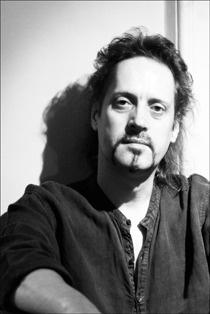
(photo: Chris Stock)

Who or what inspired you to take up conducting and pursue a career in music?

There were a number of “wow” moments that inspired me as a kid. I still remember the first time I heard an orchestra live (it was my local youth orchestra playing Shostakovich 5). I was only three, but that moment stuck with me and I started going to grown-up concerts very young, maybe five or six years old (worth noting given recent controversies about kids at concerts). There were other pieces, like the Shostakovich, that had a huge impact on me when I first encountered them- symphonies by Mahler, Beethoven and Bruckner for example.

My parents bought us a wonderful series of LPs called “The Stories of the Great Composers Told Through Their Music.” I must have played the Mozart, Bach and Beethoven records hundreds of times.

I was not a very motivated young pianist (it’s a pity nobody told the seven-year-old Ken about the link between keyboard proficiency and conducting), but I loved the cello, and when I started playing real repertoire in good orchestras, that was a major turning point. I still remember playing Schumann 2 for the first time in my high school orchestra, and when James Smith took over my youth orchestra that was an eye opener. I’d never played under a great conductor before. That was the first time I understood what an orchestra can be when everyone is giving their best.

Who or what were the most important influences on your musical life and career?

My teachers, chamber music coaches and mentors. My main cello teachers, Parry Karp (Pro Arte Quartet), Lee Fiser (LaSalle Quartet) and Fritz Magg (Berkshire Quartet) had a huge impact on me. Their teaching went way beyond cello playing, and taught me a lot about score study and chamber music. Henry Meyer (LaSalle Quartet) and Peter Oundjian (Tokyo Quartet) were very important chamber music mentors- my whole approach to conducting was shaped in significant ways by studying and performing the string quartet literature. Gerhard Samuel was incredibly generous with me when I was his conducting student in Cincinnati. Take one more step beyond the scope of the teachers I saw every week as a student, and the list of important mentors gets absurdly long, but they’re all important and inspiring.

What have been the greatest challenges of your career so far?

The hardest thing about being a conductor is that your time with the orchestra is always finite. I’m glad I can pick up a cello and play Bach without having to raise money, go to committee meetings, or set a rehearsal schedule. There’s so much great repertoire that one wants to learn (more than you could do justice to in three lifetimes), and so much that one could do in rehearsal, and yet the clock is always ticking. I’d love to be able to work with really great orchestral colleagues in the kind of detail we do in my string trio, but nobody wants to pay an orchestra to rehearse so it’s always a balancing act.

Which performances/recordings are you most proud of?

I’ll always remember conducting my first complete Mahler symphony (the Second) with the Oregon East Symphony. That was a huge undertaking for everyone involved- so many people worked very hard and the concert felt like a real spiritual coming together. The final concert with Orchestra of the Swan in our Gál/Schumann cycle was memorable and moving- the end of a fantastic journey through that repertoire, and they played out of their skins.

For me, one of the joys of playing in a chamber group is revisiting pieces over and over until we feel like we really own them. When Ensemble Epomeo play the Schnittke String Trio, it’s always an event for us, and it felt much the same whenever my string quartet used to play Bartók no. 2. When you’ve invested years in a piece with your colleagues, you know you have to savour every performance together.

As far as recordings– the Gál/Schumann discs have been special. Gál was a recent discovery I felt lucky be entrusted with, but I’d wanted to do the Schumann symphonies since I was a teenager. The recent Nimbus recording of Philip Sawyers’s Second Symphony, Cello Concerto and Concertante was also a labour of love. Introducing unknown music to a wider public is surely the most important thing a recording can do, and Philip’s music is wonderful and very important.

Which particular works do you think you play/conduct best?

I find a huge range of music both rewarding and challenging. I don’t believe in specialities, because everything not on the list of things you do particularly well then suffers. I’m an intense guy, and I suppose I’m most at home in music that uses that intensity constructively.

How do you make your repertoire choices from season to season?

It’s a balance of what I want to do (some works stay on my wish list for 15 years before I get a chance to programme them), what my colleagues and employers want me to do, and what we have to do to stay in business.

Do you have a favourite concert venue to perform in and why?

My friends from home will laugh because it’s not a great venue, but Mills Concert Hall in Madison, Wisconsin. It’s where I first heard an orchestra when I was tiny. I’ve given recitals, played in all kinds of cello sections, played concert concertos, chamber music, heard amazing performances by friends and teachers, conducted and taught. It’s where music was born for me as a kid.

Favourite pieces to perform? Listen to?

As a listener, I tend to cycle through obsessions. I might listen voraciously to late Shostakovich, Schumann piano works, Debussy and Ravel, or early Beethoven string quartets, for two or three weeks, then not touch it again for a couple of years.

Who are your favourite musicians?

I like musicians who combine a certain amount of serious mojo with craftsmanship and honesty. My favourite performers are the ones who can put across a distinctive point of view about the music they play. My favourite composers engage heart, head and guts.

What is your most memorable concert experience?

Hearing Shostakovich’s Seven Romances on Poems of Alexander Blok with the Dubinsky’s and Fritz Magg with soprano Gloria Davey at Indiana University when I was 18. I still don’t think I’ve recovered.

What do you consider to be the most important ideas and concepts to impart to aspiring musicians?

Cultivate a love of music that will sustain your efforts as an instrumentalist- too many young musicians are more interested in playing their instrument than in the music they play.

Rhythm is the foundation of music. Playing in time is hard, but you can only play with true freedom if you’re in total command of tempo, pulse, meter and time.

What is your idea of perfect happiness?

Camping with Suzanne and the kids (while knowing that I’ve got something nice in the diary when we get home)

Kenneth Woods conducts the English Symphony Orchestra at St John’s Smith Square on 24th April in a concert of music by Handel and W F Bach which explores the origins of Mozart’s Requiem. Further information and tickets here

Hailed by Gramophone as a “symphonic conductor of stature,” conductor, cellist, composer and author Kenneth Woods has worked with the National Symphony Orchestra (USA), Royal Philharmonic, Cincinnati Symphony, BBC National Orchestra of Wales, Budapest Festival Orchestra, Royal Northern Sinfonia and English Chamber Orchestra. He has also appeared on the stages of some of the world’s leading music festivals such as Aspen, Scotia and Lucerne. In 2013, he took up a new position as Artistic Director and Principal Conductor of the English Symphony Orchestra, succeeding Vernon Handley.

Kenneth Woods’ full biography

A View from the Podium – Kenneth Woods’ blog

A portal into the classical music profession, Musical Orbit allows you to learn from the very best musicians in the business through personal lessons, masterclasses and webinars online. From anywhere in the world, you can connect with leading musicians from the finest orchestras across the globe to receive artistic appraisal and tailored, professional analysis of your playing. Also an online hub for the classical music world, Musical Orbit keeps you in the loop with news stories, tips from the top professionals and ticket offers for concerts.

Founder Nicole Wilson says:

“I had such fantastic opportunities when I was growing up as well as throughout and beyond my studies at Royal Academy of Music. With programmes like the Philharmonia String Scheme, I was able to get my foot in the door of the music profession and to build relationships with those who would be my future colleagues in orchestras. I was able to get some really great advice and learn about the business.

There are such limited places on these schemes and they really do enable people to get ahead in the industry. I have been approached by countless violinists asking me to hear them play, to give them advice on playing their audition/exam programmes and to desperately try to get a foot in that firmly shut door. It is a ‘catch 22’ situation for many of them as they leave music college. They have a tiny CV so they aren’t considered for job auditions, so they cannot grow their CV. I feel for them. This is why I created Musical Orbit.”

Nicole adds:

“……we are in talks with schools in the Middle East, Far East and Africa about setting up regular lessons and masterclasses and also talking with summer music Festivals in Miami and Reykjavik about masterclasses there as well”

Already Musical Orbit is enjoying a global reach, enabling people to connect and study with some of the top musicians in the world.

Sign up to Musical Orbit is completely free, and once you’re a member you can access free webinars and masterclasses, and also book a lesson with the best musicians in the business.

www.musicalorbit.com

Musical Orbit was founded by principal violinist Nicole Wilson. After a career spanning 20 years in London, as a first violinist of the London Symphony Orchestra, a principal violinist of English National Opera, a film/tv session orchestra fixer and CD producer, Nicole has enjoyed working with nearly all the major UK orchestras and has built friendships with many principal players across the nation and throughout the world. 

Having come across many music students who needed help preparing for auditions, concerts and exams, she realised the difficult situation many of those people were in. Unable to speak to and learn from the right people, build up their CVs and ultimately get to play for the jobs they were interested in, these students were in a no-mans land. 

Nicole has used her extensive connections in the classical music business to bring together these students and the movers and shakers in the classical music world, regardless of work schedules and distance so that anyone can learn from these world class musicians. 

Nicole will feature in a future ‘Meet the Artist’ interview

I was expecting to hear a friend of mine, Charles Tebbs, perform Bach’s ‘Goldberg Variations’ at the delightful Sutton House Music Society on Sunday evening, but sadly Charles was unwell. A frantic call for a replacement went out on Facebook, which I happened to see and respond to. I am not suggesting for one moment that I “saved” the concert, but serendipitously, Daniel Grimwood whom I suggested as a replacement, was available and stood in at very short notice to perform an all-Bach programme. It is a mark of Daniel’s professionalism that he betrayed not an ounce of unpreparedness. He introduced the programme engagingly, highlighting various aspects of the music and describing the first half of the programme (Bach’s Italian Concerto and the fifth French Suite in G) as being “the jolly music”.

The Italian Concerto was indeed jolly, with precise yet sprightly passagework, crisp articulation and nuanced voicing. Daniel also plays the harpsichord and this is evident in his sensitive touch and terraced dynamics. The middle movement had a sombre grandeur, with an elegantly-turned improvisatory melodic line floating atop the bass. The closing movement poured forth like an exuberant mountain stream, rich in orchestral textures and vibrant contrasts.

More of the same in the Fifth French Suite, whose Sarabande shares the same soundworld as the Aria from the Goldberg Variations, and which Daniel played with grace and delicacy. Other notable features were the most charming and spontaneous ornaments in the repeated sections of the movements. The closing Gigue had the necessary forward propulsion, a dancing column of energy running through the entire movement.

After the interval, the Sixth Partita in sombre E minor. This, as Daniel explained, is Bach’s nearest equivalent for the keyboard to the St John Passion or the B-minor Mass, and is a work of great seriousness, mystery and profound musical thought. The opening Toccata begins with a dramatic “rocket” figure, a rising arpeggio flourish which colours the first section before the music moves into a darkly dramatic four-part fugue. All the movements display vocal textures, particularly the closing Gigue, whose rhythmic anomalies Daniel demonstrated in his introduction. This was an authoritative, thoughtful and vibrant performance, providing a wonderful contrast to the more positive music of the first half.

Sutton House Music Society is based at Sutton House in Hackney, east London, which is owned by the National Trust. Built in 1535, the house holds a fascinating juxtaposition of oak-panelled Tudor rooms, Jacobean wall paintings and Georgian and Victorian interiors, and audience members can enjoy a tour of the houseahead of a concert. The music society attracts both established and up-and-coming artists, performing a wide variety of repertoire, and the 2014/15 season concludes with a concert by the Roskell Piano Trio in music by Mozart, Shostakovich and Schumann. Concerts take place in Wenlock Barn, an early 20th-century addition which was built specially for events such as concerts.

Further information about the concert and the Society here

Meet the Artist……Daniel Grimwood


