Part play, part opera ‘The Imperfect Pearl’ or ‘Perola Barroca’ (the derivation of the term baroque) explores the life and music of one of the Baroque periods most overlooked and forgotten about composers, Domenico Zipoli, whose his manuscripts lay undiscovered for 200 years in a box marked ‘toilet paper.’ The performance not only represents the return of Zipoli to the repertoire but also pianist Mark Latimer to the stage after pioneering treatment for Dupuytren’s contracture which was generously funded by Help Musicians UK and the Royal Society of Musicians.

For more than 200 years the enigma of Domenico Zipoli’s music and inspirational life lay forgotten in the dusty archives of the 18th century Roman Jesuits and the Missions they founded in the rainforests of South America, present day Bolivia, Argentina and Paraguay.  His strange departure from Rome in 1716 where he was a revered composer, to an uncertain future in the lands across the ocean, is the sad and yet beautiful story told in ‘The Imperfect Pearl’.

Described by The Independent as “sumptuous and romantic”, ‘The Imperfect Pearl’ features Baroque keyboard, chamber and vocal music from Italy and South America, and was ccreated in collaboration with writer William Towers, and opera director Emma Rivlin.

Full details of tour dates here

I caught up with Mark Latimer to ask him about the inspiration behind The Imperfect Pearl and to talk more generally about his musical life.

Tell us more about how you conceived ‘The Imperfect Pearl’, what was the inspiration behind this music-drama and what have been the main challenges and pleasures of creating this music-drama and working with the actors and musicians to bring the story to life? 

You know that old adage about a million monkeys strumming on a million typewriters would eventually produce the complete works of Shakespeare? Well, they would never come up with the life story of Domenico Zipoli! As bizarre a story as anyone could ever imagine. On the cusp of a successful career in Italy, he turns his back on the entire enterprise and goes to South America to become a Jesuit. He died there aged just 37 and his music remained largely undiscovered until, staggeringly, 1972 when it was discovered in a priest’s lavatory! You couldn’t make this stuff up. This extraordinary biography was the impetus and the inspiration for creating and conceiving the project. The challenges were and still are immense. So little was and is known about Zipoli, such of his music that’s extant is either implausibly difficult to source and get hold of, lots of it exists in hard to read manuscript, and our current rural touring scheme involves venues that are not really suited to this kind of theatrical presentation, even a comparatively small-scale production – we’re not talking exactly RSC proportions here – is prohibitively expensive to put on, and logistically it’s a nightmare trying to gather all the disparate elements together. Indeed had it not been for two very substantial Arts Council grants it would have been impossible. My wife, who is producer and my co-creator of the show, and I have been monumentally fortunate in securing a team that is in every respect world-class and I’ll never be able to thank them all adequately. But between us all, in the face of sometimes apparently insurmountable obstacles, we actually HAVE brought it to life. With regard to the difficulties with my hands, in some respect I consider myself fortunate that these things did occur, for had they not I may still be hacking my way through Alkan, Busoni, Reger et al.. I know for a fact, I would never therefore have ever discovered Zipoli at all. And my life would’ve been infinitely the poorer for that!

Who or what inspired you to take up the piano and pursue a career in music? 

Having unsuccessfully tried aged seven, to negotiate and navigate my way around the clarinet as a result of my poor late father’s immense collection of jazz 78s and realizing I was blowing through the wrong end, I jacked it in pronto! Some years subsequently, the Headmaster of my Junior School needed someone to play for assemblies and as I was the only kid who had even a rudimentary capacity to read music – albeit at that juncture only the treble clef – he nominated me to have a bash, pardon the pun, at it. It seems in retrospect that I must have had some kind of aptitude for it as I seemed to progress quite quickly and without too much impediment. As far as pursuit of a career, thinking back I had no real aptitude for or affinity with anything else…

Who or what have been the most important influences on your musical life and career?

One of my first and unquestionably most formative teachers was the great, great man Albert Ferber, to begin with his unique heritage – he was a student of both Rachmaninov and Gieseking – probably meant little or nothing at the time to a callow kid like me, but we became best of friends, his entire persona – charming, suave, genteel – alone was a massive, massive influence. And of course, there was the supernaturally towering figure of John Ogdon. We likewise became immensely good friends and in terms of sheer colossal intellect and ability he is and will always remain unsurpassed. And I still miss him. Then there was my teacher at the Royal College of Music, Angus Morrison who knew Ravel, Walton, the Sitwells inter alia, a truly ineffably wonderful musician and gentleman. Finally Jorge Bolet whom I knew quite well as for about three weeks in the early eighties we shared the same management. Had it not been for the first time I met him – a road to Damascus moment for all the WRONG reasons – I would never have started smoking! As a brief corollary to all this, I was once interviewed for the post of Head of Keyboard at a major UK institution and I was asked why everyone I ever knew and worked with was dead!

Which performance/recordings are you most proud of?

Without question the ‘Take 2 – Unhinged’ album for Spotlite Jazz Records. We did a whole bunch of complicated stuff and half of the record is my own compositions. We did it in just six hours, the five of us had never all worked together previously and I had pleurisy at the time. I think that CD is my greatest achievement.

What is your most memorable concert experience?

I can only recall two with any modicum of vividity, and both for entirely the wrong reasons; I visited China loads of times but at one stadium concert in Hangzhou, I was towards the end of La Campanella – halfway through the long high D sharp trill – and the entire 25,000 audience suddenly burst into applause. Didn’t know how to react to such spontaneous appreciation, which is very common there – along with other such unusual concert activities as having telephone conversations, babies crying, the habitual spitting!  

The other was centuries ago. I did a concert at Wigmore Hall but the day before substituted an advertised piece for one by a composer friend who died the previous week. The ‘critic’ reviewed the ‘unplayed’ advertised programme. The fact that the review was damning was less important to me than the heretic act itself. 

What have been the greatest challenges of your career so far?

Everything’s a challenge; getting up in the morning, getting old, non-smoking long-haul flights etc.. Maybe dealing with the diagnosis of Dupuytrens Disease, a subject I’ve written much about lately owing to the interest in our production, ‘The Imperfect Pearl’ being on tour was one of the greatest challenges. The loss of the use of one’s hands and all that that implies, not wishing to sound melodramatic, really is akin to a death or bereavement.

https://youtu.be/6D_OdtInwCQ

A Safe Pair of Hands? – Mark Latimer describes his diagnosis and treatment of Dupuytren’s contracture and talks about his return to music

Guest post by Simon Brackenborough

It’s safe to say that I was never a conventional teenager. Some time around the age of 15 or 16, while my peers were obsessed with Radiohead, I discovered a profound affinity with the music of half-forgotten British composer Arnold Bax (1883-1953). I became absorbed in his epic symphonies, chamber music and tone poems. So In 2003, aged 18, I wrote to the then director of the BBC Proms to ask why a Bax symphony hadn’t been programmed for the 50th anniversary of his death. His reply was that the last time one had had a Proms performance, the attendance had been one of the lowest in memory. His memory, that is: the fateful Prom was in 1984, a few months before I was born.

Arnold Bax

Many classical fans have their own favourite neglected composers, or works of music that haven’t received their fair due. In most cases we rarely, if ever, get chances to hear them performed live. And yet at the same time, we live in a golden age for access to recorded music. Thanks to YouTube, there is now more classical music available to hear than you could listen to in a lifetime, much of it by composers you’ve never heard of, and all for free.

But taking time to explore this amazing resource can be a daunting prospect, and that’s why last year I started a blog specifically to share some of this rarely-performed music with a wider audience, and explain why it means something to me. But I don’t want to argue that Bax or anyone else join an elite canon of great composers. Mostly I avoid the whole concept: the words ‘great’ and ‘masterpiece’, while fine as expressions of admiration, are actually some of the least informative descriptions you can give. In fact, they are often a way of not exploring what the music means.

The idea of timeless ‘greatness’ is also ahistorical. Even Bach’s music needed a revival in the nineteenth century. However proud we may be of our discerning ears, we all underestimate the role that expectations play in our perceptions, and studies have shown this to be the case from art to wine tasting. That isn’t to deny that some works have a wide and enduring appeal, but it is to acknowledge that music can be different things to different people at different times, and for different reasons. And this is no bad thing: in fact, I argue, it opens up a much more interesting conversation to have with new listeners.

Because – crucially – we need to look at the current marginalisation of so many brilliant and individual composers as a microcosm of the bigger marginalisation of classical music within society. Both are symptoms of a failure to fully realise, and adequately express, the basic relevance of the music. That’s why I believe that if we can invite the public to hear a Bax symphony, by finding ways to engage them in who he was and what makes his music distinctive, we will increase the pool of listeners who come to hear Beethoven too.

It’s not about whether enough people will like Bax. But by confidently confronting the question of why he produces both obsessive fans and sniffy detractors, you have exactly the opportunity to engage people that the Proms should have seized with both hands. Disagreement, after all, is a sign that an art form matters: a repertoire of limited risk is a repertoire of limited relevance. The industry will be in a healthier place when concert-goers are less sure that they will enjoy the experience, but are willing to pay to find out.

There’s no doubt in my mind that there’s a huge untapped curiosity about classical music in the wider population, but with busy lives, listeners need to be given a route in. The success of the TED movement shows a popular hunger for learning which can be met with a smart, co-ordinated effort to feed that curiosity. Similarly encouraging is that my two most recent blog posts, looking at music through the theme of St. George’s Day and natural wildness, both had a great response from people who are not classical fans, but for whom I offered a musical connection to subjects they were already interested in. And in these contexts, an obscure composer can be just as relevant and revealing as any other.

A lateral, interdisciplinary, magpie approach surely holds more fruitful opportunities for classical music than what I call the ‘connoisseur culture’– that rather cosy preoccupation with the finer points of interpretations of core repertoire which too often seems to be the default setting in parts of the music media. Even as a music graduate I find this cliquey and uninspiring, so goodness knows how new listeners must feel. Just look at the average concert brochure today, and how little information is given on why you might want to hear anything on offer. The assumed knowledge of the repertoire suggests an industry content with preaching to the converted.

Of course, I understand that there are commercial calculations in programming pieces that are proven to sell tickets and that performers are already familiar with. But the canon, like any hierarchy, is also a way of preserving the status quo, and the status quo always benefits those with power. For people at the top of the classical industry, unfamiliar repertoire challenges the expertise on which they have built their authority. Yet as the comic writer and lifelong classical listener Armando Iannucci observed in this fantastic speech to the Royal Philharmonic Society in 2006, new listeners are blessed by not knowing what is deemed to be worthy. I sometimes think we would be better off with people running the show who know nothing about the music at all.

If it were up to me, finding ways to connect people to the ideas and themes of the music would have a much bigger role in how performances are conceived and marketed; an over-priced concert programme that you have to read in a hurry just doesn’t cut it. A good example of a step in the right direction was the heavily-conceptualised The Rest Is Noise festival at London’s South Bank Centre. Discussion of themes can even form part of the event itself, as with the Orpheus Sinfonia’s ‘Beneath the Score’ concerts, which combine biography and analysis with performance. But these forward-thinking examples are still too rare.

Steve Jobs once said of his rival Bill Gates that ‘he’d be a broader guy if he had dropped acid once or gone off to an ashram when he was younger.’ Now I’m no Apple-worshipper, but it’s clear that their phenomenal success is not just down to computer science, but understanding aesthetics, intuitive design, and consumer psychology. In contrast, we have a classical music industry that produces incredible musicians but is pretty woeful at telling the world why all their years of training, and all the amazing music they play, actually has anything to say. Even worse, it often doesn’t seem to care.

Of course I’m not the first person to make these sorts of arguments, and I won’t be the last. I particularly recommend this typically insightful post from the excellent On An Overgrown Path blog, contrasting the growth of Mahler’s popularity with that of ever-neglected Malcolm Arnold. But the arguments need continual revisiting, reconsidering, and refreshing. Because too often, classical music looks like it’s stuck in a dead-end job: one of comfortable routine that just about pays the bills, but whose narrow scope and dull repetition prevents any hope of reaching something greater.

Perhaps, in fact, the classical music world is sometimes guilty of forgetting just what an amazing resource a musical score is. Each one is a repository of years of learning, soul-searching and toil, and yet look at how we treat them – the majority gather dust while a select few grow dog-eared through overuse. This is nothing short of an artistic tragedy. The fact that scores are the starting point for classical music is what makes the art form so special, and it’s vital that they are at the heart of where it goes next.

That does not mean that all pieces offer something equally compelling. But, to borrow from George Orwell, it is to remind us that each reflects a composer seeing, feeling, hearing, and understanding the world. Quite simply, for every artist who lies forgotten we miss a unique perspective of what it means to be human; our culture carries one mind less, one world less. That is the essential truth that classical music needs to remember in order to thrive. We’re all here just trying to make sense of being alive. And through the incredible richness and diversity of our music, that’s all we should be trying to do.

Simon Brackenborough is a music graduate, currently living in Hampshire, and author of the Corymbus blog which has a special focus on neglected or little-known repertoire and composers.

https://corymbus.wordpress.com/

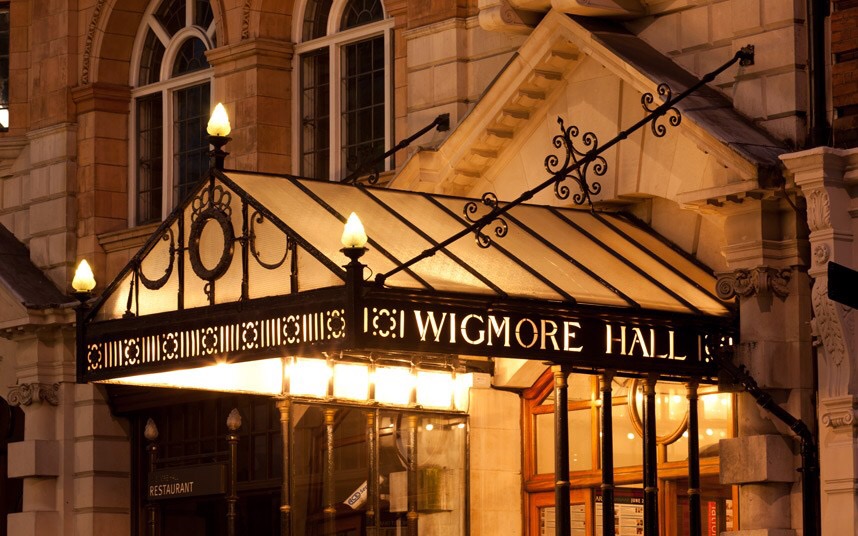
Opened on 31 May 1901, Wigmore Hall, nestling unobtrusively just a stone’s throw from the bustle and litter of Oxford Street in a row of tall Edwardian façades, is London’s pre-eminent venue for chamber music, song recitals and solo piano concerts. It was built to provide the city with a venue that was impressive yet intimate enough for recitals of chamber music. With near-perfect acoustics, the hall quickly became celebrated across Europe and featured many of the great artistes of the 20th century.

Originally called Bechstein Hall, it was built by the German piano manufacturer Carl Bechstein, whose busy showroom was next door. At the turn of the twentieth century, Bechstein was Europe’s leading piano maker, its instruments preferred by most pianists outside America, where Steinway predominated. The Bechstein piano company built similar concert halls Paris and St Petersburg to showcase its instruments and the leading performers and singers of the day. With its special barrel roof “shoebox” design, beloved of many musicians, the hall boasts a fine acoustic, while its small size (its capacity is c600) makes it the perfect place to enjoy intimate chamber recitals.

When it opened, Bechstein Hall was promoted as the best of places for intimate music making, and boasted unrivaled comfort and facilities for patrons and artists with its elegant green room up a short flight of stairs behind the stage (so that singers did not arrive on stage breathless). At the time of its opening, concert life and leisure in general in London were enjoying something of a revolution. Theatres and music halls were opening across the west end, a wide public was being introduced to the experience of shopping for pleasure in the new “department stores” (Selfridges is a mere 10 minute walk, at the most, from Wigmore Street), and with cheap and efficient public transport, it was easy for people to enjoy these delights in the centre of the metropolis. A new breed of international concert promoters, agents and impresarios, such as Robert Newman, who with conductor Henry Wood founded the world-famous Proms, were dedicated to organising high-quality recitals, and Bechstein Hall alone scheduled two hundred concerts. The opening concert on 31 May 1901 featured the virtuoso pianist and composer Ferruccio Busoni and violinist Eugène Ysaÿe; soon London’s concert-going populace were flocking to Bechstein Hall to see Frank Merrick and Leopold Godowsky, Artur Schnabel, Chopin specialist Vladimir de Pachmann, Camille Saint-Saens, Max Reger and ‘Valkyrie of the Piano’, the Venezuelan lady pianist Teresa Carreňo. The hall continues to enjoy special associations with leading international performers.

The hall was designed by architect Thomas Edward Collcutt who also designed the Savoy Hotel on the Strand. The interior is Renaissance style, with marble and alabaster walls, and above the small bell-shaped stage is a beautiful Arts and Crafts freize designed by Edward Moira depicting the Soul of Music. In the lights of the hall, the freize vibrates with the burnished radiance of a Byzantine mosaic.

In June 1916 Bechstein was forced to cease trading in London. Strong anti-German sentiments and the passing of the Trading with the Enemy Amendment Act 1916 meant that is was no longer possible to trade viably, and all property including the concert hall and the showrooms was seized and summarily closed. The hall was sold at auction to Debenhams, was rechristened Wigmore Hall and opened under its new name in 1917.


Today the hall enjoys a position of pre-eminence not only in London but across the international classical music scene, and a debut at Wigmore Hall is the long-held dream of many young and up-and-coming performers. Alongside its reputation for chamber music of the highest quality, the Wigmore’s audience is famous for its loyalty, intelligence and discernment. It is considered by many musicians to be one of the most demanding audiences of any concert hall, which brings its own unique set of pressures, and many performers will play a programme in regional venues and for local music societies before “doing a Wigmore”. But the hall holds a special place in the affections of many performers, who regard it as their artistic home in London. There are no rough edges in this beautifully proportioned, perfect shoe-box of a hall, no jarring modern architectural details to confuse and distract. The tread of the thick crimson carpets is complimented by the red Verona marble frieze, the bustle of Oxford Street and the West End forgotten in the spacious vestibule and elegant green room. Playing at the Wigmore or being in the audience, one feels a sense of history, of heritage, for the Wigmore inhabits a different era and ethos to other concert venues in London. All the time one is aware of the great performances that have taken place in the hall, and the walls of the green room are lined with photographs confirming the heritage of the hall: Rachmaninoff scowling, as if the last thing he wanted to do was play the piano, Britten’s severe stare, Tippett’s twinkling eyes.

As a member of the audience, attending a concert at the Wigmore has its own special rituals from the moment one steps through the glass doors. The richly-carpeted vestibule is a place where people meet, queue for tickets, purchase programmes, CDs or magazines. Sometimes if you arrive early, you might hear the soloist warming up, and that can lend a special frisson to the evening, a glimpse of what is to come. Downstairs the bars and restaurant resonate with pre-concert conversations, and sometimes when we visit we might spot a “musical celebrity” – Steven Isserlis, Alfred Brendel, Julian Lloyd Weber. I usually arrive in good time for drinks and chat with friends before the bell summons us to the hall and we sink into the plush comfort of the crimson seats. In the auditorium, in the moments before the concert begins, one senses the great collective breath of the audience’s expectation. Meanwhile, backstage the performer goes through his or her own special pre-concert rites.

People, usually those who have never stepped inside the Wigmore let alone enjoyed a concert there, grumble about the great age of the audience, which can make someone in their 40s seem extremely young (I never feel this when I’m there), or that the audience is overly highbrow, snobbish or elitist. But get talking to the person next to you (spying my reporter’s notebook is usually enough to get a conversation going) and you will find that the average Wigmore audience member is none of these things, simply someone who really enjoys and appreciates live classical music.

In recent years the Wigmore had broadened its remit and, in addition to lunchtime, evening and Sunday morning concerts, offers a lively education programme, music for small babies and toddlers, and “Wigmore Lates”, concerts which start at 10pm and include not just classical music but jazz and folk too. There are masterclasses and study days with leading performers on subjects such as Chopin’s Preludes and coping with performance anxiety. And on the annual London Open House Weekend visitors can explore the backstage area and even take to the stage, momentarily at least, and maybe dream of playing to a full house.

Happy Birthday, dear Wigmore Hall!

Daniel Barenboim, musical polymath, is in town for a four-concert Schubert Project residency in which he will traverse all 11 of Schubert’s completed piano sonatas. Prior to the first concert, he unveiled a brand new piano – one with his name on it. The Barenboim piano was conceived and developed in a collaboration between Barenboim and Belgian piano maker Chris Maene, with the cooperation of Steinway. What makes this piano different from the modern concert grand is that it is straight strung, and Barenboim used a Liszt piano as the inspiration for his eponymous instrument. It is said to offer a greater variety of colour, transparency and clarity across its range. Audiences at Barenboim’s Schubert recitals will have the opportunity to hear for themselves this new piano in action.

Unsurprisingly, it was a full house at the Royal Festival Hall and there was a distinct buzz of anticipation and reverence ahead of the start of the concert. Sitting in the rear stalls didn’t really offer myself and my concert companions a chance to examine the piano in detail. The piano remained firmly closed, lid down, until a few moments before Barenboim took to the stage, and was closed up again during the interval.

The jury is still out on whether the Barenboim piano was noticeably different to a modern Steinway, and any clarity and crispness of articulation, or nuanced dynamics are surely the result of the pianist’s technique, not the piano: one would expect an artist of Barenboim’s calibre to make even the most beat-up church hall piano sound lovely.

The theme of the first of Barenboim’s Schubert concerts was the key of A, as he presented three sonatas from different periods in the composer’s life. The D537, in A minor, was composed by Schubert when he was 20 and is the earliest surviving completed piano sonata, though it was not published until 1852 as the Op. post. 164. It begins with a dotted motif followed by filigree semiquaver broken chords. It’s emotionally charged and already demonstrates Schubert’s skill in unexpected harmonic shifts which colour the music. The middle movement, in warm E major, is genial and nostalgic, with a theme that would be heard later in the concert (Schubert “exported” it as the Rondo theme of the final movement of the D959). Yet, typically of Schubert, the mood shifts during the trio, a chilly march in A minor. The finale has a Beethovenian cast, with a dash of Haydn’s wit, yet already full of Schubert’s trademark unexpected harmonic shifts and emotional volte-faces.

I think many of us were trying to hear whether the piano really sounded that different instead of concentrating on the music, but the opening Sonata was presented with energy, though not always entirely convincingly, and keen sense of Schubert’s tonal palette, especially in the final movement. The middle movement, whose theme was reprised later in the D959, began genially enough, but the middle section had an ominous tread, for which the bass notes of the piano were suitably rich and dark.

The first A major Sonata of the evening is known as “the little A major” and was the most genial of the three sonatas presented in the concert.  Barenboim created a sense of intimacy in the first movement, but again one had the sense he wasn’t entirely convinced by it himself. It continued into the ethereal slow movement, whose pianissimos were, at times, barely a whisper. The finale was lyrical and good-natured, the opening theme played with a songful elegance, though I felt he pushed the tempo a little too much for my taste so that some of the lyricism was lost.

After the interval was “my’ Sonata, the penultimate of Schubert’s piano sonatas, the D959 in A major, which I have (perhaps recklessly) set myself the task of learning. I was extremely curious to hear Barenboim’s take on this big work, not least whether he could carry the narrative of the first movement right through to the closing sentence of the finale. My difficulty with hearing other people’s versions of this sonata is that they often conflict with my own, which can make me the most pedantic of listeners. I spend a lot of time with this Sonata. To say I eat, drink and breathe it might be excessive, but I often find myself waking in the night and playing it through it my head. The opening statement, a chorale-like sentence, lacked real nobility and drive and the propulsion towards the suspension at the end of the passage was lost in some curious pulling about of the tempo. There were one or two rocky moments as some of the triplet figures were lost – and this issue reappeared in the finale, where perhaps Barenboim was tiring (this is a big work – lasting around 40 minutes, even without the exposition repeat in the first movement), and overall I felt the movement lacked power and drive.

The slow movement, about much has been said, written and surmised, a melancholy folksong with a storm at its centre, lacked cohesion and there were some serious memory issues towards the end. The movement seemed relentless rather than revelatory. However, the scherzo was bright and crisp, with some sensitive highlighting of the melodic line in the trio section. The finale seemed rushed, the triplets often losing clarity, but the sections in the coda where the music stalls, as if to take a long breath, to reflect on what has gone before, were perfectly paced and the closing statement, a recapitulation of the opening sentence from the first movement, was emphatic. The standing ovation which followed was as much for Barenboim the man, the demigod, as for the performance and the new piano.


