No pianist’s alphabet would be complete without an entry on the Étude or “study” – the short piece, often considerably difficult, designed to provide practice material for perfecting a particular musical skill or technique.

The practice of writing études developed in the early 19th century alongside the growing popularity of the piano. Many of us will remember working on studies by the likes of Clementi and Czerny as young piano students. But it was Fryderyk Chopin who elevated the student study into a work of great artistry and beauty, turning humble exercises into glittering concert pieces, and his Opp. 10 and 25 Études remain amongst the most popular works written for piano. Other notable composers of Études were Liszt, Alkan, Rachmaninoff and Debussy, and the practice of writing piano études has continued into the modern era with composers such as Ligeti, Cage, Kapustin and Glass.

The opening of Chopin’s Etude in E major, Op 10, No. 3

Many people swear by études and studies as part of their daily practise regimen and some sets of études enjoy near-legendary or infamous status such as those by Czerny, Hanon and Brahms. Easier études by Heller and Burgmüller, which suit the intermediate pianist, offer technical challenges within an interesting and enjoyable piece. Debussy pokes fun at Clementi’s Gradus ad Parnassum in his Dr Gradus ad Parnassum but he also wrote a series of études which present different technical challenges within each piece, thereby following in Chopin’s footsteps.

Exercises should never be practised mindlessly. Try to play even the most dry exercises musically and appreciate how such exercises relate to actual repertoire. Having submitted to exercises by Cramer and Czerny as a young pianist, I now eschew such studies and prefer to create exercises out of the music I’m working on, though I have found Brahms’ studies useful.

Chopin’s études are incredibly satisfying to play because of the composer’s deep appreciation of the mechanics of the pianist’s hand and the desire to play beautiful music.

Frances Wilson

Exams

To do them, or not to do them? As a piano teacher, I’m amazed how the word can cause a pupil to shiver, even before they know what it’s like to take a music exam! It seems that human instinct often hones in on the negative feelings before the positive ones, and in the case of music exams, this is clearly not helpful.
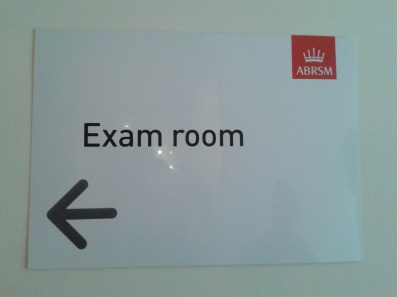
The bizarre thing about music exams is that they are treated as a permanent record, but they are only measuring one performance at one moment in time. One of the things I’ve learnt as a professional performer is that every performance will be different and that some will be ‘better’ than others, no matter how hard you try to make all of them your best yet.

Exams also invite direct comparison between people, which can be awkward. I’ve had pupils who work hard and play extremely musically and convincingly, yet their fear or lack of enjoyment in performing affects their willingness to perform in public, or their marks if they take an exam. You can tell them ‘til the cows come home that there is as much value in their playing as that of their friend who regularly gets distinctions in exams, but they will struggle to believe you.

On the other hand, some of the best work my pupils have done is when they’ve had the deadline and motivation of an exam. They seem to prefer taking an exam to giving an informal performance amongst friends and peers, precisely because they’ll get a certificate at the end of it! Teachers often tell stories in disbelief of parents who have provided the books for the next grade straight after an exam has been sat. But it was much more memorable when a reluctant performing pupil of mine sat her Grade 1 and straight away asked when she could start on work on her Grade 2.

In amongst studying other repertoire and taking up other opportunities to perform, exams are a great learning tool. As well as motivation, exams encourage disciplined preparation – a valuable skill for life, never mind learning an instrument. I’ve had some of the greatest laughs when a pupil and I have been working in great detail, or at a great pace, because we’re inspired to achieve our best together.

Controversially, I believe the marked results are not the thing. Of course, we all like to know what someone else thinks of our performance, and it’s extremely useful for teachers, pupils and parents to have an independent view on our musical performance. But for me, the best result is the personal and musical development of each pupil, and their awareness of that. I’ve been more proud of a pupil scraping a pass at Grade 5 than others achieving distinctions – because I understand the amount of effort and work that each pupil has put in. You can’t beat the beaming smile of a pupil who realises they’ve worked really hard and it was worth it. If an exam can bring wide grins, then let’s remember that and talk about it instead of shivering and creating anxiety.

Elspeth Wyllie, pianist, accompanist and coach, teacher
elspethwyllie.co.uk

A guest post by Nora Krohn

One night after a concert I was having a drink with a colleague who told me a bizarre story about a graduate school audition he’d taken. While entering the subway en route to the audition, weighed down by his violin case and a large suitcase, he walked through the service gate behind someone else rather than swiping his card at the turnstile. Since he had an unlimited monthly pass, he had essentially pre-paid his fare and assumed there was nothing unlawful about walking through the gate. So he was stunned when a police officer stopped him, arrested him for fare evasion, and took him to jail.

With his violin case sitting on the other side of the bars enclosing his cell, he called the audition committee to explain the situation, and then waited anxiously, not knowing when he would be released. A few hours later, the officer finally let him go with a summons to appear in court a few weeks later. He grabbed his violin, rushed to the hall, made it there 20 minutes before his audition, played beautifully, and was accepted.

When he got to the end of his story, I was astounded. “How could you possibly stay focused with so much stress and distraction? Weren’t you furious?” I asked. “ I would have been a mess.”

“I wasn’t nervous or angry, I was totally relaxed actually,” he replied with a smile. “You see, the situation was so over the top I’d already let go of the outcome. Whatever happened I knew it wouldn’t be my fault.”

My colleague could relax and allow his great talent and preparation to shine through in spite of these acutely stressful events because he knew whatever flaws that resulted from them were clearly not his responsibility. The absurdity of the whole thing disarmed him, and he let go.

For many of us it’s not so easy to hold the things that go wrong with lightness—to regard them as vicissitudes of fortune rather than as tactical errors, character flaws, or divine punishment. But as I pondered my friend’s story, I began to see that letting go of the impulse to assign blame for our past and future mistakes—whether to others or to ourselves—is crucial for our growth. Instead of defining ourselves by our missteps, we can learn to see them as vital steps toward greater wisdom.

Here is an example from my own experience.

Trying to Be Right

This past spring I arranged a play-through of my recital program for a colleague in preparation for an upcoming concert. In starting to collaborate more with piano, I’d discovered that my knee-jerk habit, honed from years of orchestral playing, is to blend with and defer to what’s going on around me, instead of taking charge. After that realization I’d worked hard to learn what it meant to fully occupy, or request, if necessary, the musical space I needed to play with the command that performing as a soloist requires.

As the pianist and I played through our program for my colleague, I started to feel that the music was tumbling by too quickly and I that didn’t have space to execute things the way I wanted to. In my frustration, I tried to slow down, but the pianist and I weren’t aligning, and my frustration persisted through the end of the play-through.

After we finished, my colleague offered us warm praise, and then gently suggested that in my efforts to play everything as exquisitely as I’d set out to, I was blocking the flow of the music. I countered that I had been trying to slow things down to give myself space and strength. But she replied that while my intention was good, it couldn’t work in performance, when the music of the moment required me to join up with a gesture or tempo that was already in motion. Her words and voice were kind, but I felt chastened and confused. I’d been trying so hard to be “right.” Now I felt I was back to being “wrong.”

But as I thought about it, I saw the wisdom in my colleague’s advice. In rehearsal, it was important to lead by communicating how I thought the music should flow. But in the moment of performance, I had to let go of all of that effort and be flexible in working with the particular demands of the situation instead of fighting them, no matter how “right” or “wrong” they might feel.

“Just Relax”

A few weeks ago I encountered another situation where my desire to be “right on” was inhibiting I was playing with a pianist in a master class at Madeline Bruser’s Art of Practicing Institute summer program, and we were trying to get the ensemble of a particular cadence just right. From my previous experiences, of first trying to follow the pianist, and then trying too hard to lead, I instinctively knew that for us to be together, the main thing I needed was to be solidly connected to myself—that if I could stand clearly in my own feelings and convictions, I could naturally connect with the pianist and she would know exactly where to place her notes. But I also knew that making a big effort to connect to myself would tie me up in knots. It had to just happen, but I didn’t know how.

When I explained this predicament to Madeline she said, “It sounds like you just need to let your mind relax.” Luckily we had been meditating for two hours a day for the previous five days, so after closing my eyes for a few moments I was able to let go and merge my mind with the sounds I was hearing and with the feeling in my body. We played the passage again, and the cadence flowed effortlessly. Buoyed with confidence, we tried the same idea at another cadence and were again completely in sync. But at the last second the pianist was so relaxed she played a glaring wrong note, and everyone in the room burst out laughing. It was a really great mistake, because it loosened us up, and brought everyone closer together for a moment.

When “Wrong” is Just Right

While I was at the summer program, another friend told me he was in the process of writing a piece for a student orchestra. The previous day he’d gone on a walk and felt very inspired, and sat down to write several minutes of music. But he went on to confess that after listening to it the next day he found it mawkishly sentimental and embarrassing. He dubbed it “The Happy Bunny Farm,” and played it for me, and we laughed about it. But the day after we talked he felt fresh and full of good ideas, and ended up finding the thread that became the piece he did write. He just had to get the Happy Bunny Farm out of his system first. One songwriter I know recently told me he asks his students to do what he calls the “Bad Songs Challenge.” They write one complete “bad” song per day for a week, and in the process they accumulate valuable insights about what works, what doesn’t, and why. And presumably they share a few good laughs.

I’ve spent the last few years trying to get more comfortable with the idea of screwing up, but the truth is it’s still hard to deal with. I’d always heard the phrases “mistakes are inevitable,” or “you learn from your mistakes,” but it’s taken a long time to start acquainting myself with the palpable meaning of those words. In reflecting on the missteps I’ve made as a performer, I’ve begun to see them not as pitfalls I could have avoided by being better or smarter, but as necessary steps on the path toward true confidence, a confidence based not on protecting myself from being wrong, but on becoming big and bold enough to welcome any experience that comes my way, wrong or right.

The word “forgive” comes from the Old English forgiefan. Another translation of that word is “to give up.” In my case, forgiving myself for my mistakes means giving up feeling any certainty about whether I’m on the right track. I often feel lost, uncertain whether my next step will take me closer to or further from what I desire, which is to communicate truth and beauty. But the alternative is to remain paralyzed by the fear of being wrong, which makes it impossible to take even one step forward into the vast and beautiful wilderness that is ours to know. Getting lost is not only inevitable, but vitally important. When we can hold our missteps with gentleness and humor, we are exactly where we need to be. The path is in the walking of it.

A versatile performer and recording artist in the New York area, Nora Krohn has performed on three continents in a diverse range of venues and styles. She is the Assistant Principal violist of the Ridgefield Symphony, section violist in the Binghamton Philharmonic, and she performs frequently with a dozen other orchestral ensembles throughout the Northeast. Her numerous recording credits include collaborations with Phil Dizack and Declan O’Rourke, and commercial projects for Budweiser and Tiffany and Co. She can also be seen in several episodes of Amazon’s web series “Mozart in the Jungle.”  

Founding member of pioneering viola duo Folie à Deux, Nora is also an avid chamber musician. As a recitalist, she has performed on the St. John’s Noontime Concert Series in Williamstown, MA, on the Turtle Bay Music School Artist Series, the Project 142 Series at The Concert Space at Beethoven Pianos, and for the inaugural Art of Practicing Institute fundraising concert. In October 2011 she was featured as a soloist in Paul Hindemith’s Trauermusik with the Chelsea Symphony. 

Nora graduated magna cum laude and Phi Beta Kappa from Brown University, where she earned a BA in Music and Spanish Literature and was the recipient of the Buxtehude and Muriel Hassenfeld Mann Premiums in Music. She received her MM in Viola Performance from SUNY Purchase College, where she studied with Ira Weller.

www.norakrohn.com

What makes a great film? A powerful narrative, engaging acting, imaginative direction and cinematography. All of the above – but also a compelling score. The popular of film music is reiterated by stations such as ClassicFM which regularly broadcast excerpts from the soundtracks of, for example, Lord of the Rings (Howard Shore), The Mission (Ennio Morricone), The Hours (Philip Glass) and more, and certain composers of film scores enjoy near-legendary status in the world of film and music: in addition to those mentioned above, Hans Zimmer, John Williams, James Horner, John Barry, Alexandre Desplat, Yann Tiersen.

Good music can really make a film (and bad music can really harm a film) and is a very powerful tool. Music can be used to set the mood and move on, or delay, and inform the action. Some film scores enjoy iconic status: Brief Encounter uses Rachmaninov’s Second Piano Concerto, and the rich romanticism and pathos of this music truly enhances the narrative. Last year, I went to a screening of Brief Encounter with a live performance of the score with pianist Leon McCawley. In addition to reminding me what a great classic film this is, to hear (and see) the music live added something really special to the narrative and highlighted aspects of the film which I had previously overlooked when viewing at home on a winter’s afternoon (usually in that post-Christmas slump time).

This month, as part of the Meltdown Festival at London’s Southbank Centre (this year curated by David Byrne, of Talking Heads fame), another film received the live score treatment. And it was a complete contrast to the small-town restrained English romance of Brief Encounter. There Will Be Blood is the powerful and disturbing story of the rise of unscrupulous oil man Daniel Plainview, played by Daniel Day-Lewis at his most intense and brooding. The score was performed by the London Contemporary Orchestra, conducted by Hugh Brunt, with Jonny Greenwood on the ondes Martenot.

Daniel Day-Lewis as Daniel Plainview in ‘There Will Be Blood’ (2007).

The film score was created from music composed by Greenwood, who is perhaps best known for being a member of the rock group Radiohead. He is also an acclaimed composer of film scores (and has also been outspoken on the formal presentation of classical music – read more here), including Norwegian Wood (2010), We Need to Talk About Kevin (2011) and The Master (2012). But his score for There Will Be Blood really defines Greenwood’s film music. In fact, the director Paul Thomas Anderson was initially inspired after hearing Greenwood’s piece Popcorn Superhet Receiver, written as part of his fruitful residency with the BBC Concert Orchestra, and the film opens to this music, a full 12 minutes of nothing but music and action.

Greenwood’s music glides, shimmers and pulsates. It is sparse and sinewy, strings tremble and stutter urgently, there are unsettling glissandi (which Greenwood calls “smears”) and strange orchestral “white noise”. The music expresses both the vast landscape of California, the setting for the action of the film, and also the inner turmoil and psychosis of the protagonist Daniel Plainview. There are distinct echoes of Messiaen in Greenwood’s writing, in particular in his harmonies (also found in the opening of Radiohead’s ‘Pyramid Song’), and Arvo Pärt too, and the film soundtrack includes Part’s Fratres for piano and cello (performed on this occasion by Katherine Tinker and Oliver Coates respectively). The live score offered new nuances on the film, at times heightening and magnifying the action, in particular when the orchestra produced a wall of sound that loomed up to bookend short and intense periods of action that take place in the otherwise desolate landscape. Taken as a whole, it was an incredibly powerful and absorbing evening’s viewing and listening, very enthusiastically received by the audience, who also sat in appreciative silence as the orchestra played out the film’s credits to the final movement of Brahms’s Violin Concerto (with Galya Bisengalieva as soloist). As “immersive experiences” go, I’d say this was right up there.

(photo credit: Luiz Ciafrino)

Who or what inspired you to take up conducting pursue a career in music?

When I was at school, in rural North Yorkshire, I had a very charismatic head of music, who seemed to conduct absolutely everything. As an impressionable 11 or 12 year old, I wanted to be like him. Soon I was pinching Mum’s knitting needles and carving the air in front of my bedroom mirror, accompanied by the Beethoven Violin Concerto. That’s where it started – it was downhill from there, really…

Who or what were the most important influences on your musical life and career?

Of the ones I’ve known well: Benjamin Zander figures highly – he was a profound influence, blessed with such an open-minded, enlightening approach to freedom in music. I learned so much from him about the possibilities within one phrase, or within an entire Mahler symphony. Amongst my more formal conducting teachers, three crucial, inspirational and utterly amazing maestri stand out above all others: Paavo Järvi, who I was lucky enough to study with in Estonia, and who I still see often in London and on the continent; Sian Edwards, now the new head of conducting at the Royal Academy of Music; and the legendary Ilya Musin, with whom I spent an unforgettable summer studying at Accademia Chigiana in Siena.

Of those I (alas) never met: Carlos Kleiber, Leonard Bernstein and Glenn Gould. I wore out tapes hearing and watching them as a student. Luckily I’ve replaced most of it now on CD or DVD.

What have been the greatest challenges of your career so far? 

Trying to remember that the music is more important than the multitude of irritations which follow performing musicians around: a stage that’s too dimly lit, or a silly row with a technician about trivia can always make us forget why we’re there at all

Which performances/recordings are you most proud of? 

I remember a Shostakovich 7th Symphony some years ago where almost everyone was in floods of tears at the end. Nobody could speak or clap for what felt like an age, and I kind of lost touch with myself. It was a remarkable evening. I guess, as performers, we all try to (re)capture that essence every single time.

Of recordings, my CD of works by Raymond Warren (all premieres) are undoubtedly a highlight – I was very lucky to work with such a great singer and players:

With which particular works do you have a special affinity or connection?

One composer springs instantly to mind: Sibelius. And he’s topical, with 2015 being his anniversary year. Something about his language, harmony, use of rhythm as a structural device, that distinctive timbral-colour: all those things do it for me. I also feel deeply at home with Mahler, Bruckner, Elgar, and Tchaikovsky. I wish I did so for Brahms and Beethoven, but alas not – I love their symphonies passionately, yet every time I conduct them I feel they’ve beaten me, and it’s back to the drawing board

How do you make your repertoire choices from season to season?

Programming for orchestras hinges on so many variables. Balancing the personnel required, soloists, requests for premieres, or commissions, venue-size, and of course cost plays a big part. Currently it feels as if, certainly with orchestras, one is under greater pressure than ever to appeal to audiences. In some cases, I admit, I’ve felt under pressure to water-down programming – which breaks my heart – but I suppose we’ve got to build our audiences before we can take greater risks with our programming and repertoire. I have a long wish-list of works I’d love to perform, but it gets longer each year, not shorter!

Do you have a favourite concert venue to perform in and why? 

Probably Snape Maltings, Suffolk. I’ve many fond memories of being on that stage. It’s a beautiful sounding hall, for a start, with (as I recall) so much wood, brick, and orange light. Plus the view over the marshes and  reed-beds over the Henry Moore sculptures is unearthly and intoxicating. Performing Britten there has been one of the highlights of my career to date. I long to return.

Dvorak Hall in Prague’s Rudolfinum is also right up there. Such a fantastic hall, just the right degree of space in the acoustics, yet intimate too: somehow you feel like you can reach out and touch the very back row. However, not quite the same calming, tranquil vibe backstage as Snape…

Favourite pieces to listen to? 

Sometimes I’m unable to cope with listening to music (yes, an odd thing for a musician to admit to, but at times it all gets a bit too much: silence or speech are the maximum I can handle). Despite that, I love plunging into… late Beethoven quartets (played by the Italian Quartet)… Richard Strauss with Schwartzkopf, and Kleiber’s Rosenkavalier… Beethoven Concerti with Wilhelm Kempff (that colour – where does it come from?!)… and Sibelius in those old, mono but incredible Anthony Collins / LSO recordings. Or Jeff Buckley – that works too, most days.

What is your most memorable concert experience?

Apart from the Shostakovich Leningrad mentioned above, it must be a concert of concerti in a large church in Prague, at the start of my career, when I was assistant conductor. Mid-Weber, a VERY aged, Yoda-like monk (hooded cowl, the lot) barged his way through the orchestra, sending music and stands flying, to reach the vestry. How the soloist and I stayed together I’ve no idea. Most of the violinists were either playing from memory, or in tears of laughter – probably both.

What do you consider to be the most important ideas and concepts to impart to aspiring musicians? 

To maintain the music, the composer’s deepest intentions, at all costs. Everything else is secondary, or should be. Technique is crucial, not only as an instrumentalist or singer, but as a conductor too. So is repertoire, style, stamina, and a deeply-centred awareness. Humility goes a long way too. Yes, nowadays a good website plus skill at self-promotion is necessary alongside all this. But music must always remain as the beacon, despite the weariness of travelling, unsatisfactory dressing-rooms, and the mountain of admin. We get to spend every single day with genius, after all, if we choose it

What are you working on at the moment? 

Mahler! I’ve performances of the 5th and 6th Symphonies coming up soon, and am making a short film about them too. Plus I’m busy programming with many of my orchestras for the coming seasons, including more Family Concerts with my great friend and collaborator James Mayhew

Where would you like to be in 10 years’ time? 

Doing just the same, only more of it, and in more countries than I am now. Working my way through that repertoire wish-list…

What is your most treasured possession? 

It would have to be the two cats, even though they’re not possessions at all really, are they? Besides they possess me rather than vice-versa. They’re called Schmoogle & Ratty (don’t ask!)

What do you enjoy doing most? 

Standing on top of a Lakeland fell, in total silence except the wind, having tortured myself to climb up it. And probably enjoying a pint afterwards.

British conductor Robin Browning is increasingly in demand with orchestras both in the UK and abroad. Robin made his debut with the Royal Philharmonic Orchestra at the Barbican Centre in London, in a concert which was broadcast on Classic FM. He has conducted the Hallé, English Northern Philharmonia, Northern Sinfonia, Danish Radio Symphony Orchestra, Ensemble Intercontemporain, St Petersburg Festival Orchestra, and Estonian National Youth Orchestra. 2011 marked Robin’s US debut, conducting three subscription-series concerts with the Boise Philharmonic, and in 2013 he made his debut with Milton Keynes City Orchestra. 

Robin recently assisted Sakari Oramo for the UK Premiere of Esa-Pekka Salonen’s Violin Concerto with the BBC Symphony Orchestra at the Barbican. He has also been assistant conductor to Benjamin Zander with the Philharmonia Orchestra, and assisted Mark Elder with both the LPO and OAE. Since taking second prize in the NAYO Conducting Competition, and winning the inaugural Boosey & Hawkes Award at the Edinburgh Festival, Robin is now firmly established as music director of five British orchestras, including the highly-regarded de Havilland Philharmonic. He has performed in some of the world’s most famous concert halls, including Snape Maltings, London’s Cadogan Hall, the Rudolfinum in Prague, and the Banff Centre in Canada. In 2008, Robin gave a concert at the Olympic Stadium, Nanjing, conducting live on Chinese television before an audience of 70 million. He has worked with a wide array of soloists, including Guy Johnston, Aled Jones, Craig Ogden, Jack Liebeck, John Lill and Raphael Wallfisch. 

Robin studied at the Accademia Chigiana, Siena, with Myung-Whun Chung and the legendary Ilya Musin. He furthered his training in the USA with Joseph Gifford, and was invited to Estonia for masterclasses with Neeme and Paavo Järvi at the Oistrakh Festival. Robin also studied with Sir Charles Mackerras, Sian Edwards and Benjamin Zander, and participated in the first ever Conductor Development Programme with Milton Keynes City Orchestra in 2012. 

Passionately committed to the training of younger musicians, Robin has guest-conducted orchestras at both Trinity Laban Conservatoire and Guildhall School of Music, and works regularly with young conductors at the University of Southampton. In 2008 he was involved in the Barbican Young Orchestra project, preparing the inaugural orchestra for Sir Colin Davis. Robin is also dedicated to contemporary music and recordings: since making his first first professional studio-recording in 2008, he has released three more – all are available from iTunes and Amazon. 

www.robinbrowning.com


