Who or what inspired you to take up composing, and pursue a career in music?
A career in music is something I’ve always aspired to, since poking out simple original tunes on the piano as a child, which led to a long formal musical education, with piano at the centre. But other influences led to a career in finance and technology instead.
In my adult life, the impetus to take my hobby music a step further wasn’t any single individual but rather a whole musical community which thrived in the early days of music streaming platform SoundCloud.
It was the collective positive and encouraging response from like-minded music-makers which spurred me on to do something more. To pursue a serious and bill-paying career in music.
This pursuit is strong and ongoing, and I find myself at a point where I have just resigned from 11 fruitful years at one employer, in a concerted effort to rebalance my efforts in the long-run.
Who or what were the most significant influences on your musical life and career as a composer?
When watching a film, I am always more captivated by the sound and music than by the picture or story. I am pathologically distracted by it to the degree that I almost don’t notice the plot.
And so my list of personal influences matches the list of the most celebrated film composers of our time: John Williams, Ennio Morricone, Howard Shore, Hans Zimmer, Alexandre Desplat, I couldn’t possibly complete the list of beloved and inspiring composers in this wordcount.
Bringing it a little closer to home though, there are several people in my circles who have successfully taken bold steps out of one career and into a career of composing for the screen. Outside of lucky breaks, it is an exceptionally difficult and long-playing effort to generate commercial success in music, but I see clearly now that it is in reach, whether or not you have a ‘backup’ career.
What have been the greatest challenges of your career so far?
In a marketplace flooded with exceptional talent, getting your own work heard above the crowd, by people who hold the purse strings, is pretty much everyone’s ongoing challenge. It’s a challenge I haven’t addressed by any formal means of promotion, but I seem to have accidentally addressed it by simply being active, engaged and present in musical communities like SoundCloud, SCOREcast and some thriving Facebook groups.
One other challenge is time management. I feel lucky to have more work than I can handle right now, which means having to say no to things I would love to do, but not all of that work has immediate revenue. I’ve got a ton of work being live-recorded by strings players and singers but I won’t see a penny out of that for a year or more. The only way I can address that challenge is to judge incoming work on a balance of enjoyment and return on investment. Work which is both fun and high ROI comes first.
What are the special challenges/pleasures of working on a commissioned piece?
Mind-reading is both a challenge and a pleasure when working on a commissioned piece. Your vision will rarely match the vision of the commissioning director, so you make sure you have a high quality brief and have a first stab. Sometimes it’s a direct hit, and that really hits the reward centre of your brain, that you’ve successfully empathised with your director’s vision. Sometimes it’s version 9, and you’re just relieved it’s over.
What are the special challenges/pleasures of working with particular musicians, singers, ensembles and orchestras?
My first experience combining live parts into a coherent whole was in online collaborations with musical friends on SoundCloud a few years ago. What a difference a single live part makes in an otherwise virtually arranged piece.
That experience led to my busy pipeline of remote session work on the piano. The baby grand in my professionally sound-treated studio is permanently mic’ed up for recording work for myself and other composers and I get a good stream of work via SessionExchange.org.
This year is a milestone year for me in live orchestral work. One family of production music labels requires and commissions live parts in strings and choirs and I’ve written around 30 pieces for it so far this year, some of which you can hear on my SoundCloud page. Many have been performed by the Royal Liverpool Philharmonic Orchestra players, up at Parr St studios in Liverpool, and many have been performed by a small ensemble in Vienna.
Which works are you most proud of?
Oh dear, that’s like choosing your favourite child.
If I judge it by number of plays, my trilogy The Muse has generated nearly half a million plays and still tugs my heartstrings when I play it to myself, given that the inspiration for them was a series of crises in my life.
If I judge it by commercial success, that would by my improvisational solo piano album Won Love which peaked at number 2 in the iTunes UK Instrumental chart this year, behind Richard Clayderman.
My current personal favourite is probably a single piece called Dystopia, a dark and epic piano/orchestral piece that was a lot of fun to write.
Who are your favourite musicians/composers?
Having already listed my favourite contemporary composers, I’ll bring up my favourite historic ones here: Chopin was at the centre of my love of the piano and I’ve played over half his entire opus, including most of the Etudes, Ballades, Waltzes and Preludes. Rachmaninoff is a close second and of all the pieces I’ve enjoyed playing, one day I’d love to finish learning the 2nd piano concerto, which I abandoned after the fiery first and ‘easy’ second movement.
Other favourites include Liszt, Bruckner, Holst and Wagner, the latter 2 of which remain major influences of modern film scoring.
What is your most memorable concert experience?
I’ll take the audience seat of this question as opposed to the performance seat, where I’ve enjoyed playing in some concerts but it has not been a major feature of my musical career.
From the audience seat, I will never forget the live performance and screening of Interstellar, with music by Hans Zimmer, at the Royal Albert Hall this year. Not only did the music blur my eyes almost throughout, but I also had a chance to see some of our generation’s most iconic people all in one place in one night as hosts of the evening: Stephen Hawking, Michael Caine, Kip Thorne, Brian Cox, and Hans Zimmer himself.
What do you consider to be the most important ideas and concepts to impart to aspiring musicians?
Some choose only to model others closely, some choose to express only their own voice. I don’t think the key to success lies in either extreme but in a balanced blend of the two.
To write music based on a template established by successful composers can only get you so far, soon you will blend in with the crowd and it will never be truly fulfilling. To write music expressing only your own voice may fulfill you artistically but the reality is that commercially successful music does demand a modicum of convention and a niche sound doesn’t always succeed.
Where the magic lies is in opening yourself to continuous learning from successful artists who have paved the way, accumulating the skills and musical vocabulary required to express your own voice in a well established medium.
What do you enjoy doing most?
Entertainment is a bilaterally rewarding pursuit, where the entertainer can get as much pleasure as the entertained. In music, I thrive both ways, getting as much of a thrill creating a body of musical work as I do enjoying the creations of other musicmakers.
What I enjoy doing most is living music.
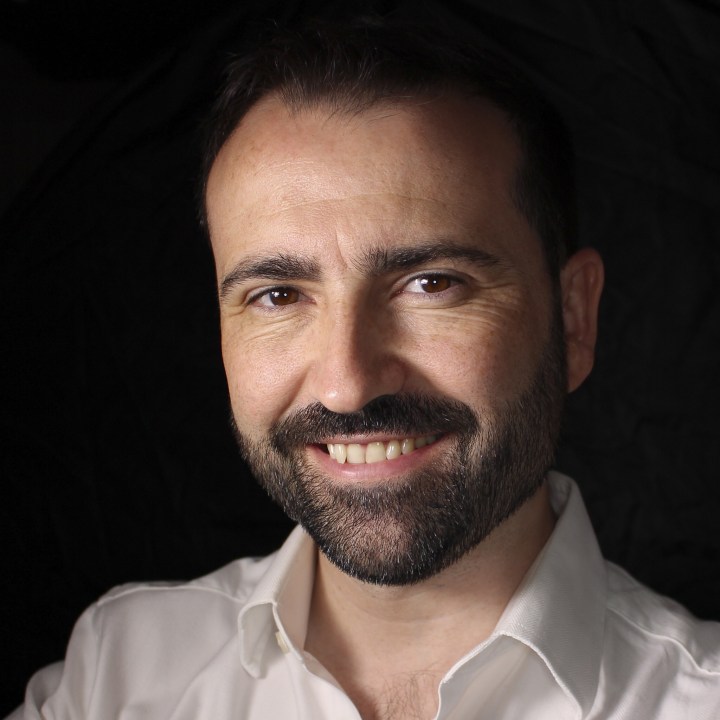
Oliver Sadie is a freelance composer and session pianist for film and tv, with an alter ego as a finance technology specialist. Operating from his purpose-built studio outside London, Oliver provides full-service soundtrack and song production, as well as live-recorded piano on demand.
With live orchestral parts performed by Royal Liverpool Philharmonic Orchestra players, blended with a full toolkit of virtual instruments, Oliver writes for production music libraries Gothic Storm Music, Lovely Music, The Library of the Human Soul, Getty Images Music as well as several non-exclusive online libraries. Some of Oliver’s portfolio of 500+ tracks can be heard at http://soundcloud.com/oliversadie.
On-screen credits include indie New Mexico film THE GARDEN (2015), upcoming UK action comedy film DEAD MEET (2016), independent Hollywood film GLASS PRISON (2013), sports documentary series SVEN DECKER, US slavery documentary MADMEN OR MARTYR, and a number of promotional and advertising spots for end-clients including Sony, Gärtnerbank, Black Bear International.







 The Cross-Eyed Pianist