
Who or what inspired you to take up the piano and pursue a career in music?
I have a half brother to thank for this – Luke, who lives in Arizona, or at least he used to, and I’ve only met him once in my life. He came to visit us in Devon when I was younger, and my mother convinced my father to get an old pub piano – Luke is a singer/songwriter and she hoped we would appreciate hearing his music. I did, and I took a particular liking to that creaky piano, began making noises and was soon taking lessons. I don’t come from a musical family, and there wasn’t exactly a fertile scene for it in my hometown, so the desire for a career in music came later, when I enrolled on a music course at The University of Chichester, met some inspiring musicians and mentors, and discovered the breadth and potential of what was out there
Who or what were the most important influences on your musical life and career?
My first major influence would be my first band The Plastic Hassle – which helped me learn how to improvise and write music, play with rhythm and make naïve psychedelic jazz-rock noise, at the age of 15. My first piano teacher had moved to Yorkshire by then and I was feeling a bit discouraged about music so this was a welcome kick! When I came back to classical piano aged 19 I found I had much more to express and ‘something to say’, and I never lost my love of improvisation. Adam Swayne, my teacher at university, switched me on to modern music, and showed me the scope and variety of piano repertoire outside the repressive ABRSM exam bubble. Finally, my teacher at Trinity Laban, Douglas Finch, who has always challenged conventions and collaborated successfully within other disciplines, which is something that became very important to me. There are of course many more influences, but these are the most important!
What have been the greatest challenges of your career so far?
Finding time and a space to practice away from irritable neighbours. Finding other musicians and artists to work with, which is easy enough when you’re part of a big collaborative conservatoire but harder when you’re in the wider world chasing up jobs, gigs, and endless life admin! Organising interesting concerts and events myself, which I would like to do more of, it is a huge investment of time and energy but incredibly worthwhile, and can raise awareness for good causes. I would like to pursue my other musical interests – whether that’s composition, jazz, harmony, learning accordion, or electronic music – but as is known, getting and staying half decent at piano is time consuming enough in itself!
Which performance/recordings are you most proud of?
My debut recital at Chichester Cathedral last year was special for me, so much of my musical development happened in that area, and coming back to perform for an audience of over 500 was quite overwhelming. I’ll be back there on the 8th March next year, excuse the plug. While studying for my Bachelors I was invited to perform the Shostakovich Piano Concerto No 2 with the university orchestra – the support and goodwill from the musicians, conductor and audience, and how it all came together on the night, is an enduring memory. Other than that, I enjoyed putting together a performance of Ravel’s La Valse, arranged for two pianos, with a choreography devised by contemporary dance students at Laban, for the first CoLab festival at Trinity Laban. I got to play some of Eric Satie’s Vexations at 4 in the morning, for a project at Chichester University. The performance, split between all the pianists that the university could muster, had been broadcast online for a good 12 hours prior to this and the music was firmly lodged in my psyche before I dragged myself out of bed to the concert hall!
Which particular works do you think you perform best?
I think it’d be easier to say what I perform badly! I suppose I feel most at home with music of the 20th century, which is very vague, and in itself contains a vast variety. I never tire of exploring whats out there, trying to find out how it all came about, and it’s place in history. Alex Ross can help with this.
How do you make your repertoire choices from season to season?
I try and learn a programme or two worth of new repertoire every season, but then it is also satisfying to come back to something I struggled with years ago and find that I now better understand the music or am no longer wrestling with the technical problems, or I might find a whole new approach to take. A teacher told me that the best performances are of the pieces we learn and forget, then relearn, then forget, then relearn, and by then they are just so well internalised and part of our musical DNA.
When it comes to programming, I try and include a diverse selection from across the four main periods of Western music, but the challenge is in giving it some kind of unifying thread. My recitals this year are loosely themed around the title ‘Visions & Dances’, with the music grouped around Visions (visionary, impressionistic, colourful, innovative, imaginative pieces, usually of the 20th century and beyond) and Dances (self explanatory), which really means I am able to incorporate all the music I love to play! I find that unpretentious and demystifying introductions can really help ‘sell your idea’ also.
I like to include contemporary repertoire in most of my concerts, not so much the wilfully difficult and obtuse stuff, but experiments in sound by Henry Cowell, Rautavaara, Somei Satoh and Frederic Rzewski have all been memorable for audiences (for good or bad!).
I occasionally start to write a ‘bucket list’ of the music I want to perform in the next year, 5 years, decade, lifetime, but such a list is never finished and can be overwhelming. It’s good to be spontaneous in our selections also.
Favourite pieces to perform? Listen to?
I never get tired of performing Prokofiev – I haven’t yet approached the sonatas but I became hopeless addicted to the Visions Fugitives, the Ten Pieces opus 12 and some of the etudes. There is something very seductive about the expressive language, the kaleidoscopic colours, the hallucinatory changes of character. It seems like this kind of music emerged out of nowhere, from a timeless and intangible place, and I can’t really figure out where it went after Prokofiev departed. I admire the nationalistic, folkloric strain in music at the turn of the century – the Dvorak Slavonic Dances, and of course Brahms’ Hungarian Dances that inspired Dvorak, are pretty much the most fun I’ve had at the piano, and I love Janacek’s piano music.
When it comes to listening that is a very difficult question in the age of Spotify, as there is so much that I have loved, forgotten, come back to – but at the moment I am enjoying the more meditative music of Olivier Messiaen, Morton Feldmann, John Adams, Arvo Pärt. Also anything with a rhythm that makes me stop in my tracks, or want to dance, whether it’s Scarlatti, Villa Lobos, Gershwin or all kinds of electronic and world music.
Who are your favourite musicians?
I have a lot of admiration for musicians that have taken creative U-turns, in spite of achieving a certain amount of success, and turned their hand to different styles rather than play it safe, bringing a new audience and appreciation to other forms – Jonny Greenwood, Scott Walker, Robert Wyatt, David Byrne, PJ Harvey, for example. As far as pianists go I love what Chilly Gonzales is doing, bringing back the somewhat lost character of composer/performer, he is also a formidable improviser, and I recommend you listen to the online snippets from his 27 hour marathon piano performance (he was the Guinness World Record holder for the longest solo performance, but only for a few months!) you’ll be impressed by the variety of music at his fingertips. In the classical world it’s hard not be in awe of Daniel Barenboim at the piano or the podium, Grigory Sokolov for the Romantic repertoire, Martha Argerich in everything she does. Alice Sara Ott has done some really wonderful things with Chopin. They’re my favourites for now. I have to mention Art Tatum and Bill Evans also, for their boundless creativity at the piano, and the music of Charles Mingus never fails to blow me away. Why are all my favourite jazz musicians dead??
What is your most memorable concert experience?
Can I pick a few?
The second time I heard an orchestra was in Ravel’s Daphnis et Chloe, which set the bar rather high. I heard three quarters of Wagner’s Ring Cycle in the space of a week, it was the Berlin Statskapelle conducted by Barenboim at the 2013 Proms, and time seemed to stop for those 12+ hours. I was transfixed by Steve Reich’s Music for 18 Musicians performed by the Colin Currie Group, and Cordelia Williams performing Messiaen’s 2.5 hour Vingt Regards sur l’enfant Jésus from memory, with this superhuman ferocity and passion. I vividly remember when Douglas Finch improvised a set of subversive variations on Christmas themes we’d suggested, in the dark, at a party. There is a German composer called Haushcka who prepares a grand piano by filling it with ping pong balls, contact microphones, E-Bows (magnetic devices invented for guitarists to sustain sounds indefinitely), other gizmos – I expected a load of gimmicks and party tricks but it was quite an amazing transformation. When I was younger I was inspired by some of the modern jazz artists who for some reason came to play in my sleepy hometown of Barnstaple, particularly Seb Rochford’s Polar Bear, and Basquiat Strings, a string quartet of incredible improvisers backed by double bass and drums. When I got a place at Trinity Laban and found some of these very musicians were on the faculty, I was very excited; unfortunately my jazz chops hadn’t really kept up!
What do you consider to be the most important ideas and concepts to impart to aspiring musicians?
Despite my philosophical sounding name I don’t have a lot to say that hasn’t been said better already. I went to hear Daniel Barenboim speak at this year’s Edward W. Said Lecture and wrote down loads of quotes I considered important. They’ve been lost since I moved house, but essentially – use music to understand life, and life to understand music, and always impart this to everyone you encounter as a musician and teacher.
Happily the lecture is on YouTube for anyone who wants it in a bit more depth/less paraphrased!
Where would you like to be in 10 years’ time?
In some remote part of the world with some good companions, a piano and just enough free time!


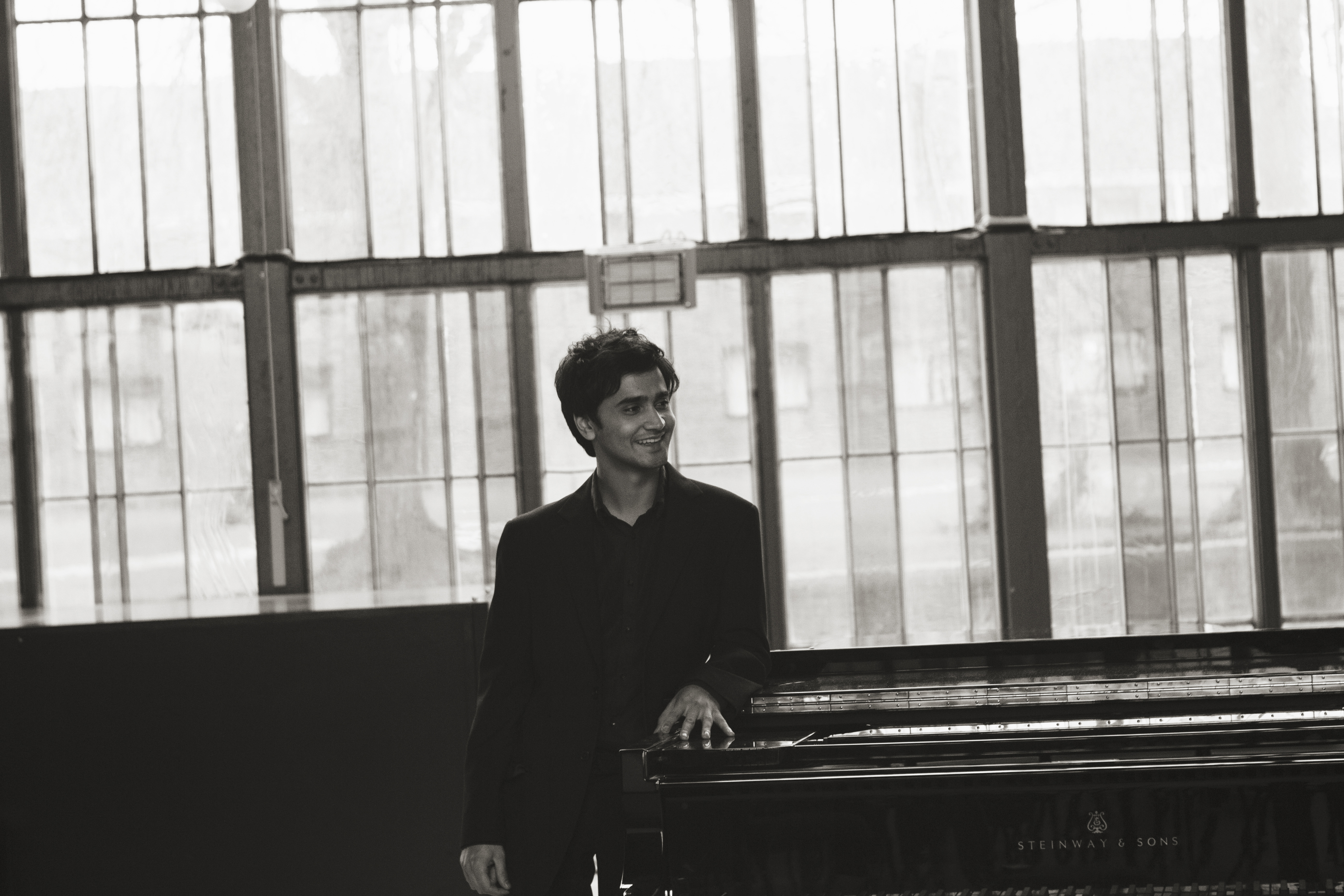




 The Cross-Eyed Pianist