
Who or what inspired you to take up composing, and pursue a career in music?
I’m not sure I can really attribute it to any one thing in particular. I always wrote music, even as a child, but I didn’t think it was an unusual thing to do. (Perhaps coming from a family of artists and musicians gave me a slightly odd perspective!) Strangely enough, a really key moment for me in my youth was giving up the violin: I absolutely hated learning the instrument, and once I’d stopped, I suddenly rediscovered my love of classical music, and began to play the piano and compose again.
I was very lucky at school too; we had an incredibly skilled and inspiring Head of Music who encouraged and supported me in my last-minute decision to apply for music degrees rather than languages.
Who or what were the most significant influences on your musical life and career as a composer?
Perhaps it’s a trite response, but the musicians who have influenced me the most tend to be those I can identify with on a personal level as well as musically. There’s always been something about Toru Takemitsu’s life and career, his struggle to come to terms with his cultural heritage and the difficulties of writing in Japan after the war, the fact that he was self taught and, by all accounts, an incredibly warm, humorous and unpretentious man that somehow strikes me as a good model of how to be a composer in these complex and ever-changing times.
Billie Holiday has also always been a heroine of mine; her ability to bear her soul in every recording she ever made (and no doubt every performance she gave), in spite of the many adversities she faced in life, inspires me continually.
Of course my teacher, Julian Anderson, also had a profound influence on me as a composer. I couldn’t really compose before I studied with him; I was full of ideas, but only had my instincts and a few very basic tools for realising them. He was incredibly encouraging, but also equipped me with the means to be constructively self-critical, which I’m immensely grateful for.
What have been the greatest challenges of your career so far?
There were some very difficult periods for me as a student. Composing has always been something of an emotional outlet for me, and I think it’s sometimes very exhausting to confront your emotions when life can seem so complex and uncertain. But then composing is always so much harder than you expect it to be anyway!
What are the special challenges/pleasures of working on a commissioned piece?
It’s always a privilege to be commissioned to write a new piece, but it’s not really that different from writing in your own time, apart from having the pressure of a deadline. That can be a useful catalyst for getting the piece finished though!
What are the special challenges/pleasures of working with particular musicians, singers, ensembles and orchestras?
It’s always a great honour to be commissioned by a specific performer. Knowing that they have selected you to write for them based on their appreciation of your previous work is hugely reassuring as a starting point, and of course, it’s always wonderful when you can work closely with them on the work in progress, and even better when they’re pleased by the final composition and play it with enjoyment and commitment.
Working with Richard Uttley recently on my new Dance Suite has been fantastic. We live close to one another and the process really has been very collaborative. I’ve written bits of the piece, played or shown them to him, and he’s then responded and helped me with very practical suggestions; I’ve learnt so much from the process, and it’s only really possible to do that when you’re writing for a particular soloist.
On the other hand, it can be quite scary when you’re writing for a really prestigious group. I remember composing for the LSO and occasionally thinking – oh god, the LSO’s first violin section are going to play those notes: they’d better be good. I try not to let myself worry about that too much, however; otherwise I’d never be able write anything at all!
Which works are you most proud of?
Someone recently told me that when a composer admits that they’re proud of a piece, it usually means they know it’s not very good! Personally I find it difficult to be completely happy with anything; the critical faculties you need to write your best music are also those that can make it difficult to enjoy them afterwards, because you’re always aware of what you could have done better.
Having said that, I am quite fond of a few short pieces that I had to write very quickly (one of them in just one day!) – perhaps it’s because I had somewhat reduced expectations of myself in those circumstances. Many others I’m relatively pleased with, but still have niggling doubts about passages I think could have improved with slightly more time and a better sense of focus.
Who are your favourite musicians/composers?
That’s hard to answer; there are so many, and I’m always on the look out for new pieces and performances to give me ideas and enrich my listening.
I suppose I would certainly want to name Guillaume de Machaut, Tomás Luis De Victoria, Henry Purcell, J.S. Bach, Mozart, Chopin, Brahms, Debussy, Ravel, Stravinsky, Szymanowksi, Herbie Hancock, Bill Evans, Wayne Shorter, Oliver Knussen, Henri Dutilleux, Hans Abrahamsen, Jonathan Harvey, Claude Vivier, Gerard Grisey and Franco Donatoni, but that’s far from an exhaustive list.
What is your most memorable concert experience?
I’ve many fond memories of concerts and it’s hard to rank them, but one that really sticks in my mind is a Chick Corea gig I went to with some friends back in 2004; he and his band just gave an utterly sensational live performance.
More recently I attended an incredibly good concert with the London Philharmonic Orchestra that included Ravel’s Daphnis et Chloë and the premiere of Julian Anderson’s Violin Concerto; it was an exquisite performance of the perfect programme. I also loved the Orchestra of the Age Enlightenment’s performance of the St Matthew Passion directed by Mark Padmore just before Easter this year.
What is your idea of perfect happiness?
Retiring, once I’m old and tired of working, to somewhere beautiful in Italy where I can eat amazing food everyday and enjoy the good weather.
What do you enjoy doing most?
Walking and cycling in the countryside and making things for the flat. (My dad is a furniture restorer and instilled a love of woodwork and DIY in me as a child.)
(interview date: June 2015)
Born in London, Matthew Kaner studied Music at King’s College London and was jointly awarded the Purcell Prize for graduating top of his year in 2008. He then gained a distinction for his Masters at the Guildhall School of Music & Drama, supervised by Julian Anderson, where he subsequently continued his studies as a Composition Fellow for a year. He has been teaching on various undergraduate courses at both King’s and the Guildhall School since 2009, becoming a Professor of Composition at the latter in 2013, in which year he was also made a Fellow of the Higher Education Academy.
Matthew has composed works for the London Symphony Orchestra, London Sinfonietta, Philharmonia, members of the BBC Symphony Orchestra, the Workers Union, Siglo de Oro, King’s College London Choir and Orfea amongst others, and soloists including Richard Uttley, Julia Samojlo and Sam Corkin. His music has been performed at various venues in the UK and abroad, including Seiji Ozawa Hall, the Barbican, the Royal Festival Hall, Wigmore Hall, the Purcell Room, LSO St. Luke’s and Snape Maltings. It has also been broadcast live on BBC Radio 3 and featured in the Aldeburgh, Norfolk & Norwich, City of London and Victoria International Music Festivals.
In the summer of 2012 Matthew was the Margaret Lee Crofts Fellow in Composition at the Tanglewood Music Center, Massachusetts, where he worked and studied with composers George Benjamin, John Harbison, Oliver Knussen and Michael Gandolfi. He attended the Britten-Pears Contemporary Composition course in 2011. In 2013, he was one of the winners of the Royal Philharmonic Society Composition Prize and was consequently commissioned to write a new work for the Philharmonia’s Music of Today series, premiered in the Royal Festival Hall on 31 May 2014. He was also the recipient of a London Sinfonietta Writing the Future chamber commission. His quartet for flute, clarinet, viola and cello, Chants, was premiered in the Purcell Room as part of the New Music Day on December 8, 2013.
Matthew was the 2013 Composer-in-Association with the Workers Union, composing a work with electronics entitled Organum which they premiered with the support of the PRS for Music Foundation, culminating in a final performance at LSO St. Luke’s on 9th November 2013. His commission for the London Symphony Orchestra, The Calligrapher’s Manuscript, was premiered under the baton of Robin Ticciati in the Barbican Hall in September 2013 and received with critical acclaim.
matthewkaner.com

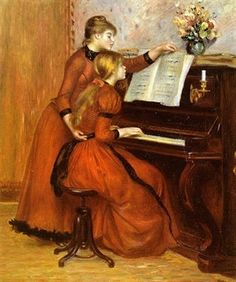 Music is the only field of study that requires regular and extended one-on-one interaction between student and teacher. The student-teacher relationship is a very special one, based on mutual trust and respect. Young students are often hungry for knowledge and experience: they turn to their teachers for support and advice, they share their insecurities and emotions. Music is all about expressing emotions, plumbing the depths of the soul or soaring in ecstasy, and a certain vulnerability and emotional intelligence is essential if the musician is going to communicate with honesty and passion. Good teachers know this – they encourage their students to know this too, enabling them to let go and free their spirit to play with feeling and musical colour.



 The Cross-Eyed Pianist