“Every time you play a great piece of music there is a new discovery. Every time.”
Mitsuko Uchida, pianist
“I am interested in music as ecstasy, as something that transports you away from the everyday to another place.”
Terry Riley, composer
“Perhaps many a composer of the past would be astonished at how over-cautious we are when we play their works.”
Helmut Deutsch, pianist
“Be open to the possibility of your ears and soul being challenged, be curious about how that may be done, be hungry for new sounds, be thirsty for what you don’t know yet”
James MacMillan, composer and conductor
“The purpose of art is the gradual, lifelong construction of a state of wonder and serenity.”
Glenn Gould, pianist
“Schnabel said Mozart is the most inaccessible of the great masters because with the fewest number of notes, he accesses the deepest levels of human awareness and experience.”
Leon Fleischer, pianist
“As you grow up, communicate more with scores than with virtuosi”
Robert Schumann
“At every concert I leave a lot to the moment. I must have the unexpected, the unforeseen. I want to risk, to dare. I want to be surprised by what comes out. I want to enjoy it more than the audience. That way the music can bloom anew.”
Arthur Rubinstein, pianist
“If you play music with passion and love and honesty, then it will nourish your soul, heal your wounds and make your life worth living. Music is its own reward.”
Sting (Gordon Summer, pop musician)
“Keep searching for that sound in your head until it becomes a reality” – Bill Evans, jazz pianist
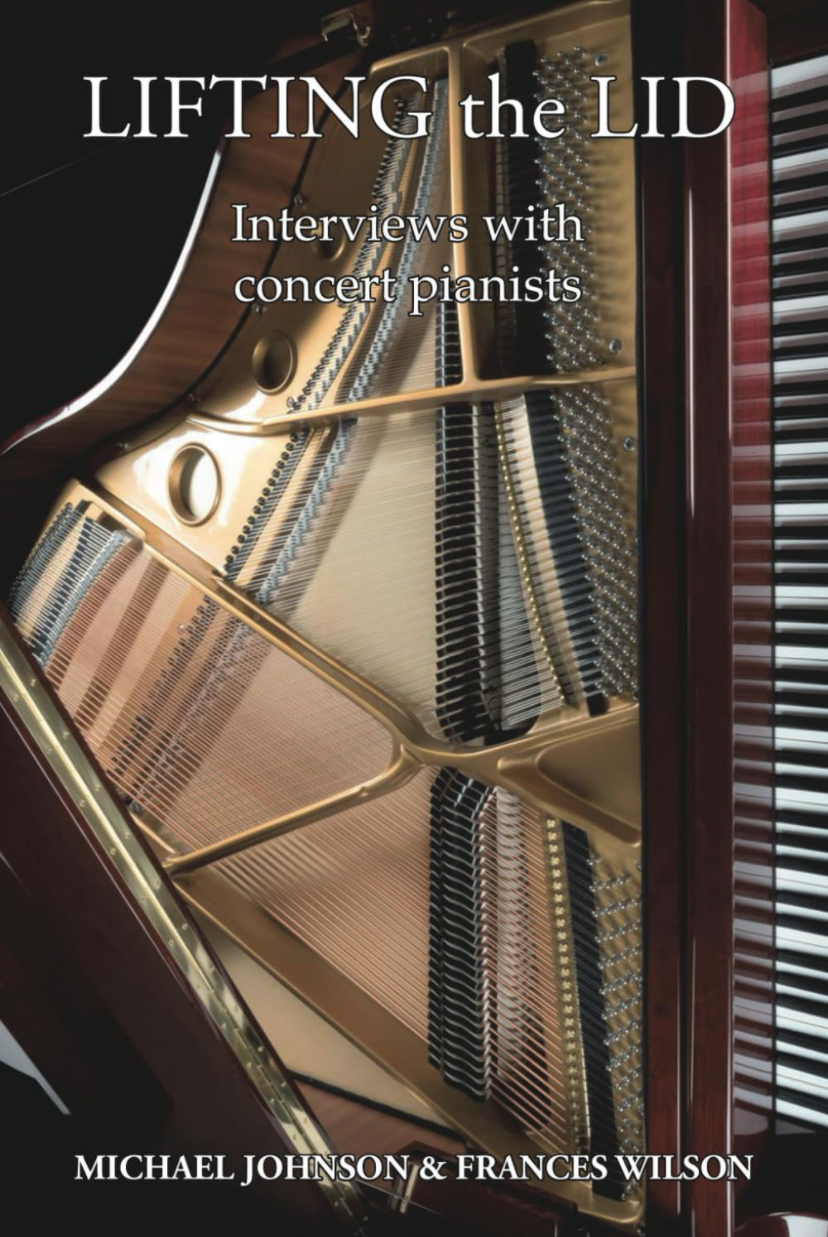
Lifting the Lid: Interviews with Concert Pianists – Michael Johnson & Frances Wilson(AKA The Cross-Eyed Pianist)
Pianists have an aura of mystique. More often than not, alone on the stage with just that box of wood and wires for company, stretched before the performer like a sleek black limousine, pianists seem more removed, almost other-worldly, than other classical musicians.
There is a great curiosity about what classical musicians do, not just life on the concert platform – the visible, public aspect of the profession – but ‘what musicians do all day’, as it were. A certain urban mythology surrounds the working life of the concert pianist; we may imagine pianists slaving away at their instrument for hours on end, cut off from family, a social life, or the normal activities of daily life. For how else could these people learn and finesse so many notes, so many details, in order to bring the music alive for us in performance and on countless recordings?
In reality, the life of the concert pianist today is rather different from the clichéd image of the wild-haired virtuoso, confined to their practice room or studio with only the instrument and its literature for company. A startling level of commitment and executive function is required to learn, memorise and perform complex music; added to that, the profession today is highly competitive, tough, often lonely – yet as these interviews reveal, the instrument and its repertoire exert a strong attraction, seducing would-be professionals from a young age and continuing to bewitch, delight, frustrate and excite.
The interviews in this book offer remarkable and often surprisingly honest insights into life as a professional pianist today – from years of intense study with some of the leading pianist-teachers and pedagogues of our time to practicing and performing, repertoire and recording. There are also more esoteric reflections on the nature of “success” as a musician, and advice for young musicians who are considering a professional career.
I must bore some people because I don’t move around when I play. Some people take this as emotional detachment but my contention is that one should come to concerts to listen, not to watch… Reproducing my gestures just wouldn’t work. (My plain) always looks effortless, like I’m just brushing the keys, but there is force at work, a lot of force.
Marc-André Hamelin
Some of the world’s greatest living concert pianists are included here – amongst them, Marc-André Hamelin, Angela Hewitt, Gabriela Montero, Stephen Hough, Joanna Macgregor, Rudolf Buchbinder, Francois-Frederic Guy and Tamara Stefanovich – but we have also included interviews with lesser-known pianists and younger artists too, who are beginning to make their mark on the international stage.
Think about what the role of a musician is today and how you can be at best useful for today’s society – for me certainly not playing only older repertoire, but thinking how to link music of all times to extraordinary creations of today. Challenge yourself by not copying someone else’s path …In short, less image, more substance
Tamara Stefanovich
The interviews have been selected from face-to-face interviews conducted by Michael Johnson before and after concerts and at music festivals, and from Frances Wilson’s popular Meet the Artist series, launched on this site in 2012 and now comprising a significant archive of over 500 interviews with musicians, composers and conductors active today.
If we are still going to persuade people to come and hear live music, we have to find ways to make that experience more meaningful and relevant, be it collaborating with other genres such as dance, the visual arts or theatre, working with living composers, or simply being able to talk to your audiences in an engaging manner.
Margaret Fingerhut
Following in the footsteps of titles such as Dean Elder’s Pianists at Play and David Dubal’s Reflections from the Keyboard, Lifting the Lid is an important survey of the thoughts and attitudes of today’s professional pianists and a significant resource for all those who are fascinated by the piano and those who play it.
Lifting the Lid is available in paperback from Amazon.com
Frances Wilson writes….. It was one of those serendipitous moments when journalist Michael Johnson contacted me in spring 2020 to suggest a collaboration project. Michael had contributed articles to this site, and I knew Michael’s writing for International Piano and Facts and Arts. It was his idea to pool our joint resources and collaborate on a book of interviews with concert pianists. I probably wouldn’t have agreed to the project had we not been in the grip of the first Covid-19 lockdown; I had very little work at the time, and desperately needed a focus and a distraction from the monotony of lockdown.
We had plenty of material, too much in fact, and so this book represents just a small selection of the many interviews we originally proposed for inclusion. While we have included some of the “big names” of classical piano, the interviews were chosen more for their interesting qualities rather than the reputation of the interviewee. I hope that readers will find these interviews insightful, giving a glimpse “beyond the notes” and the concert stage to the daily exigencies of “being a pianist”.
Frances Wilson, March 2024
“Few people ask musicians more pertinent or revealing questions than Frances Wilson…..and so the answers of her interviewees are always interesting.” – Sir Stephen Hough, concert pianist
“Frances Wilson’s Meet the Artist series is something I read every day to discover what musicians from around the world are doing and thinking. It is a fascinating behind-the-scenes glimpse into their challenges, influences and experiences via probing interviews. I highly recommend it.” – Beth Levin, concert pianist
“Not since David Dubal’s ‘Reflections from the Keyboard’ have I read a set of interviews in which music and the written word join hands so compellingly.” – Jack Kohl, concert pianist and author of ‘Bone Over Ivory: Essays from a Standing Pianist’
“Music critics have an ear. Plastic arts critics have an eye. Michael Johnson has both! This asset gives rhythm and colours to his interviews. He catches the personalities of the great pianists and reveals the little details that make them familiar to us.” – Séverine Garnier, editor of ‘Classique mais pas has been’, critic and music writer
Following on from her splendid ‘The Piano: A History in 100 Pieces’, celebrated pianist and writer Susan Tomes now turns her attention to that oft-neglected corner of classical music history – women pianists.
Focussing on 50 women pianists – some well-known (Louise Farrenc, Fanny Mendelssohn, Nadia Boulanger, Tatiana Nikolayeva, for example), others less so, or only recently discovered – Susan Tomes traces the lives and music-making of these women across the piano’s history, from the development of the piano in the 18th century to the present day.
As Tomes points out in her introduction, the piano is “an instrument that anyone can play, irrespective of gender”, yet until fairly recently, women pianists and composer-pianists, were overlooked, under-represented in concert programmes and recordings, and generally consigned to the background in classical music history.
In some ways, the reasons for this are simple: women pianists lacked access to formal music training, were excluded from performances opportunities, and were even at a disadvantage to men due to the size of the instrument, the piano’s keys being designed for men’s typically larger hands. Additionally, women often had significant obligations to the home and family. And yet despite these limitations, women continued to play, perform and compose their own music.
Pioneers in a number of ways, women pianists carved their own paths within a male-dominated profession. They travelled independently, helped to shape the modern piano concert as we know it today, including playing from memory (Clara Schumann), performing cycles of complete works (Wanda Landoswka/Bach’s Goldberg Variations), premiering new works and reviving historical works, bringing lesser-known and rare repertoire into concert programmes and recordings, and commissioning new music. They were involved in recording, broadcasting, presenting TV programmes about music, creating educational initiatives, devising concert series….and much more – all against a background of at best half-hearted support, at worst antagonism, resentment and open sexism.
These enterprising women, 50 of whom are presented in this book, helped to expand and diversify the profession, gradually debunking the notion that the male approach to a career as a concert pianist was not the only way. These women were not imitators of male pianists, but artists in their own right, with their own musical integrity, authority and identity.
This highly readable, meticulously researched and elegantly crafted book takes a chronological approach, beginning with French keyboard player Anne-Louise Boyvin d’Hardancourt Brillon de Jouy and ending with Nina Simone, jazz pianist, singer and civil rights activist. For each woman pianist featured, the author gives biographical details, notes their significant performances, recordings or compositions, and demonstrates how they have each contributed to the world of the piano.
The introductory chapters explore some of the reasons why women were sidelined, including social mores and prejudices, and how men became ascendent in the profession. The closing chapters examine where we are today with regard to female musicians, including the effect of equal rights legislation, the rise of piano competitions, shifting attitudes within the profession and audience perceptions, and the influence of teachers. For this section of the book, Susan Tomes spoke to a number of female pianists working today to reveal some surprising insights, and the barriers and limitations which women still face today in a highly competitive global profession.
At a time when the current discourse in classical music – and indeed in society in general – is focussed on equality and inclusion, this book is a valuable contribution to the debate and a rich celebration of the essential role of women in the history of classical music and the piano in particular.
‘Women and the Piano: A History in 50 Lives‘ is published byYale University Presson 12th March 2024
Residents both local and from further afield, including the Mayor of Hertford, Cllr Vicky Smith, attended a free, inaugural concert heralding the return of the Hertfordshire Festival of Music (HFoM).
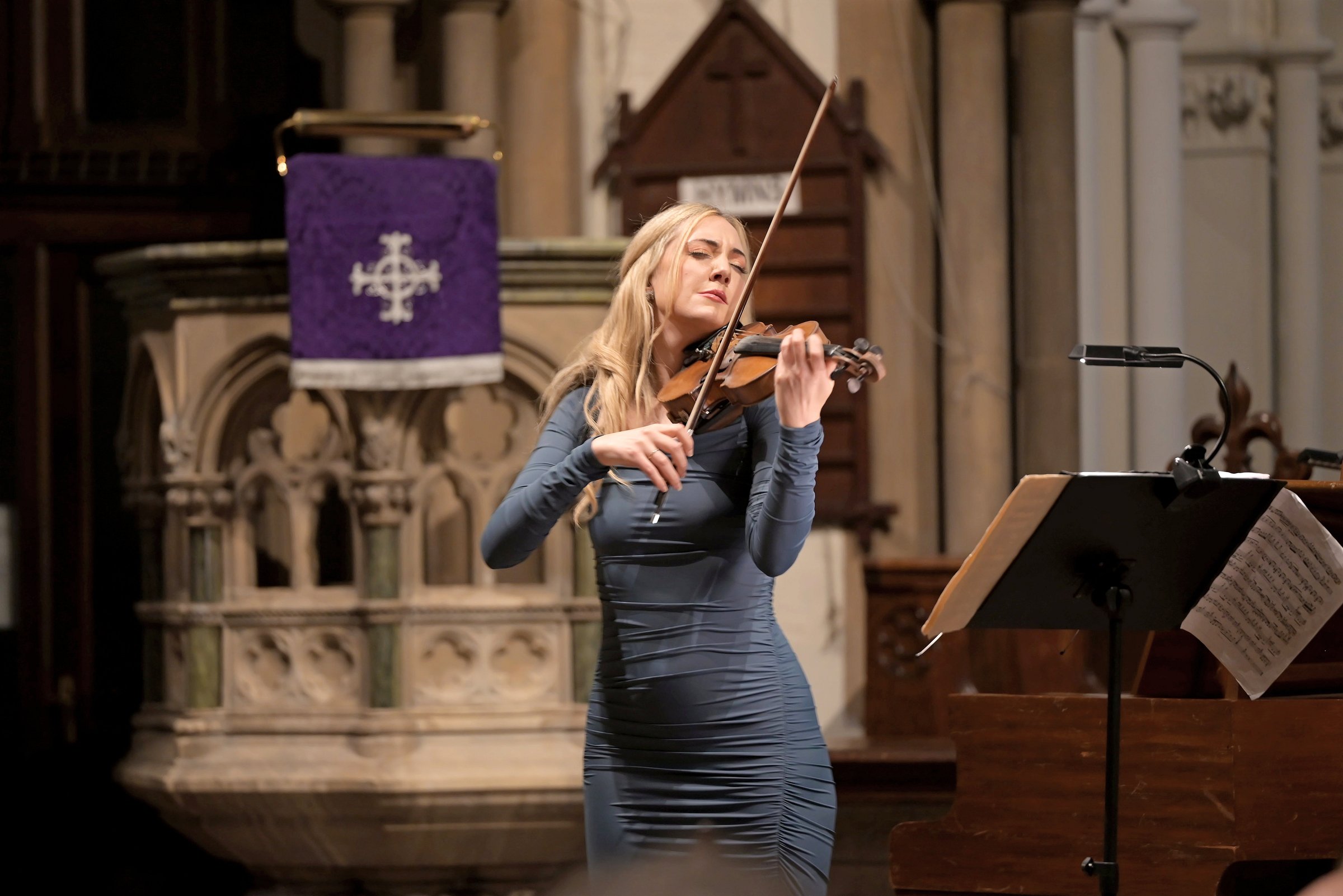
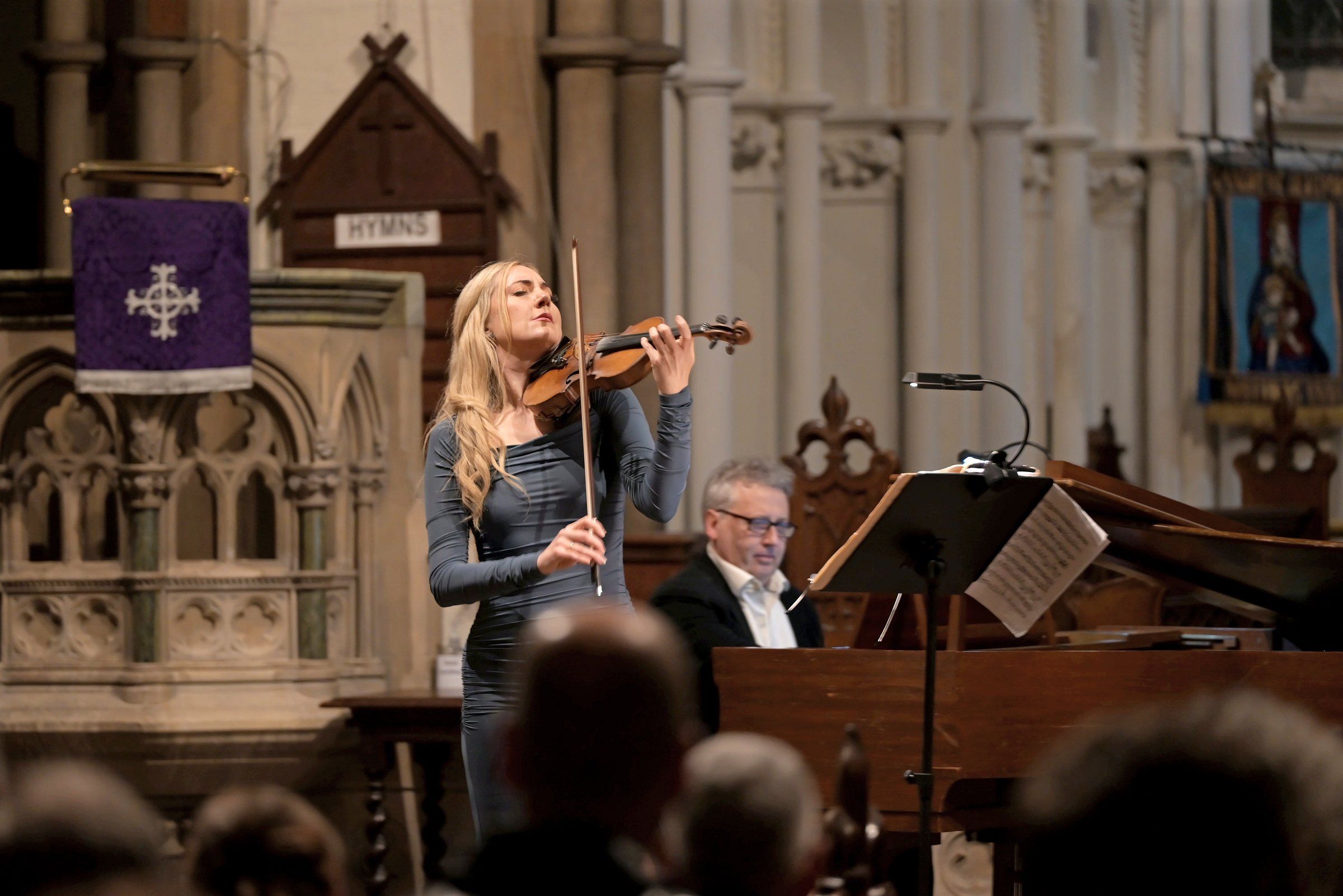
Renowned violinist Litsa Tunnah, who performed at the Festival in 2023, played at the concert, accompanied on the piano by Artistic Director, James Francis Brown. The concert took place at St Andrew’s Church in Hertford on Thursday 29 February.
James Francis Brown, HFoM Artistic Director, said: “We were delighted to see such a large gathering of people both familiar and new, in shared appreciation for the music and what the festival is achieving. We are busy planning the full Festival, which takes place in June, but this inaugural event provided music lovers an opportunity to hear about our plans and enjoy some wonderful music.”
Litsa Tunnah, violinLitsa Tunnah performs The Lake Ascending with Artisti Director James Francis Brown
Planning for this year’s Hertfordshire Festival of Music, which takes place from 7 to 15 June 2024, is well underway. This year’s festival theme is The Power of 2: Musical and Artistic Dialogues, embracing the concept of partnerships – with the “whole” being more than the “sum of the parts”. The full programme of events and artists will be announced soon.
Over the last eight years, the Festival has been built on the involvement, support and encouragement of Hertford and the county’s communities.
The Hertfordshire Festival of Music, which is a registered charity (charity no. 1175716), is an annual summer celebration of classical music, based in and around Hertford. The Festival first took place in 2016.
There are many ways that residents and businesses can get involved in the Festival, from volunteering at events to supporting the charity financially. For more information, contact info@hertsmusicfest.org.uk or visit www.hertsmusicfest.org.uk.
“the very highest level of music-making and extremely imaginative programmes” – Dame Judith Weir CBE, Master of the King’s Music (HFoM Featured Living Composer in 2021)
The Cross-Eyed Pianist is free to access and ad-free, and takes many hours every month to research, write, and maintain.
If you find joy and value in what I do, please consider making a donation to support the continuance of the site











 The Cross-Eyed Pianist