Quietude

Here I am alone with silence. I have discovered that it is enough when a single note is beautifully played. This one note, or a silent beat, or a moment of silence, comforts me.

Arvo Pärt

0e9a4e9b60bf60fa96f5a0a69bf97e1dWhy pick ‘quietude’ rather than simple ‘quietness’? Principally because I think the word has more resonance, more depth: it has a physical component, as well as one of simple silence. It is almost meditative. It is the deep breath (exemplified by Jessye Norman, perhaps) before the opening notes; and – if you’re fortunate – that precious, eternal, ethereal stillness between the final lifting of the fingers from the keys, the release of the sustaining pedal, and the subsequent applause. In both cases – even in a minimal amount of time – there is (can be, or perhaps should be) reflection, absorption, of the music in between.

Sometimes, music itself contains quietude (the most logical culmination of this being John Cage’s 4′ 33″) – although this may not necessarily mean indicated rests or pauses. Before I began to lose my hearing (which, for me, was not the descent into silence that some may expect – as Cage said, “what we hear is mostly noise”: and I experience almost constant tinnitus and occasional “musical hallucinations”), I was obsessed with a short piece, Secret Song No.6, by Peter Maxwell Davies: which, initially, appeared to begin with just a random selection of slow, sustained, intensifying, single tones. Even sitting on the settee, simply staring at that page for long periods of time – in all-consuming stillness, apart from the melody weaving through my mind – trying to understand its implications, its meaning, how one could possibly interpret it – was liable to drive me crazy. It was only a sudden realization (an emergence) that “the silence between the notes is where the magic lies” which led me to some sort of comprehension, and the confidence to return to the piano, to let the music sing for itself. (Technically, it is not a difficult piece. Emotionally, I found it extremely challenging – if only because of the self-examination it provoked. (Which one could argue is the purpose of all art…. Discuss.))

Q is also for Quakers, of course; and, although I am by no means religious (except perhaps in my addiction to creativity), one of their most inspiring qualities (even for me: someone whose tastes evolved in large, echoey gothic buildings resonating with Byrd, Tallis, Howells…) is the silent worship – listening for that “still small voice”. Sitting in true peace – whether alone, or with others – can be a truly overwhelming experience. It is therefore not for everyone.

The voice of the hidden waterfall

And the children in the apple-tree

Not known, because not looked for

But heard, half-heard, in the stillness

Between two waves of the sea.

– TS Eliot: Little Gidding (Four Quartets)

Reading this back, I appreciate that some may find hints of mindfulness. To me, though, quietude is almost its antithesis – a momentary letting go; an untethering – although not ‘mindlessness’, per se. It is an absence of intrusion of both internal and external forces. It is a caesura – but one that you may only recognize when immersed in its fragility, its transiency, its elusiveness. What follows must be sound. The rest is silence.

Stephen Ward, Writer in Residence for the Orchestra of the Swan, and blogger at The Bard of Tysoe

Quasi – As if…..

Perhaps the most famous work for piano which utilises the word “Quasi” is Beethoven’s piano sonata Opus 27 No. 2, the “Moonlight”. The first edition of the score is headed Sonata quasi una fantasia, a title the work shares with its companion piece, Opus 27, No. 1.

This is extraordinary music, this “Sonata like a fantasy”, with its first movement of delicately veiled sounds, hushed melodic fragments, those peaceful, certain triplets, the slight hesitancy in the dotted figure in the right hand, the suggestion throughout of improvisation, the pedal markings, senza sordini, indicating that the dampers should be lifted only fractionally away from the strings to allow a slight blurring between the new harmony and the old. A twilight first movement, shimmering, shifting, hinting at the tension between the forward pull of Beethoven’s revolutionary vision, and the solidity and simplicity of the classical ideal, the use of thematic material and texture beautifully demonstrated in the construction of the initial melody. A prophetic theme built on a single note, G-sharp, this the composer’s core idea. A single note, repeated six times, proceeds to A, then returns. A single note, reharmonized on its return, not by the initial C-sharp minor chord, but with luminous E-major. A single note forms a single theme; there is no second subject in the first movement, only that the triplet accompaniment assumes a more melodic role, only that tension rises as new harmonies are initiated. A single note, a single theme, now heard for the first time in the left hand in the coda. A single note, foreshadowed in the opening measures, recollected at the close. A single note, a simple triplet accompaniment, a crescendo and decrescendo first in the right hand, then in the left. The movement ends as quietly as it began…..

Frances Wilson
‘The Single Petal of A Rose’ – Duke Ellington

Another troubled, turbulent week – at home and abroad – but on Friday evening, at an informal performance platform/social event for members of Piano Network UK, a 1500+ strong Facebook group of pianists, composers, piano teachers, and piano lovers, I discovered via one of the performers, jazz pianist Rick Simpson, this piece by Duke Ellington. As Rick said when he introduced the piece, it’s Ellington’s hommage to Debussy and Ravel, and there’s more than a hint of Claire de Lune in it with its sensuous harmonies, repeated melodic fragments and softly undulating rhythms.


This rendition is by Marian McPartland from her album ‘The Single Petal of A Rose: The Essence of Duke Ellington’.

The piece comes from ‘The Queen Suite’, written by Ellington in honour of Queen Elizabeth II in 1958 after he met her at a reception in Leeds. The six-movement suite had remained hidden in the Smithsonian Institute, Washington DC, since the composer’s death in 1998 before it was played at the Marlborough International Jazz Festival as part of the Queen’s Diamond Jubilee celebrations in 2012.

r8a0839-2-web
(photo: Nikolaj Lund)
Who or what inspired you to take up violin and pursue a career in music?

This was an easy choice, everybody in my family was playing the violin. It was almost a “Mother language”. I HAD to talk this language if I wanted to be understood, or understand what was around.

Who or what have been the most important influences on your musical life and career?

In my early life, as I said, my parents and my family, but then, later on, the absolute love of the music and the need to create sounds!

What have been the greatest challenges of your career so far?

All the competitions that I have done were a great challenge till today. But I understand now, that the biggest challenge ever happens each time I come to play a concert for an audience who expects to hear something special, something they will remember; this is  very challenging!

Which performance/recordings are you most proud of?

I unfortunately don’t remember so well which concerts went well, but I remember very well the bad ones. I always try to recall what actually made an experience not so good, so that I know what to do for the next time. The greatest concert was probably a recital, where I felt the biggest connection with my partner. That was incredible.

Which particular works do you think you play best?

Probably the ones that I believe in the most. Meaning, when I study the piece in its context and the main idea, touches me. When the music, or its purpose doesn’t really touch me, I am afraid I can’t be sure of giving my best in it…

How do you make your repertoire choices from season to season?

I of course look into the big repertoire pieces that I haven’t played yet, and then try to combine them with maybe lesser-known pieces that fit well with the mood, character, and again touch me enough to be able to transmit it to the audience.

I always try to keep something that I’ve already played, so that not always everything is new!

Do you have a favourite concert venue to perform in and why?

I’ve discovered a lot of dry, beautiful and great sounding concert venues! Every concert hall for me has a very personal history: I simply try to remember every concert, and all the circumstances of each hall where I performed.

I enjoyed very much the Philharmonie in Cologne, because of the shape of the hall and its unbelievable acoustic.

Favourite pieces to perform? Listen to?

Well, probably the one I love to play the most is J S Bach, no surprises there. Simply because I always find new harmonies to underline, or listen to. The writing is perfect, so evident and clear, one always discovers more and more complexity in his music.

I would say my problem is that I sometimes want to show my “personal discoveries” too much, and then it becomes a personal fight:

What I want to show as personal intention / what needs to be kept natural and be played in a more “hidden” way. For this reason, I also love playing Ysaye’s music, where a lot is happening and there is rather more room for personal interpretation.

Who are your favourite musicians?

From the ones I have been listening to lately: L. Kavakos, C. Eschenbach, M. Goerne, V. Gergiev, M. Pressler, S. Edelman…

What do you consider to be the most important ideas and concepts to impart to aspiring musicians?

I believe that today it is becoming more and more difficult to hold on to the principles of “great culture”.  We are the people who have the chance to be part of it, we have a great but very difficult mission – we have to keep it alive. I really think that a great part of our humanity is kept in the Art, as much in the “understanding” of it, as in its “producing”. This is why new and young artists have to hold on to something that maybe doesn’t bring that much success, or money, or fame. They have to bring something much more powerful (and not to themselves) – feelings, happiness, support, unity, and thousands of images.

All those elements are the true benefits of the music that we are sharing.

You’ve just been announced as the new London Music Masters Award Holder, tell us more about this?

It is a very new episode of my life starting, and I am really looking forward to the fresh new contact with Great Britain! Passionate people, passionate musicians!

I will be given the opportunity to introduce my concepts of instrumental playing and music making to the growing new generation of people/audiences in schools, for example. I really hope that my English will be good enough for the people to understand some of my twisted notions!

What are you most looking forward to about working with London Music Masters?

Meeting different people, and learning from them!

Where would you like to be in 10 years‘ time?

In a place where there would be unlimited space for love, friendship, and where I could be in a good enough shape to make music on a very high level

What is your idea of perfect happiness?

To be surrounded by truly honest and loving people.

What is your most treasured possession

Hum… Material possession..? Nothing… (Yet?)

What is your present state of mind?

In a very good mood.

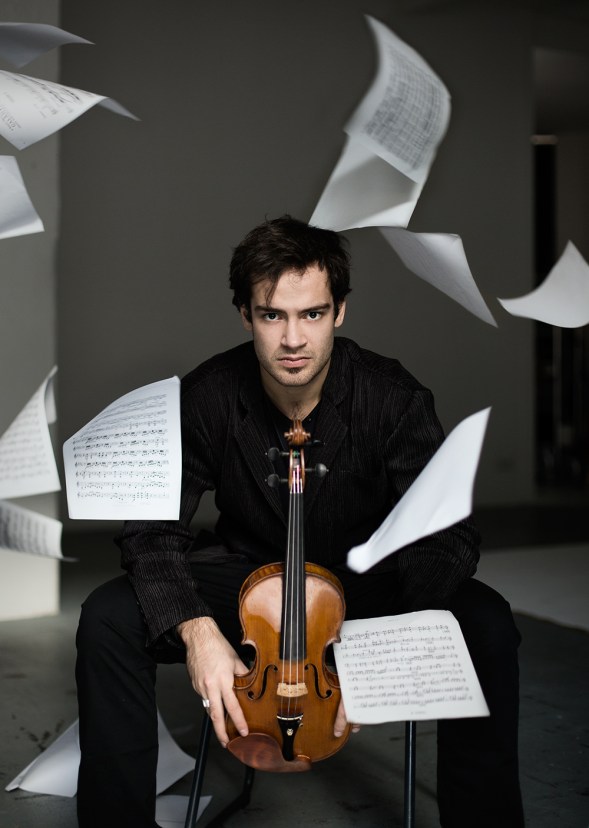
Marc Bouchkov was born 1991 into a family of musicians. He received his first lessons at the age of five from his grandfather, Mattis Vaitsner. His first public appearance was just one year later. In 2001, he joined Claire Bernard’s studio at the Lyon Conservatoire National Supérieur de Musique; he transferred to the Paris Conservatoire National Supérieur de Musique (CNSM) in 2007. There, he began studies with Boris Garlitzky, who has been his mentor ever since, and offers him invaluable guidance for honing his craft. The following years saw participation in master classes and invitations to festivals in Moulin d‘Ande, Troyes, and Bordeaux (France), Viterbo (Italy) and New Hampshire (USA).

Marc Bouchkov is the recent recipient of a London Music Masters award

Marc Bouchkov’s website

il_570xn-375692039_r8tt

A plethora of P’s PP’s and PPP’s by three guest writers for this entry in A Pianist’s Alphabet

Piano……Whisper it softly, everything we do as pianists is indicated in advance by the letter ‘P’. If we play the piano as a piano – which is to say play it piano – then we are simply following this alphabetic instruction.

We might, therefore, be tempted to say that the most pianistic pianist was Chopin, who played his piano so piano that his audiences often struggled to hear him play at all. Importantly, Chopin achieved this pianism not through the use of another ‘p’, the una corda pedal (signed ‘ped’), but through the fingers. He played with great touch, preferring to practise and perform on instruments that suited his style – notably, on Parisian Pleyels.

And yet, shout it loudly, the great strength (or forte) of the piano is that it holds within itself its polar opposite. It was originally conceived by Cristofori as a harpsichord that could be played both quietly and loudly. It is the gravicembali col piano e forte. The piano, that is, is always the pianoforte or ‘pf’.

Thus it was that Liszt, who had been inspired by Paganini (another ‘P’), was able to perform in places like La Scala, Milan, and to thousands of gathered aristocrats in St Petersburg without any loss of sound. Not that it was it just about sheer volume for Liszt. The Hungarian was, by all accounts, the master of pianoforte playing in the fullest sense. In performance, one of his strengths was that he played the pianoforte ‘pf’, moving from quiet to loud, from lyrical passages to bravura runs and back again. For him, the pf was to be played ‘pf’.

James Holden is a writer working across the critical-creative divide. He is a specialist in British and European culture from the birth of Chopin in 1810 to the death of Monet in 1926. His published work includes In Search of Vinteuil: Music, Literature and a Self Regained (Sussex Academic Press, 2010). He is currently working on a philosophical reading of romantic pianism. James also writes experimental prose and poetry. He is currently associated with the HOARD art project in Leeds. 

His website is www.culturalwriter.co.uk and he tweets as @CulturalWriter 


P  is  for  Piano. Many call it the Perfect instrument. It can Play every note, high and low, that the orchestra can. It can be both melody and accompaniment. Or a wash of sound and colors. Or even five individual voices all vying for their chance to sing above the others. It can be Percussive, Pulsating, Pounding, or Powerful. It can be Pensive, Profound, Philosophical, or Prayerful. It can be Playful, Presto, or Peculiar. It can be Pleading, Poetic, Plaintive, or Pianissimo. The Piano can express a range of emotions, to the audience of course, but also to the Performer, who often experiences the music in a totally different way than the audience. It can at times sound Pompous and Pretentious. Or Produce the most Private, Personal, innermost thoughts and feelings.

P  is  for  Practicing. Many a Pupil will Procrastinate on this essential Part of Piano Playing.  Picking apart a Piece to understand it, analyzing minute details like the chord to chord Progressions, and the overall structure and compositional form. Researching Performance Practice, to ensure that the Pedaling is appropriate for the Period, or that the Portato touch is not too short. Practicing means Painstaking Preparation. Patience. Persistence. Repeating Parts, over and over, literally thousands of times. Purging wrong notes and solving Problems that arise along the way. It means Pleasure in Perfecting a Passage. Or Sometimes Physical Pain, when a Pianist overworks his muscles and Pushes himself too hard. Or even emotional Pain, because Practicing Piano also means being alone.

P  is  for  Psychology. As performers and teachers, not only do we need to know how to Physically Play the Piano, but we need to be our own and often our students’ Psychologists. We Practice Performing to Prepare ourselves for Principal dates and venues and maybe even Premieres. We try out our Programs, Playing for whoever will listen, making ourselves nervous with the hope that at the “real” Performance we will be calm and collected, and therefore able to make music more easily. Mistakes still happen, though, even though we Played our Program Perfectly many times in the Practice room and beyond. Bad mistakes can sometimes lead to a Phobia of Public Performance, which is tough to overcome. With our Psychology in one hand, and solid Preparation in the other, however, we Push down the Panic, the Palpitations, and the Perspiration (often on our Palms!) and get back on stage, encouraging our students to do the same, hoping to share a musical moment with the audience. After all, Playing the Piano is not about Perfection, but about making a connection: to the music, to ourselves, and to the audience.

Francesca Hurst

Francesca Hurst is a New Music and Classical Pianist and teacher in Washington, DC. 

www.francescahurst.com


P is for PPPP –  Plan, Practise, Prepare and Perform!

It’s Spring 2016, and I’ve just been planning my repertoire for concerts in 2017 and 2018. In this post about the Performance of a new piece, let’s begin with the Planning, which starts a long time in advance. Yes, we must be conversant with different periods of music and different styles, but think long-term, play to your strengths and play music you respect, believe in – and enjoy; this will communicate itself to your audience.  Keep learning new repertoire, investigating the unusual as well as the familiar, to keep programmes fresh and interesting.

Then comes the Practice. If a musical performance can be likened to an architectural structure in sound, then the score is the blueprint, and much can be gleaned from studying it away from the instrument. See how the piece is put together; what are the musical motifs which form the building blocks, how are they used, and which sections reappear in different guises? What stylistic features are apparent; to what stage of the composer’s life does the composition belong, what else was he/she writing at the time in other genres, and what does the title tell us? What were the characteristics of the instruments of the day, and what else was going on in the world ?

Having grasped an overview of the piece and ascertained its context, it’s time to start the Practice. Be strategic; learn similar sections simultaneously. I would always start with separate hands and careful fingering in small sections, gradually building into longer sections with hands together when they are fluent. Memorise as you go using not only muscular memory, but an awareness of keys, patterns, harmony and structure.

After learning the piece, we then enter the crucial Preparation stage before the first Performance.  Here we need the aim of a complete play-through some weeks, or even months, before – keep going, no matter what happens. Seek to replicate performance conditions, and try ‘stress-testing’ by getting friends and family to reproduce the noises which seek to distract us in public. Coughing, rustling, mobile phones, glasses clinking… you’ll think of others, I’m sure. Try recording yourself in private or making a video –  anything that raises the expectation and which highlights areas that need reinforcement. Seek out opportunities for trying-out pieces in informal settings. Have a dress rehearsal; ensure that clothes –  and shoes –  are suitable. Brendel writes amusingly of a piano duet performance with Daniel Barenboim wherein he became tangled in Barenboim’s concert outfit; they had rehearsed in their shirtsleeves.

And so – The Performance. Everyone approaches Performance differently; some withdraw into isolation before it, some are gregarious. Find what works for you. Try the piano in advance. Before you play, take deep breaths, smile, walk tall and enjoy! You’ve Planned, Practised and Prepared; be confident.  And afterwards …  Ronald Smith used to say that pieces always improve themselves after the first performance, and he was right. Learn from what went well, note what still needs attention – then move on. Tomorrow is another day.

Christine Stevenson

Christine Stevenson enjoys a distinguished career as a recitalist and concerto soloist in the UK and abroad. She is a Director of the Summer School for Pianists, and is on the staff of the Royal College of Music Junior Department in London.

Her concerts continually draw critical acclaim for her virtuosity, musicianship, and the engaging rapport she establishes with audiences of all ages.

www.christinestevenson.net

www.notesfromapianist.wordpress.com

Meet the Artist……Christine Stevenson