Jimmy-Lee-Guitar-Runaway-WildKat

Who or what inspired you to take up composing, and pursue a career in music?

I discovered my ability to compose almost by accident. I had always been active and in love with the performing arts, school plays, school and church choir’s amateur dramatics etc…. It all started for me when I began to write poetry, mostly autobiographical of childhood memories, life experiences and so on. Without any formal training, I found that I could create melodies by turning my poems into song; I seem to have a natural gift as a songwriter. The four pieces on the album ‘The Empty Room’ were written on guitar some time ago and although I was not able to transcribe them for symphony orchestra myself at that time, When I was eventually able to hear the music played by the ensemble I founded, I was more than delighted and promised myself that one day I would record and perform all of my music albeit ballads, folk, Americana but most importantly, orchestral.  That time came a few years ago. Since that time I have produced four albums, written over thirty songs poems and produced two musical stage productions from albums.. All have been well received and proven very popular with a variety of audiences. I am ‘at one’ when I am performing!

Who or what were the most significant influences on your musical life and career as a composer?

In my childhood and at school I became emotional, reflective and very thoughtful when I heard pleasing melodies and songs. I remember at school performing Schubert’s ‘Trout’, so beautiful and meaningful; also the songs of Stephen C Foster. I was captivated by their meaning and how simple it seemed to be able to tell a story and express emotion and events good or bad. In the early 60’s I was fortunate enough to share a flat in London with very talented musicians, with a wide range of musical interests from folk to orchestral and I attended many performances throughout London and yearned to play my part. I practised hard on guitar/vocals and played my first few gigs at the Troubadour and the Half Moon in Putney.. From then on I was hooked.

What have been the greatest challenges of your career so far?

To keep my desire to perform in check. I have dipped in and out of the music scene from the late 70s, performing in the UK, Europe and the USA but my sense of responsibilities’ to provide security for my young family always overruled my personal ambition. I have no regrets in pursuing a career in the commercial world, which was thankfully both enjoyable and successful.

What are the special challenges/pleasures of working on a commissioned piece?

The challenge is to understand what is required and to create something that will last, stand the test of time and be meaningful and pleasing not just to the audience but to yourself. I have no respect for transient music.

What are the special challenges/pleasures of working with particular musicians, singers, ensembles and orchestras?

I am not the greatest musician in the world and I am always in awe of the standard talent and ability of trained or gifted musicians. Sometimes I feel intimidated and inadequate but I am usually put at ease and enjoy that company enormously.

Which works are you most proud of?

Apart from my orchestral works, which I am enormously proud of, there is a ballad on my ‘Runaway’ album called Hard Man. It was a difficult song to write and sometimes too difficult to sing but the lyrics say it all. It is a song about my Father who suffered terribly in Burma during the WWI and carried the scars for life. It is both a criticism and a tribute to a man who was never able to be the Father that I know he could have been and wanted to be.

Who are your favourite musicians/composers?

There are many from Chopin, Mozart, Schubert, John Williams, Paul Simon, John Lennon, Adele, Leonard Cohen, Kris Kristofferson and many more!

What is your most memorable concert experience?

Hearing my orchestral works performed by a full symphony orchestra at the Guards Chapel in Wellington Barracks, London in November 2015

What do you consider to be the most important ideas and concepts to impart to aspiring musicians?

For me, all music must tell a story that would be both interesting and in some way moving. The story line/lyrics will often suggest music and the music will often suggest a story line or lyrics. The two are inseparable do not be swayed by what is in vogue follow your instincts your gifts are specific to you… create and never give up!

Where would you like to be in 10 years’ time?…….

Still alive and well.

What is your idea of perfect happiness?….

Contentment.

What is your most treasured possession?…

My health and my guitar.

What do you enjoy doing most?…

Snowboarding, wind-surfing, and performing but not at the same time !!!!

What is your present state of mind?…

Excited, apprehensive, confident and pleased that at this time in my life I still have a lot to look forward to.

From classical music to folk and country, Jimmy Lee has an exotic and diverse compositional style. Disregarding all barriers that stand between genres, Jimmy has pursued his love of music regardless of any rules. His career has taken him across the globe from bars and beer joints in America’s Mid West to London’s Wembley Arena. After taking a break from the music scene, Jimmy Lee founded the Blue Coconut Music Club and decided to take up his calling once again.

Jimmy Lee released his debut classical album for symphony orchestra in Spring 2016. Having caught the attention of the Director Music at The Army Corps of Musicians (CAMUS), Kneller Hall with the power and beauty of his music, Jimmy Lee begun a collaboration with the Military for his next project. The album was recorded by Abbey Road Studios at The Guards Chapel, Wellington Barracks and Birdcage Walk with combined military and civilian musicians.

Read more about Jimmy Lee here


If there’s any excuse at all for making a record, it’s to do it differently, to approach the work from a totally recreative point of view… to perform this particular work as it has never been heard before. And if one can’t do that, I would say, abandon it, forget about it, move on to something else.
– Glenn Gould

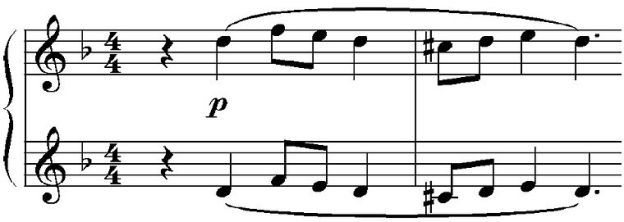
R is for “robbed”. R is also for “rhubarb”. And, aged four, sat on a plump cushion, on top of my teacher’s piano stool, having just played the Minuet in G from the Associated Board’s edition of Eighteen Selected Pieces from ‘A Little Notebook for Anna Magdalena Bach with about as much feeling as the Honda production line in Swindon,  I first came across what I initially thought was a portmanteau of the two. (By the way, I wouldn’t have known, then, what a “portmanteau” was, either. And I still have the very same music perched on my piano, today: such is the rustiness of the current state of what I laughingly refer to as my “technique”.)

“Technically, that’s excellent,” said Mr Bury (or words to that effect); “but it could do with some rubato…” – and then, of course, he went on to explain and demonstrate, beautifully, what that was.  And, although I have hunted it ever since, Snark-like:  at such a tender age, my emotional range was narrowly-focused. All I could see were Boojums.

My personal definition of the word Rubato is aural; rather than written or visual. Listen to the two (fantabulous) recordings of Bach’s Goldberg Variations which (the fantabulous) Glenn Gould made at each end of his career. The first, from 1955, <https://itun.eslasts 38:34, and is a demonstration of pure technical genius. The second, from 1981 – at 51:18 – lasts exactly one-third longer – and transforms each variation from what could easily be a mechanical Baroque exercise (see above) to something of a romantic, yet contrapuntal, serenade: particularly the opening (and closing) Aria. The difference, I believe, is not in the time taken – although there is a definite contributory effect from the time taken between making the two recordings. Subtract the first from the second – although I have to admit, given my word limit (and being, ahem, robbed of time), this is a little simplistic (and may be over-egging the pudding a little): there are a few more repeats, as well… – and what you are left with (IMHO) is the very essence of rubato.

The tempi are not so much “robbed”; as generously donated. Or, as Michael Kennedy so wisely states in the 1980 edition of The Concise Oxford Dictionary of Music (which also sits atop my piano), rubato is…

A feature of performance in which strict time is for a while disregarded – what is ‘robbed’ from some notes being ‘paid back’ later. When this is done with genuine artistry and instinctive musical sensibility, the effect is to impart an admirable sense of freedom and spontaneity. Done badly, rubato merely becomes mechanical.

…and I’m sure you can easily evoke your own guilty parties with regards to that last comment. In fact, I wouldn’t be too surprised if you disagreed with my exemplar, above. (I’m sure Chopin would.) But, surely that’s what rubato is really all about – the individual, “instinctive” subjectivity (hopefully dredged up from your very soul, and bypassing most of your mind) that you can bring to any piece of music: whether it be from your emotions; or even from a desire to stress a melody hidden deep within a morass of complex notes (see, for instance, Prokofiev’s Second Piano Concerto).

In other words, rubato – whether applied to one note, or a thousand – is simply a symptom, an expression, of one’s own interpretation.

Stephen Ward AKA The Bard of Tysoe


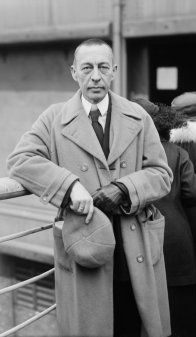
sergei_rachmaninoff_loc_33969uUp, up in the highest echelons of the pianistic pantheon sits Sergei Rachmaninov….
Regarded as one of the greatest pianists of the twentieth century, Rachmaninov had legendary technical facilities and rhythmic drive, and his large hands were able to cover the interval of a thirteenth on the keyboard. Today, his piano music remains amongst the most well-loved and widely-performed in the standard repertoire, yet in the 1950s the Grove Dictionary of Music and Musicians dismissed it as “monotonous in texture….. consist[ing] of mainly of artificial and gushing tunes….”. He was composing at a time when music was undergoing huge sea-changes (atonality and the development of the 12-note tone row, for example), yet he remained true to his own compositional vision and his music is unashamedly Romantic, full of sweeping melodies and rich textures. Even in his miniatures (for example, the Preludes, Moments Musicaux, Études-Tableaux) his music seems to express the vastness of the Russian landscape. It has a visceral and deeply honest quality.

“A composer’s music should express the country of his birth, his love affairs, his religion, the books which have influenced him, the pictures he loves…My music is the product of my temperament, and so it is Russian music”

Sergei Rachmaninov

Here is Sviatoslav Richter in the Prelude in G-sharp minor, Op 32, no. 12

Many of his piano works enjoy legendary status, and are performed around the world by the famous and the lesser known, such is their beauty, appeal and scale of challenges. Take the Third Piano Concerto, by his own admission his “favourite” of all his piano concerti – “I much prefer the Third, because my Second is so uncomfortable to play”. Due to time constraints, Rachmaninoff could not practise the piece while in Russia, and instead he practised and memorised it using a silent cardboard keyboard that he brought with him while sailing to the United States. It was premiered in New York on 28th November 1909 by Rachmaninov himself, and was dedicated to the pianist Josef Hofman, whom Rachmaninoff regarded as the greatest pianist of his generation, though Hofman never actually performed the Third Concerto.

760px-rach3_beginning
The opening theme of the Third Piano Concerto

Monumental, treacherous, gorgeous, its fearsome technical difficulties reflect the composer’s own transcendent prowess at the keyboard. For the pianist it is forty-five minutes of almost continuous playing, the equivalent in energy expended to shovelling three tons of coal just to move the keys – and this excludes the emotional and intellectual energy used. For the audience, when played well it, it encompasses the full range of human emotions in its towering virtuosity.


oxford2bphil2b202b25c225a92bchris2bgloag
(photo Chris Gloag)

Who or what inspired you to pursue a career in music?

A keen ear and an aptitude for music I showed as a boy of five

Who or what have been the most important influences on your musical life and career?

I have always been inspired by great performances, particularly those of artists of the old school such as Cortot, and have sought to make strong, informed musical statements

What have been the greatest challenges of your career so far?

To be able to keep my playing to a high standard. I am much more demanding now than I was ten years ago and the musical challenges are greater. Also, I have to ensure that the Orchestra has the resources to maintain its status and continue to expand.

You founded the Oxford Philharmonic Orchestra in 1998, why did you decide to establish a new orchestra?

To establish an instrument of the highest quality in a town which is revered the world over for excellence. My colleagues and I have worked hard to create an orchestra worthy of the attention of some of the world’s greatest artist who now collaborate with us on a regular basis. I am totally against having to create a niche in order to attract attention. The OPO makes strong musical statements playing all kinds of repertoire, including your all time favourites.

Your piano festival begins on 30th July: what are you most looking forward to in the festival?

To acquaint myself with emerging talent and share my musical experiences with them.

The Oxford Piano Festival and Summer Academy is now widely acknowledged as one of the most prestigious of its kind in the world. A residential course at St Hilda’s College, it welcomes to Oxford some of the most talented young pianists from all continents to study with some of the world’s greatest artists and teachers. This year’s artists include Marc-André Hamelin, Peter Serkin, Dame Fanny Waterman, Paul Badura Scoda, Menahem Pressler, Peter Donohoe, Tong-Il Han, Alexandre Tharaud and Nikolai Lugansky.

The students attending are of the highest standard and many are on the verge of international careers. This year, we will be welcoming as students both the winner and runner-up of the 2015 Leeds International Piano Competition. In the younger category, we are delighted to be welcoming again three scholars from the Lang Lang Foundation, chosen by Lang Lang himself. It is a privilege to be amongst such outstanding talent: I learn a lot. 

Which performance/recordings are you most proud of?

I rarely listen to my recordings once they have been edited

Which particular works do you think you play best?

I identify strongly with the German/Austrian classical repertoire of Mozart and Beethoven but also enjoy performing the romantic and 20th century repertoire.

How do you make your repertoire choices from season to season?

We are here to serve the Oxfordshire community. As the only professional orchestra in Oxford, we are free to perform works we think our audiences would enjoy, including much of the core repertoire. The Oxford Philharmonic does not have to adhere to any gimmicks or acquire a niche to attract attention: it has a territorial claim and is in the service of the community.

Do you have a favourite concert venue to perform in and why?

I love playing in the Sheldonian Theatre. Other than its revered history, it has wonderful acoustics and provides an intimate setting for our audience and musicians alike

Favourite pieces to perform? Listen to?

The works I work on at any given time. We have just performed Walton’s Façade which I loved, and I am now preparing to conduct Haydn’s ‘London’ Symphony: what a great master he was!

Who are your favourite musicians?

Those who move me

What is your most memorable concert experience?

The few concerts I have given in my life which were less discomforting than others 

What do you consider to be the most important ideas and concepts to impart to aspiring musicians?

Do not be afraid to be an individual and always aim at making strong musical statements

Where would you like to be in 10 years’ time?

I hope to be still alive and on stage tackling repertoire I have still not been able to perform: would love to conduct more Wagner, for instance. Also, I would like to devote myself to recording a lot of the piano repertoire.

What is your idea of perfect happiness?

To be with my family

What is your most treasured possession?

My family

What do you enjoy doing most?

Anything that makes me feel alive

What is your present state of mind?

One of huge responsibility for something my colleagues and I have created and which I would like to see continue its legacy when I am gone

Marios Papadopoulos MBE is the founder, music director and driving force behind the Oxford Philharmonic Orchestra (formerly Oxford Philomusica), Orchestra in Residence at the University of Oxford.

www.oxfordphil.com

Oxford Piano Festival 2016

Another term is over and as my students depart for their summer holidays, I have time to pause and reflect as my piano teaching studio approaches its 10th birthday.

I never intended to be a piano teacher. I worked for ten years in art and academic publishing after leaving university and I continued to freelance in this sector, with occasional stints for a PR company, when I stopped full-time work to have my son. But as my son started to grow up and become more independent, I began to consider a change of direction but it had to be one which could accommodate the school day and looking after my son during the school holidays. One day, during the chat that takes places between mums in the school playground while they wait to collect their children, a friend asked me if I might teach her daughter to play the piano. “But I’m not a piano teacher!” I said. The friend suggested that I try piano lessons with her daughter “as an experiment, to see if you you both like it. Rosie can be your trial student“.

And so in September 2006 I started teaching Rosie, and quickly acquired more students whose parents had heard about me via Rosie’s mum. I have never been taught how to teach and had no clear “method” at the time, only that I was determined to make piano lessons interesting and fun for the children, the absolute antithesis of my own childhood lessons, which had seemed dull and interminable and driven by an exam treadmill. I was pretty sure I could articulate all this in a way that would appeal to children.

My teaching studio grew rapidly and by the end of the first year I had nearly 20 students, most of whom had come to me via my son’s primary school. People would come up to me in the playground and say “you’re the piano teacher, aren’t you?“. And indeed by about 18 months into the job, I felt qualified to call myself “the piano teacher”.
I found the first couple of years quite tough. My son was less than happy about other people’s children coming to the house and taking up my time, but I felt it was important for him, as an only child and a boy, to see his mother working and to understand that working from home is still working.

At that time, when I was a fledgling piano teacher, I took anyone. I didn’t interview prospective students or their parents, because I knew most of them via the primary school anyway. But after a couple of instances where I and the child or parent simply did not get on, I grew more discerning and careful about whom I took on. And after a parent persistently messed me around over dates and times of lessons, cancelling them at short notice and demanding that I reschedule, I introduced a formal contract which put everyone on an equal footing and enabled me to run the studio in a more formal/businesslike way.

And that perhaps was the first most important lesson I learnt about running my own teaching studio – that one needs to formalise arrangements to ensure people treat you with respect. This is not a “hobby job” but a professional role which I take very seriously.

A few years ago, by which time my studio had grown to 25 students and I had two performance diplomas successfully under my belt, I decided to make some significant changes to the way I organised my teaching: I “let go” the students who were simply coasting, not practising and not really taking their piano lessons particularly seriously; I rebranded myself as a serious teacher of classical music (no more Adele songs!) who carefully selects students via an interview and trial lesson; and I put my fees up. Within weeks of making these changes, I had more enquiries than ever and I began to enjoy real job satisfaction too.

Second lesson: as a freelancer, don’t be afraid of making changes to your working life to suit you and which gives you job satisfaction. A happy teacher is more likely to be a successful teacher.

In terms of the actual teaching, I based much of it on my own very positive experiences with my music teacher at secondary school, rather than on my childhood and teenage private piano lessons. My music teacher was endlessly inventive and enthusiastic and it was his enthusiasm that, more than anything else, I tried to incorporate into my own teaching. I felt – rightly – that children and young people, adults too, would be enthused and excited by music if I was enthused by it, and I made sure everyone learnt and played music which they enjoyed, rather than which might be “good for them”. When, in 2008, I started having lessons myself again after a break of nearly 25 years, I was able to distill what I was learning into easily understandable nuggets for my students (something my piano teacher actively encouraged), and I quickly saw the benefit of my own lessons in my students’ playing as well as my own. In addition, I started attending courses and workshops to enhance my professional development, and began to connect with more piano teachers too.

Third lesson: good teachers never stop learning themselves

Now, as my studio approaches its tenth anniversary, my teaching style and approach has settled into one which is relaxed and flexible. There is no “one size fits all” in teaching because all children – and adults too – are individuals and deserve to be treated as such. I know each student’s strengths and weaknesses, what music they particularly enjoy, and how much or little they like to be pushed by teacher. Some want to take exams, others are content to learn music which they simply enjoying playing. I’ve always been a natural communicator and it’s not in my nature to be overly didactic: I want to empower students by giving them the tools, and confidence, which encourages self-discovery and independent learning. I have a couple of very musical and talented students, and supporting them with issues such as perfectionism, performance anxiety and the psychology of performance present their own interesting challenges and force me to think outside the box as their teacher and confront my own issues in these areas. All my students are hardworking and enthusiastic, who are taking lessons because they want to, not because a parent has insisted on it.

In addition to my regular private teaching, I’ve been fortunate to work with a number of adult pianists, both individually and in group workshops and masterclasses which include aspects such as building confidence, coping with performance anxiety and preparing for performance diplomas.

I no longer teach young children or beginners. My students are aged between 11 and nearly 17 and are all early intermediate (Grade 3) to advanced level (Grade 8) players. They are bright and engaged, unafraid to question or challenge me or work things out on their own, which is great because I never want to be the teacher who simply “tells”. For me, teaching is an exchange of ideas, a process of showing, demonstrating, explaining, confirming, questioning….. An inquisitive student is likely to learn more, and more quickly. I encourage my students to find their own individual voice in their music making and to use their developing musical knowledge to help them make judgements about aspects such as interpretation and presentation.I don’t use a set “method” or particular range of tutor books. My teaching is instinctive, responding to each student’s needs and wishes rather than imposing my own opinion and way of doing things on them, and I encourage excellence rather than perfection. My own regular studies with two master teachers, in addition to encounters with other renowned teachers and pianists via courses and masterclasses, has undoubtedly informed my teaching, and will continue to do so.

avatars-000208691703-0he3lq-t500x500Teaching has taught me far more than I ever would have imagined about being a musician as I constantly refocus and re-examine what I do and how I approach my own music making. And I think my students are intrigued by the fact that their teacher continues to study and have lessons herself. Perhaps the most significant thing I have learnt over the past ten years is that learning is a continuous, ever-changing process. It is satisfying, occasionally frustrating, and deeply fulfilling to watch students develop, find their musical voice and tastes and, above all, to gain pleasure and enjoyment from their music making.



For further information about my teaching studio please visit www.franceswilson.co.uk

Further reading

The Performing Teacher