

Who or what inspired you to take up the piano and pursue a career in music?
My family! I am the youngest of four children and when I came along my three elder siblings were all at it! I was dying to get started and at the age of three my eldest sister Mary (aged 13) started to teach me. At age 6 I won a scholarship into the Royal Irish Academy of Music in Dublin to continue my studies with John O’Conor, but Mary also continued to coach me at home. And I haven’t stopped playing since! And I’m nearly 40!
Who or what have been the most important influences on your musical life and career?
John O’Conor was the most wonderful and inspiring teacher and mentor. He taught me from age 6 to 22 – I did my bachelor degree in music performance under his tutelage. He has also been extremely generous to me by promoting me to his many international contacts and has helped my career enormously.
Christoph Eschenbach also helped me greatly when I was in my early 20s. I was selected by Menahem Pressler to play for him at a public masterclass in Ravinia and Eschenbach was so impressed he invited me to make my American début with the Houston Symphony – and I subsequently returned to play with the Chicago Symphony under his direction – that was an amazing experience!
What have been the greatest challenges of your career so far?
Maintaining a high standard of performance throughout a gruelling schedule of concerts with varying repertoire. I am very lucky to be very busy and I get through a huge amount of difficult repertoire and am constantly learning new chamber music scores (currently the Ligeti Horn Trio!) – this is all wonderful and I am very grateful to be so busy but it comes with great challenges, simply being on top of the music at all times! And the other great challenge for me is dealing with varying acoustics. It makes it so much harder to perform when you are in a dry theatre! Sadly one cannot play at the Wigmore Hall all of the time!
Which performance/recordings are you most proud of?
My solo Schumann recordings for Claves Records. They were the first really serious recordings I made and the whole process was so rewarding and fascinating. So different to performing in recital. Hugely demanding in concentration but very satisfying when the final product sounds OK!
Which particular works do you think you play best?
In solo repertoire, I think I am happiest with Mozart, Beethoven, Schubert, Brahms and Chopin – at least, at the moment! I have just recorded a new Chopin CD and I feel really comfortable in that repertoire. But I love playing Bach as well!
Paricular works that I feel I play best (reading the question again!) – Schubert Drei Klavierstücke D. 946, Brahms Two Rhapsodies Op. 79, Alban Berg Piano Sonata, Chopin Ballade No. 4. Just off the top of my head! Other people may think differently! I often think we are perhaps not the best judges of our own playing??!
How do you make your repertoire choices from season to season?
That is another great challenge. It’s so hard to know what you will want to play 18 months in the future, or how you will get on with certain pieces. It takes great courage (or foolhardiness?) to programme a very challenging work (for example the Chopin Preludes Op. 28) in a major venue (for example the Wigmore Hall) when you haven’t ever played them before!
Do you have a favourite concert venue to perform in and why?
I’ve already mentioned it twice – the Wigmore Hall in London has got the most fabulous acoustic, and the feeling on stage is so rewarding and positive. I always feel I play about 10% better there than anywhere else! There’s just a feel-good factor, something about the sound that comes back to you on stage. It’s the perfect size auditorium – for solo recitals at least, I’ve done very little chamber music there and no song! Hopefully in the future ! Another venue I’m very fond of – and proud of – is St. Mary’s Church in New Ross in Ireland, where we hold the annual New Ross Piano Festival in late September. It has a most satisfactory acoustic and has been compared to the finest chamber halls in Europe.
Favourite pieces to perform? Listen to?
Perform: see above.
Listen to: Brahms string sextets, Mozart Sinfonia Concertante, Tchaikovsky Eugene Onegin, Verdi opera, Mozart opera, Mendelssohn octet…
Who are your favourite musicians?
Gosh, where to start! There are too many. I work with such a huge variety of wonderful musicians. For example, this summer I worked with a wonderful Russian violinist Nikika Borisoglebsky, I’d never heard of him and he was amazing! I also worked with the Goldner String Quartet in Australia, who were wonderful, what a lovely experience! And that’s just picking two at random. At the moment I have a few projects with István Várdai who is a fabulous Hungarian cellist. Over the past decade I have worked a lot with the wonderful French cellist Marc Coppey. When it comes to starry pianists (if that’s what the question meant?!) – the usual suspects apply – Argerich / Perahia / Lupu / Uchida but possibly most of all Grigory Sokolov, who is extraordinary.
What is your most memorable concert experience?
A recital by Grigory Sokolov in Switzerland (Cully Classique festival 2013 – it took place in a small intimate church with no more than 300 people) in which he played a most stunning rendition of the Hammerklavier Sonata.
What do you consider to be the most important ideas and concepts to impart to aspiring musicians?
Listen to yourself, listen to others, listen to other genres of music, be open to new ideas, play a lot of chamber music, go to a lot of concerts, don’t do too many masterclasses, don’t study until you’re 30, don’t do too many competitions, get out there and network and respond to emails in a business-like fashion!
Where would you like to be in 10 years’ time?
Doing the same routine only better, still having lots of concert engagements, still travelling, still having an appetite for it all, meeting new people, playing new music, constantly striving to serve the music better and fulfil my potential. Keep communicating the central message of the music to our audience, whom we live to serve! Without audiences we are nothing!
What is your idea of perfect happiness?
Jumping off a boat into the green sea off a Greek island for a swim before drinks and dinner with a treasured friend (or two).
What is your most treasured possession?
My iphone.
What do you enjoy doing most?
Travelling.
What is your present state of mind?
Optimistic.
One of Ireland’s most successful musicians, Dubliner Finghin Collins was born in 1977 and studied piano at the Royal Irish Academy of Music with John O’Conor and at the Geneva Conservatoire with Dominique Merlet. Winner of the RTÉ Musician of the Future Competition in 1994 and the Classical Category at the National Entertainment Awards in Ireland in1998, he went on to achieve major international success by taking first prize at the Clara Haskil International Piano Competition in Switzerland in 1999. Since then he has developed a flourishing international career that takes him all over Europe, the United States and the Far East.
 (Musical) Terms
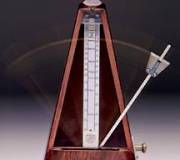 Composers use terms to guide us in our interpretation of their music. With the invention of the metronome terms relating to tempo (such as presto, allegro, andante, adagio) became more standardised and suggested tempi are given on the body of the metronome in beats per minute, and also at the start of a piece. These speeds are not set in stone, however, and terms should be interpreted according to the character and style of the piece, as well as our own abilities and limitations.
 Adrian Ainsworth nominates Jo Quail: ‘Five Incantations’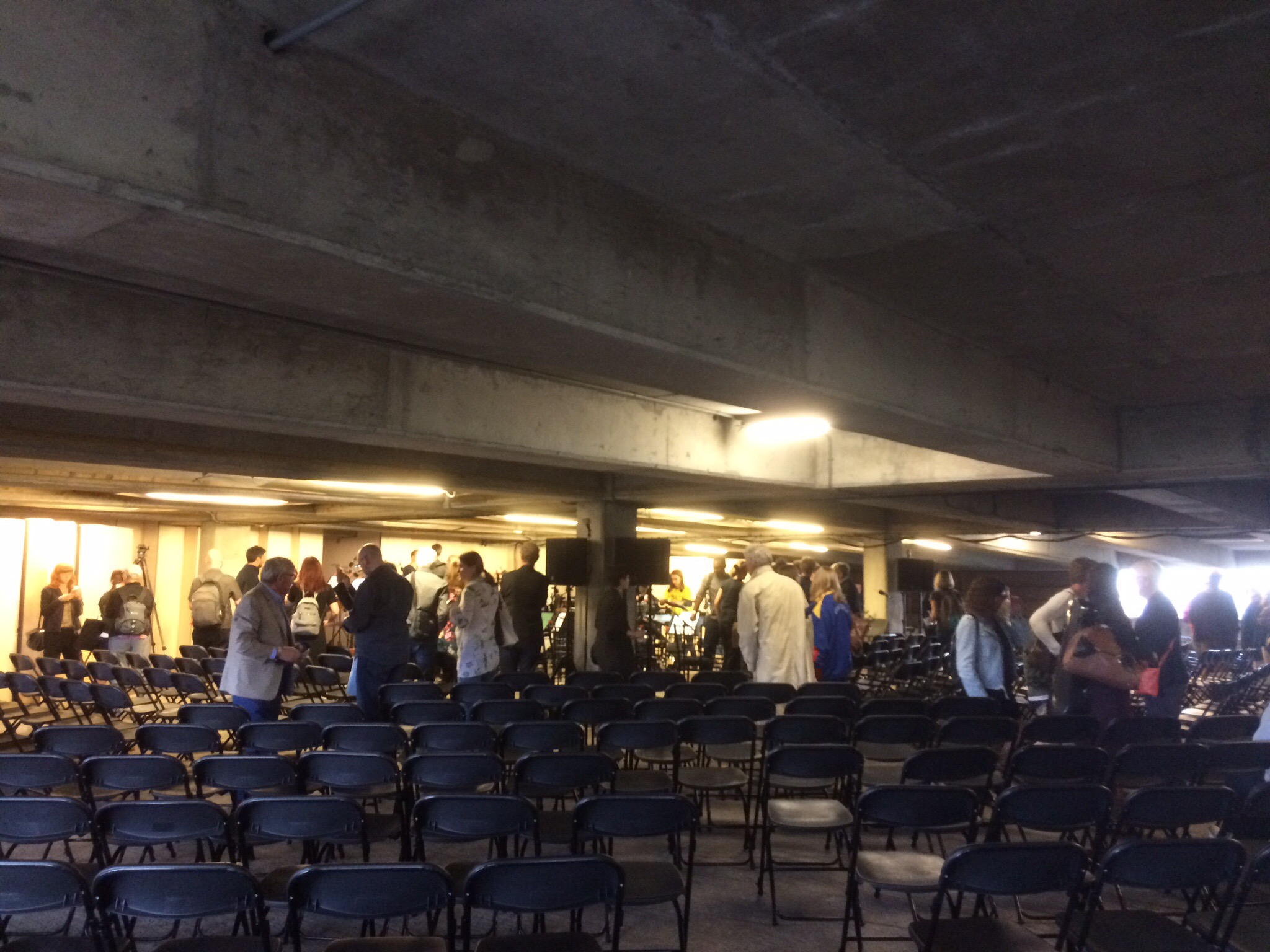






 The Cross-Eyed Pianist