“Marginal Gain Learning” (MGL) is a training concept employed by the British cycling team which has reaped brilliant rewards, as their success in both the London and Rio Olympics has demonstrated.

The concept was developed by the team’s coach Dave Brailsford, who believes that by breaking down and analysing every tiny aspect of a cyclist’s performance and then making just a 1% improvement in each area, the cyclist’s overall performance can be significantly enhanced. This approach included obvious things like adjustments to the cyclist’s diet, the weekly training regime, the ergonomics of the bicycle seat. But it also included tiny, less obvious details such as the kind of massage gel the cyclists used, or the thickness of the fabric of their racing skinsuits. Brailsford and the team searched for 1% improvements everywhere and this approach resulted in Bradley Wiggins winning the Tour de France in 2012, the first British cyclist to do so, Chris Froome winning it in 2013, 2015 and 2016, and an impressive medal haul by Britain’s track cyclists at the London and Rio Olympics.

This “aggregation of marginal gains” approach is incredibly simple and very effective – as Team GB’s success attests – and it can be used in any learning/teaching environment as it is highly adaptable and easy to implement. In short, it provides a tool for sustained improvement: from musicians looking to improve their overall performance, to students improving their learning and teachers enhancing their pedagogical skills. I have used concepts drawn from MGL in my teaching and also in my own practising and performing.

Learning music is hard: from the junior student faced with just three or four lines of music to the advanced pianist embarking on a full-length piano sonata or multi-movement work, the learning and upkeep of all those notes is a daunting prospect and requires many hours of consistent, thoughtful practise. For me, MGL is a way of “being kind” to yourself as a musician while also enabling one to practise and process music in a meticulous and mindful way. The trouble is, we tend to define achievement through one significant moment – learning a whole page or movement of a piece of music, for example – and underestimate the value of making small improvements on a daily basis which accumulate to create a significant whole.

For the musician, the MGL approach can reap important rewards. As a teacher, I encourage students to focus on very small aspects of their pieces at a time. We might take a single phrase and look at things such as shape, dynamics, articulation, mood. Each aspect is examined, played, evaluated, adjusted and re-evaluated. The various elements are then gradually aggregated and eventually the student plays the whole phrase with all the elements present. What might appear to be an overly nitpicking approach results in the student gaining security in the all notes and nuances of that phrase. And anything learnt in one phrase or section of a piece of music can be applied elsewhere, within the same piece or in other works. In this way, one creates a “knowledge bank” of information and details in music, while the process of MGL becomes almost habitual through repeated use. Because the student has been encouraged to work through this process slowly and carefully, they gain confidence in their abilities to apply the knowledge gained elsewhere in their music without constant reiteration from the teacher.

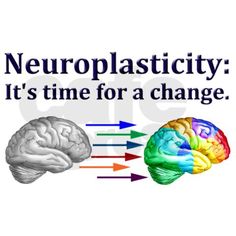
In order to achieve this, brain, eyes and ears must be engaged at all times – and it’s amazing how many musicians don’t actually listen to themselves as they play! – to assess what one sees and hears and to make small adjustments based on that judgement. Evaluation, reflection, adjustment and re-evaluation are important elements in the process and I am careful to ensure that students understand what they are doing and why. What is so satisfying about this method is that it produces noticeable progress through small increments which aggregate to create meaningful overall improvement. It also enables students to work (practise) independently because they have the knowledge and confidence to understand what needs to be practised and how. Thus, they come to their next lesson knowing they have made progress, which is one of the best motivators I know to continue practising!

I use the same approach in my own study and learning of complex/advanced repertoire and have found that it results in my ability to learn music more quickly and more accurately. It has made me more alert to the details and subtleties in a score, which in turn allows me to play with greater confidence, expression and musicality. I find the process of evaluation, reflection and adjustment deeply satisfying as the rewards are consistent and noticeable. The MGL concept can be applied in performance too as one makes small adjustments, evaluations and improvements each time the programme is performed.

On a more general level, one can apply MGL to aspects such as warm up exercises, noticing and reacting to tension when one plays, practising a phrase slowly and relishing the beauty of it, and playing in a non-judgemental way. The positive adjustments one makes are small but significant, and in this way MGL complements a mindful approach to practising and playing.

Mindfulness and Piano Playing


Who or what inspired you to pursue a career in music?

Hmm…that’s hard to say. I think by the time I knew I wanted to music I hadn’t really met anyone or seen any concerts – I just knew that I loved playing the piano and making up little tunes. It wasn’t really until I found Jazz that I knew exactly what it was that I wanted to be doing. Before that I was quite unfocused and split my time between doing the grades and playing music from musicals and coming up with my own arrangements of them. My old piano teacher used to give me hell for not playing what was on the page, but I think that I’d always enjoyed playing around with music made the transition into Jazz piano at the age of fifteen more comfortable.

Who or what are the most significant influences on your musical life and career?

My classical piano teacher at Guildhall, Laura Roberts, has probably had the biggest influence on my musical life. She’s been a close friend and ally over the years and even though we rarely see each other now she still has a big influence over me. She pulled me out of so many bad habits at the piano – before I met her I really had very little idea of how to play the piano properly so she really turned my life around. I’m still trying to work on the simple ideas she presented me ten years ago.

For Jazz if I had to name one figure it would be Keith Jarrett. He was my first real love in music and the first pianist I ever heard. I’d never listened to any famous classical pianists before, or really even any piano music in general and when I first heard Jarrett it was mind-blowing and I devoured everything I could get my hands on. What can I say about Jarrett that hasn’t already been said! To me he’s the biggest musical genius of all time. 

Other than Jarrett there came a time in my life around the age of 21 where I felt like the African-American lineage of Jazz Piano had a greater pull for me. Before then I was quite into the Bill Evans – Brad Mehldau – ECM sound, and I still love that, but the Duke Ellington, Thelonious Monk, Wynton Kelly, Herbie Hancock lineage really took over at some point. Its all beautiful and it ultimately all comes from the same place but I always want to keep on working on what is a Black American art form. Even though my own music comes from a lot of influences outside of Jazz I won’t ever stop trying to get together what Charlie Parker and Bud Powell were doing in the 1940s.

What have been the greatest challenges/frustrations of your career so far? 

I think anxiety has held me back massively. Its only been in the last two years where I’ve felt happy on stage. I used to be a nervous wreck and it showed. That’s really held me back and I feel like I need to make up for lost time but I’m generally a lot happier and settled than I was in my early and mid-twenties.

How would you characterise your compositional language?

I would say that the music I’ve written over the last four or five years has come from not thinking of tonality or chords. None of the music from my new record has any chord symbols in it. I wanted to get away from the sound that I felt that I’d heard too much of in the London Jazz scene – music which has been clearly written with a single melody line over a set of sometimes quite bleak chords. Kenny Wheeler has been a huge influence on a lot of people in London but I had to get as far away from that sound as I could. When I write music these days the composition is first and the improvising is second. At some point I’ll go back to writing very small compositions that serve as vehicles for improvising but right now with my band Klammer the music is about the compositions.

How do you work?

I work very slowly, which is of great annoyance to me. I know some people who can write several tunes in one sitting, but I don’t think that works for me. I’ll write a couple of bars and then I’ll forget about it for days on end, and then come back to it and add a few more. I’d like to get things out faster but sometimes I think leaving things can cause you to come back afresh and take the music somewhere else. 

Often I think its helpful to know what you want to write before you start. That’s worked well for me in the past where I’ve wanted to write the fast tune/the ballad/the straight 8’s odd time tune, but these days I just sit and see what comes out.

Who are your favourite musicians/bands/composers?

Modern musicians/bands that pose a huge influence on me these days are Jason Moran, Django Bates, Matt Mitchell, Steve Lehman, Steve Coleman, Radiohead, Animal Collective, Deerhoof, John Hollenbeck, Wayne Shorter, Steve Reich, Liam Noble, people like that. I love hip hop, techno, ambient, singer-songwriter music too and it all runs together.
And from the past – Thelonious Monk, Stravinsky, Ravel, Bach, Schubert, Billie Holiday, Mahler, Messiaen.

What is your most memorable concert experience?

Seeing the Wayne Shorter Quartet playing music from outer space in 2006 at the Barbican Centre. It was without doubt the most incredible music I’ve ever heard. People in the audience were screaming during the encore, it was so super-charged. There’s a recording of it out there somewhere…That band is on the farthest outer edge of what’s possible. No one is doing what they can.

Do you have a favourite concert venue to perform in and why?

Ronnie Scott’s. It took me a long time to make peace with the piano – that piano kicked my ass! I had to really learn how to play grand pianos and its only been in the last two years where I’ve felt comfortable playing one – but now I love playing there. The atmosphere and sound are perfect and I would play there every week if I could. I’ve had some great gigs there recently with Leo Richardson’s Quartet and it just feels like the perfect place for that music.

What do you consider to be the most important ideas and concepts to impart to aspiring musicians?

Be friendly. Get your social skills together. Never, ever rely on what you perceive to be as your talent, its not enough. When I was younger I didn’t feel confident in some social situations and used to hope that I could just get by on my playing. You can’t – you have to go out there and meet people and make friends.

For Jazz musicians I’d say get as much together as you can. Don’t just do one thing, get it ALL together. It’s all as equally important and the more you have in your tool box the more exciting your improvising will be. It’s not fun when you know how someone is always going to sound. Jazz should be the sound of surprise. Tape yourself. Play classical music too, its all in there.

Other than that just practice as much as you can, see as much of life as you can and don’t worry if things don’t happen straight away. Never get lazy or complacent. When I was younger I noticed that some older musicians who I used to worship had done so and I vowed I would never slack off. The only person who can help you get better is yourself.

Where would you like to be in 10 years’ time? 

Still practicing and trying to get better. I still feel like a beginner and I still don’t feel like I’ve achieved anything and I don’t really want that feeling to go away. It keeps you moving. That said, if I’m still doing what I’ve done over the last few years in ten years time I’ll be very happy. I’d just like to do more of it and eventually move into teaching at one of the music colleges. I love this life and I just want it to last a long, long time!

Rick Simpson’s new album with his band Klammer is available now on the Two Rivers Records label

Rick Simpson is based in London playing a wide variety of music, and leads his own group playing original jazz music. Rick is a regular performer at Ronnie Scott’s, the 606 Jazz Club, Pizza Express Dean Street, The Vortex, The Bull’s Head, and he has appeared at larger UK venues such as the Royal Festival Hall and the Purcell Room. In 2008 Rick won a Yamaha Scholarship Prize for Outstanding Jazz Musicians. A recording of Rick’s band was put on the front cover of Jazzwise Magazine.
Since graduating from the Guildhall School of Music and Drama in 2008 he has performed with musicians such as Christian Scott, Eric Harland, Joe Sanders, Michael Janisch, Ernesto Simpson, Martin Speake, Earl Burness Travis, Stan Sulzmann, Jeff Williams and Brandon Allen as well as younger musicians in London. Rick plays in the ensembles of Jay Phelps, Tim Thornton, Tommy Andrews, Leo Richardson, Paul Riley, and US Jazz Singer Hailey Tuck amongst others

Rick also teaches on the prestigious MEhr Clef courses alongside Stan Sulzmann, Steve Waterman, Alan Barnes, Malcolm Edmonstone Mark Hodgson, Lee Gibson, Ursula Malewski and Martin France.

www.ricksimpsonjazz.com

letteruUna Corda

Una Corda is the direction to the pianist to apply the left-hand or soft pedal. The function of the soft pedal was invented by Bartolomeo Cristofori, the inventor of the piano. In the 18th and early 19th centuries, the piano had evolved to have three strings on most of the notes. When the una corda pedal was applied, the action of the piano would shift so that only one string was struck – hence the words “una corda”, or “one string”.

On a modern grand piano the strings are placed too closely to permit a true una corda effect: the left-hand pedal shifts the whole action, including the keyboard slightly to the right, so that hammers which normally strike all three of the strings for a note strike only two of them. The resulting sound is softer and also has a duller quality due to the two strings being struck making contact with a part of the hammer felt which is not often hit and which is therefore slightly softer in density, creating a different quality of sound. On an upright piano, the mechanism is arranged so that when the left-hand pedal is applied, the resting position of the hammers is moved closer to the strings so that they have a shorter distance to travel and therefore the strings are struck with less force, creating less sound.

While the una corda pedal can be used to achieved wonderfully soft, muted and veiled effects in piano music, it is not simply a “quiet pedal”, any more than the right-hand, sustaining pedal is the “loud pedal”, and just as there are “degrees” of sustaining pedal, depending on the repertoire, so the una corda can be depressed in a variety of ways to create multi-faceted musical colours and sonorities. As with all pedalling, an acute ear, practise, discretion and experimentation will lead to greater confidence and expertise, resulting in truly wonderful effects.

Here is Beethoven giving very specific directions in the use of the una corda pedal: he stipulates lifting the left pedal so gently that only bit by bit are all the strings sounding again – only two initially and ultimately all three again:nbs-4


Urtext

An urtext edition of a work of classical music is a printed version intended to reproduce the original intention of the composer as exactly as possible, without any added or changed material. (Wikipedia)

The source materials for Urtext editions include the composer’s autograph (the manuscript produced in the composer’s hand), hand copies made by the composer’s students and assistants, the first published edition and other early editions. Urtext editions differ from facsimile editions, which present a photographic reproduction of one of the original sources for a work of music, and interpretive editions, which offer the editor’s personal opinion on how to perform the work.

Urtext scores came into being as a reaction against the many (and often incorrect) editorial liberties which were taken when editing and publishing music. Phrasing, articulation, dynamics, and sometimes even the notes themselves were altered as the editor saw fit, and so long as it made musical sense, this kind of editing was considered acceptable. Editors guilty of this kind of tampering include Busoni (in Bach) and von Bülow, amongst many others. These days, the urtext score is a must-have for the serious student, teacher or performer, offering as it does a “clean” version of the manuscript, without the distractions of an editor’s markings, and opinions, and is the most faithful record of the composer’s original intentions, which provides the starting point for independent thought and interpretative possibilities.

I still have my old ABRSM editions of Bach’s Two- and Three-Part Inventions and “the 48”. Heavily annotated by the ABRSM’s editors, the manuscript is distorted with the kind of phrasing, dynamics, and articulation markings which would probably horrify Bach.  In an urtext score, particularly a Baroque urtext score, the absence of performance directions offers the performer choice, versatility and expression.

Urtext editions, in particular those produced by established music publishers such as Henle, Wiener and Barenreiter, tend to be high-quality publications, with detailed and insightful prefaces and notes, descriptions of sources (usually in German, English and French), useful fingerings, and aesthetically-pleasing design values: durable bindings, heavy cream paper, and clear music engraving optimised for efficient page turns. With the increasing popularity of digital downloads, resources such as Piano Street and IMSLP also offer urtext editions in their catalogues.

Resources:

Henle Verlag

Wiener Urtext

Barenreiter

Edition Peters

Dover Publications

IMSLP

lucia-caruso-2

Who or what inspired you to pursue a career in music? 

My father, Alberto Caruso, was a surgeon and the son of an Italian violinist, my grandfather Salvatore Caruso (both my paternal grandparents were Italians from Calabria). He took me to my first piano recital when I was four, then to my first opera, ‘Rigoletto’, when I was six. I grew up listening to classical music at home and going to concerts thanks to my father and my mother, who is also a doctor, and she enjoyed listening to Bach and Mozart while looking at the microscope. My parents told me that when I was a baby, they put me to sleep listening to Chopin Nocturnes. My grandfather used to play the violin for quite a lot when I was a child, and I listened to him for hours delighted. I inherited his violin, the most precious possession he took to Argentina, when he emigrated before World War II started.

Who or what were the most important influences on your musical life and career?

As a pianist, I have always been very influenced by Martha Argerich, Maria João Pires, and Sviastoslav Richter. My first piano teacher was a big influence too, Gustavo Gatica, with whom I studied for about ten years until I moved to New York. Even now, I still think of everything he taught me when I practice or teach piano to others.

As a composer, my strongest influence has been Portuguese composer and guitarist Pedro Henriques da Silva, my husband. I had my first composition lessons with him when we were just friends, and he prepared me to audition for my masters in composition and film scoring at New York University, where he eventually became a member of the composition and film scoring faculty. I learned the most of composition, counterpoint and orchestration with him. Pedro, in his doctorate thesis, compiled more than two thousand modes and scales from all around the world, which I use a lot in my compositions. I learned a great amount of world music and how to compose including many unusual world instruments with their exotic tunings. Pedro has a collection of 25 plucked string instruments from different parts of the world, which certainly influenced my music. For example, I based a few of my compositions on the magical sound of the open strings of the Portuguese guitar (D-A-B-E-A-B), an instrument that is normally just used to play fado music from Portugal.

Film Composer Miklós Rózsa was a huge influence in the way I write my melodies, the modes I use with their modulations, and in the way I orchestrate. He is the film composer I admire the most, especially for his music for the biblical epics of the 50s and 60s. The scores to ‘Ben Hur’ and ‘King of Kings’ were the reason I decided that my life would be music and made me fall in love particularly with the idea of being a film composer. I even started dreaming then that I could be able to make my own films. I was 12 when I discovered Miklós Rózsa, and I feel he opened the door to the film world for me. Tchaikovsky is also a big melodic and orchestral influence in my compositions. Ravel and Liszt would be probably the strongest influence in my piano writing. Ravel is also my favourite orchestrator to learn from, especially for his brilliant orchestral special effects.

My film scoring teacher Ira Newborn during my masters at New York University was a very important influence in my scoring techniques. Ira wrote the scores to ‘Ace Ventura’, ‘Ferris Bueller’s Day Off’, and ‘Naked Gun’, among others.

What have been the greatest challenges of your career so far?

Balancing being a composer and being a performer is always a challenge. But the biggest challenge of all has been how to describe the style of music Pedro and I compose. To classify it in a genre has always been a challenge. So, after many years of trying to fit our music into a style I came up with the idea that I needed: to create my own musical style: “Transclassical Music”. I coined this term to describe exactly the kind of music that my husband and I compose and mostly perform with the chamber orchestra that we founded together in New York: the Manhattan Camerata. Pedro and I work most of the time as a team, I am the Artistic Director and Pedro is the Music Director of the Manhattan Camerata, being both the founders of the ensemble. Transclassical Music, is music that is grounded on classical techniques of performance and composition with the influence of elements from different cultures from all around the world, including improvisation and world instruments. The Manhattan Camerata is the first chamber ensemble to perform Transclassical Music.

Which performance/recordings are you most proud of? 

I am very proud of the recording I did together with my husband of our orchestral music with the London Metropolitan Orchestra at the Abbey Road Studios in London 2012. Besides having our compositions recorded, we also played as soloists on our works for piano and orchestra, and Portuguese guitar and orchestra, respectively. These compositions were commissioned by the Ahae foundation.

Another recording I’m very proud of, is the one Pedro and I did together of two commissioned film scores for full orchestra and choir for two of Georges Méliès’s masterpieces: “Joan of Arc” and “Trip to the Moon”. We recorded the two film scores with an extended version of the Manhattan Camerata to make it a full orchestra, together with Voices of Ascension, one of the best choirs in New York City. We composed the scores together, however the score of “Joan of Arc” is a little more mine and “Trip to the Moon” is more Pedro’s. We recorded at one of the best studios in the U.S., the Dolan Studios at the New York University.  We have the mission to score as many films as we can from 1928 and earlier, because since they were silent films they did not have a score composed for them. We want to help to revive many lost, forgotten, undiscovered, or damaged masterpieces, through music. The idea is to bring old films back to life with newly composed scores, so they can be projected again in theatres. This is one of our main goals with the Manhattan Camerata. Maria H. Connor was the executive producer of this project and recording, with Pedro being the music producer.

I am very proud as well of our latest album of our Tango Fado Project with the Manhattan Camerata. We recorded it also at the New York University Dolan Recording Studios and it was executive produced by Maria H. Connor, and the music producer was Pedro. We had special guests artists: Nathalie Pires, one of the best fado singers of our generation; legendary Daniel Binelli, one of the best living Bandoneon players, who used to perform alongside Piazzolla and Aníbal Troilo, the great masters of Argentinean tango; and Polly Ferman, Uruguayan virtuoso pianist and musical ambassador of the Americas. Pedro and I also perform as soloists on the album, with him on Portuguese and classical guitars, and me on piano. The album was taken by the Sorel Classics label and by Naxos  for international distribution. We are extremely proud of this recording.

I am very proud of two performances at the Versailles Palace of our compositions with a string quartet formed by members of the Orchestre the Paris and the then assistant concertmaster of the London Symphony Orchestra, Tomo Keller, as first violin. The first one of these performances was on June 23rd 2013 and the second one on September 9th 2013. Another performance I am very proud of, is the one we performed of other works of ours with the same string quartet at the Louvre Museum in Paris on June 26th 2012. In most of these compositions, Pedro and I performed alongside the string quartet with me on piano and harpsichord and Pedro on Portuguese and classical guitars. Pedro and I also performed at the Kew Palace in London together with violinist Tomo Keller on August 25th 2011. Totally unexpectedly, they gave me a harpsichord instead of the piano I had asked. So the day of the concert I had to just think fast and rearrange the whole repertoire to be able to play what I could and I improvised solo harpsichord pieces and in duet with Pedro on the Portuguese guitar. Since that day I got new commissions to compose for the harpsichord and I started my studies of harpsichord with one of the most respected harpsichordist of America, Kenneth Hamrick.

Most of our compositions performed at all these concerts I just mentioned, were commissioned by the Ahae Foundation to accompany his photographic exhibit that took place in many countries in the world, including the Louvre Museum and Palace of Versailles in France, Kew Palace in London, Grand Central Terminal in New York City, and Magazzini del Sale in Venice.

I am also very happy to perform and donate my concerts as a fundraiser to the Breast Cancer Foundation “Fundafem”, in Mendoza, Argentina, whose president is Dr. Francisco Gago. The first concert for this foundation was at the Independencia Theatre, the most important theater in Mendoza, Argentina, on May 14th 2014.

Lastly, I am particularly happy about the two concerts we did with the Manhattan Camerata of our Tango Fado Project at Kennedy Center in Washington DC on March 13th 2015 and at Lincoln Center in New York City on August 3rd 2016.

Which particular works do you think you perform best?

I have a great affinity with Mozart, his piano concertos, especially No.13 K415 and No.20 K446. The same goes for Mozart sonatas such as the ones in G Major K.283 and C Major K. 330.

I would say that Debussy’s ‘Estampes’, Chopin ‘sBallade No 1, Ginastera Tres danzas argentinas, Grieg Piano Concerto, Beethoven Sonata No 6, are among the pieces I perform best.

But in the last several years, I have focused on performing my own compositions and Pedro’s, and those are the pieces that I always have ready in my fingers, and if you to ask what pieces I play best, I would have to say that it is our works.

How do you make your repertoire choices from season to season?

I plan according to the concerts I have to play. I mostly perform my own works because of the limited time I have to learn new repertoire besides all the composition commitments I have.

Do you have a favourite concert venue to perform in and why?

Yes, I love performing at le Poisson Rouge and in Lincoln Center in New York City, and at the Monserrate Palace in Sintra, Portugal. Le Poisson Rouge has one of my favorite sound systems and a great piano. I also love the nature of the venue, which is quite creative and multicultural. It looks like a jazz bar or restaurant with tables where you can eat and drink while you enjoy the show, but you don’t necessarily listen to jazz or music that would suggest that kind of ambience. You can listen from classical to any other style of music there. This is for me one of the perfect ways to enjoy classical music: in a more relaxed and enjoyable environment than in a strictly serious one. I love to listen to classical music while enjoying a glass of wine, and not always sitting stiffly in a concert hall. When we perform there, the set up of the tables and the stage creates an intimacy that connects the audience with the performer in a very Close and warm way. It is also located in the heart of the West Village in Manhattan, one of the most alive neighborhoods of the city.

Lincoln Center is just one of the best venues I’ve ever performed in. Great acoustics, fantastic piano, great stage, huge, perfect for a big audience. Another special place where I love to perform is at the music room in the Monserrate Palace in the middle of the Sierra of Sintra (20 minutes from Lisbon) in Portugal. This last one is my favorite in terms of Magic. The room is round and has a gorgeous cupola with the most astonishing decoration, including busts of the nine muses and famous female poets all around it. The acoustics makes the sound go up and swirl around you and everything sounds even more beautiful. It is impossible not to get crazily inspired…This room has one of the best Steinway pianos I have ever played, which belongs to my dear British friend Emma Gilbert. Before Emma owned this piano, it previously belonged to Vianna da Motta, one of the most important Portuguese composers of the 19th century, and a disciple of Franz Liszt. It is a big honor for me to play on that piano. I feel it has a soul and has become one of my closest friends. I don’t only perform at the Monserrate Palace, but I also compose there most of the time when I’m in Portugal (my husband is Portuguese and I have also adopted the Portuguese nationality by marriage, that’s why I often visit). The fact that this palace is kind of hidden in the middle of the forest of the Sierra of Sintra, most of the time surrounded by a fantastical fog, typical of the sierras, it makes the whole experience absolutely magical. The Monserrate Palace is one of my favorite places to work in the world.

Favourite pieces to perform? Listen to?

From the standard classical repertoire I love to perform Mozart concertos, I would actually love to play all of them if I had the time. I also love to perform early Beethoven sonatas, Chopin Ballades No 1, 2, and 4; Schumann’s ‘Carnaval’ Op.9, Schumann ‘The Prophet Bird’ from Waldszenen op.84.

But lately I’ve been more focused on performing my works and Pedro’s works. We’ve been composing difficult music that requires all our focus, such as a piano concerto, other works for piano and orchestra, and chamber and solo pieces that often include difficult virtuosic writing. I love creating something that I will enjoy performing.

I love listening to Medieval and Renaissance music a great deal, some of my favourite pieces of the period being “Viderunt Omnes” and “Beata Viscera” by Pérotin; Cantigas de Santa Maria (12th C.), “Moro lasso al mio duolo” by Gesualdo; Dowland’s “Lachrymae”; Tallis’s “Spem in alium”; and I love everything by Josquin des Prez. My music is somewhat influenced by Medieval and Renaissance music in its colours, modes, and in instrumental timbre. Some of my music has a medieval flavour within the “modern” compositional techniques I use.

I am also a big lover of Celtic music. I am in love with the Celtic harp and bagpipes. I have a big collection of Celtic music from Ireland, Galicia, and Portugal, one of my favourite ensembles being “Strella do Dia” from Portugal.

The classical pieces I like to listen to the most are both of Liszt’s piano concertos; Brahms’s piano Concerto No.2; Tchaikovsky’s “Pathetique Symphony” (which in my opinion contains some of the most beautiful melodies ever written); Puccini’s “Turandot”; “El Amor Brujo” by Manuel De Falla; Wagner’s Ring Cycle; Ravel “Piano Concerto for the Left Hand”; Messiaen’s Turangalila Symphony, “Le banquet Celeste”; Benjamin Britten’s “War Requiem”, Ligeti’s “Lux Aeterna”.

In film music, my favourite scores are: Miklos Rozsa’s “Ben Hur”, “King of Kings” and “Quo Vadis”; Bernard Hermann’s “The Ghost and Mrs. Muir”, “Vertigo” and “Psycho”; Max Steiner’s “Gone with the Wind”; John Williams’s “The Prisoner of Azkaban”, “The Empire Strikes Back”; John Brion’s “Eternal Sunshine of the Spotless Mind”.

Pop Rock and other music I love listening to: Nils Frahm’s albums “Spaces” & “Felt”; Bjork’s albums “Vespertine”, “Post”, “Homogenic” and “Vulnicura”. I like some of the most unusual songs of the Beatles: “Blue Jay Way”, “Within Without You”, “Tomorrow Never Knows”, and also “Girl”, “Norwegian Wood”, and “Dear Prudence”. I am crazy about the song “Nobody Does it Better” by Marvin Hamlisch.

Who are your favourite musicians?

Pianists Martha Argerich, Maria João Pires, Radu Lupu, Daniel Barenboim; violinists Nathan Milstein, Itzhak Perlman, Gidon Kremer; conductors Georg Solti, Carlos Kleiber, Alondra de la Parra; bagpipe player Patricia Pato; guitarist Pablo Sainz Villégas; bandoneonist Daniel Binelli; cellist Sol Gabetta. I have the honor and privilege of being friends with the last five, and have collaborated with most of them.

What is your most memorable concert experience?

One of the most memorable and beautiful concert experiences Pedro and I had was at the Louvre Museum/Jardin des Tuileries with the Orchestre Lamoureux in Paris. We were commissioned the orchestral and chamber music for a big photography exhibit at the Louvre Museum and performed it live outdoors in two concerts at the Tuileries Garden in front of a crowd of thousands in beautiful Paris in summer. My husband and I both played as soloists with this orchestra: him on his Portuguese guitar and orchestra composition “Snow”, and I played as a soloist in my piano and orchestra piece “Clouds”. More orchestral works of ours were performed while beautiful photographs were shown on two giant screens on a huge stage that was built just for these concerts.

The other great experience in performance was the one we had last month at the Lincoln Center Out of Doors Festival in New York City. We performed our Tango Fado Project with our chamber orchestra, the Manhattan Camerata. We also had more than four thousand people in the audience – with a few dozens more standing – and had one of the most positive and effusive reactions from the crowd and the Lincoln Center authorities. An unforgettable evening!

What do you consider to be the most important ideas and concepts to impart to aspiring musicians?

As a composer, I think that the purpose of music is to touch people’s hearts and to be able to produce goosebumps as a symptom of emotional catharsis. This is more important than trying to be original or complex. As a performer, simply enjoy every musical line as if you are making love to your instrument.

Where would you like to be in 10 yearstime?

I want to keep doing what I am doing now, but more so. I want to have more concerts, more compositions and commissions and more recordings at Abbey Road, and more important concerts like the ones I have done at Carnegie Hall, Lincoln Center, Kennedy Center, Palace of Versailles, Louvre Museum, etc. I just want to write more pieces and complete my Portuguese opera and my novel about Sintra. I am at the happiest place I could possibly be right now. Of course I could always have more fame and money, but I am doing exactly what I love: composing and performing concertos and my own music, and I see myself doing the same but more so in ten years. But my greatest ambition is to be able to have a child and being able to continuing doing what I’m doing. I have talked to many artist mothers, and they just wrap their child and play piano, paint, write, and travel with the child to tours and everywhere.

I want to always live in New York, the city where all my dreams came true, but I also want to have a home in the countryside. I see myself in 10 years composing in my own studio or house either in the Catskill Mountains in Upstate NY, or in Rhode Island (US East coast) or somewhere in the countryside in England or in the south of Argentina, in Patagonia… It is crucial and vitally important for me to have a home in the countryside and in the middle of nature, so I can be fully creative.

What is your idea of perfect happiness?

Being able to be eternally in love with the loves of your life, such as romantic love, platonic love, special friends and family members. I love spending time with friends who are as close as family and with family members who are as close as friends. To fall in love with what you do as a profession, and being able to make a living or make that your everyday responsibility, has no price.

What is your most treasured possession?

My grandfather’s violin.

What do you enjoy doing most?

Besides making music, I love traveling around the world and learning as many languages as possible. I love being in the countryside and wilderness. I love riding my bike next to the ocean in Portugal with my father in law, Francisco H. da Silva. I love going to art museums with my mother, Lucia Morales, especially the Metropolitan Museum of Art in New York, and discuss art and painting for hours. I love spending time with my sister Carla, one of my closest friends and favourite people. I love being a Druid and praise nature constantly. I love climbing mountains, as I used to do since I was a child with my father and sister in the Andes Mountains. I love fencing, reading and writing. I love going to Burning Man. I love laying on the ground in the fields, mountains or on the beach to watch the millions of stars above me and look for shooting stars. I love doing wild things… I love being free…

What is your present state of mind?

Constantly in love…

Argentine-born pianist and composer Lucia, will demonstrate her technical and emotional mastery of a concerto premiered by Mozart himself, one of three designed to be accessible and a happy medium between the easy and the difficult, the brilliant and the pleasing, on Tuesday 11th October in ‘Mozart and Friends’ with the Orchestra of the Swan in Stratford-upon-Avon, details here, and further concerts in Birmingham and Cheltenham on 12th and 19th October.

Lucia Caruso’s website