nc_bw_1_credit-jim-hinson

Who or what inspired you to pursue a career in music?

I suppose my family – I was surrounded by music form a young age and never considered anything else really!

Who or what were the most important influences on your musical life and career?

My teachers (including my grandmother on piano and mother on violin!), youth orchestra and choir conductors such as Adrian Brown and Ralph Allwood, and of course a host of colleagues and conductors who I have had the privilege to assist or work with, from Mark Elder to Vladimir Jurowski.

What have been the greatest challenges of your career so far?

Keeping up with learning all the repertoire! Juggling family….

Which performance are you most proud of? 

I feel that our recent memorised performances with Aurora Orchestra have genuinely broken new ground. Some of the Proms with these have been quite special.

Which particular works do you think you perform best?

Ask me in 40 years

How do you make your repertoire choices from season to season?

With difficulty! A mixture of repertoire I know, to alleviate the burden on learning, plus taking the right repertoire to new orchestra.

Do you have a favourite concert venue to perform in and why?

Nothing beats a Prom at the Royal Albert Hall

What is your most memorable concert experience?

Playing the violin in the National Youth Orchestra with Berlioz’ Symphonie Fantastique under the baton of Sir Roger Norrington – I had an out-of-body experience!

What do you consider to be the most important ideas and concepts to impart to aspiring musicians?

Relax – it’s an obsession, a career, an ambition, yet it’s also a way of life!

Nicholas Collon and Aurora Orchestra continue an extraordinary once-in-a-lifetime journey through the complete cycle of Mozart’s piano concertos. Staged over five years (2016–20) and featuring a host of stellar guest pianists and other collaborators, Mozart’s Piano presents all 27 concertos as part of a single series for the first time in the UK.   

The concerts uses the piano concertos as a starting point for a kaleidoscopic journey across centuries and contrasting repertoire.  The result is a virtuosic, vibrant and playful series which illuminates Mozart’s life, music and legacy in new and unexpected ways. 

Further information

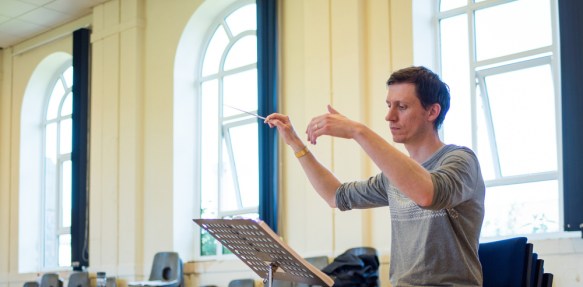
Nicholas Collon is founder and Principal Conductor of Aurora Orchestra and Principal Conductor of the Residentie Orkest in The Hague, a position he takes up in 16/17. His skill as a communicator and innovator has been recognised by both critics and audiences alike – he was the recipient of the 2012 Critics’ Circle Award for Exceptional Young Talent – and he is known as an imaginative programmer encompassing an exceptionally wide range of music.

Under Nicholas Collon’s artistic direction, Aurora Orchestra have an enviable reputation in the UK and increasingly abroad and are recognised for their creative programming and concert presentation. 2016 will see the launch of two major series in London; as Resident Orchestra at Kings Place they will begin a 5-year cycle of the complete Mozart Piano Concertos, and as Associate Orchestra at the South Bank Centre they will present a new series ‘The Orchestral Theatre.’ They have appeared at the BBC Proms every year since 2010, including performances of Mozart’s 40th symphony and Beethoven’s 6th, in which the entire orchestra performed from memory.

For Warner Classics Nicholas and Aurora have released two critically acclaimed recordings: ‘Road Trip’featuring music by Ives, Copland, Adams and Nico Muhly (winning the prestigious 2015 Echo Klassik Award for ‘Klassik Ohne Grenzen’) and ‘Insomnia’ with music by Britten, Brett Dean, Ligeti, Gurney and Lennon & McCartney.

In addition to his work with Aurora, Nicholas is in demand as a guest conductor with other ensembles in the UK and abroad. A regular guest with the Philharmonia, City of Birmingham Symphony Orchestra and BBC Philharmonic, in recent seasons he has also worked with the London Philharmonic; BBC Symphony; Zurich Tonhalle; Brussels Philharmonic; BBC National Orchestra of Wales; Spanish National Orchestra; Hallé Orchestra; Orchestre national du Capitole de Toulouse; Trondheim Symphony; Danish National Symphony Orchestra; Orchestre National de Lyon; Bamberg Symphony Orchestra; Les Violons du Roy; Scottish Chamber Orchestra; Warsaw Philharmonic; Academy of Ancient Music; London Sinfonietta; Royal Northern Sinfonia and Ensemble Intercontemporain and collaborated with artists such as Ian Bostridge, Angelika Kirchschlager, Vilde Frang, Pekka Kuusisto, Francesco Piemontesi, Steven Isserlis and Jean-Efflam Bavouzet.

Future engagements include returns to the Philharmonia Orchestra, Orchestre national du Capitole de Toulouse, BBC Philharmonic, City of Birmingham Symphony Orchestra, Trondheim Symphony, Danish National Symphony Orchestra, the Hallé and Academy of Ancient Music and debuts with Deutsches Symphonie-Orchester Berlin; Gurzenich Orchestra; Finnish Radio Symphony Orchestra; Mozarteum Orchester Salzburg; Les Siècles; National Youth Orchestra of Great Britain and Orquesta Sinfónica de Galicia.

In opera Nicholas has worked with English National Opera The Magic Flute, Welsh National Opera Jonathan Harvey’s Wagner Dream and Glyndebourne on Tour Rape of Lucretia. Future projects includeTurn of the Screw at Aldeburgh and LSO St Luke’s with Aurora Orchestra.  A champion of new music Nicholas has conducted over 200 new works including the UK or world premieres of works by Unsuk Chin, Phillip Glass, Colin Matthews, Nico Muhly, Olivier Messiaen, Krzysztof Penderecki and Judith Weir.


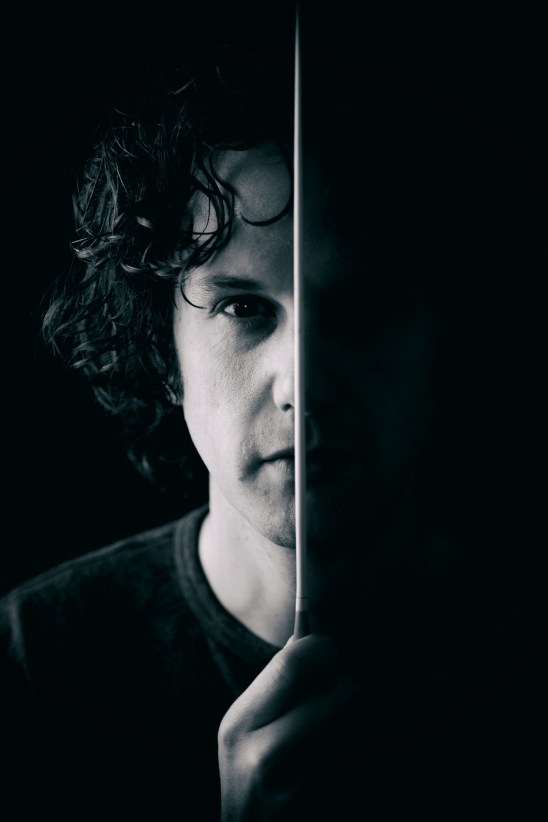
(Photo: Jim Hinson)
music-into-words-logo

The second Music into Words live event took place at Morley College, London, on Sunday 12th February 2017. This event built on the success and popularity of the project’s launch event, held last year in Senate House, UCL. This year we had two panels of speakers covering a wide range of subjects from engaging audiences through well-written programme notes and pre-concert presentations (Katy Hamilton) to how we “curate” sound (Kate Romano), the use of jargon in academic writing (Ian Pace) and why music critics and reviewers seem to take a rather London-centric/celebrity approach to reviewing concerts (Tom Hammond). With lively panel and audience discussions, sensitively chaired by Simon Brackenborough, the event proved stimulating and thought-provoking. It was also a chance to connect with people whom I and other participants had previously only “met” online. We were also delighted to have concert pianist Peter Donohoe as our special guest, together with Neil Fisher, Deputy Arts Editor of The Times, who both made insightful and intelligent comments about the responsibilities of reviewers and music critics, and the difficulties of deciding which concerts should be covered in the mainstream press.

To appreciate the wide range of discussion that took place at the event, and the parallel online discussion via Twitter, please see this Storify compilation

My friend and blogging colleague (we met via the blogosphere and Twitter!) Adrian Ainsworth, who blogs as Specs, has written an excellent summary of the event and each speaker’s contribution, together with his own presentation  – you can read it here

Meanwhile, I would like to thank all the panellists – Adrian, Tom, Katy, Leah Broad, Kate, Ian, Neil and Peter – for their very interesting and varied contributions to the event. Plans are already underway for a future event and the organisers welcome suggestions for speakers and subjects to be covered.

Visit the Music into Words website

Follow Music into Words on Twitter

Find Music into Words on Facebook

Music Into Words was created by a quartet of writers and bloggers and aims to bring together all kinds of writers about classical music – journalists, musicians, academics, bloggers and music lovers – to share their perspectives and discuss common issues in a positive, inclusive and friendly environment.

” a fantastic panel…a brilliant agenda, raising really vital issues”

– Tom Service (BBC Radio 3 & The Guardian)

richardbarnardhvrehside

Who or what inspired you to take up composing, and pursue a career in music?

Probably many things. I remember sitting at home at the piano, playing (I use the term loosely) Bach’s Preludes and Fugues, trying to work out how the hell he did it. Also my parents, teachers at sixth form and university: Martin Read, Michael Zev Gordon, Vic Hoyland and then Diana Burrell at GSMD.

What have been the greatest challenges/frustrations of your career so far?

Unfavourably comparing myself to other composers and artists. It’s so easy to descend into a Facebook-style Scroll of Shame where every successful and sparkly new thing makes you panic and think ‘I should be doing that!’ It is challenging to learn how to be influenced by other people’s ideas and techniques without feeling you have to follow their path.

What are the special challenges/pleasures of working on a commissioned piece?

First of all, commissions are fantastic. Everyone should commission composers AS MUCH AS POSSIBLE! Pieces often take ages to write and there won’t be much decent new music that defines and enriches our time and culture if people don’t commission it.

It is also incredibly motivating to have that deadline and the vision of a future audience at the first performance anticipating your new work.

What are the special challenges/pleasures of working with particular musicians, singers, ensembles and orchestras?

I write for a variety of people and situations, from professional singers and ensembles to school or community groups who have to learn things quickly and have fun doing so. Learning what works in what context is a tough skill. It takes a long time to master. I love writing for voice and I’ve been working a lot with solo singers recently. It’s great to have their voice in your head as you write and to think about the shape of the text, the breathing, the pacing and the drama of it.

Of which works are you most proud? My two recently commissioned song cycles, ‘Woolf Letters’ and ‘Early Stroll Songs’, which set Virginia Woolf’s letters to her sister and Ian McMillan’s Early Stroll tweets. I’m also very proud to have produced three performances of my opera ‘The Hidden Valley’ at St George’s Bristol this year, working with an incredible team of artists – I did, however, need a very long lie down in a darkened room afterwards.

How would you characterise your compositional language?

I like to think it’s an English sound, rooted in nature, often starting from melody and the voice.

How do you work?

I work best early. I have a lot of ideas doing other activities (gardening, showering etc.) as it gives space and time for the brain to process ideas. When I was writing ‘Early Stroll Songs’ I got into a routine of starting composing first thing (6.30-ish) for a few hours: At the keyboard, with pencil, Manuscript paper, black tea. I could usually complete 1 short song each day or two. My wife often acts as an editor, offering a second pair of ears to help me hear the music from an audience’s perspective. Later in the day, if not teaching, I would do computer / admin-type work: Typesetting, emails, checking twitter too much, grappling with a labyrinthine funding application etc.

Who are your favourite musicians/composers?

Starting out, my heroes were Bach, Stravinsky, Messiaen, Britten and Steve Reich, but I’ve recently been more drawn to the vocal music of Purcell and Handel, Mozart’s Symphonies, Schubert’s song cycles and the music of David Lang and Laurence Crane. I’m always interested in opera composers and I enjoyed Tansy Davies’ Between Worlds at ENO and Fairy Queen at Iford recently.

What is your most memorable concert experience?

When I was 16 or 17, I went to a performance of Britten’s War Requiem in Southampton. We sat right at the back. After the concert, walking out into the car park, I couldn’t speak. It was such a visceral experience.

What do you consider to be the most important ideas and concepts to impart to aspiring musicians?

Listen to and interrogate lots of good music. Like what you write. Befriend performers. Don’t follow advice too much.

Richard Barnard is a composer based in Bristol. He studied at Guildhall School of Music and Drama and University of Birmingham. He has written operas, song cycles and choral works for Welsh National Opera, Opera North, BBC Singers, Bristol Ensemble, Juice Vocal Ensemble, Siân Cameron and others. He has composed music for dance and theatre, and his chamber pieces have been performed internationally by groups including Delta Saxophone Ensemble, Juice Vocal Ensemble and Kungsbacka Trio.

Richard curated the acclaimed new music series Elektrostatic at Bristol’s Colston Hall and Arnolfini for five years. He has taught orchestration and composition at University of Bristol and is one of the UK’s foremost composition workshop leaders, working with WNO, CBSO, London Sinfonietta, Sir Peter Maxwell Davies, Philharmonia Orchestra and Eighth Blackbird.

Richard Barnard on YouTube

Twitter@richardmbarnard

richardbarnard.com


We are constantly being reminded of the importance of having “goals” in our lives in order to achieve certain things, from getting fit to winning a half-marathon or setting up a business. We believe that having goals motivates us to put in the training, go to the gym three times a week or practice regularly and efficiently. As musicians we are reminded of the benefits of “goal-oriented practice”, which is intended to enable us to achieve certain goals (passing a diploma, succeeding in an audition or competition).

There’s nothing wrong in having goals – they can provide a useful focus – but they can also create disappointment and unhappiness, especially if one does not always fulfil one’s goal. In addition, goals can be curiously anti-motivational. If all your endeavour is focussed on a single goal, what else is there to work for when that goal has been reached? This approach can create a “yo-yo effect” where you might go back and forth from working on a goal to not working on one, which makes it difficult to build upon your progress long-term.

If you are continually working towards a goal you are in effect saying “I am not good enough yet, but I will be when I reach the goal”. The problem with this attitude is that we tend to postpone happiness and fulfilment until we reach the goal. Thus, it puts a huge burden on us to succeed, which can create unnecessary stress. Instead, we should be kind to ourselves and enjoy the daily process: keep to a realistic daily practise schedule rather than stressing about that big, potentially life-changing goal.

In order to attain, or even aspire to a goal, we need to have a system, but how often do we actually consider the system by which we reach the goals?  For the sportsperson, for example, that system is training. Similarly, for the musician, the system is practising (and this includes not just time spent playing one’s instrument but also time spent studying the music away from it, including mental practice, memory work, reading, listening, thinking etc).

If we release ourselves from the need for immediate results, a systems-oriented approach will allow us to build progress day by day. This is similar to the “marginal gain learning” system, and it enables us to make long-term progress, which is far more valuable than short-term results.

There is nothing wrong with having goals. Goals are good for planning progress, but systems enable us to make progress. And when we know we are making noticeable progress, we feel motivated to continue.

The following systems are helpful in achieving sustained and long-term progress in one’s musical study:

  • Background research, reading, listening and study of the music away from the instrument
  • A detailed understanding of the structure and overall narrative of the piece
  • Regular critical self-evaluation and feedback
  • Really close and considered attention to the details of the score (dynamics, phrasing, articulation etc)
  • Trusting one’s own musical knowledge and judgement rather than received ideas about what the music should sound like

These are all skills which can be developed and finessed and which are not lost the moment one fails to achieve one’s goal. Rather, one continues to build on them, creating small but significant positive gains which go to create a significant whole.