background_renee

Who or what inspired you to take up the piano and pursue a career in music?

When I was four years old, my parents went away on a long European holiday, leaving me and my younger brother in the care of our grandmother and a much loved adopted “auntie”, a retired piano teacher. To keep her happy, they rented a piano which she played every day. One evening, Auntie Bessie played Schumann’s Arabesque Opus 18 and I vividly remember the overwhelming emotions which resulted in floods of tears! She responded by teaching me to play; by the time my parents returned I could perform simple pieces. It is my belief that from that time, music became an essential resource for me, filling the hole left by the absence of my parents. I didn’t envisage a performing career; that developed later on, but I knew there was no other path for me but to study music.

Who or what were the most important influences on your musical life and career?

I grew up in South Africa where very little 20th century music was performed. However, when I was a B. Mus. student at the University of Cape Town, my Harmony and Counterpoint lecturer, now Professor Emeritus James May, asked me to play Schoenberg’s Suite Opus 25 and Webern’s Variations Opus 27 in a concert. Despite not knowing these pieces at all and initially finding them incomprehensible, I was determined to honour my commitment and in the process became “hooked”. What fascinated me in the Suite for instance,was recognising the phrasing of a Gavotte or Minuet despite the unfamiliarity of the serial language.This felt exhilarating, like learning a new language. So thanks to James May, this was the start of my journey into 20th century and new music.

The teachers who influenced me most for very different reasons were Gyorgy Sandor at the University of Michigan, Ann Arbor, and Susan Bradshaw in London. Sandor changed my piano technique with advice on arm weight and a flexible wrist; he was a pragmatic teacher, a problem solver. Lessons on the music of Bartok, who was his teacher, were revelatory, but his interest in 20th century music stopped there.

Susan Bradshaw was the perfect guide to performing 20th century classics and new repertoire. Her incisive intelligence simplified complex textures. She taught me how to articulate phrasing in unfamiliar contexts and to make new repertoire as accessible as possible at a first hearing. She introduced me to composers such as Robert Saxton who wrote a Sonata for me, which led to my giving my first London premiere in the Purcell Room. The experience of working together with a composer like Robert to produce a first performance was life changing.

What have been the greatest challenges of your career so far?

I could say that performing the complete solo works of Schoenberg, Berg and Webern from memory in the Wigmore Hall was one of my most challenging concerts.

However the real challenge for me was returning to performing after a long break following the birth of our two children.

Which performance/recordings are you most proud of?

I am proud of my new CD of recent South African piano music which I hope will introduce some fantastic composers to those unfamiliar with South African contemporary music: Kevin Volans, Michael Blake, Rob Fokkens, Neo Muyanga, David Earl, Peter Klatzow, Hendrik Hofmeyr and David Kosviner. The majority of the pieces on the CD are rooted in traditional South African music though some are European in origin; this is diverse repertoire which reflects a rich and varied culture. With one exception, these works have never been recorded and many have been dedicated to me.

Which particular works do you think you perform best?

Schoenberg’s piano music occupied me for years so thank goodness I am told I play it well! I treasure the review from Peter Stadlen, a pupil of Webern, who liked my performance of Schoenberg’s Suite Opus 25 : “Schoenberg has come of age” he wrote; thank you Peter Stadlen!

However, maybe what I do best is what I enjoy the most, which is trying to communicate unfamiliar music in as clear a way as possible.

How do you make your repertoire choices from season to season?

Sometimes one is free to choose, or a festival or concert series may stipulate a particular work or composer. On the whole I have been able to perform the music I want to play. I enjoy creating programmes which are cohesive in some way, not merely a collection of disparate pieces.

Do you have a favourite concert venue to perform in and why?

It is the audience who create the atmosphere in a concert and an enthusiastic audience can transform any venue into somewhere special.

However, recently, I loved performing at the Turner Sims in Southampton; fabulous piano and intimate hall. I will be recording there again soon on the Fazioli.

Who are your favourite musicians?

I admire musicians who engage with the music of their own time as well as performing traditional repertoire. Maurizio Pollini comes to mind or Stephen Hough who is that rare musician in today’s world, a composer-performer. Both Pollini and Hough bring an illuminating intelligence to whatever they play. Having said that, I will go anywhere to hear Angela Hewitt play Bach

What is your most memorable concert experience?

At the Johannesburg International Mozart Festival in 2015, I gave the first South African performance of Neo Muyanga’s Hade Tata (Sorry Father) composed in tribute to Nelson Mandela. That was a very special occasion for me.

One of the most memorable experiences was taking part in the Park Lane Group’s 25th Anniversary celebrations in the Queen Elizabeth Hall; 25 pianists playing 25 Steinway grand pianos on raked stages, conducted by Sir Colin Davis!

What do you consider to be the most important ideas and concepts to impart to aspiring musicians?

When I am asked to talk to young musicians, I advise them not to choose a career in music if they think it will make them rich or famous but only if music is their reason for getting out of bed in the morning! This is a difficult and unstable profession.

Being a professional musician requires hard work, humility, curiosity, passion and stubborn persistence! It requires an ability to “bounce back” from rejections.

Keeping fit and well in order to deal with the rigours of practice, performance and travel is vital; regular exercise, meditation and control of the breath also aid relaxation.

In practice, it is important to work from the inside out, from the notation, not outside in, imitating a favourite recording; it is essential to understand how the music is put together. Every performance should sound like a first performance even if the repertoire is very familiar.

I encourage young musicians to remember that while there is a vast legacy of repertoire from the past, we are living in the 21st century and there is a wealth of music being created right now which deserves some of their attention!

Where would you like to be in 10 years’ time?

I hope I will still be excited about playing new music.

What is your most treasured possession?

Peace of mind.
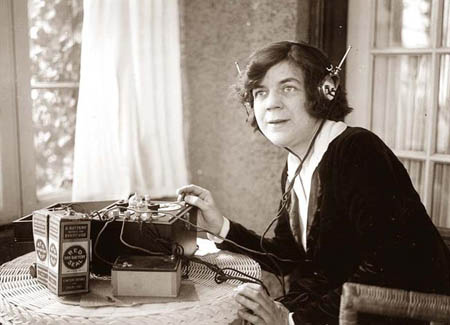
Renée Reznek’s new disc ‘From My Beloved Country’, new piano music from South Africa is released on 31st March on the Prima Facie label
Renée Reznek was born in South Africa. As a child she studied with Adolf Hallis, who was a pupil of Tobias Mattay. She graduated with distinction from the University of Cape Town with a Bachelor of Music degree. During these years Lamar Crowson was her teacher.
Read Renée’s full biography here

listen

There are many benefits in listening to the repertoire you are working on, on disc and in concert, as well as “listening around” the music – works from the same period by the same composer, and works by his/her contemporaries. Such listening gives us a clearer sense of the composer’s individual soundworld and an understanding of how aspects such as orchestral writing or string quartet textures are presented in piano music, for example. You are unlikely to pick up any nuggets of technique in the concert hall – you’re often too far away from the stage to see details – but listening attentively is helpful. Keep ears and mind alert to details such as articulation, phrasing and breathing space, dynamic shading and nuance, wit and humour, giving rests their full value (or slightly more) to create drama, tempo, and a sense of the overall architecture and narrative of the piece. We should never seek to imitate what we hear, but there is much to be learned from this kind of focused listening and I regularly come away from concerts of music I am working on with new ideas and insights.

Conversely, hearing a performance which I may dislike is never a waste of time. When I heard Andras Schiff perform Schubert’s penultimate piano sonata (in A, D959), a work with which I have spent a long time in recent years, and continue to work on, I found myself balking at certain things he did to the music – not that anything was “wrong”, it was simply not to my taste. But one thing I took away from that performance was his pedantic treatment of rests (Schubert uses rests to create drama, rhythmic drive and moments of suspension or repose) and this has really informed my practising.

In broader terms, hearing a group of pieces in performance is instructive in demonstrating how a good (or bad!) programme is put together. At one time, performers were concerned with things like key relationships between pieces, but now a programme that “works” tends to be one which contains a variety of contrasting moods, tempi and characters which help to create flow from the start of the concert to the end, or which focuses on a particular theme. Audiences – and performers – enjoy different levels of energy within a programme, while a programme with too many longeurs of tempo and mood can seem overly long or dull.

Most of us are limited by our own imagination, experience and knowledge and great performances and interpretations can broaden our horizons, inspire us and inform our own approach to music. But listening at concerts, and particularly to recordings and YouTube clips does have its pitfalls too. Recorded performances capture a moment in time and while they can certainly offer ideas and inspiration, they can also become embedded in our memory and may influence our sense of a piece or obscure our own original thoughts about the music. This may lead us to imitate a magical moment that another performer has found in a note or a phrase – a moment over which that particular performer has taken ownership which in someone else’s hands may sound contrived or unconvincing. It is important that we form our own special relationship with our music, and in order to do that we must investment time and effort in our study, while remaining open-minded and receptive to new ideas or approaches.

The other problem with recordings is that some performers may take liberties with the score to make certain passages or an entire piece more personal. This tends to happen in very well known repertoire, where an artist will put their own mark on the music to make it more distinctively their own, while not always remaining completely faithful to the score. Thus, some recordings may not truly represent what the composer intended, yet these recordings have become the benchmark or “correct” version.

So when we listen we should do so with an advisory note to self: that recordings and YouTube clips can be helpful, but we should never seek to imitate what we hear. It is the work we do ourselves on our music which is most important, going through the score to understand what makes it special, and listening around the music to gain a deeper understanding of the composer’s intentions so that our own interpretation is both personal and faithful.

A special Meet the Artist interview on the occasion of the 90th birthday of composer John Joubert


Who or what inspired you to take up composing, and pursue a career in music?

As far back as I can remember I’ve always wanted to do something creative. At first it was painting. I got quite far in this, partly because we had a marvellous art teacher at my preparatory school but also because my father was an accomplished draughtsman. In my early teens music began to take a more central part in my life largely because my mother, who had studied piano in London with Harriet Cohen, saw to it that music was integral to our domestic and educational background.

Who or what were the most significant influences on your musical life and career as a composer?

Two names occur to me – W.H. Bell and Claude Brown. Bell was a distinguished composer who had emigrated to South Africa in 1912 to become Head of the newly-formed Faculty of Music in the University of Cape Town. Having played an influential role in South Africa’s musical life he was living in retirement when I was first introduced to him by my mother. She had taken it upon herself to show him some of my first juvenile attempts at composition. What he saw in them I can’t imagine, but he must have recognised some potential as he offered there and then to take me on as a pupil. For the next three or four years until his sad death in 1946 we would meet as and when we could. During that time he gave me a thorough grounding in compositional technique which was to stand me in good stead as a basis for further development towards my then fixed goal to become a professional composer.

Claude Brown, my other main musical influence was the music master at my school. He came from an Anglican Cathedral background, having previously been Sir Ivor Atkins’s assistant at Worcester. The school had a strong musical tradition and it was here that I absorbed the influence of both Elgar and the the Anglican musical repertoire which Brown had experienced in England. Here again my mother played a part, as during a period of ‘straightened circumstances’ in our family, she insisted on keeping my brother and me at school despite strong pressure from other family sources for us to leave and get jobs to ease our financial situation.

Following my entry to the Royal Academy of Music in 1946 my ‘significant influences’ became the three composers I studied with there, namely Theodore Holland, Howard Ferguson and Alan Bush. Each had their own contribution to make on my development as a composer.

What have been the greatest challenges/frustrations of your career so far?

A big challenge was getting acclimatised to a new country (the terrible winter of 1947 was my first winter in England). I had no English relatives to turn to and for a long time my closest social contacts were the fellow South African students I had travelled over with on my 3-week voyage aboard the Winchester Castle (then still in its war-time adaptation as a troopship).

What are the special challenges/pleasures of working on a commissioned piece?

The pleasure of receiving a commission is having the sign that somebody out there likes your music and wants more of it. The pressure of meeting a deadline is of course a challenge, but challenges can be a stimulus that keeps you on your toes.

What are the special challenges/pleasures of working with particular musicians, singers, ensembles and orchestras?

As a practising musician my principal activity apart from composing has been conducting whether choral or instrumental, professional or amateur. One of my most congenial tasks as a University Lecturer was to conduct the University of Birmingham Motet Choir. With such a group one could tackle quite demanding music, and we quite frequently did so, including some of my own.

Of which works are you most proud?

It is difficult from a catalogue of over 180 works to pick personal favourites but I think I would have to include the following: my Octet, the opera ‘Jane Eyr’e, song-cycle ‘Six Poems of Emily Bronte’, oratorio ‘The Raising of Lazarus’, Second Symphony, Sonata No 2 for piano, Pro Pace motets, String Quartet No 2, Temps Perdu (string orchestra), ‘South of the Line’, Piano Trio, ‘Landscapes’ (song cycle), oratorio ‘Wings of Faith’, ‘An English Requiem’, St Mark Passion and Concerto for Cello and Chamber Orchestra.

How would you characterise your compositional language?

I try to achieve a personal voice based on traditional classical principles and carrying as lucidly as possible a strong emotional message.

How do you work?

Most mornings I am at my desk – which doesn’t mean I compose only in the mornings. I compose most of the time away from my desk whether consciously or unconsciously. I don’t compose at the piano, but I need a piano in order to try out different ways of seeking the clarity of expression I always strive for.

Who are your favourite musicians/composers?

I love all the great classics up to and including Wagner. After him I love Mahler, Strauss and Elgar and after them, Stravinsky, Bartok, Walton, Britten and Shostakovich.

What is your most memorable concert experience?

Seeing (and hearing) Richard Strauss conducting his Sinfonia Domestica (a greatly underrated work) at the Albert Hall during the Strauss Festival of 1947.

What do you consider to be the most important ideas and concepts to impart to aspiring musicians?

I think it was Eliot who advised aspiring writers to ‘work out your salvation with diligence’. I reckon the same goes for composers too!

www.johnjoubert.org.uk


John Joubert was born in Cape Town in 1927. Aged 19 he won a scholarship to study at the Royal Academy of Music in London and has lived and worked in England ever since. Joubert’s long composing career encompasses all genres from symphonic, operatic and chamber works to the ever-popular choral miniatures, Torches and There is no rose. The two Symphonies, three String Quartets, Oboe Concerto and Cello Concerto are recent additions to a growing catalogue of recordings from across his work list. Commissions of the last few years include An English Requiem for the 2010 Three Choirs Festival and Concerto for Cello and Chamber Orchestra for Raphael Wallfisch as part of the 2012 Cultural Olympiad. Joubert was featured composer at the new music wells 73-13 festival in June 2013 which included a new mass setting and anthem for the choir of Wells Cathedral. 2016 saw two major premieres: Joubert’s substantial St Mark Passion at Wells Cathedral and his opera ‘Jane Eyre’ – recorded live for Somm as one of several new releases to mark his 90th birthday in 2017.


Guest post by Mark Ainley

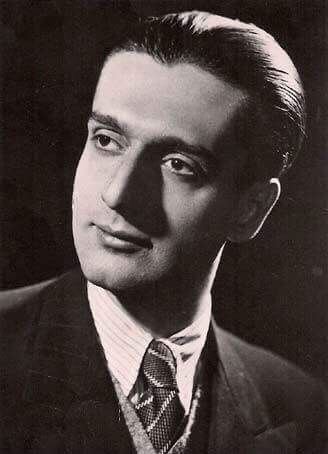
Today officially marks the 100th anniversary of Dinu Lipatti’s birth and the fascination with this pianist continues unabated, his name continuing to be held in the highest esteem amongst piano fans and professionals alike due the truly exquisite craftsmanship of pianism found in the few recordings that he made before his premature death in 1950. His traversal of Chopin’s Waltzes is regularly singled out as the reference recording, as are his readings of the same composer’s Barcarolle and Third Sonata, and his Bach First Partita and ‘Jesu, Joy of Man’s Desiring’ are among the most beloved Bach piano recordings ever made. It seems that each recorded performance by Lipatti is an example of pianistic mastery on every level – technically, emotionally, interpretatively, spiritually.

There are some who have wondered how much of Lipatti’s posthumous fame is the result of his tragic demise at the age of 33. Indeed, a good deal of mystique may be due to testimonials featuring religious terms: his recording producer Walter Legge said he had ‘the qualities of a saint’ and called him ‘a chosen instrument of God’ while Francis Poulenc apparently referred to him as ‘an artist of divine spirituality’. The story of his last recital in Besançon, France – where he was too weak to play the last Chopin Waltz he had programmed and played ‘Jesu, Joy of Man’s Desiring’ instead – reads like something out of a Hollywood melodrama.

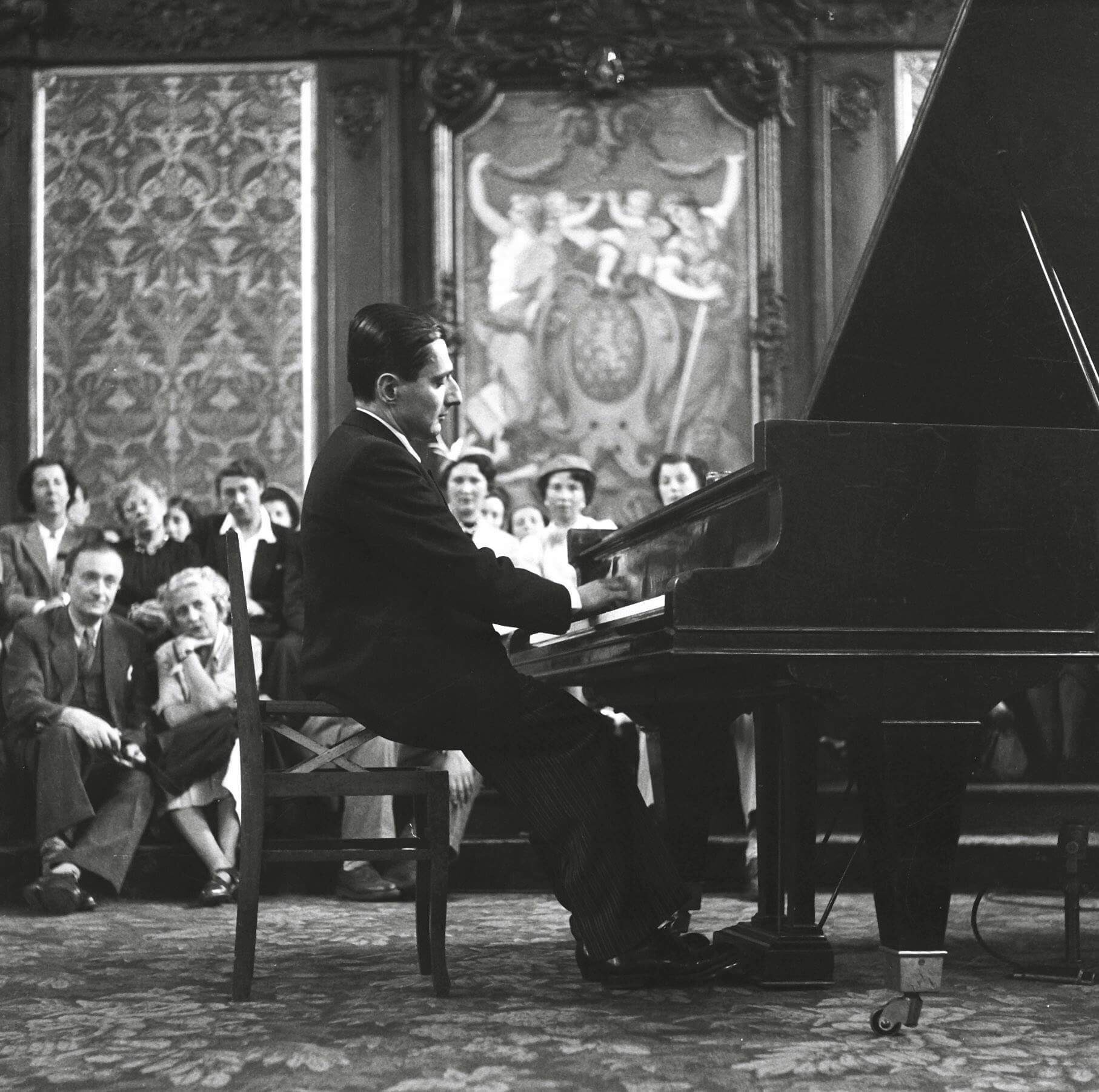
(Photo credit: Michel Meusy)

However, Lipatti received abundant praise for his playing and musicianship well before Hodgkin’s Lymphoma took its grip. The grandfather of cellist Steven Isserlis was on the jury of the 1933 Vienna Competition (Lipatti famously did not win first prize, much to Alfred Cortot’s consternation) and came home from the first round raving about “a 16-year old pianist from Romania who was so outstanding that he was convinced that he would win and become a world-beater.” The great Alfred Cortot, with whom Lipatti trained for five years, declared him “a second Horowitz” and stated that there was nothing to teach him – “one could, in fact, only learn from you.” Lipatti’s standing as a world-class pianist was evident in his teens, more than a decade and a half before his death, and his fame continued growing with each year.


The only large-scale solo work that Lipatti set down at EMI’s Abbey Road Studios was the Chopin Third Sonata, which won the Charles Cros Academy’s Grand Prix du Disque in 1949. The magnificent performance features a beautiful robust sonority, elegant phrasing, patrician timing, and subtle nuancing that is utterly beguiling:

Lipatti’s most famous recordings were made in Geneva under rather remarkable circumstances. Bolstered by outrageously expensive cortisone injections (paid for by wealthy patrons like Münch, Menuhin, and Sacher), Lipatti was enjoying renewed vitality and so at his doctor’s suggestion Legge had a van of recording equipment sent to Geneva from the Prades festival. A Radio Geneve studio was procured and over the course of ten days in July 1950 Lipatti set down critically acclaimed readings of works by Bach, Mozart, and Chopin that have never been out of the catalogue. The Bach Partita No.1 is particularly transcendent, with Lipatti’s incredibly consistent articulation and voicing, transparent textures, rhythmic momentum, and stunningly clear projection of motifs:

As remarkable as these performances are, Lipatti’s earlier recordings reveal a pianist with far more fire and bravura. A 1947 reading of Chopin’s Waltz in A-Flat Op.34 No.1 is much more virile, bold, and daring than his well-known 1950 account, with sparkling tone, a grand bass sonority, and brilliant runs, as well as some fascinating ‘breaks’ between phrases:

The recording that gives the greatest glimpse of the fullness of Lipatti’s pianistic and interpretative abilities is his April 1948 account of Ravel’s Alborada del Gracioso. With rapid-fire repeated notes, taut rhythmic bite, breathtaking runs of extraordinary lightness, creative voicing and pedalling, and graduated glissandi (4:25-4:31) of staggering ferocity and dynamic control (how that last one fades into the faintest pianissimo!), this is a performance needs to be heard (multiple times) to be believed. It is worth keeping in mind that recordings made on 78rpm discs were unedited, with no tape splicing possible, so what you’re hearing is exactly what he played:

The pianist’s last public performance has become the stuff of legend and the recording of that recital is one of the glories of the gramophone. The emotion of the concert comes through in the recording, as well as in images by local photographer Michel Meusy – the transfixed look of intensity on the faces of the audience members reveals the magnetism of the event, and those who were present stated that it was clear that Lipatti did not have long to live (he died 11 weeks later). Most intoxicating to my ears is his mournful reading of Schubert’s G-Flat Impromptu, with a gorgeous singing line soaring over an undulating murmur in the accompaniment, with gloriously peaked phrasing with fluid legato:

A century after Dinu Lipati’s birth, his legacy continues to grow. There are now two websites devoted to his memory – dinulipatti.com and dinulipatti.org – and new publications are forthcoming, with a new edition of his biography being published in Romania alongside the first ever publication of a series of his letters (currently in Romanian but due to be translated). And new recordings by this supreme musician are coming to light: 15 minutes of previously unpublished material – private discs of Scarlatti and Brahms – was recently discovered and will be released in a multi-pianist compilation on the Marston Records label, and the search for more continues. In the meantime, we can continue to enjoy the stellar playing of this master musician, whose playing was, in the words of Herbert von Karajan, “no longer the sound of the piano but music in its purest form.”


Mark Ainley is an internationally recognized authority on the art of piano playing and historical recordings of great pianists. His clear insights provide important details about the mastery of the pianists of the past and present through his magazine articles, blog (The Piano Files) and social media pages, CD productions and liner notes, and lecture-demonstrations.

More about Mark Ainley here