music-into-words-logo

The second Music into Words live event took place at Morley College, London, on Sunday 12th February 2017. This event built on the success and popularity of the project’s launch event, held last year in Senate House, UCL. This year we had two panels of speakers covering a wide range of subjects from engaging audiences through well-written programme notes and pre-concert presentations (Katy Hamilton) to how we “curate” sound (Kate Romano), the use of jargon in academic writing (Ian Pace) and why music critics and reviewers seem to take a rather London-centric/celebrity approach to reviewing concerts (Tom Hammond). With lively panel and audience discussions, sensitively chaired by Simon Brackenborough, the event proved stimulating and thought-provoking. It was also a chance to connect with people whom I and other participants had previously only “met” online. We were also delighted to have concert pianist Peter Donohoe as our special guest, together with Neil Fisher, Deputy Arts Editor of The Times, who both made insightful and intelligent comments about the responsibilities of reviewers and music critics, and the difficulties of deciding which concerts should be covered in the mainstream press.

To appreciate the wide range of discussion that took place at the event, and the parallel online discussion via Twitter, please see this Storify compilation

My friend and blogging colleague (we met via the blogosphere and Twitter!) Adrian Ainsworth, who blogs as Specs, has written an excellent summary of the event and each speaker’s contribution, together with his own presentation  – you can read it here

Meanwhile, I would like to thank all the panellists – Adrian, Tom, Katy, Leah Broad, Kate, Ian, Neil and Peter – for their very interesting and varied contributions to the event. Plans are already underway for a future event and the organisers welcome suggestions for speakers and subjects to be covered.

Visit the Music into Words website

Follow Music into Words on Twitter

Find Music into Words on Facebook

Music Into Words was created by a quartet of writers and bloggers and aims to bring together all kinds of writers about classical music – journalists, musicians, academics, bloggers and music lovers – to share their perspectives and discuss common issues in a positive, inclusive and friendly environment.

” a fantastic panel…a brilliant agenda, raising really vital issues”

– Tom Service (BBC Radio 3 & The Guardian)

richardbarnardhvrehside

Who or what inspired you to take up composing, and pursue a career in music?

Probably many things. I remember sitting at home at the piano, playing (I use the term loosely) Bach’s Preludes and Fugues, trying to work out how the hell he did it. Also my parents, teachers at sixth form and university: Martin Read, Michael Zev Gordon, Vic Hoyland and then Diana Burrell at GSMD.

What have been the greatest challenges/frustrations of your career so far?

Unfavourably comparing myself to other composers and artists. It’s so easy to descend into a Facebook-style Scroll of Shame where every successful and sparkly new thing makes you panic and think ‘I should be doing that!’ It is challenging to learn how to be influenced by other people’s ideas and techniques without feeling you have to follow their path.

What are the special challenges/pleasures of working on a commissioned piece?

First of all, commissions are fantastic. Everyone should commission composers AS MUCH AS POSSIBLE! Pieces often take ages to write and there won’t be much decent new music that defines and enriches our time and culture if people don’t commission it.

It is also incredibly motivating to have that deadline and the vision of a future audience at the first performance anticipating your new work.

What are the special challenges/pleasures of working with particular musicians, singers, ensembles and orchestras?

I write for a variety of people and situations, from professional singers and ensembles to school or community groups who have to learn things quickly and have fun doing so. Learning what works in what context is a tough skill. It takes a long time to master. I love writing for voice and I’ve been working a lot with solo singers recently. It’s great to have their voice in your head as you write and to think about the shape of the text, the breathing, the pacing and the drama of it.

Of which works are you most proud? My two recently commissioned song cycles, ‘Woolf Letters’ and ‘Early Stroll Songs’, which set Virginia Woolf’s letters to her sister and Ian McMillan’s Early Stroll tweets. I’m also very proud to have produced three performances of my opera ‘The Hidden Valley’ at St George’s Bristol this year, working with an incredible team of artists – I did, however, need a very long lie down in a darkened room afterwards.

How would you characterise your compositional language?

I like to think it’s an English sound, rooted in nature, often starting from melody and the voice.

How do you work?

I work best early. I have a lot of ideas doing other activities (gardening, showering etc.) as it gives space and time for the brain to process ideas. When I was writing ‘Early Stroll Songs’ I got into a routine of starting composing first thing (6.30-ish) for a few hours: At the keyboard, with pencil, Manuscript paper, black tea. I could usually complete 1 short song each day or two. My wife often acts as an editor, offering a second pair of ears to help me hear the music from an audience’s perspective. Later in the day, if not teaching, I would do computer / admin-type work: Typesetting, emails, checking twitter too much, grappling with a labyrinthine funding application etc.

Who are your favourite musicians/composers?

Starting out, my heroes were Bach, Stravinsky, Messiaen, Britten and Steve Reich, but I’ve recently been more drawn to the vocal music of Purcell and Handel, Mozart’s Symphonies, Schubert’s song cycles and the music of David Lang and Laurence Crane. I’m always interested in opera composers and I enjoyed Tansy Davies’ Between Worlds at ENO and Fairy Queen at Iford recently.

What is your most memorable concert experience?

When I was 16 or 17, I went to a performance of Britten’s War Requiem in Southampton. We sat right at the back. After the concert, walking out into the car park, I couldn’t speak. It was such a visceral experience.

What do you consider to be the most important ideas and concepts to impart to aspiring musicians?

Listen to and interrogate lots of good music. Like what you write. Befriend performers. Don’t follow advice too much.

Richard Barnard is a composer based in Bristol. He studied at Guildhall School of Music and Drama and University of Birmingham. He has written operas, song cycles and choral works for Welsh National Opera, Opera North, BBC Singers, Bristol Ensemble, Juice Vocal Ensemble, Siân Cameron and others. He has composed music for dance and theatre, and his chamber pieces have been performed internationally by groups including Delta Saxophone Ensemble, Juice Vocal Ensemble and Kungsbacka Trio.

Richard curated the acclaimed new music series Elektrostatic at Bristol’s Colston Hall and Arnolfini for five years. He has taught orchestration and composition at University of Bristol and is one of the UK’s foremost composition workshop leaders, working with WNO, CBSO, London Sinfonietta, Sir Peter Maxwell Davies, Philharmonia Orchestra and Eighth Blackbird.

Richard Barnard on YouTube

Twitter@richardmbarnard

richardbarnard.com


We are constantly being reminded of the importance of having “goals” in our lives in order to achieve certain things, from getting fit to winning a half-marathon or setting up a business. We believe that having goals motivates us to put in the training, go to the gym three times a week or practice regularly and efficiently. As musicians we are reminded of the benefits of “goal-oriented practice”, which is intended to enable us to achieve certain goals (passing a diploma, succeeding in an audition or competition).

There’s nothing wrong in having goals – they can provide a useful focus – but they can also create disappointment and unhappiness, especially if one does not always fulfil one’s goal. In addition, goals can be curiously anti-motivational. If all your endeavour is focussed on a single goal, what else is there to work for when that goal has been reached? This approach can create a “yo-yo effect” where you might go back and forth from working on a goal to not working on one, which makes it difficult to build upon your progress long-term.

If you are continually working towards a goal you are in effect saying “I am not good enough yet, but I will be when I reach the goal”. The problem with this attitude is that we tend to postpone happiness and fulfilment until we reach the goal. Thus, it puts a huge burden on us to succeed, which can create unnecessary stress. Instead, we should be kind to ourselves and enjoy the daily process: keep to a realistic daily practise schedule rather than stressing about that big, potentially life-changing goal.

In order to attain, or even aspire to a goal, we need to have a system, but how often do we actually consider the system by which we reach the goals?  For the sportsperson, for example, that system is training. Similarly, for the musician, the system is practising (and this includes not just time spent playing one’s instrument but also time spent studying the music away from it, including mental practice, memory work, reading, listening, thinking etc).

If we release ourselves from the need for immediate results, a systems-oriented approach will allow us to build progress day by day. This is similar to the “marginal gain learning” system, and it enables us to make long-term progress, which is far more valuable than short-term results.

There is nothing wrong with having goals. Goals are good for planning progress, but systems enable us to make progress. And when we know we are making noticeable progress, we feel motivated to continue.

The following systems are helpful in achieving sustained and long-term progress in one’s musical study:

  • Background research, reading, listening and study of the music away from the instrument
  • A detailed understanding of the structure and overall narrative of the piece
  • Regular critical self-evaluation and feedback
  • Really close and considered attention to the details of the score (dynamics, phrasing, articulation etc)
  • Trusting one’s own musical knowledge and judgement rather than received ideas about what the music should sound like

These are all skills which can be developed and finessed and which are not lost the moment one fails to achieve one’s goal. Rather, one continues to build on them, creating small but significant positive gains which go to create a significant whole.

Guest post by Javen Ling, founder of Alternate Tone Music School, Singapore

alternate_tone_music_school_singapore

“I do not have the potential to be a great pianist as I don’t have long, slender fingers”

Long, slender fingers do not necessarily make you a better pianist. While longer fingers may be an advantage in playing certain repertoire with large stretches, short, fat fingers are also an advantage when it comes to playing other music

Some of the world’s greatest pianists have small hands and stubby fingers. Instead of worrying about how your genetics have not provided you with your ideal fingers, start to work developing your technique and learn to accept your physical limitations. If a piece of music is not particularly well-suited to your hand, find a way to work around it. Every pianist eventually has to learn to live with their limitations and adapt to them.

Great pianists come in all shapes and sizes. There is no specific type of finger size or length that determines your potential.

“When I start learning a new piece, I should work from the beginning to the end”

Typically, most people will learn the piece from beginning to end and continuously practice until they can play the entire piece well. The problem with this method is having the discipline to push forward when music gets harder to play. As you approach a section that you’re unfamiliar with, you might be tempted to stray away from that and repeat the part in which you are comfortable with, rather than working on the difficult sections.

The most efficient way is to learn the most difficult sections first. This allows you to spend more time on the most difficult sections, rather than avoiding them or leaving them until later in your practicing. Thus when you start learning a new piece, scan through the composition, and determine which section/s appears the most difficult and start working on it first. As you become familiar with the harder section, you will tend to practice it more and under practice the easier sections.

“I don’t see any need to practice hands separately”

Professional pianists continue to practice hands separately even after playing a piece for 25 years or more! Many people are usually taught to practice hand separately first in order to reach their end goal of playing their hands together.

The benefit of practicing your hands separately is that you can focus on note-learning, technical sections and nuances of voicing and phrasing that might be overlooked if you practice hands together. So don’t forget about practicing separately once passed the initial phase of learning a passage. Use it as a tool to polish and improve your playing.

“Never look down at your hands when playing”

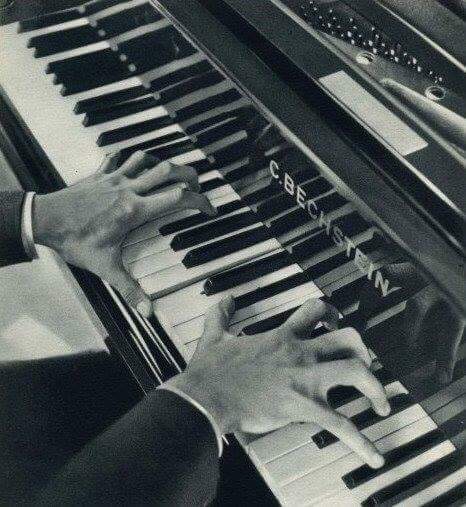
Most piano teachers encourage their students not to look at their hands. Firstly, this activity can slow down their learning, especially sight-reading skills as it inhibits them from looking ahead in the score. Secondly, students should not be too reliant on looking at their hands to find the right keys. Thirdly, the action of continually looking up at the sheet music and down at your hands can make you dizzy and might make it difficult to keep track of where you are at in the music.

An occasional glance down at the hands is PERFECTLY FINE. The trick is to not move your head too vigorously, but rather to just glance down at your hands quickly before looking back up at the sheet. By that I mean keeping your head perfectly still and just look down your nose at your hands. Lastly, of course, you should know the sequence of the keys well enough to locate them easily!

“I can easily learn the piano on my own”

With YouTube and Google, it is easy to pick up any skill via the Internet.

You can certainly teach yourself about music theory, history and techniques via the internet; however, a teacher’s experience is invaluable in helping you to improve your playing skills and technique, and advise you on common mistakes. In the long run, this will probably save you time and accelerate your learning.

Many people think that by taking piano lessons you have to go through graded piano exams. That is not the case. It really depends on what you are looking for. If you are interested in becoming a piano teacher or a piano professional, then it is advisable to take exams and diplomas. However, if you just want to learn for leisure, you don’t need to take exams and you can play repertoire which you enjoy, whether classical music, jazz or pop. Alternate Tone music school in Singapore specialises in teaching contemporary music and offers personalised lessons, which means you get to play your favourite music no matter what level you’re at!

If you’re still convinced you can get there without any professional help, that’s absolutely fine! There are many great and talented musicians who did not undergo any formal training. But in my opinion, the piano is definitely harder to learn on your own because of the structure of the instrument and its repertoire. If your goal is to play well, I definitely recommend having a good piano teacher to guide you through your piano studies.

alternate_tone_music_school_singapore1
This is a sponsored post
Disclaimer: The Cross-Eyed Pianist does not necessarily endorse organisations that provide sponsored posts which link to external websites, and does not endorse products or services that such organisations may offer. In addition, The Cross-Eyed Pianist does not control or guarantee the currency, accuracy, relevance, or completeness of information found on linked, external websites. However, every effort is made to ensure such information contained on this site is accurate at the time of publication.