Who or what inspired you to take up the piano and pursue a career in music?

I picked out tunes on our piano at home, then my grandfather showed me how to play showtunes by ear on his Hammond organ. My first professional jobs were as a church organist (including an inspiring year at Lincoln Cathedral), a jazz pianist in bars all over the Midlands, and a one-man backing-group for a Patsy Cline tribute act! I came to accompanying when singers at university started asked me to play for them in their recitals. I immediately loved the experience of playing in a duo and was fascinated the idea that it is possible to ‘play words’ as well as notes. I’m still fascinated by it now…

Who or what have been the most important influences on your musical life and career?

David Whittle (a music teacher at school), John Streets and Malcolm Martineau could hardly be more different, but were inspirational and incredibly generous teachers. I’ve also been influenced and inspired by many of the singers and musicians I’ve worked with. One of the first was Anthony Rolfe Johnson, whose straight-from-the-heart singing I will never forget.

What have been the greatest challenges of your career so far?

The biggest challenge for a piano accompanist is also the most interesting part of the job: to reinvent constantly the way you play pieces you know well and have played many times to reflect new ideas brought to the table by different partners.

Which performance/recordings are you most proud of?

I’m excited about two I’ve just finished making, both of which will come out early next year. I’ve always loved his music of Percy Grainger and was thrilled when Claire Booth asked me to collaborate on a disc of his folksong arrangements. I also really enjoyed unearthing the little-known songs of Donald Swann (of Flanders and Swann fame, but also a ‘serious’ composer) for a recording with Felicity Lott, Kathryn Rudge, John Mark Ainsley and Roderick Williams.

Which particular works do you think you play best?

I find that very hard to answer and will have to leave it for others to judge!

How do you make your repertoire choices from season to season?

A lot depends on what I’m invited to do by the singers and instrumentalists I work with – and it’s nice to be surprised. My own projects are often motivated by an interest in finding new ways to present old music, such as a recent venture to present the Schubert song cycles in new English translations by Jeremy Sams.

Do you have a favourite concert venue to perform in and why?

I love the Wigmore Hall for its unique atmosphere and audience. There is a special excitement to playing in Carnegie Hall, but I also love the modesty and intimacy of the Holywell Music Room in Oxford. I also really enjoy the wonderfully varied venues of the

Ryedale Festival that I’ve got to know so well – from Castle Howard to remote country churches.

Favourite pieces to listen to?

I love early English music, especially Tallis, Byrd, Gibbons and Purcell. Anything and everything by Bach, Mozart, Haydn and Schubert. Operas by Verdi and Janacek, string quartets by Bartok and Shostakovich, piano music by Chopin, Liszt, Mussorgsky, Debussy, Fauré and Ravel. Orchestral music by Elgar, Tchaikovsky, Sibelius, Bruckner, Mahler and anything recorded by Harry Christophers’ choir The Sixteen. Favourite albums by Leonard Cohen, Edith Piaf, The Smiths and Joni Mitchell. I also love musicals, my new favourite being Tim Minchin’s amazing Groundhog Day.

Who are your favourite musicians?

My musical heroes include Sviatoslav Richter, Alfred Cortot, Martha Argerich, Gerald Moore, Clara Haskil, Benjamin Brittten, Andras Schiff, Daniil Trifonov, Bernard Haitink, Trevor Pinnock, Jacqueline du Pre, Peter Schreier, Janet Baker, Maria Callas and Victoria de los Angeles.

What is your most memorable concert experience?

The experience of taking part in the Passion project with Streetwise Opera and The Sixteen was unforgettable. We staged Bach’s St Matthew Passion with professionals performing alongside people with experience of homelessness – the results were moving and inspiring.

What do you consider to be the most important ideas and concepts to impart to aspiring musicians?

‘Beauty is truth, truth beauty’. Learn how to read a score and acquire the technique you need. Then feel like you are improvising. Tell stories and paint pictures in music. Distrust anyone who thinks they have all the answers. Stay curious.

Where would you like to be in 10 years’ time?

Still playing – and able to say I’ve done something to bring classical music to a wider audience. Also to have written my book and a hit musical (some way to go on both those last two!)

What is your idea of perfect happiness?

The sort that appears when you least expect it and aren’t looking for it.

What is your most treasured possession?

A first edition of Schubert’s Schwanengesang.

What do you enjoy doing most?

Spending time with my children and those closest to me. A pint in a good pub with a friend.

What is your present state of mind?

Excited, as I’m deep in planning for my festival – the Ryedale Festival – next year.


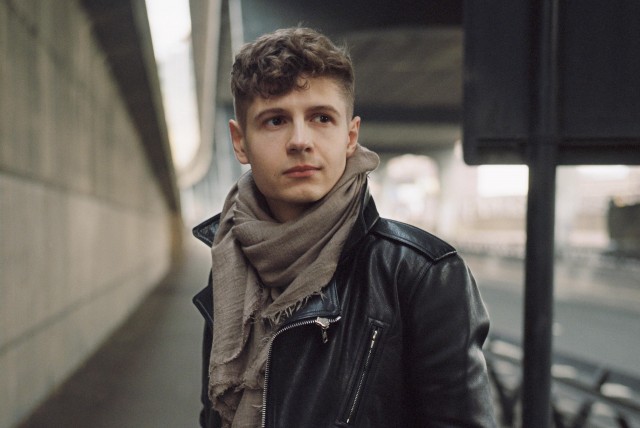
Christopher Glynn is a Grammy award-winning pianist and accompanist, working with leading singers, instrumentalists and ensembles in concerts, broadcasts and recordings throughout the world. He is also Artistic Director of the Ryedale Festival, programming around 60 events each year in the many beautiful and historic venues of Ryedale, North Yorkshire.

Described by The Times as having ‘beauties and insights aplenty’ and praised in Gramophone for his ‘breathtaking sensitivity’, Chris has performed with singers including Sir Thomas Allen, John Mark Ainsley, Sophie Bevan, Claire Booth, Susan Bullock, Allan Clayton, Lucy Crowe, Sophie Daneman, Bernarda Fink, Michael George, Anthony Rolfe Johnson, Christiane Karg, Jonas Kaufmann, Andrew Kennedy, Yvonne Kenny, Dame Felicity Lott, Christopher Maltman, Mark Padmore, Joan Rodgers, Kate Royal, Kathryn Rudge, Toby Spence, Bryn Terfel, Sir John Tomlinson, Robin Tritschler, Ailish Tynan, Roderick Williams, Catherine Wyn Rogers, Elizabeth Watts and many others.

He has also performed with instrumentalists including Julian Bliss, Andrej Bielow, Adrian Brendel, Michael Collins, Nicholas Daniel, David Garrett, Tine Thing Helseth, Daniel Hope and Steven Isserlis; with ensembles including the Elias, Heath, Fitzwilliam and Szymanowski Quartets, London Winds, Britten Sinfonia and Scottish Chamber Orchestra; and with choirs including The Sixteen.

Chris was born in Leicester and read music an organ scholar at New College, Oxford, before studying piano with John Streets in France and Malcolm Martineau at the Royal Academy of Music. His many awards include a Grammy, the accompaniment prize in the 2001 Kathleen Ferrier competition, the 2003 Gerald Moore award and the 2002 Geoffrey Parsons award.

Since making his debut at Wigmore Hall in 2001, Chris has performed in major concert venues and festivals throughout Europe and North America, and toured to Japan, China, Brazil, Sri Lanka, Russia and Canada. He has made over 20 recordings on labels including Hyperion, Decca, Erato, DG, Coro and Signum. He has also made many studio recordings and live broadcasts for BBC Radio 3.

Chris enjoys working with young musicians and is a Professor at the Royal College of Music, an Associate of the Royal Academy of Music, a coach for the Jette Parker Young Artist Programme at the Royal Opera House, and a course leader for the Samling Foundation. He has been an adjudicator for many international competitions.

Recent highlights include recording the piano soundtrack for the forthcoming film ‘Altamira’ (starring Antonio Banderas), the world premiere of a newly-discovered work by Mendelssohn on BBC Radio 4, performances at the BBC Proms, collaborations with the Richard Alston Dance Company and Rufus Wainwright, rediscovering the ‘serious’ songs of Donald Swann for a forthcoming CD, and ‘The Passion’ with The Sixteen and Streetwise Opera.

Future plans include a series of concerts entitled ‘Songbooks’ that he will curate for Wigmore Hall, Winterreise with Mark Padmore at the Endellion Festival, and a forthcoming CD of Grainger songs and piano pieces with Claire Booth. Chris will also join Toby Spence, Roderick Williams and Sir John Tomlinson for the first performances of new English translations he has commissioned from Jeremy Sams of Schubert’s song cycles.

 
(interview date: November 2016)

Robert Schumann died in a lunatic asylum on 29th July 1856. On 29th July 2017, at Prom 20, British pianist Stephen Hough gave a performance of a work suffused with melancholy and darkness, the composer Johannes Brahms’ response to the tragedy of Schumann’s mental illness.

According to Brahms’ friend and colleague Joseph Joachim, who conducted the première of the First Piano Concerto in Hanover in 1856, the work reflects Brahms’ emotions on hearing Schumann, his artistic patron and musical father figure, had attempted suicide in the Rhine. The concerto opens with a ferociously portentous drum roll and darkly-hued, angst-ridden orchestral tutti, and the entire first movement charts a terrain of pain and instability, in which orchestra and piano seem at odds, engaged in a battle of drama and rhetoric. Given that this is the work of a young composer “without his beard” (Stephen Hough), the darkness and profundity of the First Concerto is shocking, its message visceral and emotionally charged. It flames with intensity and rhetoric.

Read the full review here

On leaving and returning to familiar repertoire

240_f_103173724_1wrksn0coxd91de5mebzkmiywytpkm1cI’ve recommenced work on Schubert’s penultimate piano sonata (D 959 in A), following a few months’ hiatus due to family health issues, during which I was unable to give the music my full and proper attention. Regular readers of this blog will know (along with my husband who works at home and hears me practising every day!) that this sonata has become something of an obsession for me since I embarked on a study of it in autumn 2014 (read more about this here.)

This is not the first time I’ve taken a break from the sonata. In the immediate aftermath of receiving my (disappointing) diploma result last September, I wanted nothing more to do with the music. The score was consigned to the back of the bookcase in my piano room, firmly hidden away. I needed time away from the music, to reflect and regroup. At the time, I wasn’t sure I ever wanted to go near the piece again, but as a pianist friend of mine pointed out, “You just need to let it ‘marinade’ for a few months“. And gradually during that marinading process I found myself returning to my books and articles on Schubert, to listening to his music again, absorbing new details, new thoughts about the sonata, allowing his distinctive, highly personal idioms to seep into my musical consciousness.

Some works reveal their subtleties, depths and complexities more slowly than others. This is certainly true of Schubert’s music which has so many details to be unearthed and explored that one cannot expect to cover all of them in one go – nor even two or three. Rather like the layers of an onion, these details are peeled away over time and through repeated “returns” to the score. For example, in my latest work on the sonata, I am finding more interesting bass details and inner voices/instrumental lines to be highlighted. Whether these details will find their way into a final version, I cannot say, but the process of exploration definitely throws light on other aspects of the music and throws up new ideas for consideration.


Another satisfying aspect of returning to a piece after a rest is finding that certain passages which previously seemed intractable or particularly challenging can now be played with ease and suppleness. This may seem curious, since one has spent weeks not practising the music at the instrument, but it strikes me that one needs time away to allow technical and musical details to embed in one’s mind and fingers. A rest also encourages one to practise differently: I have found myself returning to very simple practise in some areas of the work, stripping the music back and then rebuilding it.

When working on very complex repertoire one can reach a state of saturation where it becomes impossible to take in new ideas, nor even process existing ones. At this point, you may find yourself making silly or careless errors – this is usually the time to put the music aside and give it, and you, a rest.
There is plenty of useful work to be done while the music is resting – listening, reading (both score and books/articles about the music and composer), thinking and reflecting. If, like me, one is focussing on one specific composer or work, “listening around” the work in question is always helpful, in my opinion. I have a very large Spotify playlist of late music by Schubert, including string quartets, the ninth symphony, songs and other piano music, in addition to some works by Beethoven which have a connection to the Sonata I am studying. And of course while some music is resting, other repertoire can be explored and enjoyed. In fact, I find playing music which seems almost diametrically opposed to Schubert (20th century minimalism, for example) incredibly refreshing, allowing me to return to the Sonata with renewed enthusiasm.
There is such a thing as “over-practising” (though some students don’t believe me when I tell them this!). Over-practising can kill a piece of music, as we become complacent about the work and inured to errors, which are then very difficult to erase. Over-practising can also lead to boredom, which can make us careless in practise, and can cause injury which may leave us unable to play for weeks or months. Then an enforced rest from the music and instrument may be necessary, though one can still continue with work away from the keyboard as described above.
When I recommend taking a break from the music to students, they usually exclaim that they will “forget everything” when they return to the music. In general, this is not the case. Music which has been thoroughly and thoughtfully practised and is well learnt remains in the brain and fingers and can be brought back to a good standard very quickly. Returning to a work after a rest can be a wonderful experience, like reacquainting oneself with an old friend, while also making new friendships.
A work can never truly be considered ‘finished’ and thus resting and returning to the same work many times becomes an ongoing study. Often a satisfying performance of a work to which one has devoted many hours of study can be said to put the work ‘to bed’, but only for the time being. Rest the work and return to it, and suddenly new things come to light, informed by our reading, listening, life experience, and so forth. American pianist Bruce Brubaker, in his sensitive and thoughtful blog Piano Morphosis, describes this as a process of “continuing”. Thus, one performance informs another, and all one’s practising and playing is connected in one continuous stream of music-making.


World-renowned Russian conductor Valery Gergiev has invited young British pianist George Harliono to perform with him on 5th August in Vladivostok, Russia along with his Mariinsky Orchestra.

Gergiev, Chief Conductor and Artistic Director of The Mariinsky Orchestra and former principal conductor of the London Symphony Orchestra, is set to mark the 135 years since the birth of Igor Stravinsky with a series of performances for the II International Mariinsky Far East Festival in Vladivostok.
Two days of the 30-day festival are devoted to Sergei Rachmaninoff’s most famous compositions, and Gergiev asked Harliono to play Rachmaninoff’s Piano Concerto No.2 with the Mariinsky Orchestra on the Primorsky Stage of the Mariinsky Theatre. Harliono will be featured in the festival along with some of the world’s highest acclaimed performers including Covent Garden’s prima ballerina Natalia Osipova and Russian soprano Albina Shagimuratova.

Harliono, 16, who was born in Hackney, East London now lives in Fen Ditton near Cambridge and studies with Professor Vanessa Latarche, Chair of International Keyboard Studies and Head of Keyboard at the Royal College of Music in London. He also travels regularly to Switzerland to work with his mentor, renowned pianist professor Vovka Ashkenazy and his father Vladimir Ashkenazy.

Of the surprise opportunity Harliono said ‘It is such an honour for me to have been asked to perform with Maestro Gergiev, he really is a world class conductor and I can’t wait to meet him.’

Harliono began studying piano at age six and performed his first one-hour-long solo recital at age nine. Since then he as performed in some of the world’s best known classical music venues including The Royal Albert Hall in London, The Chicago Symphony Centre in the U.S., and The Grand Hall of the Moscow Conservatory in Russia.

Harliono has been accepted to enter The Royal College of Music for a BMUS degree on a full four-year scholarship commencing in September. At 16, he will be one of the youngest students to be accepted onto this course.

The young man is really making a name for himself on the international stage and has a busy schedule with upcoming engagements that include performances with the Tchaikovsky Symphony Orchestra conducted by Vladimir Fedoseyev, the Carolina Philharmonic in North Carolina, USA conducted by David Michael Wolff and Orquesta Provincial de Santa Fe in Argentina conducted by Walter Hilgers.

(Source: press release)