As Borough New Music‘s new season begins on 3 October 2017, Artistic Director Clare Simmonds surveys the exciting new piano music on offer from October 2017 to June 2018.

Borough New Music sets out to share music by living composers and the music of today. In each of the eight Series of concerts this season, we feature a different instrument. For Series 2 – which is five free concerts every Tuesday in October 2017 at 1pm at St George the Martyr SE1 1JA – it’s the piano.

In fact, the piano became the featured instrument for this second Series simply because of the preponderance of piano premieres that month. These include a fascinating new piano sonata by Ben Gaunt, based around the architectural principles of light, written for the wonderful pianist Christopher Guild (24 October 2017); eight miniature ‘cryptograms’ by Patrick Nunn, each inspired by composers who have in some way influenced his output; and two works written specially for the virtuoso José Menor: a mighty five-movement cycle by Sam Hayden and a sparkling Toccata by fellow Catalan Tomas Peire Serrate (all on 3 October 2017). Plus there is a selection of new works written specifically for the pianists who will perform them, by composers Michael Worboys , Harry Palmer, Rotem Sherman and Toby Ingram – all outcomes of the 2017 Trinity Laban John Halford Piano and Composition Competition, a little-known public event held every April, which deserves high praise for its innovation.

But that’s just Series 2 – the tip of the iceberg. One of the most fascinating things about the piano is that every player makes it sound different. Over the 2017-18 season, we have the opportunity to hear the voices of 14 very different pianists. That includes established contemporary pianists such as Philip Mead (1 May 2018), who gave the UK premiere of George Crumb’s ‘Makrokosmos’ at the Southbank in 1977, and the first London performance of Henry Cowell’s piano concerto in 2013.


Plus, there is the master improviser Douglas Finch (17 April 2018), toy piano specialist Kate Ryder (20 March 2018), as well as Matthew Schellhorn  (30 January 2018), Aleksander Szram (26 June 2018), Christopher Guild (24 October 2017) and José Menor  (3 October 2017); and young artists such as Joe Howson, Ieva Dubova, Mahsa Salali, Rotem Sherman and Neus Peris Ferrer (31 October 2017). The pianist Ben Smith  deserves special mention not only for his repertoire for piano and electronics (14 November 2017), but also for appearances in six different concerts (November 2017 and February 2018)! Here he is performing Helmut Lachenmann’s ‘Serynade’:


It is always interesting to hear what a composer chooses to give a pianist to play – and what pianists write or improvise for themselves to play. With compelling musical material in hand, what else is important to them: the listener’s impression, the player’s strengths, or the instrument’s potential? When pianists compose, do they opt for an easy life, and write what they find straightforward, or do they demand the (almost) impossible, to show their superhuman virtuosity? (Sometimes I think that’s the equivalent of those gourmets who go for the hottest vindaloo on offer!) It is not hard to be mesmerised by the multifaceted capabilities of the piano, and the programme this season certainly explores that. From a world premiere by Joseph Horovitz (even though he is over 90!) on 30 January 2018, to Edward Henderson’s refreshingly alternative look at piano performance (10 April 2018), the bluesy, frantic etudes of Nancarrow (21 November 2017) to the works of Janet Graham, Haris Kittos, Daryl Runswick and Simon Katan, there is a compelling range of piano works to discover.
douglas_finch_800x300
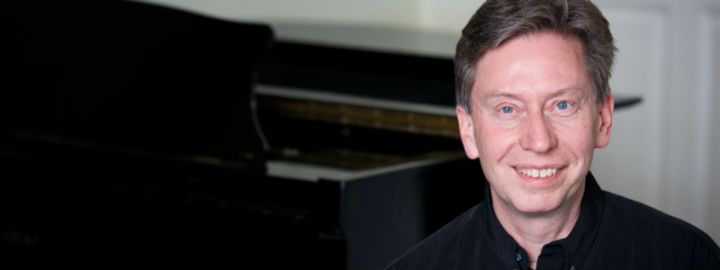
Douglas Finch

Borough New Music concerts take place every Tuesday at 1pm from 3 October 2017 to 26 June 2018 at St George the Martyr Church, Borough High Street, London SE1 1JA (just a short walk from London Bridge and Borough tube stations). Admission is free to all events, and light refreshments are served afterwards.

For a full programme, visit www.boroughnewmusic.co.uk.

Here is a selection of concerts in the 2017-18 season involving the piano (note the impressive number of premieres):

Series 2

Tuesday 3 October 2017, 1pm ‘Resonate’

José Menor (piano)

· Patrick Nunn (b. 1969) – Cryptograms I-VIII (2011-15) (PERFORMANCE PREMIERE)

· Sam Hayden (b. 1968) – Becomings (Complete) (2017) (WORLD PREMIERE)

· György Ligeti (1923-2006) – Piano Etude Book 2 No 9 Vertige (1994)

· Tomas Peire Serrate (b. 1979) – Toccata (2017) (WORLD PREMIERE)

Tuesday 24 October 2017, 1pm ‘Reverberate’

Christopher Guild (piano)

· Ben Gaunt (b. 1984) – Piano Sonata No. 1 (WORLD PREMIERE)

· Poul Ruders (b. 1949) – Piano Sonata No. 2 (1982)

Tuesday 31 October 2017, 1pm ‘Reward’

Trinity Laban John Halford Piano and Composition Competition Prizewinning Recital

Pianists: Joe Howson (winner), Ieva Dubova, Mahsa Salali (commended), Marisa Munoz Lopez (commended), Neus Peris Ferrer. Composers: Harry Palmer, Michael Worboys (winner), Rotem Sherman (commended), Toby Ingram

· Harry Palmer (b. 1994) – Birthday Song for Erwin (2017)

· Kaikhosru Sorabji (1892-1988) – Transcendental Etude 20 ‘con fantasia’ (1944)

· Thomas Ades (b. 1971) – Concert Paraphrase on Powder Her Face (2009) (Movts I & IV)

· Michael Worboys – Bone Memories (2017)

· Toby Ingram (b. 1998)- Into the Unknown (2017)

· Rotem Sherman – Home (2017)

· Hans Werner Henze (1926-2012) – Präludien zu Tristan (2003)

· Frederic Rzewski (b. 1938) – Piano Piece IV (1977)

Series 3

Tuesday 7 November 2017, 1pm ‘Last Words’

Patricia Auchterlonie (soprano), Antonia Berg (flute), Ben Smith (piano), Yoanna Prodanova (cello)

Salvatore Sciarrino (b. 1947) – Due melodie per soprano e pianoforte (1978)

· Ben Smith (b. 1991) – New Work (WORLD PREMIERE)

· Kate Soper (b. 1981) – Only the words themselves mean what they say (2010-11) (UK PREMIERE)

· Salvatore Sciarrino – Ultime rose (from Vanitas) (1981)

Tuesday 14 November 2017, 1pm ‘Babbitt-Haas-Emmerson’

Ben Smith (piano), Patricia Auchterlonie (soprano)

· Milton Babbitt (1916-2011) – Philomel (1964)

· Georg Friedrich Haas (b. 1953) – Ein Schattenspiel (2004)

· Simon Emmerson (b. 1950) – Time Past IV (1985)

Tuesday 21 November 2017, 1pm ‘Sensations’

PERFORMER: Ben Smith (piano)

· Robert Reid Allan (b. 1991) – The Palace of Light (2016) (LONDON PREMIERE)

· Colon Nancarrow (1912-1997) – Three Canons for Ursula (1988)

· Julian Anderson (b. 1967) – Sensation (2015-16)

Tuesday 28 November 2017, 1pm ‘Haikus’

FEATURED COMPOSER: Eva-Maria Houben

Antonia Berg (flute), Patricia Auchterlonie (soprano), Ben Smith (piano), Yoanna Prodanova (cello)

· Eva-Maria Houben (b. 1955) – Haikus for four (I, V, VIII, IX) (2003-04) (UK PREMIERE)

Series 4

Tuesday 16 January 2018, 1pm ‘Islands’

Carla Rees (flutes), Ian Mitchell (clarinets), Clare Simmonds (piano)

· Robert Percy (b. 1961) – Touching the Void (WORLD PREMIERE)

· Dan Kessner (b. 1946) – Genera

· Robert Percy (b. 1961) – New work (WORLD PREMIERE)

· Tom Ingoldsby (b. 1957) – The Cathedral (WORLD PREMIERE)

· Robert Percy (b. 1961) – Beacons (version for piano, flute and clarinet)

Tuesday 30 January 2018, 1pm ‘Muscle Memory’

Matthew Schellhorn (piano)

· Roger Briggs (b. 1952) – Jitterbug

· Robert Percy (b. 1961) – Chopsticks

· Edwin Roxburgh (b. 1937) – Prelude and Toccata

· Colin Riley (b. 1963) – Joplin Jigsaws

· Joseph Horovitz (b. 1926) – Pierrot’s Hornpipe (WORLD PREMIERE)

Series 5

Tuesday 6 February 2018, 1pm

Ben Smith (piano), Kirsty Clark (viola), Patricia Auchterlonie (soprano)

· Helmut Lachenmann (b. 1935) – Got Lost (2008)

· Peter Maxwell Davies (1934-2016) – The Door of the Sun (1975)

· Martin Lodge (b. 1954) – Pacific Rock (1999)

Tuesday 20 February 2018, 1pm ‘Songwriters of 2018’

Robert Reid Allan (glockenspiel/melodica), Ben Smith (piano, glockenspiel/melodica), Siân Dicker (soprano), Mimi Doulton (soprano), Delphine Mégret (soprano), Krystal Tunnicliffe (piano)

· Jake Dorfman (b. 1993) – Short Songs on Liberty (2016)

· Clare Elton (b. 1993) – Escape (2017)

· James Garner (b. 1992) – Emily Dickinson Settings (2015)

· Jules Pegram (b. 1991) – Valentines (2015)

· Mo Zhao (b. 1993) – Just Watching (2017)

· Rasmus Zwicki (b. 1979) – Fly Little Birdy (2017)

Tuesday 27 February 2018, 1pm ‘Two Sopranos, a Cello & a Piano’

Patricia Auchterlonie (soprano), Mimi Doulton (soprano), Urška Horvat (cello), Clare Simmonds (piano)

· Harrison Birtwistle (b 1934) – Nine Settings of Lorine Niedecker (1998-2000)

· André Previn (b 1929) – Four Songs for Soprano, Cello and Piano (1994)

· John Tavener (1944-2013) – Akhmatova Songs (selection) (1993)

Series 6

Tuesday 13 March 2018, 1pm

The Durufle Trio: Henrietta Hill (viola), Rosie Bowker (flute), Clare Simmonds (piano), Janet Oates (soprano)

· Rob Keeley (b. 1960) – Trio in One Movement (2017)

· Tom Armstrong – From Consort Music (2016): Monody & Concertino (WORLD PREMIERE)

· Janet Oates – Singings and Sayings (2017) (WORLD PREMIERE)

· Colin Riley (b. 1963) – New Work (2018) (WORLD PREMIERE)

· Rhiannon Randle (b. 1993) – New Work (2018)

Tuesday 20 March 2018, 1pm ‘Ear ring’

In collaboration with World Toy Piano Week

Kate Ryder, piano/toy piano

· John Cage – Suite for Toy Piano (1948)

· Stace Constantinou (b. 1971) – Cactus Prelude 6 for Toy Piano and Fixed Media(2014)

· Christian Banasik (b. 1963) – TRIMER for Toy Piano and Fixed Media (2001)

· Julia Wolfe (b. 1958) – Earring (2000); East Broadway for Toy Piano and Boombox (1996)

· Brian Inglis – New work for Toy Piano (WORLD PREMIERE)

· Yumi Hara – Farouche (2008)

· Katharine Norman (b. 1960) – Fuga Interna (begin) (2011)

· Meredith Monk (b. 1942) – Rail Road (travel song) for Solo Piano (1981); St Petersburg Waltz(1994)

· Stephen Montague (b.1943) – Mirabella – A Tarantella for Toy Piano (1995)

Tuesday 27 March 2018, 1pm

Loré Lixenberg (voice), Chris Brannick (marimba), Clare Simmonds (piano)

· Gregory Rose – Birdsongs for Loré, Volume 1 (WORLD PREMIERE)

· Gregory Rose – Quelques gouttes d’eau sur une surface (WORLD PREMIERE)

· Gregory Rose – Aphrodite and Adonis (UK PREMIERE)

· Gregory Rose – Music for a Kytherian Amphitheatre (WORLD PREMIERE)

Series 7

Tuesday 3 April 2018, 1pm

Elisabeth Swedlund (soprano), Jean-Max Lattemann (counter-tenor), Clare Simmonds (piano)

George Crumb (b. 1929) – Apparition: Elegiac Songs for Soprano and Amplified Piano

· HK Gruber (b. 1943) – Three Single Songs

· Ross Edwards (b. 1943) – The Hermit of Green Light

· Julian Grant (b. 1960) – The Owl and the Pussycat

Tuesday 10 April 2018, 1pm

Clare Simmonds, piano

· Edward Henderson – Black Box Flight Recorder (2012)

· Edward Henderson – Hold (2017)

· Edward Henderson – Tape Piece (2014)

Tuesday 17 April 2018, 1pm ‘Sound Clouds’

Douglas Finch (piano), Martin Speake (saxophone)

· Improvisations

Series 8

Tuesday 1 May 2018, 1pm

Philip Mead, Piano

· Tim Raymond (b. 1953) – Orbit of Venus (2014)

· Richard Blackford (b. 1954) – Sonata (2016) (LONDON PREMIERE)

· Jonathan Harvey (1939-2012) – Purgatory from 4 Images After Yeats (1969)

· Edward Cowie (b. 1943) – Preludes 1 and 2 from 24 Preludes (2004-2005)

· Lisa Reim – Pebbles (2004)

Tuesday 22 May 2018, 1pm ‘Cello, Electric Guitar & Piano’

Audrey Riley (cello), James Woodrow (electric guitar), Clare Simmonds (piano)

· Tom Armstrong – Diversions 3

· Stuart Beatch (b. 1991) – Three movements

· Joel Järventausta (b. 1995) – Elegy for Solo Piano (WORLD PREMIERE)

· David Ryan – New work (WORLD PREMIERE)

Tuesday 29 May 2018, 1pm

Joseph Spooner (cello) and Rebeca Omordia (piano)

· Matthew Taylor (b. 1964) – Sonata No. 1 (op. 29)

· Sally Beamish (b. 1956) – Gala Water (1994)

· Sally Beamish – The Wise Maid (1998)

· Matthew Taylor – Fantasy Pieces (op. 30)

Series 9

Tuesday 19 June 2018, 1pm

Janet Oates (soprano, flute), Clare Simmonds (piano), Jill House (mezzo soprano),

Nancy Johnston (cor anglais) Olivia Moss (soprano)

· Janet Oates – Atomic songs and fancies

· Jonathan Harvey (1939-2012)- Ah Sunflower (2008)

· Janet Oates – Blind Fool Love

· Tansy Davies (b. 1973) – Destroying Beauty (2008)

· Janet Oates – Arse-elbow (WORLD PREMIERE)

· Joel Järventausta (b. 1995) – New work (WORLD PREMIERE)

· Janet Oates – A Lover (WORLD PREMIERE)

· Frederick Viner (b. 1994) – New work (WORLD PREMIERE)

· Dai Fujikura (b. 1977) – Away we play

Tuesday 26 June 2018, 1pm

Aleksander Szram (piano)

· Hollie Harding – Suite P

· Janet Graham (b. 1948) – Sonata for Piano (2016) (WORLD PREMIERE)

· Daryl Runswick (b. 1946) – Scafra Preludes Book 2

· Haris Kittos – Athrós (2001)


Clare Simmonds performs regularly as a soloist and ensemble pianist, and enjoys presenting unconventional programmes. From 2016-17 she was a staff accompanist at the Guildhall School of Music and Drama for Jane Manning’s contemporary song classes, as well as performing in several chamber groups. She also provides online marketing services to promote contemporary music and is a publicity consultant for Prima Facie Records.
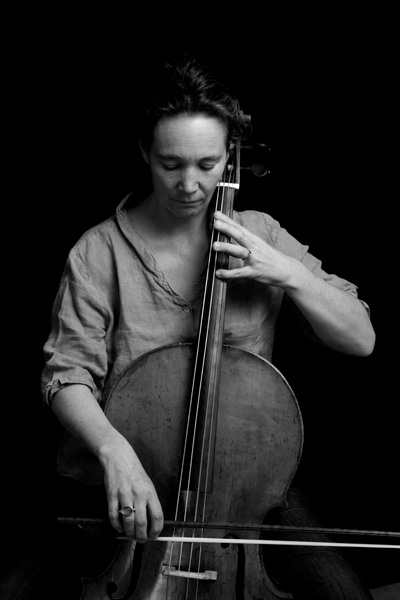
An interview with Ruth Phillips, cellist, teacher and creator of Breathing Body, Breathing Bow workshops for cellists and other musicians

phllips-ruth-1

Who or what inspired you to take up the cello and pursue a career in music?

My mother is a music teacher and my father a painter. I started the cello at the age of 4 and had to get up every morning to practice before school. To be honest I remember it being excruciating. I was so uncomfortable in my body for so much of my childhood and early teens that I was unable to feel much connection to the instrument. To this day, I do not know how much the hours of practice on the instrument during those and even some of the subsequent years served me. However, singing and being immersed in music as a language from so early, having it be a source of community and communication, at first in the family and, later, on music courses, in chamber music and orchestras, was something from which I could not, initially, turn away and which, ultimately, I chose as a way of life. Career is a funny word…At the time I would have been ‘choosing a career’ I simply followed my heart and did that which I loved. Both my parents did that. My husband and I do it. I suppose, fortunately, I have never known anything else.

Who or what have been the most significant influences on your musical life and career?

I was a friend (and fan) of Steven Isserlis from a very early age – way before he was famous – and I attended the Cello Centre run by his teacher Jane Cowan both in London and at Edrom. If anyone breathes through their instrument in my opinion, it is Steven. That pretty much set the bar for me, though playing so effortlessly and with such apparent joy was an alien concept for a long time to come. Other inspiration was largely drawn from the extraordinary experiences I had year after year at the International Musicians’ Seminar at Prussia Cove, with Sandor Vegh, Andras Schiff, Daniel Phillips and Johannes Goritzki, and later my wonderful teacher in the US, Timothy Eddy. What touches me is that every one of these people goes back in some way to one person whom I sadly never met or heard play, but the great grand teacher of so many of us – Pablo Casals. I was incredibly lucky to play in the Chamber Orchestra of Europe for eight years under conductors such as Claudio Abbado and Nikolaus Harnoncourt and there are other things too, … standing on a street corner in Bamako (where my son was born) singing and dancing, African drumming, looking at the waves, writing a poem, watching my husband paint….it’s all connected.

What have been the greatest challenges of your career so far?

For musicians, a sense of belonging is important and yet as a freelance musician, that sense can be elusive. One is so easily replaceable, indeed so often replaced, and usually without explanation or a chance to evolve. It is hard not to take this personally (and of course sometimes it is personal) and thus become less and less confident even as one gains experience and ease on the instrument. The challenge seems to be to develop an inner confidence and be true to one’s voice. Now, approaching my mid-fifties, I, along with many of my colleagues I believe, am facing the challenge of moving gracefully into the latter part of my life as a musician. For me, this is about continuing to play whilst allowing the world of concert touring to flourish largely without me, turning my energy instead towards holding and passing on something of that which I have been so lucky to have been given. Happily this period coincides with having a young child late in life so it’s quite a relief on all fronts!

How did you develop your Breathing Bow technique?

I mentioned Steven Isserlis and most of my life has been spent trying to understand how his exquisitely breathing bow worked (because I don’t think he really understands it himself, it’s so natural!). His teacher Jane always spoke about winged bowing which was an important key, but learning how turn the lock and open the door took the next two decades and I am of course still learning.

When my beautiful Banks cello on which I had played all my life was smashed into a hundred pieces on tour with COE in 1989, I was forced to face the fact that it is not the cello but my body (and heart and spirit if you like) that is the instrument through which to express the music. The trouble was, I wasn’t in any way connected to my body. That was a point of breakdown, my starting point, and the point at which I went to study in America.

Since that fateful day, there have been several moments and elements that have come together to influence my approach. The first was my teacher Tim Eddy saying to me in my first lesson ‘Ruthie, something has to move inside you for you to be moved to play‘. It took me the next four years to understand and experience the truth of this, but that phrase changed my direction completely. Initially I became interested in Alexander technique and had a teacher come out to Stony Brook to work with all the string players. Then, on my return to the UK, having developed a frozen shoulder and been told I would never play again (doctors should get some counselling on how to deal with such situations!), I started practicing yoga and was lucky to find a teacher, Peter Blackaby, who revealed to me how movement happens in release, and how that release is connected to the breath. This, itself a mindful practice, led to practicing meditation.

Though I work happily alone, I am lucky to have two dear friends, also cellists, with whom I collaborate, one an Alexander teacher (Dale Culliford) and another a yoga teacher (Jane Fenton). I love working alongside them and increasing my own awareness at the same time, keeping my approach alive and changing rather than fossilizing into a technique. I hope to enjoy other collaborations in the future. For example, I’d love to work with a Feldenkrais teacher.

How has this technique helped you as a musician, performer and a teacher?

At university in America where I performed solo for the first time (having sneakily avoided it until then!) I suffered terribly from stage fright. Before my degree recital I actually thought I was going to die. I have since found out of course that I am not alone with having had these feelings. It’s helpful as a teacher to know that place first hand and, also, to know that it is not something one needs to suffer at all, let alone in silence. Having come through that myself I know that stage presence is something one can practice, just as one practices vibrato. I am now happier on stage than anywhere else. (Well, apart from watching my six year old son make fresh tagliatelle for 25 people!.)

How does your Breathing Bow technique support and help string players?

I suppose wind players have the greatest advantage in uniting their musical phrasing and their technique through the breath, because they can’t play otherwise. As string players, however, the breath is rarely mentioned other than something we have to catch occasionally between phrases. But, there is hope! We have this incredible curved extra limb called a bow which, when connected through the arm to the expanding and contracting rib-cage, can express all the qualities that the breath has – tension, release, expansion, contraction, expression, inspiration, control, letting go, strong, weak – and of course on which the music is based. Rather than the effort involved in sustaining an even bow pressure or speed or contact point resulting from a thought about the music and having to control every millisecond, the breath becomes a sort of limousine in which we can ride, uniting the body, the instrument and the music. Playing becomes such a pleasure!

bbc20vc2

Do you think Breathing Bow has relevance to other instrumentalists and how might it help them?

I call it the Breathing Bow, but of course it’s not just about the bow. There are so many aspects to this approach that can help performers on all instruments, though I have of course developed it on the cello so I can apply things more easily to that instrument. For example, on the cello, when one releases from an impulse and the elbow drops (as in the release after bouncing a ball) the bow naturally rides up towards the fingerboard which creates exactly the release in the sound that the music demands. However, for a violinist, this is the opposite. Releasing the elbow brings the bow nearer the bridge. I have worked with quite a few violinists and violists and they are helping me with this. But yes, I believe anyone can benefit. I get everyone I work with to watch Andras Schiff play the piano, for example (as well as watching Roger Federer play tennis), and I do think he could do a mean line in the Breathing Keyboard…

How does Breathing Bow help in performance and can it counter the effects of performance anxiety?

I love to think about developing stage presence as opposed to countering the effects of performance anxiety or dealing with stage fright. The language we use is already so negative and I think one of our largest obstacles is that negative thinking and the fact that the subject has been taboo (it’s changing now, happily). Another is that I believe we are taught and therefore we practice being constantly in control – of every split second of every note, or every bit of every phrase. What we do not practice and therefore that with which we are uncomfortable is the aspect of the movement and the music that we do not control. We call this being ‘out of control’ and it terrifies us. No wonder we fall apart on stage when we lose some of our ability to be in constant control. However, we do not need to be in control all the time! In fact, I would say we need to be in control more like 30% of the time. I try and show people how to practice that aspect of letting go, allowing what we have set in motion to live its own life without our constant interference, knowing when to rest and simply listen. This takes a different kind of practice which is very enjoyable, like practicing being on holiday! Developing a quiet non-judgemental mind and knowing how to come into the present moment is naturally a huge part of this, and I would say one of the best things to do before going on stage, rather than running up and down the instrument, is to meditate.

What do you consider to be the most important ideas and concepts to impart to aspiring musicians?

When I was playing under Harnoncourt in the Chamber Orchestra of Europe, I will never forget the experience of the 4th cello, the second oboe, the soloist, the person in the back row of the audience, the conductor, even the space itself, being an equal part of this magical moment-to-moment unfolding. I am still not sure how Harnoncourt created this other than by being a true ‘conductor’, but I know that a search for this humility, this sense of simplicity and common humanity is the most important thing for me. We get so knotted up in ‘my performance’ ‘my technique’ ‘my interpretation’, and that ‘my’ implies a ‘your’ which creates duality. Sometimes the ‘you’ is a voice with whom we are at war within ourselves. If we can find a way to open ourselves and allow the music to flow through us as it is in the present moment then we can be at peace in a non-dualistic world which, especially in this current climate, feels like an urgent need. We are so privileged as musicians to be able to share this. I would encourage all musicians do find whatever way they can to make music not with fear but with joy.

For more information about The Breathing Bow, please visit Ruth’s website:

http://thebreathingbow.com


This album contains a wealth of beautiful music that I think anyone can tackle, given time, passion and determination.

-Alistair McGowan

alistair-mcgowan

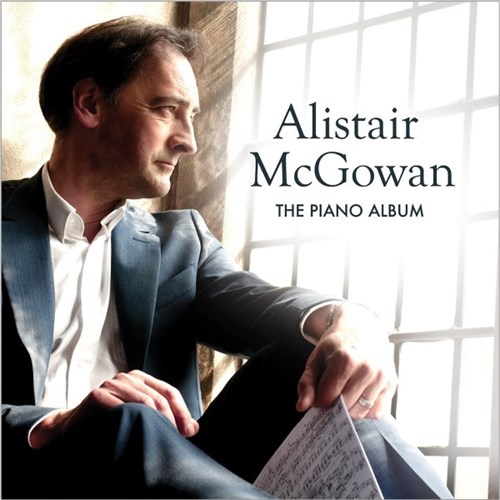
The debut album from Alistair McGowan sees the BAFTA-winning impressionist, comedian and actor in a new role, that of concert pianist. Called simply ‘The Piano Album’, it contains 18 short pieces of roughly Grade 5-6 standard, including works by McGowan’s beloved Erik Satie, mostly romantic or flowing music, and is intended to encourage others to play the piano by offering attractive well-known and lesser-known pieces which are accessible to intermediate level amateur pianists. McGowan feels that hearing someone like him, who returned to the piano as an adult having had only a couple of years of lessons as a child, is perhaps more inspiring than a recording or performance by a top professional playing Rachmaninov’s Second Piano Concerto, which many amateurs “could never play” (AG). Having spent the last few weeks listening obsessively to Krystian Zimerman’s exquisite new recording of Schubert’s last two piano sonatas, which have provided me with much food for thought and yes, inspiration, I am not sure I would agree. But as someone who goes to and reviews many piano concerts by top  international artists (Aimard, Perahia, Osborne, Levit, Hough…..), maybe I am not the ideal audience for this disc….

The pieces are played nicely with some good production values, but there is nothing striking about the playing, no moments of insight nor real wonder. Philip Glass’s Metamorphosis No. 5, for example, is pleasant enough. It flows, it’s in time, but it has neither the spaciousness nor relaxed sense of breathing space that a more experienced player or someone who has spent a long time living with and in the music would bring to it. In short, it is rather too “notey” and somewhat laboured. Most of the pieces lack real expressive depth or subtleties of musical colour, and the result is a rather bland trawl through some nice piano miniatures. As a pianist friend of mine remarked, “people with a vague interest in classical piano music who want a “first album” would probably love it. Those of us more used to Perahia, Brendel et al will be less enamoured“.

Having said that, kudos to Alistair McGowan for taking on the challenge of learning, finessing and recording the pieces for this album. Integral to this process were lessons with several concert pianists ,notably Anthony Hewitt and Lucy Parham, and quality time spent at piano courses run by Paul Roberts and at La Balie in France. He has not taken on this project lightly, and his dedication to, and passion for, the piano is to be commended. That alone should be an inspiration to other adult amateur pianists.

The Piano Album is available now on the Sony Classical label

inner_image

Who or what inspired you to take up the piano and make it your career?

I remember sitting in a school assembly at the age of five, hearing schoolmates perform little piano pieces, and thinking to myself quite definitely, as other children of that age surely do in their inimitable fashion: ‘I want to do that too’! It used to bother me that this initial self-generated impulse to play music was ‘sociological’ rather than ‘musical’, motivated more by the situation and ritual of musical performance than by its content. But much later I realised that what I love doing is to commune and communicate with people through the beautiful world of sound and sound structures. Thus the original ‘sociological’ motivation makes very good sense to me.

The point at which I decided to attempt a professional career in music did not come until the age of eighteen. This resolve came to me a few days after arriving at university to start a degree in Natural Sciences. As I had combined various interests for years throughout my school life, this more serious commitment to music didn’t need to divert me from my scientific studies. In fact, I found the university environment to be ideal in terms of the opportunities it offered for making music with others, broadening my study skills, and meeting colleagues with a wide range of interests. Perhaps not studying music for my degree helped avoid some potentially constraining burdens of expectation.

Who or what were the most important influences on your musical life and career?

I was fortunate to have an outstanding music teacher at primary school. She brimmed with enthusiasm and energy, quickly making music a favourite topic for me. She taught me the piano until I was ten, and as I recall, more than ‘just’ the piano – there was basic theory too right from the start. Her talents extended to composing dramatic works for children – I remember taking part in one, aged eight, as an auxiliary percussionist among a small group of professional freelancers, on one occasion playing a mark tree in an inappropriate improvised manner and far too loudly.

As I became more serious about the piano, several pianists became a great source of inspiration and support, each in their own way. Alexander Kelly, Piers Lane, Irina Zaritskaya, and lastly Maria Curcio, all oversaw and supported my pianistic development. But that development was also brought on by wider musical experience. I played the clarinet, french horn, and composed enthusiastically. At the Junior Royal Academy of Music I joined a piano quartet that rehearsed and performed together for a period of four years. During the summer holidays I would often find myself at semi-staged opera performances and observing voice masterclasses. I can’t unpick what was most important and why, at least not yet.

What have been the greatest challenges of your career so far?

Without doubt it is juggling the demands of performance with those of teaching and of family life. In addition, as someone who is curious about new, neglected, and forgotten works as well as ‘mainstream’ classical repertoire, I need to spend a lot of time learning pieces, and this can be more exhausting than the travel and performance schedule itself. Last year I was preparing Beethoven’s Hammerklavier Sonata and at the same time practising the first two books of Ligeti’s Piano Études – I should probably avoid allowing those two worlds to collide again in order to preserve my sanity.

Which performances/recordings are you most proud of?

With regard to recordings, I don’t know how to answer as I rarely listen to my recordings once they have been released. Perhaps I should, but I am inevitably more concerned with the journey ahead, asking myself how can I improve my performances and deepen my interpretative insights rather than patting myself on the back. This isn’t to say that I don’t take pride in my work, especially if I feel a concert performance or recording session has gone well, but anyone who knows me will tell you I don’t indulge myself.

One performance does come to mind: some years ago I decided to accept an engagement to play Saint-Saens Fifth Concerto at three weeks’ notice. I hadn’t played a note of the work before, but rightly calculated that it was possible to learn and memorise this piece in time. I worked very methodically to ensure I did so. The concert went very well and the performance was released as an unedited live recording.

Which particular works do you think you perform best?

I don’t know the answer – that’s up to my listeners to decide, and I trust them. I have to trust them as much as they trust me.

How do you make your repertoire choices from season to season?

There is no set formula, and I must admit that I am reluctant to make decisions very far ahead. My guiding principles are firstly that I have to be passionate about and deeply involved with the music I am to play, so that I can share it with others effectively; secondly, I like to construct programmes that can feel like a kind of journey, even though they often traverse a huge range of music written over at least two centuries.

Do you have a favourite concert venue to perform in and why?

I am fortunate to perform in some beautiful halls with very good acoustics, but I love the way that each venue (even a dry speech theatre, as occasionally happens) creates a particular set of challenges that demand engagement from performers and listeners alike. For me the moment of communication and the content of the music are much more important than the venue, even though a comfortable venue helps performers and listeners alike.

What is your most memorable concert experience?

There are several: Krystian Zimerman at the Royal Festival Hall performing Ravel’s Valse Nobles et Sentimentales, Chopin’s Ballade no 4 and the Sonata in B flat minor incomparably; Yo-Yo Ma playing Dvorak’s Cello Concerto with the Houston Symphony; Yuri Temirkanov and the St Petersburg Philharmonic in Shostakovich’s Leningrad Symphony at the Barbican; Simon Rattle and the Rotterdam Philharmonic performing Parsifal at the Proms (yes, I stood up for the entire opera, and didn’t feel even a slight ache); Esa-Pekka Salonen conducting a small ensemble in Franco Donatoni’s Hot.

What do you consider to be the most important ideas and concepts to impart to aspiring musicians?

Live your life to the full and never stop searching. You can never know enough, be experienced enough, ‘finish the work’, or be truly satisfied! This is potentially frustrating but also liberating because the process leading up to each performance is what becomes important and enriching. Aspiring musicians should gain the widest possible musical experience, get to know and engage with other art forms, read widely…. You never know where an idea or an inspiration might be lurking, and behind every seemingly simple answer lies a multitude of questions.

Where would you like to be in 10 years’ time?

Doing what I do now, hopefully quite a lot better.


British pianist Danny Driver trained with Alexander Kelly and Piers Lane whilst studying at Cambridge University, with Irina Zaritskaya at the Royal College of Music in London, and completed his studies privately with Maria Curcio. As a student he won numerous awards including the Royal Over-Seas League Keyboard Competition and the title of BBC Radio 2 Young Musician of the Year.

Read Danny Driver’s full biography