Stories, Images, and Magic from the Piano Literature – Neil Rutman

As musicians we can and should call upon our imaginations to enable us to create the myriad sounds we desire from our instrument, and to communicate the story or image of the music to the audience. The first teacher I worked with when I returned to the piano as an adult really encouraged the notion of “hearing the sound” in one’s “mind’s ear” (so to speak) before playing and I have found this technique incredibly helpful in my own playing and my teaching. She also encouraged forming a personal narrative or picture for the music – even if the work has an evocative title such as Chasse-Neige or Jeux d’Eau – to spark one’s musical imagination.

Alongside this, our musical imagination can be piqued and encouraged by other stimuli: listening to works by the same composer, or from the same period, looking at art, reading poetry and literature, watching films, traveling, life in general…… All these things feed into our cultural and creative landscape to nourish and inform our music-making and stimulate our musical imagination.

In addition, an appreciation of the social, historical and cultural context in which the music was written can also help us create a personal, authentic, convincing and vividly three-dimensional portrait of the music when we play it. Stimulating the imagination through extra-musical sources illuminates and enhances the meaning of the music for us as players. Often editions of piano music contain only the briefest contextual notes, the editor preferring to focus on technical issues, while learned volumes on, say, Beethoven’s Piano Sonatas tend towards dense musicological analysis which can seem totally divorced from the expressive and emotional content of the music (which is, after all, what makes music interesting!).

51n13g-rehl-_sx331_bo1204203200_The American pianist and teacher Neil Rutman has compiled a wonderful resource for pianists, teachers and indeed general music lovers in his book Stories, Images, and Magic from the Piano Literature. It’s a rich seam of information drawn from classical literature, poetry (some of which inspired piano pieces), reviews and critical commentaries, anecdotes and personal reminiscences; in addition, highly informative musical, interpretative and technical insights by acclaimed pianists, including Marguerite Long, Sviatoslav Richter, Alfred Brendel and Edwin Fischer). Much of the material originates from the composers themselves, and as such it offers a unique and sometimes very personal way into the music.

For hours I have been playing over and over again a melody from the last movement of my Phantasie…..Are you not the secret tone that runs through the work?

– Robert to Clara Schumann about the last movement of the Fantasy in C, Op 17.

A few highlights which I particularly enjoyed:

  • Czerny’s adjectives to describe the moods found in Beethoven’s piano works – e.g. unruly, determined, capriciously, teasing, bewitching, roaring, dreamy. That these are the result of Czerny’s inimate acquaintance with and appreciation of Beethoven’s own piano playing make them all the more significant.


  • Alfred Brendel’s lively satirical titles of each movement of Beethoven Diabelli Variations, e.g. Var 2 – “Snowflake”, Var 7 – “Sniveling and stamping”, Var 15 – “Cheerful Spook”, Var 30 – “Gentle grief”. You may not agree with these titles, but there’s no doubt that they offer a fresh perspective and may make you consider the music in a different way, thus stimulating new ideas about how to approach and play it.


The great technical errors which deface my piano music, to the point of rending it unrecognizable, are: tempo rubato, stinginess in the use of pedal, and too much articulation in certain arpeggiated phrases which should, on the other hand, be rather smooth and blurred.

– Francis Poulenc on playing his own piano music


The book also succeeds in taking classical music out of its gilded cage by offering a more down-to-earth and human approach to the piano repertoire and its composers. It is informed and informative, eminently readable and the kind of book one can keep by the piano for reference, or simply dip in and out of for pleasure, such is its appeal.

To close, a quote from Ravel about Oiseaux Tristes from Miroirs, a work I am currently learning: “In it I evoke birds lost in the lethargy of a somber forest during the most scorching heat of summertime.”

I can almost feel that intense heat, and smell the resinous scent of pine trees…..


The composers featured in the book are organised alphabetically by chapter, together with a comprehensive bibliography of sources and an index of all works cited.

Recommended

Further information about Neil Rutman’s book
original

Thursday 11 January 2018

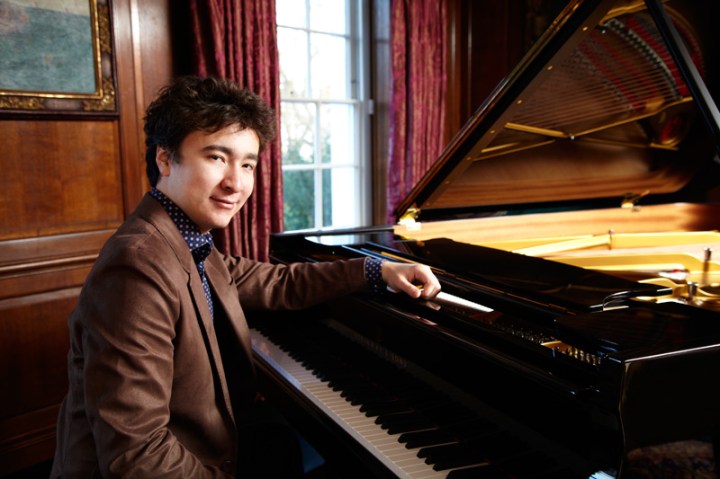
Samson Tsoy, piano

Schubert – Four Impromptus, Op 90

Rachmaninoff – Five Preludes Op 23

Two composers writing 75 years apart, both 30 and both entering significant periods of intense creativity in their compositional lives. By 1827 Schubert knew his life was drawing to a close. Ill with syphilis and the side-effects of its treatment since 1823, the year before his death, when his composed his Impromptus for piano, signalled a period of remarkable output. 75 years later in 1902 Rachmaninoff marries his cousin Natalia Satina and embarks on his Second Piano Concerto, the Cello Sonata, and Second Suite for Two Pianos, in addition to the Preludes Op 23.

Both sets of works are infused with their composer’s distinct psychology. Schubert’s bittersweet nostalgia, his markedly shifting moods, his long-spun melodies and the lilting rhythms of the ländler and the waltz run through the Four Impromptus Op 90, creating a unifying thread, and Samson Tsoy revealed these special qualities of Schubert’s writing with sensitivity and poise, from the desolate opening of the Impromptu in C minor, to the warm poetry of the fourth in A flat. This was refined and mature playing.

Rachmaninoff’s Op 23 Preludes are confident and exuberant, never more so than in the famous G minor, and Samson responded to with equal confidence and spirit, offering a rich palette of musical colours presented with stylish panache and an evident relish for this music. A special warmth and elegance was reserved for the D major Prelude.

A most enjoyable and rewarding lunchtime concert.


The Jazz Room at The Bull’s Head, a riverside pub in Barnes, SW London, more usually vibrates to the tunes, rhythms and vibe of the genre from which it takes its name, but last night the intimate space was filled with altogether different sounds in a concert given by two highly acclaimed classical musicians – David Le Page (violin) with Viv McLean (piano).

David-le-Page-2-1

In addition to his solo, ensemble and orchestral work, David Le Page is also a composer of beautifully-crafted, imaginative and highly evocative music. His latest album ‘The Book of Ebenezer’ (release date TBC) is inspired by The Book of Ebenezer Le Page by G B Edwards. Set in Guernsey through the late nineteenth century up to the 1960s, the novel takes the form of a fictional autobiography narrated by Ebenezer Le Page, a typical “Guern’ man, deeply engrossed in his life on the island. David Le Page also hails from Guernsey,  no relation to Ebenezer Le Page, though as David said in his introduction to his music, the name Le Page is as common in Guernsey as Smith is elsewhere in the UK. David has taken moments in Ebenezer’s life as recounted in the book as the inspiration for an album of 10 exquisite miniatures for violin and piano.

In the slower, more reflective pieces, the music is redolent of the spare grace and meditative stillness of expression of Arvo Pärt, while the more lively pieces have folksy intonation and foot-tapping rhythms. Several of the pieces use Guern folksongs, and one is based on Sarnia Cherie, the national anthem of Guernsey. All the music is highly evocative, infused with a tender poignancy which speaks not only of the eponymous hero’s reminiscences and reflections but also of David’s connection to the island of his birth, its landscape and its weather. There are haunting bird calls, as if heard from afar, the gentle wash of the sea rippled by the wind, the glint of light in water – elements which give the music a filmic quality and serve as a narrative thread which runs throughout the suite of pieces.

Purists may balk at hearing classical music in a venue normally reserved for jazz, but the small size of the jazz room lends itself to the right kind of concentrated listening and intimacy of expression which this music demands and offers. And David Le Page and Viv McLean create a very special intimacy of their own – these musicians work together regularly and their empathy and mutual understanding is palpable in every note they play.


David Le Page and Viv McLean return to the Jazz Room at the Bull’s Head for a special concert for Valentine’s Day on Wednesday 14 February – details here

Who or what inspired you to take up the piano and pursue a career in music?

I started the piano when I was 3 (apparently!), and to be honest I’ve never for a second thought about the possibility of doing anything else. And I guess I might have to finally come to terms with the fact that – at 36 – Stoke City seemingly aren’t going to be calling me to play up front for them, so I guess I’m stuck with the music.

Who or what have been the most important influences on your musical life and career?

I had the great fortune to go to Chetham’s School of Music for nine years, during which time I had a fantastic education in the nuts and bolts of music, before going to the Royal Academy of Music in London to do the Undergraduate jazz course there. Having such a comprehensive training has certainly been invaluable in helping me adapt to, and survive in, the myriad of musical situations I tend to find myself in!

I’ve also been lucky enough to work with some amazing musicians over the last 20 years, and I’ve always tried to learn from everyone I’ve worked with, and every musical challenged I’ve undertaken. That’s one of the lovely things about being a musician – you never stop learning!

What have been the greatest challenges of your career so far?

Logistics! Replying to emails, booking flights, doing my accounts… The glamorous stuff!

In all seriousness being a freelance musician does come with a unique set of challenges, and surviving professionally, or professional surviving if you like (!) is right up there with the hardest of them.

Alongside that, I’ve always struggled with performance anxiety (a problem rarely discussed but frequently suffered by so many…) so dealing with that is always at the forefront of my mind.

Which performance/recordings are you most proud of?

My last release under my own name, called ‘Instrumation’, features a chamber orchestra and I wrote, arranged, produced and mixed it all – so I’m very proud of that! Every album I’ve ever made I’ve tried to do to as high a standard as possible, and whilst your style, influences and sound inevitably change over time, hopefully the attention to detail and quality of your work can remain a constant feature of what you do.

Which particular works do you think you play best?

Unfortunately I don’t really get too much opportunity to play the more standard repertoire, but this is something I’d like to rectify at some point in the future. So I guess the answer would be – hopefully – my own!

How do you make your repertoire choices from season to season?

I guess this question, again, is a little bit irrelevant for my particular career! That said, I do really enjoy the wide variety of musical situations I end up getting involved in, and I guess there is a certain amount of reacting to what is requested of me that dictates the musical direction I end up taking. In terms of a more general direction, I certainly find myself enjoying the world that lies in between the composed and the improvised more and more, so the pieces from the ‘classical’ side that I get involved with tend to be those that lend themselves to this kind of treatment. I seem to come back time and time again to 20th Century French music, as the harmony and lyricism seems – to me – to be so strongly connected to the world of improvisation and harmonic exploration that I enjoy so much.

Do you have a favourite concert venue to perform in and why?

I was fortunate enough to perform my own music at the Proms back in 2008, and to play in the Royal Albert Hall, and in front of a live BBC television audience, was just the greatest thrill. I guess, with having a classical education, performing in that situation, on that iconic stage, felt like truly fulfilling a dream. Aside from the RAH, I’ve been so fortunate these last few years to play in hundreds of concert halls around the world, all different shapes and sizes and all fantastic in different ways, but I guess on a personal note – playing in the Bridgwater Hall in Manchester has always been a wonderful experience, as I remember seeing it being built from the very beginning when I was at Chetham’s in the 90’s – so finally getting to play concerts there as a professional musician has always been a special experience.

Who are your favourite musicians?

In terms of composers, Ravel, Debussy and Dutilleux are my favourites. Jazz musicians: well piano-wise my heroes have definitely been headed by Keith Jarrett, Chick Corea and the wonderful, much-missed John Taylor. In a wider sense, the music of electric bassist Jaco Pastorius and guitarist Pat Metheny has always really been special for me. And aside from that, I always absolutely love listening to Steely Dan, Earth Wind and Fire, and Stevie Wonder. Hopefully that covers quite a bit for now!

As a musician, what is your definition of success?

To achieve respect and appreciation from my fellow musicians has always been the main aspiration for me. Of course every concert I play, I really want to give the audience a wonderful evening and take them on a musical journey, but in a more general sense I think that question of what my legacy will be has become more and more important to me as the years pass. I try extremely hard to give everything I can to each project I’m involved in, so when things go well after all the hard work, it always makes for a satisfying moment!

What do you consider to be the most important ideas and concepts to impart to aspiring musicians?

This would take quite some time to answer, but suffice to say I’m always encouraging my students to really try to put in the hours at the piano, as nothing can really replace good old-fashioned hard work! I do try to get them to try to stretch themselves creatively as much as possible, as, in the world of improvised and new music especially, developing and honing your own ‘voice’ and sound is of paramount importance. Again, there really isn’t any short cut to this, other than to put the hours in!

Gwilym Simcock performs at the London Piano Festival on 4 October. More information


Gwilym Simcock has carved out a career as one of the most gifted pianists and imaginative composers on the European scene.  He moves effortlessly between jazz and classical music, with a ‘harmonic sophistication and subtle dovetailing of musical traditions’. Gwilym has been hailed as a pianist of ‘exceptional’, ‘brilliant’ and ‘dazzling’ ability, and his music has been widely acclaimed as ‘engaging, exciting, often unexpected, melodically enthralling, complex yet hugely accessible’, and above all ‘wonderfully optimistic’.

Gwilym’s influences are wide ranging, from jazz legends including Keith Jarrett, Chick Corea, Jaco Pastorius and Pat Metheny, to classical composers including Maurice Ravel, Henri Dutilleux, Béla Bartók and Mark-Anthony Turnage. Although principally a jazz artist, Gwilym has composed numerous works for larger Classical ensemble that combine through-composed elements with improvisation, creating a sound that is distinctive and very much his own.

Read more


