Harriet Harman launches ‘Venus Blazing’, Trinity Laban Conservatoire of Music & Dance’s campaign to celebrate music by ‘missing’ women composers


  • Trinity Laban pledges that music by women – past and present and across many genres – will make up more than half of its concert programmes in 2018/19 academic year
  • Trinity Laban will also create an online database of female composers and expand its library to ensure students have access to the wealth of musical scores by women that music history has overlooked

Trinity Laban Conservatoire of Music & Dance today announces Venus Blazing, an unprecedented commitment to the music of women composers throughout the next academic year, virtually abolishing concerts which feature only music by men.

Drawing on centuries of music past and present, Trinity Laban will ensure that at least half of the music it chooses for the multitude of varied public performances it mounts on its landmark Greenwich campus and in venues across London in 2018/19 will be by women composers. This encompasses the 60+ concerts and opera performances given each year by the conservatoire’s 12 large-scale student performing groups in all the musical genres for which Trinity Laban is known, including classical music, opera, and jazz. There will be a particular focus on 20th and 21st century British composers, including Trinity Laban students, alumni and staff.

Harriet Harman MP, Chair of Trinity Laban Conservatoire of Music & Dance, launched Venus Blazing to coincide with a lunchtime concert by Trinity Laban’s Chamber Choir celebrating the 90th birthday of British composer Thea Musgrave, in Greenwich today [1pm, 8 March], also marking International Women’s Day.

Harriet Harman, Chair of Trinity Laban Conservatoire of Music & Dance, says:

Trinity Laban Conservatoire of Music & Dance is strongly committed to diversity in all elements and it has a mission to constantly challenge the status quo. Venus Blazing is a great example of just how it can do this. It will encourage and inspire its students – many of whom will go on to shape the future of the performing arts to engage with the historic issue of gender imbalance in music by women, and ensure that it does not continue into the next generation. I welcome this bold initiative to raise awareness of the disparity that has long existed in music and shine a light on music that has so frequently been overlooked. I am also greatly looking forward to hearing some of the musical treasures by women I might not otherwise have had the chance to hear.”

Among the performance highlights of Venus Blazing is a new production of Thea Musgrave’s opera A Christmas Carol (December 2018), symphonies by Louise Farrenc and Grace Williams performed by the Trinity Laban Symphony Orchestra, an exploration of the music of Trinity Laban alumna Avril Coleridge-Taylor and much more to be announced in due course. This will include music by current Trinity Laban composition students and staff, including Soosan Lolavar, Laura Jurd and Deirdre Gribbin – whose Violin Concerto Venus Blazing has given the name to this celebration.

Alongside these performances Trinity Laban will make available an online database of works by female composers, and will expand its library resources, including scores, books and recordings. This will encourage and inspire students to discover works that they might not previously have been able to access, and will and ensure that Trinity Laban, as a modern conservatoire with a key role to play in shaping the next generation of music makers, addresses the historical gender imbalance in music so that it does not continue.

Venus Blazing is being spearheaded by two key members of Trinity Laban’s Faculty of Music: Dr Sophie Fuller, Programme Leader of Trinity Laban’s Masters programmes and acclaimed author of The Pandora Guide to Women Composers: Britain and the United States, alongside conductor and Head of Orchestra Studies, Jonathan Tilbrook, Head of Orchestral Studies.

Dr Sophie Fuller, said:

It is widely recognised that music created by women – whatever the genre – is heard much less often than music created by men. In past centuries, it was difficult for women to find a meaningful musical education or get equal access to performance opportunities, but there have always been those who leapt over any obstacles placed in their way. We at Trinity Laban want our students and their audiences to hear their often powerful work. It is our duty to celebrate women’s music, not just for one year, but to provide the structures, support and encouragement to ensure that this is a lasting legacy for all future musicians and music lovers.”

trinitylaban.ac.uk/venusblazing

@TrinityLaban #VenusBlazing


(source: press release)
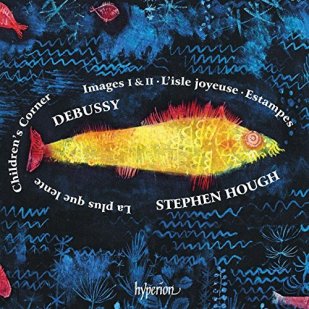
debussy-piano-music---stephen-hough-hyperion-1515405549…….make sure it’s Stephen Hough’s new disc of piano music by Debussy (Hyperion).

I read Stephen’s illuminating article about Claude Debussy (New York Times, 2 March 2018) and then listened to his new disc of Debussy’s piano music (Estampes, Images, Children’s Corner, La plus que lente and L’isle joyeuse). Here is Stephen writing on Pagodes, the first piece on his new disc:

[Debussy’s] use of its tonal color………is not so much a translation of a foreign text as it is a poem written in a newly learned, fully absorbed language

Stephen could be describing his own playing here (though he is far too modest to do so!). For those more used to hearing him play Liszt with cool yet colourful virtuosity, his Debussy playing is deliciously liquid, lucid, perfumed, sensuous and elegant. The phrasing and pacing is so natural and supple, fermatas and pauses so sensitively judged, touch, articulation and pedalling so clear and carefully nuanced, one has the sense that Stephen has also “fully absorbed” the composer’s language.

Take Pagodes, for example, the piece which opens this disc. Textures and lines emerge, blur and recede with all the ethereal delicacy of watercolour painting (and the suite Estampes is a reminder that Debussy loved art), but there is clarity too, so that every note sounds like a crystalline droplet. Reflets dans l’eau is similarly coloured, glistening and shimmering with subtlety and elegance. There’s nothing fussy or contrived in Stephen’s account of this music, and his assertion in the NYT article that Debussy was a “modern” composer is more than confirmed in his highlighting of the composer’s fondness for piquant or erotic harmonies, surprising melodic fragments (often using the pentatonic scale) and rhythmic quirks.

Children’s Corner proves as much a delight for adults as the young ones: snow dances with feathery delicacy, while The Little Shepherd a study in tender simplicity, tinged with poignancy. Strictly for adults, La plus que lente is wonderfully louche and languorous, with its late-night cocktail bar swagger. L’isle joyeuse closes this fine recording with a sparkling clarity, wit and sunlit joie de vivre

Highly recommended

Claude Debussy (1862-1918) / Piano Music / Stephen Hough (piano) / Hyperion CDA68139


Meet the Artist – Stephen Hough

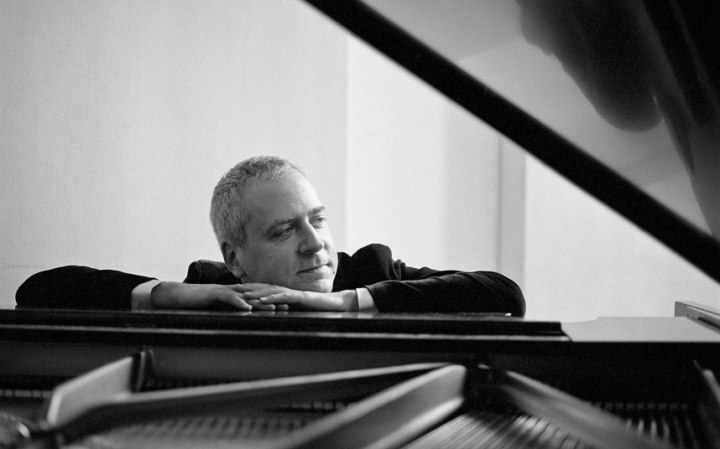
jeremydenk_3226643k

When the concert is perfect, does that make the reviewer redundant?

As regular readers of this blog will know, I enjoy writing about the concerts I attend but I also struggle with the purpose and value of concert reviews. At the most fundamental level, a review is a record of the event, setting it in context and as a moment in history. A review should also offer readers a flavour of the event and the thoughts and opinion of the reviewer about that event. When I left Milton Court last night I told my concert companion I could not write about the concert we’d just attended because it was so perfect that to write about it could not possibly do justice to the quality of the performance…..

Last night I attended American pianist Jeremy Denk’s concert at Milton Court, one of London’s newest concert venues and, in my opinion, the finest for piano music because of the clarity of its acoustic. Add a pianist whose musical insight and intellectual clarity, magical touch and sense of pacing bring the music to life so that you want to hear him “no matter what he performs” (NY Times), and we have the makings for an evening of exceptionally fine pianism.

It was a typically piquant programme, changed from the published version to include just three works – two magisterial, transcendent late sonatas by Beethoven and Schubert and Prokofiev’s Vision Fugitives, twenty fleeting miniatures, by turns quirky, ethereal, rambunctious, grotesque, poetic, delicate, fragmentary….. Denk revealed their individual characters so carefully, so delightfully that each tiny gem felt like a stand alone piece in its own right.

Beethoven’s piano sonata in E, op 109, the first of his triptych of last sonatas, also opens with a fragment – a tiny arabesque of just two notes in the right hand to which the left hand replies with a similar figure. It’s not a melody, yet that opening is immediately memorable. In Denk’s hands the music unfolded before us, its narrative flow so naturally paced. A muscular middle movement which dissolved into a theme and six variations, surely some of the most transcendent Beethoven ever wrote and handled with a delicacy and robustness, when required, by Denk which pulled one into this otherwordly soundworld so completely that one was transported, fully engaged and utterly overwhelmed. It was akin to meditating.

It felt almost wrong to leave the auditorium for the interval and face the noisy crush around the bar, but we knew the second half would take us to another special place, the unique world of late Schubert, his final sonata completed just a few months before his death.

Is the Sonata in B flat, D960 Schubert’s “final word”? A valediction for his departure from this world? I’ve always been suspicious of this view of this great sonata, whose expansive opening movement is like a great river charting is final course before the ocean, and whose finale is a joyful outpouring of hope, a reminder perhaps that Schubert had more, much more to say, had he lived longer. This was certainly Denk’s take on Schubert’s last sonata. The opening movement’s first theme had the serenity of a hymn, the second theme more unsettled, but the overall sense of repose remained, occasionally interrupted by dark, but never ominous, rumbling bass trills.

The meditative quality of the Beethoven variations was felt again in the slow movement of the D960. In some pianist’s hands, this movement can sound funereal, but Denk gave it a mystical grace and a sense of forward movement, so that the warmth of the A major middle section when it came infused rather than surprised the ear. The Scherzo poured forth with the agile freshness of a sparkling mountain stream, but the Trio reminded us that melancholy is never fair away in Schubert’s world, the bass accents (too often overlooked in other performances/recordings) here perfectly highlighting the change of mood….

The finale opens with a bare G, potentially as cold as the opening of the first Impromptu, but a dancing sprightly rondo quickly ensures, rising to a joyous conclusion, all masterfully and imaginatively presented by Denk. The overall pacing of this Sonata, like the Beethoven, was so elegantly managed: it is a long work (around 40 minutes) yet Denk’s clear sense of a through narrative and overall architecture of the music ensured there were no longueurs, not a moment when the mind wandered to other realms.

The encore was Brahms’ ever popular Intermezzo in A, from the Op 118. Tender and poignant, it was a lovely conclusion to an exceptionally fine evening of pianism.

when I have felt in the moment of the performance I have brought the notes on the page to life in a weird way which is outside of me – that is the kind of success that I am after

– Jeremy Denk (interview with The Cross-Eyed Pianist)


Meet the Artist – Jeremy Denk

