Posts

Who or what inspired you to take up the viola, and pursue a career in music?

I come from a family of musicians; my mother was even playing concerts with me in her belly so I guess I’ve been drinking it all in since I was a bean. I began with the violin so the viola is a natural sibling instrument and I’m happily bilingual as both violinist and violist. I rarely think of my life as a musician in terms of a career, I just knew that music would hold the greatest challenges and rewards, and so there was no other path… here I am on it!

Who or what have been the most important influences on your musical life and career?

There many musicians to whom I’m thankful for inspiration, but if I think back to being drawn to improvisation as a child it is learning this skill that has had a powerful influence on my music-making and has opened many musical doors, sparking my curiosity at every stage.

What have been the greatest challenges of your career so far?

Learning to say no. And overcoming fear.

Which recordings are you most proud of?

I’m proud of the discs I’ve made with my group ZRI—we’re recorded both the Brahms Clarinet and Schubert C major quintets, re-scored to include santouri (dulcimer) and accordion to reconnect with the Hungarian, folk, and cafehaus traditions that inspired Johannes and Franz when they each went drinking in the Zum Roten Igel pub in Vienna and heard the gypsies play. We’re playing at Kings Place on April 8th with our brand new Charlie Chaplin live score and concert program!

Which particular works do you think you play best?

I’ll leave that for the audience to decide…

How do you make your repertoire choices from season to season?

Often I’m invited to play particular repertoire but if I’m in charge then I’ll choose a program according to the context in which it’ll be performed. The particular venue and kind of audience you expect is crucial for a choice of what to play and how to present a program. That’s not to say I’ll choose something that may be in an audience’s comfort zone—sometimes the most exciting concerts push those boundaries—but it’s always a consideration in planning. And the bottom line is it’s got to be something that I’m really into myself or else how can I expect anyone else to be?

Do you have a favourite concert venue to perform in and why?

I like to give concerts in weird and wild settings, and not necessarily traditional halls. But as far as more regular stage settings go, I love Wilton’s Music Hall in Shadwell—it’s a stunning Victorian music hall with a gorgeous natural acoustic. The Wanamaker Playhouse is also awesome: all wood, candle-lit, and perfect for a chamber group or solo.

Who are your favourite musicians?

How long have we got?! I like people who make music with risk and real-time flow, who have an individual voice and personality, who explore sound and colour, who like to groove…people who can captivate you with their imaginations. Magicians of sorts. Vladimir Horowitz, for example, or Bobby McFerrin.

What is your most memorable concert experience?

It’s impossible to choose! Playing with Malian rappers at a festival in Timbuktu? Leading Bjork’s string orchestra in the Albert Hall? String trios with my father and sister in an old Berlin Ballroom? Solo Bach in an underground cave in the south of France?…

As a musician, what is your definition of success?

When you are physically and imaginatively in the zone at a concert, when the flow of the music is bigger than you yet you are also standing at its helm… where your intuition is your guide, where you’re experiencing the music for the first time whether it’s from an old score or improvised… and when the audience are right there with you from start to finish.

What do you consider to be the most important ideas and concepts to impart to aspiring musicians?

Play with your mind and heart not your fingers. Learn to talk as well as sing on your instrument. And, to quote Charlie Parker: ‘If you don’t live it, it won’t come out your horn’!

What is your present state of mind?

I’m excited because I’m on a plane to the north of Norway where I’m spending 3 days working with some amazing folk musicians on a new Folk-meets-Baroque project.


Max Baillie performs in Time Line with Oliver Coates, Thomas Gould and Rakhi Singh on 28th February, part of the Time Unwrapped season at King’s Place.

Further information


A graduate of the Yehudi Menuhin School, Cambridge University, and Berlin’s UdK, violinist and violist Max Baillie leads a uniquely versatile career. He performs across a diverse spectrum of music spanning new commissions, improvisation, and collaborations with artists from all over the world. As a soloist and chamber musician he has performed on stages from the Royal Albert Hall to Glastonbury, from Mali to Moscow, and plays regularly for television and radio broadcast.

Max is a founding member of ZRI, Zum Roten Igel. The ensemble has toured to major festivals with its re-scored versions of the Brahms clarinet quintet and the Schubert C major quintet, including accordion and santouri (dulcimer). He also has a duo with his ‘cellist father Alexander Baillie with whom he recorded a disc of folk-influenced violin and cello duos earlier this year. Max also features regularly with Notes Inegales, an improvisation group which ventures into adventurous cross-cultural and cross-genre collaborations at its regular club night Club Inegales.

For over ten years Max held the Principal Viola position in the London-based group Aurora Orchestra, playing a major role in its creative path. He conceived and directed the first of Aurora’s Brazilian dance collaborations, featured as soloist in Julian Philips’ dedicated commission Maxamorphosis drawing on his background as a trained dancer, and in 2016 curated the first season of late night ‘Lock-in’ concerts at London’s Kings Place.

Max is partnered with the National Youth Orchestra of Britain to build an online educational resource for young string players, and is currently working with an animator to create a short film about how to approach solo Bach as part of his Bach Voyager project.

www.maxbaillie.com

4205e2_758c8115c3f34f1c80528b14268aab01~mv2_d_3562_2490_s_4_2
Wolfgang Rubsam

It is not that often a set of recordings comes along which is genuinely as much a revelation and surprise to the Bach initiate as this one.  Wolfgang Rübsam’s current spate of recordings on his self-released ‘Counterpoint Records’ include the entire Well-Tempered Clavier (across 5 vols.), Art of Fugue and most recently a number of the Cello Suites (!), all of which are available only as downloads but thankfully in FLAC format as well as lossy MP3.  They all feature an unfamiliar sound: the Lautenwerk or lute harpsichord, in this case one of only a few in existence, built by the fine and intrepid instrument maker, Keith Hill.  Readers need look no further than Rübsam’s website for generous helpings of tracks from these CDs together with other recordings of Pachelbel, Buxtehude and Böhm (www.wolfgangrubsam.com/listen ).  For me the recordings speak for themselves, and I have grown to like them even more over time, as well as slowly realising how far they go against the grain of traditional Bach keyboard interpretation. Those who are not instantly convinced may want to read on and reflect.

First let it be said that the Lautenwerk has a charm all of its own.  The timbre outwardly resembles that of the buff stop that is featured on some harpsichords except that it is a lot fuller, mellow and, well, lute-like.  Although notes die away rapidly a warm reverberation is created by a set of strings above that resonate in sympathy, rather like the effect contributed by the undamped final octave or so of strings on the piano.  In fact, the ear does not seem to tire of this closely recorded sound as much as can be the case with the bright tone emitted by some conventional harpsichords, even after listening endlessly to it (on headphones).  There is a gentle ease about it, matched by the ease and delight of the player.  Sometimes the sound-world reminds me of arrangements of Renaissance polyphony for lute duet, and Rübsam manages to make the listener forget that this is actually a keyboard instrument, so nuanced is his touch.

The liberties the instrument itself seems to entice Rübsam towards, lead him beyond where most dare to tread in this very Germanic, learned repertoire. However, for me the results give a breath of fresh air to what can seem sometimes, even on the piano with all its dynamic variety, a rather trudging tradition of playing (I am thinking particularly of the fugues).  In fact, I think this raises a whole heap of questions about how such music may have been brought to life by the player of an instrument where other parameters such as dynamics are so minimal.  It is clear from the modern tendency to perform works like the Art of Fugue on strings and other combinations (not to mention piano) that the listener benefits from such individualisation of lines, yet Rübsam finds a viable and enchanting solution to this problem on the Lautenwerk by displacing one voice rhythmically from another resulting in a remarkably three-dimensional sense of the polyphony (Bradley Lehman has called his Bach ‘geodesic’), an effect that initially takes some getting used to.

This is nothing new for him.  His two complete Bach organ cycles (particularly the later one for Naxos) show a subtle rhetorical approach to rhythm that, although requiring more concentration from the listener, is deeply rewarding in communicating the sense of metre, the stress of dissonances and light and shade of rhythmic groupings, and bears out repeated listens. This sensibility has been transmitted to the work of his students too, including Julia Brown’s brilliant Buxtehude complete organ series for Naxos.  Rübsam himself also did quite a lot of piano recordings for Naxos that also show a distinctly free approach rarely heard in today’s pianistic Bach, saved from accusations of Romanticism by its accomplished ornamentation and deep awareness of style.  The ornamentation on his Lautenwerk recordings is also very impressive and adds to the sense of freshness.  Everything is on the table and there are no textbook solutions for Rübsam, who adds anything he chooses, before, on or after the beat.  Hearing it is really thought-provoking, reminding me of the writings of Frederick Neumann, who has always criticised the dogmatic approach of some early music specialists in the light of contradictory evidence, emphasising the final arbiter of good taste over formula in this epoch, a concept reinforced in many treatises.

There is something luxuriant, deeply sensuous about this playing that I think reveals a kind of ultra-sensitive Bach that perhaps has been unfairly obscured from view by pianists and harpsichordists alike, but is now perhaps coming more into the open (a favourable comparison would be Richard Egarr’s WTC) even if historically one might speculate this to be closer to the performance traditions of the later Bach circle.  Although we know of the importance of the clavichord to Bach, another instrument essentially lost to the modern concert world, it is interesting that the Lautenwerk also had a place close to Bach’s heart (two such instruments are listed in the inventory of his possessions at the time of his death) and these performances should perhaps make us think again about the expressive core of this music, its simultaneous expression of harmonic depth and contrapuntal complexity.  I for one have never enjoyed the canons from The Art of Fugue so much as in the hands of this wise sage of Bach interpretation, who seems to care nothing for contemporary fashion and everything for the music, its world of overlapping voices and subtle comings and goings.  It is fair to say you will find a whole universe here, the existence of which you might not even have suspected.

A 5CD version of WTC I+II by IFO Classics will be released first quarter of 2018.  www.ifo-classics.de/index.php/startseite.html

Also worth reading: Rübsam’s notes on ‘horizontal music’ here : www.wolfgangrubsam.com/biography

Other reviews of Rübsam CDs:

www.bach-cantatas.com/NonVocal/Klavier-Var-Rubsam-Part1.htm

A short video amalgamating various flexible versions of Bach’s C major Prelude from WTC 1 (including Rübsam’s): https://www.youtube.com/watch?v=q0ygnhv2FQ8


About the reviewer:

Dr Charles Tebbs is a freelance piano teacher, pianist, one-time harpsichordist, organist, and accordionist, recording fanatic (both making and listening to) who also composes from time to time (and is a recipient of two minor composition prizes).  Special areas of interest include polyphonic music, jazz improvisation, historical keyboard performance practices from the 18th to early 20th century and early recordings.  He has recorded a CD of Bach’s Goldberg Variations on piano and made numerous contributions to YouTube.  Current plans include recording the entire Well-Tempered Clavier Book One on the piano in a temperament other than equal.

www.charlestebbs.co.uk

Who or what inspired you to take up the ‘cello and pursue a career in music?

Juicy low notes, an absent cello-playing father, Tchaikovsky’s Romeo & Juliet/Star Wars (for my 6-year old purveyor, a concert without these items on the programme just didn’t cut it), Verdi’s Falstaff (aged 6, I played the Page Boy in a stellar cast of AMAZING British singers conducted by Roger Norrington and directed by Jonathan Miller – the horn call that heralded Nanetta and Fenton’s night-time tryst and the magic of the ‘nymphs, elves’ music completely spell-bound me – music IS magic, after all).

Who or what have been the most important influences on your musical life and career?

Robert Le Page – two of his one-man shows ‘back in the day’: The Far Side of the Moon and The Andersen Project. Intimate, epic, harnessing cutting edge technology but all about the human touch. I thought, ‘I’m going to do this for classical music, in my own way.

Kneehigh Theatre – especially ‘The Bacchae’ and ‘Tristan and Iseult’. I went to see ‘The Bacchae’ with a legendary hangover and found its descent into a murderous rave world completely intoxicating – classic text meets visceral imagination (meets my legendary hangover) = THAT’S how to communicate something ‘from the canon’. And then I was lucky enough to work with them briefly, during which time Emma Rice sorted me out a couple of tickets for their sold out run of ‘Tristan and Iseult’ at the Cottesloe [at the National Theatre, London]. I went with the woman who became my wife. I couldn’t talk about the show for weeks afterwards without weeping.

Shakespeare – I really like nights out with fabulous art that somehow tend towards the condition of a Shakespeare play – where Hamlet needs his Gravediggers, Macbeth his Drunken Porter and King Lear his Fool. I’m being simplistic/dualistic (child of the binary/digital age)…but I hope you know what I mean. Clearly, the earthy and ethereal, bawdy and transcendent, unhinged and rational, ‘tragical-comical-historical-pastoral’ exist ‘cheek by jowl’ in works from the classical music canon…I find they rarely get a chance to breathe like that, though. Something to do, I think, with an overweening concern for propriety in the performance of classical music. Obviously, the really great music itself from the canon isn’t concerned with propriety (even if it is concerned with poise/balance/proportion etc) – it’s too busy being about important things like people, the world, meaning, expression.

So, Shakespeare is a kind of touchstone and guru/shaman in my own adventures.

My extraordinary teachers (Kate Beare, Alexander Baillie, Boris Pergamenschikow, Ulla Blom, Sam Kenyon).

Those cello-playing ‘animals’, where the cello-playing disappears – Shafran, Rostropovich, Harrell.

George London (Canadian bass-baritone), Dmitri Hvorostovsky (Russian baritone – my cello teacher, Boris Pergamenschikow, would give me tapes of Hvorostovsky singing Russian romances…I wore it out).

What have been the greatest challenges of your career so far?

Negotiating the feudal system inherent in the classical music industry in the UK – I’m still not especially adept at it! I have an aesthetic that’s deeply rooted in connection, communication, the transformative potential of music being performed RIGHT NOW. That can make me seem like a Wild Man sometimes! When that meets an aesthetic that’s rooted in the academic, amateur, choral tradition, impartial and dispassionate (profile the BBC and its various ‘voices’, for instance) – excellent qualities though they are! – it can take some neuro-linguistic adjustment to chime. For me, music is mainly about the visceral and the spiritual. The intellect is a useful tool along the way but, personally, in performance, I’m not that interested in beholding the intellect on stage. There are more vital things at stake and bigger risks to take.

Which performance/recordings are you most proud of?

Ooooofff. Today…John Tavener’s The Fool at the QEH. It’s a mighty kind of dramatic cantata that he wrote for me to sing and play.

Recordings-wise, the one that’s out on February 16 (and then the solo disc coming out in April…obvs!). The Feb 16 recording is the world premiere recording of Hans Gál’s glorious Cello Concertino, along with his epic solo sonata and solo suite. Simon Fox-Gál produced it and he has captured the cello sound AMAZINGLY!

(And I also have to mention my recording of Errollyn Wallen’s fabulous/fiendish cello concerto – she’s a wonderful composer, extraordinary person and dear friend, and her cello concerto has deeply touched SO MANY listeners).

Which particular works do you think you play best?

For better or for worse, I think my nature and talents – such as they are – are good at connecting with and communicating works with big hearts, innate drama and an invitation to some kind of extremity in them. I like to go the ledge beyond the edge and report back. Don Quixote, Penderecki 2nd Cello Concerto, Rachmaninov Sonata – that’s today’s Top Three.

How do you make your repertoire choices from season to season?

Generally by saying ‘yes’ and going to where the excitement is.

Do you have a favourite concert venue to perform in and why?

Victoria Hall in Geneva is exquisite, grand yet intimate. But actually, I find I’m less and less fussy – about acoustics, stage orientation etc. My job is to lay it on the line and ‘only connect’ and as long as I can see/hear, be seen/heard, then I’m really happy to get on with that.

Who are your favourite musicians?

So many of my inspiring colleagues. I’m lucky to work with some of the greatest musicians I know – brimming with generosity, creativity, virtuosity. They make me better.

What is your most memorable concert experience?

When I was 19, I gave the first ‘from memory’ performance of Tavener’s ‘The Protecting Veil’ in Trinity College Chapel, Cambridge. The intensity of the silence that followed that sublime piece was unforgettable.

As a musician, what is your definition of success?

Keeping going – adventurously, hungrily, positively – like the Great White Shark on the first page of Peter Benchley’s JAWS…carving out time and space to manifest my creative dreams…paying the bills.

What do you consider to be the most important ideas and concepts to impart to aspiring musicians?

Well, I did some ‘improvisation’ workshops and a performance with my band ZRI at the Yehudi Menuhin School last week. It was UNFORGETTABLE. The essence of what we offered was: accept and build, grow your own artist, honour your curiosity by continuing to take creative risks. The reaction we received was mind-blowing. These particular students were craving these kinds of ideas, concepts, approaches and tools. I think it’s time to bring our music education up to date. It’s possible to balance vision and provenance and train young musicians for a career right now.


Matthew Sharp is internationally recognised as both a compelling classical artist and a fearless pioneer. His adventures in and through music and across disciplines are ‘unrivalled’ and ‘unprecedented’, balancing provenance and vision in a unique and potent way.

He studied cello with Boris Pergamenschikow in Cologne, voice with Ulla Blom in Stockholm and English at Trinity College, Cambridge. He was taken to Jacqueline du Pré when he was 12, Galina Vishnewskaya when he was 18 and studied chamber music with the Amadeus Quartet. He performs at major venues and festivals worldwide as solo cellist, baritone, actor and director.

Matthew has appeared as solo performer with the RPO, LPO, RLPO, CBSO, Orchestra of Opera North, SCO, EUCO, ESO, NCO, Manchester Camerata, Orchestra of the Swan, Orchestra X, Arensky Chamber Orchestra, and Ural Philharmonic.

In opera, he has performed principal roles for Opera North, ROH, Almeida Opera and Mahogany Opera Group, amongst many others.

In theatre, he has performed principal roles at the Young Vic and National Theatre Studio, collaborated with Kneehigh, Complicité and, most recently, with legendary illustrator and film-maker, Dave McKean.

He has recorded for Sony, EMI, Decca, Naxos, Somm, NMC, Avie and Whirlwind and appeared in recital as both cellist and singer at Wigmore Hall, SBC and Salle Gaveau.

www.matthewsharp.net

bipcmflogoresized-web-131605017660291830

Between 20th – 23rd November this year, the brand new building at the Royal Birmingham Conservatoire will be alive with the sound of chamber music, all involving the piano. An array of leading international artists will share the platform with talented young musicians in a brand new event, directed by Daniel Tong (pianist and Head of Piano Chamber Music at the Conservatoire). Musical friends will be joining Daniel from across Europe for concerts, masterclasses and also a competition for young ensembles, more about which below. Given the wealth of such events for piano or string quartet, for instance, a celebration of chamber music with piano is overdue, especially given the keyboard’s place at the heart of so many great composers’ musical personality. Mozart, Beethoven, Schumann, Mendelssohn, Brahms and many more were all musicians with consummate mastery of the piano, speaking freely through their wonderful instrument.

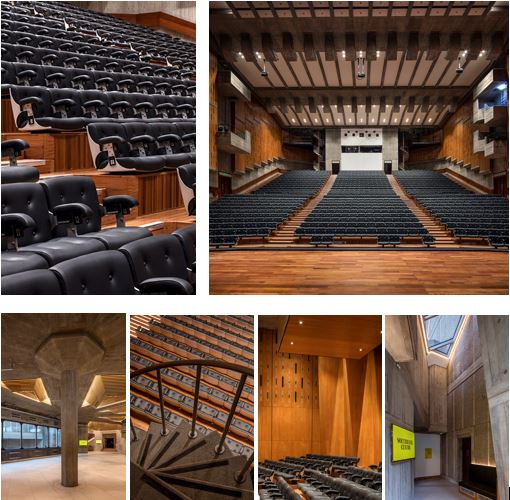
The festival line-up is headlined by pianists Katya Apekisheva and John Thwaites, cellists Christoph Richter and Alice Neary, violinist Esther Hoppe and violist Robin Ireland, who are lined up to take part in concerts alongside the Gould Trio and London Bridge Trio. Together they will explore the chamber music of Brahms, Schumann, Felix and Fanny Mendelssohn, and present new works by Colin Matthews and James MacMillan. Concerts take place in two magnificent new performance spaces at the Conservatoire, opened this year: the larger Concert Hall for evening events and the more intimate Recital Hall for daytime performances. The same artists will work with students from Birmingham and beyond, as well as providing the jury for the competition.

Daniel Tong says: “Chamber music is a multi-layered medium, in the wealth and depth of its repertoire as well as the skills and characteristics required to realise it. It is music for sharing, both with one’s performing colleagues and the audience, and is therefore somewhat confessional. It is open to wide-ranging interpretation, despite often being put together by composers with great intellectual rigour. A competition in this discipline may therefore seem like a paradox, which is why our festival is as collegiate and inclusive as possible. We will make music together. Each competing ensemble will give a recital and take part in masterclasses. All jury members will also perform as part of the festival programme. The Royal Birmingham Conservatoire has put chamber music at its heart with inspiring results.

The competition is set up to offer maximum benefit to the young competitors. After preliminary audition (all applicants will be heard, either live or by video if entering from outside the UK), eight ensembles will be invited to join the festival in November. Each will present their recital as part of the festival programme, take part in masterclasses, and three groups will progress to the final concert. The winning ensemble will be offered mentorship and a commercial recording with Resonus Classics, as well as engagements including London’s Wigmore Hall.

For more details about this unique and inspiring event, visit the festival website

Or email keyboard@bcu.ac.uk

bcu-royal-birmingham-conservatoire-recital-hall
Recital Hall at Royal Birmingham Conservatoire