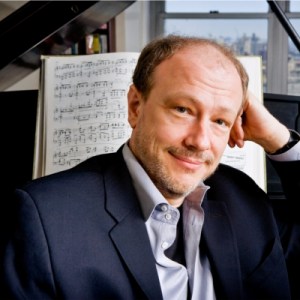
Marc-André Hamelin, (image credit: Fran Kaufman)

Who or what inspired you to take up the piano and pursue a career in music?

I might not be doing this at all had it not been for my father, who was a very good amateur pianist. I’m told that as a very young boy I’d go to the piano when he played and watch him open-mouthed! I have a clear memory of the moment when he asked me if I wanted to take piano lessons. I said yes without hesitating! I seemed to have a predisposition for learning quickly, and it didn’t take long to discover that I had perfect pitch, like my dad.I remember his playing vividly. He mostly favored the Romantic period (Liszt and Chopin above all) and through him I was exposed very early to a sizable chunk of the literature.

At that point, of course, I had no notion of what a career in music would represent; at the beginning, music was something natural — a game, perhaps. I first studied with a local teacher for four years, and then my dad enrolled me at the Vincent-d’Indy school in Montréal, which was very prestigious at the time. And although I showed a natural facility almost from the very beginning, I was never touted as a prodigy.

Who or what have been the most important influences on your musical life and career?

Again I must mention my father, because he was directly responsible for one important part of my development. His favorite artists were the pianists of the so-called Golden Age, the ones who were active during the 78RPM era. He collected all the reissues he could find, which in Canada wasn’t always easy, especially earlier on. He listened to these treasures constantly. He was much less attracted to more contemporary pianists and was in general very critical of them. I think the reason he liked the older pianists so much is because of the unbridled freedom inherent to their performances, a freedom which meant that the true letter of the score was often distorted or even disregarded. This cavalier attitude toward the finer points of notation became a part of my musical thinking. It was only much later, in my twenties, that I was sensitized to the necessity of taking composers’ markings seriously, probably because I had begun writing my own music and had become aware of how deeply meaningful and intricate musical notation really is.

And then there were my teachers, all of whom brought something different to my development. First there was Yvonne Hubert, who had once been Alfred Cortot’s assistant in France, and who had come to Canada in the twenties, completely revolutionizing the pianistic landscape at the time. She watched my purely pianistic progress very closely, but above all, she really awakened me to the importance of detail. I vividly remember one of my earliest lessons with her, at which I’d brought Bach’s D minor sinfonia. It was the most complicated piece I’d worked on by that time, and after an exhausting half-hour of her correcting elementary voicing details – several in every bar, it seemed – I realized that I hadn’t known the piece at all beforehand. She was also very instrumental in getting me to pay attention to my sound. An amusing detail: any of her students will recall how she could, sitting on your right as she always did, demonstrate a right-hand passage you had just played, with her left hand, perfectly.

After I moved to America, I spent some years under the wing of Harvey Wedeen, who had, I could say, a more broadly cultured outlook of pianism in general. Through him I really developed a keener awareness of style, among many other things. Lastly, I had a few lessons with Russell Sherman, who above all is a master in stimulating his students by providing constant musical or extra-musical sources of inspiration. I will never forget bringing him Beethoven’s Sonata in F major, op.10 no.2. In the middle movement – the second half of the trio, more specifically – whatever I was doing didn’t have the character he was looking for, so he said ‘Imagine these gigantic Roman temples, with these huge columns…..and behind one of them, Julius Caesar is being murdered!’

It’s a blessing that none of my teachers was ever ill-tempered or despotic. (The sole exception to this is the one lesson I had in 1987 with Juilliard’s Adele Marcus where, after two hours, I was reduced to feeling like an untalented, sub-human ignoramus. But that’s another conversation entirely.)

It would be a grave omission if I didn’t underscore the vital role that my wife Cathy has played in my life. Many friends of mine have taken special delight in pointing out her influence on my character, and how my playing seems to have transformed for the better ever since we’ve been together. To them there’s no doubt she’s the reason! Beside the fact that she has a heart of gold, her musical sensitivity is truly a thing of wonder. She is also an extremely gifted pianist, and all of this gives a real dimension to our life as a couple.

What have been the greatest challenges of your career so far?

The biggest difficulty I’ve had over the years was overcoming a disastrous choice of management I made early on in America, one which I had to live with for thirteen years. Throughout that period, developing regular concert activity in the U.S. was very hard work. It wasn’t until I was finally able to change agents in the U.S. (around 2001-2002) that things really began to happen, almost exponentially you might say. Fortunately, in the meantime, I had acquired a very efficient manager in the UK, and that helped me start to get a good foothold in Europe. And all this time I was able to build a catalog of recordings which, in many countries, was the only way anyone could hear me.

Which performance/recordings are you most proud of? 

I always say that if I could play Schubert’s final sonata in every one of my recitals until the day I die, I wouldn’t be unhappy! For that reason, the recording of it that is just now being released is extremely important to me, and I would love it to do well; I value it almost as much as everything else I’ve ever done, combined.

Concerning performances on video that can be seen on YouTube – none of which I’ve ever posted myself – my thoughts on those vary a great deal. While I am proud of some of the things that have appeared there recently, a Brahms Second Concerto with the Warsaw Philharmonic being a good example, a lot of my solo performances, especially ones from the distant past, now make me cringe with embarrassment. I often didn’t realize just how quickly I was playing then, and I wish I could go back to that period and put everything right! I’d be telling myself, “Slow down, man! Smell the flowers!”

Which particular works do you think you play best?

If you asked audience members, you might get different answers! But for myself, works like the Schubert B-flat Sonata, the Schumann Fantasy, the Liszt Sonata, the Debussy Images and second book of Préludes, and the Brahms concerti come to mind.

How do you make your repertoire choices from season to season?

There can be many factors which might influence these decisions — too many to mention here. If you’re talking about a new work in your repertoire, I guess the main motivating impulse to program it for the first time is an instinctive feeling of being “ready” for it (whether right or wrong!). And even though I constantly try to expand my repertoire, I often revisit old friends — like the Schumann Fantasy, which I learned 40 years ago. On the other hand, I just recently learned Chopin’s Polonaise-Fantaisie and 4th Scherzo.

As far as building a program, I usually start with one special work, then fashion a balanced set of pieces around it. I don’t generally tend to try to establish deep thematic connections of any kind between the works; my only aim is to provide an experience that is stimulating, thought-provoking, perhaps even challenging. This is why I usually include one or more less-often heard pieces on the program, as part of a lifelong wish to expand awareness of what pianists have been unjustly neglecting. (These days I’m becoming crazy over C.P.E. Bach – see for yourself what an explosively creative individual he was.)

And above all, though I have indeed played a great amount of highly demanding music — the type usually called “showpieces” (a word which I dearly wish would vanish from the dictionary), I do not go on stage to exhibit myself. For me, it’s all about sharing. I consider the public a friend, since I am fortunate enough never to have experienced stage fright. So, any outing on stage for me is an occasion for celebration, an extolment of the miracle of human creativity.

Do you have a favourite concert venue to perform in and why?

Living in Boston affords me the pleasure of being able to attend concerts in Symphony Hall and Jordan Hall, two of the most magnificent venues anywhere from an acoustical point of view. There have been many places over the years where I’ve felt the relationship between my musical intentions and the aural result was near-perfect. The concert space at the Domaine Forget in Saint-Irénée in Québec is truly wonderful – many CD recordings have been realized there – and some Japanese spaces I’ve played in were absolutely fantastic with their varnished-wood walls and flooring.

Who are your favourite musicians?

Impossible to answer with just a few names! I could fill a page with musicians who at one time or another have given me true pleasure – and we’re not just talking about pianists! As far as pianists are concerned, I always have time for those who truly treat the instrument as a singing, speaking, living, breathing entity, and who have a complete emotional connection to it. The occasional references one hears about the piano being a percussion instrument, to me, amount to blasphemy.

What is your most memorable concert experience?

I don’t have too many anecdotes of that type, but there is something that happened a few years ago that will linger in my memory forever (and safe to say, in the memories of most of those who were there).

I was giving a recital in New York in the summer about 4 years ago, and one of the works on the program was Ravel’s triptych Gaspard de la nuit. It was very hot, but fortunately not enough to wreck my concentration. Near the end of the first piece (Ondine), I heard a slight buzzing sound, followed by the feeling of something landing squarely on my head. I had no idea what it was at the time. They told me after the concert that it was a fly, about as big as my thumb! I continued to play – there was no reason to stop, really – but I wondered what the audience was thinking. And that fly proceeded to stay there, on my head, unmoving from the spot where it landed, for the entire length of Le Gibet! That’s 7 minutes!! And the best part is that the terrifying poem that Le Gibet is based on describes a winged beetle plucking a hair from a corpse! I learned afterwards that some people in the audience were fantasizing that this creature was sucking my brains out…!

As a musician, how do you define “success”?

Achieving total trust from the public as well as from concert promoters, and being able to sustain it over decades.

What do you consider to be the most important ideas and concepts to impart to aspiring musicians?

First, it should go without saying that a thorough knowledge of the science of music – harmony, counterpoint, theory, aural training, analysis – is indispensable. Without these you cannot begin to truly understand what you’re doing. I am convinced, and have become more and more convinced over the years, that being naturally conversant in these matters will have a crucial influence on your playing. A clear musical mind with an overarching mastery of theoretical matters will have a much better chance at developing fluent pianism, even though this will probably not be apparent for a long while. I try to avoid using the word ‘technique’, since it’s really a misnomer; the word is usually used to indicate the purely mechanical side of piano playing, whereas it should also encompass the artistic and the emotional.

But, even more importantly, take time out of the practice room! The much-overused expression ‘get a life!’ fully applies here. It is pure folly to think that you can ultimately achieve anything artistically significant when the only landscape you ever glance at is the four walls of a practice space. Learn to concentrate your work as much as you can by zeroing in mercilessly on your shortcomings and don’t spend so much time on what you already know. This will allow you the time to blossom as a human being and to expand your horizons.
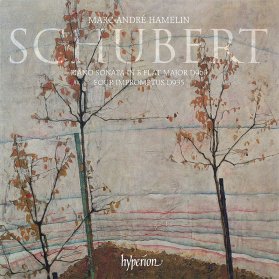
Marc-André Hamelin’s recording of Schubert’s last piano sonata and the second set of Impromptus is available now on the Hyperion label

Review here

http://www.marcandrehamelin.com

dsc-98012-lst263101

The 3 British Tenors are…..

Barry Clark, David Heathcote and Matthew Scott Clark

Who or what inspired you to take up a career in music?

Barry: From an early age I sang and acted at school, later joining various local amateur theatre groups. My parents were vociferous in their disapproval of this and actively discouraged any thoughts of my turning professional. I languished as a cartographic draughtsman at the Ordnance Survey for four years before rebelling & applying, successfully, for the chorus of the D’Oyly Carte Opera Company. Through local productions I had acquired a love of the Gilbert & Sullivan operas, their tunefulness and oddly skewed humour being entirely to my taste.

David: from as early as I can remember I was fascinated by opera singers and conductors. In fact, my mum would catch me pretending to conduct orchestras whenever they came on the TV! My biggest influence as a singer has been José Carreras, particularly his beautiful sound, his vocal honesty and connection to the words and music. I also remember the story of his battle with leukaemia, even though I didn’t know who he was at the time; I just somehow knew it was an important story.

Then in 1990 the world changed when The 3 Tenors emerged. I just loved the format and the sheer joy of three tenors on one stage, singing the arias they loved. Listening to Luciano Pavarotti in these concerts is a concentrated masterclass of vocal technique. What a huge talent he was!

Matthew: Music has always been a big part of my life; listening and making it. It’s always been in the family with my parents being opera singers too, but early on I was keen on pursuing a career in acting and even film making. The tipping point came when I played Salieri in a student production of Amadeus; that affectively ignited my love for the music of Mozart, and eventually led me to play Papageno in an amateur production of The Magic Flute. It was thereafter that I knew I wanted to be an actor-singer.

Who or what have been the most important influences on your career?

Barry: Being self-educated in music & drama, I would say that a particular singing teacher, the singer/actor Andrew Downie, unlocked the voice and got me started on the road to a proper, and stable, vocal technique. Watching the Carte’s “patter man”, John Reed was a great influence; his stagecraft and attention to detail, plus the maintaining of stamina over eight performances a week, have all aided me over the years.

David: my teachers have been amazing and have all brought our something different in me. In recent years Colin Baldy and Justin Lavender have helped me realise what I always knew was there, particularly in the higher registers. But it’s all the wonderful family and friends who have kept me going on my journey. Also my late friend and West Yorkshire singing teacher Steven Mellor, who gave the most important advice ever: “Just open your gob and sing”. Classic!

Matthew: Other than my parents and friends in the industry, I think it’s the music itself and the composers who wrote it. When I hear a piece of music that really affects me it’s a great feeling; and I love being able to express that when I perform, so others can feel it too.

What have been the greatest challenges of your career so far?

Barry: Remaining in work!

David: being business-like is so important. Equal to the dedication of establishing a vocal technique (an ever-present occupation!) and learning the right repertoire is the business and marketing skills to succeed. I have been lucky enough to have worked as a singer and as a producer and also in other business areas. I try my best to apply these skills and knowledge to my own career but I know it is so much harder when you are the product you’re selling.

Matthew: They are too numerous to list here! (Laughs) But the ongoing challenge is just doing it: keeping yourself at that level of performance all the time. That’s really hard.

Why did you decide to form The 3 British Tenors?

Barry: Re-form really. The original act ran roughly from 1995 to 2005 and performed all over the UK & abroad. As the tenors began to seek other work, the act disbanded. I decided that the time was ripe for a revival and with the new team of myself, David Heathcote and Matthew Scott Clark we tried out at the Chapel of the Royal Foundation of St Katharine, London, towards the end of 2017.The response was heartening enough for us to decide to continue and we are looking forward immensely to building the act during 2018.

David: Barry Clark was one of the original The 3 British Tenors and enjoyed great success in the UK and internationally. With my background in the music business, Barry approached me to sound me out about bringing the it back, which I was delighted to do. We tried out the format at an intimate concert in the Chapel of The Royal Foundation of St Katharine in London and were convinced by the audience reaction in our sell-out performances. Now we know it works we look forward to having lots more fun performing together in 2018!

Matthew: I just remember seeing Dad in the original Three British Tenors back in the ’90s, and it was this great operatic cabaret act with sparkly curtains and synthesisers and wonderful old stories from the world of opera; and as a kid I just loved it. So when Dad said he and David were thinking of reprising the act with the three of us in mind I said “Hell yeah!”

Which performance/recordings are you most proud of?

David: our launch concerts in autumn 2017 were special occasions for us. Can we report back in a year’s time?

Matthew: Other than our recent performances at St Katherine’s Foundation, I have to say performing the role of Bardolpho in Verdi’s Falstaff for Royal Welsh College a couple of years ago. It was this wonderfully creative production set in the 1980s, with some great up and coming people in the principle roles. It was conducted by Carlo Rizzi, so it was like being conducted by Verdi himself! And the characterisations were just so nutty, which are the best kind of roles for me.

Which particular works do you think you perform best?

Barry: My particular love has always been operetta, not just Gilbert & Sullivan, but the Viennese répertoire: Lehar, Strauss, Kalman etc.

David: the beauty for us is that we can choose repertoire that suits us individually and then come together in the famous songs and arias that the audience expects from having three tenors together on one stage. I am most at home in the coloratura madness of Rossini and Donizetti and I love singing the famous tenor songs with Barry and Matt. The audience love it when we come together to sing the classics such as O Sole Mio, La Donna è Mobile and Nessun Dorma, for example.

Matthew: Anything that tells a story, and has some really stand out emotive hooks or amusing jokes thrown in there. I love the character roles, because they are just so much fun to play; but with the lyrical roles you can really make a mark, change people’s hearts. I can never decide what I enjoy more! (Laughs)

How do you make your repertoire choices from season to season?

David: for our general performances we choose arias that suit us well and make sure there are always some pieces with the ‘wow factor’ when we come together as a trio. Our Christmas programme was pretty special as we choose classical and operatic repertoire that was connected to the season: Rossini’s Si, Ritrovarla io Giuro from Cinderella, Britten’s The Holly and the Ivy and Warlock’s The First Mercy were crowned with O Holy Night in our Christmas concert.

Matthew: For me, it’s really a choice of what speaks to me the most. There are some roles or pieces which are essential for any singer’s repertoire; but if there’s a particular tune or scenario in a piece that affects me in particular, then that’s the deciding feature in my mind.

Do you have a favourite concert venue to perform in and why?

Matthew: I love the Buxton Opera House. I was there a few years ago in a production of Handel’s Acis and Galatea for Mid Wales Opera, when I was a member of the chorus. It’s just such a gorgeous venue, all the royal greens and golds; and when you see the names of William Shakespeare and Sir Arthur Sullivan painted opposite to each other in front of the stage, you know you’re in exactly the right place!

What is your most memorable concert experience?

Barry: Participating in the 25th anniversary celebrations of “The Phantom of The Opera” at the Royal Albert Hall in 2011.

David: I was lucky enough to perform the role of Gandhi in what was possibly the professional British premiere of Philip Glass’ opera Satyagraha at The Midlands Arts Centre (sorry ENO but it wasn’t you!). That was an emotional experience and the start of my professional career in 1999.

Matthew: Singing in college chorus for a Royal Welsh performance of Benjamin Britten’s War Requiem, conducted once more by Carlo Rizzi, with baritone soloist Simon Keenlyside and tenor soloist, my teacher, Adrian Thompson. It was such an incredible piece to be a part of, not just for the personnel, but for that truly heartrending score!

I remember one movement towards the end where it feels as though the whole world has ended beneath you, and you’ve left the ground without anything to grab onto except the words on the page! It was nuts.

As a musician, what is your definition of success?

David: getting paid to make people happy.

Matthew: Audience reaction. If you can convince them for one song, that’s the biggest success in my book.

What do you consider to be the most important ideas and concepts to impart to aspiring musicians?

David: don’t be afraid to treat you and your art as a business. You need a great product and absolutely to love performing but you can’t sustain it if you’re not bold enough to be business-like.

Matthew: Honesty. Always look for the truth in what you do. Otherwise what’s the point?

Where would you like to be in ten years time?

Barry: In comfortable retirement!

David: Going around the world singing my favourite repertoire would be heaven!

What is your idea of perfect happiness?

Matthew: Knowing your vocation, and sticking to it. That and Netflix.

What is your present state of mind?

Barry: Buoyant!

David: Excited!


The 3 British Tenors have entertained audiences in concerts and private and corporate events for over 20 years in the UK, in Europe and the United States of America.

As you’d expect, the tenors include the great arias such as the world famous Nessun Dorma (which was sung by Pavarotti on the eve of the 1990s World Cup), the brilliant, La Donna e Mobile and wonderful arias by Puccini, Verdi as well as the great Neapolitan songs such as O Sole Mio.

Throughout their performances, The 3 British Tenors sing as a trio to create magical moments from opera, music theatre and songs.

Being British, the tenors like to lighten things up with humour and audiences love the stories they tell throughout the programme.

www.the3britishtenors.co.uk


  • Five new productions and four revivals
  • collaborations with the Unicorn Theatre and Theatre Royal Stratford East
  • ENO’s 2018/19 season is the first curated by Artistic Director Daniel Kramer and Music Director Martyn Brabbins
  • Director Adena Jacobs opens the season with her UK debut, a bold and radical feminine interpretation of Salome conducted by Martyn Brabbins and starring Allison Cook in the title role
  • John Wilson conducts Porgy and Bess, performed for the first time in the company’s history and featuring Eric Greene, Nicole Cabell, Latonia Moore and Nadine Benjamin
  • ENO’s Olivier Award-winning Chorus will present Benjamin Britten’s War Requiem, designed by Turner Prize-winning photographer Wolfgang Tillmans
  • World premiere of Iain Bell and Emma Jenkins’s Jack the Ripper: The Women of Whitechapel with central female roles created by some of the UK’s most esteemed singers, including Dame Josephine Barstow, Susan Bullock, Janis Kelly, Lesley Garrett and Marie McLaughlin
  • Opera for All: 50 Years of Opera at the London Coliseum – a special evening of performances celebrating moments from operas that have played an important part in ENO’s history, performed by stars from ENO’s past and present
  • Revivals comprise David Alden’s striking Lucia di Lammermoor, Jonathan Miller’s much-loved La bohème, Phelim McDermott’s Olivier Award-winning Akhnaten and Simon McBurney’s standing-room only production of The Magic Flute
  • Colaboration with the Unicorn Theatre in May 2019 to present 19 performances of Dido, inspired by Purcell’s Dido and Aeneas, specially aimed at teenage audiences
  • In July 2019 ENO will collaborate for the first time with Theatre Royal Stratford East to present Noye’s Fludde, directed by Lyndsey Turner and bringing together professional performers, children and community groups from across Newham with participants from our ENO Baylis programme
  • More than 42,500 tickets are available at £20 or less across the 2018/19 season, increased from 39,500 last season

This season will see 85 performances of opera at the London Coliseum, having increased from 79 in the 17/18 season and 73 in the 16/17 season. In the 19/20 season ENO will be increasing to 10 fully-staged productions at the London Coliseum.

ENO’s Artistic Director, Daniel Kramer said:

“I am delighted to present ENO’s 2018/19 artistic season, the first we have curated in full since Martyn Brabbins and I joined the company. This season comprises nine main-stage operas, two ENO Outside projects, a very special gala to celebrate 50 years at the London Coliseum, and the work of our learning and participation programme, ENO Baylis.

The nine operas that we’ll be performing at the Coliseum this season explore and examine some of the patriarchal structures, relationships, and roles of masculinity within our society.  From our radical, feminine interpretation of Salome through to the bold Merry Widow and our female-led retelling of the Jack the Ripper story, I hope that these productions will prompt conversation around what an improved balance of masculine and feminine might look like, what a healthy masculine might encompass, and the changes we need to make for this to be possible. 

I am immensely proud that our Olivier Award-winning ENO Chorus will join our 40-strong, handpicked Porgy and Bess ensemble for our presentation of Britten’s War Requiem, ENO’s commemoration of the end of the First World War.

I would like to thank my colleagues onstage, offstage, in the pit and behind the scenes who have worked so hard to bring together this season. We look forward to welcoming you to the Coliseum and to sharing with you the endless ways in which opera continues to entertain, electrify and enlighten us all.”

ENO’s Music Director, Martyn Brabbins said:

“It has been a privilege to conduct two operas as ENO Music Director this past season, and I am looking forward to conducting Strauss, Britten and a world premiere from British composer Iain Bell next season.

At ENO we strive to move our audiences by the passion and brilliance of our music making, and through the intensity and commitment of our Orchestra and Chorus.

Opera has an unrivalled ability to communicate, and it is gratifying to know that our performances are reaching an ever wider and more diverse public.”

ENO’s CEO, Stuart Murphy said:

“It has been a great first few weeks as CEO of English National Opera.

I’ve been struck by how passionate people are about what we do, both within the company and outside, which makes me even more keenly aware than I was of my duty to renew, grow and embolden us for the future. That requires the continued dynamism of the exceptional teams I’ve encountered here, as well as support from our thousands of production partners, performers and friends across the world.

I am pleased to share that, during the 17/18 season, our average sold occupancy increased from 67% in the 16/17 season to 72%. Additionally, we have seen a real shift in our audience, with the percentage of audience members under 44 increasing by 13% year-on-year and the proportion of our audience with a black or minority ethnic background increasing from 4% to 10%. We have so much more to do in this area, but to see this shift start to take place is truly exciting.

ENO Baylis, our learning, participation and outreach programme, is absolutely core to what we do. Equally vital is ensuring that people are never priced out of enjoying one of our operas, and so maintaining our ability to sell over 40,000 tickets a year at £20 or less remains key. Opera is for everyone and we are committed to ensuring that increasing numbers of people, from all walks of life, know that.”

New productions at the London Coliseum

Salome

The 18/19 season opens with a radical feminine reading of Strauss’s Salome from Australian director Adena Jacobs in her UK debut.

Adena Jacobs is the Artistic Director of Fraught Outfit, known in Australia for its stark reimaginings of classical and biblical stories from a contemporary feminine perspective, and in 2014-15 she was Resident Director at Belvoir. The all-female creative team is completed by award-winning Designer Marg Horwell and Lucy Carter, one of London’s most sought-after lighting designers.

Talking about the production, Adena Jacobs said:

“This production of Salome is mythic, feminine and brutally contemporary. Imagined through Salome’s perspective, Strauss’s opera becomes a fever dream, a dark fantasy, and an examination of patriarchal power and control. My approach to Salome is through the lens of trauma; the ways in which cycles of violence have inscribed themselves on to the bodies and psyches of these characters.” 

Scottish mezzo-soprano Allison Cook makes her ENO debut in the title role, following acclaimed performances of 20th century roles such as the Duchess in Thomas Adès’s Powder Her Face and in Britten’s Phaedra. Susan Bickley sings Herodias, with English bass David Soar as Jokanaan and tenor Michael Colvin as Herod. The ensemble of Jews, Nazarenes and soldiers includes members of ENO’s award-winning Chorus stepping into principal roles.

ENO Music Director Martyn Brabbins conducts the first of his three engagements with the company this season.

Porgy and Bess

A landmark in the history of opera, jazz and theatre, the Gershwins’ Porgy and Bess is presented by ENO for the very first time.

Artistic Director at the Opera Theatre of St. Louis, James Robinson will direct this co-production with the Metropolitan Opera, New York and Dutch National Opera. Conductor John Wilson will lead the ENO Orchestra for the first time. Best known as the head of the John Wilson Orchestra, his performances of Gershwin have been called “the greatest show on earth” (The Spectator).

American baritone Eric Greene returns to ENO after Tansy Davies’s Between Worlds (2015) to sing the role of Porgy, while Bess will be performed by Nicole Cabell, BBC Cardiff Singer of the World 2005, in her ENO debut. Latonia Moore makes a welcome return to ENO after her acclaimed performances in 2017’s Aida, Grammy Award-winning baritone Nmon Ford sings the role of Crown and Nadine Benjamin makes her first of two ENO appearances this season singing Clara.

An ensemble of 40 singers, specially brought together for the project, will perform in ENO’s Porgy and Bess and will also appear with Dutch National Opera for the performances in 2019. This ensemble will join ENO’s own Chorus for the performances of Benjamin Britten’s War Requiem later in the season.

War Requiem

Marking the centenary of the November 1918 Armistice that brought an end to World War I, Benjamin Britten’s War Requiem will be fully staged in the UK for the first time.

ENO Artistic Director Daniel Kramer will collaborate with Turner Prize-winning German photographer Wolfgang Tillmans, paying testament to the horrors and contemporary resonances of war through this combination of music, drama and visual arts. Tillmans is one of the most admired photographers at work today. In 2000 he was the first photographer and first non-British artist to receive the Turner Prize and has also been awarded the Royal Photographic Society’s Centenary Medal, the Royal Academy Summer Exhibition’s Charles Wollaston Award, The Culture Prize of the German Society for Photography, and is a member of the Royal Academy of Arts. His first exhibition at Tate Modern was held in 2017.

Wolfgang Tillmans said:

“The piece is universal, and we wanted to put its contemporaneity into focus. In my research again and again I came across the importance of children and youth: playing war and training for war cannot be separated. Britten wrote War Requiem in the spirit of pacifism: what has been forgotten is how much of the rhetoric immediately after the Second World War was about reconciliation between nations, but today we often remember only our own nation’s dead. It was great to work on the production with Daniel Kramer, both in terms of deciding what was there on stage and crucially what would not be there: the look of it is as much about what you can’t see as what you can.”

ENO Music Director Martyn Brabbins will conduct the combined forces of ENO’s Orchestra, 40-strong Finchley Children’s Music Group, the ENO Chorus and the ensemble from Porgy and Bess, as well as three exceptional British solo singers. Baritone Roderick Williams, Singer of the Year at the 2017 RPS Awards, leads the trio of principal singers. He is joined by David Butt Philip, one of Britain’s most exciting young tenors, and soprano Emma Bell, who has given acclaimed performances of the piece around the world.

The Merry Widow

The story of Baron Zeta’s attempt to keep his poor province from bankruptcy by marrying off the wealthy widow Hanna Glawari to the right man has entertained audiences for more than a century. ENO’s history of welcoming both new and existing audiences to an operetta or light opera each season continues with Max Webster’s new production of Lehár’s comedy.

Sarah Tynan returns for her second title role of the season, following Lucia di Lammermoor, as the eponymous widow. She is joined by Andrew Shore, ENO’s master of the comic buffo role, as Zeta and former ENO Harewood Artist Rhian Lois as his wife, Valencienne. Baritone Nathan Gunn makes his ENO debut as Danilo, romantic hero and suitor to Hanna.

Acclaimed for her opera and operetta performances, particularly at the Komische Oper Berlin, Kristiina Poska mades her debut in the ENO pit.

Director Max Webster makes his ENO debut. Associate Director at the Old Vic, where his credits range from Fanny and Alexander to David Greig’s adaptation of Seuss’s The Lorax, his extensive experience across comedy, musicals and children’s theatre will all contribute to making this an operetta to remember.

Jack the Ripper

ENO is proud to present the world premiere of Iain Bell and Emma Jenkins’s Jack the Ripper: The Women of Whitechapel. The stories of these women, often obscured by the gruesome legend that grew around their murderer, will draw together some of British’s opera’s greatest female singers for a sympathetic exploration of womanhood in London’s East End.

Iain Bell is a prolific composer who has mined British historical and literary subjects for his critically acclaimed operas. His first, A Harlot’s Progress, drew on the paintings of Hogarth; the second, A Christmas Carol, on Dickens and the third, In Parenthesis, on First World War poetry. With Jack the Ripper, Bell and librettist Emma Jenkins (who also wrote the libretto for In Parenthesis) draw on the history of those killed by the famous Whitechapel murderer.

Iain Bell said:

“Both my parents were born in the East End and London remains a constant muse in my work. Jack the Ripper: The Women of Whitechapel is the third in a triptych of London operas I’ve written following A Harlot’s Progress and A Christmas Carol. In each of these cases I have sought to delve into the London that gave birth to these characters and circumstances. Jack the Ripper: The Women of Whitechapel first and foremost afforded me the opportunity to explore the dignity and humanity of the women whose lives he stole, whilst cracking opening a window into the life of the Victorian poor; a society with whom we still share uncomfortable parallels. Every street corner, every pub, every alley bears witness to its own Whitechapel.”

The central female roles will be created by some of the UK’s most esteemed singers, including Dame Josephine Barstow, Susan Bullock, Janis Kelly, Lesley Garrett and Marie McLaughlin. Alan Opie creates the role of the Pathologist, 50 years after his ENO debut, former ENO Harewood Artist Nicky Spence will sing Sergeant Johnny Strong and Claudia Boyle returns following her performances in the 2017/18 season’s La traviata.

ENO Music Director Martyn Brabbins conducts, continuing his reputation as a champion of British contemporary music, and ENO Artistic Director Daniel Kramer directs.

Revivals at the London Coliseum

ENO will present four revival productions during the 2018/19 season.

David Alden’s “magnificent conception” (The Daily Telegraph) of Donizetti’s Scottish tragedy Lucia di Lammermoor returns to the London Coliseum for the third time since its initial run in 2008. Sarah Tynan, recently acclaimed for her performances in The Barber of Seville and Partenope, takes on the famously demanding title role. American baritone Lester Lynch makes his house debut as Lucia’s brother Enrico, while Mexican tenor Eleazar Rodríguez, who sang alongside Tynan as Almaviva in The Barber of Seville, returns to the Coliseum stage as her lover Edgardo. Stuart Stratford, Music Director at Scottish Opera, conducts.

Jonathan Miller’s enchanting La bohème, set in 1930s Paris, returns to the Coliseum stage with award-winning Welsh soprano Natalya Romaniw making her ENO debut as Mimí. Garnering huge acclaim for her Tatyana in WNO’s Eugene Onegin in 2017 (“one of the performances of the year” – WhatsOnStage) and for her Jenůfa at Grange Park Opera (“our most promising dramatic sopranos” – The Daily Telegraph), she leads a cast of operatic rising stars.

Jonathan Tetelman sings Rodolfo, also in his ENO debut. Baritone Nicholas Lester sings Marcello and Nadine Benjamin returns for her second engagement of the season, after Porgy and Bess, as Musetta. David Soar also returns for a second engagement, after Salome, singing Colline. He most recently performed the role at the Metropolitan Opera, New York in 2018. British conductor Alexander Joel, a regular guest conductor at the Royal Opera House, Hamburg Staatsoper and Grand Theatre Geneva, makes his ENO debut after a distinguished career on the continent.

Winner of the 2017 Olivier Award for Best New Opera Production, Phelim McDermott’s sell-out production of Akhnaten opens ENO’s 2019 Spring Season. This piece of “astonishing theatre” (The Observer) with visuals of “unforgettable magnificence” (The Independent) features designs by Tom Pye, costume designs by Kevin Pollard and lighting by Bruno Poet. The ENO Chorus is re-joined by the Gandini Juggling Company, whose mesmeric performance gave visual support to Glass’s music.

Countertenor Anthony Roth Costanzo, the man who “exists to transform opera” (The New York Times), once again sings the title role. ENO Harewood Artist Katie Stevenson takes on the role of his wife Nefertiti for the first time and Keel Watson will sing the role of Aye, returning after his performance as Bartolo in The Marriage of Figaro at ENO in 2018. Rebecca Bottone, James Cleverton and Colin Judson reprise their roles as Tye, Horemhamb and the Priest of Amon respectively. Karen Kamensek, one of the world specialists on the music of Glass, returns from both Akhnaten (2016) and Satyagraha (2018), further affirming ENO’s reputation as an important home for the composer’s work.

The “life-enhancing achievement” (The Spectator) of Simon McBurney’s much-loved production of The Magic Flute returns for its second revival. ENO’s collaboration with theatrical powerhouse Complicite provides an “exhilaratingly inventive” (The Guardian) journey into the realm of the imagination, with a foley artist, projections and spectacular visual effects accompanying some of Mozart’s most sublime music.

Lucy Crowe returns to the role of Pamina, which she sang to great acclaim in 2016 (“the best-sung in years” – The Guardian). Rupert Charlesworth takes up the role of Tamino and Thomas Oliemans follows his 2018 performance as Figaro with another comic baritone role, Papageno. Soprano Julia Bauer makes her house debut as the villainous Queen of the Night, having performed the role on many occasions in her native Germany. The Three Ladies are performed by former and current ENO Harewood Artists Eleanor Dennis, Samantha Price and Katie Stevenson. Principal Guest Conductor of the BBC Philharmonic and winner of the Salzburg Festival Young Conductor’s Award, Ben Gernon makes his ENO debut. He is one of the youngest conductors to have held a titled position with a BBC orchestra.

Opera for All: celebrating 50 years of opera at the London Coliseum

On the 10 October ENO will present a very special evening of performances celebrating the last 50 years of opera in residence at the London Coliseum. In 1968 English National Opera, then called Sadler’s Wells Opera, moved into the London Coliseum, performing John Gielgud’s production of Don Giovanni in August of that year. The theatre has been home to ENO ever since.

The iconic Frank Matcham-designed theatre, the largest in the West End, had played host to variety theatre, music hall and a cinema, with an original intention that it be pro bono publico (for the public good), a purpose that remains central to ENO’s work today. Bringing together stars from the company’s past and present, the evening will raise income for future ENO learning and talent development work.

The performance will feature moments from operas that have played an important part in ENO’s history, including Britten’s Peter Grimes, Handel’s Julius Caesar, Gilbert and Sullivan’s The Mikado and Wagner’s Ring Cycle. Artists appearing on the night include baritones Alan Opie and Andrew Shore, tenors Nicky Spence and Gwyn Hughes Jones, mezzo-soprano Sarah Connolly and sopranos Susan Bullock and Claire Rutter, as well as ENO Harewood Artists and the award-winning ENO Chorus and Orchestra. Further special guests will be announced soon.

ENO Outside

In Summer 2019 ENO will stage two productions with other London companies. ENO Outside takes ENO’s work to arts-engaged audiences that may not have considered opera before, presenting the immense power of opera in more intimate theatres.

In May 2019 ENO will collaborate with the Unicorn Theatre, the UK’s leading theatre for young audiences, to create Dido, a reimagining of Purcell’s Dido and Aeneas, directed by the Unicorn’s former Artistic Director Purni Morell and designed by 2017 Linbury Prize Winner Khadija Raza. This modern day production focuses on the relationship between Dido and her daughter, and is specifically for audiences aged 11+. ENO Mackerras Conducting Fellow Valentina Peleggi will conduct.

In July 2019 ENO will collaborate for the first time with Theatre Royal Stratford East to present Benjamin Britten’s Noye’s Fludde. Drawing together professional performers with community choirs, amateur musicians, participants from the ENO Baylis programme and groups of young people from across Newham, Noye’s Fludde will be directed by National Theatre Associate Lyndsey Turner.

ENO will also continue its partnership with Grange Park Opera, launched in June 2018. Each year ENO’s award-winning Orchestra will play for productions presented by Grange Park Opera at West Horsley Place.

Full details at www.eno.org


(source: press release)


CDA68213Piano Sonata in B flat major D960

Four Impromptus D935 Op 142

Marc-André Hamelin, piano

(Hyperion CDA68213)


Canadian pianist Marc-Andre Hamelin, more used to scaling the most vertiginous peaks of the piano literature or revealing the more esoteric nuggets and rarities of repertoire, has released a recording of Schubert’s final piano sonata and the second set of Impromptus.

The evergreen Sonata in B flat, D960, is perennially popular with pianists and audiences alike, and regularly graces concert programmes and recordings. Not only is it a beautiful and absorbing piece of music, it also holds a curious fascination for pianists and listeners. Completed just a few months before the composer’s death in November 1828, this sonata (and to a lesser extent its companions D958 and D959) is regarded by many as a valediction or a premature message from beyond the grave – the composer’s final farewell at the end of a life cut tragically short by syphilis. As a consequence, this sonata has acquired a certain “otherworldiness” which can influence the way pianists approach it. It is, in my opinion, unhelpful to apply too sentimental an interpretation to this striking work, or to approach Schubert’s life and work in Vienna in the first part of the nineteenth century with 21st-century sensibilities:  it is worth noting that the average life expectancy for a man in Vienna in the 1820s was 38 years, and at the time when Schubert lived in that great city it was dangerous, dirty, disease-ridden, and rife with crime. All lives were lived on the edge of sorrow, not just Franz Schubert’s. And so while there is pathos, sombre melancholy and a sense of acceptance (but never resignation) in this Sonata, there is also serenity, exuberance and a tangible joie de vivre, particularly in the third and fourth movements. Indeed, by the close of the work, one has the sense of a composer who lived a full life and still had plenty more to say.

When so many performances and recordings of this great sonata exist, including some notable “benchmark” recordings which stand the test of time (and we each have our personal favourites), why would a pianist of Marc-André Hamelin’s standing and facility, with an already impressive discography, turn to Schubert? Well, in a way, late Schubert – like late Beethoven – sits up there alongside Shakespeare, and like Shakespeare’s writing, there’s always more to find in this music, and each performance (as a player or listener) is a different experience. The D960 has the richness of a journey willingly undertaken and plots a course through the whole gamut of the composer’s personality, his emotions and ideals. He’s introspective, yet his message has a universal truth – and tenderness too.

For a pianist who seems able to handle anything the repertoire can throw at him, from the craggy edifice of Charles Ives’ ‘Concord’ Sonata, Stockhausen’s enigmatic Klavierstück IX, to Villa-Lobos’ savage Rudepoema, or the mannered witty classicism of Haydn, late Schubert seems an unusual choice. Yet I know from a conversation with Marc-André that this is a hugely significant undertaking for him personally, and I feel this recording perhaps says more about the pianist than the work itself.

This is not virtuosic music, in the traditional sense of the word. It has no grand gestures nor intricately glittering passages; it is introspective and often deeply intimate. But there are certainly connections between Schubert’s last sonata and Ives’ Concord – both are large-scale works, expansive and wide-ranging, and require the pianist to create a clear narrative for the entire work, rather than “sleepwalking” through it. Schubert combines beauty and a structure so vast that it seems it may never end, and the work requires special reserves of concentration and artistic vision to be convincing. Pairing this large sonata with the four Impromptus D935 gives the listener a chance to appreciate Schubert’s intense artistic maturity and skill in handling structure in smaller works too.

Fortunately, Hamelin eschews the valedictory or overly sentimental approach for the D960 and opts for a leisurely Andante moderato in the opening movement, highlighting the graceful hymn-like melody of first subject, and despite a couple of rhythmic anomalies, the music moves forward with a serene sense of purpose, occasionally tinged with hesitancy. Agogic accents (a slight hesitation before arriving at a note) are used to emphasise the long notes which begin the phrases in the first subject. This can feel a little self-conscious at times, although I appreciate why Hamelin does it – it lends a dramatic poignancy to the melody. The infamous bass trill, first heard in bar 8, is a distant rumble, nothing more ominous, though later iterations feel more unsettling, quickly dispelled by the poetic melody, which is tastefully balanced against the accompaniment. The bridge to the development section (the exposition repeat is, thankfully, intact!) – those two extraordinary chords at bar 117 – is suitably ethereal, though the pause before embarking on the development is just on the uncomfortable side of dramatic for me. Overall, Hamelin’s take on this movement is not “Schubert as Beethoven on a quiet day”, but rather Schubert the genial spinner of songs: Hamelin gives this movement the intimacy of a lieder while also appreciating its regal expansiveness. Schubert’s good nature is never far away in the transitions between major and minor passages, to which Hamelin responds with a nuanced warming up or cooling of the sound, and the overall mood is positive – imperturbability and joyfulness are only occasionally disturbed by darkness.

The temperature drops somewhat in the slow movement (famously given a desolate, almost funereal air by Sviatoslav Richter’s choice of tempo), though the atmosphere is restrained and meditative rather than cold and melancholy. The bass line, whose rhythmic ostinato figure maintains the underlying sense of forward motion in the outer sections, is well delineated and never obscured by too much pedal. And it is that rising bass figure, over which the melody is simply yet elegantly shaped, which also saves the music from becoming too sombre. The middle section, in warm A major, is rather passive. I would have liked a greater sense of exaltation: it feels a little held back and occasionally ponderous. The coda however is sensitively managed, ending on a rising arpeggio in radiant C-sharp major.

If the opening movement unfolds like a great river plotting its final course, the third movement is as bright and playful as a mountain stream. Hamelin captures its bubbling, quixotic character, responding neatly to the harmonic sidesteps and shifting registers. A change of mood is signalled in the minor key Trio, whose fzp bass accents and syncopations in the right hand suggest an exotic and rather menacing dance or ländler, but the former ebullience is quickly restored in the return to the Scherzo, preparing the way for the finale.

It is in the finale that Hamelin has the greatest opportunities for virtuosity, yet there is restraint and sensitivity here, just as in the opening movement: supple responses to the shifting moods and harmonies, the second subject melody lyrically shaped, the dotted rhythms dance gracefully, and some colourful voicings give this movement playfulness and vigour. The occasional places where the tempo presses forward somewhat unexpectedly lend a slightly breathless sense of urgency, while the coda is bright, robust and positive.

Coming after the expansive D960 (other programmes may place these works the other way round), the Impromptus D935 also have the sense of a sonata in four contrasting movements. The fourth of the set has a toe-tapping vigour and wit, a darkly lit Hungarian dance (remember these pieces were written the year before the final sonatas in the aftermath of Winterreise), the third is graceful and mercurial, occasionally tongue-in-cheek, and the second tender and intimate.

The F minor Impromptu, the first of the set, has an orchestral grandeur offset by the tender duetting passages. Purists will balk at the addition of a “new” coda, written by Hamelin himself, who regards the score “a frozen moment in time“. His justification for adding a coda in this instance is that the work “basically finishes without a coda“, and while he believes that one should not stray too far from what the score says, it is sometimes “permissible to go a little bit away from it“. Certainly, it’s an interesting addition, perhaps more akin to Schumann than Schubert in its romantic textures, and it picks up the duetting fragments from the main body of the work. For me it just feels too unexpected.

But perhaps the most unexpected aspect is Hamelin’s decision to record late Schubert, given his predilection for more virtuosic/unusual repertoire. It’s a bold move, because the Sonata D960 holds such an important place in the repertoire and the hearts and minds of pianists, listeners and commentators. Do we need another recording of the D960? Does it matter that many others have also recorded it and others are waiting to record it in the future? I don’t think so, because the music is there to be played and this recording will enter the great catalogue of Schubert recordings to give pleasure to listeners. It may not be to everyone’s taste –  no recording ever could be – but there’s an eloquence and sensitivity in Hamelin’s approach to this music which is satisfying and committed.


Recording details: May 2017
Concert Hall, Wyastone Estate, Monmouth, United Kingdom
Produced by Andrew Keener
Engineered by Simon Eadon
Release date: 27 April 2018
Total duration: 81 minutes 48 seconds

Informative and readable liner notes by Richard Wigmore


