Mentor – an experienced and trusted adviser

(OED)

A mentor is not necessarily a teacher. The musician’s journey is a complex one, requiring many years of highly rigorous, focused training, and a consistent routine of work (practising) and performing and/teaching, and more…. While many of us have studied with particular teachers during this journey – teachers who have helped carve the path for us and form us into the musicians we are today – we may encounter or seek out others along the way to offer advice, support, encouragement and honest critique.

The most obvious definition of a musician’s mentor is someone you might play to – a master teacher (perhaps recommended by your regular teacher) or well-regarded musician who is able to offer a different perspective and insights on your music making which inform not only the evolution of a specific piece or pieces or music, but also your personal development as a musician. We might visit such a person on a number of occasions during our career – I know of several renowned concert pianists who still refer to a mentor for guidance.

A good mentor is able to offer advice and critique in an honest yet sympathetic way, providing support and inspiration, and instilling in one a sense of empowerment and personal autonomy – qualities which I believe are crucial in our ongoing development as musicians and which enable us to create our own artistic vision and persona. In addition, a mentor is a brain to pick, a sympathetic ear to listen, a nudge in the right direction and a guide in achieving one’s goals. The best mentor-mentee relationships are built on mutual trust and respect, and shared values, and while the mentor may be superior in knowledge and experience, there is a certain equality to a good mentor-mentee relationship.

Of course not all mentors are musical ones. We may seek advice in managing our career and dealing with the business side of being a professional musician, someone who can inform and guide us through the minefield of building a professional profile (including creating a website and online presence), approaching promoters, funding applications, tax planning and so forth.

Trusted friends and colleagues can also act as mentors, offering advice and support over a range of issues, musical or otherwise. I have a very good friend, a medic by profession and an advanced amateur pianist and piano teacher whom I regard as my mentor. His positive pragmatic approach (playing the piano is not a life or death scenario!), sheer pleasure in music making, and an ability to critique my playing honestly and helpfully without making me feel inadequate or insulted, has done more for my confidence as a performer and self-esteem as a musician in general than any teacher. Our friendship is founded on mutual respect and a shared enjoyment in playing the piano, exploring repertoire and attending concerts (and much more besides, as befits a deep friendship).

Another acquaintance, a concert pianist, has been helpful in acting as a kind of “coach”, challenging my interpretive choices and asking me to justify every decision made within the music (technical and artistic, specifically in relation to the late piano sonatas of Franz Schubert) in a way which was non-confrontational, stimulating and respectful. This was not “teaching” between master and pupil, but rather a more equal discussion about the music. One of many interesting outcomes of this particular relationship was when he told me our discussions had taken him back to his scores, to examine the music in new way in the light of our conversations. Thus, mentoring is a two-way exchange.

We may also cultivate “inner mentors” who resonate with us and who we have identified as offering us what we need for ourselves. These may include a fictional character or a great musician whom we admire. As we resonate with these mentors, we make them our role models, tune into their special qualities, and draw these into ourselves so that we can utilise and be inspired or motivated by them.

Having a mentor or mentors is not about dependency or neediness, but about growing, pushing boundaries, learning, exploring and allowing someone to guide you – more than you could do on your own – in a direction that is your own. Mentors can pave new internal ground too, giving one greater self-trust and confidence in one’s path and purpose.


If you enjoy the content of this site, please consider making a donation towards its upkeep:
Buy me a coffee

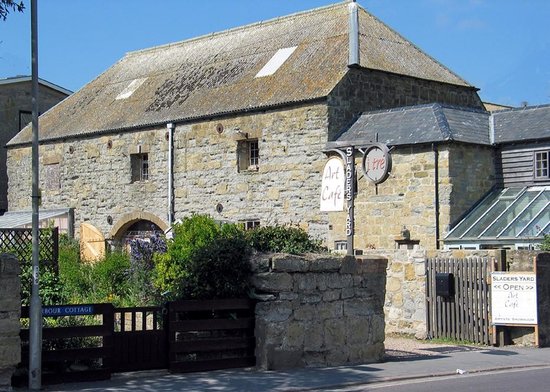
A picturesque drive through west Dorset, the sun setting over the sea, snow still covering some of the higher ground along the route, took us to West Bay yesterday evening for a concert by violinist Philippa Mo at Sladers Yard, a small gallery in a historic Georgian rope storage warehouse.

getlstd-property-photo
Sladers Yard, West Bay

By day the gallery’s café, by night, with seating arranged in the round on three sides, the small space was transformed into an intimate concert venue for a programme of music for solo violin by Teleman, Pisendel, Bach, Smirnov, Tartini and Karg-Elert. This was the fifth concert in Philippa’s series ‘Partita, Fantasia, Caprice’, her personal journey through Bach’s solo violin sonatas, complemented by baroque and contemporary music which reveals connections between music and composers. Philippa introduced each work in the programme, highlighting points of interest which gave the audience a way in to the music.

As someone who frequents piano concerts, usually in larger-scale venues where one can feel at one remove from the performer/s, the experience of hearing and seeing Philippa perform in such a small space was fascinating. The late great Russian pianist Sviatoslav Richter queried why audiences might want to see him playing and opted to play in almost complete darkness, so the audience couldn’t see him “working”, but I think audiences have a great fascination with the way musicians produce the music and if you’re ‘up close and personal’ in a small space such as Sladers Yard, you really appreciate the physicality of music making. You’re right there with the performer in the moment of creation, following the fingers, the body. In addition, in a small space with a good acoustic, I heard wondrous colours, harmonics and resonances from the instrument which I had not thought possible, sounds and timbres which may be lost in a larger space or when the violinist is accompanied by a piano or other instruments.

The whole concert was an intensely absorbing experience. In such a small space, one is compelled to listen attentively, and Philippa’s understated mannerisms and gestures are proof that one can create a profound ‘presence’ by sound alone.

The final concert in Philippa Mo’s series is on 8 June at Sladers Yard, West Bay, Dorset.

Concert-goers can enjoy a glass of wine or local craft beer before and during the concerts and there is also the option to stay for supper at Sladers Yard after the concert. The atmosphere is friendly and convivial.


Meet the Artist interview with Philippa Mo


Leon McCawley – Schubert piano music (SOMM)

This enjoyable account presents Schubert’s often overlooked Drei Klavierstucke D946 alongside song transcriptions by Liszt and a rollicking Wanderer fantasy. The Klavierstucke (literally, “piano pieces”) were written in 1828 and are impromptus in all but name. They share the same structure as the popular D899 and D935 sets and are works of startling variety, colour and mood. McCawley neatly captures Schubert’s mercurial nature but never dwells too long in the melancholic, reminding us that though these pieces were written the year Schubert died, their composer was still very much alive. This is most clearly demonstrated in the third of the triptych, an energetic scherzo with a hymn-like middle section, and throughout the three works, McCawley highlights their songful qualities and dramatic contrasts.

Schubert’s songs, refracted through Liszt’s genius into wonderfully absorbing pieces for solo piano, are here given warmth, virtuosity and heroism in equal measure – for example in the gradual climatic grandeur of Auf dem Wasser zu singen, beautifully paced by McCawley. Meanwhile, McCawley’s Wanderer is a muscular majestic canter, positive in message but also replete in subtle harmonic shadings and an eloquent sensitivity to Schubert’s shifting emotional landscape.


Olga Stezhko – Et la lune descend: Claude Debussy

Appropriately, I listened to this generous new release from Olga Stezhko while reading a review of the new Pierre Bonnard exhibition which has recently opened at London’s Tate Modern.

Comprising of five suites, the album ‘Et la lune descend’ marks the centenary of Debussy’s death and charts the development of his writing for piano solo from the very first ‘Suite bergamasque’ to the much lesser known last suite ‘Six epigraphes antiques’. – Olga Stezhko

Like Bonnard’s paintings, Olga’s Debussy is vivid and richly-hued, the finer details of the music revealed through sonic clarity combined with a suppleness of pulse and tempo which never feels contrived or forced. Interior voices and details are sensitively highlighted. The piano sound in the upper register is particularly fine, with a harp-like crystalline clarity; one can almost sense the absolutely tautness of those high treble strings.


Anna Szalucka – A Century of Polish Piano Miniatures (Naxos/Grand Piano)

Another album to mark an anniversary, Anna Szalucka’s debut disc was released to coincide with the centenary of Polish independence in 2018. Each work represents a significant moment in the country’s musical and political history and the album pays tribute to the bravery of composers who stood up for freedom in art and culture during politically turbulent times. Appropriately, the album opens with works by Ignacy Jan Paderewski, a passionate advocate for Polish independence and appointed the country’s prime minister in 1919. Miniatures by Szymanowski, Bacewicz, Gorecki, Mykeityn and Panufnik bring us almost to the present day and demonstrate the variety and inventiveness of the heirs to Chopin. While others may dwell on sentimentality, Anna takes a simpler (but never superficial) and more direct approach in her interpretations. Her playing is committed and authoritative with a piano sound that is warm and bright.


Adam Swayne – (Speak To Me): New Music. New Politics (Coviello)

Another musical journey in Adam Swayne’s new album and one which touches on the politics of present-day America in two works reflecting art’s ability to offer commentary on contemporary events and popular culture. Kevin Malone’s ‘The People Protesting Drum Out Bigly Covfefe’ was commissioned by Swayne and integrates popular songs captured live at anti-Trump rallies in the UK and the US – a permanent testament to the circumstances surrounding the piece’s creation. It’s energetic and urgent, and Swayne handles it with an assured aplomb and wit. This work sits well with Rzewski’s North American Ballads, which are based on American folk and work songs, and draw on folk musician and activist Pete Seeger’s work. Meanwhile, Amy Beth Kirsten’s Speak to Me, a work in three parts, includes vocalisations by the performer. Although based on the Echo and Narcissus myth, the political inference is clear in the “censoring” of the performer’s voice in the final movement where we hear the piano alone. Again, Swayne handles this music with assurance, creating an unsettled calm in the last movement. The album is bookended by Gershwin’s Three Preludes and Morton Gould’s Boogie Woogie Etude, and Swayne brings a toe-tapping energy and swagger to the Gould and the first and last of the Gershwin Preludes, while the middle of three is soulful and sensuous, deeply redolent of ‘Summertime’ from Porgy and Bess.


Karim Said – Legacy (Rubicon)

This interesting new release from Karim Said juxtaposes Byrd, Morley, Bull and Tomkins – with piano music by Schoenberg and Webern. Said takes Joseph Kerman’s assertion that William Byrd had a “pervasive” influence on Arnold Schoenberg as the inspiration for the repertoire included on this disc and his fascination with the way composers influence one another, in this case across the distance of 400 years, is demonstrated in the organisation of the works on the disc. The Renaissance pieces take on a new dimension when heard alongside Schoenberg’s Suite for piano, op.25 and Webern’s ‘Kinderstuck’. This thoughtful disc is a wonderful example of how the old can shine a new light on the new, and vice versa, and Said’s tasteful, elegant playing brings the music to life with grace and clarity.


Cordelia Williams – Bach & Part: Piano Works (SOMM)

These two composers are natural companions as both share a deep spirituality and clarity of expression. The works on this disc reveal each composer’s interest in the way musical lines overlap, intertwine and respond to one another. While Bach’s counterpoint is concerned with the interplay of voices and motifs, Part’s explores timbres and intervallic relationships between the melodic lines; both share a striving for essence and economy of expression. Williams’ clarity is complemented by exquisite phrasing and musical sensitivity, a tender intimacy and simplicity in the works by Part, and elegance of expression in the Bach Inventions and Prelude.


Who or what inspired you to take up singing and pursue a career in music?

I honestly don’t recall having a specific moment where I decided to make music my career! Both of my parents are professional instrumentalists at the Lyric Opera of Chicago, so I quite literally grew up in the Civic Opera House, learning music as my true mother tongue. I was even a little gingerbread munchkin in Lyric’s production of Hansel und Gretel when I was six! Genuinely terrified of the witch, I learned that we are able to experience the stories we tell on stage just as viscerally as our ‘real’ lives. I simply haven’t known any other way of living, so while I entertained the idea of other professions, I got hooked on always having an outlet to express myself and I can’t seem imagine doing anything else. Music is as much a lifestyle as it is a profession.

Who or what have been the most important influences on your musical life and career?

Most definitely my parents; there’s nothing like hearing Strauss played on the horn everyday growing up to influence a soprano! My folks started me on piano at the age of four and violin at seven before I got anywhere near singing lessons, but it became clear that voice was my calling when I began to sight-sing all my concertos, my violin conveniently resting on the lid of our piano. I must have been born with a singer’s brain because I could always learn music faster with my voice than with an instrument in hand! I was also really shaped by my time in the Chicago Children’s Choir, a boundary-busting organization dedicated to bringing kids of diverse socio-economic backgrounds together by exploring music of all genres and styles from across the globe. My time in CCC taught me that my work as an artist always has the potential to make a cultural or societal impact.

What have been the greatest challenges of your career so far?

Something I have to consciously work at is staying grounded. I have struggled with anxiety for most of my life, often getting swept away by my extremely active imagination which is often on the train to la-la-land. When I discovered yoga, I realized that I could help myself stay in the present if I choose to do so. Dedicating myself to a consistent mindfulness practice has completely changed my life, and I love it so much that I actually completed a yoga teacher training program last spring! It can be difficult to set time aside for self-care, but the impact of even ten minutes of stillness has such a large ripple effect throughout my mind-set, relationships, singing, and general well-being that I try my best to include some quality yoga-and-meditation-time each day.

Which performance/recordings are you most proud of?

Oof, I think I have two! Last summer, I was a Vocal Fellow at Ravinia’s Steans Music Institute, where I spent an idyllic four-weeks completely saturated in some of my favorite art song repertoire. In one of the final performances, I got to sink my teeth into some lesser-known, extremely romantic Joseph Marx lieder in a livestreamed recital (which is now on YouTube!), the perfect end to a perfect month. The other event which stands out for me is when I was 20 and performed the North American premiere of Jesse Jones’ One Bright Morning on tour with Oberlin’s Contemporary Music Ensemble to my hometown, Chicago. Seeing all my loved ones’ faces in the audience for my first big premiere made the occasion only that much more special. We recorded the piece and it’s going to be released on the Oberlin Music label sometime soon!

Which particular works do you think you perform best?

Joseph Schwantner’s Two Poems of Agueda Pizarro is a favorite of mine. I have a video of the work posted online and somehow Schwantner himself found it, tracked my website down, and sent me a lovely note about my performance! I most definitely screamed when I saw that a Pulitzer-Prize winning composer had popped up in my inbox.

How do you make your repertoire choices from season to season?

Who my audience is plays a key role in what I choose to perform. I always try to find a balance between both obscure and familiar repertoire, but the calibration of the two depends on the occasion. Sometimes I aim to create an environment where listeners can turn inward and explore themselves more intimately and other times I hope to encourage empathy and an expansion of the definition of ‘self.’ My goal, always, is to use the energy of music to connect and heal. I strive to work from these intentions outwards, using music as the medium for sharing radical honesty and generosity.

Do you have a favourite concert venue to perform in and why?

I’m really looking forward to my Wigmore Hall debut with The Prince Consort this March, to say the least! So many of the most influential artists in music have performed in that intimate space; it’s where history itself is made. I also love singing in Preston Bradley Hall in Chicago’s Cultural Center, one of the lesser known gems in my hometown, because of its enormous Tiffany glass dome and view of Millennium Park. It feels like home!

Who are your favourite musicians?

Ella Fitzgerald, Barbara Hannigan, Kurt Elling, Renée Fleming, Jonas Kaufman, Robert Glasper, Karina Gauvin, Frank Sinatra, Yo-Yo Ma, Beyoncé

What is your most memorable concert experience?

While I was a student at Oberlin, I played the role of Thérèse in Poulenc’s Les Mamelles de Tirésias, this crazy surrealist one-act where the main character denounces her femininity and goes off to regain authority of her life. In the first scene, as she rejects the restrictions of being a woman, she grows a beard and moustache….and her breasts fly away because they’re secretly balloons! I had a blast shocking the audience each night, so much so that I even choreographed a one-handed cartwheel into my staging just for the heck of it. I felt so free in our little surrealist world, buoyant enough let go of myself and explore the absurd.

As a musician, what is your definition of success?

Success for me comes down to honesty. Even though I am a recovering perfection addict, I still believe my best performances have been the ones where my feet were firmly planted on the ground, my head was held high, and my heart beat proudly on my sleeve, regardless of miscellaneous mistakes and mishaps. Vulnerability is often both a performer’s kryptonite and Achilles’ heal, so I call it a success when I’ve allowed myself to be entirely generous with my spirit and had a little fun while I was at it.

What do you consider to be the most important ideas and concepts to impart to aspiring musicians?

We are first and foremost human beings; our art can only be born out of our humanity.

On a more tangible level, I want to emphasize that our minds and bodies are as much our instruments as the cello, trombone, or vocal cords which vibrate to create sonic waves. The more lined up the mind-body-spirit connection is, the easier making music gets.

Where would you like to be in 10 years’ time?

Doing it all and probably trying to find enough hours in the day to make it happen! I would love to have a balance between opera, concert, and recital work with a healthy mixture of classical and contemporary repertoire. Maybe not in 10 years’ time but in 20, I would like to have a hand in creative strategic planning to help steer how we move classical music forward. I have always envisioned myself with a family, so that’s a must for me, too.

What’s your current state of mind?

Sleepy but satisfied 🙂


Chicago-born soprano Olivia Boen completed her undergraduate studies at the Oberlin Conservatory of Music in May of 2017 and will be starting her MM at the Guildhall School of Music and Drama in London this autumn. Olivia has been seen on the Oberlin Opera Theater stage as the title roles in Poulenc’s Les Mamelles de Tirésias and Händel’s Alcina, as well as the leading ladies in Donizetti’s Don Pasquale, Puccini’s Gianni Schicchi, and Händel’s Serse with the Oberlin in Italy program in Tuscany. In January 2016, she had the distinct honor of performing the North American premiere of Jesse Jones’ One Bright Morning with the Contemporary Music Ensemble on Oberlin’s 150th Anniversary Tour to her home city. The piece will be released on the Oberlin Music record label in late 2018. Olivia has participated in masterclasses with such renowned artists as Renée Fleming, Eric Owens, and Marilyn Horne. Recent accolades include 2018 First Place Winner at the Musicians Club of Women of Chicago, 2017 First Place Winner at the Tuesday Musical Competition, and finalist in Oberlin’s Senior Concerto Competition.

Read more


If you enjoy the content of this site, please consider making a donation towards its upkeep:

Buy me a coffee

