Who or what inspired you to take up the recorder, and pursue a career in music?

As a child, I wanted to play the piano, but when my best friend started to play the recorder, I decided to join her. Best decision ever!

When I had to start playing the piano later in preparation for musical studies (in Germany, playing the piano is mandatory if you want to study music), I realised how limited the piano is and how much I was missing sound-wise.

I was regarded a great talent from early age on, so it felt natural to pursue a career as a freelance musician. Freedom and self-management are very important parts of my being a musician – I love to explore, create, experiment, and also to say “no!”, if needed.

Who or what have been the most important influences on your musical life and career?

Mostly non-musical people first, like my grandmother, who told me to listen to my heart rather than to other people; later fellow musicians, teachers, etc..

I was puzzled when I looked around and mostly found men in charge and visible everywhere in the music business. At that point, my focus on fostering the multi-disciplinary artistic work of woman developed, and I started looking for like-minded people, like, for example, composer and fellow activist Dr. Dorone Paris. Together, we founded the organisation ArtEquality, and are on our way to turn the world into a better place through #ArtAsActivism.

What have been the greatest challenges of your career so far?

To end the belittlement regarding my instrument and the difficulties of being a woman in the music business. Since I am active in the acoustic as well as the electronic sector, there is always a bunch of guys supporting their fellow guys to deal with. It is such a pity that so much creative energy by women has to be wasted on fighting repression and harassment…

Which performance/recordings are you most proud of?

My solo recording “Windserie” with my own works from basically the last 20 years, and my solo recitals from the series “the sadly unknown”, also the inter-disciplinary work with artist Carola Czempik, …

Which particular works do you think you play best?

The “fun fact” about the recorder is everybody thinks they know the instrument, but when they start to compose for it, it turns out to be a quite interesting and difficult challenge.

The works I play best are the works written for me, by composers who do the necessary research on the instrument, interact with and involve me, etc., like Nicoleta Chatzopoulou, Marc Yeats, Jeanne Strieder, Catherine Robson, Mathias Spahlinger, to name a few beacons in the luckily steady growing group of risk-taking composers.

With Jeanne Strieder, I also perform in an industrial-doom-electronic project called Catenation (as well as in two death metal bands, Coma Cluster Void and Infinite Nomad).

How do you make your repertoire choices from season to season?

I am in the very lucky position of having a pool of incredible and diverse works, and also being presented with stunning new works regularly. Since I also travel a lot, many aspects have to be taken into account while creating a new programme: Where is the concert, festival, concert series? How many instruments do I need? (bear in mind that I need a different instrument for every single piece of music on the programme – recorders are very sensitive, and can only be played a certain amount of time on a daily basis, due to air pressure and condensation). Is it possible to use electronics and / or visuals / projection? Is there any composer I know and / or who has written for me residing at the place, or a person I would like to collaborate with? Which part of the world is the concert going to happen, what’s the temperature / air pressure / humidity, plane or train or car, and so on. So my programmes are always exclusively built and adapted for every occasion, place, and audience.

Do you have a favourite concert venue to perform in and why?

No, not really – I like many places for different reasons, like acoustics or atmosphere.

Who are your favourite musicians?

The ones I work with on a regular basis: violin player Alexa Renger (for over 20 years now), the Reanimation Orchestra, oboe player Freddi Börnchen, tenor saxophone player Dr. Dorone Paris, and partner-in-crime Jeanne Strieder.

What is your most memorable concert experience?

Performing in Mexico in a contrasting concert programme of Bach fugues and contemporary music. The (mostly young) people greeted the performance with such a heartfelt enthusiasm, like a rock concert – an incredible experience!

The audience in general seems to be very mixed in age; you have the whole range from newborns to seniors. Unlike in germany, people want to express their feelings and gratitude, and love to talk to artists about their experiences: in the concert hall, in the parking garage, at the rest room… Everybody is so open and highly interested, it is just lovely to be and perform there.

As a musician, what is your definition of success?

To be creative, to be content with my artistic output, to be able to bring my music and my artistic creations to the global public, to be able to interact with other arts and disciplines, to be fostering a network and work towards equality.

What do you consider to be the most important ideas and concepts to impart to aspiring musicians?

Find your own way, and take your time! Don’t simply repeat, create!

What is your most treasured possession?

My collection of recorders from sopranino to sub-doublebass in different woods, models, and tunings.

What is your present state of mind?

Forward-looking, but impatient regarding the uprise of the right-winged. nevertheless, without art, there is no hope nor solace.


Praised for her equally fierce and bold dramatic performance style, Sylvia Hinz is one of the leading recorder players worldwide, specialised in contemporary music and improvisation.
sylviahinz.com

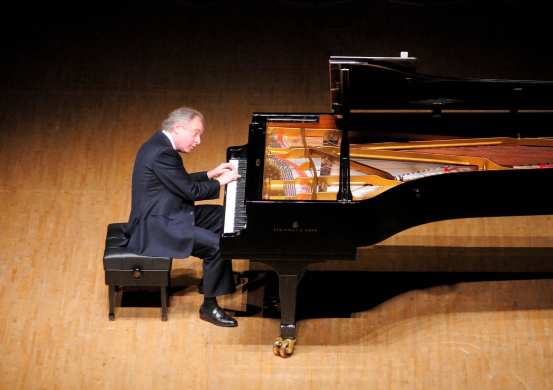
One of the world’s best pianists, Sir András Schiff, joins the Orchestra of the Age of Enlightenment to perform some of world’s best piano music.

Andras-DSC3357-c-Yutaka-Suzuki

Written 22 years apart, Brahms’ only piano concertos are snapshots of his life. The first is youthful, raw and expressive; the second is mature, structured and wiser. Both embody radical ideas of the 19th century, when revolution was in the air and artists joined political movements to overturn the old order.

The OAE performs these blockbuster piano concertos over two nights with Sir András Schiff, an extraordinary pianist and one of the world’s finest musicians. To complement the piano concertos, they also delve into music by Brahm’s mentor and inspiration, Robert Schumann exploring the complex interplay between political turmoil and personal anguish in composer’s life.

Pre-concert talks, Level 5 Function Room, Royal Festival Hall 6pm

New to Brahms? Enjoy an introduction to Brahms’ Piano Concertos at a free pre-concert talk by presenter Katy Hamilton.

On the second night, Dr Robert Samuels of the Open University will explore Brahms’ relationship with Schumann in a pre-concert talk

Brahms Piano Concertos with Sir András Schiff

Monday 18 and Tuesday 19 March 2019, Royal Festival Hall, 7pm

Further information and tickets


source: OAE press

(Photo: Yutaka Suzuki/Askonas Holt)

Guest post by Simon Danell

Memorizing has, for years, been very fascinating to me. I think that’s partly due to the fact that it was such a struggle for me in the beginning, whereas now it seems like a very natural thing to do. It’s something most of us haven’t really been taught, but expected to figure out by ourselves – if we don’t learn the piece by heart, we’re usually just told to practice more.

I find it interesting how such a crucial part is just left for fate do decide.

When starting to play piano, memorizing is usually not such a big problem. The songs or pieces are short enough to learn just by playing them through a couple of times per day. But once we enter even slightly more advanced repertoire, that way of learning is suddenly of no use, and we tend to find ourselves fiddling around on the keys with an increased heart rate, and with the words “Oh, sh*t” repeating in our heads.

I was no different. I easily came through the harmonically simple and motorically repetitive pieces without any difficulty, and putting my head on auto pilot was my idea of a perfect concert – I’d get up on stage, bow, sit down and start to play. Things would then turn black, and I would come out of the darkness a few minutes later once the last note is played. “How did it go? Oh, just amazing, I didn’t even have to think!” Then it came….. I went up on stage, bowed, sat down and things turned black. “But what was that note again?“, and it all changed. I came out of the darkness, but I wasn’t even half -way through the piece. Desperately I tried to find the right notes to play, my heart rate increased and “Oh, sh*t!” was on repeat in my mind.

Luckily, it was on a sort of bad piano, and the audience was a bunch of classmates who just wanted to go home. They were probably coughing and yawning a lot, so it was surely because of that, and nothing I had done wrong. All I had to do was to practice some more and just focus a bit more next time.

The next concert came – I went up, bowed, sat down.. all just routine by now. The only difference was that this time, I’d be Focused! “Focus, focus focus focus… fo.. f…. oh, sh*t!

These slips went on. I could play the music perfectly at home, and almost as good in the lesson room, but once on stage, it all just fell apart. I went on to practice 8-10 hours per day, but still with the same result in concert.

I got some tricks from my teacher, like “Think of the harmonies” or “Practice more slowly, and with separate hands!“, but that rarely made any actual difference.

The real difference came when I started studying at actual music school, when I was about 18, where other students also had to practice. The rooms quite quickly became full, and there was a lot of time spent just waiting. As the pieces had to be learned anyway, I started by just reading the score, and tried to imagine what it looked like. I read a line, or a phrase, closed my eyes, and tried to play it in my head. Not only was I unable to remember the notes, I barely remembered what it sounded like! It was such an epiphany that I knew it would change my musical life. I finally started thinking about practicing. How would I ever be able to play anything if I had no idea what I was actually playing? From then on I started practicing away from the instruments at least an hour every day. I tried to not allow myself to practice at a piano before I had a very clear idea in my mind of how it was going to sound once I started playing.

It became clear to me that the motoric memory (or muscle memory, as some call it), the thing I had used for so long, was actually very unsafe and unstable. I found that the other senses have an impact on our memory too – the aural and visual, and the intellectual part – and how they, unlike the motoric memory, really needed to be worked on properly and won’t just come by themselves.

I started analyzing my performances, and what I was thinking during my playing. As it turned out, I was thinking almost exactly the same things when I was performing as when I was practicing, and once the muscle memory turned off, I had no safety-net since I didn’t make one when I was practicing. In some aspects, practicing shouldn’t really be that different from performing.

Once I started practicing everything I had to know on the stage, all the memory slips disappeared almost over night. I finally realized not only to focus, but on what I should focus. If I noticed that my mind was drifting on a certain spot, I practiced to know what to think on that spot (the notes, the character, to sing the melody…) to train myself to think about the same thing during the performance. Or if I noticed that I worried about remembering the notes in a certain phrase, I practiced every voice carefully in my mind, both the notes and the music, before I played them, and followed each of them very attentively when I played. Then I would have created a safety net, in case I would need it in public.

I practiced very attentively like this for some time, to make sure I would cover the full piece – I remember once when I was performing the Symphonic Etudes by Schumann and, with full focus, was able to follow everything, down to pretty much every single note – but then got into the next problem….

You. Can’t. Make. Music. If. It. Never. Ever. Flows. … Which is what happens if you think on a note-to-note basis.

It was an obvious improvement from being neither detailed nor attentive, but it was a few steps too far. I tried to alternate between being in constant control, with often playing through to put everything in a certain perspective.

Now I feel that I can be both while performing. If I feel I am under control, I can let go and let the music flow by itself, and can just as easily go back to regain my focus if it’s starting to fall apart.

This article first appeared on the website of pianist Simon Danell.

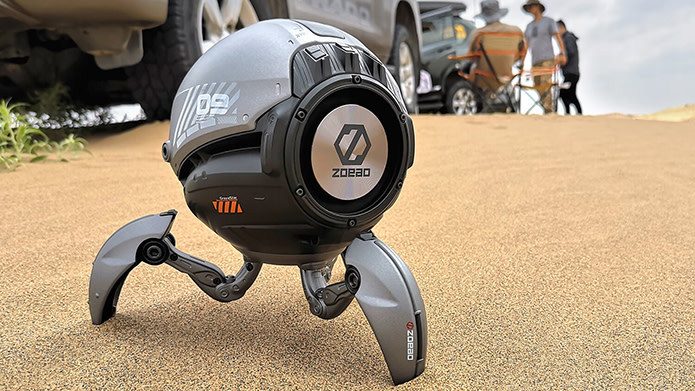
Diehard classical music fans look away now – this futuristic bluetooth speaker is not for you. Designed to appeal to teens, SciFi fans and lovers of films like Star Wars and War of the Worlds, the Zoeao ‘Gravastar’ bluetooth speaker prides itself on its unusual design and a deep punchy bass sound.

ymfjj4g7nasqiuuufdc3

It may look as if it’s about to scurry across the room like a metallic robot spider, but the Gravastar is perfectly benign and very easy to use. Once I’d paired it with my iPhone (no need to presss the bluetooth button for very long to achieve this), a message from the device confirmed pairing had taken place and I was away with a selection of music ranging from late Brahms piano music to Chick Corea, a pianist friend’s own Indian-inspired compositions, and the debut album by experimental electronic 1990s group Enigma, which is where the speaker really came into its own, filling the room with sound, clean and resonant. And yes, the bass is impressive.

Unaccompanied Bach Cello Suites (Yo Yo Ma’s recent recording) also fared pretty well – the device’s rich bass sound suits the warm voice of the cello, but you need the volume turned down to avoid hiss. The volume control on the device is a simple swipe of the finger across its domed head – or adjust it via your smartphone.  My Reggae mix came across particularly well via the Gravastar, and I also relived my 50th birthday party with this playlist. This device is definitely best suited to jazz, pop and rock music; the serious classical music afficionado is not necessarily going to find the breadth or detail of sound from the Gravastar.

Technical info:

  • shock-absorbent zinc alloy shell houses a 20W speaker
  • tripod design gives stability so that bluetooth connection and playback quality is not compromised, even at maximum power/sound output
  • two Gravastar devices can be paired for an even bigger surround sound
  • Touch-sensitive volume control
  • Futuristic ambient lighting effects
  • TWS Bluetooth V5.0 technology
  • 30-hour battery life
  • Comes with charging cable and connector cable for non-wireless playback
  • RRP $129 (launch price)

More information


