
Who or what inspired you to take up piano?
Actually I don’t recall being inspired or even asking my parents if I could take up piano. We weren’t a musical family and in the difficult post-war years I had no record player, concerts, or any musical experiences beyond a daily dose of BBC Light Programme’s ‘Listen while you work’!
However, my Mum had a small accordion – a relic of her Austrian childhood. I must have shown some aptitude teaching myself to play simple Austrian folk tunes on it, and one day my Dad just went ahead and arranged piano lessons. I was about 9 or 10 at the time.
Perhaps he could no longer stand the sound of badly played Austrian folk tunes on an accordion!
Who or what have been the most important influences on your musical life?
I was lucky to have a brilliant first teacher, Doreen Newman. She took me right through the Associated Board grades, all with Distinction by the time I was 15. For various reasons things kind of stalled after that for the next 40 years – until I just happened to attend a recital by Russian virtuoso Konstantin Scherbakov.
That still counts as my most significant musical experience ever. It was not the technical wizardry (of which there was plenty) which stunned, but the extraordinary beauty of the sounds coming from the bowels of instrument, the likes of which I had never heard before or even believed possible. That recital was all the inspiration I needed to begin playing seriously again after all those years of neglect.
What have been the greatest challenges in your musical life?
I think my early aptitude for the piano took my parents somewhat by surprise. Presumably the piano was supposed to be a hobby, no doubt to keep me out of mischief – and the very idea of making a living as a musician – well that’s not a ‘proper job’ is it?! I well remember after two or three hours of practise my Mum would ask “when are you going to get off your backside and do some real work?” – said as a question rather than an exclamation!
That rather knocked my confidence for six, and it took a great many adult years before I overcame a feeling of guilt whenever I “wasted” time at the piano. The greatest challenge for me in later life was to justify the vast amount of time I began to devote to the piano, to understand there was indeed value in my playing, and to take the huge step away from an established career and become a full-time musician.
Which particular works do you think you play best?
That’s like asking which are my favourite works and the answer to both is always the same – the ones I am immersed in right now – which happen to include the Bach/Busoni Chaconne and the Chopin’s Ballade no. 4.
A comment by the Chopin Society in Warsaw – that I “play Chopin with the true Polish spirit, especially Mazurkas” – rather pleases me since though these miniatures present few technical challenges, their characteristic idiom is extraordinarily difficult to capture.
Perhaps those Austrian folk tunes on my Mum’s accordion helped!
Who or what inspired you to take up piano teaching?
My non-musical career has always involved teaching, either in schools or in industrial/commercial settings and it’s something I do greatly enjoy. It’s hardly an original thought, but there truly is something immensely rewarding about sharing knowledge – it’s a ‘win-win’ for both student and teacher.
Becoming a full-time musician so late in life was a huge personal journey for me. With some modest success have come fabulous performing opportunities in some of the great concert halls of the world. I’m keen now to share what I’ve learned along the way with fellow amateur pianists.
What are the pleasures and challenges of working with adult amateur pianists?
Well, it’s not so long ago that I too had a career and family taking priority on my time and energy, so I have a pretty good idea of how things are for amateur pianists. I’m constantly astounded at the devotion and commitment amateurs give to their music-making, but many recognise they’ve reached a certain level and are not sure how to get beyond it.
This makes coaching adults quite different from younger students, where lessons mainly focus on whatever pieces the student is playing at the time. The challenge adults face is how to make progress in the limited practise time they have. So the challenge for me is to identify what to focus on that will make a difference to all their playing rather than just to current pieces.
How do you see your role as a teacher?
I see myself much more as coach than teacher. Unless they are practising with a particular purpose in mind such as an exam or concert, with adults it’s not really about giving a hint or two on how to play a particular piece better. It’s more about identifying and addressing what may be holding them back in general. It’s not always simply lack of technique, for example it might well be a weak understanding of theory which means they can’t analyse or don’t fully understand the music they play.
For me coaching like this is far more rewarding than teaching because students make real progress in much less time, and what they learn is permanent – important considerations given the reality amateur pianists face balancing practise with daily life commitments.
What are your thoughts on the link between performance and teaching?
I’m not sure I see much of a link – a first rate performer may not be a good teacher, and it doesn’t follow that to be a good teacher one has to regularly perform.
That said, a performer who also knows how to teach obviously brings a wealth of additional experience to their teaching, but I rather think they are a rare breed. My first brilliant teacher never performed but she certainly knew how to inspire her students. On the other hand I’ve been privileged to play to some pretty illustrious names – and learned precious little if anything from them.
A notable example of both superlative performer and outstanding teacher is Scherbakov, the Russian pianist I mentioned earlier – whom I know from both participating in and observing his masterclasses. But I don’t think there’s a link as such between the two activities – he just happens to be good at both!
What is your advice for coping with performance anxiety?
I would distinguish between performance anxiety and nerves – the first is a positive force while the second is not. Before a recital I do feel anxious – anxious to succeed in sharing my musical thoughts which can only happen if I play well and remain focussed on the music rather than the task.
A degree of performance-anxiety provides the adrenaline to create an inspirational moment, or to take a risk I would otherwise hold back from. I don’t subscribe to the idea that the performer should be so wrapped up in their music-universe as to be totally unaware of the audience.
On the other hand with a bit of amateur psychology nerves can be rationalised out of contention! Recall that you put yourself in front of an audience to share something that is uniquely yours, your interpretation – and that, after all, is what the audience have come to hear. Certainly not to tally up your mistakes, to revel in your lapsed memory, or to savour your embarrassed agony. They’re absolutely willing you to give a great performance.
Once you see the audience as friend rather than foe, you can tap into their positive eagerness. Slips and wrong notes if they happen pale into insignificance compared to the interpretation you’ve prepared for them, and it’s that that you will leave in their memory.
Of course, you can hardly feel that way if you are not 100% at home with the music, everything about it.. Which is just another way of saying total preparedness. In my experience even the most severe case of nerves evaporates when the student is so well prepared they have absolute confidence in what they are about to do.
Who are your favourite musicians?
Fortuitously, the first LP I owned had Wilhelm Kempff playing three Beethoven Sonatas – I say fortuitously because I can’t think of a better example even now to inspire a budding pianist. Moiseivitch on Chopin was next. I was 15 before I attended my first live concert, Peter Katin as I remember. These early experiences led me appreciate exquisite tone control over all other pianistic attributes.
The ultimate living example for me would have to be Russian virtuoso Konstantin Scherbakov, a pianist I admire immensely not only for his sound but also his musical and intellectual integrity. He’s also a jolly nice fellow!
What is your most memorable concert experience?
As audience, again I would have to say the first time I heard Scherbakov. My earlier comment was no exaggeration – the incredible soundscape he created was quite literally the inspiration I needed to begin serious playing again after 40 years of neglect.
As performer I have a fond memory of a recital I gave in Brochow (Chopin’s home town). As I took the applause I noticed a small old woman making urgently for the exit. Meanwhile the organisers presented me with ‘the standard bouquet’ to show their appreciation – and much appreciated it was too, though of course such things are of necessity pre-planned.
However a few minutes later when most of the audience had dispersed, back comes the little old woman to present me with a bunch of wild flowers and herbs she’s evidently just picked from the roadside, tied together with a handkerchief! I speak no Polish and she no English, yet with this simple gesture she communicated a depth of feeling that would in any case have been inexpressible in words. Such is the power of music!
As a musician, what is your definition of success?
For me personally, it probably has to do with performing – the ability to share, through great music, something intangible and unreachable – inspiration, excitement, solace, whatever – absolutely this is what performing is all about. I can think of no better example than the little old woman I just mentioned.
What do you consider to be the most important ideas and concepts to impart to aspiring musicians?
Hmmmm – a difficult one. I coach only adults these days, which makes a difference to my answer. The key point for amateurs is how demands of career and family leave limited time for practise. Understandably they’d much rather spend what time they have playing great music than endless technical exercises building technique – but it doesn’t have to be a trade off of one against the other.
I’ve (just this moment!) coined a phrase which may well become my watchword – ‘deep learning’. What I mean is approaching a work not just from the notes but by exploring EVERYTHING there is to know about it. It’s the same approach I use during a coaching week where probably we spend as much time thinking and discussing as we do pushing keys. It might make progress seem slow, but that’s just a mental illusion. Without question it’s the quickest way by a very large factor both to build technique and learn new works – what might take a month or more of repetitive practising to get right, can be fixed in a day or two – and once learned, it’s permanent.
So for the keen amateur who has to make the most of limited practise time I would say the most valuable concept they could take on board would be ‘deep learning.’
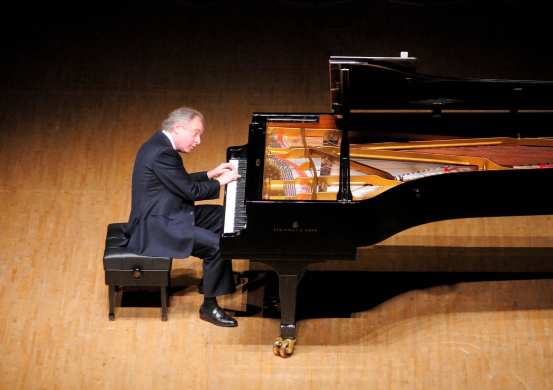
Pianist and teacher Gil Jetley has a lifetime experience in music as a second career and is the creator of Music Holiday Italy, one-on-one piano courses for adult amateur pianists in Italy.
In 2012 he won First Prize in the second edition of the prestigious triennial International Chopin Competition in Warsaw, having previously been a finalist and Honourable Mention Winner in the first edition in 2009.
Other competition successes include finalist in the Pianist/Yamaha Competition (London 2007), Spezialpreis der Jury (Berlin 2010), Bärenreiter Urtext Prize (Berlin 2010), and First Prize Chopin Competition (London 2013).
As guest artist for the Chopin Society in Warsaw he has given recitals at the Staszica Palace and in their celebrated ‘Concert in the Park’ series where it was commented ‘he plays Chopin with the true Polish spirit.’ These recitals have led to repeated invitations from the Society, twice to perform in Brochòw, Chopin’s home town. In 2015 he was invited to give the inaugural recital at the third edition of the Warsaw competition. Professor Antoni Grudzíński (General Director, The Fryderyk Chopin Society of Warsaw) says of Jetley’s playing: “his rich artistic personality and great sensitivity captivates Polish audiences with masterly interpretations of Chopin’s music.”
Jetley studied piano at the Royal Academy of Music in London under Harold Craxton and Alan Richardson, and composition with Richard Stoker. After gaining a performance diploma he was invited to study with Louis Kentner (pupil of Kodály, prize winner in the 1932 International Chopin Competition, and brother-in-law of Yehudi Menuhin) shortly before he died. In recent years, Jetley has participated in masterclasses with Paul Badura-Skoda, Konstantin Scherbakov, Pietro De Maria, and Peter Feuchtwanger.
Jetley has a wealth of teaching and coaching experience in schools and Universities in UK, Singapore, and New Zealand. At the National University of Singapore he produced and directed a musical for which he composed his own score, conducting an ensemble from the Singapore Symphony Orchestra. As General Manger of the Nelson School of Music in New Zealand he had overall responsibility for the well-being and promotion of two orchestras, three choirs, 50 music teachers and over 700 students.
Jetley has given recitals at numerous festivals around the world (France, Germany, Hungary, China, Argentina), and several times toured Poland at the invitation of the Chopin Society. Performances in major cities include London, Paris, Nice, Berlin, Stuttgart, Munich, Basel, Budapest, Buenos Aires, Singapore, Shanghai, Kelowna (Canada) and Wellington (New Zealand). Concertos with orchestra include Schumann, Grieg, Mozart K.488 (A major), K.491 (C minor) and Addinsell’s Warsaw Concerto.




 The Cross-Eyed Pianist