p

Who or what inspired you to take up composing, and pursue a career in music?

It was hearing Monk’s Dream (Thelonious Monk Quartet) at 17, amidst the sea of UK garage and US Hip Hop I was listening to, that really made me want to play. I’d wander into the music rooms at my school between lessons and start hitting notes; school wasn’t the best of times (probably a universally applicable statement), and the sense of being able to assign inexpressible feelings to keys and sequences of notes, however primitively they may have been expressed and constructed, was completely absorbing.

Who or what were the most significant influences on your musical life and career as a composer?

It’s probably no exaggeration to say Tourette’s Syndrome (TS). I didn’t know it by its name when I was a teenager (and wouldn’t until my early twenties) but I did know that the piano – the immersion I felt in it, the satisfaction of this innate [again universal, yet arguably slightly amplified [in the case of TS] craving for rhythm – offered me relief from my own body.

I think I would always have felt some draw to the instrument on a musical level – but without TS I’m not so sure that I would have stayed at the piano.

What have been the greatest challenges/frustrations of your career so far?

The greatest challenge has probably been sticking with things, over months and years, trying to carry on persevering in spite it feeling delusional/completely unachievable at points. But I’m not actually sure this was a challenge; I didn’t really view doing what I wanted to be doing as a choice.

As an aside – I’m not sure I’d call my relationship to/involvement with music a career as such – partly because I try to split my time relatively evenly between sonic and visual areas but also because I’m slightly uncomfortable with the word ‘career’. I’ve always associated that word with the people who came to my school, asked me some questions and then suggested I was destined for one in the catering industry.

‘Career’ seems to evoke a sense of detachment or distinction from a life that must exist around it, in spite of it…personal life versus career. For better or worse, I’ve wanted to avoid doing anything with my life that I’d feel any need or desire to escape or detach from.

Career’ to me at least, is the imposition of artificially constructed expectations – from society and self it implies trajectory, outcome, above all – an attempt to quantify that which perhaps should exist outside the realm of metrics.

So perhaps one of my biggest challenges is to remember quite how much I don’t want to build a career. I don’t ever want to retire from what I’m choosing to give my time and my life to. And I suppose within that lies the ever-present question of whether what I’m choosing to give my time to is something I should be giving my time to.

My biggest frustration would definitely be the amount of time I need to spend in front of a screen to facilitate my engagement with a world that exists beyond it.

Another challenge I’m becoming increasingly aware of is how to communicate simple ideas without sounding detached and pretentious.

What are the special challenges/pleasures of working on a commissioned piece?

My main, and relatively limited, experience of ‘commissioned’ music has been through film scores (a few shorts, documentary / narrative and a feature documentary). It’s a real privilege to be trusted with someone else’s work – and exciting to be able to respond to it.

I think part of the challenge is to factor in an awareness that what I’m doing should be informed but not limited by my response to the material. At the end of the day it’s someone else’s film – something they’ve potentially been working on for years and poured their life into, they’ll be attached to certain ideas when it comes to soundscapes and it’s important to be respectful of those ideas whilst also knowing when to be assertive and speak out and constructively disagree.

What are the special challenges/pleasures of working with particular musicians, singers, ensembles and orchestras?

At its best, collaboration really takes me outside myself – there’s a lowering of inhibitions and a confidence that doesn’t quite exist when playing solo. There’s also far more objectivity – good ideas mean so much more and crap ideas get removed so much earlier – or at least the process of working to redeem them begins much earlier.As far as challenges go – giving / being open to receiving feedback. But then if communication’s good and there’s mutual respect that’s 90% of the work done.

Of which works are you most proud?

I’m particularly proud of the mini album ‘Weightless’. I’d been holding on to four little piano tracks for a few years  – almost as a safety net to be used if felt like my involvement in music was really slipping away.

I decided to try to commission a non-remix style remix album (one which wasn’t comprised of four C-grade club remixes) that could extend the small scope of the piano tracks into something more expansive and offer a more cohesive listening experience. I approached some friends whose music I loved and asked them to respond as honestly as possible to the themes of titles, to go wherever they felt musically led but just asked they remained tethered, however loosely, to some part of the original. I loved the resulting reworks and the musical variety that had spawned from these four very simple piano pieces- all credit for that of course goes to the four artists involved (Tom Adams, Siavash Amini, Hedia, Transept).

How would you characterise your compositional language?

I’m interested in attempting to bring a variety of influences and feelings to the piano. I like leaving room for slight variety in performance, space for improvisation at points. That gives me room to grow in my existing compositions and for them to grow with me too. I like melody but am trying to push my understanding and use of harmony further along. Whilst I love sparser music that I can get lost in, I find I’m generally more interested in narrative – I’d say most of the music I make, on piano at least, has some sense of journey attached baked into it. I can fully appreciate and welcome simplicity but equally don’t like easy answers so I try to not to offer those through my music either – life very rarely, if ever, finds itself exclusively steeped in one end of the existential spectrum so it doesn’t make sense to me for music to do so either.

How do you work?

Occasionally something will come out of nowhere but usually the process is fairly slow. I tend to play things over and over, record primitively on my phone (when camera phones were smaller I used to put one in my mouth and film what my hands were playing. Now I just record audio on my phone and hope to remember the fingering), listen back, play back, add, subtract, listen, listen – extend this process over weeks or months. By the end ideas have either been near fully formed or if I start to find them boring I let go of them.
Time becomes a filter, through which only the stuff that still interests me passes.

Even with my upcoming album – I’m listening to it on almost daily basis to make sure, at least up to the point of release, that I still feel accurately represented by it and sufficiently interested in it.  I don’t mind if I change my mind at some future point but I need to know that at the moment of release it is music that still means something to me.

Who are your favourite musicians/composers?

I really love Stevie Wonder’s albums from the 1970s. Errol Garner, Oscar Peterson, Thelonious Monk, Dave Brubeck. My favourite album of 2018 was Baloji’s “137 Avenue Kaniama” and having him seen him perform it live last year can easily say he’s one of my favourite performers.

As a musician, what is your definition of success?

To remember that expression isn’t a commodity and music isn’t a competition. To balance your strengths and limits over that fine line between thinking you’re shit / THE shit.

What do you consider to be the most important ideas and concepts to impart to aspiring musicians?

To have confidence in your story and own it, don’t expect everyone to get it or the music that comes from it – make stuff for yourself primarily and treat anyone else wanting to listen in as a welcome bonus.

Where would you like to be in 10 years’ time?

Primarily outside.

What is your idea of perfect happiness?

Finding stability in transition and being free from expectations.. with a football in one hand and a frisbee in the other.

What do you enjoy doing most?

I love walking and being outside as much as possible. I used to love playing football almost more than anything else – I really miss it.

What is your present state of mind?

Honestly – conflicted and unsettled. Trying to question things without getting completely lost.

Alex Kozobolis’ new album ‘Somewhere Else’ is released on 26 April and is an album with the piano at its heart. Alex describes the piano as possessing a therapeutic magnetism for him, having originally turned to the instrument as a way of regulating the symptoms of his Tourette syndrome. A jazz-like preoccupation with improvisation is embedded within the album, each track was brought to the studio slightly incomplete allowing for spontaneity during the recording process.
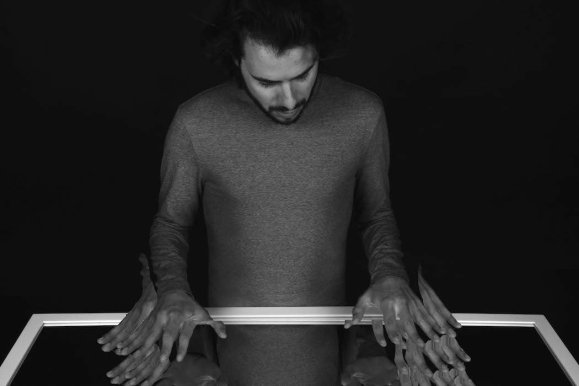

D0f5cS9XQAAOaoG


(Photos by Özge Cöne)

The launch of the new season of the BBC Proms is always met with excited anticipation. I had a preview of this year’s programme late last night, thanks to an article on the Classical Source website. Glancing through the “highlights” my heart sank a little, then a little more…..By this morning, having read more detailed surveys of the new season, I felt rather deflated.

Every spring, when the Proms season is announced, there is a chorus of disapproval about the programming – and every year it seems that the Proms have to try harder than ever to justify their existence. There are always howls of complaint about the Proms being “too populist” or “gimmicky” , or not populist enough. Or too inclusive. Too much, or too little new music. Too few works by women composers. Too little coverage on BBC television – and so on. The adage that “you can’t please all of the people all of time” is particularly apt for the Proms.

When the Proms were founded by Robert Newman and Henry Wood, their stated aim was to bring classical music to a wider audience, and the concerts were, by all accounts, quite lively, eclectic affairs, with big programmes and an audience who were permitted to eat, drink and smoke during performances (though patrons were requested not to strike matches during quiet passages). Do the Proms succeed in doing this today? It’s hard to tell, without some rigorous audience surveying (“Is this your first time?” etc), and I’d very interested to find out what percentage of the audience are genuine classical music ingenues. Also, do those people who attend the Ibiza Prom or this year’s hip hop Prom actually then book to hear a mainstream (or even non-mainstream) classical music concert? Are these types of concerts really a “gateway” to classical music for younger audiences? I’m not sure….

I used to argue quite vociferously for as broad a range of concerts as possible in the Proms, my view being that if you could get young people or those who wouldn’t normally attend classical music concerts through the doors of the Royal Albert Hall for Jarvis Cocker’s late night Prom or the Strictly Prom, they might return for a drop of Beethoven or a healthy dose of Tchaikovsky, but I don’t think this is borne out in actual ticket sales.

A few years ago I attended an all-Brahms Prom performed by the OAE with Marin Alsop (I was there because a friend of mine was playing double bass in the orchestra). I happened to be sharing a box with a family for whom this was their very first visit to the Proms, or indeed a classical music concert. They were anxious beforehand: out of their usual comfort zone, they had arrived at the concert full of the usual preconceptions about classical music – would they applaud “at the wrong time”, would they be able to “understand the music” etc etc. I told them to simply sit back and let the music wash over them, and that if they were worried about when to applaud, they could follow my lead. In the interval they turned to me and beamed with wide-eyed delight – they were loving it! As a mark of our new-found joint pleasure in the music, they shared their box of chocolates with me. This to me more than demonstrates that one doesn’t need to programme trendy or gimmicky Proms to engage people in classical music – and I am sure my experience is not unusual.

My feeling on looking at this year’s programme is that the planners are attempting that impossible task of trying to please all the people all of the time, and as a consequence, the programme feels like a rather weird mish mash of mainstream classical music, a few novelties, some great warhorses of the repertoire, and a whole bunch of disparate “populist” oddities. More often than not these days, I feel the BBC is almost apologetic about classical music – an attitude which is fairly common (cf. Radio 4’s Today programme whose presenters frequently snigger or smirk when talking about classical music, as if is some kind of weird taboo). And then the BBC broadcasts something so splendid and moving as the recent programme about Janet Baker by John Bridcut and just for a moment, it feels like the good old days of high-quality cultural broadcasting….. Those days are gone of course, but why can’t we celebrate classiccal music for what is really is? It’s wonderful, it’s fantastic, it’s epic, it’s heart-stoppingly dramatic, tear-jerkingly beautiful, tender, poignant, funny, bizarre and so so varied. It’s not all written by dead white guys in periwigs and not all contemporary music sounds like a “squeaky gate”. There is something for everyone in the vast canon of classical music and a way to bring that to “a wider audience” would be to curate a festival that demonstrates and confirms this without the need to resort to “crossover” or gimmicks.

The BBC Proms, the world’s largest classical music festival, launched today with concerts featuring hip hop music…” (paraphrase of announcement on Radio 4 Today programme, Wednesday 17th April).

I’m tired of people (presenters, promoters, marketers, critics, audiences, even some musicians) apologising for classical music. Instead let’s celebrate it.

Guest review by Doug Thomas

Gavin4_400x400
Gavin Bryars

In 1971, the British composer Gavin Bryars looped the recording of an unknown homeless man singing what was thought to be the religious hymn “Jesus’ Blood Never Failed Me Yet” over a dense minimalistic orchestral arrangement. The result is a mesmerising musical experience; first limited to twenty-five minutes on LP, then sixty minutes on cassette and finally seventy-four minutes with the CD version. Unfortunately, it appears that the old man never heard Bryars’ composition – and the composer himself later came to conclusion that the hymn had actually been improvised by the unknown man. Last Friday, 12th April 2019, a handful of lucky people gathered in the Tanks at London’s Tate Modern to experience for the very first time for a full twelve-hour live performance of the piece.

The event, scheduled at eight in the evening and running until the early morning, was organised so that the audience could stay for the entire duration of the concert, but with constant open doors to allow people to come and go throughout the night. Contrary to Max Richter’s eight hour lullaby “Sleep”, no beds had been arranged; actually no seating had been arranged at all. The audience spontaneously sat, and later lay down, in a semi-circle in front of the orchestras, while some people stood up and moved around, as one would do in a museum room. The orchestras were the Academy of St Martin-in-the-Fields, Southbank Sinfonia and the Gavin Bryars Ensemble (including my arranging teacher at university, Audrey Riley). On the side of the orchestras, Street Wise Opera, a choir of people with experience of homelessness, and in the middle of all that, on contrabass and later on the conductor’s seat, Gavin Bryars himself.

The piece started quite spontaneously with no announcement or introduction. And then something happened. To the words of the old man’s voice and the sweetness of the instruments, the entire audience remained silent and immovably mesmerised. Stanza after stanza, the instruments introduced themselves, then the choir started singing. There was the beauty of the music, the honesty of the musicians and the singers, the admiration and attentiveness of the audience. When I checked the time, I realised that what felt like minutes had actually been hours. Throughout the night, members of the orchestra took turns in performing while part of the audience remained, as night owls, until the early morning.

Everything about this experience was right. The venue, which broke with the austere standards of classical concerts venues, and allowed everyone to come, and go. The spontaneous audience: musicians, curious wanderers or simple art and music lovers. The performers: amateurs and professionals gathered around a communal sense of honesty and authenticity. And of course, the music. What had always seemed to me like a beautiful two-dimensional musical painting became a sonic sculptural wrapping, and a unique musical experience. How lucky I feel to have been a little piece of history of minimalistic music.


Doug Thomas is a French composer and artist based in London.

Read more

A conversation with Jon Jacob who blogs at Thoroughly Good

JJ: I read a few reviews this morning with star ratings. I’m reminded how they much they annoy me. I’m not entirely sure why they do. I was hoping our exchange might help me understand why a bit better.

Basically, I just think rating someone’s performance is a bit odd. Mean really. By stating how many stars you thought someone’s performance was you’re kind of elevating yourself – making out that your criteria for judging whether something is good or not is valuable.

What really irks is that so much marketing stuff makes use of these star ratings. Because when that happens that rating process is legitimised.

Do I need to lighten up? Am I missing something?

CEP: I have always been uncomfortable with the star rating system for reviews and was acutely aware of it when I wrote for an international concert listings and reviews site where star ratings were de rigueur. For me, when reviewing, it meant that I had to always been thinking “is this a …. star performance?” and the aforementioned site actually had guidelines for reviewers to help them decide whether the performance deserved five stars or fewer. Awarding three stars often felt quite mean-spirited to me – being in the middle of 1 and 5, 3 feels like you’re saying “it was ok”, when in fact it was quite obvious to me, being a musician myself, that the performer had clearly spent hours and hours preparing for the performance and was maybe just having an off day at the concert, for whatever reason (something I think many reviewers – and audiences – don’t appreciate: performers are human too and a disrupted journey to the venue, feeling under par and a whole host of other factors can affect one’s performance…..)

From the reader’s point of view, I think star ratings are very limiting, especially if they are published at the head of the review (as is common practice). The reader/potential audience may see a low star rating (and I think a lot of readers think 3 stars signals “mediocre”) and not bother to read on. There is, of course, a converse argument – that a one-star review might pique one’s interest to actually read the review and/or go and hear that performer out of curiosity.

As I think you know from my writing on this subject and our conversations, I do not think it is the reviewer’s role to “rate” the performance; nor do I think music performance can be rated via such a rudimentary metric as stars. We are not talking about hotel accommodation here where the criteria for star ratings are more easily comprehendable! I believe a music review should be a record of the event and as such serves to place the concert in context (for example, a composer anniversary or a premiere of a new work). I believe we still need to record the activities of performers/composers via intelligent, well-informed and well-written music criticism – in the blogosphere and in the mainstream media. Such writing prevents mediocrity and dumbing down, and, I hope, encourages variety, authenticity and objectivity. Unfortunately, I feel the star rating system discourages all of this by putting an undue focus on “rating” the event rather than describing it and bringing it to life for those who weren’t there.

I agree with your comment about the value of star ratings for marketing purposes and this troubles me for the same reasons you express. And to describe someone as a “five star performer” seems to me be an anodyne and lazy way of presenting what might be a really exceptional artist. Sadly, in our feedback-driven culture, where undue emphasis is placed on customer reviews on sites like Amazon or TripAdvisor, I don’t think we can easily escape this…..

JJ: Your response reminds me of the challenge in art music at the moment. On the one hand we want more people to enjoy it. I want people to experience a similar thrill discovering personal insights about the art. Such insights can’t be documented as a criteria or expectation from listening. They are by definition personal and distinctive. A Haydn sonata’s impact on you will be different from the impact it has on me, for example.

How do we report on a performance authentically and respectfully without stating implicitly or explicitly that the performance should be performed one way or the other? And how do we style that reporting such that it advocates attentive or active listening rather than promoting an erroneous requirement of prior knowledge in the subject? It’s as though we need to promote listening, rather than the content.

In that way, I’m not entirely convinced that star ratings support that approach to documenting events or promoting active engagement in performance.

There’s a personal perspective too. What if the star ratings apply to a soloist rather than an ensemble? Does the person using the rating mechanism have a responsibility for the way the rating might be interpreted by a large audience (ie the rater’s intent maybe entirely different from the audience/reader interpretation)?

I also don’t get the point in rating a live performance which is by definition a one-off. Fine for opera because there’s a run of performances, but a one off concert seems a bit odd.

But still, I wonder whether there’s another perspective I’m missing.

CEP: I agree re. star ratings for opera (or theatre/film, for that matter) – stars are more relevant if there’s a run of performances.

I’d love to know how much store audiences/potential audiences really set by star ratings (maybe we should run a survey?!). Do people really select concerts by performers who’ve received favourably ratings on the basis of those ratings (I know I don’t), or are there wider criteria (such as reputation of performer, venue, programme etc – the last point being my usual criteria for selecting a concert)? Do they think “oh I’ll book to hear Trifonov because he always gets 5-stars”? Not sure…. and I think audiences are actually far more discerning than mainstream reviewers/promoters give them credit for.

Your response ties in with something else I am pondering – the apparent need to find “meaning” in everything, specifically in classical music as a way, perhaps, of validating it or making it relevant to people today. In an way, reviews are complicit in this by trying to express meaning (whether it is actually there or not in the music) to the reader. It seems we can’t simply report on the concert, describing the sounds the performer/s made, the quality of the performance, our personal response to it. Everything must be freighted with meaning or “relevance”. The music is not simply allowed to “be”, or be “entertainment” (in the best sense of that word)… But I digress slightly.

When I was reviewing regularly, I would quite frequently receive comments from other people who had attended the same concerts and who might take issue with something I had said in a review. For example, I was accused of being “far too generous” to a very elderly pianist (now sadly no longer with us) because his Chopin performance was “riddled with errors and inconsistencies”, and why hadn’t I documented them? But I don’t believe it is my job as a reviewer to highlight a performer’s errors (unless they are really dreadful, in which case I simply wouldn’t write a review); nor do I think reviewers/critics should seek to tell the musicians how to do their jobs.

My personal “crusade” – and I think this is a sentiment we share – is to encourage people to enjoy classical music and to debunk this silly notion that one needs to be well-informed, knowledgeable or educated to a certain level in order to “appreciate” it. Unfortunately, some of the more high falutin or pretentious writing on classical music isn’t helping; but I also think people are becoming more suspicious of mainstream critics and reviewers and are turning instead to independent review sites/blogs where they can find longform/more considered writing which has a more personal/authentic voice to it.

JJ: We agree. For me I experience unfamiliar works, familiar ones, or new compositions as a journey of self-discovery. What or how the composer or performer does is of secondary importance to the effect their work is having on my emotions. That for me is the thrill of this art form. Being able to articulate when it works and when it doesn’t takes more than just a rating.

What I keep coming back to in our exchange here is the responsibility on the mediator – be it marketer, journalist, critic – to advocate the art form in a respectful way that pays deference not only to the effort involved in creating it, but also emphasises the listeners contribution to the end product.

I’m not sure I’ve arrived at the best way of achieving that preferred mediation, but I’m working on it.


