Ignored for years, their composer regarded as Beethoven’s poor relation, Schubert’s last three piano sonatas now enjoy a special place in the piano repertoire, ranking alongside Beethoven’s final three piano sonatas, and they hold a particular fascination for pianists, audiences, critics and musicologists.

The final year of Schubert’s life was one of extraordinary productivity, marked by increasing public acclaim and declining health (he had been suffering from syphilis, and the debilitating effects of its treatment, since 1822/23). In addition to the three final piano sonatas, the last months of Schubert’s life saw the appearance of the Drei Klavierstücke D946 (Impromptus for piano in all but name), the Mass in E-flat D950, the String Quintet D956 and the posthumously published ‘Schwanengesang’ songs, amongst many other works, all of which display a high level of artistic maturity.

Drafted in the spring of 1828, Schubert completed his final three piano sonatas in September of that year, just a few months before his death at the age of 31. These were the first works of the kind he had composed following the death of Beethoven, a composer whom Schubert much admired, and his last three piano sonatas all pay tribute to Beethoven; indeed the first of the three is even cast in C minor, the key of Beethoven’s Fifth Symphony and the ‘Pathétique’ Sonata, and contains some distinctly “Beethovenian” idioms. Schubert numbered the three sonatas sequentially, perhaps envisioning them as a cycle. After his death, Schubert’s brother sold the manuscript to the publisher Diabelli, but the sonatas were not actually published until 1839, and were dedicated to Robert Schumann, a keen advocate of Schubert’s music. Given the popularity of these sonatas today, it is remarkable to note that their fame came late, well into the twentieth century, and due in no small part to pianist Arthur Schnabel’s championing of them during the 1928 centennial of Schubert’s death. Schnabel himself was one of the finest interpreters of Schubert’s piano sonatas and pioneered the programming of the final three as a set in concert. Today these sonatas are regarded as a core part of the pianist’s repertoire and are regularly performed.

The attraction of Schubert’s piano sonatas for performer and listener is their breadth of expression, further reinforced by a dramatic expansiveness, and the daring underlying harmonies which create contrasting and often startling musical hues and striking shifts of emotion. While Beethoven is often declamatory, Schubert speaks more quietly, more ambiguously, and even in its grander gestures, his music has a strong sense of intimacy and introspection. He takes us into his confidence, and makes us feel we are being spoken to personally and invidually.

In the final three sonatas, freed from the shadow of Beethoven, Schubert finds a new voice. Like Beethoven’s final sonatas, Schubert’s late works seem to communicate a sense of acceptance (but never resignation) combined with an “incompleteness”, as if he had much more to say, and the music’s propulsive driving force, its almost obsessive creative energy, is a transcendent refutation of disorder and death, whose overriding message is fundamentally positive.

Yet this positivity is frequently lost in the oft-repeated trope that the final sonatas are the composer’s farewell, his valediction, written when he knew he was dying, and it is rather too easy to ascribe his physical and emotional condition to the personal poignancy, melancholy and tragedy found within his music. It is remarkable how many performers, critics, broadcasters, academics and audience members take this view of the late sonatas, a view which also finds its way into programme and CD liner notes.

Remarkable circumstances surrounding death – such as suicide, murder, horrible disease, or extreme youth – typically exert an extraordinary influence on posthumous perception.

Christopher H Gibbs, “Poor Schubert” Images and Legends of the Composer, The Cambridge Companion to Schubert (Cambridge: 1997)

The romanticisation of Schubert’s illness and his premature death tend to ignore the realities of life in early nineteenth-century Vienna. In Schubert’s day, Vienna was a dirty, disease-ridden, violent and dangerous city where life was tough, and the average life-expectancy of an adult man at this time was 38 years. In this police-state city, its citizens maimed by the ravages of the French Revolutionary and Napoleonic wars, lives were lived on the edge of sorrow, and Schubert’s was not unusual in the context of the time. Schubert’s music expresses not just personal joy, sorrow, disorder….but the ferment of life itself in all its dimensions.

Like his other late works, the final three piano sonatas move between extremes, often taking performer and listener from the darkly tragic and melancholic to a golden transcendence or joyous other-worldliness, all rendered in music of incredible, almost revolutionary inventiveness.

Alfred Brendel describes Schubert as “a sleepwalker”, yet in his final three sonatas, we see Schubert’s innate sense of musical geometry and his bold treatment of traditional sonata form. These are tightly-organised works with almost perfectly-balanced structures, perhaps most obviously in the middle sonata of the triptych, the D959 in A. Here, as elsewhere, Schubert uses cyclic devices – motivic, melodic and rhythmic – to create a sense of “belonging” between the movements and as “signposts” throughout the sonata’s narrative. For example, the opening measures of the D959 are reprised at its close, and the first and final movements are almost identical in length.

Another unifying factor in these sonatas is Schubert’s use of dramatic rests and fermatas. Silences abound, suspending time and offering pause for reflection, while also clarifying the structural expansiveness of the music. In addition, Schubert’s use of dynamics is often ‘psychological’ rather than purely physical, suggesting an intensity of feeling rather than volume of sound. His generous use of pianissimo in particular creates an ethereality in the music as if hovering between different states.

The C-minor Sonata, D958, is the most Beethovenian in tone and opens with a torrential drive and strength clearly influenced by Beethoven’s 32 Variations in C minor. This gives way to a contrasting, hymn-like second subject, while the development section contains mysterious chromatic passages.

Elisabeth Leonskaja brings a suitably Beethoven’s drama to the opening movement of D958:

The slow movement is a songful Adagio, reminiscent of the slow movement of Beethoven’s Pathetique Sonata with its peaceful cantabile melody which returns in variation interposed with dramatic sections in contrasting keys. Despite the serene theme, the atmosphere never feels entirely settled and this agitation is carried forward into the Scherzo which opens in c minor. The finale is a frenetic, swirling tarantella with violent dramatic contrasts and the obsessive drive of Erlkonig.

The Sonata in A, D959, is joyous after the darkness of the C minor Sonata, D958, and its themes are nostalgic, springlike and lilting. In this respect it is related to Beethoven’s ‘Pastoral’ Symphony. The first movement has a dramatic symphonic sweep in its generous breadth, but closes with a softly-spoken coda, bringing a somewhat uncertain end to this long-spun movement. It has the curious effect of setting the scene for the second movement without actually pre-empting it at all.

When it comes, the Andantino seems distant and alien, so utterly different in character from what has gone before.This music is quite unlike anything else Schubert wrote, a “composed hallucination” (Jonathan Biss, pianist), which many people – pianists, scholars, critics, listeners – believe is the clearest indication, in music, of Schubert’s emotional and mental instability, probably due to his advanced syphilis. Whatever the meaning of this movement, its position in the overall structure of the sonata creates a striking contrast between the expansive majesty of the opening movement and the quirky, playful Scherzo which follows it. A lyrical melancholy barcarolle turns, through a series of harsh modulations, into a middle section “storm” of savage, almost hysterical drama before a haunting reprise of the opening melody.

Richard Goode’s tasteful approach to the Andantino is measured and not too slow:

The finale of D959 is also a homage to Beethoven. Modelled on the finale (also a Rondo) of Beethoven’s Piano Sonata op. 31 no.1, in fact the only truly imitative element is Schubert’s reworking of the slow movement theme from his Piano Sonata in A minor, D537, composed more than a decade earlier. The movement has a lilting, good-natured charm reminiscent of his string quartets and quintets, and the dramatic chords at the opening of the sonata are reprised at the very close.

Inon Barnatan’s Finale is crisply articulated with a clear sense of through narrative:

Schubert’s final sonata, D960 in B-flat, is scored in the same key at Beethoven’s ‘Archduke’ Trio, and shares its regal expansiveness, felt most strongly in the opening movement whose first subject is one of hymn-like serenity, occasionally disturbed by bass trills. Harmoniously balanced, gently melancholic and imbued with a sense of acceptance, this spacious movement is almost as long as an entire Beethoven piano sonata, and it plots its course like a great river flowing inexorably towards the sea.

Here is Alexander Lonquich:

In the slow movement, a masterpiece of nostalgic lyricism, Schubert creates a sense of almost complete stasis through a recurring figure in the left hand, and this could be a movement of haunting melancholy were it not for the contrasting middle section in warm A major. The Scherzo sparkles with all the clarity and joy of a mountain stream, its effervescence only briefly interrupted by the minor-key Trio.

The finale has the same structure as the A major sonata, and shares its positive, life-affirming qualities. Far from tragic or valedictory, it closes with a robustly triumphant Presto coda.

Schubert’s final three sonatas take the listener on a rewarding, moving and highly absorbing musical and emotional journey and succeed in expressing, through music, the panorama of the human experience. If ‘Winterreise’ (completed in 1827) is heartbreak, a study in unrelieved sorrow, the final three piano sonatas reveal and revel in all of life – heroism, determination, spirituality, dancing high spirits, humility, intoxicatingly bittersweet, nostalgic, and life-affirming, never unremittingly melancholy nor heavy.


Further reading:

An Autumn Sonata – a series of essays on the Sonata in A, D959, from a learning perspective. These also appeared in consecutive issues of The Schubertian, the journals of the Schubert Institute of the UK

Luminous and Illuminating Late Schubert – Richard Goode at the Royal Festival Hall

To Repeat or Not? Thoughts on Schubert’s D960
 

Ronan Magill, piano

Piano Sonata No. 3 in C, Op 2, No. 3

Two Bagatelles, Op 126 : G major – Andante con moto & E flat major. – Andante cantabile e grazioso

Piano Sonata No. 29, Op 106 ‘Hammerklavier’

Friday 26 April, Tincleton Gallery, Dorset


The tiny village of Tincleton is nestled in the pretty Dorset countryside near Moreton, where T E Lawrence (of Arabia) is buried. A converted Victorian school house is home to Tincleton Gallery which exhibits local artists and sculptors and also hosts concerts of jazz and classical music in an elegant vaulted gallery space which was once the schoolroom.

Organiser and host Joan Burdett-Coutts is friendly and welcoming, and one can take a glass of wine into the concert room, underlining the convivial ambiance of these events. The audience is very loyal, some people travelling from far outside the county to attend, and many come to all the concerts in the series.

The first time I met pianist Ronan Magill he played Liszt and Schubert, and some of his own compositions from his Titanic suite, on the Bechstein in my living room – a pre-performance ahead of a “proper” concert later that week. It’s a real treat to be so close to the music, and the music maker, and the audience at Tincleton Gallery enjoyed the same intimacy and immediacy of sound.

Ronan’s programme offered a snapshot of the extremes of Beethoven’s compositional life, from an early sonata, composed in 1795, to two Bagatelles from the Op 126, written after the final three piano sonatas and inhabiting the same otherwordliness as these works, and the monumental Hammerklavier sonata, one of the highest peaks of the pianist’s repertoire.

The early sonata is full of Hadynesque wit in its outer movements, deftly portrayed by Ronan, but the slow movement looks forward to the emotional depth and range of the Hammerklavier and the late sonatas, and was played with an elegance and sensitivity which found even greater expression in the slow movement of the Hammerklavier.

The first and last Bagatelles from the Op 126 contain all the brilliance, rhetoric and mercurial character of Beethoven’s piano sonatas, and set the tone nicely for the Hammerklavier after the interval (during which more wine, nibbles and conversation).

The Hammerklavier is justly regarded by pianists as one of the high Himalayan peaks of the repertoire, and marks a significant point in Beethoven’s compositional life – a musical manifesto, which reaffirms the composer’s presence in the world, after the turbulent, difficult years of the Heilingenstadt Testament (a letter from October 1802 in which Beethoven expressed his despair over his increasing deafness). The sonata is a pianistic tour de force, from its infamous and perilously daring grand opening leap of an octave and a half  to its finger-twisting final fugue. As Beethoven himself stated, ‘it will give pianists something to do’. The cumulative effect of this work is overwhelming: an expression of huge power, richness and logic, and Ronan rose to the challenge of the majestic breadth of this great sonata

The Adagio sostentuto is the emotional heart of this expansive work, and here time was suspended in music which has an almost Schubertian harmonic trajectory and introspection, combined with the improvisatory qualities of a Chopin Nocturne, all played with a Mozartian clarity and broad dynamic palette. And out of this other-worldly place came a restless physicality in the gigantic explosion of the final fugue and its deliberate dissonances and crunchy harmonies.

What can one play after such a mountain has been scaled? Schubert’s sixth Moment Musical in consoling A flat major offered a gentle salve and shared the introspection of Beethoven in his more reflective moments.

Concerts at Tincleton Gallery

Who or what inspired you to take up the violin, and pursue a career in music?

As a child, in Cape Town, I played recorder and then classical guitar, and at the age of 9 I started violin lessons as I really wanted to be in the school orchestra. Already then, the lure of making music with others took hold. But it was not a given that I would be a musician. My secondary school was sporty and academic, and I got a scholarship to study medicine at University. However a gap year convinced me that a career in music would be infinitely more exciting than life as a medic, albeit far more insecure, and I headed to the Guildhall School of Music in London to concentrate on the violin, a decision I have never regretted!

Who or what have been the most important influences on your musical life and career?

I would say violin lessons with Gyorgy Pauk and Sandor Vegh, and chamber music coaching from members of the Amadeus Quartet (especially Siegmund Nissel) were a real inspiration to me, musically. But I was also an avid concert-goer, and a love of live music-making was instilled in me from an early age.

What have been the greatest challenges of your career so far?

Fitting everything in, and finding time for recharging those batteries! I was luckily born with a lot of stamina, and I have certainly needed it.

Which performance/recordings are you most proud of?

The complete cycle of Shostakovich Quartets which I recorded for Chandos with the Sorrel Quartet, and played live over a weekend in Cratfield Church in Suffolk. Nothing will compare to that epic journey, both emotionally and physically. One of the great excitements of now joining the Brodsky Quartet is that they have shared similar Shostakovich journeys and I am looking forward to comparing “travel notes”.

Do you have a favourite concert venue to perform in and why?

I can think of two, straightaway. The first, Wigmore Hall, London. Perfect acoustic, perfect size, wonderful audience, and the sense of history walking onto that stage, well-documented in all the photos lining the Green Room walls. I made my solo debut there at the age of 21, and I vividly remember playing the Bach Chaconne as part of the programme in that heavenly acoustic, and thinking how amazingly fortunate I was to be there. The second, Snape Maltings near Aldeburgh. Every creak and groan from the wooden structure has one imagining Benjamin Britten’s presence still there in those rafters. Years ago, when they replaced the bluffs on the roof, my then quartet, spending a winter in residence in Aldeburgh, was sent as a publicity stunt to be pictured with instruments (luckily not our own!) on the roof…and oh, the view across the marshes, with the steel grey water meandering in loops through the reeds! You never see that from ground level. A very special place indeed.

Who are your favourite musicians?

Too many to list, but currently: Maria Joao Pires, Henning Kraggerud, Kristine Opolais, Paul Lewis

What is your most memorable concert experience?

As a child, hearing the Berlin Philharmonic Orchestra at the Alhambra Palace in Granada. The setting, the architecture and the music made such an impression on me.

As a musician, what is your definition of success?

I think if one feels successful, one might as well retire! As musicians we are so fortunate to be involved in a career we love, where we can continue learning and being curious and growing in experience throughout our life. Sharing this passion and enthusiasm with audiences or students is surely the most rewarding part of our life? If just one person is moved or changed in some way by their experience in a concert hall then perhaps we have been successful in our mission?

What is your most treasured possession?

I know I should say my violin! But actually it is a string of pearls which belonged to my Austrian/Italian mother, and her mother before that, the only piece of her jewellery which travelled from Europe to South Africa and was not stolen in a burglary. My only sadness is I cannot wear it when playing violin!

What do you consider to be the most important ideas and concepts to impart to aspiring musicians?

Work hard – nothing valuable is ever gained without that – but be open to inspiration from a broad range of genres. Do not spend all your day in a practice room. Walk in nature, visit an art gallery, go to the theatre, read, explore… you will need far more than an assured technique if you are to have something interesting to share with an audience. And every time you play a piece, find something new in it, and take risks.

Gina McCormack will join the Brodsky Quartet from May 2019. Find out more


Gina McCormack is well established as one of Britain’s leading artists, with regular solo appearances at London’s Wigmore Hall, the South Bank Centre and at venues across the country. She has performed at many British Festivals, including the City of London, Henley, Edinburgh, Buxton, Aldeburgh and Salisbury Festivals, and has appeared as soloist in the UK with the Hallé and Royal Philharmonic Orchestras and the former Bournemouth Sinfonietta. Tours abroad have taken her to France, Norway, Denmark, the Czech Republic, South Africa and South America, and most recently to Austria and Switzerland.

Gina studied with György Pauk at the Guildhall School of Music and Drama, London, and attended masterclasses with Sandor Vegh (at the Salzburg Mozarteum and at Prussia Cove in Cornwall), Dorothy DeLay, Andras Mihaly and Siegmund Nissel (from the Amadeus Quartet). While still a student, she was a prizewinner at the Royal Overseas League Music Competition in London and at the International Young Concert Artists’ Competition in Tunbridge Wells, where she has since returned to serve on the jury.

For thirteen years Gina was the leader of the Sorrel Quartet, with whom she was frequently heard on BBC Radio Three. The quartet made twelve CDs for Chandos Records, of works by Britten, Mendelssohn, Schubert and the complete cycle of Shostakovich quartets. Their Elgar CD was chosen as one of Classic FM’s records of the year and was Editor’s Choice in Gramophone Magazine. The group also recorded John Pickard’s Quartets on the Dutton label.

She then led the Maggini Quartet for two years, and decided to leave the group in March 2010 to focus on her solo work, continuing a long association with her duo partner, pianist Nigel Clayton. Since then the duo has had engagements in Holland, Switzerland, Denmark, and all around the UK.

Gina McCormack is also well-known as a teacher, having spent 11 years as professor of Violin at Trinity Laban Conservatoire of Music and Dance (formerly Trinity College of Music) in London. She is currently teaching at the Royal Northern College of Music, Manchester and the Royal Conservatoire of Scotland, Glasgow.  She also gives regular masterclasses both in the UK and at summer festivals abroad.

ginaviolin.com


artist photo: Melanie Strover


If you enjoy the content of this site, please consider making a donation towards its upkeep:

Buy me a coffee

Politicians in particular talk a lot about the “weight of history” or of feeling “the hand of history on our shoulders”, especially when faced with a serious national crisis or significant policy decision.

As musicians we feel the weight of history too – through the many exceptional musicians who have gone before us and the fine recordings of the “great works” of the repertoire which serve as benchmarks or models for our own progress. These can affect our approach to our music making and influence the way music is presented to others.

Whether or not you like his playing, the presence of Glenn Gould hangs heavily over anyone playing Bach, and his two recordings of the Goldberg Variations, a great work in itself, are held up by many as the absolute zenith of greatness in this repertoire. Similarly, Andras Schiff and Angela Hewitt, both fine Bach interpreters, also cast a significant shadow over those of us who choose to play Bach’s music. In Mozart we have Mitsuko Uchida and Maria Joao Pires, Barenboim in Beethoven, Lupu in Schubert, Pollini in Chopin, Argerich in, well, virtually anything, and Perahia for “all round excellence”….the list is endless as everyone has their personal favourites, and each era seems to bring yet another crop of “greats”.

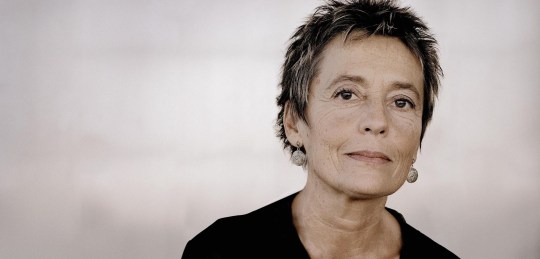
Maria Joao Pires
Maria Joao Pires

The classical musician’s training is still largely about preserving tradition and the reverential “canonization” of repertoire: we’re taught from a young age that Bach, Mozart, Beethoven, Brahms et al…. are “great” composers. Revering the music in this way can create problems when learning and playing it: for pianists, as for other musicians, certain works – the Goldberg Variations and the Well-Tempered Clavier, Beethoven’s 32 Piano Sonatas, Chopin’s Études, the great piano concertos, for example – have an elevated status on a par with the works of Aristotle, Shakespeare or Dickens. We hold the music in awe and feel a tremendous responsibility towards it. Thus, the musician is like a conservator or gardener, bringing these great works to life.

As a consequence, it can be difficult for us to find our own personal voice: the music itself is not necessarily “more difficult”, but the weight of history, and the long line of renowned musicians who have played these great works, can stifle our creativity, artistry and personal interpretation (it is for this reason that I tend towards lesser-known or contemporary repertoire for performances). In addition, the many recordings of these works, plus a century or more of scholarship, can drown out one’s personal voice. You hear a “perfect” recording or performance and wonder “what can I bring to this music that is new/different?”

I had to stop myself listening to other people play it or there would no hope in hell of me finding my own way with it.

– Jonathan Powell, pianist

There are, however, ways to mitigate this. Listening to great recordings and performances does no harm. They can inspire and inform, highlighting aspects of the score which may not be obvious from our initial study of it, sparking ideas, expanding our perspective and nourishing our perceptions of the music. We can admire the great interpretations of the music we are studying, but should never seek to imitate nor borrow from someone else’s version. Acknowlegding the greatness rather than revering it can be helpful too: after all, if we continually keep the music on unreachably high pedestals, we may never actually play it, thus denying ourselves the opportunity of experiencing something truly wonderful and the feeling of being part of an ongoing process of recreation every time we play or perform the music.


If you enjoy the content of this site, please consider making a donation towards its upkeep:

Buy me a coffee

header image: statue of Glenn Gould in Toronto, Canada


