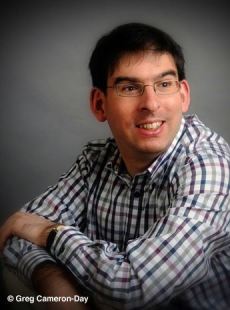
Who or what inspired you to take up composing, and pursue a career in music?

At the age of 5, having heard classical music on the radio and piano lessons at my mother’s school, I asked my parents if I could have piano lessons. After piano lessons started I decided I wanted to be a concert pianist and a few years later I began writing pieces for myself.

Who or what were the most significant influences on your musical life and career as a composer?

Contemporary dance. People, songs, dance and the landscapes of my native Jamaica. The music of Bela Bartok. Later also the music of J S Bach, Birtwistle, Stravinsky, Messiaen, Schoenberg, Robert Cohan.

What have been the greatest challenges/frustrations of your career so far?

Two things: issues of race and gender in as much as they have defined me in the minds of others.

Not having had what is considered a thorough and proper university education as a composer.

What are the special challenges/pleasures of working on a commissioned piece?

Deadlines; they are as energising as they are terrifying.

What are the special challenges/pleasures of working with particular musicians, singers, ensembles and orchestras?

Finding out and knowing about the special strengths of particular soloists or groups. I found that working with, for instance, Mary Plazas whilst writing my opera was a big influence in how that role was shaped. Ditto writing my first violin concerto for my violinist husband, Thomas Bowes.

Of which works are you most proud?

‘Snow White’ as it was my first piece for that size of orchestra. Far from being intimidated I felt instantly at home.

My three String Quartets I can now look back on with great pride. I managed three quite substantial pieces I feel, and that they are all very different from each other pleases me especially now that they have been recorded.

The Opera ‘Letters of a Love Betrayed’ because it so clearly moved people when they saw and heard it.

I was also proud of ‘Arise, Athena!’ which I wrote for the last night of the BBC Proms.

How would you characterise your compositional language?

I have a language which ranges from things clearly derived from my Jamaican childhood and heritage through to the sort of sounds people more often associate with modernism. There always seems to be a sliding scale of the proportions of these two extremities. This has been a problem for some people – even me – at times. But I’m now quite relaxed about this. I write to be me.

Who are your favourite musicians/composers?

There are those I’ve admired from afar; composers Schoenberg, Berg, Bartok, Stravinsky, Shostakovich, Messiaen, JS Bach; pianists Martha Agerich, Sviatoslav Richter, conductors Kleiber and Furtwangler amongst others.

And then those who I’ve actually had the pleasure of hearing or getting to know or working with – Jeremy Huw Williams, Mary Plazas, Thomas Bowes, Joseph Swensen, Joanna MacGregor, Peter Ash, Harrison Birtwistle to name a few.

As a musician, what is your definition of success?

Sensing an audience has been moved or thrilled or for whom one senses time has stood still during a performance. All three at once is good.

What do you consider to be the most important ideas and concepts to impart to aspiring musicians?

Be serious about what you are doing. Be persistent, dedicated, disciplined and passionate. Be yourself – that’s the tricky bit.

What is your most treasured possession?

My home.

What do you enjoy doing most?

Composing, playing. Relaxing with my hubby and friends.


London’s premiere youth orchestra, the London Schools Symphony Orchestra, will mark Eleanor Alberga’s 70th birthday with a performance of her musical adaptation of Roald Dahl’s Snow White and the Seven Dwarfs at London’s Barbican Hall on 23 September. More information


With her 2015 Last Night of the Proms opener ARISE ATHENA! Eleanor Alberga cemented a reputation as a composer of international stature.  Performed by the BBC Symphony Orchestra, BBC Chorus and conducted by Marin Alsop, the work was heard and seen by millions.

Her music is not easy to pigeon-hole.  The musical language of her opera LETTERS OF A LOVE BETRAYED (2009), premiered at the Royal Opera House’s Linbury stage, has drawn comparisons with Berg’s Wozzeck and Debussy’s Pelleas, while her lighter works draw more obviously on her Jamaican heritage and time as a singer with the Jamaican Folk Singers and as a member of an African Dance company.  But the emotional range of her language, her structural clarity and a fabulously assured technique as an orchestrator have always drawn high praise.

Born in Kingston, Jamaica, Alberga decided at the age of five to be a concert pianist, though five years later she was already composing works for the piano.

Read more

eleanoralberga.com

What does it mean to be “a pianist”?

Pianists do not devote their lives to their instrument simply because they like music….there has to be a genuine love simply of the mechanics and difficulties of playing, a physical need for the contact with the keyboard….inexplicable and almost fetishistic….

– Charles Rosen

The members of my piano Meetup group, my students, the people who play street pianos – they are all “pianists” to me.

Yet in the research for this article, I discovered that many people believe the title “pianist” assumes a certain level of capability and should only be conferred upon a select few – professional concert pianists or those who have achieved an extremely high level of musical attainment.

“Oh I’m not a proper pianist!” is a common refrain from the amateur pianists I meet regularly, some of whom are very advanced players. But what is a “proper” pianist? Is it someone who can perform complex repertoire from memory, with confidence, poise and flair, who has undergone a rigorous professional training, who has 50-plus concertos “in the fingers”….? Or is it simply a person who self-identifies with playing the piano?

Google isn’t much help either. Type in “Being a pianist” and the search throws up any number of “How to be a better pianist” sites,  “top 10 worst things about being a pianist” or “15 steps to become an amazing piano player” (if only it were that easy!).

hand-of-a-pianist-rodin
Hand of a Pianist by Auguste Rodin

A confession: although I have played the piano for nearly two-thirds of my life, it wasn’t until I had secured my first professional qualification (a performance diploma, taken in my late 40s), that I felt I could justifiably describe myself as “a pianist”, rather than someone who “plays the piano”. When I started to give public concerts, sometimes for real money, I stopped feeling like I was playing at being a pianist, a fraudulent concert pianist.

Being a pianist implies an intensity of connection, commitment, passion and focus. For those who play professionally, it can be all-embracing, sometimes overwhelmingly so, for one must live and breathe the instrument and its literature. Work shapes every hour of the day, the cadence by which one sets one’s life, always feeding the artistic temperament, the pressure to achieve matched only by the pressure to sustain, and always the uncomfortable knowledge that one is only as good as one’s last performance. In addition, the competitive nature of the profession coupled with its job insecurity leads many professional pianists to pursue, by necessity, what is fashionably called a “portfolio career” which may include teaching and lecturing, running summer schools, arts administration or even roles outside the music industry. “Being a pianist” can feel distinctly unglamorous, restrictive, sometimes lonely, often badly paid….

“I play the piano” suggests a more casual relationship with the instrument, something one does occasionally, at weekends, on Sundays….Yet many of the amateur pianists I  encounter display a passionate commitment to the instrument which borders on obsession, regardless of the level at which they play. These people are not dreaming of the stage at Wigmore or Carnegie Hall; no, they play and practise for a personal challenge and fulfillment, a sense of one’s own accomplishment, to be better than one was yesterday while working towards tomorrow, and the next day, and the next…..It’s addictive, constant and consistent, sometimes therapeutic, often frustrating, but always, always compelling….It’s founded on love, of the instrument and its literature, and it is this love which drives these people to practise, to take lessons, and to strive to improve their playing, cherishing precious moments in their busy lives to find time to spend at the piano.

It’s a state of madness. Unless you’re any good. Even then, you drive yourself half mad and waste precious time proving yourself to idiots who haven’t a clue – David, professional pianist

There’s a frustration with which many of us who play at an advanced level are familiar – that people don’t really understand or appreciate what we do, or how hard it is (“does it get easier as you get better?” a friend of mine asked me recently. “No“, I replied. “You just get more efficient at working out how to do it!“).  I remember the parent of one of my students commenting admiringly that it was “amazing” how the music just “came out” of my fingers. “How do you do it?” she asked. I felt like asking her whether she had ever considered why her daughter, my student, was required to practise regularly…. Yet for audiences and onlookers the magic, the mystique, of the pianist is very potent, and to reveal too much about our craft and art would dispel that.

Frustration, physical pain and constant setbacks. Sadly it doesn’t seem to be a mantle I can take off though – it’s just what I am

– Dave

It’s my passion, frustrating, challenging and rewarding every day

– Teresa

It is the most important thing in my life, it makes me profoundly happy to play and teach this beautiful instrument and its wonderful repertoire. I never take it for granted. When I play, I am transported somewhere else beyond my music studio…

– Caroline

It means I can be pro-active with the world of music, and not just a bystander

– Terry

It means feeling alive, it’s who I am. My life would be useless without music

– Tricia, professional pianist

Being a pianist puts us in touch with a vast repertoire, a rich seam of creativity, and some of the finest music ever written, and still being written. By engaging with it, we bring these works to life, like a conservator or gardener, every time we play. It puts us in touch with emotions and sentiments which are common to us all; it reminds us of our humanity, yet also transcends the pedestrian, the every day. In this way, for many of us being a pianist is an escape: as a child, I regarded the piano as a playmate, a place where I could go to weave stories and set my imagination free. Why should that be any different when one reaches adulthood?

For all of us who play the piano – amateur or professional – being a pianist offers limitless possibilities in what we can create and experience.

The real question is – what would you be without the piano?


If you enjoy the content of this site, please consider making a donation towards its upkeep:

Buy me a coffee

Guest post by Howard Smith, Adult Amateur Pianist

My first Chetham’s. The International Summer School & Festival for Pianists, that is. Manchester, UK. Two hundred and thirty participants. Forty tutors and staff. Phew!

What is Chetham’s? A holiday? An experience? A dream? Deep learning? A festival? Camaraderie? Joy? All these and more. Mental exhaustion? Yes. Tutorials throughout the day. Recitals each evening. And practice rooms open 6am til 11pm. Seven days (fourteen if you can do it) of end-to-end piano madness. Non-stop. Punctuated by meals and coffee breaks. And for those with stronger metabolisms than I, late nights in the bar or around town. I needed sleep. Lots. Be prepared to pace yourself.

So what is Chetham’s? A privilege. Yes. A shock, also. So much talent. I feel … inadequate. My journey just beginning, despite the last years of obsessive practice. I am … nowhere. Visceral. I feel it keenly as I watch the young people and experienced ‘adult amateurs’. It’s hard to come to terms with this reality, despite the modest progress I have made. So little for the effort expended. Like a heavy weight bearing down on me, I hardly dare to imagine what will happen if, in the end, I find the journey too onerous.

Day 0: Registration. Check in. Unpack. Explore. And in the evening (from 5pm) three recitals! Three!! Nearly four hours of music, including Peter Donohoe CBE (Haydn programme).

Day 1: Tai chi (optional) Breakfast. 1-to-1 and group workshops. Coffee break. Workshops or practice. Lunch. Workshops. I play on stage, on a grand, for six minutes, to over seventy people. I am first to volunteer. Not bravery. Far from it. Desperation. Unless I do this my performance anxiety will kill whatever progress I have made. Dinner. Then three more recitals. Top international talent. 10pm. Bar. Wine (large glass). Sleep.

Repeat for six days. And *everyone* gets a piano.

Day 2: 9am. I am sitting in (observer) on a composition class. A young man, clearly ambitious (and knowledgeable) is explaining to a faculty tutor that he wishes to write a toccata. His  tutor opens a copy of Spectrum, book IV (ABRSM) and invites the young man to accompany him at the keyboard in selected ‘miniatures’. They discuss style and compositional ideas. Exploring. There is a poster on the wall of the tutor’s office: Peter Maxwell Davies. My mind returns to 1975.

What is Chetham’s? Memory jogger and nostalgia generator.

Time for my second 1-to-1. Schubert. I learn how to play big chords, softly. And how Schubert requires far less pedal than I was using. Somehow Tippett enters the conversation. My tutor has a close relative now occupying the house where Tippett lived and composed. He tells me about the garden path he trod while writing Child Of Our Time. And as the lesson ends, my tutor tells me – based on what he heard and the way I took instruction – that I should be playing more advanced music: Grade 8 music. Music to my ears …  but he does not know just how much work I do at Grade 6. LOL.

Still day 2. Lunch. I sit down by myself. A lady a couple of chairs away seems eager to introduce herself. We exchange stories. As a student, she studied Jazz, at Leeds, and now teaches. I start listing some of my musical heroes, starting with Corinne Bailey Rae. Her face lights up. “I was at college with Jason and Steve!” Oh my. My new Chetham’s friend (Leeds accent, there’s the clue) shows me photos of herself and the gang.

Is this musical world smaller than we imagine? Is that because being ‘musical’ is rare? Or weird? Does it require a particularly high IQ, or is it just a niche innate ‘talent’? More evidence emerges … I am in the school shop (Forsyths, who also ship-in additional grand pianos for the summer school) and ask a question about the Spectrum series of ‘contemporary music’ I heard about in the composition class. A man standing nearby asks, “Ah. Do you like contemporary music?”

“Britten and Tippett,” I reply.

“Oh, not contemporary then,” he says. “Britten would be 106 this year.” He smiles.

(He has a point. I have some catch-up to do.)

And then explains he has “worked with Britten”, and “lived for a while at The Red House”. Wow.

“And did I mention that I also worked with Tippett. Nice man.”

And the young woman behind the book counter joins in. “Yes, Tippett came to conduct our school orchestra. I agree, really nice. Fun. Britten was a but stuffy.”

Racing ahead with more connections the man (a Faculty tutor I now see from his badge) adds, “I taught Ed Sheeran you know. Lovely family. Must catch up with him some day.”

So there we are. What is Chetham’s? The centre of things.

How can this still be Day 2? But it is. A (much anticipated) evening recital in the gorgeous Stoller Hall (perfect acoustics). Angela Hewitt. Bach. The monumental Goldberg (30) Variations. Four (four) standing ovations! A once-in-a-lifetime performance. Superhuman. Truly. Everyone agrees.

stoller-hall-1440x720
Stoller Hall

Day 3. The afternoon class introduces a wonderful idea. We are each asked to i) walk to the piano (applause), ii) improvise “anything” (no more than thirty seconds), iii) take a bow and iv) walk offstage. It works like a dream. Those who were reticent to play before are, by the end of the course, playing to the group.

Day 3. Evening. The bar. Chatting. We have just been treated to not one but TWO concertos. Brahms No. 1 and No. 2, with full orchestra (the first performed by Murray McLachlan, founder of the summer school, the second by the french-American pianist Eugen Indjic). A quiet lady joins us. I ask her what she has played to her group. In an accent I don’t recognise she explains she is too nervous. She has travelled to Manchester from Brazil. And not played! (other than to her tutor) Well, that has to end. Gathering up a colleague, and despite it being late (11pm), I suggest that we grab a room with a couple of grand pianos and play to each other for an hour or so. And we do. And my little plan works. She plays a complex piece by Villa Lobos. Slow and hesitant but lovely. And half an hour later she is showing off another piece, rich in Brazillian rhythms. Mission accomplished.

(Later in the week I repeat this trick for an IT Project Manager who had previously only played to his teacher at home … not even to his family and friends. But he played for me, at Chetham’s, and later found the confidence to play in his final group workshop.)

So what is Chetham’s? Mutual support network. Agony aunt for performance anxiety limited international piano tourists.

Day 4. I sit in on an ‘Improvisation” lesson. The pupil is a lady I met on the bus from the station. She has spotted my music bag and introduced herself. Her first Chetham’s, just like me. To the surprise of her tutor, she breaks down, tearful, before the lesson gets underway. The explanation: the first two days had shown her a new world: what it *really* means to be a musician. She explained that her musical education at school, and with various ‘teachers’ thereafter, was little but rote learning. No creativity. No authenticity. I understand her. My childhood experience was limiting. Decades pass and along comes Chetham’s to show us what the journey is really about. Two minutes later she has recovered her composure as she listened to the kind, empathetic, words of reassurance from her sensitive faculty teacher.

Day 4. Just before lunch. A friend from a London-based piano circle I attend (LPMG) emerges from class. We decide to help each other and find an empty practice room. He helps me with my sight reading. We exchange notes on Bach minuet style. We play Satie to each other, wondering how to achieve evenness.

analysis
Adult student receiving tuition at Chethams Summer School for Pianists

Day 4. Afternoon tutorial. More input. Listen. Apply. This is good. I am learning. I hope it sticks. I’ll try.

Quote of the week:

Pupil: “I always get these bars wrong.”

Tutor: “I see. Have you tried playing them right?”

Evening concert. Sarah Nicolls’ ‘Outside-In-Piano’. Difficult to describe. Sarah builds vertical pianos, exposing the strings. The keyboard is sawn off and put back at a ninety degree angle. (No reaching over to get to the strings and the audience sees everything) Sarah uses this ‘instrument’ and a pile of electronics to compose new music. Tonal music washed in pads of sound coaxed from the unusual piano using her box of toys. What is this music? Part theatre, I could call it acoustic-electro-Dada’esque art. The hour with Sarah bewitches the audience. I meet up with her after the show, and she gives me an old piano-key from one of her construction projects. Apparently it contains a secret download-key to her digital album.

Sarah turns out to be an ex-student here at the school. So what is Chetham’s? Creativity incubator. And talent attractor.

Sarah is building a new InsideOutPiano (grand) using high-tech light weight components. The unique #StandingGrand will be built by FuturePianoLtd. The design will occupy no more space than a traditional upright and be able to be carried by two people. This will allow Sarah to perform more wildly and perhaps open the market for more musicians to own such a beautiful and unique instrument. Please consider supporting this project here on Kickstarter.

Day 5. Late (after an evening of recitals). Cabaret!! Not the musical; rather an end of summer school tradition. We assemble in the hall for the end of week celebration. A few have been roped in to provide the ‘entertainment’. A talented student plays the ubiquitous Bach Prelude in C major from the WTC Book 1. He is sitting on the ground, facing away from the keyboard, hands over his head and swapped left-right. This and a host of other entertainment closes the night. And before you ask … yes, I volunteered. It went down OK (for a first timer). Enough said of that the better.

Day 6. The following morning. Bit-of-a-head after late night wine. But I had signed up to play in the ‘leaving day’ recitals at 10AM. Without music! Memorization. Satie. Gnossiennes No. 1 and No. 2. Six minutes. That should be enough of me for this audience.

So what is Chetham’s? Unique. Essential. If you want to find out what lies ahead, just around the corner, waiting to pop up and poke fun at you. I’m back at school, where I need to be. The stepping stone.

What was the oddest thing I learnt? Clementi lives in Croydon. His name is Chris and he is a bellringer. Yes, Clementi’s great great (etc) grandson lives not too far. I knew there was a reason I found those exercises a little too close for comfort….


Who or what inspired you to pursue a career in music?

When I was very young (2 or 3 years old) I would visit my grandmother and watch her play piano. She was amazing – she could play by ear. The memory that is the clearest for me is listening to her play “Harlem Stride” piano – mostly songs by the great Jelly Roll Morton. She would have this incredible laugh. It was pure joy. I was captivated and I wanted that for myself. It‘s funny – at 3 years old I don’t think I knew what “that” was…

Who or what have been the most important influences on your musical life and career?

How much time do you have? (laughs) I think the single biggest influence on me has been film music. I have been listening to film music since seeing “Fantasia” (Disney 1940). I have always been amazed at how music and visual could work together. Even now, my recordings are so programmatic. I love creating “scenes” and characters in my songs. People ask if my songs are about me… or if I am the central person that the song is based on. The answer is a resounding “no”. Music is an opportunity for me to inhabit the lives and experiences of others – just like in the movies.

Which performances/recordings are you most proud of?

My new recording “Cupid Blindfolded” has been one of the most satisfying of my life. I think it started with the writing. I was very, very focused and disciplined and I think all of the preparation made a huge difference. Many of my other piano recordings have been either completely improvised or partially improvised – “Cupid” stands out as a triumph of performance and composition for me. I also think “Cupid” is the best sounding piano recording I have ever made. Engineer Tom Eaton is a genius and he did an amazing job. You can watch a “mini-documentary” about the making of the recording here:


Watch the first video here:

The other album that I am very proud of is: “The Shadows of October.” It’s a collection of my ‘classical’ chamber works including my two string quartets. You can listen to my String Quartet No. 1 here:

Which particular works do you think you perform best?

It’s hard to say because I only perform live 5 or 6 times a year. Frankly, I hate playing my pieces exactly the way I recorded them. In concert, I use the melody as a “jumping off point” and I take the audience on an adventure musically. It’s been fun to take a very popular melody like “I Have Loved You for a Thousand Lifetimes” and watch it evolve over the last 15 years. In the case of that song, I do NOT mess with the melody. I think there would be a riot at the performance! (laughs)

What is your most memorable concert experience?

Last year, I did a concert for about 75 people – lovely space. No chairs. People laid on matts. Some did yoga (quietly). Some napped. Some held hands with their friends and partners and just “vibed” to the music. A woman even laid down UNDER my piano! It was wonderful. The audience loved it. I might do it again with all this new music I have created.

How would you describe your compositional style?

I think my language changes based on the type of music I am creating. I am something of a “chameleon” in this way. I might be creating a “rock” track for a jingle that has a very different musical language than a classical piece versus my solo piano music which is maybe the ONLY place in my musical life where I take shards of all the musics I create and press them into their own palette. On my new album, “Cupid Blindfolded”, you can hear my pop, jazz, soundtrack, classical and even my bent towards chromaticism – even avant-garde. I love the idea of self limiting systems in music. For example, a string quartet is the most rigorous kind of system where you have these four instruments and centuries of repertoire. Writing for solo piano is a similar challenge but you can surf more easily inside of “style” or “genre”. Recently, a reviewer on the radio said: “it’s ridiculous to call Michael Whalen’s music on ‘Cupid Blindfolded’ ’new age’”. (laughs) Honestly, I have to agree. I am pulling together 30 years of experience when I make my music. The only problem is that I trip over my limitations as a “pianist” while trying to execute the music I have created often!

How do you work?

Oh, this is TOP secret! (laughs) Honestly, it changes from project to project. However, for my recordings – – I do two things: first, I create the NAMES of the songs before writing a note of music. Secondly, I like to have some idea on the cover artwork as early in the process as possible. Having these elements helps me focus on the “story” and the “character” of each piece. I love writing programmatically. I guess it is from writing so much music to picture.

As a musician, what is your definition of success?

Freedom. Artistic, financial and creative freedom. Two out of three ain’t bad! (Laughs)

What do you consider to be the most important ideas and concepts to impart to aspiring musicians?

Integrity. I think for musicians coming up to be true to who they are as artists versus trying to create “content” to be popular. I have friends my age who battle with this idea. They think to be relevant they have to be well liked. That is nonsense. To be relevant you need to be saying something that is connecting with people authentically. Fans can smell a fake a million miles away. You can’t fake soul, emotion or pathos.

Where would you like to be in 10 years’ time?

Exactly where I am.


Michael Whalen’s new album Cupid Blindfolded, his first solo piano album in 20 years, is available now. Stream or buy “Cupid Blindfolded” here


Michael Whalen is a two-time Emmy® Award winning composer and music supervisor (with 8 nominations) who has worked in advertising, television, film and video games for over 30 years. Some of his best-known work: “Veronika Decides to Die” (2014), “What the Bleep Do You Know?”, “As The World Turns”, themes for HBO, CBS News, ABC News’ “Good Morning America”, “The Oprah Winfrey Show”, dozens of specials for PBS, National Geographic, Discovery, The BBC, NHK and the History Channel and television films for Lifetime and the Hallmark Channel. Michael is also an internationally known recording artist with 32 solo and soundtrack recordings to his credit. Well-known for his beautiful and thematic music, he performs when time allows. He has also produced and executive produced over 100 recordings for other artists. His work as a executive producer resulted in a Grammy Nomination in 2000. 

michaelwhalen.com