Who or what inspired you to take up the piano and pursue a career in music?

My family loves music, although none of them are professional musicians. But they enjoy having friends over, having fun playing accordion and singing songs together, so I grew up in a music loving atmosphere. When I was four, my mother bought me a piano as she thought musical training would be beneficial for me. I was a quiet girl and could easily sit in front of the piano for a long period of time, definitely longer than the other kids could I suppose! I guess I was quite attracted to the sound of piano without knowing what it would mean to my life. Later, I won first prize at a number of piano competitions held in my home city Chongqing when I was between the ages of six to nine. My parents were encouraged by the professors from the best conservatory in China, and decided to send me for professional music study. So, I moved to Beijing at the age of ten, and “officially” started to pursue a professional career at the Central Conservatory of Music. Once I started to understand music and gradually build up a genuine connection with it along the path, I became more certain about choosing a career in music.

Who or what have been the most important influences on your musical life and career?

My piano teachers. I wouldn’t have gone this far without them. I’ve always been lucky to work with teachers who have helped me tremendously in different stages of my career. Professor Huiqiao Bao was my teacher for twelve years in the Central Conservatory of Music in Beijing. She laid a solid foundation for my career, as a respectable female musician, she is most certainly my role model. Her lessons have extended beyond the scope of music and spilled over into my life, learning better how to navigate through difficult periods. I studied with Professor Alexander Korsantia during my time in New England Conservatory in Boston; his passionate attitude to music and bold approach to life constantly encourage me to step out of my comfort zone and break my limits. My current teacher at the Royal College of Music in London, Professor Norma Fisher, is bringing my understanding of music to another level. These teachers have always been by my side and have guided me to be a better pianist. Their attitude towards music has inspired me to pursue the ultimate goal to become a better artist.

What have been the greatest challenges of your career so far?

The greatest challenge I have faced was to hold on to the passion and belief in the music I perform, regardless of any dilemma and obstacles that came my way. I believe all the greatest artists have experienced the same challenges and overcame them.

Which performance/recordings are you most proud of?

All of the performances I have given were meaningful for me; I keep learning from every performance, also getting to understand the pieces and myself better. Thus, I would say I am proud of every step I have taken.

Which particular works do you think you play best?

It depends on the time being. However, it would definitely be the pieces that I feel connected to the most at that time. Lately, I feel a deep connection with the music of Scriabin and Rachmaninov.

How do you make your repertoire choices from season to season?

I think it’s important for young artists, including me, to try to add variety into their repertoire. I would not want to limit myself to a certain style, or certain composers. Instead, I love challenging myself by selecting pieces that cover a wide range of styles, and pushing myself to play pieces that I don’t feel most comfortable with.

Do you have a favourite concert venue to perform in and why?

It’s really hard for me to pinpoint a favourite because I’ve enjoyed playing in different ones. Some are grand concert halls, some are intimate salon venues. I think each venue has a unique character and my adjusting to it can certainly be a fun part of the performance.

Who are your favourite musicians?

There are many extraordinary musicians I’d like to mention, but Radu Lupu and Martha Argerich are the two living musicians I admire the most. Radu Lupu’s playing always flowed with the genuineness and the simplicity which held deep thoughts behind the musical language; his interpretation of the works by Schubert simply blows me away. Martha Argerich is a female musician who has a strong character; her boldness and fearlessness makes her music so unique and effective.

What is your most memorable concert experience?

I was attending a music festival in Kiev Ukraine in February 2014, and was scheduled to play Tchaikovsky Piano Concerto No.1 in a concert. At this time the Ukrainian Revolution broke out, there was violence involving riot police, shooters, and protesters in Independence Square. I was very frightened being in the city. However, the concert went on as planned, and I was deeply touched when I saw so many people in the audience At that moment, there was no doubt that music can heal great divisions. It was the most unique concert experience in my career so far, and it reminds me the meaning that music can bring to everyone.

As a musician, what is your definition of success?

Despite all the obstacles, keep playing, pursuing and sharing music for a lifetime!

What do you consider to be the most important ideas and concepts to impart to aspiring musicians?

Always be genuine to the music and the composers, learn the background and history of the music and composer, try to understand the true meaning that the composers wanted to convey and interpret their works with your own voice. To build up a career as a musician, our persistence and love for music are always the backbone to support our dreams.

What is your idea of perfect happiness?

Doing the things I love to do for life and could have others benefit from it.


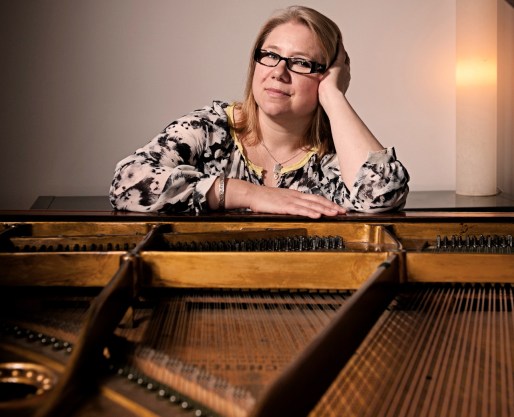
Born in 1992, Chinese pianist Siqian Li started her musical education at the age of four. She studied with Madame Huiqiao Bao, received her Bachelor of Music Degree at the Central Conservatory of Music (Beijing) and became the first pianist to be awarded the “Best of the Best – Top and Innovative Talent” diploma and scholarship from China’s Ministry of Culture. As a student of Professor Alexander Korsantia, she obtained a Master of Music Degree with Academic Honors and a Graduate Diploma at the New England Conservatory (Boston). She continues to pursue an Artist Diploma at the Royal College of Music (London) under the tutelage of Professor Norma Fisher.

Read more

Guest post by Dr James Holden

I’ve always really enjoyed playing the piano. However, I’ve always avoided doing my piano practice. This spring I decided to put an end to that. I was particularly motivated by the start of the annual 100 Day Project, in which people commit to doing something creative for 100 days. I determined that my project would be to teach myself how to play Chopin’s Nocturne op. 27 no. 2, a piece I’ve always loved but lacked the impetus and dedication to learn. To do this, I committed myself to practising for at least 30 minutes every day. What’s more, I decided to make myself publicly accountable by streaming my practice sessions on my Twitch channel.

In case you’re not aware, Twitch is a streaming platform usually used by gamers to broadcast themselves playing videogames. However, it’s also used by artists and other creatives to stream their ongoing work. At any one time you can usually find several pianists playing live in the ‘Music & Performing Arts’ category. These players are often watched by hundreds of viewers as they perform arrangements of popular songs and other tunes, improvisations and more.

If these pianists are giving online concerts, they are less like modern concerts than they are nineteenth-century salon performances. Twitch allows real time interaction through a chat window which means that these pianist-streamers can engage with their audiences in real time between and even during pieces, and are therefore able to perform requests, respond to suggestions and otherwise chat with viewers.

My own Twitch streams are a little different. Firstly, my standard of playing is generally lower: I am an intermediate level amateur at best with limited repertoire (largely the result of my limited practice!). Secondly, I’m not attempting to give salon style performances. Instead, I’m ‘just’ broadcasting my daily piano practice.

Practice is normally private not public. It’s what precedes a performance; it’s not the performance itself. And yet, the simple act of streaming it on a public media platform means that my private practice does take on a performative aspect. Even if no one is watching – and that’s often the case on my channel – people could be watching. And that makes all the difference.

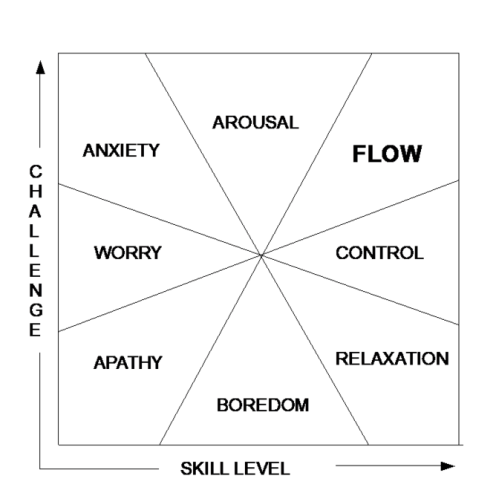
The performative aspect of my streams has necessarily altered my relationship to my practice. It has introduced an implied need to make it enjoyable to watch. This means, in the first place, choosing to work on a piece that will appeal quickly to viewers surfing between channels. The Chopin nocturne I’ve chosen is a beautiful work with relatively immediate appeal. However, it simply doesn’t have the mass recognition or popularity that a cover of a hit song would have. Secondly, the need to make my streams an enjoyable watch potentially risks altering how I practice. It feels as though I should play the work through coherently ‘in flow’ rather than working in a more deliberate, detailed fashion. It’s just not that much fun to watch someone play one bar over and over, or play a phrase slowed down to the point of unrecognizability. And yet, that is the kind of effort that is often required when practising.

On the plus side, Twitch’s interactivity means that it’s possible to get immediate positive reinforcement during practice. I was genuinely thrilled when a viewer typed in chat that my playing sounded good. The comment led me to think about the broader possibilities of learning on stream. I can imagine a practice session becoming something like an informal masterclass with knowledgeable viewers offering encouragement and advice.

chopinpaintingsmall

Given my chosen piece, I can’t help thinking about all these issues in relation to the Romantic virtuosos. Chopin himself, of course, was a brilliant performer but famously averse to giving large concerts. Perhaps he would have enjoyed playing in the privacy of his own home to an invisible public audience on Twitch. I’m not sure how he would have felt about making the private work of practice public though. I certainly know how the older Liszt would have felt. It’s probably true that during his years as a touring virtuoso the younger Liszt did much of his practice in public on the concert platform itself. However, in later life as the stern master of Weimar he was famously dismissive of pupils who displayed poor technique during his masterclasses, berating them with the declaration: “Wash your dirty linen at home!” I am literally counting ledger lines during my streams so am certainly, musically speaking, washing my dirty linen in public.

AD5728
Franz Liszt in concert in the 1840s

I’m only a short way into #the100dayproject. Despite the complications it has introduced, the decision to stream has already had several positive effects. Firstly, it has given me the necessary commitment to keep practising. My advertised stream schedule makes me publicly accountable for my practice in a way I’ve never been before, not even when I had lessons as a kid. I have, as a result, stuck to the task far more than I would have done otherwise, and my playing has genuinely improved as a result. I’ve certainly made solid progress with the nocturne. Whilst it’s true that I’m still stumbling over the more challenging passages and continue to play wrong notes, I at least play them better than I did before. It turns out that regular practice really does make a difference!

A second consequence of my decision to stream my practice is that I now have a video archive of my progress. I can compare the video of my day 1 stream with, say, that of my day 21 stream and quickly see the progress. This is a source of positive reinforcement that offers continued motivation when things seem challenging. More immediately, the fact that Twitch makes streams available as VODs means that I can watch myself back straight after I finish my practice. I can listen to my playing divorced from the act of playing itself, which means I can hear things much more clearly. The critical reflection for which this allows feeds back into my following practice sessions.

Thirdly, I have become somewhat used to the idea of others watching me play (if not perform exactly) – which was a rare occurrence before. In particular, I’m more accustomed now to the idea of people seeing me struggle with a piece and play wrong notes. I’ve had to get over any embarrassment about my lack of technical ability or competence, and my playing is probably becoming freer as a result. I think, overall, that streaming is making me more forgiving of my mistakes.

I’m excited about where my 100 Day Project is heading. I’m certainly looking forward to hearing the improvements I’m sure to make in the days and weeks ahead, and to exploring new pieces alongside my current choice of nocturne.

I’ll be streaming my practice on my Twitch channel at 6pm UK time for about 30 minutes every evening until I reach day 100. It’d be great if you could tune in, say hi in the chat and give me some encouragement. Please do give the channel a follow whilst you’re there too. Can’t make it at 6pm? Don’t worry, you can always find videos of all of my previous practice sessions, so do stop by.


James Holden is an independent writer and academic. He is a Lisztian, a Proustian and a Nerd. He is currently streaming his piano practice every day at 6pm on his Twitch channel. Find out more about his work and publications on his website. You can also follow his progress on Twitter and Instagram.

Review by Karine Hetherington

Natalya Romaniw’s star has been shining bright on the operatic stage for the past five years as her creamy soprano voice continues to draw an ever increasing legion of fans. A Daily Telegraph critic suggested in February this year that Romaniw was the next Netrebko of her generation.

At Opera Holland Park last season, I was enraptured by her lead performance in Tchaikovsky’s Iolanta. Her Tosca at Scottish Opera and, more recently, her Madame Butterfly at ENO, earned her the highest of accolades from critics and audiences alike. Her Cho Cho San at the Coliseum was unforgettable.

And now away from the heady world of live opera, Romaniw, together with pianist and long time collaborator, Lada Valešová, are bringing out Arion, an album of Slavic song repertoire.

Read more

Romaniw-ORC100131-WebCover-1

Who or what inspired you to take up conducting and pursue a career in music?

When I was 14 my violin teacher gave me the chance to conduct a string orchestra I was playing in. I remember vividly the experience standing there with the music flowing around and through me as I tried to communicate with the players. I didn’t have any technique at all and it was probably terrible! But in that moment I had a very strong sense that this was an extraordinary feeling and something I wanted to explore deeply.

Who or what are the most significant influences on your musical life?

I’m not sure I can judge this myself fully. However, without a doubt conductor Sian Edwards who is the most wonderful human being and has taught me a huge amount about the relation between music and conducting technique. Michael Dussek, my piano teacher at the Royal Academy of Music, was also a strong influence in helping me develop my own artistic ethos in service of the music. Working as an assistant to several conductors provided opportunities to see at first hand what works, what doesn’t and what kind of musical leader I would like to be.

What, for you, is the most challenging part of being a conductor? And the most fulfilling aspect?

Mastering a huge range of repertoire in the depth required is a never-ending challenge, particularly as a young conductor starting out. There is almost no amount of preparation that will enable you to feel fully confident with a symphony when standing in front of a great orchestra that has played it hundreds of times before. How to deal with this is an important milestone. The most fulfilling thing is when everything clicks within the orchestra, and the music seems to unfold naturally. When I feel as if I have to do very little on the podium this is wonderfully satisfying.

As a conductor, how do you communicate your ideas about a work to the orchestra?

I try to show everything with my baton, and occasionally where appropriate use a mental image or piece of historical context to frame a particular sound world or effect. It’s important to realise quickly what works best with a certain orchestra: some players prefer to avoid verbal communication, others are drawn in by a bit more context or personal imagery.

How exactly do you see your role? Inspiring the players/singers? Conveying the vision of the composer?

The position of the conductor is often anachronistic – it is only from the time of Beethoven onwards that musicians would have expected someone to direct the performance this way. In Mozart you need to get out of the way; in Mahler it almost seems as if the music was written for a single music interpreter to shape; in much contemporary repertoire you are akin to a sophisticated metronome. So the role varies, but the conductor must always bring his/her personal energy to the ensemble and a love for the letter and spirit of the music.

Is there one work which you would love to conduct?

Elgar Symphony no. 2. I find Elgar’s English character combined with his Austro-Germanic style of composition irresistible.

Do you have a favourite concert venue to perform in?

I’ve only performed there once but the Shanghai Oriental Arts Centre has the most exceptional acoustic: crystal clear yet warm enough to create any sound world you could possibly want.

Who are your favourite musicians/composers?

My all-time No. 1 conductor would be Claudio Abbado, whose flair, intellectual rigour and versatility across all repertoire seem unparalleled to me. If I had to choose one composer it would be Beethoven. At the moment I’m realising what a limited picture we get of him as orchestral musicians if we don’t explore the piano sonatas and chamber music. His symphonies and concerti alone give a misleading sense of his musical personality.

As a musician, what is your definition of success?

Very, very rarely we feel we have done justice to the music. It is gratifying when this feeling is shared by respected colleagues and listeners, and of course sometimes this can lead to career progression which plays a part in ‘success’ too.

What do you consider to be the most important ideas and concepts to impart to aspiring musicians?

An ethos of constant self-sacrificing exploration. And a passion to learn why and in what situation a piece was composed as this can really help recapture its spirit in the present moment.

What is your idea of perfect happiness?

To maintain a fulfilling balance between desire and satisfaction over a lifetime.


Mark Austin’s performances of orchestral and operatic repertoire have been praised for their “eloquent intensity” (Guardian).

Recent highlights include Mark’s debut at Royal Opera House Linbury Theatre, and the final of the Chicago Symphony Orchestra Solti Conducting Competition. He has been shortlisted for the ENO Mackerras Conducting Fellowship 2020-22. In 2019 he was elected an Associate of the Royal Academy of Music and worked in masterclass with Riccardo Muti. He collaborated with soloists including Guy Johnston, Kristine Balanas, Julien van Mellaerts and Siobhan Stagg. As assistant conductor he worked at Garsington Opera and with the Orchestre de Chambre de Paris. 2020 includes work at Folkoperan in Sweden, a return to Garsington and concerts at Oundle International Music Festival and Cambridge Summer Music Festival.

Other projects have included ‘Le nozze di Figaro’ (Dartington International Festival), ‘Goyescas’ (The Grange Festival), ‘Tosca’ (Musique Cordiale International Festival) and a two-concert Brahms residency with Guy Johnston and Faust Chamber Orchestra at Hatfield House. Mark was assistant conductor for the world première production of Mark-Anthony Turnage’s ‘Coraline’ (Royal Opera). He has worked with figures including Vasily Petrenko, Sian Edwards, Marin Alsop, David Parry, David Hill, Steuart Bedford, and the late Sir Colin Davis, and conducted orchestras including Aurora, Britten Sinfonia, Bournemouth Symphony Orchestra, Civic Orchestra of Chicago, Orchestra of St John’s and the Hangzhou Philharmonic, China. Mark was awarded a Bayreuth Festival Young Artist Bursary in 2018 and recorded the world première of Alex Woolf’s ‘NHS Symphony’ for BBC Radio 3, which won a Prix Europa. He studies with Sian Edwards and was awarded an International Opera Awards Bursary in 2017. 

An accomplished pianist, Mark has performed at venues including Wigmore Hall, Kings Place, St John’s Smith Square, Holywell Music Room, Opera Bastille (Paris) and the Shanghai Oriental Arts Centre. He is musical assistant to The Bach Choir and regularly conducts the choir in concert and the recording studio, including live on BBC1 for the Andrew Marr Show.

Born in London, Mark had lessons in violin and piano from an early age. He played in the National Youth Orchestra, and studied at Cambridge University and Royal Academy of Music, where he received numerous prizes and was appointed a Junior Fellow. Mark contributed a chapter on Wagner, Beethoven and Faust to the recently published ‘Music in Goethe’s Faust’. You can read more about Mark on http://www.mark-austin.net and follow him on Twitter @mark_aus_tin.

mark-austin.net