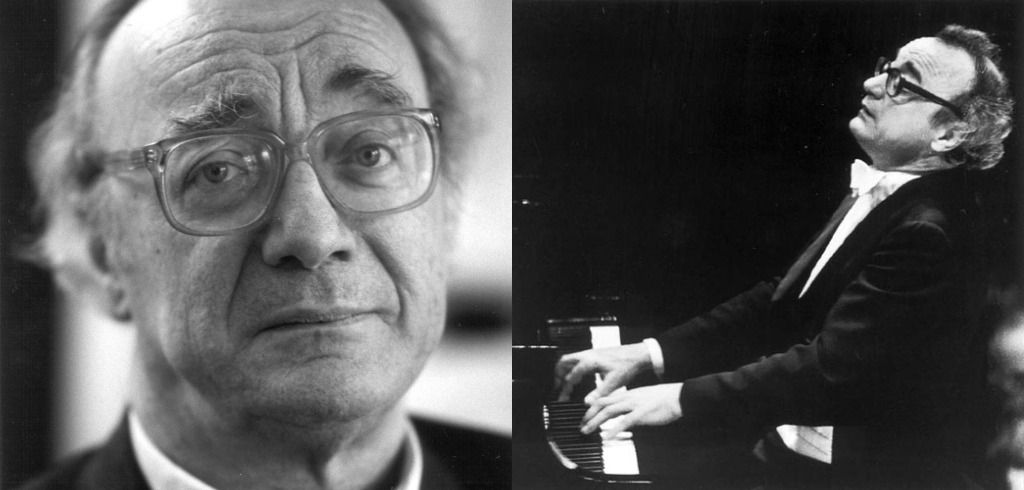
It’s hard to believe Alfred Brendel has died at the age of 94. He’s been a part of my musical landscape since I was a teenager, when my mother, who was an admirer of Brendel in concert and on LP, bought me an Edition Peters copy of Schubert’s Impromptus and Moments Musicaux to learn – music which has remained central to my own piano journey for over 40 years.
A highly regarded pianist whose performances and recordings of the core of the classical canon – Haydn, Mozart, Beethoven, Schubert and Liszt – are considered amongst the finest, Brendel retired from the concert platform in 2008 to focus on writing and lecturing. In addition to his impeccable, tasteful playing, his erudite and engaging writing on composers, music and the exigencies of the pianist’s life is intelligent and considered, the result of a lifetime spent in music.
What follows is just a handful of quotes from Alfred Brendel which offer some useful food for thought for musicians of all ages, whether amateur, student or professional.
If I belong to a tradition, it is a tradition that makes the masterpiece tell the performer what to do, and not the performer telling the piece what it should be like or the composer what he ought to have written.”
Brendel interviewed on the BBC
Fidelity to and respect of the score are the fundamentals of learning and performing music.
The score is the performer’s “road map”, with “signposts” to guide tempo, mood, expression, articulation, dynamics. These markings are also the composer’s personal “signs”, indicating and illuminating how he/she envisaged the music. At a simplistic level, these markings tell us “how to play the notes”, and we ignore them at our peril. Sometimes we have to make considered judgements in order to balance fidelity to the score with, for example, the possibilities offered by the modern instrument; such judgements are based on musical knowledge and experience. So while adherence to the score is fundamental, equally it is not the composer’s last word, as it were, and the score thus provides a jumping off point for interpretation, allowing the performer to bring their own personality and experience to the music and create performances which offer insights into the music while also remaining faithful to the text.
Brendel’s quote is also an important reminder to keep the ego in check when we play, so as not to obscure the music.
Recordings…have helped me to be better aware of my playing, to control it and listen to it more precisely
Here Brendel is talking about listening to his own recordings. Recordings are a very useful tool in practising, offering the musician an opportunity for self-critique, reflection and adjustment. And returning to recordings after a period of time, perhaps years in the case of Brendel, can also be enlightening as they offer a snapshot of where one was in one’s musical development/career and an opportunity to consider how one’s playing may have matured over time.
It should not be the purpose of listening to a number of recordings of a piece to observe what others have done and then play it differently to all of them because it’s me! The other end is to copy a performance that one loves as much as possible – one can learn from it….The most important source of performance is still the score.
Listening to recordings by others of the music you are working on is another useful practice tool, offering ideas about presentation, tempo, articulation and interpretation. As Brendel says, we should not seek to copy the great performers – imitation can sound contrived and artificial and anyway no one could truly imitate great pianists like Cortot or Argerich, for example. Equally, we should not seek to be different for the sake of our ego, but rather seek to be authentic and honest in our approach to and performance of the music. This also, neatly, comes back to Brendel’s comment about the importance of fidelity to the score and placing oneself at the service of the composer and the music, not one’s own ego.
This article first appeared on the Interlude.hk site, in an earlier version
The 88-key piano looks to be headed for a major transformation in the coming decades. The mechanism under the lid is based on a 130-year-old design and many specialists believe it is time to dispense with those delicate moving parts. As innovative Australian piano builder Wayne Stuart says, “The piano has been crying out for a rethink for over a hundred years.”
Stuart may have it right. The behemoth that once adorned middle-class salons East and West is already in steep decline.
In the long term, it looks doomed. Owners often complain these pianos occupy too much space and nobody wants to take them away – not even for free. Only three piano makers survive in the United States compared to dozens just a few years ago. Some 80 percent of piano production is now in China, mostly for the Chinese market.
The trends are downward because of declining interest in piano study in Western cultures and competition from a dizzying array of digital devices that attract our young. These gadgets require no practice time, no studying and – most importantly – no waiting. As Jean-François Dichamp of the Barcelona Superior School of Music told me recently, “Learning to interpret music demands a lot of time and maturity. It seems the new generations are not prepared for this kind of patience.”
The “acoustic” piano, sometimes known as the 88-tooth monster, is threatened from another direction, even more pressing. New electronic models – the virtual pianos –storming in from Asia are undercutting the classic piano in price and performance with digital or hybrid keyboards that feel and sound just about right. Young players love them. Yamaha, Casio, Guangzhou Pearl River, Samick, KORG, Kawai and others are competing in this transition period. Some concert pianists travel with their favorite electronic keyboard for a quiet run-through in their hotel room before a concert.
Schools and institutions, the bread-and-butter market for the industry, are showing a preference for the low cost and easy maintenance of digital systems. Sales projections are for electronic keyboards to exceed a million units worldwide annually within two years. Steinway, the market leader in acoustics, says it can produce only about 3,000 units a year.
The clunky, heavy, expensive classic piano, critics argue, may eventually end up in a museum by late in this century, displayed as beautiful furniture.
Before that happens, the acoustic piano still has some potential to change and improve. Paris musicologist and pianist Ziad Kreidy recently collected views from twelve piano builders around the world and found that most are “not satisfied with the status quo”. Ironically, they consider that the market dominance of Steinway “unfairly stopped historical evolution”. In his recent book “Keys to the Piano” (Editions Aedam Musicae) Kreidy notes that a few innovative builders who have survived Steinway’s aggressive commercial strategies aspire to offer “new possibilities for musicians, to widen acoustic horizons, to exceed Steinway and its competitors”.
German piano builder David Klavins says, for example, that new materials such as carbon fibre offer “significantly better options. In his experience, he told Kreidy, “I have discovered that virtually every aspect of the acoustic piano can be improved remarkably when and if builders begin to think outside the box…”
There is much conflicting data, however, with market forces pushing in opposite directions. But research indicates pressures are building for a “rethink” along Stuart’s and Klavins’ lines. Stuart has just delivered his first 112-key export to an amateur American pianist.
Piano innovation has a long history. When Franz Liszt joined forces with his French friend Sebastien Erard to introduce the last major improvement, the double-action piano that became the world standard in the 1770s, European music-lovers were at first stunned, then thrilled. Rapid repetition of single notes was suddenly possible. People by the thousands traveled to concert halls to hear the great Liszt demonstrate the new musical fireworks that Erard had enabled.
Liszt was the rock star of the 18th century. He roamed around Europe with his new Erard on loan, prompting some proper ladies in his audiences to faint in ecstasy as he exploited the piano’s new potential. Other players quickly followed Liszt’s example.
But it was nearly 100 years later that Heinrich Steinway industrialized the production of his improved version, and his heirs still rule the piano world today, standardized and robotized in construction. Nearly all recent improvements have been cosmetic, however, lacking any “rethink” of any consequence.
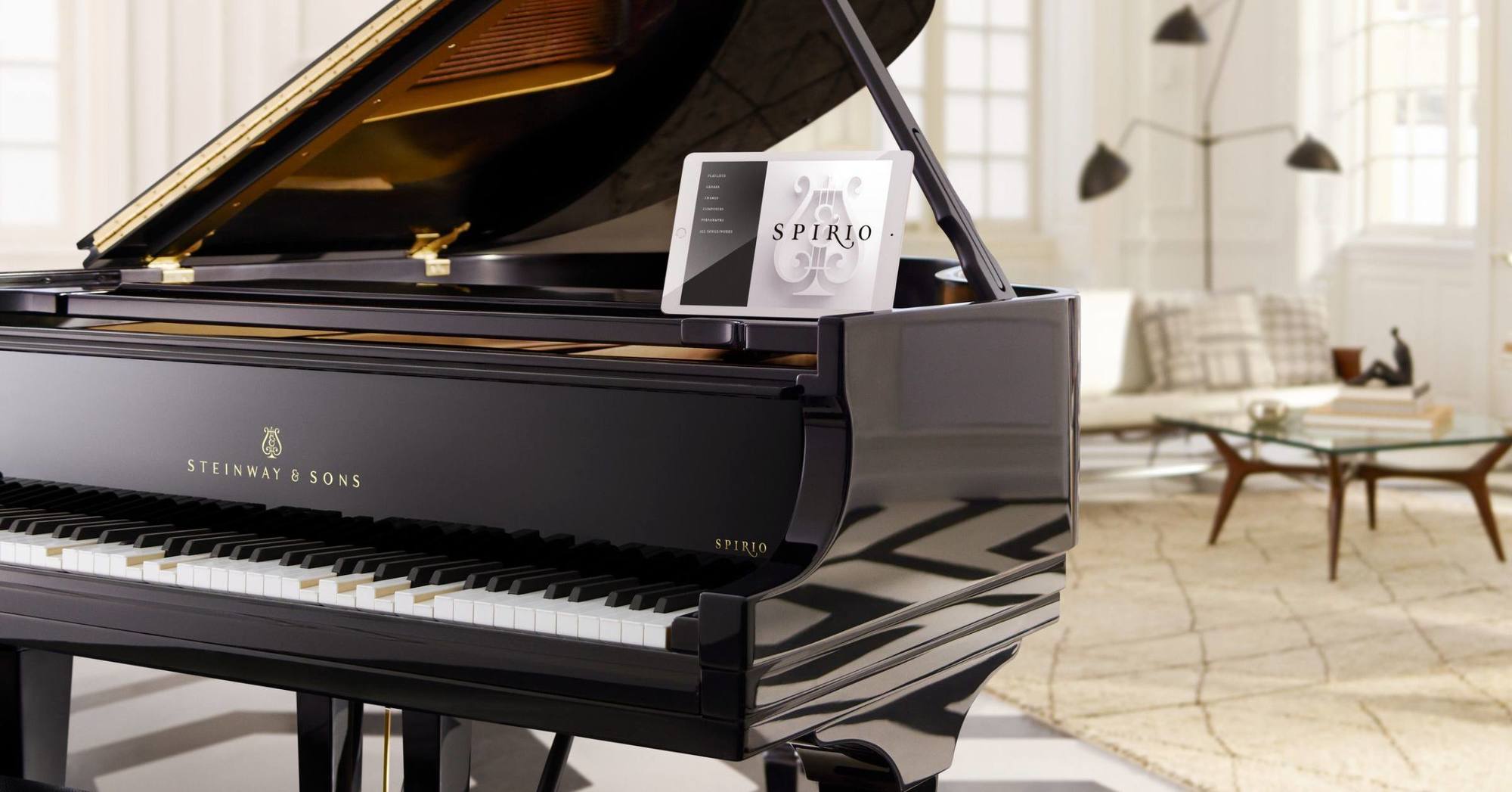
The Steinway influence has not been entirely positive. Critics such as Stuart refer to the brand as “Stoneway” for its innovation lethargy. The latest new thing is the best Steinway can manage – the Spirio. Aggressively marketed, it seems to be a toy for the very rich Chinese, delivering high-resolution recordings of leading pianists’ performances to run on a player piano in private homes. But who wants Lang Lang in their living room? Will a hologram of the Chinese showman be the next step? The technology is there.
(Image Steinway & Sons)
To be sure, most leading pianists roll out their Steinways onstage and are satisfied once the tuner wrests the strings into shape. But often at intermission, after just an hour of Chopin or Rachmaninov, the strings need further attention from a tuner as the audience looks on.
Other brands struggle to maintain smaller share of the market in Steinway’s shadow. Each has its personality, measurable in tiny advantages. Boesendorfer, Bechstein, Fazioli, Grotrian, Sauter, Shigeru Kawai, Steingraeber and Yamaha all claim to be the best. The American aphorism applies : Even if you are on the right track, you will get run over if you just sit there.
This century will almost certainly produce a new look, feel and technology for pianos – ones we are only beginning to imagine. Experiments have already appeared on the market. Klavins’ creation is seeking $6 million investment for development of his striking Model 408. Its mission, he says, is to “eliminate each and all acoustic and technological shortcomings that are associated with traditional grand pianos, including Steinway”. Fazioli builds futuristic designs custom-made for billionaires. Boesendorfer builds a 92-key “Imperial” known as the world’s most expensive piano at about $180,000. It has never caught on.
Other innovations can be found here and there. Bigger keyboards with additional octaves, sounds that will rattle your teeth, micro-tonalities that make your head swim, electronic expansions that imitate entire orchestras – or useful things like canned laughter, stormy applause and even gunshots.
More innovation is coming just over the horizon. French piano builder Stephen Paulello, a retired pioneer in innovative design, has commercialized his Opus 102 model that offers an keyboard of 102 keys. Soon he will launch a 108-key version, equal to that of Wayne Stuart’s world first, his Big Beleura.
Pianist Ashley Hribar, at the Big Beleura Australian keyboard (above) has released a CD featuring revisions of Liszt’s Mephisto Waltz No. 1 and his own Paganini Variations, among others. A listener will be surprised by the sonic range of the 108-key instrument. Ears are bound to perk up.
He and other pianists who have tried this model say they cannot imagine returning to the standard 88-key model. In this clip, Hribar calls on the deep bass and high treble to enhance “Fingerbreaker”, the Jelly Roll Morton classic.
This is not to say the world has fallen out of love with the classic piano, whatever its limitations. No instrument comes close to producing such a range of sound, loud or soft, to convey the beauty of music.
Can an estimated 60 million young Chinese students be wrong? They are studying and mastering Western piano music on the classic design. And international piano competitions now exceed 750 worldwide, attracting Asians and Europeans as well as a few Americans. Conservatories such as Curtis and Juilliard are thriving on the influx of talented fee-paying Asian students.
Leading players help keep seats filled in concert halls by staging dramatic performances in short skirts, low tops, high heels, and – for the men – eye makeup and acrobatic writhing, hair flicks and in Lang Lang’s case, the occasional wink at the house. Audiences are divided between love and hate for these excesses.
Contemporary composers are eager to contribute ideas to these experimental keyboards. A leader in this world, Prof. Kyle Gann of Bard Collage in the United States, says you must listen to his micro-tonality work over and over again to appreciate what a piano can do. His instrument uses computer technology to simulate more than 300 keys. A sample of his ethereal creations can he heard in his recent album “Hyperchromatica” which I have tested repeatedly to let it sank in. As one listener writes in the comments section of the CD, “The more you listen, the more coherent it gets.”
We are lucky to be alive as the piano undergoes this metamorphosis. It will be an unsettling, disturbing period, just as it was for Christofori, Erard and Heinrich Steinway who dared to rethink the instrument in the 18th and 19th and 20th centuries.
Now it’s our century. Now it’s our turn.
MICHAEL JOHNSONis a music critic and writer with a particular interest in piano. He has worked as a reporter and editor in New York, Moscow, Paris and London over his journalism career. He covered European technology for Business Week for five years, and served nine years as chief editor of International Management magazine and was chief editor of the French technology weekly 01 Informatique. He also spent four years as Moscow correspondent of The Associated Press. He is a regular contributor to International Piano magazine, and is the author of five books.Michael Johnson is based in Bordeaux, France. Besides English and French he is also fluent in Russian.He is a regular reviewer for this site’s sister site ArtMuseLondon.com.
Support The Cross-Eyed Pianist
This site is free to access and ad-free, and takes many hours to research, write, and maintain. If you find joy and value in what I do, why not
Tuesday 24 June at 1.15pm St Bride’s Church, Fleet Street, LondonEC4Y 8AU
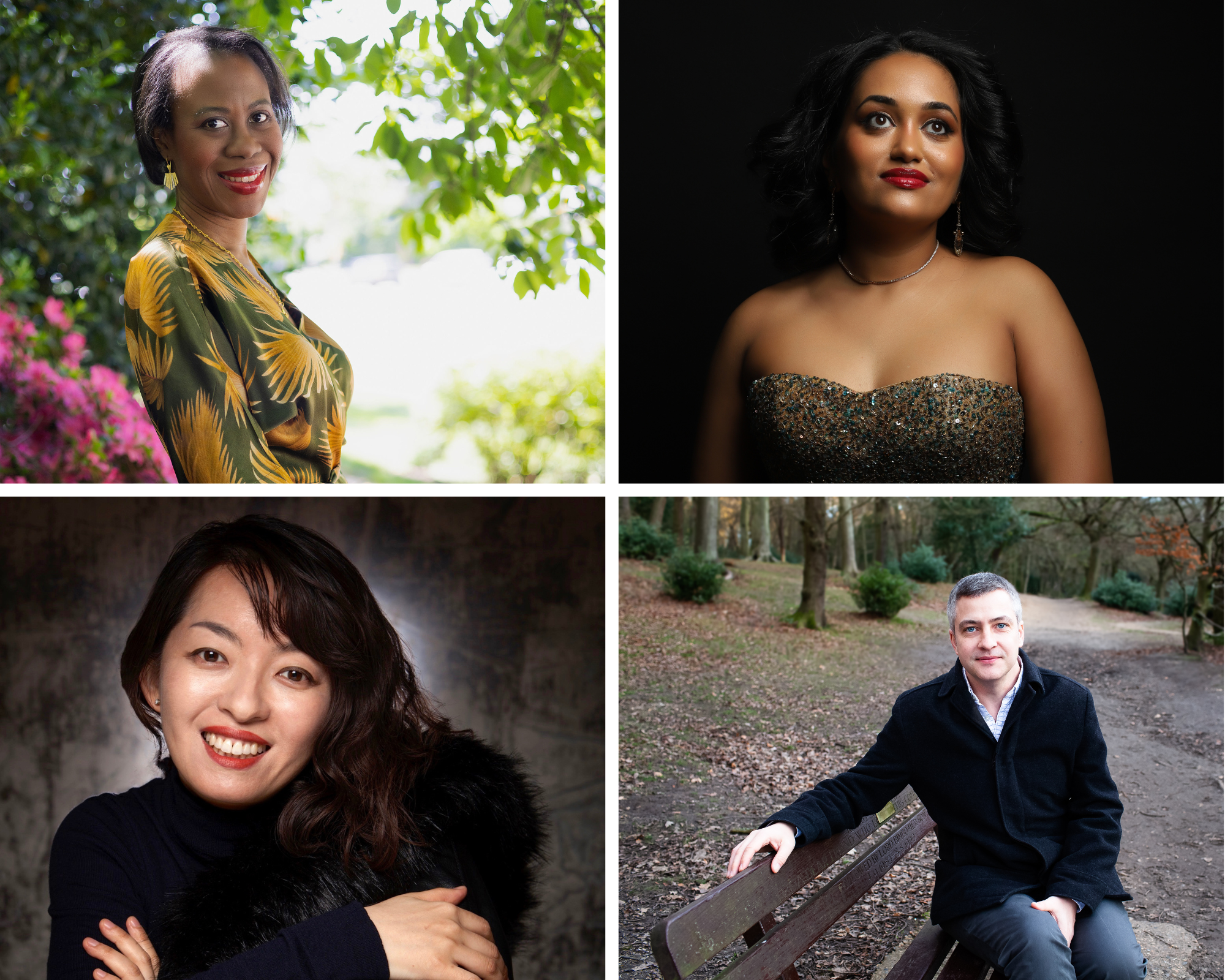
World premiere performance of ‘Metropolis’, six songs by British composer Bernard Hughes and lyricist Chinwe D John that capture the pulse of a modern metropolis. These songs, which explore aspects of urban life, romantic love, and resilience, bring the emotional essence of our shared experience into stark and beautiful view. Soprano Isabelle Haile and pianist Asako Ogawa infuse their sublime artistry through the songs, creating an unforgettable musical experience.
This free lunchtime concert also includes music by Francis Poulenc, chosen to complement the songs. Find out more here
Metropolis appears on the album ‘Songs for Our Times’, released to critical acclaim in 2023 on the Divine Art label. ‘Songs for Our Times’ features composers Bernard Hughes and Staurt MacRae, lyricist Chinwe D John, pianist Christopher Glynn, soprano Isabelle Haile and tenor Nick Pritchard. The project, from its conception by Chinwe D John to the enthusiastic participation of the artists, exemplified by the premiere organised by soprano Isabelle Haile and pianist Asako Ogawa, speaks to the spirit of collaboration and shared interest in engaging current and future listeners.
Composer Bernard Hughes says, ‘I hadn’t written any solo songs when the opportunity to work with Chinwe came up. It was really interesting to work with lyrics by someone from such a different background to me. She pointed me towards some music styles I wouldn’t have otherwise encountered, and these formed the inspiration for the piano parts of several of the songs. It was a very collaborative process…I liked working on the songs as a cycle: there is a definite thread running through them. It was a delight working with Isabelle Haile on the recording. She is an exceptional talent and I’m so pleased she is giving the live UK premiere of Metropolis.’
Praise for Songs for Our Times – Metropolis
‘As a poet writing texts for songs, John has a very clear, direct voice, with the ability to craft memorable, evocative phrases and use short bursts of lyricism. Rarely do her texts feel too wordy or too over-written, there is space for the music….. Haile sings with a lovely bright, focused soprano tone’ – Robert Hugill
‘Here is music to enjoy but to make you think as well!’ – British Music Society
‘This is a capable and sensitive player who is intelligently inside the music, and quite capable of drawing us into it.’ – Early Music Review on Asako Ogawa
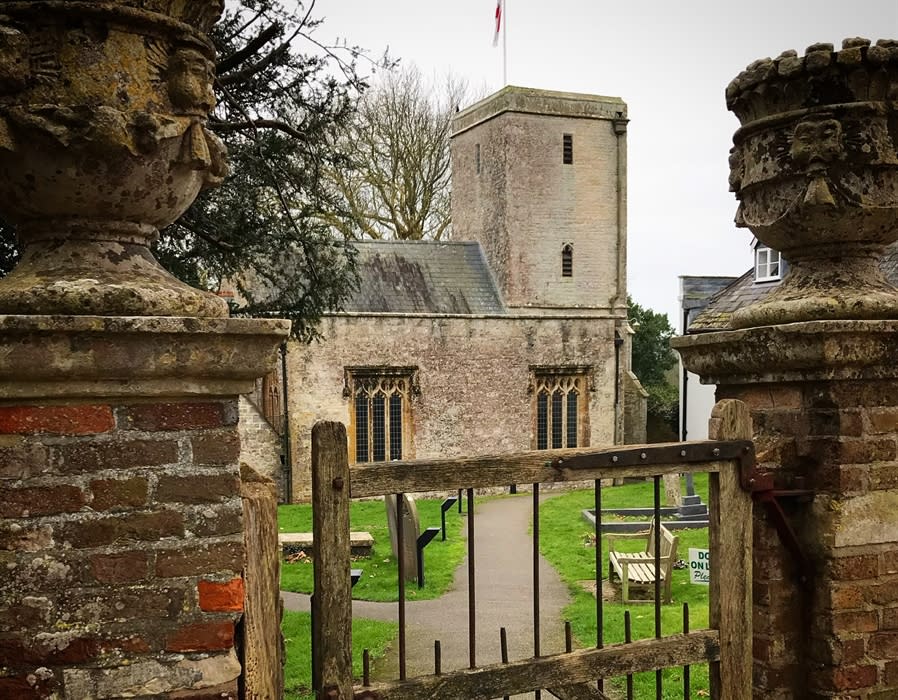
Stinsford church, near Dorchester in Dorset, just a short distance from Thomas Hardy’s birthplace at Upper Bockhampton, and the place where his heart is buried, provided the perfect setting for A Beautiful Thread, a new words and music concert concept from the ever-inventive Orchestra of the Swan (OOTS). Produced to coincide with the 150th anniversary of the publication of Far From the Madding Crowd, A Beautiful Thread (a quote from that novel) weaves the words of Thomas Hardy – as dramatic as any of his novels – from his and others’ memoirs, his letters, poetry and prose – with atmospheric music composed or arranged by David Le Page, leader and artistic director of OOTS, and performed by a small ensemble of musicians from the orchestra.
Stinsford Church
Anton Lesser (Game of Thrones, Wolf Hall, Endeavour) and young actress Lucia Bonbright (who could have walked straight out of one of Hardy’s novels with her fresh face, jaunty curls and sky-blue dress) read the words, including excerpts from Far From the Madding Crowd, Tess of the d’Urbervilles, and Jude the Obscure, bringing Hardy’s life, work and world vividly to life.
I confess I’ve not ready much of Hardy’s writing, but I’ve really enjoyed film versions of some of his novels. And perhaps the move to Dorset (in 2018) and a greater sense of connection to the places and landscapes he knew, loved and included in his novels, piqued my interest in his writing, especially when hearing it read out loud by Anton Lesser. Indeed, there is a wonderful cadence to his writing, almost musical, and hearing his words spoken in the heart of “Hardy County” (as the Dorset Tourist Board likes to portray it!) was particularly special.
David Le Page writes haunting, atmospheric music. There are drones and loops, shimmering, wistful melodies, often with a folk inflection, hints of birdsong or the wind rustling the trees on ‘Egdon Heath’ (the primary setting for Hardy’s novel The Return of the Native). His arrangements of traditional folk melodies and carols (Apple Tree Wassail, See Amid) are earthy, textural, foot-tappingly rhythmic, with careful attention paid to individual instruments (Diane Clark on flute/piccolo, Miloš Milivojević on accordion, and Glenda Allaway on harp, to name but a few of these fine musicians).
But perhaps the most arresting aspect of this heartfelt, poignant, witty and fascinating performance was the way the music was so subtly interposed between the words, weaving in and out, sometimes softly, sometimes more robustly, but always sensitively paced, complementing, illustrating and enhancing the words. The overall effect was of a continuous narrative of Hardy’s life and work. A fine tribute to Thomas Hardy, his words, his world – and to Dorset.
Go and see if it you can!
Anton Lesser says: ‘Words and Music is a kind of unique genre, neither pure reading, nor acting, but with an immediacy that comes from the huge emotional impact the music has upon the words, and vice versa, and the interplay we as actors enjoy with the musicians on-stage. Quite simply, it’s the most enjoyable thing I’ve ever done!’
A Beautiful Thread is currently on tour – find out more here
The Cross-Eyed Pianist is free to access and ad-free, and takes many hours every month to research, write, and maintain.
If you find joy and value in what I do, please consider making a donation to support the continuance of the site







 The Cross-Eyed Pianist