An interview with composer Augusta Read Thomas, whose new disc “The Auditions” is out now on Nimbus Records


Who or what inspired you to take up composing, and pursue a career in music?

Composing and spending my life working in and with music is a natural extension of who I am at the core. As such, I never explicitly decided to “pursue a career.” Rather, my “life” is the same as my “career.” I love music, am passionate about and devoted to sculpting sound. I composer music to express gratitude.

What were the most significant influences on your musical life and career as a composer?

Music, nature, and poetry leap to mind. Music of all kinds inspires me every hour of the day. Nature is a spectacular composition teacher. About poetry: in a poem, a dash, colon, comma, line break or a stanza break can totally shape or, when changed, reshape the meaning of the poem. If you change the order of two words, purposely interrupt a rhyme-scheme, create or remove a pause, or change the voice of the speaker, the meaning can be transformed. A micro move in a poem can have macro consequences. the same can be true in music and nature.

What have been the greatest challenges of your career so far?

I wish there were more than 24 hours in a day! So much work to do composing, teaching, supporting the work of others, making recordings, traveling, attending concerts and residencies, organizing and running festivals, directing The Center for Contemporary Composition at the University of Chicago, volunteering on many Boards of Trustees…and, alas, so little time!

What are the special challenges/pleasures of working on a commissioned piece?

For every artist, in whatever area of creative endeavour, the receipt of a commission stirs the life force. Commissioning new art is a leap-of-faith! The commissioner does not know what they will receive. I feel profoundly fortunate for each commissioner’s investments in my life’s-work. I cherish the collaboration with each and every musician and always look forward to devoting my strongest, focused efforts to sculpting a new composition.

What are the special challenges/pleasures of working with particular musicians, singers, ensembles and orchestras?

I believe music feeds our souls. Unbreakable is the power of art to build community. Humanity has and will always work together to further music’s flexible, diverse capacity and innate power. The magnificence and energy of musical resources: soloists, chamber ensembles, choir, orchestra…is humbling and inspiring. I cherish working with solidarity and teamwork with all musicians. Musicians have given me much happiness and taught me a great deal about music and life.

Of which works are you most proud?

At age four, I started playing piano and composing tiny little, trivial fragments of music. In third grade, I took up the trumpet and played for 14 years, attending Northwestern University as a trumpet performance major, playing in brass quintet, chamber orchestra, orchestra, band, Jazz band, and I sang in choirs for many years. Throughout all of my childhood and young adulthood, in addition to playing music, I was also composing music. Since the age of about 15, I have been heavily focused on composing music, which means that I have been composing with passion for 40 years! For this reason, it is impossible for me to pick out a few works of which I am most proud.

Rather, I think of my life’s work as an integrated body of compositions which have a “voice” and yet are varied in terms of genre, duration, instrumentation, and so forth. My catalogue is comprised of works that, to me, feel chain-linked together and which offer a gestalt, labyrinth or web of sonic creativity. I have many works for orchestra, chorus, chamber ensembles of varied instrumentations, as well as works for band and wind ensemble, solos, opera, works for dance…It is literally impossible for me to compare works across categories, genres, decades or to pick one over the other.

How would you characterise your compositional language?

Although highly notated, precise, carefully structured, soundly proportioned, and while musicians are elegantly working from a nuanced, specific text, I like my music to have the feeling that it is organically being self-propelled – on the spot. As if we listeners are overhearing a captured improvisation. My music, which is organic and, at every level, concerned with transformations and connections, should be played so that the inner life of the different rhythmic, timbral and pitch syntaxes are made explicit and are then organically allied to one another with characterized phrasing of rhythm, colour, harmony, counterpoint, tempo, keeping it alive — continuously sounding spontaneous. All of this, hopefully, working toward the fundamental goal: to compose a work in which every musical parameter is allied in one holistic gestalt.

If you had to make one programme note for your whole life’s work, what would it be?

Words that leap to mind for such a program note include polished, nuanced, intricately notated, captured sound sculptures that always spark and catch fire as spontaneous and capricious improvisations…natural impulse, mobile, flexible, sonorous, resonant, intentional, interlaced, braided, woven, circuit, networks…

How do you work?

I’d like to reply with a graphic and a description:

35569a

Gestalt Web is one of a series of composition lesson illustrations graphically depicting a creative process in composing music with implications for other areas of imaginative thinking.

The illustration is playful, accessible, unique, sincere, and optimistic. To follow the purple line, starting from the bottom left, moving upward and then swirling through the image is to follow Augusta’s thinking about an integrated creative process. Staring with sound and ending with yellow dots of sound that climb right off the top of the page, it is as if this process creates sounds (or other things) that are able to go on forever. The yellow dots also lead to – or perhaps start from a place of silence – as seen toward the bottom of the page. The portrayal, at once whimsical and insightful, signposts that an imaginative creator passes through progressive stages: DREAM, EXPERIMENT, BUILDING MATERIALS, CREATING INTENTIONAL ORGANIC CRAFT, which lead to a GESTALT WEB where myriad parameters of music are holistically interdependent. This artwork suggests that, through such a journey, one has an opportunity to create works of NUANCE, DETAIL, PERSONALITY, CHARACTER, SOUL, and INTEGRITY.

Who are your favourite musicians/composers?

The list is vast so for the purposes of this answer, I will focus in on two examples. I consider JS Bach to be my most important teacher. His music underpins every day of my life. I love his music for far too many reasons to list, but for starters… its magic, sublime beauty, invention, craft, clarity, intensity, elegance, concision, perfection, technical mastery, form, flow, integration, magnetism, humanity, spirituality, empathy, power, civility and grace. Every day, when listening to Bach, I sing along whether listening to The Well-Tempered Clavier , a Brandenburg Concerto, Sonatas and partitas for solo violin, a cantata, or the Goldberg Variations.

For me, Bach’s music will always be contemporary because it is timeless – it sounds ‘fresh’ and vivid in any context or epoch.

In addition, it is clear, in all my compositions, that I have been listening to jazz for 45 years. I am not a composer of ‘crossover’ jazz pieces; rather, there is a deeply integrated and digested sense related to jazz harmonies, flexibility, spontaneity and flow.

The collaborations between Miles Davis and John Coltrane are chamber music of the highest order. They were able to link into the same sonic and spiritual wavelength as if they could hear and think, in advance, about what the other player was about to do. As well as being superb duo partners, they created iconic solos.

As a musician, what is your definition of success?

Success is integrity, honesty, individual voice, character, soul, generosity, passion, enthusiasm, love, and grace.

What do you consider to be the most important ideas and concepts to impart to aspiring musicians?

Concepts that leap to mind include:

Be true to yourself and your art; honesty, integrity, work hard, support others, listen to a vast amount of diverse music; be self-critical and always aiming to improve; allow your imagination to flourish; hone your technical craft; approach life with an open heart.

Where would you like to be in 10 years’ time?

Alive and composing.

What is your idea of perfect happiness?

Humanity at peace with one another: all humans supporting one another in a globally interdependent, positive, communicative gestalt.

What is your most treasured possession?

My integrity and generosity toward others.

What do you enjoy doing most?

Composing music and supporting musicians and composers.

What is your present state of mind?

Optimistic

Augusta Read Thomas’ new disc “The Auditions” is out now on Nimbus Records


The music of Augusta Read Thomas (b. 1964 in New York) is nuanced, majestic, elegant, capricious, lyrical, and colorful — “it is boldly considered music that celebrates the sound of the instruments and reaffirms the vitality of orchestral music” (Philadelphia Inquirer).

A composer featured on a Grammy winning CD by Chanticleer and Pulitzer Prize finalist, Thomas’ impressive body of works “embodies unbridled passion and fierce poetry” (American Academy of Arts and Letters). The New Yorker magazine called her “a true virtuoso composer.” Championed by such luminaries as Barenboim, Rostropovich, Boulez, Eschenbach, Salonen, Maazel, Ozawa, and Knussen, she rose early to the top of her profession. The American Academy of Arts and Letters described Thomas as “one of the most recognizable and widely loved figures in American Music.”

Read more

As some of my friends, readers and followers know, my son is a professional chef who has been working in fine dining in London for 6 years. He’s been living with us during the UK lockdowns and in addition to enjoying his beautiful, inventive and delicious cooking, I have learnt some useful ‘kitchen tricks’ and shortcuts from him.

Homemade pasta was something that had eluded me for years. It’s not that I couldn’t make it, it’s that I could never make it ‘right’. But with my son’s guidance, I have now learnt to make my own egg pasta – and I don’t even use a machine to roll it, just a long rolling pin and a dash of elbow grease. The other day, inspired by one of the ‘skills tests’ on Masterchef The Professionals, a TV series to which we as a family are all glued at this time of the year, I made tortellini (filled pasta) using my own pasta dough. As I was cutting out the discs of dough to be filled with a mushroom stuffing, it occurred to me that if I can make pasta dough and filled pasta, I can also make Japanese gyoza, Chinese wontons and dim sum, Indian samosas, Polish pierogi, and any number of other small stuffed dumpling.

Musical skills, just like culinary skills, once learnt and practiced, can and should be applied to different situations. No learning should ever be done in a vacuum: a single piece of music is not just that one piece, it is a path to other pieces via accrued technical proficiency and artistry. Early students and less advanced pianists often see the pieces they are learning in terms of stand alone works which have no relevance to other music they are working on, or are going to learn. This is also particularly true of scales, arpeggios and other technical exercises which may be studied in isolation instead of appreciating their relevance not just in understanding keys and key relationships, but also in actual pieces of music. This was something I was not taught when having piano lessons as a child, and it’s the fault of the teacher, not the student, if the usefulness and relevance of technical work is not highlighted.

Everything is connected. Chopin knew this: it is said that he studied Bach’s WTC every day, appreciating this music’s relevance to his own musical development, his composing and his teaching. If you can successfully manage Bach’s ornamentation, for example, you should have little difficulty with Chopin’s trills and fioriture.

If we understand how to adapt specific skills, to make them relevant to the repertoire we are currently working on, we can make the learning process less arduous and more rewarding, while also continuing to build on existing skills and develop new ones.

What is it about the Goldberg Variations which gives them such an enduring appeal? Two new recordings have been released in as many months, by two leading pianists of the 21st-century, yet each quite different in their approach. Maybe it is because Bach gives few performance directions, a lack of specificity which allows performers the freedom to make personal choices about the interpretative possibilities of this music. This is certainly true of these two new recordings.

Lang Lang’s Goldbergs (DG), released in September as a double album of studio and live recordings, is bright in sound and lavish in presentation. Some of the tempi are questionable, with elastic rubato stretched just a little too far, presumably intended to convey meaning or deep emotion, and the faster variations are rather showily bombastic. Listening at home, it feels like an extrovert and spirited concert performance, occasionally just too declamatory (though one can of course turn the volume down a notch or two!), but I have to admit that overall I enjoyed Lang Lang’s Goldbergs. There’s a freshness in his approach and he manages a singing tone with a bright, colourful piano sound, and I take issue with those who have suggested that he should not touch this music, which enjoys such an elevated status in the canon of keyboard music. In my view, the music is there to be played, by anyone who chooses to play it, and Lang Lang makes a good case for being considered a serious musician, rather than a flamboyant showman (in fact, he is both) with his recordings of the Goldbergs.

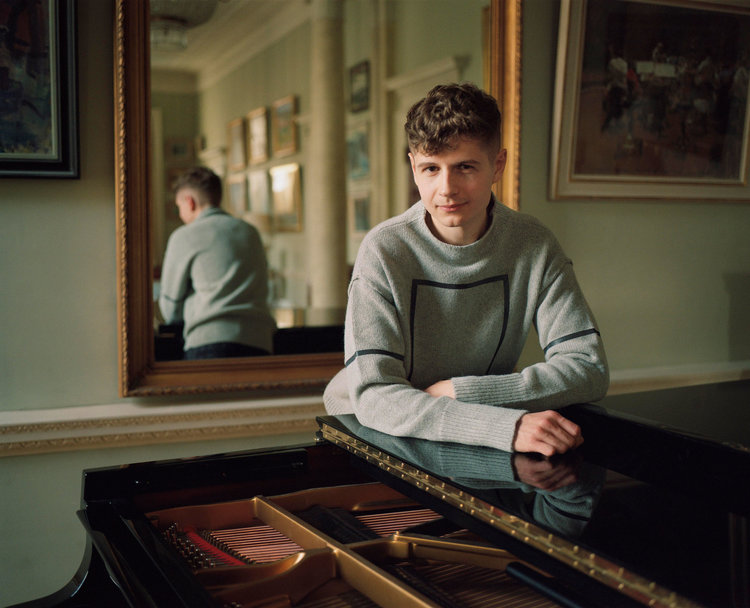
At the other end of the spectrum, musically and presentationally, is the young Russian pianist Pavel Kolesnikov, whose concert performances and recordings are imbued with a special sensitivity and emotional intelligence. Modest in mannerisms and presence, Kolesnikov could not be further from Lang Lang.  Rightly described as a “poet” of the piano, he can nuance his touch and dynamics in such a way that the slightest shift in sonority speaks volumes in terms of mood and narrative.

2pavel_kolesnikov_copyright_eva_vermandel

With these qualities to his playing, it is no surprise that Kolesnikov’s version of the Goldbergs is rich in intimacy, reminding us that this music was, it is said, composed as a distraction for the insomniac Baron (later Count) Hermann Carl von Keyserlingk, Russian ambassador at the Dresden electoral court. The famous opening Aria barely announces itself, gently insinuating its simple, elegant melody into the ear and the consciousness. In Kolesnikov’s hands it’s a miniature study in elegance and other-worldly serenity. A calmness flows through the music, setting the tone for the entire work. Even in the up tempo or more lively variations, where there is palpable drama and robustness, Kolesnikov still retains an underlying sense of measured thoughtfulness.

But for me it is his touch which really captivates and delights: filigree ornaments and trills, passage work in which his quicksilver fingers appear to float across the keys, yet without losing definition. His textures flicker in and out of focus – now crispy defined, now delicately veiled and muted, yet throughout there is clarity of articulation, structure and musical vision.

And there is one particular moment which really stops you in your tracks – and may have Bach purists clutching at their pearls. Did he really do that? Variation 30 segues from the one before it in a bloom of sound, the sustaining pedal creating an unexpected and intriguing extra sonic layer before fading away to allow the Aria to return like a memory of times past.

This recording is the result of Kolesnikov’s collaboration with dancer and choreographer Anne Teresa de Keersmaeker, and the spirit of the dance, which infuses so much of Bach’s music, is never far away in the delightful playfulness of Kolesnikov’s approach to Bach’s rhythms and counterpoint. This is an exquisitely tasteful and original account, recorded on a modern Yamaha grand piano on which Kolesnikov manages to recreate the softly-spoken sonorities of a clavichord or fortepiano (in preparing for the recording Kolesnikov worked on a number of different instruments “switching between them, in order to loosen up a little, to shake up my perception of sound of piano“.

What these two recordings prove – and the many, many others which exist – is that the Goldberg Variations is music without consensus: there are clichés about how Bach’s music should be played – from the period instrument zealots to the iconoclasts – and traditional views about how it should be played on the modern piano, but in fact there is no “right way”, nor who should play it, and the Goldberg Variations remain extraordinarily fertile terrain for those who choose to walk there.


Photo credit: Eva Vermandel

Composer Sally Beamish has received an OBE (Order of the British Empire) in the 2020 Queen’s Birthday Honours, for services to music. Here she shares some insights into her influences and inspirations, the pleasure of working on commissioned pieces, and how talking to audiences can help explain the creative processes involved in making music.


Who or what inspired you to take up composing, and pursue a career in music?

My mother, a professional violinist, taught me to read and write notes when I was four – before learning to read and write letters. As soon as I grasped the relationship between the dots on the staves and the sound from her violin, I began to create my own music. It is something I still recognise in myself – the compulsion to ‘do it myself’ – to make, to draw, to write stories.

I don’t think I ever doubted that I would be a musician, and I was lucky that the professional musicians in my family were all female, so there didn’t seem to be any problem with that. My father’s sisters were both musicians, as was my paternal grandmother – though she had been discouraged from a professional career.

However, none of them composed, and I was not aware of any woman who did, apart from Clara Schumann, whom I adopted as my role model from an early age – even though I didn’t have the opportunity to hear much of her music. It was enough for me that she existed.

But, like her, I didn’t consider composition as a possible career, and decided to study viola to achieve a level whereby I could support myself, in order to be able to compose.

Who or what were the most significant influences on your musical life and career as a composer?

My mother and paternal grandmother were hugely important. Granny would play piano duets with me, teaching me to sight-read by refusing to wait for me, or slow down, when we played piano duets together. I had to keep going, even if it meant playing one of two notes per bar.

We gave many family concerts – my brother is an excellent trumpeter, and my father was a good amateur flautist and singer. Only my mother and I were shy about singing. Everyone else was happy to perform lieder, show songs and parlour duets, and I was the house accompanist.

Later, as a violin/viola student at the RNCM, I found myself in demand as accompanist and chamber pianist in lessons and master classes, and was able to learn first hand about the instruments I didn’t play myself.

But maybe the biggest influence was my father’s record collection. He worked for Phillips, and was often responsible for taking first-edit records home to check for faults. They were in brown paper sleeves: Ravel’s La Valse, Prokoviev’s Classical Symphony, Schubert’s piano trios. Through his collection I discovered Malcolm Arnold’s Tam O’Shanter, Walton’s viola concerto, and the classics – such as Dvorak’s New World Symphony. Arnold and Walton, in particular, had a profound affect on my orchestration and musical language.

When I was 15, a friend introduced me to Lennox Berkeley, and he became a mentor – encouraging me by telling me that I was ‘a composer, and must not forget it’.

What have been the greatest challenges of your career so far?

During my time studying viola at the RNCM I was quite often asked to write for friends, and also for my teachers – writing a violin sonata for Bronislaw Gimpel and a viola piece for Atar Arad. Several pieces were performed by students who went on to have solo careers. I gained confidence through these opportunities, and applied to study composition as a post-graduate at several institutions. I was turned down for all of them, one of them citing my tonal language as a barrier. This was a blow, and it was hard to keep my confidence. In those days, it simply wasn’t acceptable to write tonally, but I was baffled by the sounds I was hearing from the well respected composers of the time. Looking back, I’m glad I didn’t have to try and fit in with something that was alien to me, when I was still developing my own voice.

Later, as a viola player in London, I played a great deal of contemporary music, often with the composers conducting, and I became more comfortable with different languages to my own.

Many of these composers were extremely generous with their time and advice, and this was my period of study – with Oliver Knussen, Nigel Osborne, John Woolrich, Luciano Berio, Peter Mawell Davies and others, who kindly agreed to look at my scores.

What are the special challenges/pleasures of working on a commissioned piece?

I love the boundaries that come with a commission. I love having the scoring, length, and sometimes an extra-musical theme set out, so that I have parameters to work within. And it is always inspiring to listen to the players I’m writing for – to imagine the occasion of the premiere, and what I would like to hear them playing. I even, in a way, love the deadline – because it takes away a lot of the agonising. Like playing Sheep May Safely Graze with my granny, I just have to keep going. As the deadline approaches, there’s no time to look over my shoulder and wonder if it’s ‘any good’, or what people will say/think.

What are the special challenges/pleasures of working with particular musicians, singers, ensembles and orchestras?

Each musician brings something individual, and the alchemy between composer and performer is very important to me. Often a performer has their own idea of what the piece might be about, or of filling a particular gap in the repertoire – for instance Håkan Hardenberger, who wanted a lyrical trumpet concerto, and Evelyn Glennie, who asked for marimba plus ‘handbag-sized’ percussion; and Robert Cohen, who wanted a cello concerto to draw on his family roots in Poland and South Africa. These are the things that immediately start making sounds in my mind. My three piano concertos were all written within a year, and the inspirational starting points suggested by the three soloists (Ronald Brautigam, Martin Roscoe and Jonathan Biss) made it possible to find a fresh world for each work. The Cairngorm Mountains. The whirlpool at Corrievreckan. Beethoven’s first concerto/the 2016 US election…

Of which works are you most proud?

In 1993, violinist Anthony Marwood asked me to write him a concerto. I knew his playing well – having played for several years with him in the Raphael Ensemble. He sent me Remarque’s book ‘All Quiet on the Western Front’. I had never read it, but as soon as I did, I knew what he meant about it being a fantastic starting point for a concerto. The violinist as the protagonist – the lone soldier, pitted against the horrors and futility of war. It chimed in with my own pacifist convictions, and I think produced one of my strongest works. I was still very inexperienced at writing for orchestra, but almost for that reason, was bold and sometimes rash in my instrumental choices, which makes the work one of my most daring for orchestra.

The concerto Seavaigers is one of the few pieces I decided to write and then looked for performance opportunities. I knew I wanted to write for Scottish harpist Catriona McKay and Shetland fiddler Chris Stout, and to put them together with the Scottish Ensemble. The solo parts are mostly notated, but the idea was that Catriona and Chris took them off the page in their own direction, so their recorded version is in places quite different from what I originally wrote. The piece can be performed by non-improvising soloists, and even by soloists on different instruments – which have included nyckelharpa, accordion and recorder – but I loved that original conception of the piece, with the soloists responding freely and spontaneously to my music by extending, ornamenting and expanding.

How would you characterise your compositional language?

I find myself speaking different languages, and sometimes become quite a different composer for different projects. My music is very often informed by other genres – for instance jazz, and folk music. Increasingly, I let go of any anxiety about being ‘original’, and try to think of how I can use musical language and idiom to express the broadest range of emotion and ideas.

How do you work?

When I first started composing full-time, I was limited by the 4 hours a day that I had child care, and this worked extremely well. Once I no longer had this limitation, I struggled for years to regain that self-discipline. In 2013, a friend recommended the Pomodoro Technique. I have used it ever since – planning eight 25-minute composing sessions per day. One advantage is that I know when I have finished for the day! Another is that I never have the excuse of it not being worth starting, thinking I have too little time. One pomodoro can be crossed off the list in a spare half hour.

I work straight into Sibelius software, having made notes and planned a structure. Sometimes I start drafting the programme note before writing any notes at all. Now that I’m playing the viola again I do occasionally try out ideas, and I have a keyboard next to me which is useful.

But I tend to start by listening in silence, and waiting. Sometimes 25 minutes is simply a silent preparation. Showing up at my desk is vitally important.

Who are your favourite musicians/composers?

The folk musicians who’ve inspired me, such as Chris Stout, Catriona Mckay, and Donald Grant (member of the Elias Quartet, for whom I wrote a folk inspired fiddle part in Reed Stanzas). The American saxophonist Branford Marsalis, who I met in 2016, has become very important to my work and inspiration, and I’ve written several classical pieces for him, while planning a jazz collaboration which we hope will come to fruition in the next 10 years or so..! Composers I return to again and again are Knussen, Turnage, Bartok and Gubaidulina.

As a musician, what is your definition of success?

Communication. If I can express something through a score, via performers, to an audience. If someone in that audience is changed, moved or affirmed in some way by hearing the music.

What do you consider to be the most important ideas and concepts to impart to aspiring musicians?

I think it’s important for composers to be in touch with performing. Whether they sing, conduct, or play an instrument, they should be aware of how it feels to be onstage, and to be the direct transmitter of sound and emotion.

What do you feel needs to be done to grow and maintain classical music’s audiences?

It’s important to share the creative process – to talk to audiences. The pre-concert talk is good up to a point, but it tends to be talking to the converted. Much better for the composer to come onstage just before the new work, and talk about their process, their inspirations – preferably with examples. It is very difficult for a listener to assimilate a work on one hearing, and therefore to get something from it beyond a vague impression. This applies to the historical repertoire too, and in fact I think the language of the classical canon is very hard to identify with, if it is outside your experience. All the more reason to break down the 4th wall and chat to the audience, being careful not to use exclusive language (such as pizzicato, fugue, sonata form etc etc).

What is your idea of perfect happiness?

Collaborating on joint projects. My work with choreographers David Bintley and David Nixon on full-length ballets was transformative, and when I met my husband, a playwright, in 2016, I realised this was the way I wanted to continue to work. He is very often a ‘dramaturg’ in my work, suggesting stories, structures and dramatic trajectory. Our discussions are my idea of perfect happiness.

And being with my family!

What is your most treasured possession?

The viola made for me by my daughter in 2014. Having had a beloved instrument stolen in 1989, and then to have sold all my instruments in 1995 because I decided I simply didn’t have time to play any more, this viola has brought me back to a communion with performers, and reminded me what an important part of my life it is to perform.


Sally Beamish was born in London. She studied viola at the RNCM with Patrick Ireland, and in Detmold with Bruno Giuranna, and was a founder member of the Raphael Ensemble. She also performed regularly with the Academy of St Martin-in-the-Fields and the London Sinfonietta, and was principal viola in the London Mozart Players and Scottish Chamber Orchestra.

She moved from London to Scotland in 1990 to develop her career as a composer. Her music embraces many influences: particularly jazz and Scottish traditional music.

She has recently moved to Brighton, and is married to writer Peter Thomson. She still performs regularly as violist, pianist and narrator.

Read more

Sally Beamish to receive OBE – article in The Strad magazine

Photo credit: Ashley Coombes

