If you had been standing in Buckingham Street (now York Buildings) off the westerly end of the Strand in London, on the evening of the 19th April 1687, looking out over the river and what had been the gardens of old York House, and with the York Watergate in front of you, you would have been privileged to overhear one of the finest voices in Europe coming from Number 12. The voice belonged to the castrato Siface (Giovanni Francesco Grossi) a man who according to the chronicler John Evelyn “disdained to show his talent to any but princes”; the house where he was performing belonged to Evelyn’s friend Mr Samuel Pepys, late Secretary to the Admiralty, one-time MP, and, from 1684 to 1686, President of the Royal Society. And of course creator, from 1660 to 1669, of the most famous diary in English history. It says all you need to know of Pepys’s reputation as a music-lover that here was Siface performing in his drawing room.
One of the great joys of researching Walking Pepys’s London were the insights it produced into the man himself, the chance to explore what you might call his inner geography. Alone with his Diary, Pepys was a man of strong passions, by no means all of them as admirable as his devotion to music, and of much ambition. He could be shamelessly calculating in his pursuit of women, professional and social advancement, and wealth; but when he speaks in his Diary of music and the effect it had on him, it is with the artless adoration of the truly besotted. “That which did please me beyond any thing in the whole world was the wind-musique when the angel comes down,” begins one of his most famous descriptions of how music could possess him, after witnessing a performance of Decker and Massinger’s The Virgin Martyr: “so sweet that it ravished me, and indeed, in a word, did wrap up my soul so that it made me really sick, just as I have formerly been when in love with my wife; that neither then, nor all the evening going home, and at home, I was able to think of any thing, but remained all night transported…” I imagine every music-lover can recognise themselves in that experience. Then in the very next sentence Pepys the romantic is elbowed out the way by the bull-headed man of business, the ruler of his roost: the experience “makes me resolve to practice wind-musique, and to make my wife do the like.”
And when Pepys resolved to master a thing, he did exactly that. One of the secrets of his professional success was that he couldn’t see a system without wanting to better it. When teaching himself to play his recorder (purchased from Drumbleby the instrument-maker in the Strand), he notes how the getting of its fingering “is necessary for a man that would understand musique… though it be a ridiculous and troublesome way, and I know I shall be able hereafter to show the world a simpler”. October 1667 saw him investigating the workings of a ‘trump-marin’ (or tromba marina, a stringed instrument despite its name) of “one Monsieur Prin… it is most admirable and at first was a mystery to me that I should hear a whole concert of chords together at the end of a pause, but he showed me that it was only when the last notes were 5ths or 3rds, one to another, and then their sounds like an Echo did last so as they seemed to sound all together…. I was mightily pleased with it, and he did take great pains to shew me all he could do on it.”
As you might intuit from this, Pepys loved a new toy (he could go into ecstasies over a slide-rule); his library, now in Magdalene College, Cambridge, contains, alongside his 3,000 books and the manuscript Diary itself, an extraordinary relic of 17th-century ingenuity in the form of an ‘Arca Musarithmica’, a sort of wooden proto-computer, its movable slats as dry and fragile now as autumn leaves. By manipulating these, its inventor, Athanasius Kircher, had assured the world that “anyone, even the ἀμουσος [unmusical] may, through various applications of compositional instruments compose melodies according to a desired style.” Pepys was hardly unmusical (as his fortune increased he would eventually also own a flute, lute, viol, flageolet, lyra or bass viol, spinet, theorbo, violin and virginals), but he paid out 35 shillings, or about £200 today, simply for the accompanying book of instructions, making a trip to Duck Lane in Smithfield – now Little Britain; then one of London’s bookselling centres – to do so.
Pepys lived and wrote at a time of exceptional change and innovation in the arts, and was something of a conservative at heart; by no means all such novelties as the Arca Musarithmica met with his approval. He was, for example, initially scathing of the guitar, as opposed to the lute or viol. Visiting the Theatre Royal in Drury Lane on the 8th May 1663, the day after it had opened, Pepys noted how its innovative orchestra pit meant that “the musique being below, and most of it sounding under the very stage, there is no hearing of the bases at all, nor very well of the trebles, which sure must be mended.” Nicholas Lanier, the first man ever to hold the title ‘Master of the King’s Musick’ was a friend, as you might expect, as were a number of other notable musicians of the day, and Pepys was well aware of the friction between the older style of English music and the newer French style, favoured by the newly restored King Charles II. (The same kind of genteel battle was going on between the English fashion for dining, with all the dishes on the table at once, and the more Continental practise of one course succeeding another. Pepys’s wife Elizabeth was French – one wonders which system triumphed when they dined at home?) The Diary records how a night out in August 1661, at a tavern next to the Savoy, had ended very badly when the virtuoso Humphrey Madge took exception to the views of one Monsieur d’Esquier “discoursing of musique … so much against the English and in praise of the French that made him mad,” and Madge had left in a huff.
But by 1661 English music had a lot of ground to make up. The cultural black hole of the Protectorate stood between Pepys’s childhood and his manhood. He had been born in 1631, in in the shadow of the old St Pauls and right next door to St Bride’s church, so the music of the Anglican liturgy might have run through his youth. But when Pepys was 9, in 1642, church music in London ceased to be, by order of Parliament. Public music-making such as Morris dancing was also forbidden, and London’s theatres were dark – a state of affairs with which we are more familiar now than we might ever have supposed possible before 2020. So the music Pepys grew up with was either domestic (his father, John, a tailor, owned a pair of virginals), or it would have been the traditional melodies of London’s streets: the whistled songs of tradesmen going about their business, the cries of the street-sellers plying their wares door to door, joined perhaps by the ranting of the gloriously named ‘PraiseGod Barebones’, a Parliamentarian militant, yelling his disapproval of everything from his spot close by the Pepyses’ own front door.
We might intuit that Samuel retained his fondness for these songs and this music of the everyday from the fact that he had over 1700 ballads and ditties in that carefully curated library, many of them purchased from the publisher John Playford, a Fleet Street neighbour. Music was how he began his days, practising popular songs in his study before he went to work – “Up betimes and to my vyall [viol] and song book a pretty while,” is how he starts a typical day in April 1663. We can imagine him singing as he was rowed up and down the Thames on his business for the Navy Board; or trying out harmonies under his breath as he bustled back and forth across London, much as a writer will take a promising passage for a walk, working it back and forth, and if Pepys had a passion to rival his love of music, it was words. ‘Musique’ was how many of his days concluded, too, with a supper-time impromptu in a tavern, or in fine weather with friends ‘on the leads’, that is on the rooftop of his house in Seething Lane. “So home Sir William and I,” begins his account of one of the first such merry evenings in June 1661, with his patron Sir William Penn, “it being very hot weather I took my flageolette and played upon the leads in the garden….. and there we staid talking and singing, and drinking great drafts of claret, and eating botargo [a sort of 17th-century taramasalata] and bread and butter till 12 at night, it being moonshine; and so to bed, very near fuddled.” Music, a warm night, moonlight, food, friends and wine – what could be better than that?
The companionship that music brings was another reason for Pepys, that most clubbable of men, to treasure it. “Most excellent company with Mr. Hill and discourse of musique,” he writes in September 1665, as the entire country boiled and bubbled with plague and the war with the Dutch threatened to bankrupt the City. (The same Mr Thomas Hill, a London merchant, would later introduce Pepys to the musician Cesare Morelli, who would become an essential member of his household in the 1670s). It was the mark of a gentleman to be able to discourse upon music; it was the mark of a gentleman’s wife to be able to play and hold a tune, and at his behest Pepys’s wife, Elizabeth, put in many hours’ practise at her keyboard or with her singing-master. She sounds to have been a far more confident dancer than her husband (Pepys was consequently ferociously jealous of her dancing-master, even though he himself had hired the man), but you get the strong impression from the Diary that Elizabeth’s feel for music, and its role in her life, was much below her husband’s.
Pepys loved to sing, and loved to listen to a fine voice singing; his admiration for the actress Mrs Knepp, which frequently raised Elizabeth’s jealousy in turn, was as much about Knepp’s fine singing voice as it was about her feistiness and her person. “Here the best company for musique I ever was in, in my life,” he writes in December 1665, “and wish I could live and die in it, both for musique and the face of Mrs. Pierce, and my wife and Knipp [sic], who is pretty enough; but the most excellent, mad-humoured thing, and sings the noblest that ever I heard in my life.” To hear Knepp sing his own composition (laboured over for months), a setting of ‘Beauty Retire’ from William Davenant’s The Siege of Rhodes – perhaps the first English opera – was one of the highlights of their relationship.
There were not many times when Pepys could claim innocence in his dealings with other women, as he was fully aware, but when Elizabeth upbraided him for the hours he spent with Mary Mercer, Elizabeth’s own paid companion, “teaching her to sing and could never take the pains with her [i.e., with Elizabeth herself]”, he could for once answer quite truthfully, “It is because that the girl do take musique mighty readily, and she do not, and musique is the thing of the world that I love most.” For Samuel Pepys, ‘Musique’ as a mistress, trumped them all.
Jacky Colliss Harvey’s Walking Pepys’s London is published by Haus Publishing (£12.99, Hardback)
There is a very useful virtual exhibition, to be found here, with illustrates Pepys’s Arca Musarithmica and includes a brief excerpt from ‘Beauty Retire’
Jacky Colliss Harvey is a writer and editor. She has worked in museum publishing for the past 20 years and is a commentator and reviewer who speaks in both the UK and abroad on the arts and their relation to popular culture. She is the author of the bestseller RED: A History of the Redhead and most recently The Animal’s Companion.
She is a reviewer for ArtMuseLondon, a sister site to The Cross-Eyed pianist
Alan Rusbridger, journalist and former editor-in-chief of The Guardian newspaper, gave us some fascinating insights into the world of the amateur pianist in his 2013 book ‘Play It Again’ – a world hitherto regarded by many as the realm of eccentric hobbyists and ‘Sunday Pianists’ note-bashing their way through Chopin and Brahms, and old ABRSM exam books….
What Rusbridger’s book reveals is something quite different, and anyone who has attended a piano course or belongs to a piano club will have come across the exceptional amateur pianist, the one for whom “the distinction between the feats they can manage on the keyboard and that of an accomplished professional pianist is pretty negligible” (Alan Rusbridger).
Who are these exceptional amateurs and how have they achieved a standard of playing which, if presented in a blind audition, would be indistinguishable from a professional pianist?
Perhaps the most obvious distinction between the amateur and the professional pianist is simply mercantile: the professional gets paid for their performances. Aside from this, there is no reason why an amateur pianist cannot achieve the dizzy heights of a professional standard of playing
I’ve met a few exceptional amateurs myself, on piano courses and in my piano club. They are individuals whose playing one would happily pay to hear in concert, yet they have “day jobs”, perhaps the most famous being Condoleezza Rice, who served as US Secretary of State from 2005 to 2009, and who has played at Buckingham Palace for The Queen. Then there is British-Australian pianist Paul Wee, a barrister by day, with two acclaimed discs to his name, including one of Alkan’s notoriously challenging Symphony for Solo Piano and Concerto for Solo Piano, works which require an exceptional level of technical and artistic executive function, and certainly not the repertoire would one normally associate with an amateur player.
But here’s the thing: amateurs can and do play repertoire like this, and the fact that they do debunks the notion that amateurs are cack-handed dilettantes. We know exceptional playing when we hear it – and being “exceptional” does not necessarily mean the ability to play the most demanding, virtuosic music. What distinguishes these people from other amateur pianists, what makes them truly exceptional, is their ability to play at and maintain this level, piece after piece, performance after performance.
“Aspiration is everything” says Julian, an amateur pianist friend of mine who plays at an extremely high level of both technical and artistic fluency. But surely the ability to play at such a level goes beyond mere aspiration: we can all aspire to play the Bach-Busoni Chaconne or Gaspard de la Nuit, or any of the other high Himalayan peaks of the repertoire. But only a handful of amateurs can do so convincingly and, more importantly, consistently.
Some exceptional amateurs have had a formal musical training, a training which ingrains in them good practice habits, how to practice efficiently and deeply, and an appreciation that one must ensure the foundations are in place on which to build technical and artistic assuredness. This includes selecting appropriate repertoire, and listening and studying around that repertoire to broaden one’s musical knowledge and place the music in the context in which it was written.
Commitment and time management are also crucial for the exceptional amateur (as indeed for anyone who wishes to improve their playing). Music is “always something I’ve made time for” says Paul Wee in an interview for Gramophone magazine. Other exceptional amateurs to whom I spoke when researching this article said the same thing, that making time to practice is very important to their pianistic development. For many, this means a regular daily (if possible) practice regime. Paul Wee admits that he blocks off several weeks to devote to his piano playing and that he is lucky that his job as a self-employed barrister allows him to do this. He also points out that this approach to practicing is often used by professional players who, because of concert and touring schedules, may not have the luxury of a daily practice regime.
While many exceptional amateurs have had a formal musical training, they have chosen a different career path while keeping music as a significant part of their life. I think this goes beyond merely “playing for pleasure”; as mentioned above, one must be willing to commit to the task and adopt the ethos of continuous improvement, with an openness to new ideas and a willingness to put one’s ego to one side, rather than wanting to “prove oneself”. But amateurs enjoy considerable freedom too: they are not bound by concert diaries, the demands of agents or promoters, and they can choose when to be exceptional – unlike the professional who is judged on every performance and who is under pressure to be exceptional all the time.
Is there really a difference between the exceptional amateur and the professional pianist? No – because they are both pianists and the same technique, musicianship and artistry applies.
Elan Sicroff is one of the leading interpreters of Thomas de Hartmann’s music and his extensive recording project with the Nimbus label brings de Hartmann’s chamber and solo piano music to a wider audience. Here he talks about the project as well as his own influences and inspirations and the experience of recording and performing de Hartmann’s music.
Who or what inspired you to pursue a career in music and who or what have been the most important influences on your musical life and career?
There were two people who influenced my decision to become a professional musician:
I met J.G. Bennett in December 1972. He directed an academy in Gloucestershire modelled after the Institute for the Harmonious Development of Man, founded by George Gurdjieff, a spiritual teacher and polymath. At the time I was ambivalent about my path as a musician, and he said to me “If you have talent, it is a gift. It doesn’t belong to you, and you have an obligation to share it.”
Bennett was particularly interested in Beethoven’s music, and we worked together on the late sonatas Op. 110 and 111. During this time I also came across the music of Thomas de Hartmann, beginning my lifelong involvement with his music.
A second important influence is the guitarist Robert Fripp. In 1985 he produced my CD Journey to Inaccessible Places – the music of Gurdjieff and de Hartmann. Since 2006 he has helped me with a 21-year effort to bring de Hartmann’s classical music back to public awareness. In 2010 he introduced me to Gert-Jan Blom, Artistic Producer for the Metropole Orchestra in the Netherlands. We embarked on a five year recording project in 2011, resulting in six hours of music for solo piano, voice and chamber ensemble, now being released by Nimbus Alliance Records.
I would like to mention one other, overwhelmingly important influence on my pianistic and musical development. This was Jeaneane Dowis. When I first met her in 1964 when she was 32 years old: elegant, beautiful, and brilliant. In her early 20s she had become assistant to Rosina Lhevinne, on the strength of her ground-breaking discoveries in piano technique. Rosina had taught Van Cliburn, winner of the Tchaikovsky Competition in Russia in 1958, and students flocked from around the world to study with her. She sent those with technical problems to Jeaneane, and soon she was teaching 70 hours a week. I was 14 years old at the time, and she agreed to teach me if I was accepted by the Juilliard Preparatory School. The four years I spent with her were consistently exhilarating. She had astonishing insights, not only in technique but also in musicianship and interpretation. I went back to her again in the 1980s for further study, and her teaching had moved to another level: her remarkable discoveries about ease of movement, related to skeletal anatomy and visualization, deserve to be more widely known.
What have been the greatest challenges of your career so far?
After nearly 40 years teaching piano, I was thrust into the world of professional musicians in 2011, due to the needs of the Thomas de Hartmann Project. The recordings in the Netherlands that began in 2011 presented many firsts for me.
The repertoire was very demanding. Many of the pieces contained technical difficulties, and once those were surmounted the task of turning them into music could be challenging. This was especially true for the later works, like the Commentaries on Ulysses Op. 71 and Musique pour la fête de la patronne Op. 77.
Accompanying vocal music was something I had never done before. Working with musicians of the calibre of Claron McFadden – a celebrated soprano in the Netherlands; and Nina Lejderman, a talented young opera singer, was quite a stretch.
Recording is an uncomfortable process and presents its own challenges. I have had to overcome my self-consciousness, which was magnified whenever the engineer said “You’re On!” After five years in the studio I have learned to trust the process. I now find myself looking forward to it: the birth pains are unavoidable, but the result is worth it.
Which performances/recordings are you most proud of?
In 2016 the Thomas de Hartmann Project gave two memorable performances at Splendor in Amsterdam. The venue is quite special, founded in 2010 by a group of musicians, composers, and artists who needed a place to experiment and perform as they saw fit. When the de Hartmann recording project in Hilversum came to an end, many participants offered their services, pro bono, for the recitals. Music for saxophones, a trio for flute, violin and piano; sonatas for violin and cello, works for solo piano as well as de Hartmann’s songs were among the works featured. The response was very positive, confirming our belief that the listening audience was becoming ready to embrace de Hartmann’s music, after many years of neglect.
As for recordings: I have made 3 CDs of the Gurdjieff/de Hartmann music. I like all of them, but my favourite is Laudamus…, released in 2010.
That said, the Thomas de Hartmann Project CDs, now being released by Nimbus, occupy a special place for me. They represent the first commercial recordings of Thomas de Hartmann’s work, ever. I am so happy that this music is now available for the public to enjoy, and also to play. The contributions of Gert-Jan Blom, producer extraordinaire, and Guido Tichelman, one of the leading recording engineers in Europe, cannot be overstated. Gert-Jan brought his wide-ranging knowledge and enthusiasm to the project, and the sound quality that Guido captured is of the highest order.
Which particular works do you think you perform best?
I find myself attracted to composers who are able express deeper meaning in their music. In May 1970 I sang in a performance of Mozart’s Requiem at the National Cathedral in Washington, presented by the Oberlin Conservatory, as an act of protest against the Vietnam War. I was strongly affected by how Mozart expressed the meaning of the words through his music. It was a seminal moment, which lead me to look for more works by Mozart and other composers that had this power.
Beethoven’s struggles with deafness are well known – he even contemplated suicide in his thirties as a result, but decided to continue and compose for the benefit of mankind. His compositions became a chronicle of his inner life. The same can be said for Schubert – contracting syphilis was a death sentence, and his music often reflects his inner struggles, sometimes leading to defiance, at others to acceptance.
Thomas de Hartmann attempted to express psychological ideas that he encountered through his work with Kandinsky and Gurdjieff, in addition to wide-ranging literary influences. Along with the colour, vibrancy and beauty of his music, his attempts to insert meaning in his music continue to fascinate me.
What do you do off stage that provides inspiration on stage?
I find that physical work of various kinds is essential to my feeling of well-being. These days I walk and have a vegetable garden. I also practice yoga and the Alexander Technique, which help to tune the whole body, before sitting down to the instrument.
How do you make your repertoire choices from season to season?
Since 2011, there has been a flow that has made choices for repertoire fairly easy. The aim to present a body of representative works by de Hartmann for the public, resulted in our recording a substantial portion of his output for piano solo, voice, and chamber ensemble…though to be accurate, we’ve only scratched the surface of his vocal output.
A group of musicians has now come together to form the Thomas de Hartmann Consort. The aim for our programming has been to integrate de Hartmann’s work into the rest of the classical canon. The programming possibilities are almost endless:
— Music by de Hartmann’s composition teachers, Anton Arensky and Sergei Tanaieff.
— The music by Debussy and Ravel, to compare and contrast de Hartmann’s own work with Impressionism.
— Music that relates to de Hartmann’s quest for meaning: Beethoven and Schubert.
— De Hartmann’ Bach transcriptions for Pablo Casals provide the opportunity to perform them next to the originals.
— Music by contemporaneous Russian composers, from Rachmaninoff to Scriabin, Prokofiev, etc.
— Music by Bartok and Kodaly, delving into early attempts to bring World Music to the West.
As for recording, the Piano Concerto Op. 61 is next on the agenda, scheduled for this autumn. There are also a few solo piano pieces that need to be recorded, including a 25 page sonata written when de Hartmann was 17, and some very late works from the 1950s.
Do you have a favourite concert venue to perform in and why?
Most of my performances have taken place in small halls that seat several hundred people. I particularly like Carnegie (Weill) Recital Hall for its intimacy and acoustic. I’ve played at many universities and conservatories, including the University of Anchorage, Alaska, UCLA and UC Berkeley in California, and the Longy Conservatory in Boston. I always enjoy the energy and enthusiasm of these audiences. Young musicians represent the future, and if de Hartmann’s music is going to be established, it will be those people who will give it voice.
What do you feel needs to be done to grow classical music audiences/listeners?
Quality education is the highest priority. Very young children should hear top-notch recordings and performances to develop an ear for music. This means that parents need to get involved. It also helps when elementary and high schools have good music programs: Zoltán Kodály brought solfège to the Hungarian school system, and Japanese schools also have a quality music program. Dr. Shinichi Suzuki revolutionized violin teaching when he developed the “mother-tongue approach,” in which young children learn to play an instrument in the same way they learn to speak. He has been a major force in bringing youngsters to classical music.
What is your most memorable concert experience?
Following are two answers to this question, from opposite perspectives: first as performer, secondly as audience participant:
In 1975 Mme. de Hartmann had organized a recital of her husband’s music at McGill University in Montreal. I had been asked to play the Two Nocturnes Op. 84, written in de Hartmann’s late classical style.
This was my first meeting with her. Madame may have been diminutive in size, but she was truly a force of nature. She had been a member of the Russian aristocracy, close to the Tsarina before the Russian Revolution, and had strong ideas that sometimes ran contrary to the relaxed attitudes of young people in the later years of the hippy era. She didn’t approve of women wearing jeans, of young men with beards, or grand pianos on movable platforms being used in performances of her husband’s music. She told me to ignore the audience and play only for her, to look up at the ceiling before playing ‘the Music of the Stars,’ and that a musician must rest on the afternoon of a performance to conserve energy for the event. I was still impressionable at the age of 25, and took it all in.
When my performance was a success, it began a relationship that lasted for 4 years until her death in 1979. It opened the door for further recitals under her tutelage, as well as instruction in de Hartmann’s music.
One of the most memorable performances I ever saw took place in London in the mid 1970s, when I heard the cellist Paul Tortelier give a solo recital. I had not heard his name before, and had no idea what to expect. He came onto the stage, an elderly man, thin, with a shock of white hair. He seemed to float over the cello when he played. The first piece, a Boccherini sonata had 3 movements, but he was so pleased with himself after the first two that he stood up, took a bow and moved onto a Bach cello suite! Then he stopped, began speaking in French, and changed to English: “If you want to cough while I play, please leave the room!” The audience was noticeably taken aback.
In the second half he played the Franck Sonata and (if I remember correctly) also the Debussy cello sonata. By the end he had won the audience over, and began playing encores – without leaving the stage, he continued for another 45 minutes, even including the entire Kodály Unaccompanied Cello Sonata. By this time the audience was in a frenzy, with some people standing to watch him in amazement. Finally he stood up, closed the lid of the piano, and walked off the stage, not turning back….
In the programme notes I noticed that he had studied with Gerard Hekking. De Hartmann had dedicated his cello sonata to him, so I went backstage to ask Tortelier if he knew of the piece. “Yes,” he said, “it has a beautiful second movement, but the rest is not for the masses.”
I walked out of the hall feeling that I had witnessed an event that was a throwback to the Romantic Age, reminiscent of stories I’d read about Liszt and Paganini in performance.
As a musician, what is your definition of success?
I view my work in music as a process, with different stages, and it is necessary for some form of success to enter into each of them. First there is the functional work of learning the notes, understanding the structure, and overcoming technical challenges. Then another level comes: the music must begin to speak. In some ways it is the opposite of the functional work – activity ends and receptivity begins: one must listen, be still, be open, questioning. This stage is sometimes quite agonizing: the piece still is not music, and one cannot “make it happen.” When one completes this stage and is prepared, the final stage comes with performance. Here the audience becomes a participant, adding its listening to the music. There are then three aspects: the performer, the audience and the music. Occasionally there is an “event,” where something new and memorable occurs. Success!
What do you consider to be the most important ideas and concepts to impart to aspiring musicians?
In 1972 I went to see Nadia Boulanger in Paris, to inquire about becoming her student. One of the most memorable things she said to me was “If you can live without Music, do!”
This statement has resonated with me over the years. It covers a lot. Anyone considering a career in music should have an all-consuming love for it. If one is fortunate enough to realize that there is nothing one would rather do than make music, then there really isn’t a choice…!
Where would you like to be in 10 years’ time?
Seven years remain until the end of the 21-year Thomas de Hartmann Project. For a long time I’ve an image of what completion would look like: I will be standing in front of Carnegie Hall, looking at the billboard announcing the performance of Beethoven’s Seventh Symphony and Thomas de Hartmann’s Symphonie-Poème. This would indicate that de Hartmann has finally “arrived.”
I’d be happy to substitute specific works in this visualization – it might be another symphony or concerto by Thomas de Hartmann. Another orchestral work by Beethoven might also be acceptable….!
What is your idea of perfect happiness?
I would say that true happiness results from a life well lived, in which one manages to achieve one’s goals. As a working musician, I find that self-satisfaction comes from overcoming obstacles in learning the repertoire that I value, and performing it well. Each time this occurs, it gives a taste of happiness.
On 2 April, Nimbus release three volumes of the Music of Thomas de Hartmann. More information here.
Elan Sicroff is known as an interpreter of the music written by Thomas de Hartmann, both the classical works as well as the music from the East composed in collaboration with Gurdjieff . In the 1960s he studied with Jeaneane Dowis, protégée and assistant to Rosina Lhevinne at the Juilliard School. From 1973-75 he attended the International Academy for Continuous Education at Sherborne, in Gloucestershire, England, as a student and later Director of Music. The Academy was directed by J. G. Bennett, a leading exponent of Gurdjieff’s teachings. It was here that Elan was introduced to the music of Thomas de Hartmann. Between 1975 and 1979 he studied with Mme. Olga de Hartmann, widow of the composer, focusing on the music which de Hartmann composed in the classical idiom. He performed many recitals under her auspices, and in 1982 toured the United States.
The Cross-Eyed Pianist is free to access and ad-free, and takes many hours every month to research, write, and maintain.
If you find joy and value in what I do, please consider making a donation to support the continuance of the site


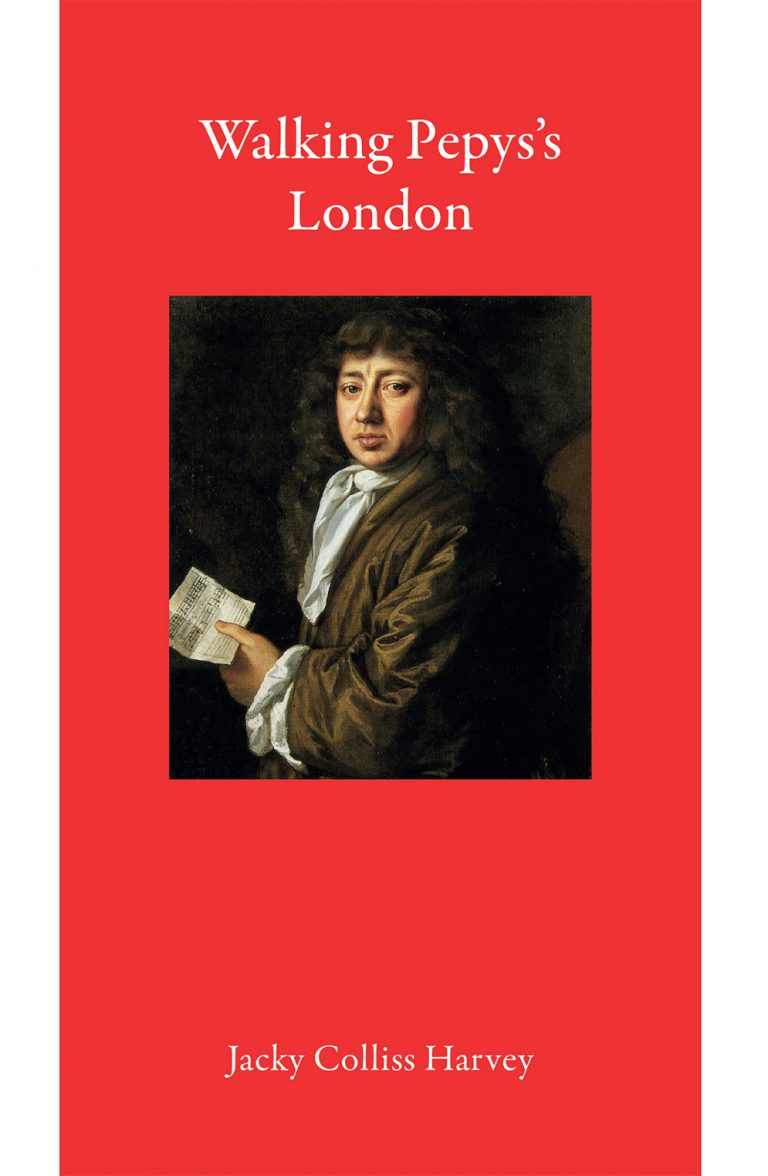 Jacky Colliss Harvey’s Walking Pepys’s London is published by Haus Publishing (£12.99, Hardback)
 worked in museum publishing for the past 20 years and is a commentator and reviewer who speaks in both the UK and abroad on the arts and their relation to popular culture. She is the author of the bestseller RED: A History of the Redhead and most recently The Animal’s Companion.
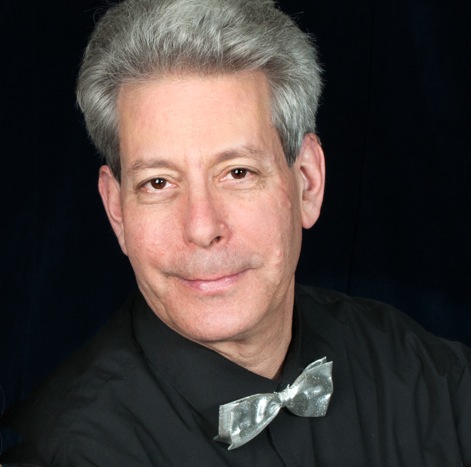 Elan Sicroff is one of the leading interpreters of Thomas de



 The Cross-Eyed Pianist