Another excellent three days in the company of other advanced pianists – some students, some piano teachers like me, and some professional pianists – on the piano course run by my teacher, Penelope Roskell. We enjoyed a wide range of repertoire, from Scarlatti to Stephen Montague, and discussed and practiced aspects of technique such as soft hands and forearms, ‘Mozartian’ staccato (what Penelope descibes as “detached legato”), ‘orchestrating’ sonatas and piano works by Haydn and Mozart, and how to achieve a beautiful cantabile sound in Schubert’s Impromptu in G flat (D899 No. 3) and Chopin’s ‘Aeolian Harp’ Etude (Opus 25, No. 1). And much more besides….. Our coffee and lunch breaks were full of interesting ‘piano chat’ and it was both instructive and enjoyable to exchange ideas with other pianists and teachers. The next course is on September – details at the end of the post.

Despite finding the first course (in April 2009) very daunting, because of the very high standard of the other participants, I have always gained a huge amount from these courses: they are instructional, inspiring, very supportive, and non-competitive. Everyone comes to the course with different needs and interests, from help with tension or performance anxiety, or simply a desire to play through some repertoire to other people in a relaxed setting. The course always ends with a concert, to which friends and family are welcome. The performance aspect of these courses has done wonders for my confidence and I have lost any shyness I had about performing, and now actively enjoy it. The 30 seconds of contemplative silence which greeted my performance of Chopin’s Nocturne in E, Opus 62, No. 2 was the ultimate compliment at the concert yesterday afternoon, and I was flattered and touched by some of the comments I received afterwards.

What we played during the course:

Debussy – Preludes Book I: ‘La fille aux cheveux de lin’

Villa-Lobos – Prole de bebe No. 1: ‘O Polochinello’

Bach – Prelude & Fugue in F minor, XII, WTC Book 2

Chopin – Nocturne in E, Op. 62, No. 2 (me)

Mendelssohn – Variations Serieuses, Op. 54

Chopin – Berceuse, Op. 57

Scriabin – Piano Sonata No. 4, in F sharp major, Op. 30

Mozart – Piano Sonata in A minor, K 310 (1st & 2nd movements)

Haydn – Piano Sonata in E flat, No. 59, Hob. XVI:49 (1st movement)

Mozart – Piano Sonata in D, K 576

Chopin – Waltz in E minor, No. 14

Beethoven – Piano Sonata in F major, Op. 10 No. 2

Mozart – Piano Concerto No. 5 (1st movement)

Dave Brubeck – ‘Dad Plays the Harmonica’

Henry Cowell – ‘Exultation’

Stephen Montague – ‘The Headless Horseman’

Bach – Concerto in D minor after Marcello BWV 974 (me)

Chopin – Etude, Opus 25 No. 1 ‘Aeolian Harp’

Mozart – Rondo in A minor, K511 (me)

Scarlatti – Sonata K.215

Martin Butler – ‘After Concord’

Joanna MacGregor – Lowside Blues

Diana Burrell – ‘Constellations’

Schubert – Impromptu in G flat, D899 no. 3

Chopin – Nocturne, Op. 48 No. 1

Bach – Prelude & Fugue in C-sharp major, WTC Book 2, III

Prokfiev – Piano Sonata No. 3 (1st movement)

Liszt – Concert Study: ‘Un Sospiro’

Charles Tebbs – ‘Moonlight from Sunlight’ (Charles is a pianist and composer who attended the course and performed some of his own pieces for us)

You can hear most of the pieces via this Spotify playlist

‘Moonlight from Sunlight’ by Charles Tebbs

More on piano courses here (includes details of Penelope Roskell’s September course)

I ran an informal poll amongst my Twitter and Facebook friends, asking them to indicate which pieces they feel should be “must plays” in the pianist’s repertoire. This post is compilation of those thoughts. Thank you to everyone who contributed. Please feel free to leave further comments, either via the comments box on this blog or via Twitter @crosseyedpiano.

J S Bach – The Well-Tempered Clavier, Italian Concertos, Partitas

The general consensus is that Bach “teaches you everything” (Melanie) and is “the basis of all piano knowledge” (Lorraine) – phrasing, voicing, balance, techniques such as jeu perlé and legato, “orchestration”. Master Bach and you can play anything. Bach was revered by many composers who followed him, perhaps most notably, Fryderyk Chopin, who, it is said, studied the ’48’ every day (he took a copy of the manuscript with him on his ill-starred trip to Majorca).

Mozart

I’m revisiting Mozart’s late Rondo in A minor, K511, at the moment, and I am struck, not for the first time, by how Mozart’s piano music presents his oeuvre in microcosm: operatic, orchestral, choral – it’s all there. He is also a master of chiaroscuro (light and shade), with changes of mood and shading often occurring within the space of just a bar or two. Mozart’s piano music requires great clarity and elegance. Never forget Schnabel’s comment “too easy for children, too difficult for artists”.

Beethoven – Piano Sonatas

Beethoven’s 32 Piano Sonatas are considered to be the New Testament of piano repertoire (Bach’s WTC is the Old Testament). Learn any one of the sonatas and you’ll have a snapshot of Beethoven’s creative impulse, as well as insights into how rapidly the instrument was developing at the time. Beethoven pushed the boundaries, both of the form and the instrument for which he was writing. For all the clichéd readings of it, the ‘Moonlight’ Sonata (Opus 27/2) remains a revolutionary work, written by a composer poised on the cusp of change. His music is full of wit, humour, pathos & philosophy.

Chopin – Études, Nocturnes

I suppose it goes without saying that any pianist worth his or her salt should study at least one of Chopin’s Études and Nocturnes at some point. Chopin elevated the Étude from student study to a highly refined genre, while retaining the original intention of the ‘study’. They are all different, and individual, and they all offer opportunities to hone specific techniques. Some are very well known (the ‘Winter Wind’, ‘Butterfly’, ‘Aeolian Harp’, ‘Tristesse’, ‘Revolutionary’) which makes them doubly difficult to play, for one wants to do one’s absolute best by them. Learn a handful of the Études – or all of them – and you will be scaling the high Himalayan peaks of piano repertoire.

The Nocturnes are exquisite miniatures, some of the finest small-scale music written for piano, and studies in beautiful cantabile playing. The distinct ‘vocal line’ in these pieces lends great drama and profound emotional expression, together with the judicious use of tempo rubato. Many have decorative features such as trills and fiorituras, which, when played well, appear to float over the surface of the music. The influence of Mozart on Chopin is clear in these works, in their distinct melodic lines. For me, the best performances of Chopin’s Nocturnes reveal him as a classical composer, with understated rubato, and close attention to structure and notation. Chopin may be ‘Prince of the Romantics’ (Count Adam Zamoyski), but he revered Bach and Mozart.

On a more general level, playing Chopin’s music offers the modern pianist a fascinating insight into what kind of instrument the piano was in the first part of the nineteenth century. More advanced than Beethoven’s piano, it was still some way from the modern instrument we know today. Hearing his music played on a period instrument is fascinating and makes sense of his dynamic markings such as sostenuto, and his pedal writing. (The Cobbe Collection at Hatchlands, Surrey, has three ‘Chopin’ pianos, which he may have played during his 1848 visit to England.)

Rachmaninov

The landscape artist in sound, Rachmaninov presents the vastness of his native Russia in his music, and a sense of history. A reluctant performer himself (in a photo in the green room at Wigmore Hall he looks as if he’d do anything but play the piano!), he wrote piano music which is difficult yet so beautifully constructed that it is extremely satisfying to play.

Debussy

Debussy forces you, as a pianist, to totally reappraise the way you play, and how the instrument works. In a lot of his piano music, you need to forget the piano has hammers. Debussy’s own piano playing was described as “hands sinking into velvet”. I learnt so much about arm weight, lightness, and touch from my study of Debussy for my Diploma, so much so that I feel he is now required playing for any pianist, whatever level. (Even simplified versions of Debussy’s greatest piano works are worth investigation.) Debussy’s piano music also presents some interesting paradoxes for the modern pianist: we have this idea that his music is fluid and gentle. It was, relative to the prevailing style, but we have now gone too far now, and many interpretations capitalise, sometimes erroneously, on the “impressionistic” nature of his music. The Preludes, for example, contain many different moods. shadings, and exercises in touch and tone. Definitely worth studying.

Bartok, Stravinsky, Prokofiev, Shostakovich, Messiaen, Stockhausen, Ligeti

I’m a recent convert to atonal music. I actually sat through a piece by Stockhausen in a concert earlier this week and enjoyed it, and I learnt a piece by Messiaen for my Diploma. It’s good to play outside your comfort zone, not least because it introduces you to new and different repertoire (I feel the same about Scarlatti and his cohorts!). Interestingly, younger students are often very receptive to dissonant and atonal music, because they have not yet experienced enough ‘straight’ classical music. I have also found some of my students like minimalist music, for the same reason.

This is by no means comprehensive, and is also very subjective. There are many, many more pieces and composers which could be considered “required reading” for pianists. Do please feel free to leave comments and keep the discussion going.

“If you can’t sing it, you can’t hear it. And that means we [the audience] can’t hear it either.”

This is what my teacher said to me at my recent lesson, during which we worked on Chopin’s Nocturne, Opus 62 no. 2, the last Nocturne published in his lifetime. In bars 20-22 the left hand plays descending sustained minims, achieved by silently changing from a thumb to a fifth finger. I’d got the fingering right, but I could not sing those sustained notes. As a result, they were lost amid all the other sounds and textures in this passage. Once I’d sung the notes, I found I could sound them easily, and a little extra weight in the finger added a warmth and resonance which was obvious, but not overpowering, under the gorgeous treble line.

It sounds obvious, that we should listen all the time when we are playing, whether in practice or performance, but it is quite common for us not to listen, and to allow the mind – and ears – to wander as we work, and thus not take in fully what we are doing at the keyboard. As pianist Murray McLachlan said at a recent EPTA event I attended, “use your ears: they are your fiercest critic and your best teacher”.

My piano lesson last week was mostly concerned with listening as both pieces I presented have a strong melodic line which needs to sing out over the bass (the other piece was the slow movement from Bach’s D minor Concerto after Marcello, BWV 947). As I listened to myself playing, striving always for the most beautiful cantabile sound, I learnt to adjust my arm weight, lightening it to produce a better sound. In the Chopin, even where a passage is marked crescendo, leading to forte (for example, from bar 12), one should not allow the arm to become heavy: the sound one is aiming for here is increased warmth rather than volume. At this point, my teacher and I paused to discuss first-hand accounts of Chopin playing: it is said that he never played louder than mezzo-forte (even if he had written forte in the score). ‘Warming up’ the sound can create the effect of an increase in volume, without losing a beautiful tone.

I find it hard to persuade my students to listen. Too often they want to gallop through their pieces, get the notes right and not bother too much about producing a good tone. Yet, the production of beautiful tone is what pianists strive for above anything else: even the most spiky passages of Prokofiev or Stockhausen should be played with careful attention to tone. Be critical as you play: listen all the time and if you don’t like the sound you are hearing, find ways to adjust it to make it better by experimenting with arm weight (lightening the arm will usually produce a better tone), and by ‘visualising’ the sound you want to achieve before you play it (it’s amazing how different your tone will be if you spend a few moments before you play imagining the sound). We should keep our ears open and attuned to what we are doing, to allow us to make minor adjustments to our playing and sound production. If you like the sound you are producing in a particular passage, try and remember that sound for next time, and what it felt like as you were playing it. Were your arms light, your wrists soft? What else were you doing with your body to create that sound?

Recording yourself playing is another invaluable aspect of listening: I have routinely started recording my students, especially those who have exams fairly imminently, and sending them a soundclip to listen to. I ask them to listen critically, not for errors and slips, but for an ‘overview’ of the sound. I ask them to make notes (to bring to the next lesson for discussion with me) about what they liked and disliked about the sound, and to think about how they can improve it or change it.

If you do record yourself playing, don’t listen to the recording as soon as you’ve made it. You are likely to be far more critical at this point and may not listen in the right way. Leave it a few days, and then listen to your recording. Review it carefully and note what you like and dislike about your playing. Compare recordings of the same piece, made at different times and in different circumstances (for example, in practice, in performance, on a different instrument etc.).

Another aspect of listening is of course hearing other people play, live and on disc. Go to concerts, listen to recordings and note what you enjoy about the sounds other pianists make. Remember that they are probably employing the same techniques as you to create that sound!

Chopin – Opus 62 no.2

Here is Richter

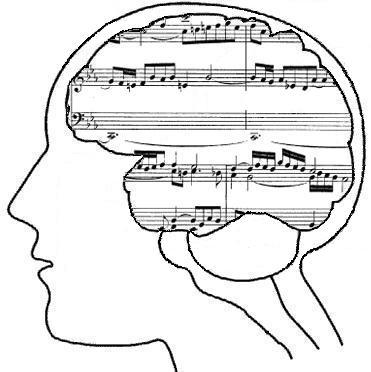
It’s one of the great romantic images, isn’t it? The lone performer, faced with the huge black beast of a full-size concert grand piano on a bare stage, armed with nothing but his or her memory. And it’s one of the most absurd things musicians put themselves through. We have Clara Schumann and Franz Liszt to thank (or blame!) for the tradition of the concert pianist playing from memory, and both were significant in turning the piano recital into the spectacle it is today. Before the mid-nineteenth century, pianists were not expected to play from memory. Few pianists today would dispute this legacy, and now it is almost de rigeur, so much so that if you go to a concert where the pianist plays from the score, you may hear mutterings amongst the audience, suggesting the performer isn’t up to the job. Which is of course rubbish: sometimes, especially in contemporary or very complicated repertoire, it is simply not possible to memorise all of it. No other musician is expected to play from memory, though some virtuosi, and of course opera singers do.

When I had piano lessons as a child and teenager, I was not taught how to memorize music. Thus, there are very few pieces in my repertoire which I can play from memory now. However, in the course of my study for my Diploma, I realised the benefits of memorization, and I’ve made the practice and exercise of memory part of my daily diet in my practising. Piano students in music colleges and conservatoires are expected to memorise all their music and to perform from memory, and are taught the skills to facilitate successful memorization.

Playing from memory is not a virtuoso affectation. It allows the performer greater freedom of expression and communication with listeners, and if one is not glued to a score, one can be far more gestural. Memorization demonstrates a high degree of skill and application (high-level musicians often display mental agility akin to that of chess masters), and people often exclaim of concert pianists “how on earth does he/she remember all those notes?” (as pianists, we have to learn more than double the number of notes of any other musician). While each individual musician will have his or her own particular method of memorization, there are a number of proven strategies to assist in memorising music, and the storage and recall of information.

For the pianist, there are four kinds of memory, all of which must be employed when learning music:

Visual Memory: human beings use this part of their memory function to record large amounts of information, such as faces and colours and everyday objects. Music is made up of patterns and shapes, and the pianist uses visual memory to “picture” the score, as well as to recall the physical gestures involved in playing.

Aural/Auditory Memory: this is what enables us to sing in the shower! Music is an assortment of sounds, arranged in a certain order. The pianist uses aural memory to know he/she is playing the correct notes and to anticipate what he/she will play in the next few seconds.

Muscular/Kinaesthesic Memory: the ability to recall all the movements, gestures and physical sensations required to play music. Muscular memory is trained by repetitive practice: just as the tennis player practices his over-arm serve in exactly the same way each time to ensure a perfect delivery, so the pianist must employ repetitive practice to ensure the fingers land on the right notes every time.

Analytical/Conceptual Memory: the pianist’s ability to fully comprehend, absorb and retain the score through his/her intimate study and knowledge of it. This involves understanding structure, harmony, dynamics and nuances, phrasing, reference points, modulations, repetitions etc, as well as the context in which the music was composed, whether it is Baroque, Classical or Romantic, for example. This “total immersion” in the score should result in a rich, multi-layered awareness of it.

Many young students rely, often unconsciously, on auditory and visual memory, or on auditory and muscular memory, and many can play competently from memory. However, to play expertly from memory, and to ensure that one’s ability to download and deliver music accurately is completely secure, all four aspects of memory must be trained and maintained.

Students should be encouraged from the very first lesson to memorise their music, but discouraged from relying purely on muscular memory. They need to understand both the building blocks of the music, and its unique language.

Secure memorisation can lead to an assured performance and less performance anxiety. However, even the very best people can suffer from memory lapses, perhaps due to anxiety, lack of proper preparation, tiredness, stress, or any number of other factors. I’ve witnessed memory lapses in concert a few times: on each occasion, the performer managed to maintain the harmonic framework of the music, thus making the errors less obvious, but no less unsettling, and I’ve often wondered how many times post-performance the performer went over that section of the score to exorcise the mistake.

More on strategies for memorisation from The Musician’s Way blog.