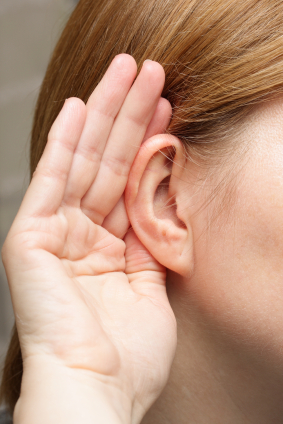
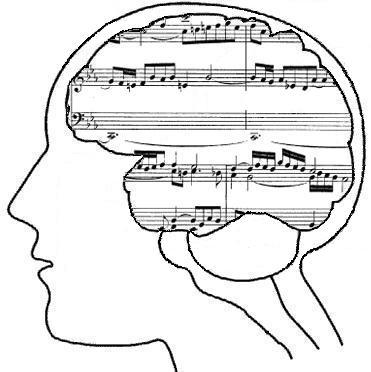
“If you can’t sing it, you can’t hear it. And that means we [the audience] can’t hear it either.”

This is what my teacher said to me at my recent lesson, during which we worked on Chopin’s Nocturne, Opus 62 no. 2, the last Nocturne published in his lifetime. In bars 20-22 the left hand plays descending sustained minims, achieved by silently changing from a thumb to a fifth finger. I’d got the fingering right, but I could not sing those sustained notes. As a result, they were lost amid all the other sounds and textures in this passage. Once I’d sung the notes, I found I could sound them easily, and a little extra weight in the finger added a warmth and resonance which was obvious, but not overpowering, under the gorgeous treble line.

It sounds obvious, that we should listen all the time when we are playing, whether in practice or performance, but it is quite common for us not to listen, and to allow the mind – and ears – to wander as we work, and thus not take in fully what we are doing at the keyboard. As pianist Murray McLachlan said at a recent EPTA event I attended, “use your ears: they are your fiercest critic and your best teacher”.

My piano lesson last week was mostly concerned with listening as both pieces I presented have a strong melodic line which needs to sing out over the bass (the other piece was the slow movement from Bach’s D minor Concerto after Marcello, BWV 947). As I listened to myself playing, striving always for the most beautiful cantabile sound, I learnt to adjust my arm weight, lightening it to produce a better sound. In the Chopin, even where a passage is marked crescendo, leading to forte (for example, from bar 12), one should not allow the arm to become heavy: the sound one is aiming for here is increased warmth rather than volume. At this point, my teacher and I paused to discuss first-hand accounts of Chopin playing: it is said that he never played louder than mezzo-forte (even if he had written forte in the score). ‘Warming up’ the sound can create the effect of an increase in volume, without losing a beautiful tone.

I find it hard to persuade my students to listen. Too often they want to gallop through their pieces, get the notes right and not bother too much about producing a good tone. Yet, the production of beautiful tone is what pianists strive for above anything else: even the most spiky passages of Prokofiev or Stockhausen should be played with careful attention to tone. Be critical as you play: listen all the time and if you don’t like the sound you are hearing, find ways to adjust it to make it better by experimenting with arm weight (lightening the arm will usually produce a better tone), and by ‘visualising’ the sound you want to achieve before you play it (it’s amazing how different your tone will be if you spend a few moments before you play imagining the sound). We should keep our ears open and attuned to what we are doing, to allow us to make minor adjustments to our playing and sound production. If you like the sound you are producing in a particular passage, try and remember that sound for next time, and what it felt like as you were playing it. Were your arms light, your wrists soft? What else were you doing with your body to create that sound?

Recording yourself playing is another invaluable aspect of listening: I have routinely started recording my students, especially those who have exams fairly imminently, and sending them a soundclip to listen to. I ask them to listen critically, not for errors and slips, but for an ‘overview’ of the sound. I ask them to make notes (to bring to the next lesson for discussion with me) about what they liked and disliked about the sound, and to think about how they can improve it or change it.

If you do record yourself playing, don’t listen to the recording as soon as you’ve made it. You are likely to be far more critical at this point and may not listen in the right way. Leave it a few days, and then listen to your recording. Review it carefully and note what you like and dislike about your playing. Compare recordings of the same piece, made at different times and in different circumstances (for example, in practice, in performance, on a different instrument etc.).

Another aspect of listening is of course hearing other people play, live and on disc. Go to concerts, listen to recordings and note what you enjoy about the sounds other pianists make. Remember that they are probably employing the same techniques as you to create that sound!

Chopin – Opus 62 no.2

Here is Richter

It’s one of the great romantic images, isn’t it? The lone performer, faced with the huge black beast of a full-size concert grand piano on a bare stage, armed with nothing but his or her memory. And it’s one of the most absurd things musicians put themselves through. We have Clara Schumann and Franz Liszt to thank (or blame!) for the tradition of the concert pianist playing from memory, and both were significant in turning the piano recital into the spectacle it is today. Before the mid-nineteenth century, pianists were not expected to play from memory. Few pianists today would dispute this legacy, and now it is almost de rigeur, so much so that if you go to a concert where the pianist plays from the score, you may hear mutterings amongst the audience, suggesting the performer isn’t up to the job. Which is of course rubbish: sometimes, especially in contemporary or very complicated repertoire, it is simply not possible to memorise all of it. No other musician is expected to play from memory, though some virtuosi, and of course opera singers do.

When I had piano lessons as a child and teenager, I was not taught how to memorize music. Thus, there are very few pieces in my repertoire which I can play from memory now. However, in the course of my study for my Diploma, I realised the benefits of memorization, and I’ve made the practice and exercise of memory part of my daily diet in my practising. Piano students in music colleges and conservatoires are expected to memorise all their music and to perform from memory, and are taught the skills to facilitate successful memorization.

Playing from memory is not a virtuoso affectation. It allows the performer greater freedom of expression and communication with listeners, and if one is not glued to a score, one can be far more gestural. Memorization demonstrates a high degree of skill and application (high-level musicians often display mental agility akin to that of chess masters), and people often exclaim of concert pianists “how on earth does he/she remember all those notes?” (as pianists, we have to learn more than double the number of notes of any other musician). While each individual musician will have his or her own particular method of memorization, there are a number of proven strategies to assist in memorising music, and the storage and recall of information.

For the pianist, there are four kinds of memory, all of which must be employed when learning music:

Visual Memory: human beings use this part of their memory function to record large amounts of information, such as faces and colours and everyday objects. Music is made up of patterns and shapes, and the pianist uses visual memory to “picture” the score, as well as to recall the physical gestures involved in playing.

Aural/Auditory Memory: this is what enables us to sing in the shower! Music is an assortment of sounds, arranged in a certain order. The pianist uses aural memory to know he/she is playing the correct notes and to anticipate what he/she will play in the next few seconds.

Muscular/Kinaesthesic Memory: the ability to recall all the movements, gestures and physical sensations required to play music. Muscular memory is trained by repetitive practice: just as the tennis player practices his over-arm serve in exactly the same way each time to ensure a perfect delivery, so the pianist must employ repetitive practice to ensure the fingers land on the right notes every time.

Analytical/Conceptual Memory: the pianist’s ability to fully comprehend, absorb and retain the score through his/her intimate study and knowledge of it. This involves understanding structure, harmony, dynamics and nuances, phrasing, reference points, modulations, repetitions etc, as well as the context in which the music was composed, whether it is Baroque, Classical or Romantic, for example. This “total immersion” in the score should result in a rich, multi-layered awareness of it.

Many young students rely, often unconsciously, on auditory and visual memory, or on auditory and muscular memory, and many can play competently from memory. However, to play expertly from memory, and to ensure that one’s ability to download and deliver music accurately is completely secure, all four aspects of memory must be trained and maintained.

Students should be encouraged from the very first lesson to memorise their music, but discouraged from relying purely on muscular memory. They need to understand both the building blocks of the music, and its unique language.

Secure memorisation can lead to an assured performance and less performance anxiety. However, even the very best people can suffer from memory lapses, perhaps due to anxiety, lack of proper preparation, tiredness, stress, or any number of other factors. I’ve witnessed memory lapses in concert a few times: on each occasion, the performer managed to maintain the harmonic framework of the music, thus making the errors less obvious, but no less unsettling, and I’ve often wondered how many times post-performance the performer went over that section of the score to exorcise the mistake.

More on strategies for memorisation from The Musician’s Way blog.

Pianist, teacher and writer Catherine Shefski studied at Smith College, Massachusetts, and at the Guildhall School of Music & Drama in London, where she was taught by EPTA founder, Carola Grindea.  Catherine has performed as a soloist and chamber musician, has taught “virtual” piano lessons, and writes an informative blog, All Piano, with the mission to “make piano lessons relevant for the digital generation”.

During my piano playing “formative” years, age eight to seventeen, I studied with four piano teachers. Two teachers at college and four post-grad brings the total to ten. Each teacher contributed something to my growth as a pianist and as a teacher. I find myself passing along choice tidbits of information to my students, clearing up confusion about musical terminology and offering practice tips.

I’d like to share just a few lessons I learned along the way, in addition to all the repertoire, which made certain teachers (and lessons) memorable.

  • Piu means “more” and peu means “little.”
  • Piu mosso means more motion and meno mosso means less motion.
  • Accidentals do not affect the same note of a different octave, unless indicated by a key signature.
  • Senza means without and sempre means always.
  • To shape the melodic line it usually makes sense to go to the long note.
  • If there is no fingering written in the score, follow the “next note, next finger” rule.
  • Una corda means use the soft pedal (one string); tre corda means release the soft pedal (three strings).
  • When you have two phrases with identical notes and rhythm, make them different by dynamic contrast or a change in touch.
  • Grace notes in Chopin are generally played on the beat.
  • F# minor melodic scale is the only scale that changes fingering on the descent.
  • m.d. (main droite) right hand and m.g. (main gauche) left hand.
  • With a ritardando at the end of a piece pay attention to the space between the notes. Should be incrementally longer with the longest wait before the last note.
  • When working on very soft passages, practice “excavating the pianissimo.” In other words, begin from nothing and then gradually you’ll get to the softest sound possible.
  • Before playing extended octave passages, try flipping your arm over and reaching an octave with your hand upside down, fingers pointing to the floor. It a good stretch!
  • Sopra means above.
  • Sotto voce meas “under voice”, or soft.
  • A staccato note under a slur is a portato. Think of it as a “plump staccato.”
  • When working for dynamic contrast, practice stopping and preparing before the change.
  • When working with large complicated chordal passages, practice squeezing the chord to shape the hand. Your muscles will remember.
  • Sightread chords from the bottom to the top.
  • To play a passage of thirds, fourths, fifths, etc. legato lift the finger that is to be repeated while connecting the rest.
  • When in doubt sing the melody.

© Catherine Shefski

http://allpiano.wordpress.com


OVERCOMING PERFORMANCE ANXIETY

At my recent kids’ masterclass, the class leader, pianist Graham Fitch, likened playing in different situations – at home, for teacher, in a festival or exam, in a concert – to walking a tightrope. When practising at home, often alone, or with the family getting on with their own things around you, the tightrope is easy to negotiate, very close to the ground, and should you fall off, you won’t hurt yourself. When you play for your teacher, you may feel a little anxiety initially, but once you start playing, you settle into the music and look forward to your teacher’s feedback. The tightrope is still manageable, not too high, not too scary, and not far to fall.

However, when we put ourselves in more stressful situations, the tightrope is suddenly yanked up, and is sometimes dauntingly vertiginous. We view it with trepidation, and the nerves may well set in from the moment we receive the exam date, book the concert venue or send off the competition application form. Dealing with performance anxiety can be a major issue for many musicians and is, for some, the reason why they choose not to perform at all (most famously, perhaps, Canadian pianist Glenn Gould). As I prepare for my diploma exam (mid-December), coping with anxiety on The Day has been up there at the forefront of my mind, along with ensuring my repertoire is ready, my programme notes are accurate, the page-turner is primed, and my dress is appropriate for the occasion.

Everyone has their own way of dealing with anxiety, but there are some well-established strategies which can help, from physical exercises, deep breathing, sensible diet and rest, to psychological activities to help encourage a positive outlook on the event, and thorough preparation. For me, anxiety manifests itself mostly in physical symptoms: dry mouth, racing heart, trembling hands, feeling hot, feeling cold, headache and light nausea. Lately, I have learnt how to counteract this with positive thinking, Bach Flower Rescue Remedy and the “piano pilates” exercises from my teacher.

In preparing for a concert, exam or similar situation, where one knows one’s playing will be held up for scrutiny, it’s important to set that tightrope slightly higher, even if one is working in the relatively stress-free environment of one’s home or piano studio. This past week, my practising has incorporated recording myself playing, using a neat digital recording device (Olympus LS-5). It’s amazing how just having that little machine behind me as I played has upped the anti: knowing that there is an extra pair of “ears” listening has either made me play better, or caused me to crash through my repertoire with all the finesse and poise of a grade one schoolgirl. I posted the recordings on Soundcloud, and have been surprised at the positive feedback. It all helps!

It is also important to present one’s concert or exam repertoire to an uncritical audience ahead of The Big Day. Playing for friends, in the informal surroundings of one’s own home (if space permits), can be very useful. Ply the friends with coffee and cakes, don’t expect them to sit in hushed reverential silence, and just play for pleasure. You know you’re on show, but no one’s going to boo or slow hand-clap you.

Ahead of the event proper, try on your concert clothes and ensure everything fits and is comfortable. As a female pianist, it is crucial (for me at least) to have shoes with a heel which is comfortable on the pedal, and will not slip (much as I love high heels, they are impossible for playing the piano). Match your concert attire to the venue and time of the concert: you don’t need to wear evening dress for a lunchtime or early evening recital. Find out how to get to the venue well in advance, especially if you have to rely on public transport, and work out a route that will ensure you arrive in good time.

Even in the concert setting, on The Big Day, you can engage in psychological strategies to counteract the nerves. Imagine yourself walking across the stage, greeting the audience, sitting at the piano and placing your hands on the keys. Visualise the opening page of the first piece you will play and hear the music in your head. Take a deep breath and as you exhale, allow your hands to float onto the keys ready for the opening measures. Deep, thoracic (“Pilates”) breathing can also help when you are playing: in our anxiety, or extreme concentration, sometimes we do actually forget to breathe (I know I do this in the second half the Schubert Impromptu Opus 90 No. 2 – I have marked a reminder to myself on the score!). A deep breath in and slowly exhaled can help refocus, and can even have a softening effect on the music, especially during sections where a bugbear error has always cropped up in practice, or which are just plain difficult. Remind yourself that you are well-prepared, that you are ready,  looking forward to sharing your music with others, that you fear nothing, and that the experience will be fun, exciting, and instructive.

When helping my students prepare for our end of term concerts, we talk about performance anxiety and I remind them that playing the piano is very hard. The audience (parents, grandparents, siblings and friends) is sympathetic, nay, gobsmacked that anyone has the guts to get up on the stage and play. My own mantra in this situation is “I can do it. And you can’t”. Bullish? Egocentric? Of course – but you need a degree of chutzpah to drive you out onto the stage in the first place. And it makes you play better.

It is adrenaline (the “fight or flight” hormone) which causes the unpleasant symptoms of performance anxiety, but it can also be harnessed to create the right excitement, daring, poise and sprezzatura to perform – and perform well. My teacher has a lovely anecdote about her daughter, who was taking part in a school drama show. The child asked her mother excitedly “I wonder if I’ll get adrenaline on The Day?”, knowing that it would enhance her performance.

On a more prosaic level, it is important to go into a performance or exam situation well-rested and properly fed. Don’t hammer through your pieces on the morning of the concert or exam. Do gentle practice, eat a light lunch, preferably not overloaded with rich salad dressings or carbohydrates which will make you sleepy, take a nap, prepare your concert clothes, put your music in your brief case. At the venue, familiarise yourself with all the key entrances and exits, and facilities (including fire exits). Move calmly and quietly. Avoid too much conversation with venue staff, house manager etc. Get dressed and warm up. Now, start to think yourself into the music…..

The Inner Game of Music and The Mastery of Music, both by Barry Green, and The Musician’s Way by Gerald Klickstein all contain sound, sensible, and reassuring advice on how to prepare for a concert, strategies to overcome performance anxiety and how to “become a performer”. The accompanying Musician’s Way website is also extremely helpful.