As part of the Southbank Centre’s Festival of Love this summer, there have been three screenings of the classic love story Brief Encounter, with a live performance of the score (drawn largely from Rachmaninov’s perennially popular 2nd Piano Concerto) by pianist Leon McCawley with the LPO. The film screening took place during the second half of the concert and was preceded in the first half by a full performance of the Rachmaninov Concerto. The whole event was introduced by Lucy Fleming, daughter of Celia Johnson, who plays Laura, the female lead in Brief Encounter. Her introduction was full of wonderful anecdotes about the making of the film (which took place during the final year of the war), including extracts from Celia Johnson’s diary.

Trevor Howard as Alec and Celia Johnston as Laura in ‘Brief Encounter’

Based on Still Life, a one-act play by Noel Coward, and directed by David Lean, the plot centres around Laura, a suburban housewife married to a dependable but rather dull man. A chance meeting with a doctor, Alec Harvey, in the ‘refreshment room’ at the station (which is fiercely guarded by the wonderfully-named Myrtle Bagot, played by Joyce Carey with some of the best lines in the entire film) leads Laura into a brief but intense romantic liaison with the doctor, before circumstances and their own moral integrity forces them to part, never to meet again…. Much of the action is narrated by Laura, and despite the plummy, cut-glass RP accents of the main characters, the plot is sharply-observed, witty, very funny at times, and also heart-rendingly poignant. The story is underpinned by the wonderful score, and was in fact largely responsible for bringing this epic piece of music to wider fame. It has undoubtedly contributed to the enduring appeal.

It must be 20 years since I last heard the ‘Rach 2’ performed live (I think by Evgeny Kissin at the Proms) and I had forgotten what a gloriously rich and expressive work it is. Towering and climactic, it is demanding work to play, and one of the chief challenges is avoiding an overly-romantic reading of it. Leon McCawley’s warm tone was perfect for this work, combined with an exquisite clarity and an ability to highlight some of the less obvious details in the score. The entire work had a classical edge to it which avoided sentimentality, yet never detracted from the rich textures of the score.

Leon McCawley & the LPO (photo (c) Leon McCawley)

To perform the score with the film must have taken some very careful rehearsing to create such a smooth synthesis of film and soundtrack. In her introduction, Lucy Fleming explained that some complicated technical processes were used to strip out the original music from the film. A new soundtrack was commissioned especially for the RFH screening: this played while we watched the film was the most wonderful cinematic and musical experience, a nod back to the days of silent cinema, almost, when films would be accompanied and “narrated” by a resident pianist, small orchestra or organist.  A really superb evening celebrating great music and a great film, both of which have most definitely stood the test of time. Oh, and the enduring power of love…..
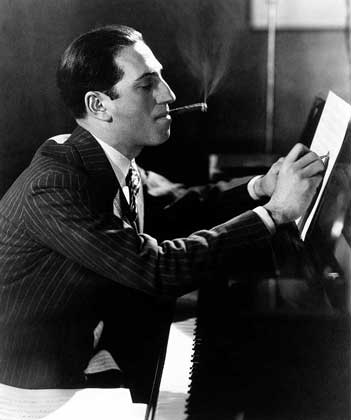
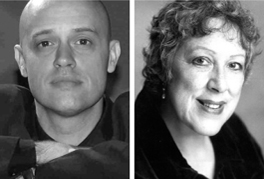
 

The music of George Gershwin remains perennially popular with performers and audiences alike, and his life and work are vividly illustrated in ‘Classic Gershwin’, a new words and music production with actress Susan Porrett and acclaimed Gershwin interpreter, pianist Viv McLean.

It is a mistake to think of Gershwin purely as a composer of “jazz” (a term he in fact disliked, preferring the term “swing” to describe his jazz-inspired music). His musical tastes and influences were wide, from Bach to Stravinsky and Schoenberg. He was particularly influenced by the French composers of the early twentieth-century, notably Maurice Ravel, who in turn was most intrigued by Gershwin’s work. Gershwin’s great skill was his ability to manipulate different forms of music into his own unique musical voice.

‘Classic Gershwin’, the third words and music collaboration between Susan Porrett and Viv McLean, takes the audience on an exhilarating, foot-tapping journey through Gershwin’s life and music, from his early years in Brooklyn to Tin Pan Alley, Broadway and Hollywood to his tragically early death from a brain tumour in 1937. Just as in ‘Divine Fire’, Viv and Sue’s moving concert focusing on the life of Chopin and his relationship with Georges Sand, the text of ‘Classic Gershwin’ offers just enough information to continually pique the listener’s attention and brings Gershwin to life with the clever and eclectic interweaving of words and music. Each nugget is illustrated with sensitively-chosen music selections, including Someone to Watch Over Me and the rarely-performed Three Preludes, to Swanee, the song which marked Gershwin’s elevation into the realms of established composer and song-writer, after Al Jolson heard Gershwin play it at a party.

The first half of Classic Gershwin closes with Rhapsody in Blue, Gershwin’s hommage to bustling metropolis of Jazz-Age New York, the city of his home, complete with wailing sirens, honking car horns and the rattle of the subway. The second half focuses on Gershwin’s later life, his growing success and fame, and his work in Hollywood. The description of his failing health (the result of a then-undiagnosed brain tumour) was told with great poignancy, and the concert closed on a tender note, a fitting contrast to the sparkling bravura of the Rhapsody in Blue.

The great appeal of this words and music concert, aside from the wonderful music, played by Viv with great precision, exuberance and musical sensitivity, all underpinned by his pristine technique, is its ability to offer just enough information in the text to keep the listener wanting more. Viv demonstrated that pieces driven by rhythmic vitality and syncopation can still have the most exquisite tonal palette and a magical dynamic range, and the music provided the most delicious interludes, complementing the text at every turn (the musical selections are made between Viv and Sue). The overall effect is a glorious and intriguing celebration of Gershwin’s life and work.

This was the world premiere of this new words and music collaboration and it was rapturously received by the audience at the OSO Arts Centre, Barnes, SW London. Highly recommended.

My review of ‘Divine Fire’

This is the year of CPE Bach, the tercentenary of the birth of the fifth son of JS, and this anniversary is being marked with performances, recordings and appreciations of his music worldwide.

This is also the year of Mahan Esfahani, the young Iranian harpsichordist, now resident in the UK, who has been credited with bringing the harpsichord “out of the closet” and making this instrument, the pre-eminent symbol of the Baroque period, accessible and exciting and proving that the harpsichord has an important position in contemporary music making.

I first encountered Mahan Esfahani via Norman Lebrect’s Slipped Disc blog and, my interest piqued, heard Mahan perform Bach’s Goldberg Variations at Cadogan Hall as part of the 2011 Proms. This was a double first – Mahan’s Proms debut and the first solo harpsichord recital in the Proms history. The performance was fresh, thrilling and insightful, revealing many of the gems of Bach’s writing not always highlighted by other performers, either on harpsichord or piano.

Since then, Mahan’s star has been ascending rapidly, evidenced by a busy international concert diary, including participation in this yaer’s Aldeburgh Festival, appearances on BBC Radio 3, and an acclaimed recording of CPE Bach’s Wurttemberg Sonatas for Hyperion. In addition, Mahan is a sharply intellectual musician who is not afraid to challenge the dogmas of the early music movement and who likes to draw his own conclusions about aspects such as interpretation and performance practice from his studies of period sources, and collaborations with modern instrument players to recreate the sonic world of earlier music.

Mahan’s witty and relaxed stage manner combine with his intelligence and musical insight, resulting in recitals with a magnetic appeal which prove that far from an instrument capable of producing “one sound”, the harpsichord is vibrant, colourfully nuanced, expressive and highly textural. From the melancholic arabesques of Couperin to the dramatic bravura and declamatory statements of the young JS Bach’s Toccata in F# minor BWV910 to the graceful soundscape of Takemitsu (an inspired inclusion), this was a concert which fizzed and sparkled.

Those of us more used to hearing piano recitals at the Wigmore need a few moments to “tune in” to the sound of the harpsichord. It speaks more quietly, inevitably, because of its size, but the special acoustic of the Wigmore Hall seems just about ideal for this instrument. Add to this an audience which, by and large, listened most attentively, creating a highly engaging and absorbing concert.

In addition to the works by Couperin, JS Bach and Takemitsu, there were two Sonatas by CPE (“Emmanuel”) Bach, written while his father was still alive. Dedicated to Emmanuel’s employer, the newly-crowned Prussian King Frederick II, these sonatas reveal a composer working within a musical landscape which was poised on the cusp of change and display the remarkable forward-pull of Emmanuel’s creative impulse in the use of texture, dissonance, rapid changes of mood, rhetoric and wit, music which looks forward to Haydn and Beethoven. For the purposes of comparison, Mahan also included in his programme a sonata by Georg Anton Benda, a Bohemian disciple of Emmanuel. More sparely scored, it lacked the immediate “shock value” of Emmanuel’s writing, yet included many distinctive facets – drama and tension, a recitative-like slow movement and a spirited finale – and was performed with great elegance and sensitivity.

On first glance, Rain Dreaming by Toru Takemitsu may seem an odd choice in a programme dedicated to Baroque and early classical music, but the piece worked well, providing an interesting contrast and a pause for reflection. There were echoes of Emmanuel’s unexpected dissonances and Couperin’s poetry within Takemitsu’s writing , yet the work is also highly lyrical in its explorations of tonality.

This was a concert of bravura playing, combined with wit and intelligence to create a thoroughly engaging concert, which challenged pre-conceived notions about the harpsichord and the music of the Baroque and Rococo periods. Mahan’s entertaining and informative introduction (given after the Couperin) and his interesting and quirky programme notes (in which he described Frederick II as an eighteenth-century “hipster”) undoubtedly contributed to a most enjoyable and imaginative evening of music making. Highly recommended.

Meet the Artist……Mahan Esfahani

www.mahanesfahani.com


(Photo credit: Marco Borggreve)

Penny Woolcock’s visually arresting “The Pearl Fishers” returns to the Coliseum in London in a revival of the 2010 English National Opera co-production with the Metropolitan Opera of New York.

The original production was praised for its stunning effects and staging, and this updated production proved mesmerizing, beginning with a beguiling underwater sequence in which pearl fishers, viewed through a gauzy screen, dive and swim, digitally-generated air bubbles trailing their lithe, fluid bodies (in fact, actors suspended on harnesses). When the curtain goes up, the scene is an exotic Ceylonese shanty town: rough wooden houses crowd higgledy-piggledy around the shoreline, tiny lights prick the early morning sky, telegraph cables sag between the buildings, and a cleverly conceived reflective surface across the entire stage creates the sense of water. The villagers gather around the ghats, dressed in sarongs, dhotis and saris in turmeric and paprika colors, and go about their business — hanging out washing, bathing, cooking at the water’s edge, gossiping. You can almost smell the masala dosas frying.

In later scenes, the houses have gone, leaving the glittering ocean across which a fishing boat glides. The illusion of waves is created through ingenious lighting effects and air-filled pillows, set low on the stage, which billow and swell like the sea. Longer scene changes are made behind the gauzy screen onto which are projected images of waves, including an impressive tsunami between Acts II and III.

Leila (Sophie Bevan) arrives (photo credit: ENO / Mike Hoban)

Bizet finished “The Pearl Fishers” in 1863, a year after Ingres painted “The Turkish Bath,” when Europe was gripped with a fervor for Orientalism, the term used by 19th-century Western scholars and artists in their study of Eastern cultures and peoples. At the time, the East was regarded as highly exotic — and erotic — and “The Pearl Fishers” resides in this tradition, with its recreation of an imaginary geography inhabited by ignorant, superstitious people who engage in transgressive sexual practices. The narrative is the age-old love triangle, with the added frisson of friendship, loyalty and religious observance.

In fact, Bizet’s opera is rather thin, particularly in comparison to his much-loved, vibrant “Carmen.” The libretto borders on cringe-making, and in this production unfortunately more than highlighted by the fact that it is sung in English and the language doesn’t always sit comfortably with the phrasing and shape of the music, as it surely would if sung in French. Apart from the famous aria (of which more later), there is little to hold the attention, musically, and while others might highlight inventiveness and variety in Bizet’s writing, this reviewer found it wanting, with Act III verging on turgid. Added to this, the characters are wooden and the narrative hardly believable. But of course, “The Pearl Fishers” is saved by the glorious tenor-and-baritone duet “Au Fond du Temple Saint” in Act I (with fragments and reprises in subsequent acts), whose sweepingly romantic melody stays with you throughout, and long after you have left the opera house, a pleasing earworm which will have you humming on your commute to work. On this occasion, what should have been a voluptuous celebration of friendship and unrequited love lacked conviction and depth: this was the first night and one hopes that as the singers (George von Bergen and John Tessier) settle into their roles, the richness of this great aria will come to the fore.

Soprano Sophie Bevan, making her role debut as Leïla, Priestess of Brahma, was a delight. Arriving by boat, veiled and submissive, her palms pressed together in obeisance, she proved a charmingly winsome and flirtatious Leïla, and full credit must go to Bevan for singing the role so arrestingly while recovering from a bug. By comparison, Zurga, sung by von Bergen, was underplayed, given his role (again one hopes his character will develop over forthcoming performances), but Nadir (Tessier) was more convincing, torn between his friendship with Zurga and his passion for Leïla. An attempt, via the setting, to comment on global warming and developing-world poverty seemed overly worthy and self-conscious, and an amused nod to the exigencies of Indian bureaucracy in the Act III scene in Zurga’s “office,” piled high with friable papers and bulging ledgers on rusting filing cabinets, felt unnecessary.

But if the music doesn’t always hold your attention (and all credit to the orchestra, whose muscular playing contributed much-needed vibrancy, together with some fine chorus singing), the visual effects will, along with the costumes: Nourabad, the High Priest of Brahma, could have stepped straight off a sculptural frieze on a South Indian temple, with his sadhu’s ash-smeared body, draperies, dreadlocks and top knot. Worth seeing if only for the arresting and finely wrought visual effects and staging.

The Pearl Fishers continues in repertory at ENO.

Date reviewed: Monday 16th June 2014.

Leïla, Sophie Bevan; Nadir, John Tessier; Zurga, George von Bergen; Nourabad, Barnaby Rea; Director, Penny Woolcock; Conductor, Jean-Luc Tingaud; Set Designer, Dick Bird; Costume Designer, Kevin Pollard; Lighting Designer, Jen Schriever; Video Designer, 59 Productions Ltd; Choreographer, Andrew Dawson; Translator, Martin Fitzpatrick. English National Opera, London Coliseum 

(This review was first published on CultureVulture.net)


