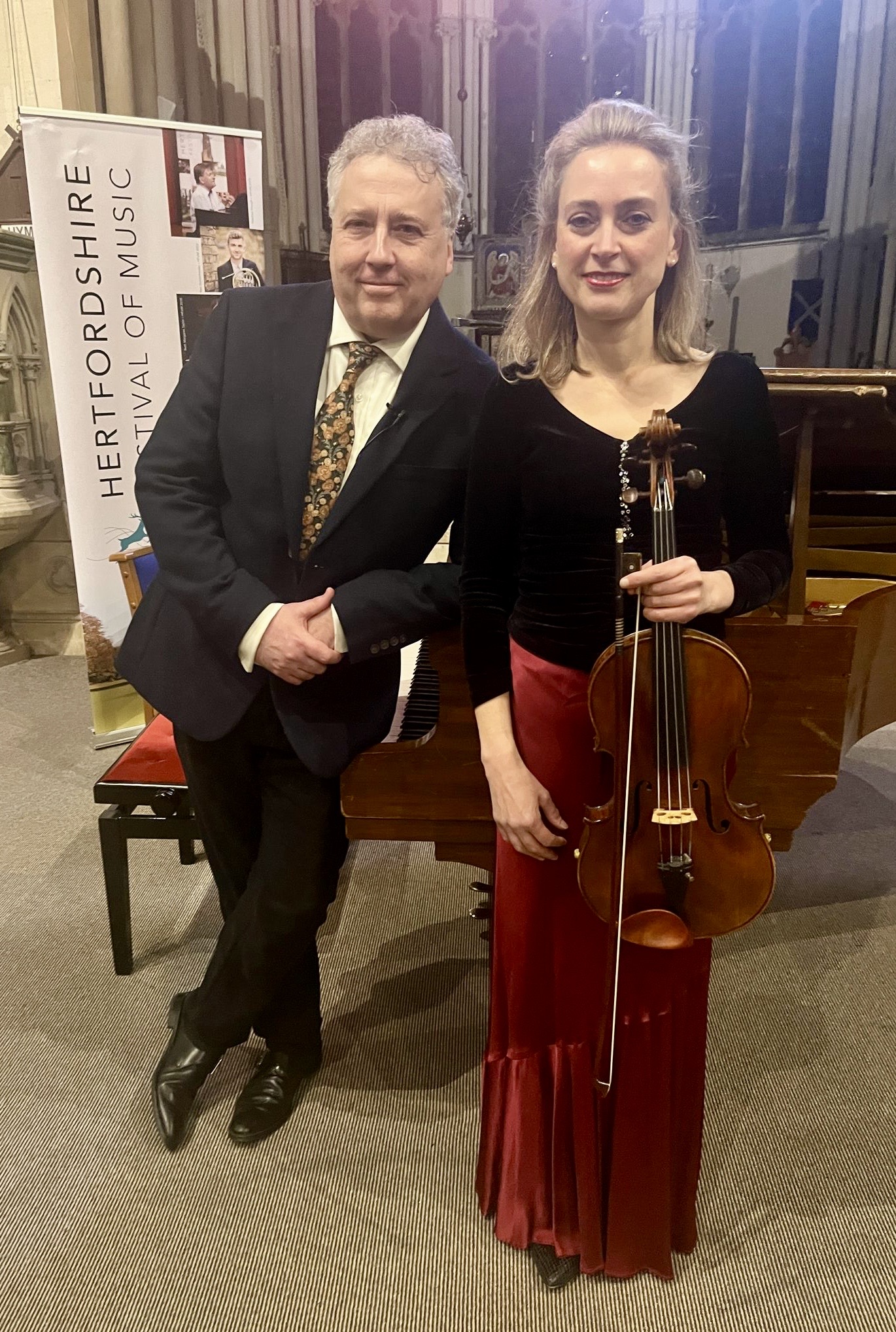
An interview with composer Russell Hepplewhite

What was the initial inspiration behind the Living Voices project?

Firstly, I love working with words – almost all the music I compose is to be sung. I’d been talking with the publishers Stainer & Bell about a new collection of choral works for a while, and so I began thinking about texts. I came to the realisation that I’m not really interested in setting words by deceased poets anymore – it’s too one-sided with no possibility of collaboration! Instead I wanted to create a connection with living writers, to communicate and work together; to better understand their words with honest conversations about their intentions; and to hear their responses to my music. So the idea was born – and the next step was to find the ten poets I most wanted to work with, and to see if they might be interested in being part of the project. The final step was to choose a theme, and so I decided to go for as broad a subject as possible, to enable as wide a variety of responses as I could obtain. I therefore asked each poet to write about something connected with ‘life,’ and said they could choose to write in any style and with any tone.
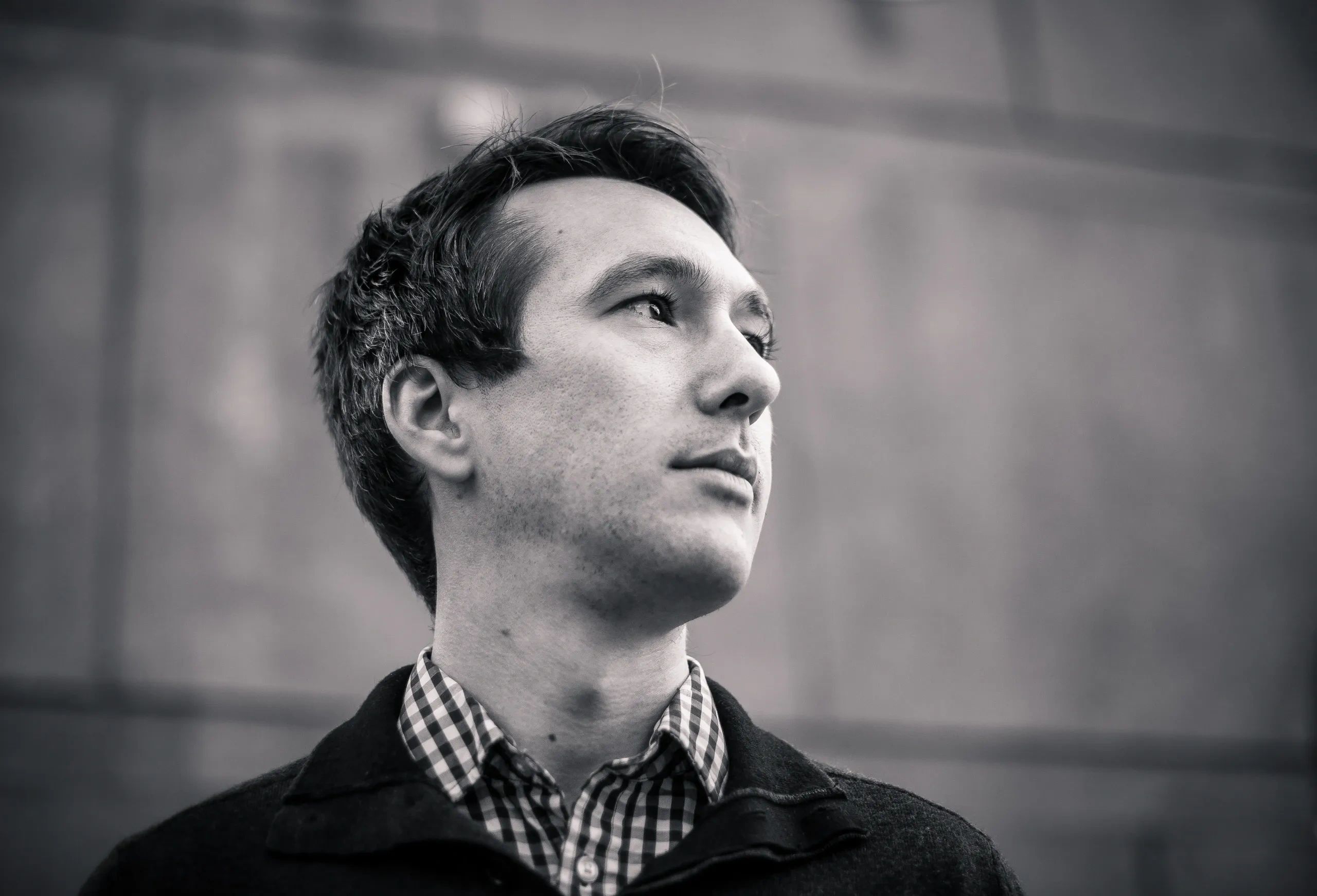
Russell Hepplwhite, composer

Tell us more about the process of selecting the ten poets and how their diverse writing styles/voices and perspectives informed the overall collection?

I simply selected truly brilliant writers that I really wanted to work with. All the writers share something – an ability to write directly, with laser-like clarity, and also a sense of accessibility. I’m interested in poetry that can be understood on first hearing/reading, but that also has more layers to be appreciated upon further exploration. Setting the various poems was fascinating, because I could see whether my own compositional style changed according to the poet that I was setting. I like to think the collection has lots of variety within it as a result of this approach, but that it all still sounds like my music.

How did you approach setting the texts to music for SATB choir and piano, particularly considering the range of themes/emotions explored in the poems?

When I was setting the texts, it was all about the words. So I read the poems, re-read several times, worked out the underlying tone or emotion, and then without any further ado, began setting them. With everything I compose the very first step is the absolutely crucial one – if I can’t find a way in then nothing else can follow; whereas once the piece is underway it becomes like a game of chess – a series of next moves to be made. So, with each poem I was looking for that first step – and mostly this happened very quickly – in the case of some poems it was a couple of chords I liked, with others it was a rhythmic pattern to fit a specific pair of words for example. Something that did surprise me on this journey though was how my appreciation of the poems changed and grew as I went along. At some stage, I can honestly say that each of the ten poems has been my personal favourite.

How has your other choral and opera writing informed your compositional approach/choices for Living Voices and the aim to create a “vibrant collective choral sound”?

With this collection I worked hard to create pieces that are colourful and imaginative, but fundamentally I wanted to do justice to the original poems. The aim was to compose music that would be accessible to the vast majority of choirs, but that still has enough challenges to keep everyone interested. I guess my other work has just made composing a lot easier since I have strategies and familiar processes which I adopt when composing. I also no longer feel any pressure about what I compose – I just write what I want to listen to, and hope others will feel the same.

Given the themes of Living Voices encompass aspects of modern life such as birth, death, youth and memory, what do you hope audiences will take away or reflect upon after experiencing these pieces?

I hope people can relate to both the words and the music, and to appreciate how the two fit together. Some of the texts pack a profound punch on first reading, such as Joseph Coelho’s ‘The Diarist’s Pages’ which tackles the idea of things in life coming round in circles, while others take a more light-hearted approach to make an equally significant point – I’m thinking of Roger McGough’s ‘The Good Ship Attenborough,’ for example, where the climate emergency is explored courtesy of a particularly playful approach.

And what do you hope choirs will take away from singing these pieces?

Goes without saying really, but I want people to enjoy singing them, and to get involved with the ambition of the collection – if they like singing one of the works I really hope they will be inspired to learn another one!
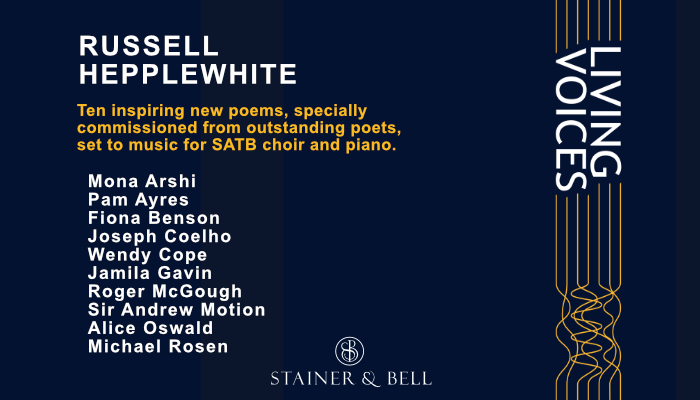

Living Voices is a new collection of ten inspiring choral pieces composed by Russell Hepplewhite. This innovative project brings together the talents of Hepplewhite and ten of Britain’s most outstanding contemporary poets, each commissioned to create poetic responses to our world today.

Find out more here
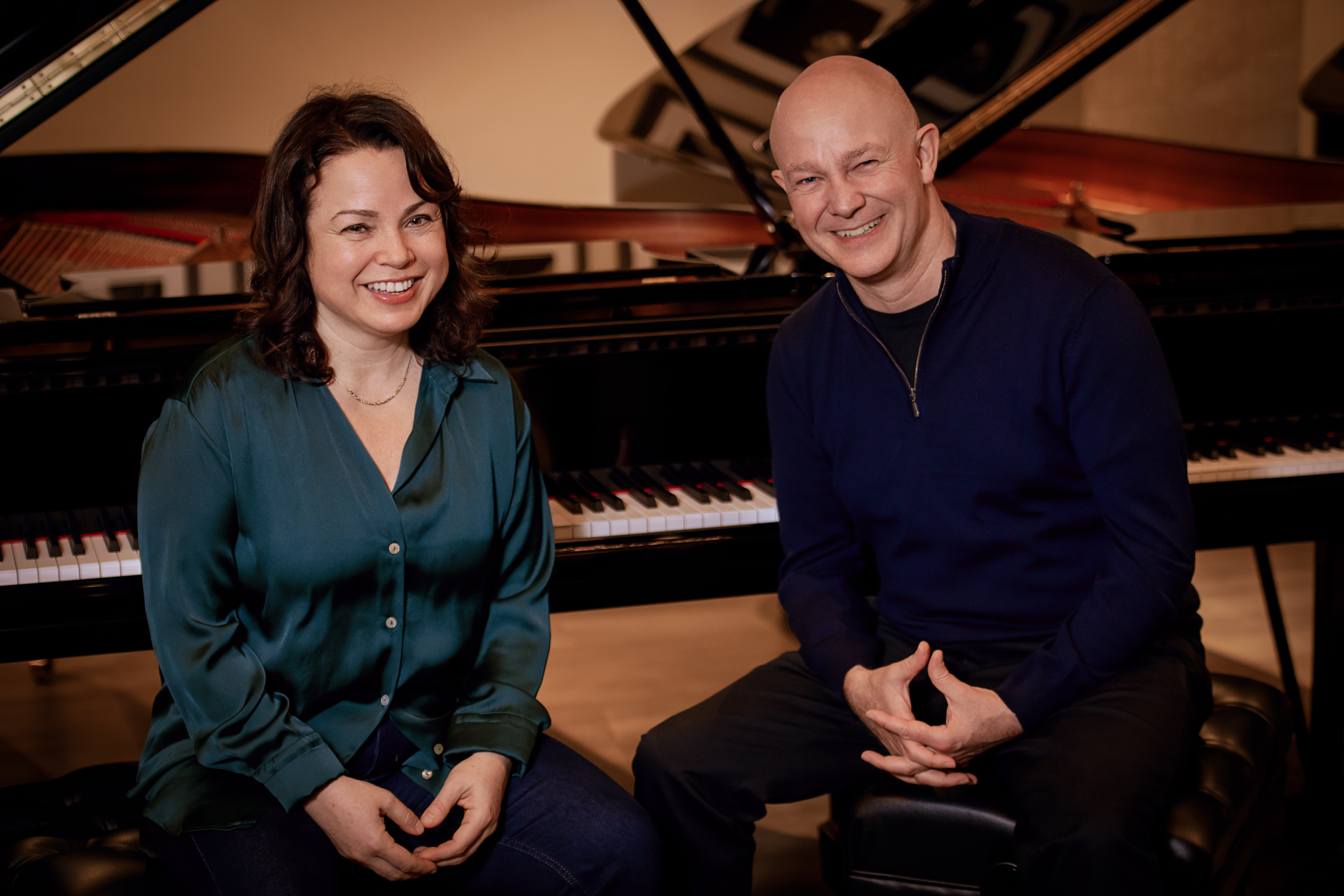
The tenth London Piano Festival takes place between 9 and 12 October 2025 at Kings Place, London

  • Three world premieres written to celebrate the 10th anniversary of the Festival by composers Cheryl Frances-Hoad, Stephen Hough and Elena Langer
  • The central Gala, featuring co-founders Charles Owen and Katya Apekisheva with Stephen Hough, Ingrid Fliter, Ronan O’Hora, Seta Tanyel, Mishka Rushdie Momen, and Joseph Havlat performing four-, six- and eight-handed works
  • Solo recitals by Ingrid Fliter, Mishka Rushdie Momen, and festival co-founders Charles Owen and Katya Apekisheva
  • A family concert narrated by Michael Morpurgo and featuring Keelan Carew, James Kreiling and Janneke Brits
  • A masterclass led by Stephen Hough
  • A showcase of star pianists from the Julian Joseph Jazz Academy
  • Pre- and post-concert discussions led by Ella Lee, presenter of the Classical Circuit podcast

Pianists and co-Artistic Directors Katya Apekisheva and Charles Owen reveal another dynamic lineup for the tenth-anniversary edition of the London Piano Festival (LPF) which returns to Kings Place from 9-12 October 2025. Four days of classical and jazz piano performances will include three world premieres by internationally renowned composers, each commissioned especially for this year’s Festival. The programme sees Ronan O’Hora, and Julian Joseph returning to perform at the Festival, and Stephen Hough, Ingrid Fliter, Keelan Carew, Zoe Rahman, Joseph Havlat, Mishka Rushdie Momen and more making their Festival debuts.

Under 30s tickets are available for all concerts at a reduced price of £10. The Festival is delighted to be working with International Piano magazine as its media partner for the tenth year running.

Co-Artistic Directors Katya Apekisheva and Charles Owen commented, “It is our great pleasure to be announcing the programme for the 10th London Piano Festival alongside the world premiere of three new commissions by Cheryl Frances-Hoad, Stephen Hough and Elena Langer. When we first dreamt up the idea of starting a piano festival over a decade ago, we hoped to fill a gap in London’s musical offering by creating a festival devoted exclusively to the piano. Ten years on, having presented nine Festivals featuring over 45 exceptional jazz and classical pianists, we are immensely grateful to continue offering world-class piano performances at our Festival home – Kings Place.”


Sam McShane, Artistic Director of Kings Place, commented: “London Piano Festival is back with an epic programme to mark its 10th anniversary year. This year’s theme, ‘Maturity & Youth’, beautifully reflects the festival’s journey—celebrating a decade of artistic excellence while championing the future of piano music. From world premieres to classics, this programme embodies the spirit of sharing, friendship and collaboration that defines Kings Place.”

The Festival opens with a joint recital from Katya Apekisheva and Charles Owen, featuring two world premieres. Katya Apekisheva will perform Seasons by Elena Langer, inspired by Philip Larkin’s poetry and commissioned as a companion piece to Tchaikovsky’s The Seasons. Charles Owen performs Stones of the Sky, a new composition by Cheryl Frances-Hoad inspired by gemstones found in the Austrian Alps and the Gem Poems by Pablo Neruda, and conceived as a complimentary piece to Schumann’s Carnaval. The event will be preceded by a pre-concert talk with the composers, led by Ella Lee, presenter of the Classical Circuit podcast [9 October].

Argentinian pianist Ingrid Fliter makes her LPF debut with a solo recital including Beethoven’s Sonata in E Flat and Sonata in D Major, and Chopin’s Nocturne in B Major and Sonata No. 3 in B minor. Ella Lee will lead a discussion with Charles Owen and Katya Apekisheva beforehand, exploring the artists featured across the rest of the program and reflecting on the Festival’s decade-long legacy [10 October].

On Saturday, the Festival hosts a family concert, featuring a world premiere arrangement of Stravinsky’s The Firebird for two pianos, arranged and performed by James Kreiling and Janneke Brits, alongside Keelan Carew performing Poulenc’s Barbar the Elephant, with celebrated children’s author Michael Morpurgo as narrator. World-renowned pianist Stephen Hough will later present a piano clinic masterclass with pianists from the London conservatoires and beyond, closing with a Q&A led by pianist and broadcaster Keelan Carew [11 October].

The Saturday concludes with the Festival’s central event, the Two-Piano Gala, this year featuring no less than eight performers – Stephen Hough, Ingrid Fliter, Ronan O’Hora, Seta Tanyel, Mishka Rushdie Momen, and Joseph Havlat, in addition to Charles and Katya themselves. This year’s programme will include a world premiere composition by Stephen Hough, King’s Cross March, commissioned by the Festival and performed by Charles Owen and Katya Apekisheva. Joseph Havlat, Charles Owen and Katya Apekisheva will perform the UK premiere of Havlat’s own composition 64 Geese. Stephen Hough also joins Charles Owen and Katya Apekisheva for a rendition of Rachmaninov’s Romance for Six Hands, and Ingrid Fliter, Joseph Havlat, Mishka Rushdie Momen and Ronan O’Hora perform Smetana’s Sonata for Two Pianos, (Eight Hands). Other featured composers include Mozart, Brahms, Shostakovich, Britten, Babajanian, Ravel and more [11 October].

The Sunday begins with a morning recital from Mishka Rushdie Momen, centred around her acclaimed album Reformation, exploring the rich sound world of Renaissance repertoire. This recital will include pieces by Byrd, Gibbons, Bull, Sweenlinck and more, and will conclude with a post-performance Q&A with Ella Lee [12 October].

BBC Russia Editor Steve Rosenberg intersperses stories of his life in Russia with piano improvisations at an event hosted by BBC Radio 3 presenter Petroc Trelawny. Running in parallel with this conversation will be a special focus on the historical and political significance of Dmitri Shostakovich, including a selection of his Preludes and Fugues performed by Berniya Hamie and Jeremy Chan, making their Festival debuts [12 October].

Julian Joseph returns to LPF with Zoe Rahman (in her Festival debut),bringing the 2025 Festival to a close with a recital of outstanding young pianists from the Julian Joseph Jazz Academy, including Danny Piers, Emile Hinton, Emily Tran and Nnamdi Nnachi Cole, all performing at LPF for the first time [12 October].

The London Piano Festival was founded by pianists Katya Apekisheva and Charles Owen in 2016 and takes place every October at Kings Place, London. Previous visiting artists have included Alfred Brendel, Alexandra Dariescu, Julian Joseph, Gabriela Montero, Stephen Kovacevich, Jason Rebello, Vadym Kholodenko, Leszek Możdżer, Lara Melda, Reinis Zariņš and Kathryn Stott, amongst many others. The Festival has also commissioned several new works for two pianos, working with composers including Sally Beamish, Jonathan Dove, Elena Langer and Nico Muhly.

Full details at londonpianofestival.com

[Source: press release]

Image: Viktor Erik Emanuel

Last week I went up to Hertford, the attractive county town of Hertfordshire, to attend an inaugural concert and reception, ahead of this year’s Hertfordshire Festival of Music (HFoM) which runs from 7 to 14 June.

I have been involved in the Festival since its founding by conductor Tom Hammond (who tragically died in 2021) and composer James Francis Brown, initially in an ad hoc way by sharing details of the festival here and on my social networks, and since 2020 as the Festival’s publicist.

Now in its ninth year, the festival has grown from a weekend to a full week of concerts and related events/activities. The ethos and aims of the festival have remained largely the same – presenting world class classical music and musicians in the heart of Hertfordshire alongside education and outreach projects within the local community – and each year sees a different Principal Artist (Emma Johnson, Ben Goldscheider, Steven Isserlis and Stephen Hough to name a few) and Featured Living Composer (e.g. Judith Weir, CBE, David Matthews), as well as musicians who live and/or come from Hertfordshire (flautist Emma Halnan, pianist Florian Mitrea). The concert programmes are varied and imaginative, and the range of artists is impressive. Previous performers/ensembles have included ZRI, the Rosetti Ensemble, pianists Katya Apekisheva and Charles Owen, violinists Litsa Tunnah, Mathilde Milwidsky and Chloe Hanslip, cellist Guy Johnson, and guitarist Jack Hancher.

Potential audiences (and reviewers) who live in London are often reluctant to journey too far out of the metropolis to experience live music (it was via an online discussion about this issue that I first met Tom Hammond, back in 2015), yet the ease with which one can travel to Hertfordshire was quite evident when, after having lunch with my father near Kings Cross, I took the Circle Line a few stops to Moorgate and thence a train to Hertford North station (Hertford has 2 railway stations; trains from Hertford East go to Liverpool Street). The journey was less than an hour, comfortable and pleasant, and my hotel was an easy 10-minute stroll from the station to the attractive historic centre of town. Hertford is also easily accessible by road, again less than an hour’s drive from London.

HFoM concerts take place in the town’s two main churches, St Andrew’s and All Saints, both of which are within walking distance of the town centre. Other events take place at the Hertford Quaker Meeting House (the oldest meeting house built by Friends that has remained in unbroken use since 1670), and other local venues.

If you were to make a mini break or weekend visit to Hertford, or even just a day trip, you’ll find the town has a good range of independent shops, cafes, restaurants and pubs. Ahead of the evening event, I enjoyed a stroll around the town in unexpectedly mild sunshine.

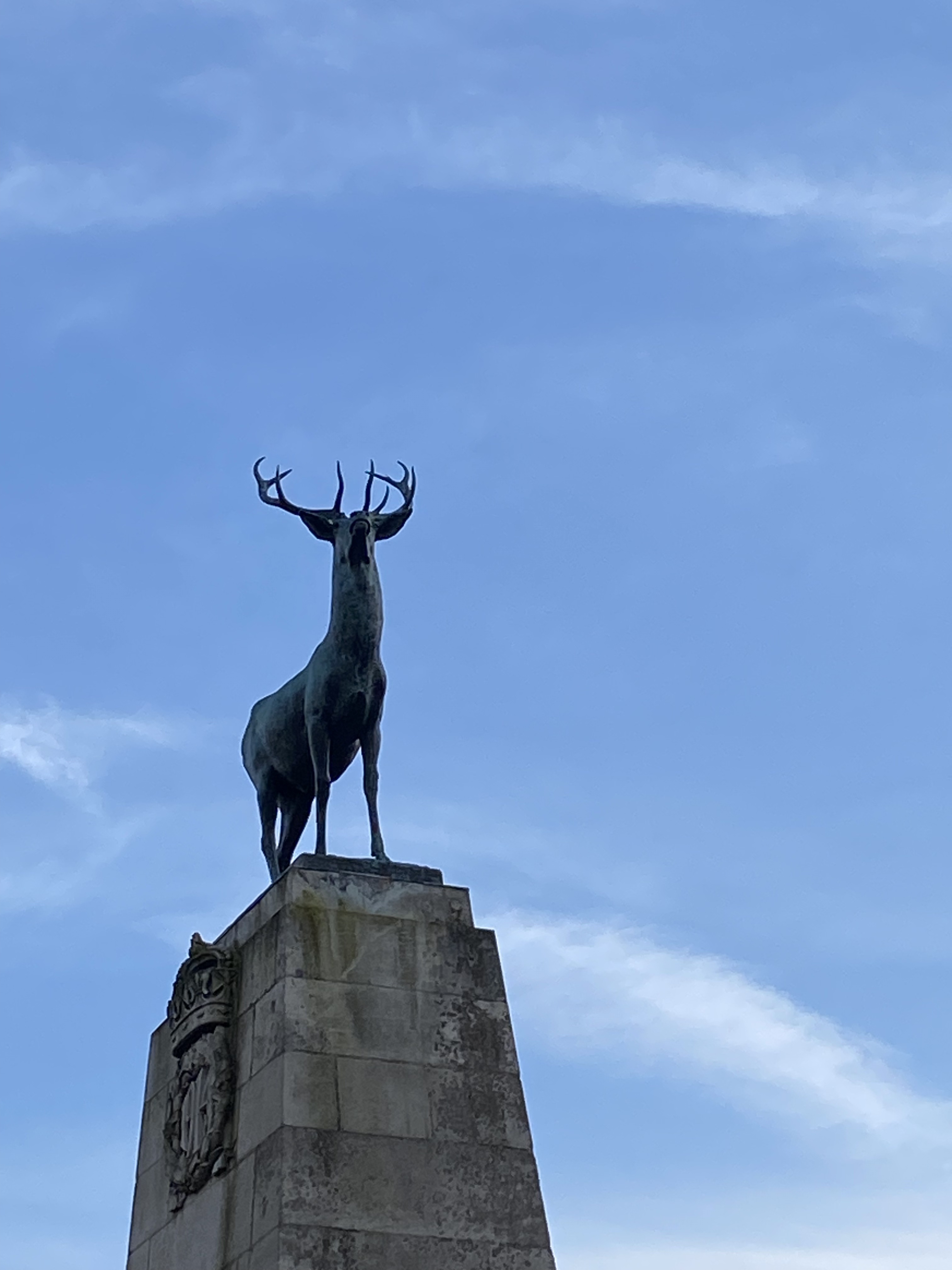
This year’s festival runs from 7 to 14 June. I can’t reveal the full programme yet but I can tell you that this year’s Festival theme, ‘Shadows to Light: Musical Journeys in Conflicts and Peace’, which celebrates the universal language of music through times of adversity and peace, and touches on the 80th anniversary of VE Day alongside contemporary global conflicts. From young musicians to established international artists, jazz music, the Hertford Community Concert Band, and even a special Festival Church Service, this year’s Festival offers something for everyone and features over 30 events across music and outreach activities, of which 50% are free, with concessions applied to ticketed events.

You can enjoy early access to Festival news by signing up to the HFoM newsletter or by following the festival on social media.

Hertfordshire Festival of Music website

Hertfordshire Festival of Music is built on the involvement, support and encouragement of Hertford and the county’s communities who help build a thriving and rich Festival for the communities HFoM wishes to serve.

ABSOLUTE

J.S. Bach: Lute Suites BWV 996-998Transcribed for piano and performed by Eleonor Bindman

All my transcriptions are motivated by the desire to play my favourite music on the piano. – Eleonor Bindman

A lifelong love of J S Bach has led pianist Eleonor Bindman to produce a number of important transcriptions for solo piano and piano duo of his music for other instruments, including the evergreen Cello Suites and the Brandenberg Concertos.

In addition to recordings demonstrating ‘Bach playing of the highest order’ (Pianodao), Eleonor has also produced sheet music and anthologies of her transcriptions, primarily aimed at amateur pianists and piano teachers. Her two-volume ‘Stepping Stones to Bach’ features intermediate piano arrangements of the Baroque master’s most famous tunes, including the Gavotte from the Violin Partita, No.3, and the Badinerie from the Orchestral Suite, No. 2. In making these transcriptions, she is following in the footsteps of the master himself: Bach regularly transcribed his own and other composers’ music and created different instrumental versions of the same piece.

The resulting musical statement may be a faithful reproduction …, a transformation beyond recognition or something in between. Regardless of the outcome, the original source is of such exceptional depth and appeal that for the past three centuries it attracted a steady stream of pilgrims, ready to sacrifice their time and energy for the joy of communion.

Eleonor Bindman

In her latest project, she has turned her attention to works originally composed for the lautenwerk or lautenwerck (lute-harpsichord), one of Bach’s favourite instruments, similar to the harpsichord, but with gut (or nylon today) rather than metal strings, which results in a more mellow tone. Generally performed on harpsichord, lute, and guitar, Eleonor’s new recording of the Lute Suites brings a fresh perspective on these rarely-explored masterpieces, showcasing their intricate structures, rich textures, and emotive character on the modern piano.

Eleonor Bindman’s Bach pianism is all about clarity and order. Her strong and assertive fingerwork complements her firmly centred rhythm

Gramophone magazine

Highlights include BWV 997 and 998, featuring stunning fugues with ornate middle sections unlike typical keyboard fugues, and a heartfelt arrangement of “Betrachte, meine Seele” from St. John’s Passion, which serves as a moving conclusion to the album.

Fans of Eleonor Bindman’s previous transcriptions – such as The Brandenburg Duets and The Cello Suites – will appreciate this latest addition to the pianist’s catalogue, recorded on a Bösendorfer piano which truly captures the remarkable richness of Bach’s writing.

Eleonor Bindman writes, ‘Transcriptions can revive interest in original compositions, and I am hoping that a piano version of Bach’s Suites BWV 996, 997, and 998 will increase their popularity. Just like Bach’s other solo collections, these suites present a technical and musical tour de force for their performers and deserve their rightful place alongside Bach’s suites for keyboard, violin, and cello.’

Eleonor Bindman celebrates J S Bach’s 340th birthday and launches her new CD with a special concert at the 1901 Arts Club, London’s most stylish small venue, on Sunday 23 March at 3pm. Tickets/info here

ABSOLUTE is released on Friday 7th March on the Orchid Classics label. Available on CD and via streaming. Pre-order here

eleonorbindman.com