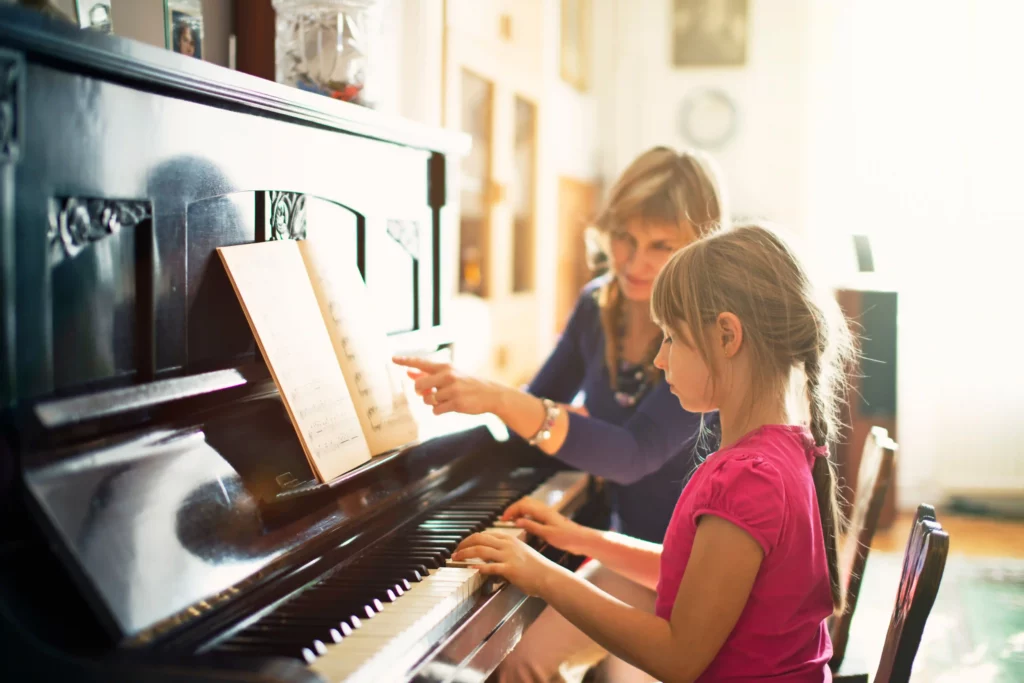
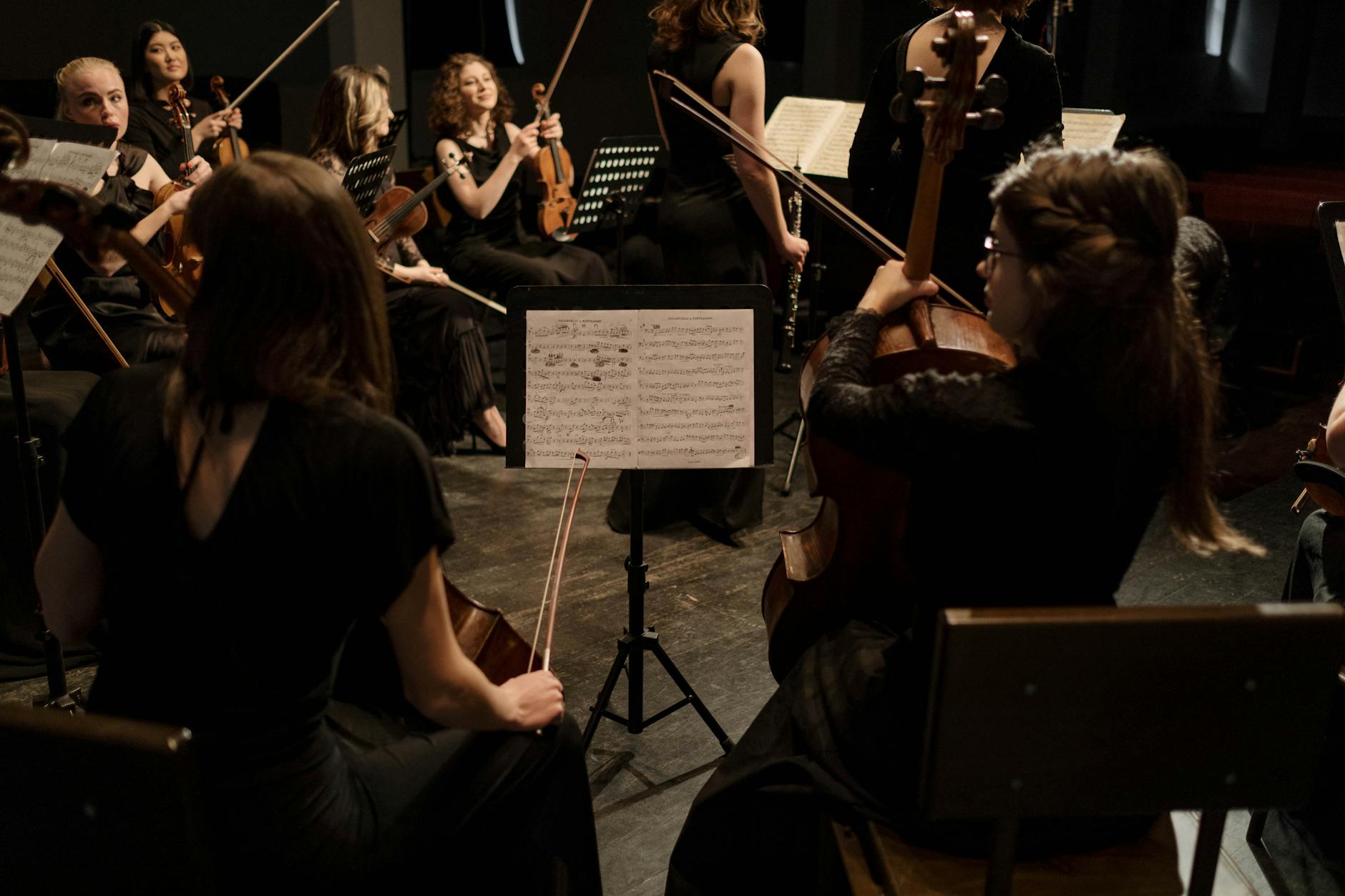
There is more to being a musician than simply creating and/or performing music.
Musicians are here to educate too. They are the professionals, the experts — and they should share their knowledge and wisdom with the rest of the world. It is a duty for them. The listeners in fact do not know as much they think they do, and musicians are here to help guide them towards what is true. Musicians should promote quality and help the listeners distinguish their taste. In the cultural world, the musicians’ role is of utter importance, as musicians are also educators.
In fact, musicians are on a constant mission. They are indeed, all in their own ways, educators, whether they do it consciously through teaching, or unconsciously by the mere act of composing and performing their music. Each work, each performance is an opportunity to educate the listeners. To promote new sounds and ideas. Musicians spend a lifetime understanding the language of music, the history of music and deciding what the future of music is. They are the direction-takers and decision-makers, and they should remain as such. For music is to grow and develop, to uncover new territories, to surprise and discover the unknown. And somehow resist the human nature of wishing for comfort and repetition; even in art.
Therefore, musicians should not create what the listeners want; this is a mistake that is done too often. Musicians must not bend to the wishes of their listeners. They must not accept familiarity and repetition of ideas. Musicians should carefully decide what material to create; what message and information, as well as emotion, to bring to the listeners. Their role is of utmost importance. They are the drivers of music progress. They are the bringers of novelty.
To learn, listening is not enough. One has to practice and devote. And sacrifice. And it is in the sacrifice that musicians do — the sacrifice of time, energy and attention — that they automatically become leaders and influencers. It is this sacrifice which places the true musicians in front of their audience. Music takes devotion. And if the price is high, the reward is immense.
Today the concept of musicians as educators is more important than ever as they often forget that they are first and foremost artists — rather than perhaps industry actors. Their role is to create, perpetuate, educate and through this improve the cultural world. Their role is to guide and lead.
Doug Thomas is a Franco-British artist based in London.
His main medium of expression is music; since founding NOOX — or North of Oxford St., his own production studio — in 2015, Doug has composed, performed, recorded and produced multiple projects, both featuring his own music and other artists’ too. Additionally, he has worked with multiple independent labels and collaborated with artists from other disciplines.
An aspiring polymath, Doug also ventures in the world of visual arts, through photography and various sketching works. He also designs his own project’s artworks and images. Finally, Doug writes articles, reviews and often interviews his musical peers.
Doug is a lover of food and drink, and this often appears in his universe too.
“Music allows me to express ideas and feelings in a unique way. Each piece I compose is an attempt in finding balance between intellect and beauty, within the limits of my own language and experience. More than a language, music is a way to engage with the above.”
Guest post by Julian Leeks, director of Sound World
Imagine a future in which it’s almost impossible for enthusiastic, musically gifted children to reach their potential. A future in which state education is completely devoid of music. A future in which the amateur choirs and orchestras that have flourished for decades in towns, cities and villages up and down the country, have all but vanished.
A future in which the music teachers, the freelance performers and the talented, dedicated amateurs who form the backbone of our country’s musical life, have all become endangered species. What would our musical culture look like then? Every aspect of music would be affected: from Friday night pub bands to the London Sinfonietta and from primary school nativities to Oscar winning films.
How would we fill the void left by the musicians? AI perhaps? The very thought makes me shudder. But we don’t really need to worry about that now, do we?
Well, it may be closer than you think.
At the risk of sounding like a prophet of doom, bellowing “The end is nigh!” at passers by, I believe we may be sleepwalking towards a future in which there are insufficient musicians and music teachers to sustain a viable musical culture. I’m concerned that the status of music has declined significantly in our increasingly visually oriented society. A society which values “output” and wealth generation above an inner life and well-being, and one in which decisions of consequence are made on the basis of quantitive data at the expense of qualitative understanding.
But where is the evidence to support this warning?
In deference to the prevailing trend, let’s start with the numbers.
Between 2007 and 2013, the number of pupils taking GCSE music has nearly halved. The decline is even steeper at A’Level where a disproportionate number of candidates are privately educated (28% and rising year on year), despite accounting for just 6% of the total school population. Research predicts that A’Level music will disappear from state schools completely by 2033. Just nine years from now.
The most recent ABRSM study reported the lowest ever number of children taking instrumental lessons since records began. Between 2014 and 2020 there has been a 15% decline in the number of children currently playing an instrument and an 11% decline in the number of those taking instrumental lessons. During the same period, the report reveals an increase in the amount of available work for music teachers, suggesting an even more marked decline in teacher numbers.
There has also been a very significant shift towards whole class teaching at the expense of individual lessons, artificially inflating the numbers recorded for overall participation. Data suggests that this method of teaching does not translate into children’s continuing interest in playing music.
So, those are the numbers and they don’t look good. But do they chime with our experience of the nation’s musical life today? Maybe not.
But while music might look and feel like it’s thriving, the wealth of bands, orchestras, concerts and gigs provides only a superficial sheen of good health. What we see today isn’t a predictor of our musical future its a reflection of our educational past. If we want to imagine the future of music we have to think about our educational present. And we’ve seen how that’s going.
Of course there are always a few, super-talented, autodidactic outliers, but the vast majority of working musicians, regardless of genre, had at least some input from a knowledgable, motivating music teacher. It’s how we pass on the wisdom of generations; virtual lessons via YouTube or elsewhere don’t come close.
So why isn’t everyone talking about this?
This kind of generational knock on effect is hard to perceive due to shifting baseline syndrome. For those unfamiliar with this idea it can be summed up as follows: every generation perceives its own experience as representing a normal or acceptable baseline against which subsequent change can be measured. But for each generation that follows the baseline may be quite different, meaning any further changes will be measured against quite different acceptable norms.
To bring it back to music and the numbers described above, if the trajectory continues unchecked for successive generations, even though no single generation will experience any sudden, dramatic loss of music, the outcome – the gradual, inexorable depletion of musical activity – is inevitable.
But even musicians might not be aware of this. Surrounded by musical activity both at work and in the home, whilst constantly meeting a wildly disproportionate number of musical children, their experience is totally at odds with the broader reality and may lead to a degree of complacency.
It may also be the case that a lot of musicians feel they’re doing enough already, just by being musicians. Understandably, they may not wish to become activists or campaigners. But increasingly, many are starting to think that simply being a musician is no longer enough. After all, if musicians won’t stand up for music, why would anyone else?
To return to my main theme, how long could we go on if the number of children learning music were to halve every 15 years or so (and by extension, the number of teachers available to teach each subsequent generation). I don’t know what the critical mass for musicians is, the point below which we really experience the loss of music as described in my opening paragraphs. But if current trends are allowed to continue it can’t be that far off. One generation? Two maybe?
And once it reaches that point the damage would take many decades to repair, even with the very best intentions of a government with very deep pockets.
Which is why, over the past year, we’ve been making A land without music? a podcast series about the value of music and what we can do to safeguard it for future generations.
It’s been a huge privilege to meet some wonderful guests for the series and their insightful and engaging contributions are what make the series; and it seems fitting to note that, as music education becomes evermore the preserve of a wealthy elite, hardly any of the musicians I spoke to came from what might be described as privileged backgrounds.
Unless, that is, we’re talking about a very different kind of privilege; the privilege of opportunity. It’s what gave them the chance to discover music and to grow that seed of discovery into a life-long, life-sustaining passion. Crucially, it was opportunity which was indifferent to the financial or social status of people’s parents. It was there for everyone.
Would they have had such opportunities had they been growing up today? Probably not. To quote Jess Gillam, “So much untapped potential, and so much untapped happiness.”
The Cross-Eyed Pianist is free to access and ad-free, and takes many hours every month to research, write, and maintain.
If you find joy and value in what I do, please consider making a donation to support the continuance of the site