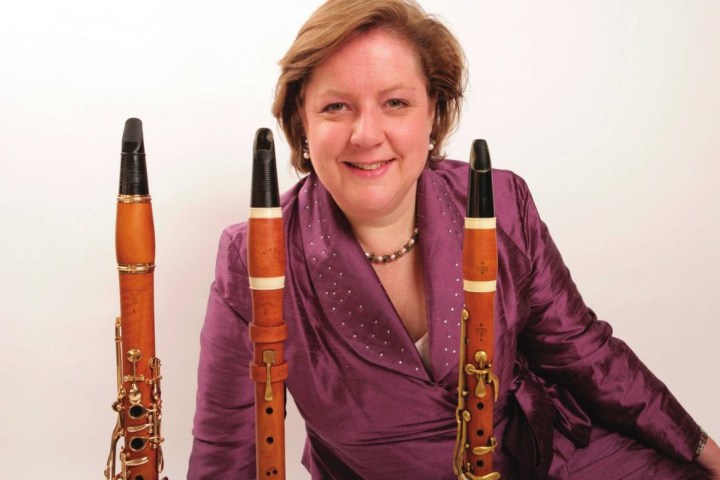
jane_booth

Who or what inspired you to take up the clarinet and make it your career? 

My father used to take me to hear concerts at Middlesbrough Town Hall given by what was then called the Northern Sinfonia Orchestra. I loved the sound of the the clarinet in that orchestra and declared it my chosen instrument – apparently!

Who or what were the most important influences on your musical life and career? 

During my teenage years I loved making music in a variety of settings. The combined energies, harmonies, rhythms and colours from orchestras, wind bands, dance bands and pit bands gave me a  hunger for performing that has never left!  Chamber music, solo playing, orchestral playing now fill many of my days (and evenings), and the sense of fulfilment just gets stronger.

What have been the greatest challenges of your career so far? 

As a performer on historical instruments I find that I need to have many different instruments in good working order and ready for performance at any one time. Sometimes lining up 10 or 12 different clarinets, basset horns or chalumeaux in the run up to a range of concert programmes can be quite challenging – not to mention ensuring that I have good working reeds for all of them too! But each instrument has its own tonal colour, depth and dynamic range to explore and this also informs my music making so the down sides all have a really positive flip side to accompany them.

Which performance/recordings are you most proud of? 

I’m really excited about the new CD with one of my chamber groups ‘Ensemble DeNOTE’, an ensemble formed by my husband and fortepianist, John Irving. We often play historical arrangements of eighteenth and nineteenth century favourites, so this CD celebrates that repertoire with two Beethoven ‘selfies’ – his trio arrangement of the Septet (clarinet, cello, fortepiano) and a piano quartet version of the Op. 16 quintet for piano and wind. With the beautiful added decorations in the Op. 16 I’m enjoying the piano quartet version rather more than I ought to! With ensembleF2 I’ve recorded a second album of chamber music by Franz Danzi. Returning to his two wonderfully operatic sonatas (one for clarinet with fortepiano and the other for basset horn and fortepiano) with Steven Devine has been great fun, especially using the Fritz fortepiano at the Finchcocks museum and its very special percussion pedals!

Some years ago I was thrilled to take part in the first ‘historical instrument’ performances of Wagner Operas with two different orchestras and under two conductors.  Daniel Harding and Sir Simon Rattle each brought their own insights to this repertoire, the results were thrilling for players and audiences – such a privilege to be a part of this particular journey of rediscovery.

Which particular works do you think you perform best? 

Mozart ‘s Gran Partita, Requiem and of course Concerto really are enjoyable to perform and I’ve had plenty of opportunities to indulge myself in these works in recent times. Again, the instruments we use are so very special for these pieces and I’m lucky to have very well made (hand made) copies that are as close to the instruments that Anton Stadler played as I think it is possible to have. My basset clarinet was made by Peter van der Poel, it plays really well and is modelled on the picture of Stadler’s instrument from a Riga concert announcement.  My basset horn was a recent purchase from Guy Cowley whose instruments just get better and better – it sings so sweetly and is a joy to play.

How do your make your repertoire choices from season to season?

A new bass chalumeau by Guy Cowley and a basson de chalumeau by Andreas Schöni have promoted me to explore a number of baroque composers recently leading to a new programme of music for chalumeaux, voice and continuo with works by Vivaldi, Bononcini, Graupner, Zelenka,  Telemann and others. The soprano chalumeau in particular blends so sweetly with a voice – and fits very conveniently into a coat pocket!

Do you have a favourite concert venue to perform in and why? 

My favourite hall of the moment is The Anvil at Basingstoke. With the OAE (Orchestra of the Age of Enlightenment) we have played large symphonic programmes such as Berlioz Symphonie Fantastique as well as chamber performances of classical wind serenades. The sound in the hall is exceptional and it is so rewarding to perform in such a wonderfully warm and vibrant atmosphere. The people of Basingstoke and the surrounding region may not realise just how lucky they are!!

Favourite pieces to perform? Listen to? 

I love playing great choral works such as Mozart’s Requiem, Haydn’s Creation, Bach/Mendelssohn St. Matthew Passion and others. Performing the texts and sentiments of these great works is always inspiring and there are several great choral ensembles around these days that lift the music to incredible heights – I’m lucky to have the opportunity to work with some of them. Brahms Symphonies, Tippett’s A Child of our Time and Schubert’s Lieder would also be on my desert island disc list.

Who are your favourite musicians? 

Playing in TWO chamber groups on a regular basis affords me many wonderful opportunities to play with musicians whose playing I adore, who inspire and challenge me and with whom I can explore ideas and repertoire to my heart’s content.  Beyond the lives of those ensembles, I feel most inspired when I’m on stage with people who put the music and their enthusiasm first, leaving their egos outside the room…… A number of them work alongside me at the Guildhall School!

What is your most memorable concert experience? 

I’ve enjoyed many different performing settings but many concerts with Toronto’s Tafelmusik stand out for me as having incredible energy, consensus and excitement. Under Bruno Weil, Tafelmusik’s exploration of Beethoven Symphonies brought me immense pleasure and fulfilment – even through the recording sessions which so often in other settings can sap the joy out of the music.

What do you consider to be the most important ideas and concepts to impart to aspiring musicians? 

Technique only has value if you can use it to convey something from your heart.

Where would you like to be in ten years’ time? 

In 10 years’ time I’d like to be working one-to-one with more students and directing even more of my own musical projects.

 Jane peforms Mozart’s Clarinet Quintet K.581 on a period basset clarinet and Crusell Quartet Op.2 No. 1 in a concert on October 5th with Consone Quartet, St Leonard’s Church, Shoreditch, London E1 6JN. Free entry with retiring collection

Jane is a specialist in the early clarinet and chalumeau. In addition to her work as Head of Historical Performance at the Guildhall School of Music & Drama, London, regular masterclasses and international adjudicating, she has pursued a busy international career, playing all over the world with many renowned ensembles including the Orchestra of the Age of Enlightenment, Tafelmusik and The Academy of Ancient Music. Her repertoire is vast and extends from the works of Handel, Telemann and Vivaldi through to Wagner, Mahler and Debussy – all on historically appropriate instruments.

After some fifteen thrilling years as principal clarinet of the Orchestre des Champs-Elysees Jane turned her focus towards chamber music. She has performed in the UK, North America, Japan, Australia and Europe with Robert Levin, Ronald Brautigam, Eybler Quartet and Les Jacobins, and currently performs regularly with her Ensemble DeNOTE and Ensemble F2. Concerto performances include baroque concertos by Fasch, Telemann, Graupner, and Molter, Mozart’s Concerto for basset clarinet and Weber’s Concertos performed Europe-wide.

Jane has recorded for Analekta (Canada), ATMA (Canada) and sfz music (UK) performing Mozart’s Clarinet Quintet, solo repertoire for the Basset Horn, wind music by Gossec and Méhul, and a programme of Lieder by Schubert. A DVD documentary on Mozart’s Kegelstatt Trio with Ensemble DeNOTE (Optic Nerve) is complemented by a new recording of Beethoven’s Trio Op. 38 (Omnibus Classics). A second CD of the chamber music of Franz Danzi is in preparation with ensembleF2 on the Devine Music label.
janebooth.net

denote.org.uk

ensemblef2.com


picWho or what inspired you to take up the piano and pursue a career in music?

I started piano aged 6 and didn’t show much interest in the first few months but a family trip to London when I was just 7 included a night at the Proms, with Malcolm Sargent conducting the Berlioz Symphonie Fantastique which just blew me away. When I got back home they couldn’t get me off the piano ! As far as a career was concerned I really had no idea what was entailed … I just drifted into it…one thing led to another. 

Who or what have been the most important influences on your career as a musician?

My teachers to start with: Marjorie Clementi, who sorted out my technique when I went to her aged 13 and who taught me to listen to myself for the first time. Gordon Green, who taught me how to practise in so many imaginative ways, and whose infectious love and enthusiasm for music overall was very inspiring. He really was a great human being. When I was a student Alfred Brendel’s early recordings were a great inspiration, and also the playing of so many pianists… Richter, Rubinstein , Kempff and Curzon to name a few of the most important.

What have been the greatest challenges of your career so far?

Recording all the major Schubert works for Radio3 in the 1980’s and more recently recording all the Beethoven Sonatas for Deux-Elles. Playing at the Proms was a great experience , but very challenging!

Which performances/recordings are you most proud of?

My performance of Rachmaninov’s Second Concerto at the Proms in 1989, and my recordings of the Beethoven Sonatas

Which particular works/composers do you think you play best?

Beethoven and Schubert for sure. Mozart’s Concertos, Brahms, Dohnanyi, and Debussy.

How do you make your repertoire choices from season to season?

I’ve started to play themed programmes in the last few seasons….The piano and nature for example this year including Beethoven’s Pastoral Sonata and shorter works by Liszt, Schumann, Dohnanyi Ireland and Debussy all inspired by nature. Next year The piano and Art …works by Liszt, Debussy and Granados culminating in Mussorgsky’s Pictures. Also a lot of all Beethoven programmes when recording the sonatas. Now all Schubert programmes in preparation for recording his works.

Do you have a favourite concert venue to perform in and why?

S0 many! – but Manchester’s Bridgewater Hall for concertos…. The clarity and immediacy make it so exciting. For solo it’s difficult to beat Kings Place. For chamber the warmth of sound in the Wigmore is very special

Favourite pieces to perform? Listen to?

Too many to list….but for listening I’m still as obsessed by Wagner now as I was when I discovered his music as a teenager. Haydn Quartets are an endless treasure trove…..

Who are your favourite musicians?

Again, where to start ? Just recently I heard two stunning performances from very contrasting pianists whose work I love and admire…….Richard Goode and Martha Argerich

What is your most memorable concert experience?

Taking part in the final concert of Kathy Stott’s Piano 2000 festival at the Bridgewater Hall in Manchester…all the Rachmaninov Concertos in one evening. I played No.2

What do you consider to be the most important ideas and concepts to impart to aspiring musicians?

Fidelity to the score and the communication of the music without personal interference. Meaning is more important than style, yet a sound knowledge of style is also necessary. An interest in all the works of the major composers, not just the piano music.

What do you enjoy doing most?

Apart from playing Schubert and Beethoven, walking on the hills of Scotland and the Lake District, cooking, watching films, and listening to Wagner


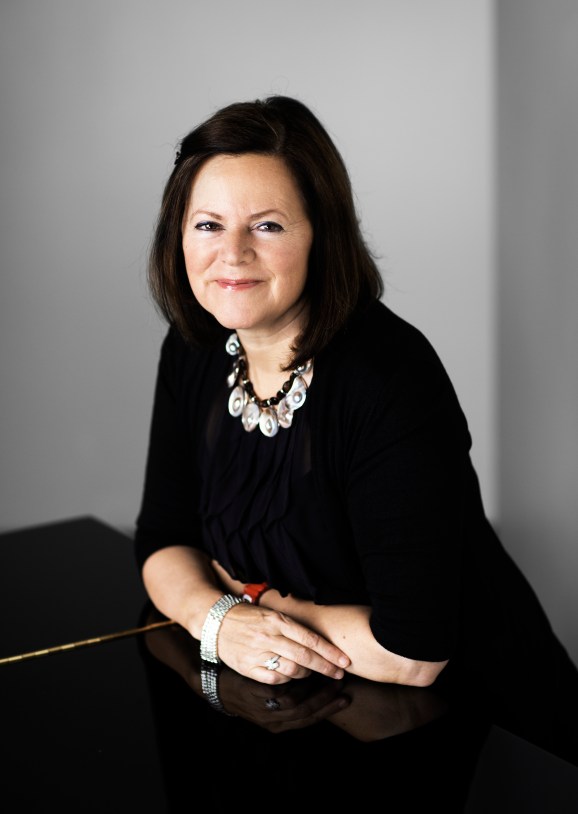
With an extraordinary career spanning over 4 decades, Martin Roscoe is unarguably one of the UK’s best loved pianists. Renowned for his versatility at the keyboard, Martin is equally at home in concerto, recital and chamber performances. In an ever more distinguished career, his enduring popularity and the respect in which he is universally held are built on a deeply thoughtful musicianship allied to an easy rapport with audiences and fellow musicians alike.


Read more about Martin Roscoe here

r8a9075_11
(photo Nikolaj Lund)

Who or what inspired you to take up piano, and pursue a career in music? 

I’m not sure I was particularly inspired by anyone at the age of 5, but we had an upright piano in the house as my mother gave piano lessons to little ones after her day job. I don’t remember she pushed me to start but I was easily drawn to the instrument and picked up the basics pretty quickly. I had no wish to sit there for hours on end, so I think my saving grace was being able to read music quickly and get on with whizzing through my little book! I’ve never felt that I made a conscious decision to pursue a career in music. I went to the Yehudi Menuhin School at the age of 8 and it just naturally led to studies at the Royal College of Music – actually I never felt there was a choice NOT to continue!

Who or what have been the most important influences on your musical life and career? 

Although my lessons were infrequent with Vlado Perlemuter, he did influence me a lot in the way he approached clarity and intensity of sound. Nadia Boulanger influenced my ears to be as wide open as is humanly possible but the teacher who actually had the most profound influence, was Kendall Taylor who I studied with for 4 years at the Royal College of Music. He basically put me together after I had become very fragmented and most important, was the first person who believed in me. I’ve known Yo-Yo Ma for all of my adult life (and worked with him for 31 years) and without doubt he has influenced me tremendously, both as a pianist and a person.

What have been the greatest challenges of your career so far? 

I’ve had a number of challenges along the way. Perhaps the greatest was balancing being a mother and trying to maintain a focus on having a career which often took me away from home. My other great challenge was to accept I didn’t really like performing from memory and just deal with the fact I prefer using the score. I’ve now been doing that for about 20 years. I remember a promoter told me the critics would shoot me after I gave my first full recital using the score. It appears I’m still here.

You’re performing in the inaugural London Piano Festival in October – tell us about your programme?

I initially thought it would be a good moment to perform the Dutilleux Sonata again – a piece I absolutely love. I performed it for a whole season 10 years ago but then it disappeared from my repertoire until I recorded it for BIS 2 years ago. Then of course comes the question of what to perform with it. Somehow I couldn’t escape the idea of F sharp and now here we are with music by Ravel, Messiaen and Fauré. I’m often fascinated by keys and why music sounds the way it does because a composer chose a particular key. I think it will be interesting to explore the contrasts of F-sharp for an hour. 

Which performance/recordings are you most proud of? 

I don’t particularly dwell on whether I’m proud of something or not so there are probably performances which went especially well which I’ve totally forgotten about. I think I’m proud of the fact that I performed Rachmaninov’s 4th Concerto for the first time only a few years ago. As I get older, adding works such as this seem a bigger mountain than when I was younger, but I would have been gutted to get to the end of the performing road and never have played it…what a piece! Recordings – I’d probably have to say my complete Fauré for Hyperion. Not because I think it’s better than anything else I’ve done but it was such a beautiful labour of love to learn the complete works. I know I would play everything differently now but that’s how these things go. I don’t listen to my recordings – that’s for other people to do.

Which particular works do you think you play best? 

I think there are certain pieces I perform better now simply because I’ve had some life experiences which have definitely affected how I express myself. For example I feel I now play the Britten Concerto in a way which makes much more sense than when I was younger – same with works by Shostakovich. I have no idea really – my interest in repertoire is vast so sometimes it’s good to explore even if I don’t think it’s for me.

How do you make your repertoire choices from season to season? 

It depends on the season and what is generally going on. I always have a lot of chamber music in my season, so as that repertoire is not necessarily determined by me, I might decide my own recital repertoire according to other things in place. Concertos I don’t play as often and it’s always been rare to dictate repertoire. Then of course, there are festivals where you might have a million things to play in a short space of time. I try to think how I’m going to be able to prepare everything time wise and so some choices are made on that. It goes without saying that I’ve programmed or hinted strongly I want to play a certain piece just simply because I have to play it!

Do you have a favourite concert venue to perform in and why? 

I don’t have one favourite but on the list would be Teatro Colon in Buenos Aires for its beauty and history, the Concert Hall in Luzern for being contemporary but warm and Symphony Hall in Boston for its acoustic, relationship to audience and wood floor (stage) which tells a thousand stories. I generally dislike very high stages so even a great hall where I’m too far from the audience is not in my top ten.

Favourite pieces to perform? Listen to? 

No favourites – depends what day it is. I love silence more and more but I love listening to Symphonic Music, Opera, Lieder –rarely piano music just for pleasure

Who are your favourite musicians? 

I don’t have favourites but I’m currently enjoying listening to Philippe Jaroussky.

What is your most memorable concert experience? 

If you mean me performing then performing at the Hollywood Bowl with Yo-Yo and lots of lovely, wonderful Brazilian musicians. I remember we all held hands to take a bow and I said to guitarist Sergio Assad ‘remember where we are’. He knew what I meant. It was a happy evening for us all in an iconic venue. If the experience is me sitting in the audience – I’ve just been to my first Wagner Ring Cycle performed by Opera North. Truly memorable.

What do you consider to be the most important ideas and concepts to impart to aspiring musicians?

I always think it’s important for young musicians to find their own voice and I often discuss the concept of being true to ones self, to think about why they want to be part of the music profession and to try to balance the wishes of a composer with what they have to say as an individual. Learning to tell stories via their instruments is what I’m interested in and most important, I do like to stress we all mess up and performances are not ruined thanks to some wrong notes. In the end, I hope to help them be creative, independent, courageous and above all curious.

Where would you like to be in 10 years’ time? 

Anywhere where I feel to be alive and well

What is your idea of perfect happiness? 

I don’t think it exists

What is your most treasured possession? 

My photo albums – I’m very nostalgic

What do you enjoy doing most? 

Walking in the countryside with my dog, Archie

What is your present state of mind? 

Always lots going on!

Kathryn Stott performs music in F-sharp by Fauré, Ravel, Messiaen and Dutilleux as part of the inaugural London Piano Festival at Kings Place on Saturday 8 October.

Further information here www.londonpianofestival.com

www.kathrynstott.com


Who or what inspired you to take up the piano and pursue a career in music?

When I was young, I was extremely shy around people. I felt more comfortable when I spent time at the piano, and the more time I spent exploring the sonic worlds of different composers and the instrument, the more I fell in love with music. Music became a vital way for me to communicate, and there were no second thoughts from then on pursuing a career in music.

Who or what have been the most important influences on your musical life and career?

As a pianist, my teachers and mentors throughout every stage of my development- Ian Fountain, Oleg Stepanov, Helen Dobrenko, and Neville Baird- have all shaped my sound on the piano and approach to classical music repertoire. I also look up to strong female role models during my period of learning- including the wonderful Joanna MacGregor who has been a real inspiration and who is ever so encouraging during my time at Royal Academy of Music, and the equally inspiring Natasha Vlassenko from Queensland Conservatorium.

Stylistically speaking, I listen to a very wide range of music and am constantly taking inspiration from great artists of other genres. For example, the structural construct for my album ‘Mediterranean Sounds’ was inspired by Frank Zappa’s ‘Civilization Phase III’ and Marvin Gaye’s ‘What’s Going On’. In terms of sound design, I also look up to Brian Eno and take inspiration from his treatment of sounds and samples.

When it comes to how the samples are integrated with classical music and performance presentation, I observe the practices of a wide range of artists (and their producers) and DJs ranging from Miles Davis, Gilles Peterson, George Benson, Quincy Jones, Gypsy Kings, Erykah Badu, Esperanza Spalding, right up to Justin Timberlake, Pharrell Williams, and more recently the phenomenally talented Jacob Collier.

In the end, I am a bit like a sponge, always absorbing sounds and formulating new ideas to integrate these with classical music language. There are many influences on my music and sound- all important and always evolving!

I think equally as important as influences are the people and new friends that I encounter and meet while sourcing my sounds. I am always curious about people, and encounters often allow for a glimpse inside their respective worlds and lives. Observing people’s stories and shared experiences very often provide the fuel and motivation for my works.

What have been the greatest challenges of your career so far?

I am a sensitive person, and it is always an internal struggle to stand strong and firm in my artistic visions amidst challenges and criticism, especially in my more experimental works. It has taken me a very long time to find a sound and style that is ‘me’- something that satisfied my need to create and communicate my own voice and experiences- and not merely perform the masterpieces.

Which performance/recordings are you most proud of? 

So far, I have been lucky with the attention that came from my first EP- ‘Listen, London’- which was an integration of sampled sounds captured around London with piano works by Poulenc, Sibelius, Liszt, Ginastera, and more. It has been a long hard road though, I remembered when I first showed it to a couple of people and recording stores, it caused them some very genuine confusion. “What, was this recorded in a car park?!” was one of the remarks… It was quite a challenge to power through the critical remarks in the beginning, as I had taken a leap of faith and poured my heart and soul into the project. But nevertheless, it was a great learning curve and I feel stronger as an artist because of this.

Since then, ‘Listen, London’ was handpicked by Brian Eno for Curator’s Choice in 2014 NOISE Festival, and then subsequently led to my recent win of 2015 London Music Awards’ Classical Music Rising Star Award.

Which particular works do you think you play best?

I play the works that speak to my heart and personal experience the best.

How do you make your repertoire choices from season to season?

Repertoire choices are often chosen after research and experimenting to find what fit the best in designing a particular experience through a programme.

Do you have a favourite concert venue to perform in and why?

I think my favourite concert venues are associated to the audience in it… I love all venues large and small, indoors or outdoors, when the chemistry and vibe between the audience and the stage is strong!

Favourite pieces to perform? Listen to?

When I was young, I listened to Ashkenazy’s recording of Rachmaninaff Piano Concert No. 2 & 3 with the Moscow Philharmonic a lot. It is partially because it was the first classical music recording that I owned, and it remains a recording that I hold close to my heart.

Right now on my iPhone music library are: Astor Piazzolla, Juan de Marcos & Afro-Cuban All Stars, Los Amigos Invisibles, London Symphony Orchestra, Marc-Andre Hamelin, Michael Kieran Harvey, Pascal Roge, Gilles Peterson’s Havana Cultura Band, Esperanza Spalding, Erykah Badu, St. Germain, The RH Factor, Justin Timberlake, Daft Punk, Vikter Duplaix, George Benson, Jacob Collier, and a list of Greek folk music that I am currently investigating.

Who are your favourite musicians?

There are so many! Vladimir Horowitz, Martha Argerich, Vladimir Ashkenazy, Brian Eno, Quincy Jones, and my more recent fascinations are as mentioned above!

What is your most memorable concert experience?

There have been several memorable concert experiences- the hilarious moment where I tripped over my own dress on stage, the touching moment when I could hear an audience member sobbing from on the stage (I was relieved when she later told me it was because she was touched… phew), the sweet moment of a very young girl climbing onstage to dance to a waltz and handing me a flower that she had picked from the garden… in midst of the intense heat and humidity of regional Australia… and very recently the surreal moment of doing a sound-design & piano set at Latitude Festival in the middle of the woods…! There are many great memories.

What do you consider to be the most important ideas and concepts to impart to aspiring musicians?

Find your own voice.

Where would you like to be in 10 years’ time?

I have a passion for traveling and exploring different cultures. I always source new audio and visual material when I travel and construct little pieces of sonic documentary as I go. I hope in 10 years time my portfolio will consist of sounds and works inspired by all seven continents!


Winner of Classical Music Rising Star Award at the inaugural 2015 London Music Awards, Australian-Taiwanese pianist Belle Chen has been enjoying a busy international schedule, performing a diversity of programmes ranging from classical piano recitals, chamber music recitals, to experimental collaborations with sound design, visual art, theatre, and dance.

Belle is a piano soloist for the prestigious Park Lane Group Artists in their 2015/16 season. Her festival appearances in recent years include: 2015 Newbury International Festival, Deal Festival, Australia & New Zealand Literature Festival, Shanghai World Expo, Bloomsbury Festival, Taipei Fringe Festival, and Teneriffe Festival. In 2014 & 2015, she toured UK as pianist in Concert Theatre’s production of Romeo & Juliet/The Rite of Spring, and as a solo recitalist in Taiwan and UK.

Belle’s performances have also been broadcasted and featured by media such as BBC Radio 3, BBC China, Monocle 24 Radio, Classic Radio Finland, Classic FM, ABC FM, 4MBS, and Dateline (TV). Belle graduated from Royal Academy of Music (United Kingdom) in September 2013 with Master of Music in Performance with Distinction, and has since been handpicked by Brian Eno for as a winner of Curator’s Choice for Music Award at 2014 NOISE Festival, awarded the 2014 Finalist Award for The American Prize for Music in Chamber Music, and winning the 2015 London Music Award.

Since 2016, Belle has been endorsed by Arts Council England under the Exceptional Talent visa scheme. She is currently a guest lecturer in Multimedia and Piano Performance at the Royal Academy of Music, where she was previously endorsed as a Graduate Entrepreneur after her degree. Belle is the founding director of Eito Music, where she leads a new generation of self-producing talents in classical and experimental genres.

Website/Social Media

bellechen.com

facebook.com/bellechenmusic

Twitter: @bellepianist
